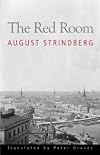
The Red Room
by August Strindberg
On This Page
Description
Fans of well-honed satire will enjoy The Red Room, August Strindberg's no-holds-barred send-up of the pretensions of Swedish high society in the late nineteenth century. Earnest government worker Arvid Falk leaves his old life behind and tries to make a splash as a writer, but as he begins to spend more time with various elite and exclusive cliques, he becomes all the more disillusioned..
Tags
Recommendations




















Member Recommendations

andejons I båda böckerna går Strindberg till hätskt anfall mot det officiella Sverige, men i Det nya riket har han struntat i ramberättelsen.
20

Member Reviews
Reason read: This was April's botm by reading 1001. The Red Room is included in the 1001 books you must read before you die because it is considered the first modern Swedish novel. It is strongly satirical, exposing hypocrisy across Stockholm society. The plot is loose as it is told with episodic vignettes and character sketches. It follows a young idealistic people colliding with the materialistic world. The action revolves around a bohemian gathering place called the Red Room (a red walled room where artists, writers and intellectuals meet). The tone is realistic, ironic, and humorous. Romantic ideaism is ground down by the young and idealist. The themes are the gap between ideal and reality, hypocrisy, the treatment of art, theater, show more and journalism as objects to be sold, and the difficulty of maintaining integrity in a corrupt system. The idealist settles for the ordinary life, while society continues unchanged. Institutions and social pressures wear down individual integrity. I would ask, does it really, or does the idealist finally come down to reality and gets on with it. show less
Burocrazia levantina, stratificazione sociale di stampo vittoriano, ipocrisia, religiosità di facciata, furberie e malaffare.
Dove è riunito un simile coacervo di brutture? Nella Svezia di fine '800 che assomiglia a un girone dantesco, e dove uno spirito libero può solo scegliere la morte volontaria o l'omologazione.
Nonostante la traduzione ignobilmente arcaica si riesce a intuire la potente vena di satira sociale che Strindberg ha profuso in questo romanzo degno di Victor Hugo.
Dove è riunito un simile coacervo di brutture? Nella Svezia di fine '800 che assomiglia a un girone dantesco, e dove uno spirito libero può solo scegliere la morte volontaria o l'omologazione.
Nonostante la traduzione ignobilmente arcaica si riesce a intuire la potente vena di satira sociale che Strindberg ha profuso in questo romanzo degno di Victor Hugo.
Röda rummet (or in translation The red room; I read this in Swedish) is one of the biggest classics of Swedish literature.
A funny, satirical look at 19thC bourgeois attitudes, The red room presents a loosely-connected group of counter-cultural artistic types and has them confront their counter-cultural and progressive ideals with those of conservative, mainstream society. Most of them are poor (well, poor bourgeois types), making ends meet by pawning each other’s possessions and taking on hack work that’s beneath their dignity. Their goal is to be recognized as master-level artists by the stodgy mainstream, without having to give up their anti-mainstream ideals.
Strindberg wrote funny observations of people and attitudes, and the show more situations he throws at his characters are frequently entertainingly absurd. Unfortunately, The red room will go no further: the book is more a loose collection of scenes featuring one or more of the main characters than a plotted novel, and I found its satire had a hard time rising above the level of the individual scene. Early chapters are great, but the lack of a solid central plot makes its flightiness annoying.
And then there’s the fact that the book is now (in 2017) almost 140 years old (it appeared in 1879): I found myself unable to appreciate it as a satire, but could only read it as poking fun at the mores of a society that no longer exists -- a historical artefact more than a novel.
So yeah. I’m glad I read this, but I won’t be reading it again. show less
A funny, satirical look at 19thC bourgeois attitudes, The red room presents a loosely-connected group of counter-cultural artistic types and has them confront their counter-cultural and progressive ideals with those of conservative, mainstream society. Most of them are poor (well, poor bourgeois types), making ends meet by pawning each other’s possessions and taking on hack work that’s beneath their dignity. Their goal is to be recognized as master-level artists by the stodgy mainstream, without having to give up their anti-mainstream ideals.
Strindberg wrote funny observations of people and attitudes, and the show more situations he throws at his characters are frequently entertainingly absurd. Unfortunately, The red room will go no further: the book is more a loose collection of scenes featuring one or more of the main characters than a plotted novel, and I found its satire had a hard time rising above the level of the individual scene. Early chapters are great, but the lack of a solid central plot makes its flightiness annoying.
And then there’s the fact that the book is now (in 2017) almost 140 years old (it appeared in 1879): I found myself unable to appreciate it as a satire, but could only read it as poking fun at the mores of a society that no longer exists -- a historical artefact more than a novel.
So yeah. I’m glad I read this, but I won’t be reading it again. show less
Neobično iskustvo s ovom knjigom. Pola sam je pročitala a pola odslušala. To ne bi bio problem da je prevoditelj bio isti. Ali sve u svemu ovo je odlična knjiga. Iako je napisana 1879. godine može se slobodno primjeniti i na današnje društvo.
Glavni lik je Arvid Falk, mladi intelektualac koji se ne snalazi najbolje u svijetu prevara, fiktivnih poduzeća, lažnih dobroćinitelja, kvaziintelektualaca.
Likovi su blago karikirani. Podjeća me na Branislava Nušića.
Jedan od interesantih citata:
"U ono vrijeme koje se sada smatra dobrim, iako je bilo za mnoge zapravo veoma loše, izvršeno je velikop otkriće-najveće u stoljeću: da je jeftinije i prijatnije živjeti od tuđeg novca nego od svog vlastitog rada."
Glavni lik je Arvid Falk, mladi intelektualac koji se ne snalazi najbolje u svijetu prevara, fiktivnih poduzeća, lažnih dobroćinitelja, kvaziintelektualaca.
Likovi su blago karikirani. Podjeća me na Branislava Nušića.
Jedan od interesantih citata:
"U ono vrijeme koje se sada smatra dobrim, iako je bilo za mnoge zapravo veoma loše, izvršeno je velikop otkriće-najveće u stoljeću: da je jeftinije i prijatnije živjeti od tuđeg novca nego od svog vlastitog rada."
Neobično iskustvo s ovom knjigom. Pola sam je pročitala a pola odslušala. To ne bi bio problem da je prevoditelj bio isti. Ali sve u svemu ovo je odlična knjiga. Iako je napisana 1879. godine može se slobodno primjeniti i na današnje društvo.
Glavni lik je Arvid Falk, mladi intelektualac koji se ne snalazi najbolje u svijetu prevara, fiktivnih poduzeća, lažnih dobroćinitelja, kvaziintelektualaca.
Likovi su blago karikirani. Podjeća me na Branislava Nušića.
Jedan od interesantih citata:
"U ono vrijeme koje se sada smatra dobrim, iako je bilo za mnoge zapravo veoma loše, izvršeno je velikop otkriće-najveće u stoljeću: da je jeftinije i prijatnije živjeti od tuđeg novca nego od svog vlastitog rada."
Glavni lik je Arvid Falk, mladi intelektualac koji se ne snalazi najbolje u svijetu prevara, fiktivnih poduzeća, lažnih dobroćinitelja, kvaziintelektualaca.
Likovi su blago karikirani. Podjeća me na Branislava Nušića.
Jedan od interesantih citata:
"U ono vrijeme koje se sada smatra dobrim, iako je bilo za mnoge zapravo veoma loše, izvršeno je velikop otkriće-najveće u stoljeću: da je jeftinije i prijatnije živjeti od tuđeg novca nego od svog vlastitog rada."
real good. very nice analytical irony and sarcasm. great language! fun. firery.
I absolutely did not like this book.
For reading, I switched to audio, which was okay in the beginning. But, the further I got in the book, the more confusing it got. I seem to have completely missed the subject, and why the characters did the things they did.
Happy to cross this one off to ever return to it!
For reading, I switched to audio, which was okay in the beginning. But, the further I got in the book, the more confusing it got. I seem to have completely missed the subject, and why the characters did the things they did.
Happy to cross this one off to ever return to it!
Members
- Recently Added By
Lists

1001 Books You Must Read Before You Die
1,448 works; 1,134 members

The Guardian's 1000 Novels Everyone Must Read
1,005 works; 548 members

Western World's Greatest Books - Project Gutenberg
295 works; 15 members

1,001 BYMRBYD Concensus
723 works; 27 members

Scandinavian Fiction of the 19th Century in English Translation
77 works; 2 members

School Made Us Read It
380 works; 196 members
Author Information

859+ Works 11,177 Members
August Strindberg was born in Stockholm, Sweden on January 22, 1849. He was educated at the University of Uppsala in Sweden, but left without a degree. He began to write while supporting himself at a variety of jobs, including journalist and librarian. He wrote several novels including The Red Room and Black Banners, but was best known as a show more playwright. His plays include The Father, Miss Julie, Creditors, A Dream Play, and The Ghost Sonata. He also wrote an autobiography entitled The Son of a Servant. He died on May 14, 1912 at the age of 63. (Bowker Author Biography) show less
Some Editions
Awards and Honors
Notable Lists
Series
Belongs to Publisher Series
Work Relationships
Common Knowledge
- Canonical title
- The Red Room
- Original title
- Röda rummet
- Original publication date
- 1879
- People/Characters
- Arvid Falk
- Important places
- Stockholm, Sweden
- First words
- It was an evening in the beginning of May.
- Last words
- (Click to show. Warning: May contain spoilers.)The fool!
- Original language
- Swedish
Classifications
- Genres
- Fiction and Literature, General Fiction
- DDC/MDS
- 839.73 — Literature & rhetoric German & related literatures Other Germanic literatures Swedish literature Swedish fiction
- LCC
- PT9813 .R6 — Language and Literature German, Dutch and Scandinavian literatures Swedish literature Individual authors or works 19th century Strindberg, Johan August
- BISAC
Statistics
- Members
- 862
- Popularity
- 31,659
- Reviews
- 12
- Rating
- (3.40)
- Languages
- 15 — Bosnian, Czech, Danish, Dutch, English, Estonian, Finnish, French, German, Italian, Norwegian (Bokmål), Norwegian, Russian, Spanish, Swedish
- Media
- Paper, Audiobook, Ebook
- ISBNs
- 87
- ASINs
- 20