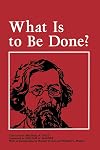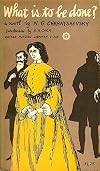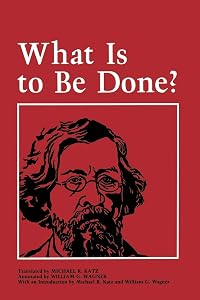
What Is to Be Done?
by Nikolai Chernyshevsky
On This Page
Description
"No work in modern literature, with the possible exception of Uncle Tom's Cabin, can compete with What Is to Be Done? in its effect on human lives and its power to make history. For Chernyshevsky's novel, far more than Marx's Capital, supplied the emotional dynamic that eventually went to make the Russian Revolution."-Joseph Frank, The Southern ReviewAlmost from the moment of its publication in 1863, Nikolai Chernyshevsky's novel, What Is to Be Done?, had a profound impact on the course of show more Russian literature and politics. The idealized image it offered of dedicated and self-sacrificing intellectuals transforming society by means of scientific knowledge served as a model of inspiration for Russia's revolutionary intelligentsia. On the one hand, the novel's condemnation of moderate reform helped to bring about the irrevocable break between radical intellectuals and liberal reformers; on the other, Chernyshevsky's socialist vision polarized conservatives' opposition to institutional reform. Lenin himself called Chernyshevsky "the greatest and most talented representative of socialism before Marx"; and the controversy surrounding What Is to Be Done? exacerbated the conflicts that eventually led to the Russian Revolution.Michael R. Katz's readable and compelling translation is now the definitive unabridged English-language version, brilliantly capturing the extraordinary qualities of the original. William G. Wagner has provided full annotations to Chernyshevsky's allusions and references and to the, sources of his ideas, and has appended a critical bibliography. An introduction by Katz and Wagner places the novel in the context of nineteenth-century Russian social, political, and intellectual history and literature, and explores its importance for several generations of Russian radicals. show lessTags
Recommendations


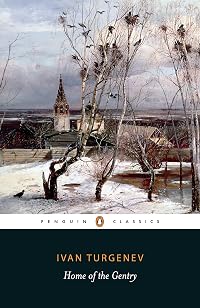
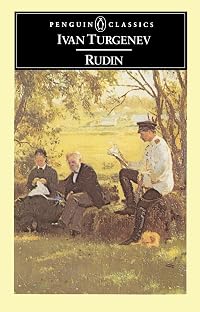
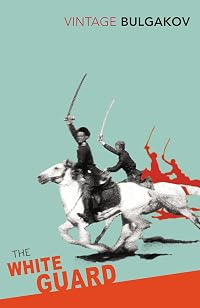


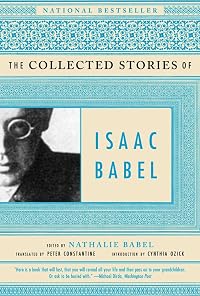










Member Recommendations

Member Reviews
For all this book’s issues as a novel (of which there are many), it gives insight into the 19th century political conditions, and its effect on the history of the 20th century can’t be underestimated. For me personally, reading it seemed to make my forays into Russian literature come full circle.
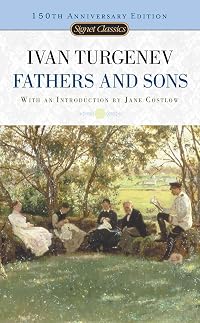
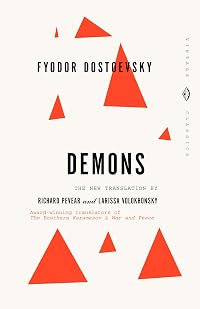
The society Nikolai Chernyshevsky grew up in was based on a very small percentage of serf-owning noblemen and an autocratic tsar overseeing the masses of a poor and illiterate populace, and facing inevitable change. The intelligentsia were (perhaps naturally) divided as to the direction forward. Turgenev wrote ‘Fathers and Sons’ in 1862 with the intention of making his nihilist character Bazarov sympathetic, but readers found that his show more portrayal had laid bare problematic aspects of radicalism, thus antagonizing young liberals like Chernyshevsky. As opposed to Turgenev’s moderate liberalism, Chenyshevsky advocated revolution, a fringe position that would of course become increasingly important over the decades to follow, culminating in the events of 1917. Russian authorities were not amused, and he was either in prison or in Siberia from 1864 to 1883 (at the ages of 36 to 55), and would die a martyr in 1889. ‘What Is to Be Done?’ was written from the Peter and Paul Fortress (slash prison) in 1863 with its revolutionary content veiled in symbolism, but there was enough incendiary content in it to provoke a strong conservative reaction, including Dostoevsky’s ‘Demons’ in 1871.
This edition with translation by Katz, annotations by Wagner, and a fantastic introduction by the two of them really puts the book in context. As they put it, Chernyshevsky’s writing “tried to reconcile the conflicting tensions between egoism and altruism, Western individualism and Russian collectivism, scientific discovery and moral certainty, and technological change and agrarian harmony.”
There is a lot to like in the ideas Chernyshevsky puts forward, starting with the end to exploitation of the working class, and the distribution/sharing of hereditary wealth. He was also an advocate for women’s rights - to get educated, become doctors, to stop wearing corsets, and to be respected as equals. His descriptions of sexual freedom and sexual desire are pretty direct, for the mid-19th century anyway. He sought to discover the underlying causes of social structures and poverty, and viewed religion as a spread of ignorance that held mankind back. He also embraced Jews, in contrast to conservative (and unfortunately anti-Semitic) voices such as Dostoevsky.
Unfortunately, this is all couched in a writing style that is didactic and prone to speeches. His protagonists have a robotic, unfeeling rationality about them, and their cold logic made me think of Lenin. There are some remarkably bad portions, such as parts 30-31 which end Chapter 3, which are a blend of illogical actions, haughty pronouncements from the author, and him insulting (literally) the reader. This continues on into Chapter 4, and there is a stretch of about 30 pages of tedious analysis/explanation of a character’s action that should have been about one or two – and even then he contradicts itself pages later.
Chernyshevsky is annoyingly smug, and a man who thought he truly had the secret to mankind’s happiness on both societal and personal levels. It may be the case that his looking down on and criticizing his readers was an aspect of his wanting to upset the existing order, e.g. knocking them from their pedestals and challenging their levels of comfort with the way things were, but it is a little annoying, particularly when with the benefit of history we know how all his ideas turn out.
Chernyshevsky significantly overestimated the power of his idealism to fix the many problems of the world, and it’s ironic that someone with such a bent towards rationalism could be so naive. He correctly pointed out that it was wrong to exploit the peasants and workers, that they were deprived of the end value of all their labor, and that the dominant group in power would never voluntarily surrender their power. However, he didn’t foresee the decline in motivation with collective ownership where rewards were evenly shared regardless of talent, or the loss of happiness in communal housing (kommunalki). He believed that the future be one with fewer people living in cities (ha!), instead foreseeing large, harmonious farming communities that had been transformed in efficiency through the advances of science. Most of all, he overlooked human nature – competition, tribalism, and the will to power … instead believing that people would fundamentally transform with the revolution.
It’s ironic as Chernyshevsky states “Freedom comes before everything else, even life itself,” that the reality under communism – that colossal, failed experiment – was that freedom was completely sacrificed. If only Vasily Grossman, a writer from the next century who also believed that freedom was the most important thing to possess, could have sat down with Chernyshevsky and given him a glimpse into what his ideas would contribute to. Where did all these ideal concepts go wrong? The concentration of power in one man’s hands, and that inevitably passing to a thug (e.g. from Lenin to Stalin, or later, from Yeltsin to Putin).
Despite the book’s flaws, it was an interesting read, and like many lessons in history, it’s still relevant today. In the debate for evolutionary change vs. revolution, I saw the same dynamic we see in both American political parties today, where the extreme left and right argue for fundamental changes, resulting in the same types of fissures. Also, as Chernyshevsky describes the late night debates between the young intellectuals where those who were in general aligned attacked each other because of signs of moderate thought or bourgeois tendency, I couldn’t help but think of what sometimes devolves into what amounts to purity tests in today’s left.
Just this quote, an excerpt from the poem ‘Russian Song’ by Aleksei Koltsov, and which may seem a little odd given the thrust of the book and all the political commentary, but I liked it:
“How lovely you are, Verochka!”
“How happy I am, Sasha.”
His sweet speeches are
Like the babble of a brook;
His smile
And his kiss.
Dear friend! Quench
Your kisses.
Even without them
My blood races when I’m near you.
Even without them
My face flushes,
My breast heaves,
And my eyes sparkle
Like stars at night. show less
The society Nikolai Chernyshevsky grew up in was based on a very small percentage of serf-owning noblemen and an autocratic tsar overseeing the masses of a poor and illiterate populace, and facing inevitable change. The intelligentsia were (perhaps naturally) divided as to the direction forward. Turgenev wrote ‘Fathers and Sons’ in 1862 with the intention of making his nihilist character Bazarov sympathetic, but readers found that his show more portrayal had laid bare problematic aspects of radicalism, thus antagonizing young liberals like Chernyshevsky. As opposed to Turgenev’s moderate liberalism, Chenyshevsky advocated revolution, a fringe position that would of course become increasingly important over the decades to follow, culminating in the events of 1917. Russian authorities were not amused, and he was either in prison or in Siberia from 1864 to 1883 (at the ages of 36 to 55), and would die a martyr in 1889. ‘What Is to Be Done?’ was written from the Peter and Paul Fortress (slash prison) in 1863 with its revolutionary content veiled in symbolism, but there was enough incendiary content in it to provoke a strong conservative reaction, including Dostoevsky’s ‘Demons’ in 1871.
This edition with translation by Katz, annotations by Wagner, and a fantastic introduction by the two of them really puts the book in context. As they put it, Chernyshevsky’s writing “tried to reconcile the conflicting tensions between egoism and altruism, Western individualism and Russian collectivism, scientific discovery and moral certainty, and technological change and agrarian harmony.”
There is a lot to like in the ideas Chernyshevsky puts forward, starting with the end to exploitation of the working class, and the distribution/sharing of hereditary wealth. He was also an advocate for women’s rights - to get educated, become doctors, to stop wearing corsets, and to be respected as equals. His descriptions of sexual freedom and sexual desire are pretty direct, for the mid-19th century anyway. He sought to discover the underlying causes of social structures and poverty, and viewed religion as a spread of ignorance that held mankind back. He also embraced Jews, in contrast to conservative (and unfortunately anti-Semitic) voices such as Dostoevsky.
Unfortunately, this is all couched in a writing style that is didactic and prone to speeches. His protagonists have a robotic, unfeeling rationality about them, and their cold logic made me think of Lenin. There are some remarkably bad portions, such as parts 30-31 which end Chapter 3, which are a blend of illogical actions, haughty pronouncements from the author, and him insulting (literally) the reader. This continues on into Chapter 4, and there is a stretch of about 30 pages of tedious analysis/explanation of a character’s action that should have been about one or two – and even then he contradicts itself pages later.
Chernyshevsky is annoyingly smug, and a man who thought he truly had the secret to mankind’s happiness on both societal and personal levels. It may be the case that his looking down on and criticizing his readers was an aspect of his wanting to upset the existing order, e.g. knocking them from their pedestals and challenging their levels of comfort with the way things were, but it is a little annoying, particularly when with the benefit of history we know how all his ideas turn out.
Chernyshevsky significantly overestimated the power of his idealism to fix the many problems of the world, and it’s ironic that someone with such a bent towards rationalism could be so naive. He correctly pointed out that it was wrong to exploit the peasants and workers, that they were deprived of the end value of all their labor, and that the dominant group in power would never voluntarily surrender their power. However, he didn’t foresee the decline in motivation with collective ownership where rewards were evenly shared regardless of talent, or the loss of happiness in communal housing (kommunalki). He believed that the future be one with fewer people living in cities (ha!), instead foreseeing large, harmonious farming communities that had been transformed in efficiency through the advances of science. Most of all, he overlooked human nature – competition, tribalism, and the will to power … instead believing that people would fundamentally transform with the revolution.
It’s ironic as Chernyshevsky states “Freedom comes before everything else, even life itself,” that the reality under communism – that colossal, failed experiment – was that freedom was completely sacrificed. If only Vasily Grossman, a writer from the next century who also believed that freedom was the most important thing to possess, could have sat down with Chernyshevsky and given him a glimpse into what his ideas would contribute to. Where did all these ideal concepts go wrong? The concentration of power in one man’s hands, and that inevitably passing to a thug (e.g. from Lenin to Stalin, or later, from Yeltsin to Putin).
Despite the book’s flaws, it was an interesting read, and like many lessons in history, it’s still relevant today. In the debate for evolutionary change vs. revolution, I saw the same dynamic we see in both American political parties today, where the extreme left and right argue for fundamental changes, resulting in the same types of fissures. Also, as Chernyshevsky describes the late night debates between the young intellectuals where those who were in general aligned attacked each other because of signs of moderate thought or bourgeois tendency, I couldn’t help but think of what sometimes devolves into what amounts to purity tests in today’s left.
Just this quote, an excerpt from the poem ‘Russian Song’ by Aleksei Koltsov, and which may seem a little odd given the thrust of the book and all the political commentary, but I liked it:
“How lovely you are, Verochka!”
“How happy I am, Sasha.”
His sweet speeches are
Like the babble of a brook;
His smile
And his kiss.
Dear friend! Quench
Your kisses.
Even without them
My blood races when I’m near you.
Even without them
My face flushes,
My breast heaves,
And my eyes sparkle
Like stars at night. show less
I picked this up as a prelude to reading Dostoevsky's Notes from Underground. I believe the quotation which concludes the review posted by TomcatMurr is key to that work. Sincerely hope this is correct, because Chernyshevsky's novel is spectacularly badly written, IMHO. The plot is preposterous, the characters absurd, the authorial asides self-parodic. Only comparable book I have read is Daisy Ashford's The Young Visiters. It did send me back to chapter 4 of Nabokov's The Gift, which is presented as the protagonist's published biography of Chernyshevsky. A hilarious hatchet job which I gather offended Russians on both the left and right at the time, but entirely warranted if this novel represents the fruit of C's mind and art.
"What is to Be Done?" is a Russian classic, not because it is wonderfully written, but because of the influence this book had on both Russian cultural history and on revolutionary Russian youth in the second half of the 19th century. Years ago I tried reading it in the original Russian, but found the book very, very dull and gave up.
When I found this copy at a used bookstore, I decided to try again. I also read Irina Paperno's "Chernyshevsky and the Age of Realism" in which the importance of this book to Russian culture is central to her study. A must if one wants to understand why this book was considered so important.
I also have the Michael Katz translation, but I haven't read that one yet, and in the future I'll have to go back to show more the Russian version to judge whether this translation is faithful to the original, but I can say that it read fairly easily. It turns out that the translator of this edition, Benjamin R. Tucker, was quite a character himself--a proponent of individual anarchism and what we would now call libertarianism.
This is a "tendentious" novel in that Chernyshevsky's main goal is to present a blue-print of sorts as to how to change society -- with an emphasis on the role of marriage and male/female relationships. As the writer/narrator, he often comments on his own writing, pointing out what the reader of novels would be thinking and sometimes giving away plot points. The main characters are: Vera Pavlovna, an intelligent young woman whose mother tries to get her to make a good match with someone who is, supposedly, rich, but unscrupulous and only wants to seduce her. Her young brother's tutor, Lopukhov, offers to marry her in order to get her out of her unbearable situation. He offers her complete freedom. It is a 'paper' marriage. They live in separate rooms and do not infringe on each other's personal space. Lopukhov is in love with her, but decides that in order to not burden Vera with this love, he does not attempt to win her heart, even when she falls in love with his best friend Kirsanov. As romantic triangles go, this one is very polite and sometimes a little annoying. show less
When I found this copy at a used bookstore, I decided to try again. I also read Irina Paperno's "Chernyshevsky and the Age of Realism" in which the importance of this book to Russian culture is central to her study. A must if one wants to understand why this book was considered so important.
I also have the Michael Katz translation, but I haven't read that one yet, and in the future I'll have to go back to show more the Russian version to judge whether this translation is faithful to the original, but I can say that it read fairly easily. It turns out that the translator of this edition, Benjamin R. Tucker, was quite a character himself--a proponent of individual anarchism and what we would now call libertarianism.
This is a "tendentious" novel in that Chernyshevsky's main goal is to present a blue-print of sorts as to how to change society -- with an emphasis on the role of marriage and male/female relationships. As the writer/narrator, he often comments on his own writing, pointing out what the reader of novels would be thinking and sometimes giving away plot points. The main characters are: Vera Pavlovna, an intelligent young woman whose mother tries to get her to make a good match with someone who is, supposedly, rich, but unscrupulous and only wants to seduce her. Her young brother's tutor, Lopukhov, offers to marry her in order to get her out of her unbearable situation. He offers her complete freedom. It is a 'paper' marriage. They live in separate rooms and do not infringe on each other's personal space. Lopukhov is in love with her, but decides that in order to not burden Vera with this love, he does not attempt to win her heart, even when she falls in love with his best friend Kirsanov. As romantic triangles go, this one is very polite and sometimes a little annoying. show less
Almost the only memory I retain of this book is the author's obsession with aluminium.
It was an important book from the historical perspective but amounts to very little these days. The author was an early proponent of gender and social equality. The book has influenced socialist thought in Russia in XIX century probably more than anything else written at the time. Having said that, the literary value of this oeuvre is close to zero.
It was an important book from the historical perspective but amounts to very little these days. The author was an early proponent of gender and social equality. The book has influenced socialist thought in Russia in XIX century probably more than anything else written at the time. Having said that, the literary value of this oeuvre is close to zero.
I expected some kind of political tract because it Mobilized a generation of intellectuals and inspired Lenin, but it was a cute, romantic love story at first. Very enjoyable. Also many postmodern effects like a narrator who plays with the characters and addresses the reader directly
The content of this book helped me to reinforce my perceptions of equality issues (gender); relationship, respect, independence, love, "mundanity".
Also, I enjoyed it so much that I often gave copies to friends; especially those in a crisis.
Invariably, if the book had been read, the feedback I got was appreciative and occasionally profound.
Also, I enjoyed it so much that I often gave copies to friends; especially those in a crisis.
Invariably, if the book had been read, the feedback I got was appreciative and occasionally profound.
Before I read this I knew of its reputation as an anarchist (or at least radical) novel but on reading it I found it more sensible than I had supposed.
Members
- Recently Added By
Lists

Russian Literature
184 works; 35 members

Edward Gorey Covers
150 works; 8 members

Harold Bloom - The Western Canon: C. The Democratic Age
336 works; 15 members

All Things Russia
459 works; 11 members

My Favorite Russian Novels
37 works; 2 members
Author Information

27+ Works 589 Members
Some Editions
Awards and Honors
Series
Belongs to Publisher Series
Work Relationships
Is a reply to
Common Knowledge
- Canonical title
- What Is to Be Done?
- Original title
- Что делать?
- Alternate titles
- A Vital Question
- Original publication date
- 1863
- People/Characters
- Vera Pavlovna; Dmitri Sergeivich Lopukhov; Alexander Matveich Kirsanov
- Important places
- St. Petersburg, Russia; Russia
- Dedication
- Dedicated to my friend O. S. Ch. [Chernyshevsky's wife, Olga Sokratovna)
- First words
- On the morning of July 11, 1856, the staff of one of the large hotels near the Moscow Railway Sation in Petersburg was in a quandary, almost in a state of distress.
- Last words
- (Click to show. Warning: May contain spoilers.)"If you don't want to listen now, then of course I must postpone the sequel until you're in a mood to listen. I hope we won't have to wait too long for that day."
- Original language*
- venäjä
*Some information comes from Common Knowledge in other languages. Click "Edit" for more information.
Classifications
- Genres
- Fiction and Literature, General Fiction
- DDC/MDS
- 891.73 — Literature & rhetoric Literatures of other languages East Indo-European and Celtic literatures Russian and East Slavic languages Russian fiction
- LCC
- PG3321 .C6 .C42 — Language and Literature Slavic languages and literatures. Baltic languages. Albanian language Slavic. Baltic. Albanian Russian literature Individual authors and works 1800-1870
- BISAC
Statistics
- Members
- 537
- Popularity
- 55,566
- Reviews
- 12
- Rating
- (3.46)
- Languages
- 9 — English, Finnish, French, German, Italian, Portuguese, Russian, Spanish, Swedish
- Media
- Paper, Ebook
- ISBNs
- 29
- ASINs
- 9