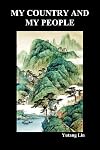
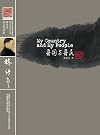
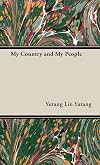
My Country and My People
by Yutang Lin
On This Page
Description
In this classic book Yutang Ling does a fantastic job of describing Chinese people, customs and culture in an understandable way for the Western reader. this book was the first of it's kind, Ling being a rarity as he was fluent in both English and Chinese, having been born in China but growing up in America. This extremely popular book will prove to be a fascinating read, and is highly recommended on the bookshelf of anyone with an interest in different cultures and societies.Tags
Recommendations



















Member Reviews
Lin Yutang writes here in a systematic approach to a western audience about China and Chinese culture. Still prescient even today, after nearly seventy years, Lin truly understands what it is to be Chinese and conveys that to his audience, and is frank and sincere about China's shortcomings and positives. Highly recommended at the time of its publishing, it ought to remain so today.
Written in 1935, Lin’s was the first major work by a Chinese to introduce China and her culture to the West. Lin was born in China, but was educated in the West, in the US and Europe. He was a key figure in the New Culture Movement of the 1920s, but after 1935 spent most of his life in the US. He was the compiler of a Chinese - English dictionary which is still one of the most widely used today, and the inventor of the first Chinese language typewriter – a kind of Renaissance Man. He is ideally suited, then, as a kind of insider-outsider to write about his own culture.
The Chinese observer has a distinct advantage over the foreign observer, for he is a Chinese, and as a Chinese he not only sees with his mind but he also feels with show more his heart… he writes of his mission to observe and explain his birth culture to his adopted culture.
Lin’s book covers subjects as diverse as…
Read the full review on The Lectern show less
The Chinese observer has a distinct advantage over the foreign observer, for he is a Chinese, and as a Chinese he not only sees with his mind but he also feels with show more his heart… he writes of his mission to observe and explain his birth culture to his adopted culture.
Lin’s book covers subjects as diverse as…
Read the full review on The Lectern show less
China, Chinese memoir, China 1930s,
"...He wrote this during the 1930s after China’s Opium Wars. A lot of people were trying to understand what was going on in China so Yutang wrote the book to explain. For many people it became the standard text to read on the subject if you wanted to understand the key characteristics of Chinese people and China’s history. He wanted to explain why Chinese people are lost without the Imperial Emperor who is like our god. He suggested that without a god we had nothing to fight for except a new god; that is why when the last Emperor fell in the early 20th century there was such turmoil as Chinese people fought to find the new Emperor or god.
This was something I read in the 1980s at university and I was very surprised to see this show more portrayal of Chinese people to the Western world, because Yutang wrote it in English for foreigners. You have to understand that China has a long history without religion and even though Western people might say they are not religious your country is so deeply embedded in religious history it permeates your culture and your way of life. You have Christmas and Easter, you can walk down a street in London and see St Paul’s Cathedral and hear church bells. When you pray for something it is to do with the afterlife and your spiritual well being. Your daily life is watered and weathered by religion. For Chinese people it is all about the here and now. If they adopt a religion and pray it will be for money or good luck or good health or good exam results..."
(reviewed by Xinran at FiveBooks. Full interview is available here:http://fivebooks.com/interviews/xinran-on-understanding-china) show less
This was something I read in the 1980s at university and I was very surprised to see this show more portrayal of Chinese people to the Western world, because Yutang wrote it in English for foreigners. You have to understand that China has a long history without religion and even though Western people might say they are not religious your country is so deeply embedded in religious history it permeates your culture and your way of life. You have Christmas and Easter, you can walk down a street in London and see St Paul’s Cathedral and hear church bells. When you pray for something it is to do with the afterlife and your spiritual well being. Your daily life is watered and weathered by religion. For Chinese people it is all about the here and now. If they adopt a religion and pray it will be for money or good luck or good health or good exam results..."
(reviewed by Xinran at FiveBooks. Full interview is available here:http://fivebooks.com/interviews/xinran-on-understanding-china) show less
Ratings
Members
- Recently Added By
Lists

Trinity College Booklist (1951): Class Five, Travel and Geography
52 works; 2 members

Paul French's Ultimate China Bookshelf
31 works; 1 member
Author Information

168+ Works 3,333 Members
Though he was never considered to be a serious original thinker or a leading writer in his native China, Lin Yu-t'ang's role as an essayist and popularizer of things Chinese in the West is worthy of attention. He was a native of Changchow in Amoy, son of a Presbyterian minister, and third-generation Christian. He was brought up in a strict show more household and prepared for the ministry, and after middle school he was sent to the Protestant College of Amoy. In 1911 he entered the famous St. John's University in Shanghai, and it was during his time there that he became disillusioned with the choice of a religious career and renounced Christianity. After graduation (with a rather weak academic record), Lin Yu-t'ang became a professor of English at Tsinghua University because his grounding in foreign languages was much stronger than in classical Chinese. In 1919 he decided to pursue further study in the United States, where he spent one year at Harvard University and then went on to France where he worked for the YMCA. He moved to Germany for a term, and at last in 1923 earned a Ph.D. in Leipzig in the field of archaic Chinese phonology. Lin Yu-t'ang then returned home and tried out various teaching posts, and in 1927 became secretary to the Ministry of Foreign Affairs in the Wuhan government. But politics was not to his liking, and he resigned in the following year. In 1932 he founded the Analects Fortnightly, a magazine of wit and satire that proved to be an instant popular success. Two years later he began another periodical, This Human World, which contained short essays. Unfortunately, his satire angered intellectuals on both the Left and the Right, and this was the beginning of his lifelong friction with Chinese literary and academic circles. In 1936, feeling hostility at home but an increased demand for his writings in the West, Lin Yu-t'ang went to New York City and remained there until 1943, when he went back home to lecture briefly and again became embroiled in controversy. However, in the United States, his essays and ideas were greeted with great enthusiasm. Early in 1954 he was appointed chancellor of the new Chinese University in Singapore, but, because of a disagreement with the trustees on policy, he and his staff left early in 1955 before the university opened its doors. Not long after this, in New York, he and his wife publicly announced their reconversion to Christianity. In addition to his many books of essays, Lin Yu-t'ang published a novel, Moment in Peking, a saga about a Chinese family spanning the years 1900--38. He also published a number of translations of classical Chinese works, the best of which is perhaps Shen Fu's Six Chapters of a Floating Life, the moving autobiographical account of a happy marriage marred by parental disapproval and the tragic early death of the wife. Lin Yu-t'ang's writings are marked by an appreciation of both Eastern and Western culture, and their sparkling, idiomatic English style has endeared him to thousands of Western readers. (Bowker Author Biography) show less
Some Editions
Series
Belongs to Publisher Series
Common Knowledge
- Epigraph
- Truth does not depart from human nature. If what is regarded as truth departs from human nature, it may not be regarded as truth.
--Confucius - First words
- When one is in China, one is compelled to think about her, with compassion always, with despair sometimes, and with discrimination and understanding very rarely.
Introduction: One of the most important movements in China today is the discovery of their own country by young Chinese intellectuals. - Last words
- (Click to show. Warning: May contain spoilers.)Upon this basis of spirit of reasonableness the Chinese civilization and Chinese private and public life were based in the past, and we can be sure that whatever is fanatical will be ruled out and whatever is "reasonable" will be accepted by China in the future.
Classifications
- Genres
- Nonfiction, History, General Nonfiction, Biography & Memoir, Travel, Religion & Spirituality, Philosophy
- DDC/MDS
- 915.1 — History & geography Geography & travel Geography of and travel in Asia China and adjacent areas
- LCC
- DS721 .L58 — History of Europe, Asia, Africa and Oceania Asia History of Asia China
- BISAC
Statistics
- Members
- 250
- Popularity
- 130,125
- Reviews
- 4
- Rating
- (3.85)
- Languages
- 8 — Chinese, English, Finnish, French, German, Hungarian, Italian, Norwegian (Bokmål)
- Media
- Paper, Ebook
- ISBNs
- 22
- ASINs
- 11