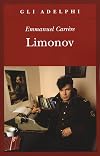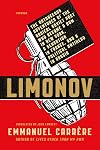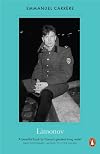
Limonov
by Emmanuel Carrère
On This Page
Description
"A thrilling page-turner that also happens to be the biography of one of Russia's most controversial figures This is how Emmanuel Carre?re, the magnetic journalist, novelist, filmmaker, chameleon, describes his subject: "Limonov is not a fictional character. There. I know him. He was a rogue in Ukraine; an idol of the Soviet underground under Brezhnev; a bum, then a multimillionaire's valet in Manhattan; a fashionable writer in Paris; a lost soldier in the Balkan wars; and now, in the show more chaotic ruins of postcommunist Russia, the elderly but charismatic leader of a party of young desperados. He sees himself as a hero; you might call him a scumbag: I suspend my judgment on the matter. It's a dangerous life, an ambiguous life: a real adventure novel. It is also, I believe, a life that says something. Not just about him, Limonov, not just about Russia, but about all our history since the end of World War II." So Limonov isn't fictional--but he might as well be. This pseudo-biography isn't a novel, but it reads like one: from Limonov's grim childhood; to his desperate, comical, ultimately successful attempts to gain the respect of Russia's literary intellectual elite; to his emigration to New York, then to Paris; to his return to the motherland. Limonov could be read as a charming picaresque. But it could also be read as a troubling counter-narrative of the second half of the twentieth century, one that reveals a violence, an anarchy, a brutality that the stories we tell ourselves about progress tend to conceal"-- show lessTags
Recommendations





















Member Recommendations

Member Reviews
Non è facile rendermi simpatico un fascista.
Con questa biografia dello scrittore e militante politico russo Eduard Veniaminovich Savenko, in arte Limonov, forse Emmanuel Carrère è quello che più ci è andato vicino.
Certo, Eduard Limonov non è esattamente un fascista classico, gli mancano i tratti dei stereotipi dei fascisti che siamo abituati a vedere in giro e ad odiare: razzismo, antisemitismo, omofobia. Ne mantiene però altri, come il forte sentimento nazionalista, una smisurata stima di se e una sfrontatezza che spesso sconfina nell'arroganza.
Eppure Carrère ci fa capire che la vicenda umana di Limonov non può certamente essere ridotta al suo solo fascismo: la faccenda è più complicata di così, come non si stanca mai di show more ripetere lo scrittore francese per tutto l'arco della narrazione.
Dall'Ucraina a New York, Parigi, la Jugoslavia devastata dalla guerra, la Mosca Post Sovietica, l'Asia Centrale con i suoi paesaggi mozzafiato, Eduard Limonov non rimane mai fermo, la sua mente brillante sembra non accontentarsi mai di ciò che riesce a ottenere, non può accontentarsi mai.
Un ego strabordante, geniale e controverso che di sicuro non lascia indifferenti, complice anche la splendida scrittura di Emmanuel Carrère che ogni tanto compare in questa biografia con le sue considerazioni, le sue opinioni che impreziosiscono il racconto di una vicenda umana già ricca di avvenimenti.
Da leggere. show less
Con questa biografia dello scrittore e militante politico russo Eduard Veniaminovich Savenko, in arte Limonov, forse Emmanuel Carrère è quello che più ci è andato vicino.
Certo, Eduard Limonov non è esattamente un fascista classico, gli mancano i tratti dei stereotipi dei fascisti che siamo abituati a vedere in giro e ad odiare: razzismo, antisemitismo, omofobia. Ne mantiene però altri, come il forte sentimento nazionalista, una smisurata stima di se e una sfrontatezza che spesso sconfina nell'arroganza.
Eppure Carrère ci fa capire che la vicenda umana di Limonov non può certamente essere ridotta al suo solo fascismo: la faccenda è più complicata di così, come non si stanca mai di show more ripetere lo scrittore francese per tutto l'arco della narrazione.
Dall'Ucraina a New York, Parigi, la Jugoslavia devastata dalla guerra, la Mosca Post Sovietica, l'Asia Centrale con i suoi paesaggi mozzafiato, Eduard Limonov non rimane mai fermo, la sua mente brillante sembra non accontentarsi mai di ciò che riesce a ottenere, non può accontentarsi mai.
Un ego strabordante, geniale e controverso che di sicuro non lascia indifferenti, complice anche la splendida scrittura di Emmanuel Carrère che ogni tanto compare in questa biografia con le sue considerazioni, le sue opinioni che impreziosiscono il racconto di una vicenda umana già ricca di avvenimenti.
Da leggere. show less
(version française)
I first heard of Édouard Limonov through Adam Curtis’ most recent series Can’t Get You Out of my Head. I went back and watched the scenes that feature Limonov after finishing this book and was startled by the difference in tone between the way Carrere depicts him vis a vis Curtis. In this book we are presented with a Limonov who early in his life was cast as the iconoclastic rebel, the anti-elitist punk turned fascist and violent nationalist. Carrere is clearly disturbed and confused by this supposed change undertaken by Limonov in the later part of his life. However, he goes through pains to make us understand that he is unusually sympathetic towards Limonov’s actions in comparison to the liberal milieu of show more Parisian writers and intellectuals he lives amongst; people who wanted nothing to do with the Russian writer after he was shown in Pawel Pawilowski’s documentary firing a machine gun towards the besieged Sarajevo in the early 90s. Throughout the book, Carrere seems to be searching for a way to explain the fascination he feels for Limonov to himself and to the reader. Despite valiant efforts, he never quite succeeds, evinced by the books closing pages. I wonder if Carrere had written this book now if he would feel differently. The world of the 00s and early 10s feels light years away from the present we currently inhabit, and I think every passing year brings Limonov’s sentiments into clearer focus. (I deliberately use the word sentiment, because going by this book, Limonov never codified his intuitive beliefs about the world into any kind of philosophy or -ism, for better or worse) Limonov knew that with the fall of the Soviet Union Russia was entering into a profoundly dark period of history that has played out just as he expected. This in combination with the systemic rot he inhabited while living in the west certainly played into forming his pessimistic perspective on how the world was progressing, a perspective that seems more and more vindicated. What made Limonov a compelling figure was his willingness to face reality as it truly was. He pulling back the shroud of neoliberal class apartheid as it existed in the West, and he scorned the sacrifice of all tradition and collective identity for the sake of material gain in the post-Communist states. Anyone who faces the world as it truly is, without the protection of platitudes and propaganda, will, even should, be radicalized. Was Limonov toying with dangerous ideas? Absolutely. Was he fraternizing with evil people? It seems so. But I think he was attracted to strains of thought potent enough to abnegate the rising tide of the destructive world order we are now living with, and through this attraction pursued ideas beyond what most of us would feel comfortable with. But I think it’s important to the consider the fact that, just as Carrere is searching for a lens through which to view this complicated man, Limonov was perhaps also searching. We are unfortunately only given brief glimpses into his inner psychology, he who was so opaque. When any kind of inner dilemma is reveal, it sticks out for the incongruity. Limonov typically came off so self-assured that he was on the moral high ground, but It does, after all, take supreme self-confidence (fabricated as it may be) to make any kind of impact on the scale that he pined for.
Curtis, in contrast with Carrere, shows Limonov as a kind of pure provocateur, someone who knew that he had to bring out the “big guns” in order to fight against the ascendant powers of neoliberalism and global capital that were taking over the world. These “big guns” were namely the most demonized credos of the last century, Bolshevism and fascism. In Curtis’ telling, Limonov wanted to reclaim these ideas, so demonized by those he set himself in opposition against, because they were the last mass movement that truly allowed for the subsuming of the individual, and therefore made change a possibility. Limonov and his enemies both knew that this kind of mass movement was the only thing that could stop their winning streak. The fact that both parts of the National Bolshevik namesake were responsible for the widest scale human rights abuses in history was, to Limonov, beside the point. In his conception, if we lose sight of the factors that made them both so successful in the first place, something even more important than human life may be at stake.
I think Curtis’ depiction will be shown as more in line with how history will see Limonov. We are after all, still developing the vocabulary and intellectual framework to understand the current shitshow we find ourselves in. Do I think Limonov was correct in everything or even most of what did and believed? No, I don’t. But I think people like him are essential to finding new ways to make the world a better place and fighting against the cynical, nihilist apparatus that has installed itself at the head of world affairs. show less
I first heard of Édouard Limonov through Adam Curtis’ most recent series Can’t Get You Out of my Head. I went back and watched the scenes that feature Limonov after finishing this book and was startled by the difference in tone between the way Carrere depicts him vis a vis Curtis. In this book we are presented with a Limonov who early in his life was cast as the iconoclastic rebel, the anti-elitist punk turned fascist and violent nationalist. Carrere is clearly disturbed and confused by this supposed change undertaken by Limonov in the later part of his life. However, he goes through pains to make us understand that he is unusually sympathetic towards Limonov’s actions in comparison to the liberal milieu of show more Parisian writers and intellectuals he lives amongst; people who wanted nothing to do with the Russian writer after he was shown in Pawel Pawilowski’s documentary firing a machine gun towards the besieged Sarajevo in the early 90s. Throughout the book, Carrere seems to be searching for a way to explain the fascination he feels for Limonov to himself and to the reader. Despite valiant efforts, he never quite succeeds, evinced by the books closing pages. I wonder if Carrere had written this book now if he would feel differently. The world of the 00s and early 10s feels light years away from the present we currently inhabit, and I think every passing year brings Limonov’s sentiments into clearer focus. (I deliberately use the word sentiment, because going by this book, Limonov never codified his intuitive beliefs about the world into any kind of philosophy or -ism, for better or worse) Limonov knew that with the fall of the Soviet Union Russia was entering into a profoundly dark period of history that has played out just as he expected. This in combination with the systemic rot he inhabited while living in the west certainly played into forming his pessimistic perspective on how the world was progressing, a perspective that seems more and more vindicated. What made Limonov a compelling figure was his willingness to face reality as it truly was. He pulling back the shroud of neoliberal class apartheid as it existed in the West, and he scorned the sacrifice of all tradition and collective identity for the sake of material gain in the post-Communist states. Anyone who faces the world as it truly is, without the protection of platitudes and propaganda, will, even should, be radicalized. Was Limonov toying with dangerous ideas? Absolutely. Was he fraternizing with evil people? It seems so. But I think he was attracted to strains of thought potent enough to abnegate the rising tide of the destructive world order we are now living with, and through this attraction pursued ideas beyond what most of us would feel comfortable with. But I think it’s important to the consider the fact that, just as Carrere is searching for a lens through which to view this complicated man, Limonov was perhaps also searching. We are unfortunately only given brief glimpses into his inner psychology, he who was so opaque. When any kind of inner dilemma is reveal, it sticks out for the incongruity. Limonov typically came off so self-assured that he was on the moral high ground, but It does, after all, take supreme self-confidence (fabricated as it may be) to make any kind of impact on the scale that he pined for.
Curtis, in contrast with Carrere, shows Limonov as a kind of pure provocateur, someone who knew that he had to bring out the “big guns” in order to fight against the ascendant powers of neoliberalism and global capital that were taking over the world. These “big guns” were namely the most demonized credos of the last century, Bolshevism and fascism. In Curtis’ telling, Limonov wanted to reclaim these ideas, so demonized by those he set himself in opposition against, because they were the last mass movement that truly allowed for the subsuming of the individual, and therefore made change a possibility. Limonov and his enemies both knew that this kind of mass movement was the only thing that could stop their winning streak. The fact that both parts of the National Bolshevik namesake were responsible for the widest scale human rights abuses in history was, to Limonov, beside the point. In his conception, if we lose sight of the factors that made them both so successful in the first place, something even more important than human life may be at stake.
I think Curtis’ depiction will be shown as more in line with how history will see Limonov. We are after all, still developing the vocabulary and intellectual framework to understand the current shitshow we find ourselves in. Do I think Limonov was correct in everything or even most of what did and believed? No, I don’t. But I think people like him are essential to finding new ways to make the world a better place and fighting against the cynical, nihilist apparatus that has installed itself at the head of world affairs. show less
Eduard Limonov is one of those people who are far more interesting, the LESS you know about them. I have given the book three stars because its deficiencies cannot be blamed upon the writer, or translator, as much as the subject.
Upon a brief acquaintance, Limonov comes across as an intriguing character: on further inspection, he becomes a narcissistic creature. I couldn't begin to guess as to whether he believes ANY of his 'principles'; they are certainly easily shed when a new chance to gurn in front of the media appears.
My advice about this book: don't bother, there are much more exciting people about whom to read.
Upon a brief acquaintance, Limonov comes across as an intriguing character: on further inspection, he becomes a narcissistic creature. I couldn't begin to guess as to whether he believes ANY of his 'principles'; they are certainly easily shed when a new chance to gurn in front of the media appears.
My advice about this book: don't bother, there are much more exciting people about whom to read.
“With Yeltsin’s second term coming to an end, the oligarchs look around for a successor who’s just as cooperative, and the slyest of them, Berezovsky, has an idea: a Chekist who’s completely unknown to the public, Vladimir Putin. A former intelligence officer in East Germany, he went through some rough times after the fall of the Berlin Wall before finding a new niche for himself at the FSB, which he’s quietly headed for the last year. Wherever he’s served he’s demonstrated unfailing loyalty to his superiors, and it’s precisely this quality that Berezovsky sells to his fellows: “He’s no genius, but he’ll eat out of our hands.” Given the go-ahead by the gang, Berezovsky takes his private jet and lands it in the show more airfield in Biarritz, where Putin is on vacation with his wife and kids at a midpriced hotel. When the oligarch offers him the job, he says that he’s not sure he’s got what it takes.
“Let’s have none of that, now, Vladimir Vladimirovich, where there’s a will there’s a way. And don’t worry, we’ll be there to help you.”
To jump ahead: Berezovsky, so proud of his Machiavellian maneuver, has just made the worst decision of his career. As in a film by Joseph Mankiewicz, the bland, obsequious officer will turn out to be a remorseless powermonger and will take down, one by one, all those who made him king. Three years after the meeting in Biarritz, Berezovsky and Gusinsky will be forced into exile, Khodorkovsky, the only one to try to turn over a new leaf by making the management of his oil empire more ethical, will be arrested and, after a rigged trial, sent to Siberia just like back in the good old days. The others watch their step; they’ve understood who’s the boss.” show less
“Let’s have none of that, now, Vladimir Vladimirovich, where there’s a will there’s a way. And don’t worry, we’ll be there to help you.”
To jump ahead: Berezovsky, so proud of his Machiavellian maneuver, has just made the worst decision of his career. As in a film by Joseph Mankiewicz, the bland, obsequious officer will turn out to be a remorseless powermonger and will take down, one by one, all those who made him king. Three years after the meeting in Biarritz, Berezovsky and Gusinsky will be forced into exile, Khodorkovsky, the only one to try to turn over a new leaf by making the management of his oil empire more ethical, will be arrested and, after a rigged trial, sent to Siberia just like back in the good old days. The others watch their step; they’ve understood who’s the boss.” show less
Limonov by Emmanuel Carrere
Biography, history, fiction tracing recent cataclysmic events in both the personal life of one, Eduard Limonov, and of the downfall and rebuilding of the Soviet nation.
Eduard Limonov is a real life character whose life story reads like several other stories: John Richey’s City of Night, Charles Bukowski, Hunter Thompson’s Hell Angel’s, Denis Johnson’s Jesus Son. One gets the idea- this is a wild ride of adventurism, rebellion, living on the edge, fueled with vodka, cold enough “to go down like oil”.
Limonov starts off in a small town, makes his way to Moscow re-invents himself as a bohemian dissident- a combination poet/hustler who ends up travelling to Paris, New York and then back to Moscow where show more he quickly ends up in the new gulag, branded a terrorist whose self-anointed political party of seven thousand followers challenge the status quo. Along the way, posing as a journalist he reports and participates in the Serbian- Croat- Kosovan war participating as a fighter shooting at innocents in Sarajevo.
Additionally depicted is his sexual journey- a ravishing desire sharing beds with nymphomaniacs, soap opera stars, models and underage girls. Limonov is a flame that never realizes his desire and in the end he self identifies the life he has lived “as a shitty life”, a loser who reaches more than his 15 minutes of flame yet never realizes his dreams of glory.
Emmanuel Carrere has found a real life character who is the equal of great literary figures. A brilliant account with the added insight into today’s Russia where the oligarchs, and Putin’s kleptocracy live hand in hand. Amazing that Putin, who in the early 90’s was driving a taxi cab, is now the power that controls all of Russia. To this day Limonov is still hoping, working for a renewed fascist Stalin-like society from his “shitty” little apartment in Moscow.
A great read! show less
Biography, history, fiction tracing recent cataclysmic events in both the personal life of one, Eduard Limonov, and of the downfall and rebuilding of the Soviet nation.
Eduard Limonov is a real life character whose life story reads like several other stories: John Richey’s City of Night, Charles Bukowski, Hunter Thompson’s Hell Angel’s, Denis Johnson’s Jesus Son. One gets the idea- this is a wild ride of adventurism, rebellion, living on the edge, fueled with vodka, cold enough “to go down like oil”.
Limonov starts off in a small town, makes his way to Moscow re-invents himself as a bohemian dissident- a combination poet/hustler who ends up travelling to Paris, New York and then back to Moscow where show more he quickly ends up in the new gulag, branded a terrorist whose self-anointed political party of seven thousand followers challenge the status quo. Along the way, posing as a journalist he reports and participates in the Serbian- Croat- Kosovan war participating as a fighter shooting at innocents in Sarajevo.
Additionally depicted is his sexual journey- a ravishing desire sharing beds with nymphomaniacs, soap opera stars, models and underage girls. Limonov is a flame that never realizes his desire and in the end he self identifies the life he has lived “as a shitty life”, a loser who reaches more than his 15 minutes of flame yet never realizes his dreams of glory.
Emmanuel Carrere has found a real life character who is the equal of great literary figures. A brilliant account with the added insight into today’s Russia where the oligarchs, and Putin’s kleptocracy live hand in hand. Amazing that Putin, who in the early 90’s was driving a taxi cab, is now the power that controls all of Russia. To this day Limonov is still hoping, working for a renewed fascist Stalin-like society from his “shitty” little apartment in Moscow.
A great read! show less
It's not quite a traditional biography, but it is a fascinating & fast-moving look at the man (admirable? reprehensible? both? neither?). Worth reading, especially for fans of world/international politics, outcasts, & rabble-rousers.
One of the more interesting biographies I have ever read. I frequently had to go to Wikipedia and google maps to look things up because the story frequently seems so incredulous. The author almost presents the work as fiction and frequently seems to have a hard time believing this really happened at all. The author frequently interjects his own personal narrative which I did not mind as much as I would have expected.
Members
- Recently Added By
Published Reviews
ThingScore 92
Extremisten-Biografie "Limonow": Pussy Riots düsterer Vorgänger - Nationalbolschewist, Sex-Abenteurer, Selbstdarsteller: Der Schriftsteller Eduard Limonow ist eine der schillerndsten Figuren der russischen Politik und fordert mit provokanten Aktionen den Staat heraus. Eine Biografie widmet sich nun seinem Leben - voller Abscheu und Faszination.
added by private library
“This deft, timely translation of French writer and filmmaker Carrère's sparkling 2011 biography of Eduard Limonov is an enthralling portrait of a man and his times. The subtitle is no exaggeration: Limonov, a prolific and celebrated author, cofounder of Russia's National Bolshevik Party, onetime coleader of the Drugaya Rossiya opposition movement, and current head of Strategy 31 (which show more organizes protests in Russia aimed at securing the right to peacefully assemble), has led an extraordinary life. Carrère suggests that Limonov's haphazard turns--from budding poet, disillusioned émigré, New York City butler, and Parisian literary rock star to Russian countercultural maverick, Putin opponent, and political prisoner--have been prompted by his drive for adventure and fame . . . Carrère's Limonov never dissolves in a mess of unfathomable contradictions. Instead, he emerges as a mirror through which the vortex of culture and politics in the late-Soviet and New Russian eras is reflected. In this astute, witty account, Limonov has found his ideal biographer. There are few more enjoyable descriptions of Russia today.” show less
added by davidgn
“There's an obsession that has always tormented Emmanuel Carrère and that has forced him to become the greatest living French author: to unearth his three demons [deception, savagery, loss], to drive them away, and, if possible, to reveal them to the world through books which prove themselves necessary . . . Limonov . . . is the human being who more than any other embodies Carrère's three show more demons and adds a crucial one of his own: the desire to challenge the world.” show less
added by davidgn
Lists

Top Five Books of 2017
757 works; 231 members

Books Read in 2017
4,249 works; 130 members

Books Read in 2022
5,168 works; 114 members

contemporary literary fiction list to check out
47 works; 1 member
Author Information

49+ Works 6,874 Members
Emmanuel Carrere is one of France's most critically acclaimed writers, author of screenplays, a biography of Philip K. Dick, and two novels, including CLASS TRIP, which won the prestigious Prix Femina. A major bestseller in France, THE ADVERSARY is being published in eighteen countries. Carrere lives in Paris (Bowker Author Biography)
Some Editions
Awards and Honors
Awards
Distinctions
Series
Belongs to Publisher Series
Work Relationships
Is contained in
Common Knowledge
- Canonical title*
- Limonov
- Original title
- Limonov
- Original publication date
- 2011-09-01; 2011
- People/Characters
- Edouard Veniaminovitch Limonov
- Important places
- Kharkiv, Ukraine; Moscow, USSR; New York, New York, USA; Paris, France
- Important events*
- Guerres de Yougoslavie; Chute des régimes communistes en Europe
- Epigraph*
- "Celui qui veut restaurer le communisme n'a pas de tête. Celui qui ne le regrette pas n'a pas de coeur."
Vladimir Poutine - First words
- Jusqu'à ce qu'Anna Politkovskaïa soit abattue dans l'escalier de son immeuble, le 7 octobre 2006, seuls les gens qui s'intéressaient de près aux guerres de Tchétchénie connaissaient le nom de cette jornaliste courageuse... (show all), opposante déclarée à la politique de Vladimir Poutine.
- Last words
- (Click to show. Warning: May contain spoilers.)Ça, d'accord : ça lui va.
- Original language*
- Français
*Some information comes from Common Knowledge in other languages. Click "Edit" for more information.
Classifications
Statistics
- Members
- 912
- Popularity
- 29,442
- Reviews
- 27
- Rating
- (3.89)
- Languages
- 17 — Catalan, Czech, Danish, Dutch, English, Finnish, French, German, Hebrew, Italian, Norwegian (Bokmål), Polish, Portuguese (Portugal), Romanian, Russian, Spanish, Swedish
- Media
- Paper, Audiobook, Ebook
- ISBNs
- 37
- ASINs
- 12