
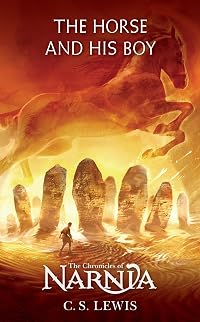
The Horse and His Boy
by C. S. Lewis
The Chronicles of Narnia-Chronological (3), The Chronicles of Narnia: Publication order (5)
On This Page
Description
A boy and a talking horse share an adventurous and dangerous journey to Narnia to warn of invading barbarians.Tags
Recommendations
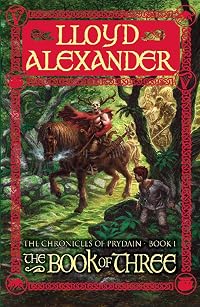
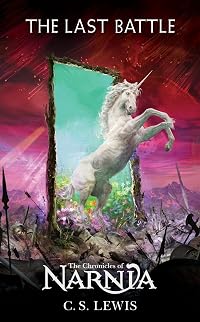
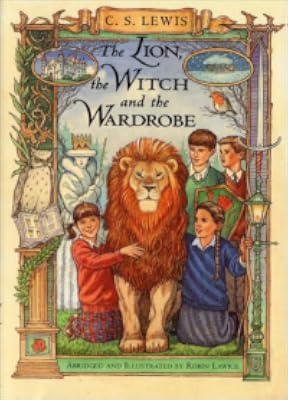
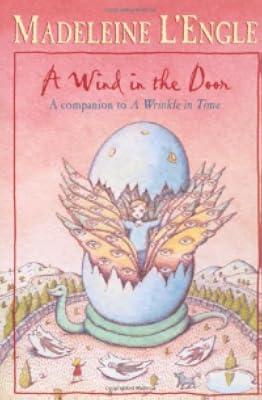


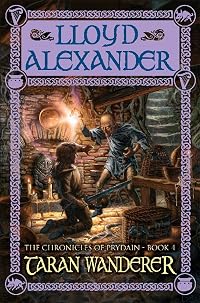
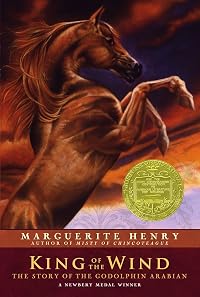
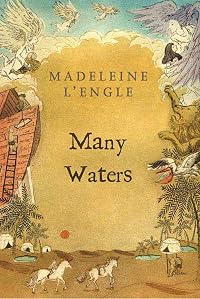
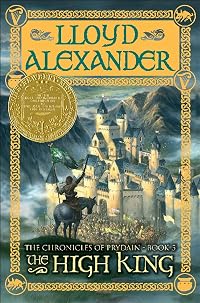



Member Recommendations
Member Reviews
This was a re-read of a beloved childhood favorite. Reading with a thoroughly modern 8 year old helped me to see a lot of casual racism and sexism that I didn't catch as a kid. My son was all over it. C.S. Lewis was certainly a product of his time and his devotion to Christian ideals also made him paint racist portraits of his pseudo-Muslim bad guys. And jeez, this book is violent. At one point they talk about boiling people to death, and lots of stuff about beating slaves, and it was just...gross? There were at least two lines about such topics that I just flat out couldn't read aloud they were so awful. This is also one of the most overtly religious in the series, one chapter is practically a Footprints in the Sand wall hanging.
Still, show more I really love those talking horses. show less
Still, show more I really love those talking horses. show less
I feel really guilty about loving this book as much as I do. I loved it as a kid and I love it now, and there is just so much wrong with it.
The xenophobia is positively racist -- by page 5, we're already hearing the first of many references to the fact that the residents of Narnia are considered by the residents of their southern neighbor, Calormen, to be "fair and white...accursed but beautiful barbarians."
The Calormenes, on the other hand, are nothing but walking Middle Eastern stereotypes. They wear turbans and have long beards and speak in overblown wise old sayings like, "Has not one of the poets said, 'Natural affection is stronger than soup and offspring more precious than carbuncles?'"
This aspect of the story is ridiculously, show more inexcusably bad. As I've mentioned in reviews of other Narnia books, Lewis seems to take great pride in backing the wrong horse at every possible social and/or historical point, and boy howdy, does he blow it here. He puts his last dollar down on good old colonialist "Hey, look! Savages! If only they had a civilized country to tell them what to do!"
(This should not be taken as me buying into moral relativism and excusing the very real sexism and lack of democracy running rampant through the real Middle East, by the way. It's me thinking that those weren't exactly the things that bothered Lewis about that region.)
So: knowing all that, how can I possibly enjoy this book?
I cringe at times, but I do. Lewis has some of his most memorable lines and greatest moral triumphs in this story.
For instance, I once wrote an article and later created an e-card featuring this terrific line:
"If you do one good deed, your reward usually is to be set to do another and harder and better one."
It's true. It's one of the horrible unfairnesses of life, but there it is. And when you see life in those terms, you're better able to bow your head to the deeds that are your lot. It isn't fair. It just is.
I also love when Hwin, the gentle nervous motherly talking horse, speaks up to Bree (another talking horse) when he insists they should take a break before setting out on a march. Time is short and the enemy is almost at the gate, but he wants a snack and a rest and a rubdown first. More than that -- he thinks he needs them.
"'P-please,' said Hwin, very shyly, 'I feel just like Bree that I can't go on. But when Horses have humans (with spurs and things) on their backs, aren't they often made to go on when they're feeling like this? and then they find they can.'"
This is true both morally and physically. How often do we get to what we think is the breaking point -- the point where we simply Can. NOT. Go on. And then, if we don't give in but push ourselves a little harder, we learn the difference between what we think we need and what we're really capable of. Because of course Hwin turns out to be right, and Bree's wrongness almost ruins everything.
I didn't understand this when I read it for the first time, but I remembered it. And now I think about it all the time, whether I'm running a hill or writing a few more words (or any words at all on a day I could have sworn I was too tired to get some writing done).
There are too many outstanding examples like this to resist. And as always, Lewis nails the little moments we can all relate to, even if we've never quite experienced them. Like when Shasta, waiting anxiously for his friends alone in the dark among some ancient tombs, hears a terrible noise. After almost jumping out of his skin, he realizes it's a distant horn blowing for the closing of the city gates:
"'Don't be a silly little coward,' said Shasta to himself. 'Why, it's only the same noise you heard this morning.' But there is a great difference between a noise heard letting you in with your friends in the morning, and a noise heard alone at nightfall, shutting you out."
And then, later, when the two main character children (Shasta and Aravis) are riding across the desert:
"On again, trot and walk and trot, jingle-jingle-jingle, squeak-squeak-squeak, smell of hot horse, smell of hot self, blinding glare, headache. And nothing at all different for mile after mile."
Such brilliantly understated word-painting.
Oh, and one last passage, a short one and one of my favorites ever:
"One of the drawbacks about adventures is that when you come to the most beautiful places you are often too anxious and hurried to appreciate them."
So, yes, this book is bad. And yes, I love it. Because it's great, too. show less
The xenophobia is positively racist -- by page 5, we're already hearing the first of many references to the fact that the residents of Narnia are considered by the residents of their southern neighbor, Calormen, to be "fair and white...accursed but beautiful barbarians."
The Calormenes, on the other hand, are nothing but walking Middle Eastern stereotypes. They wear turbans and have long beards and speak in overblown wise old sayings like, "Has not one of the poets said, 'Natural affection is stronger than soup and offspring more precious than carbuncles?'"
This aspect of the story is ridiculously, show more inexcusably bad. As I've mentioned in reviews of other Narnia books, Lewis seems to take great pride in backing the wrong horse at every possible social and/or historical point, and boy howdy, does he blow it here. He puts his last dollar down on good old colonialist "Hey, look! Savages! If only they had a civilized country to tell them what to do!"
(This should not be taken as me buying into moral relativism and excusing the very real sexism and lack of democracy running rampant through the real Middle East, by the way. It's me thinking that those weren't exactly the things that bothered Lewis about that region.)
So: knowing all that, how can I possibly enjoy this book?
I cringe at times, but I do. Lewis has some of his most memorable lines and greatest moral triumphs in this story.
For instance, I once wrote an article and later created an e-card featuring this terrific line:
"If you do one good deed, your reward usually is to be set to do another and harder and better one."
It's true. It's one of the horrible unfairnesses of life, but there it is. And when you see life in those terms, you're better able to bow your head to the deeds that are your lot. It isn't fair. It just is.
I also love when Hwin, the gentle nervous motherly talking horse, speaks up to Bree (another talking horse) when he insists they should take a break before setting out on a march. Time is short and the enemy is almost at the gate, but he wants a snack and a rest and a rubdown first. More than that -- he thinks he needs them.
"'P-please,' said Hwin, very shyly, 'I feel just like Bree that I can't go on. But when Horses have humans (with spurs and things) on their backs, aren't they often made to go on when they're feeling like this? and then they find they can.'"
This is true both morally and physically. How often do we get to what we think is the breaking point -- the point where we simply Can. NOT. Go on. And then, if we don't give in but push ourselves a little harder, we learn the difference between what we think we need and what we're really capable of. Because of course Hwin turns out to be right, and Bree's wrongness almost ruins everything.
I didn't understand this when I read it for the first time, but I remembered it. And now I think about it all the time, whether I'm running a hill or writing a few more words (or any words at all on a day I could have sworn I was too tired to get some writing done).
There are too many outstanding examples like this to resist. And as always, Lewis nails the little moments we can all relate to, even if we've never quite experienced them. Like when Shasta, waiting anxiously for his friends alone in the dark among some ancient tombs, hears a terrible noise. After almost jumping out of his skin, he realizes it's a distant horn blowing for the closing of the city gates:
"'Don't be a silly little coward,' said Shasta to himself. 'Why, it's only the same noise you heard this morning.' But there is a great difference between a noise heard letting you in with your friends in the morning, and a noise heard alone at nightfall, shutting you out."
And then, later, when the two main character children (Shasta and Aravis) are riding across the desert:
"On again, trot and walk and trot, jingle-jingle-jingle, squeak-squeak-squeak, smell of hot horse, smell of hot self, blinding glare, headache. And nothing at all different for mile after mile."
Such brilliantly understated word-painting.
Oh, and one last passage, a short one and one of my favorites ever:
"One of the drawbacks about adventures is that when you come to the most beautiful places you are often too anxious and hurried to appreciate them."
So, yes, this book is bad. And yes, I love it. Because it's great, too. show less
Out of all the books in The Chronicles of Narnia series, The Horse and His Boy has been my favorite so far. It felt like I got to dive even deeper into the world of Narnia, not just the magical parts we usually see, but its borders, its people, and even its neighboring lands.
I also loved getting to know new characters like Shasta and Aravis, and of course the talking horses, Bree and Hwin. Their growth throughout the story felt real and playful. The pacing was great, with just the right mix of action, mystery, and deeper set themes.
I liked how Aslan met each character exactly where they were, not just physically on their journey, but emotionally and spiritually too. There was something wonderful about how he was always present, even show more when the characters didn’t realize it at first. This was a great continuation of the series. show less
I also loved getting to know new characters like Shasta and Aravis, and of course the talking horses, Bree and Hwin. Their growth throughout the story felt real and playful. The pacing was great, with just the right mix of action, mystery, and deeper set themes.
I liked how Aslan met each character exactly where they were, not just physically on their journey, but emotionally and spiritually too. There was something wonderful about how he was always present, even show more when the characters didn’t realize it at first. This was a great continuation of the series. show less
This novel is not set in Narnia for the most part, but in Calormen, a country south of Narnia. The protagonist is the boy Shasta, who lives with a fisherman who treats him hardly better than a slave. One evening Shasta eavesdrops on the fisherman and a rich guest and learns that the fisherman plans to sell him. Shasta goes to the stables and seeks solace with the horses, when the guest's horse starts talking to him - Bree is a Talking Horse from Narnia and plans his escape. He takes Shasta with him and together they live through many adventures on their way north.
I loved this story as a child - although I did not remember details before my reread, I knew that I loved the adventure, the talking horse and the sense of freedom running show more through the story. I still enjoyed these aspects of the novel now: The companionship between Bree and Shasta, the descriptions of the landscapes, the rough life they led on the way. However, the depiction of Calormen and its inhabitants is rather problematic: It is clearly inspired by Arabic countries and it is full of stereotypes and ridiculousness. The Calormenes are depicted as stupid, foolish and weak, in contrast to the free and noble Narnians and Archenlanders who of course are real men and look much better, too. I felt really uncomfortable reading all that. It is a pity because apart from that, it is a really good story. show less
I loved this story as a child - although I did not remember details before my reread, I knew that I loved the adventure, the talking horse and the sense of freedom running show more through the story. I still enjoyed these aspects of the novel now: The companionship between Bree and Shasta, the descriptions of the landscapes, the rough life they led on the way. However, the depiction of Calormen and its inhabitants is rather problematic: It is clearly inspired by Arabic countries and it is full of stereotypes and ridiculousness. The Calormenes are depicted as stupid, foolish and weak, in contrast to the free and noble Narnians and Archenlanders who of course are real men and look much better, too. I felt really uncomfortable reading all that. It is a pity because apart from that, it is a really good story. show less
This is my favorite Narnia book so far (I'm reading this in publication order, so still two more books to go).
Unlike the other books, the main characters are not English children who visit Narnia, but natives of the secondary world. There is a cameo from some of the Pensieve children, in their roles as kings and queens of Narnia, and it is nice seeing them from an outside perspective.
I liked about this book how solid and standalone the story is. It's not a showcase for thinly veiled religious propaganda in the form of Aslan. That was a problem for me in the other books of the series. Aslan was too much of a deux ex machina, and the plot showcased him too much, at the expense of the storytelling. We still get Lewis' delightful show more storytelling style, but at the service of a better tale.
The story is an adventure with fairy tale elements, and a really solid story. show less
Unlike the other books, the main characters are not English children who visit Narnia, but natives of the secondary world. There is a cameo from some of the Pensieve children, in their roles as kings and queens of Narnia, and it is nice seeing them from an outside perspective.
I liked about this book how solid and standalone the story is. It's not a showcase for thinly veiled religious propaganda in the form of Aslan. That was a problem for me in the other books of the series. Aslan was too much of a deux ex machina, and the plot showcased him too much, at the expense of the storytelling. We still get Lewis' delightful show more storytelling style, but at the service of a better tale.
The story is an adventure with fairy tale elements, and a really solid story. show less
A boy and a talking horse make an escape from their separate enslavements and make their way North to Narnia, picking up another talking horse and young human along the way.
A was obsessed with this Narnia story when I was a kid and wanted a talking horse for a friend so very badly. This time around wasn’t quite as magical, but that’s okay; the sentimental value is still there for me, although Adult Me gets nauseated by Aslan every time he shows up on the page.
A was obsessed with this Narnia story when I was a kid and wanted a talking horse for a friend so very badly. This time around wasn’t quite as magical, but that’s okay; the sentimental value is still there for me, although Adult Me gets nauseated by Aslan every time he shows up on the page.
Shasta escapes Calormen with the stallion, Bree, and Aravis, a young Calormene aristocrat, and her horse, Hwin, and when they finally meet the Narnians, they all get a huge surprise once they meet Corin, The Prince of Archenland. This was one of my favorite books as a child and, although the religious allusions are too heavy-handed for an adult, every time I reread it, this little band of escapees bring me the same joy they always have. This, and the other books in the series, will be on my to-reread list for the rest of my life.
Members
- Recently Added By
Published Reviews
ThingScore 50
In the opinion of this admirer, "The Horse and His Boy" is relatively unispired. It does not glow as much as the incomparable first book of the series, "The Lion, the Witch and the Wardrobe." It has not as much gay satire and plain excitement as several of the others. Just possibly the Narnian fields are suffering from overcropping, and could stand lying fallow while other fields are put back show more into cultivation. show less
added by Shortride
Lists

Favorite Childhood Books
1,646 works; 514 members

Best Fantasy Novels
821 works; 361 members
Favourite High Fantasy Books
113 works; 23 members

Books I've Read More Than Once
602 works; 49 members
NPRs Ultimate Backseat Bookshelf: 100 Must-Reads for kids 9-14
222 works; 30 members

Best Young Adult
399 works; 101 members

1950s
340 works; 22 members

School Library Journal - 2012 Top 100 Children's Novels
68 works; 8 members

20th Century Literature
1,161 works; 55 members
Mensa for Kids Excellence in Reading Award Program (Grades 4-6)
64 works; 9 members

Favorite Animal Fiction
359 works; 156 members

Christianity Books You've Read
179 works; 19 members

Books Read in 2023
5,547 works; 145 members

Books with Twins
175 works; 12 members
Childhood Favorites
427 works; 23 members

Books tagged favorites
390 works; 30 members
Generation Joshua
115 works; 3 members
Travel from real to fantasy world -- children's/young adult fiction
125 works; 11 members
Speculative Fiction to Read
706 works; 32 members

Read in 1999
62 works; 1 member
Science Fiction and Fantasy
63 works; 4 members

um actually
76 works; 3 members

Books With the Most Memorable Titles
478 works; 158 members

4th Grade Books
312 works; 5 members
'Books You Can't Live Without: The Top 100', The Guardian, 2007
156 works; 7 members

Books Read in 2021
5,361 works; 114 members

Twins, fantasy -- children's/young adult fiction
62 works; 6 members

Pageturners
40 works; 6 members

Animals in the Title
498 works; 11 members

Recommended Reading : 600 Classics Reviewed, Editors of Salem Press, 2015
634 works; 6 members

Books About Boys
175 works; 15 members

Horse Books for Kids
376 works; 6 members

Witches and Wizards Oh My
135 works; 12 members
LOPC Children's Library Wishlist
62 works; 2 members

Summer Reading 2015
18 works; 1 member

Blue Pyramid 1,276 Best Books of All Time
1,248 works; 32 members

CCE 1000 Good Books List
1,033 works; 12 members

Books Read in 2014
2,343 works; 89 members
Honey For a Child's Heart
1,152 works; 25 members
Ambleside Books
459 works; 18 members

Sonlight Books
1,487 works; 25 members

Best Horse Stories or "Back in the Saddle Again"
82 works; 17 members

Horses, fantasy -- children's/young adult fiction
24 works; 1 member

Nifty Fifties
129 works; 14 members

Unread books
1,063 works; 83 members
Books We Want To Read Again For The First Time
384 works; 160 members
Mind Expanding Books by hackerkid
581 works; 8 members
Author Information

528+ Works 523,238 Members
C. S. (Clive Staples) Lewis, "Jack" to his intimates, was born on November 29, 1898 in Belfast, Ireland. His mother died when he was 10 years old and his lawyer father allowed Lewis and his brother Warren extensive freedom. The pair were extremely close and they took full advantage of this freedom, learning on their own and frequently enjoying show more games of make-believe. These early activities led to Lewis's lifelong attraction to fantasy and mythology, often reflected in his writing. He enjoyed writing about, and reading, literature of the past, publishing such works as the award-winning The Allegory of Love (1936), about the period of history known as the Middle Ages. Although at one time Lewis considered himself an atheist, he soon became fascinated with religion. He is probably best known for his books for young adults, such as his Chronicles of Narnia series. This fantasy series, as well as such works as The Screwtape Letters (a collection of letters written by the devil), is typical of the author's interest in mixing religion and mythology, evident in both his fictional works and nonfiction articles. Lewis served with the Somerset Light Infantry in World War I; for nearly 30 years he served as Fellow and tutor of Magdalen College at Oxford University. Later, he became Professor of Medieval and Renaissance English at Cambridge University. C.S. Lewis married late in life, in 1957, and his wife, writer Joy Davidman, died of cancer in 1960. He remained at Cambridge until his death on November 22, 1963. (Bowker Author Biography) show less
Some Editions
Awards and Honors
Series


Work Relationships
Is contained in
The Complete Works: Fantasy & Sci-Fi Novels, Religious Studies, Poetry & Autobiography: Enriched edition. The Chronicles of Narnia, The Space Trilogy, The Screwtape Letters by C. S. Lewis (indirect)
The Magician's Nephew / The Lion, the Witch, and the Wardrobe / The Horse and His Boy by C. S. Lewis
The Chronicles of Narnia vol II (2): The Horse and His Boy, The Magicians Nephew, The Last Battle, The Lion of Judah in Never-Never Land by C. S. Lewis
The Last Battle; The Horse and His Boy; The Voyage of the Dawn Treader; Prince Caspian; The Silver Chair; The Magician's Nephew by C. S. Lewis
Has the adaptation
Is abridged in
Has as a commentary on the text
Has as a student's study guide
Has as a teacher's guide
Common Knowledge
- Canonical title
- The Horse and His Boy
- Original title
- The horse and his boy
- Original publication date
- 1954
- People/Characters
- Shasta; Bree (horse); Aravis; Aslan; Hwin (horse); Edmund Pevensie (show all 17); Lucy Pevensie; Susan Pevensie; Arsheesh; Tisroc; Corin; Rabadash; Lasaraleen; King Lune; Cor; Peter Pevensie; Mr Tumnus
- Important places
- Archenland; Calormen; Narnia; Tashbaan, Calormen
- Dedication
- To David and Douglas Gresham
- First words
- This is the story of an adventure that happened in Narnia and Calormen and the lands between, in the Golden Age when Peter was High King in Narnia and his brother and his two sisters were King and Queens under him.
- Quotations
- And he writhed inside at what seemed the cruelty and unfairness of the demand. He had not yet learned that if you do one good deed your reward usually is to be set to do another and harder and better one.
- Last words
- (Click to show. Warning: May contain spoilers.)And there weren't many months in which one or both of them didn't come trotting over the pass to visit their friends at Anvard.
- Original language
- English
- Canonical DDC/MDS
- 823.087661
- Disambiguation notice
- Please do NOT combine "The Horse and his Boy" with "The Chronicles of Narnia".
Unabridged. Please do NOT combine with any abridged edition.
Classifications
- Genres
- Fantasy, Fiction and Literature, Christian Fiction, Kids
- DDC/MDS
- 823.087661 — Literature & rhetoric English & Old English literatures English fiction By type Genre fiction Adventure fiction Speculative fiction Fantasy fiction High fantasy
- LCC
- PZ7 .L58474 .H — Language and Literature Fiction and juvenile belles lettres Fiction and juvenile belles lettres Juvenile belles lettres
- BISAC
Statistics
- Members
- 30,486
- Popularity
- 114
- Reviews
- 272
- Rating
- (3.86)
- Languages
- 34 — Afrikaans, Arabic, Armenian, Bulgarian, Catalan, Chinese, Czech, Danish, Dutch, English, Estonian, Finnish, French, German, Greek, Hungarian, Indonesian, Italian, Japanese, Korean, Latvian, Norwegian (Bokmål), Norwegian, Farsi/Persian, Polish, Pohnpeian, Romanian, Russian, Croatian, Slovak, Spanish, Swedish, Turkish, Portuguese (Brazil)
- Media
- Paper, Audiobook, Ebook
- ISBNs
- 274
- UPCs
- 13
- ASINs
- 154