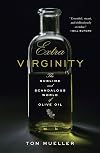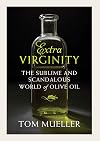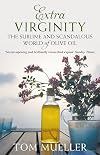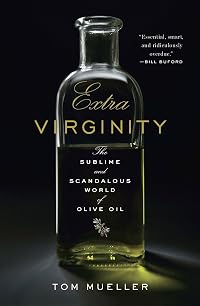
Extra Virginity: The Sublime and Scandalous World of Olive Oil
by Tom Mueller
On This Page
Description
For millennia, fresh olive oil has been one of life's necessities, not just as food but also as medicine, a beauty aid, and a vital element of religious ritual. Today's researchers are continuing to confirm the remarkable, life giving properties of true extra-virgin, and "extra-virgin Italian" has become the highest standard of quality. But what if this symbol of purity has become deeply corrupt? Starting with an explosive article in The New Yorker, the author has become the world's expert show more on olive oil and olive oil fraud, a story of globalization, deception, and crime in the food industry from ancient times to the present, and a powerful indictment of today's lax protections against fake and even toxic food products in the United States. It is also an account of the artisanal producers, chemical analysts, chefs, and food activists who are defending the extraordinary oils that truly deserve the name "extra-virgin." show lessTags
Recommendations




Member Reviews
A fascinating book about the olive oil world, a place as murky as a balsamic vinaigrette.
It is fascinating and disheartening that the, apparently, most regulated food product in the world has the most rampant corruption and false-labeling issues. Issues that have been documented in Roman times and earlier cuneiform tablets. The American market appears both particularly rife with this potentially dangerous issue. However, the size and vibrancy of the same market offers the hope of redemption in the same way wine was: quality-conscious buying and legally verified/validated labelling.
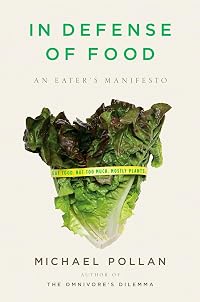
The fact that quality food needs to be sought recalls to me In Defense of Food: An Eater's Manifesto and the economic angle, cheap olive oil begets show more adulterated and falsely labeled products, recalls the motivations that led inexecrably to factory farms as laid out in Eating Animals.
At the end there is a lengthy and detailed glossary and resource listing of Web sites and blogs. Probably a great addition to the physical copies, this doesn't make for compelling listening on an audiobook. show less
It is fascinating and disheartening that the, apparently, most regulated food product in the world has the most rampant corruption and false-labeling issues. Issues that have been documented in Roman times and earlier cuneiform tablets. The American market appears both particularly rife with this potentially dangerous issue. However, the size and vibrancy of the same market offers the hope of redemption in the same way wine was: quality-conscious buying and legally verified/validated labelling.
The fact that quality food needs to be sought recalls to me In Defense of Food: An Eater's Manifesto and the economic angle, cheap olive oil begets show more adulterated and falsely labeled products, recalls the motivations that led inexecrably to factory farms as laid out in Eating Animals.
At the end there is a lengthy and detailed glossary and resource listing of Web sites and blogs. Probably a great addition to the physical copies, this doesn't make for compelling listening on an audiobook. show less
Interesting expose on the olive oil industry. I had heard, off and on, that much if not most of the extra virgin olive oil we buy is a much lower quality olive oil, not warranting the label or the price. This book, "Extra Virginity", explains that and much more about olive oil and the olive oil business. To me, the subject would have been adequately covered in a newspaper series or magazine article, and the book was a bit long for the subject. Nonetheless, Mueller presented a lot of interesting facts about olive oil from around the world, and laments the fact that many consumers don't know what they're missing by not having access to the extra virgin olive oil we think we're getting in our supermarket purchases. For those interested in show more getting what you're paying for, Mueller offers valuable tips and resources for obtaining quality olive oil at the end of the book, and that alone made the book worth reading. show less
I can tell already that this is going to be one of those books that makes me look suspiciously at everything on a supermarket shelf.
In the end, after this fascinating glimpse into the shadowy, often bizarre world of olive oil, I came away with one relief: Zingerman's is still safe.
In the end, after this fascinating glimpse into the shadowy, often bizarre world of olive oil, I came away with one relief: Zingerman's is still safe.
Like many books of this genre, your mileage may vary: there are parts of this book that are fascinating and parts that really drag. I was much more interested in the modern-day fraudulent olive oil trade than in the history of olive oil's popularity in the Mediterranean, which I was already familiar with. Although there is a lot going on in each chapter of the book, I found it easy to skip sections I already knew about (for instance, olive oil in religious ceremonies) and get back to more modern stories. It's worth a read if you buy olive oil for home cooking. I do, and I am now very intrigued about what I'm actually getting from Trader Joe's. I'll be watching this topic in the future to see if the European Union starts enforcing its show more rules around olive oil labeling. show less
I loved this exhaustively researched book about olive oil, its history, its production and producers, its scientific compounds, its regulation (or not), its adulteration, and the benefits of seeking out the pure and real thing. There is also a lot in this book to consider on he issue of food regulation and food safety that applies to more than adulterated oil! With a cast of characters that range from monks to mafioso to boot.
While I found a great deal of interesting information about the olive oil industry and the ubiquity of fraudulent oils buried in the text, the generic prose and clichéd characterizations (does every small olive oil producer have an engaging smile, folk wisdom, and a family kitchen run like a Manhattan bistro?) dilutes the book's message and, in the end, eroded my patience. Still, it is an honest account and the author is able to communicate an admirable passion for his subject. It's worth reading by anyone with an interest in the present state of the olive oil market.
I did not rate it higher because there are few long passages that slow down the reading pace. Plus, yes, I got the point there is a lot of fraud and bad oil out there, and that the powers that be, who benefit from the status quo, will not do squat to change it; after a while, that point got repetitive.
Having said, the best parts of this book for me where the ones dealing with the history of olive oil, which does have a very fascinating history. I also learned how the trees grow and what it takes to make good olive oil. There was even a little bit of science. Those parts I enjoyed and liked. This is certainly a good book to learn more about the history and business of olive oil. You also learn a bit about the health benefits of good show more olive oil. So there is much to learn in the book. If you knew little before, this book will certainly make you think twice about just grabbing that generic bottle of "olive" oil at your local grocery store. In addition, the book does feature a very good appendix on how to find good olive oil. So, not perfect, but it was a pretty good book, and I would still recommend it to anyone wanting to learn more on this topic. show less
Having said, the best parts of this book for me where the ones dealing with the history of olive oil, which does have a very fascinating history. I also learned how the trees grow and what it takes to make good olive oil. There was even a little bit of science. Those parts I enjoyed and liked. This is certainly a good book to learn more about the history and business of olive oil. You also learn a bit about the health benefits of good show more olive oil. So there is much to learn in the book. If you knew little before, this book will certainly make you think twice about just grabbing that generic bottle of "olive" oil at your local grocery store. In addition, the book does feature a very good appendix on how to find good olive oil. So, not perfect, but it was a pretty good book, and I would still recommend it to anyone wanting to learn more on this topic. show less
Members
- Recently Added By
Published Reviews
What I had missed was a loophole in Italian regulations so big you could ship a freighter through it — the name "Tuscan" on the label only specified where the oil had been bottled, not where it had been grown or even pressed.
In other words, in 1986 there had been a whole lot of cheap Algerian and Spanish olive oil that had been magically transformed into pricey Tuscan with just a little glue show more and a slip of paper. And that's the best-case scenario; odds are there was a whole lot of cottonseed oil in those bottles as well. Talk about transubstantiation! That was my introduction to the olive oil business — the temptation to describe it as "slippery" is almost irresistible and certainly justifiable. If you're curious about just how slippery, Tom Mueller's "Extra Virginity" offers a smart, well-written crash course. show less
In other words, in 1986 there had been a whole lot of cheap Algerian and Spanish olive oil that had been magically transformed into pricey Tuscan with just a little glue show more and a slip of paper. And that's the best-case scenario; odds are there was a whole lot of cottonseed oil in those bottles as well. Talk about transubstantiation! That was my introduction to the olive oil business — the temptation to describe it as "slippery" is almost irresistible and certainly justifiable. If you're curious about just how slippery, Tom Mueller's "Extra Virginity" offers a smart, well-written crash course. show less
added by John_Vaughan
Author Information
2+ Works 539 Members
Tom Mueller writes for The New Yorker and other publications. He, lives in a medieval stone farmhouse surrounded by olive groves in the Ligurian countryside out-side of Genoa, Italy.
Awards and Honors
Common Knowledge
- Canonical title*
- Extraverginità: Il sublime e scandaloso mondo dell'olio d'oliva
- Original publication date
- 2011
- Important places
- Puglia, Italy
*Some information comes from Common Knowledge in other languages. Click "Edit" for more information.
Classifications
Statistics
- Members
- 543
- Popularity
- 54,801
- Reviews
- 24
- Rating
- (3.78)
- Languages
- 5 — English, Finnish, German, Italian, Portuguese
- Media
- Paper, Audiobook, Ebook
- ISBNs
- 16
- ASINs
- 5