On This Page
Description
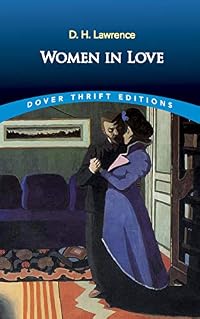
Dive into a provocative coming-of-age story that challenged the vestiges of England's Edwardian-era sexual mores. A continuation of a fictional arc that D.H. Lawrence began in a previous novel, The Rainbow, Women in Love explores the romantic entanglements and love affairs of the sisters Ursula and Gudrun Brangwen..
Tags
Recommendations


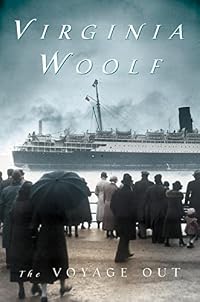
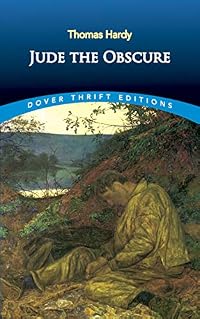
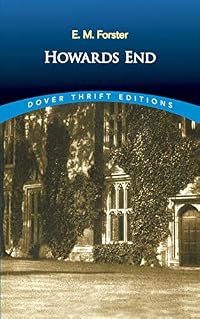

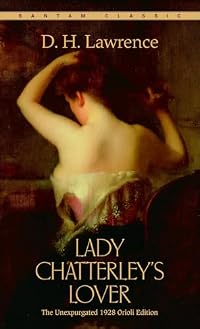








Member Recommendations
Member Reviews
D.H. Lawrence's novel about the hopelessness of attaining ideal love. I imagine him inspired by arguments with Frieda Weekley that match the scene of the twenty-third chapter, 'Excurse' - in which Ursula and Birkin have their petty fight that is brilliant for its verisimilitude - and feeling that love is really only a hopeless joyride of emotional pinnacles alternating with illogical battles, so let's write a novel about that.
Unfortunately that chapter features all the verisimilitude I could find, and the only part I felt he got right. I can't relate to Lawrence's way of thinking, or his characters' way of thinking, whichever it may be. These thoughts and conversations do not seem realistic to me. The characters are oppressed by show more everything that matters - beauty, love, knowledge, family, society, each other. The only thing they let stand is their questing after an undefined "truth" and wrestling with whatever that means. I'd only read "Sons and Lovers" prior, many years ago, and came here to give Lawrence a second chance. This is supposed to be his best work. Why then, the amateur mistake of diving headfirst into philosophical arguments among characters I haven't yet gotten to know well enough to bother my head about what they're arguing about? Yet it is only through their (tedious) arguing that I was able to compose their respective characters. It took me a hundred pages just to begin understanding the five leads and their differences.
Birkin is unsure what he believes in, he only knows he doesn't like the world as it presents itself. He wants ultimate truth and purity, something that lies beyond everyday emotions, but he can't define it to his or anyone else's satisfaction. His love match Ursula is more traditional, believing in the power of love that conquers all and as an end in itself. Her competitor Hermione is the most self-centered, viewing the world as a structure built around herself to which all must align or be brought into alignment by her will. Ursula's sister Gudrun is sensitive to the drawbacks of being a woman, desirous of freedom, jealous of men's power. Her love interest Gerald views the world as an industrialist might, to be used at his pleasure, but having accomplished that he finds himself at a loss. He also appears to be wrestling with his homosexuality, which he is unable to recognize or assert. None of these characters succeed at finding full satisfaction in love, or are able to fully equate the word 'love' with the concept their hearts yearn for.
All well and good. But then, as they act this out, some absurd emotional twist happens, like Ursula's sudden descent into ruminations on death and inexplicable hatred for Birkin out of nowhere, and I think I just don't understand what Lawrence is doing at all. He wants to splash a dose of realism over the picture of romantic love, fine; but does realism have to mean irrationalism? Or is he saying women are just plain irrational and that's the whole problem? Because only a couple of chapters later, for no reason (again) Ursula has done another flip: "he had lost his significance, he scarcely mattered in her world." No hate, no nothing. Another chapter: now he's off to France without her, so now she's going to die without him. Oh, please. Is this the best and most convincing way to demonstrate the flaws of 'ideal love' through narrative? And it isn't just the women. The men don't exhibit these sudden twists but get caught up in their determined desires for something beyond the immediacy of what love has to offer, and obsess over it. I might buy Lawrence's hypothesis, but these 'proofs' are useless. There's no realism in this realism.
Then there's the irritating language he uses. He's reluctant to portray the act of falling in love, preferring to it the idea of placing others under one's power. I've never known an author to so generously use the word "loins". Everything between your waist and your knees is your loins, according to Lawrence. Perhaps that's as daring as he could manage prior to Lady Chatterley? And the dialogue tags that grate on my nerves, with people crying out, jeering and retorting all over the place. Nope, can't do Lawrence anymore. show less
Unfortunately that chapter features all the verisimilitude I could find, and the only part I felt he got right. I can't relate to Lawrence's way of thinking, or his characters' way of thinking, whichever it may be. These thoughts and conversations do not seem realistic to me. The characters are oppressed by show more everything that matters - beauty, love, knowledge, family, society, each other. The only thing they let stand is their questing after an undefined "truth" and wrestling with whatever that means. I'd only read "Sons and Lovers" prior, many years ago, and came here to give Lawrence a second chance. This is supposed to be his best work. Why then, the amateur mistake of diving headfirst into philosophical arguments among characters I haven't yet gotten to know well enough to bother my head about what they're arguing about? Yet it is only through their (tedious) arguing that I was able to compose their respective characters. It took me a hundred pages just to begin understanding the five leads and their differences.
Birkin is unsure what he believes in, he only knows he doesn't like the world as it presents itself. He wants ultimate truth and purity, something that lies beyond everyday emotions, but he can't define it to his or anyone else's satisfaction. His love match Ursula is more traditional, believing in the power of love that conquers all and as an end in itself. Her competitor Hermione is the most self-centered, viewing the world as a structure built around herself to which all must align or be brought into alignment by her will. Ursula's sister Gudrun is sensitive to the drawbacks of being a woman, desirous of freedom, jealous of men's power. Her love interest Gerald views the world as an industrialist might, to be used at his pleasure, but having accomplished that he finds himself at a loss. He also appears to be wrestling with his homosexuality, which he is unable to recognize or assert. None of these characters succeed at finding full satisfaction in love, or are able to fully equate the word 'love' with the concept their hearts yearn for.
All well and good. But then, as they act this out, some absurd emotional twist happens, like Ursula's sudden descent into ruminations on death and inexplicable hatred for Birkin out of nowhere, and I think I just don't understand what Lawrence is doing at all. He wants to splash a dose of realism over the picture of romantic love, fine; but does realism have to mean irrationalism? Or is he saying women are just plain irrational and that's the whole problem? Because only a couple of chapters later, for no reason (again) Ursula has done another flip: "he had lost his significance, he scarcely mattered in her world." No hate, no nothing. Another chapter: now he's off to France without her, so now she's going to die without him. Oh, please. Is this the best and most convincing way to demonstrate the flaws of 'ideal love' through narrative? And it isn't just the women. The men don't exhibit these sudden twists but get caught up in their determined desires for something beyond the immediacy of what love has to offer, and obsess over it. I might buy Lawrence's hypothesis, but these 'proofs' are useless. There's no realism in this realism.
Then there's the irritating language he uses. He's reluctant to portray the act of falling in love, preferring to it the idea of placing others under one's power. I've never known an author to so generously use the word "loins". Everything between your waist and your knees is your loins, according to Lawrence. Perhaps that's as daring as he could manage prior to Lady Chatterley? And the dialogue tags that grate on my nerves, with people crying out, jeering and retorting all over the place. Nope, can't do Lawrence anymore. show less
This is a sequel of sorts to The Rainbow, inasmuch as it continues the story of Ursula and Gudrun Brangwen from that novel. Wikipedia claims the two books were planned as one big novel but split by the publisher, but the introduction to my edition of Women in Love contradicts this – in Lawrence’s own words. He was driven out of London in late 1915 by The Rainbow obscenity trial, a libel suit and his vocal opposition to the Great War (which made him a lot of enemies in London society), and settled in poverty in Cornwall. After recovering from illness, he started work on Women in Love – “a sequel to The Rainbow, though quite unlike it”. Certainly, the two books are not big on rigour, and Women in Love might be better considered show more an entirely new novel whose leads share their names, and some background details, with the Brangwens of The Rainbow. Lawrence apparently wrote it very quickly, but it took four years before it saw print. Gudrun is an artist, returned to the family’s Nottinghamshire home village after a few bohemian years in London. Ursula is a teacher in a local school. She is attracted to school inspector Birkin (a stand-in for Lawrence himself), while Gudrun takes up with Gerald Crich, son of the local coal-mining magnate. The novel charts the two couples’ relationships through a series of (mostly) tragic incidents. You don’t read Lawrence for the plots, which is just as well as he tends to meander. And his characters usually read like they’re dialled up to eleven (so many! exclamation marks! It seems somewhat excessive to a modern reader). But there’s also lots of philosophising and discussions of Lawrence’s often bonkers ideas on art and life. Birkin especially is fond of lecturing the other characters, often at great length. And, of course, there’s Lawrence’s lovely descriptive prose. Women in Love is a… meatier novel than Sons and Lovers or The White Peacock; but it’s also a novel that disappointingly seems to treat the working-class like noble savages (and especially disappointingly so after Sons and Lovers). With its cast of minor gentry, teachers and artists, Women in Love is very middle-class, almost as if Lawrence’s years in London turned him into a social climber (and Birkin suggests as much in Women in Love). I have that absolutely enormous three-volume biography of DH Lawrence on my bookshelves. One of these days I’ll have to read it. show less
"Instead of chopping yourself down to fit the world, chop the world to fit yourself."
Women in Love is the sequel to The Rainbow and follows sisters Ursula and Gudrun Brangwen struggle to balance independence, love, and marriage at the beginning of the twentieth century but I don't believe that it is absolutely necessary to read it's predecessor before tackling this book. I didn't.
Ursula and Gudren are in their late twenties and have established independent and comfortable lives with their fairly liberal parents in an anonymous mining town in the Midlands. Ursula is a schoolteacher whilst Gudrun is a sculptor who has recently returned from London. Gudren does a little teaching at the school but finds her home-town dull and show more claustrophobic until Gerald Crich, a handsome mining heir, catches her eye. Meanwhile Ursula finds herself captivated by Gerald's best friend Rupert Birkin.
Rupert loves Gerald but neither men can envisage an enduring relationship between two men. The two of them have a naked wrestling match but whilst each man admires the other physical attributes it goes nowhere.
In many respects the title of this book is a bit of a misnomer as it is soon becomes apparent that neither woman are in love rather this is a novel that explores psychological drama between the sexes looking at feelings and thought processes through sensual language. Lawrence is however, also making a social commentary with this novel; the meaning of love in particular how the two differing sexes view it, intellectualism and nature, the need for social reform in regards to societal expectations versus individual sentiments and the desire/ aversion for marriage.
This is certainly not an easy read. Firstly I don't agree with the author's views on marriage (I have been married to the same woman for over thirty years which may colour my views) whilst some of the long philosophical sections of the text were tedious at best. Yet every time I decided to read one more chapter before throwing in the towel I would find myself being drawn into the plot again and the conclusion was both unexpected and dramatic. I am glad that I have finally gotten around to reading it but it is not a book that I am likely to revisit. show less
Women in Love is the sequel to The Rainbow and follows sisters Ursula and Gudrun Brangwen struggle to balance independence, love, and marriage at the beginning of the twentieth century but I don't believe that it is absolutely necessary to read it's predecessor before tackling this book. I didn't.
Ursula and Gudren are in their late twenties and have established independent and comfortable lives with their fairly liberal parents in an anonymous mining town in the Midlands. Ursula is a schoolteacher whilst Gudrun is a sculptor who has recently returned from London. Gudren does a little teaching at the school but finds her home-town dull and show more claustrophobic until Gerald Crich, a handsome mining heir, catches her eye. Meanwhile Ursula finds herself captivated by Gerald's best friend Rupert Birkin.
Rupert loves Gerald but neither men can envisage an enduring relationship between two men. The two of them have a naked wrestling match but whilst each man admires the other physical attributes it goes nowhere.
In many respects the title of this book is a bit of a misnomer as it is soon becomes apparent that neither woman are in love rather this is a novel that explores psychological drama between the sexes looking at feelings and thought processes through sensual language. Lawrence is however, also making a social commentary with this novel; the meaning of love in particular how the two differing sexes view it, intellectualism and nature, the need for social reform in regards to societal expectations versus individual sentiments and the desire/ aversion for marriage.
This is certainly not an easy read. Firstly I don't agree with the author's views on marriage (I have been married to the same woman for over thirty years which may colour my views) whilst some of the long philosophical sections of the text were tedious at best. Yet every time I decided to read one more chapter before throwing in the towel I would find myself being drawn into the plot again and the conclusion was both unexpected and dramatic. I am glad that I have finally gotten around to reading it but it is not a book that I am likely to revisit. show less
The edition I read had some critical commentary in the frontmatter. In one case, someone or other was quoted as having said this book should have been called "Everyone In Hate". That's only the beginning of the story: everyone is completely, irrationally hateful, spiteful, and petty at times, especially the women -- including the painfully incomprehensible act of attempted murder with a paperweight over a shockingly mild disagreement about the meaning of a probably meaningless painting of a duck, compounded by the victim's later conclusion that he deserved the unprovoked attack, which in a better writer's work might have been attributed to the severe concussion he received. Meanwhile, the attention on the manly physiques of the heroic show more male characters was absurd in its poorly suppressed and utterly gratuitous lasciviousness, while the fatuous, excrutiating attention to irrelevant details (such as the comically out of place page and a half devoted to the yellow dress worn by one of the key female characters in the midst of what could have been a tragic incident involving a boy's untimely demise) boggled the mind.
One could easily be forgiven for coming away from this book with the idea that its author was a misogynistic, cowardly, loathesomely passive-aggressive man who lashed out at everyone who did not regard him with stars in their eyes through the pathetic mechanism of turning them into comically vile people in his writing, his view of the world twisted by his inability to reconcile his latent (but obviously emerging) homesexuality with his cultural indoctrination. In fact, if one was to then go on to read about Lawrence's life at the time he wrote the book, one's ideas to that effect would be fully justified. The asinine double-helping of teenage angst behind Lawrence's piss-poor writing might be forgivable if he was not about twice the age normal for that kind of self-pitying pathos. I'm convinced the only reason this overwrought, overvalued, overlong bundle of kindling is regarded as a "classic" is its controversy at the time it was published and the fact it is a relatively early indicator of the way repressed sexual deviations from the norms of the time found outlet in what we might call "the arts" for lack of a better, less flattering term for this novel. show less
One could easily be forgiven for coming away from this book with the idea that its author was a misogynistic, cowardly, loathesomely passive-aggressive man who lashed out at everyone who did not regard him with stars in their eyes through the pathetic mechanism of turning them into comically vile people in his writing, his view of the world twisted by his inability to reconcile his latent (but obviously emerging) homesexuality with his cultural indoctrination. In fact, if one was to then go on to read about Lawrence's life at the time he wrote the book, one's ideas to that effect would be fully justified. The asinine double-helping of teenage angst behind Lawrence's piss-poor writing might be forgivable if he was not about twice the age normal for that kind of self-pitying pathos. I'm convinced the only reason this overwrought, overvalued, overlong bundle of kindling is regarded as a "classic" is its controversy at the time it was published and the fact it is a relatively early indicator of the way repressed sexual deviations from the norms of the time found outlet in what we might call "the arts" for lack of a better, less flattering term for this novel. show less
After reading several of Lawrence’s books, I have come to the conclusion that what keeps D. H. Lawrence in the Modern Library Top 100 list is his inexhaustible capacity to describe the human psyche. Perhaps not your psyche or mine, but the psyche of his eclectic characters. However, unfortunately I found it very difficult to relate to most of them.
The two young Brangwen women, Ursula and Gudrun, share many characteristics. They both crave independence, loathe social decorum, have a burning desire to find true love, and have an adventurous spirit. Yes, they wanted it all! Today that might be possible, but around the year 1915, it would have taken rare circumstances to acquire the prized combination of eternal love and independence. show more
They pick two very different men. Ursula (after several failed attempts at love in The Rainbow) falls for an anti-social cynical nihilist who professes to hate sex, love, passion, marriage, children, and all forms of domestic life (page 186). I never did figure out exactly what the attraction of Birkin was to Ursula, but Lawrence must have known because he claimed this character, Rupert Birkin, was in essence himself, and Ursula resembled Lawrence’s wife Frieda.
Gudrun, an artist, an idealist, and as skittish as an untamed animal, pairs up with a wealthy, successful, handsome, and aristocratic business manager, Gerald Crich. On the surface he is totally in control - the ideal man. But under the surface he suffers a deep dark feeling of emptiness and sense of impending doom. Again, an unlikely match, but Lawrence makes an effort to force his characters to behave as the plot demands.
While Lawrence is leading his characters on a twisted labyrinth of human emotions, drama and the illusive search for happiness, he is with very little subtlety sermonizing his personal philosophy- extreme right wing autocratic politics and ultra liberal sexual ideals. His cynical attitude about love and traditional marriage oozes from every page. And a common thread from three of his highly praised novels is his disdain for women; most of his female characters seem to be selfish, vain, and manipulative. I almost get the feeling that the title "Women in Love" was flagrantly intended to be a mocking slap in the face, essentially stated in sarcastic contempt.
Perhaps Lawrence may have deserved the Modern Library recognition for "Women in Love" at one time, but to say today that it is one of the best novels ever written in the English language is just a damned shame... in spite of his sweeping sardonic language.
Overrated and extremely disappointing. show less
The two young Brangwen women, Ursula and Gudrun, share many characteristics. They both crave independence, loathe social decorum, have a burning desire to find true love, and have an adventurous spirit. Yes, they wanted it all! Today that might be possible, but around the year 1915, it would have taken rare circumstances to acquire the prized combination of eternal love and independence. show more
They pick two very different men. Ursula (after several failed attempts at love in The Rainbow) falls for an anti-social cynical nihilist who professes to hate sex, love, passion, marriage, children, and all forms of domestic life (page 186). I never did figure out exactly what the attraction of Birkin was to Ursula, but Lawrence must have known because he claimed this character, Rupert Birkin, was in essence himself, and Ursula resembled Lawrence’s wife Frieda.
Gudrun, an artist, an idealist, and as skittish as an untamed animal, pairs up with a wealthy, successful, handsome, and aristocratic business manager, Gerald Crich. On the surface he is totally in control - the ideal man. But under the surface he suffers a deep dark feeling of emptiness and sense of impending doom. Again, an unlikely match, but Lawrence makes an effort to force his characters to behave as the plot demands.
While Lawrence is leading his characters on a twisted labyrinth of human emotions, drama and the illusive search for happiness, he is with very little subtlety sermonizing his personal philosophy- extreme right wing autocratic politics and ultra liberal sexual ideals. His cynical attitude about love and traditional marriage oozes from every page. And a common thread from three of his highly praised novels is his disdain for women; most of his female characters seem to be selfish, vain, and manipulative. I almost get the feeling that the title "Women in Love" was flagrantly intended to be a mocking slap in the face, essentially stated in sarcastic contempt.
Perhaps Lawrence may have deserved the Modern Library recognition for "Women in Love" at one time, but to say today that it is one of the best novels ever written in the English language is just a damned shame... in spite of his sweeping sardonic language.
Overrated and extremely disappointing. show less
This is the sort of book where nobody talks about the weather, or the headlines, or the latest scandal. Instead, all conversations have deep and portentous Symbolic Intent. This is the sort of book where characters will frequently lapse into silence as they look to the horizon and feel oppressed by the subtle machinations of society.
Judging from this book, Lawrence's three favorite words are "abstract," "voluptuous," and "loins."
Judging from this book, Lawrence's three favorite words are "abstract," "voluptuous," and "loins."
Very disappointing!
For an alleged breakthrough masterpiece of the era it seems to lack most of the literary elements that would justify the claims made for Women In Love.
If Lawrence seriously believed the conversational chat-up monologues he produces in this book won the affection of females then not only were they women of an altogether different era (granted), but surely of a near alien species who were attracted to dry, insipid meandering thoughts of conceited, self-absorbed near dead in mind and body males.
The 2 relationships were very unconvincing: the hints of sensuality that so engaged and enraged many when WINL was first published whilst understandable for the period make for dull reading today. Others of the author's period show more covered much more effectively such topics as human desire and the excited body.
I suppose I also resented that this was written by an author who flunked any participation in the grief-strewn, human calamity of WW1: And it shows in his writing - the violence between leading characters, both mental and physical, is of a high-brow taste that no one having experienced the frontline or even a staff post in gay Paris could possibly describe in so tediously drawn out scenes that had 'false premise' at their core. Much of its description of the main characters is not insightful but incredulous for its lack of perception of the human personality.
Lawrence was a gifted novelist and wrote some very fine works: I have to disagree with so many others and declare this was definitely not one of them! show less
For an alleged breakthrough masterpiece of the era it seems to lack most of the literary elements that would justify the claims made for Women In Love.
If Lawrence seriously believed the conversational chat-up monologues he produces in this book won the affection of females then not only were they women of an altogether different era (granted), but surely of a near alien species who were attracted to dry, insipid meandering thoughts of conceited, self-absorbed near dead in mind and body males.
The 2 relationships were very unconvincing: the hints of sensuality that so engaged and enraged many when WINL was first published whilst understandable for the period make for dull reading today. Others of the author's period show more covered much more effectively such topics as human desire and the excited body.
I suppose I also resented that this was written by an author who flunked any participation in the grief-strewn, human calamity of WW1: And it shows in his writing - the violence between leading characters, both mental and physical, is of a high-brow taste that no one having experienced the frontline or even a staff post in gay Paris could possibly describe in so tediously drawn out scenes that had 'false premise' at their core. Much of its description of the main characters is not insightful but incredulous for its lack of perception of the human personality.
Lawrence was a gifted novelist and wrote some very fine works: I have to disagree with so many others and declare this was definitely not one of them! show less
Members
- Recently Added By
Lists

1001 Books You Must Read Before You Die
1,448 works; 1,132 members

The Guardian's 1000 Novels Everyone Must Read
1,005 works; 547 members

Radcliffe's 100 Best Novel of the 20th Century
100 works; 32 members
501 Must-Read Books
508 works; 72 members

Read the book and saw the movie
1,170 works; 192 members
20th Century Literature
1,161 works; 54 members
In and About the 1920s
181 works; 31 members

Banned Books Week 2014
268 works; 62 members

Unread books
1,063 works; 82 members
Larry McCaffery's 20th Century Greatest Hits: 100 English-Language Books
103 works; 12 members
Harold Bloom - The Western Canon: D. The Chaotic Age
833 works; 24 members
Banned or Challenged Books
400 works; 41 members

Novels featuring siblings
133 works; 8 members

Watched the Movie, Probably Won't Read the Book
185 works; 34 members
1920s
141 works; 6 members

Modernism
140 works; 8 members
1,001 BYMRBYD Concensus
723 works; 27 members

The Greatest Books
99 works; 5 members
Shaking a Leg
111 works; 3 members

Books Read in 2020
4,379 works; 124 members

SHOULD Read Books!
354 works; 9 members

Yet another list
67 works; 1 member

Books Read in 2022
5,164 works; 113 members
Modern Library's 100 Best Novels
100 works; 2 members

.
396 works; 1 member
Reading LIst
648 works; 1 member
My Favourite Books
86 works; 5 members
New Lifetime Reading Plan by Fadiman and Major
225 works; 5 members

DigitalDreamDoor top 300
300 works; 4 members

Recommended Reading : 600 Classics Reviewed, Editors of Salem Press, 2015
634 works; 6 members

The 150 Greatest Novels of All Time
150 works; 6 members

Greatest Books, allegedly
484 works; 9 members

Books I Own But Haven't Read
144 works; 2 members

Publishing Triangle 100 Best Lesbian and Gay Novels
97 works; 6 members
Author Information

890+ Works 60,510 Members
D(avid) H(erbert) Lawrence was born on September 11, 1885. His father was a coal miner and Lawrence grew up in a mining town in England. He always hated the mines, however, and frequently used them in his writing to represent both darkness and industrialism, which he despised because he felt it was scarring the English countryside. Lawrence show more attended high school and college in Nottingham and, after graduation, became a school teacher in Croyden in 1908. Although his first two novels had been unsuccessful, he turned to writing full time when a serious illness forced him to stop teaching. Lawrence spent much of his adult life abroad in Europe, particularly Italy, where he wrote some of his most significant and most controversial novels, including Sons and Lovers and Lady Chatterly's Lover. Lawrence and his wife, Frieda, who had left her first husband and her children to live with him, spent several years touring Europe and also lived in New Mexico for a time. Lawrence had been a frail child, and he suffered much of his life from tuberculosis. Eventually, he retired to a sanitorium in Nice, France. He died in France in 1930, at age 44. In his relatively short life, he produced more than 50 volumes of short stories, poems, plays, essays, travel journals, and letters, in addition to the novels for which he is best known. (Bowker Author Biography) show less
Some Editions
Awards and Honors
Notable Lists
Daniel S. Burt's Novel 100 (030 – 30)
Series

Belongs to Publisher Series
Work Relationships
Is contained in
Sons and Lovers [and] The Fox [and] Love Among the Haystacks [and] Aaron's Rod [and] The Ladybird [and] Women in Love by D. H. Lawrence
Sons and Lovers / Women in Love / Lady Chatterly's Lover / Love Among the Haystacks by D. H. Lawrence
Women in Love • Lady Chatterley's Lovers • The Rainbow • Sons and Lovers • The Plumed Serpent by D. H. Lawrence
Contains
Has the adaptation
Has as a study
Has as a commentary on the text
Has as a student's study guide
Common Knowledge
- Canonical title
- Women in Love
- Original title
- Women in Love
- Alternate titles*
- Verliefde vrouwen
- Original publication date
- 1920
- People/Characters
- Ursula Brangwen; Gudrun Brangwen; Gerald Crich; Rupert Birkin
- Important places
- Cromford, Derbyshire, England, UK; Beldover; Derbyshire, England, UK; England, UK
- Related movies
- Women in Love (1969 | Ken Russell | IMDb); Women in Love (2011 | IMDb)
- First words
- Ursula and Gudrun Brangwen sat one morning in the window-bay of their father’s house in Beldover, working and talking. Ursula was stitching a piece of brightly-coloured embroidery, and Gudrun was drawing upon a board which ... (show all)she held on her knee. They were mostly silent, talking as their thoughts strayed through their minds.
- Quotations
- "No man," said Birkin, "cuts another man's throat unless he wants to cut it, and unless the other man wants it cutting. This is a complete truth. It takes two people to make a murder: a murderer and a murderee. And a murde... (show all)ree is a man who is murderable. And a man who is murderable is a man who in a profound in hidden lust desires to be murdered."
- Last words
- (Click to show. Warning: May contain spoilers.)‘You can’t have two kinds of love. Why should you!’
It seems as if I can’t,’ he said. ‘Yet I wanted it.’
‘You can’t have it, because it’s false, impossible,’ she said.
‘I don’t believe that,’ he answered. - Blurbers
- Burgess, Anthony
- Original language
- English
*Some information comes from Common Knowledge in other languages. Click "Edit" for more information.
Classifications
Statistics
- Members
- 7,629
- Popularity
- 1,492
- Reviews
- 57
- Rating
- (3.56)
- Languages
- 22 — Catalan, Chinese, Czech, Danish, Dutch, English, Estonian, Finnish, French, German, Hungarian, Italian, Korean, Lithuanian, Norwegian (Bokmål), Polish, Portuguese, Russian, Spanish, Swedish, Thai, Turkish
- Media
- Paper, Audiobook, Ebook
- ISBNs
- 322
- UPCs
- 4
- ASINs
- 156