On This Page
Description
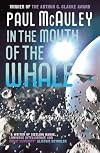
A novel of a savage future war, perfect for fans of Alastair Reynolds and Peter F. Hamilton. Humanity's future rests on the shoulders of a Child from the past, and she must never know of the battles being fought for her . . . In the system of Fomalhaut, a war is being fought. The Quicks came long ago, refugees from the Solar System. The True arrived later, to find a declining civilisation and a system ripe for the taking. Then the Ghosts appeared, no longer human, unknowable, powerful and show more determined to drive out the Quick and the True. The battle continues, but the outcome is uncertain. Three lives will intersect, because there is something at the centre of their universe, something dangerous and growing and powerful. Something that is worth fighting for. And it will change everybody's life. show lessTags
Recommendations












Member Reviews
This third entry in McAuley's Quiet War sequence moves the action away from the Solar System, and follows events in the Fomalhaut system, home to a single gas giant planet and accompanying asteroids and habitats. Thousands of years have elapsed and at first it seems that there is no connection with the earlier novels in the series. We are pitched into the midst of conflict between different clades of post-humans, told through three separate plot strands: a Child (the capitalisation is deliberate), apparently growing up in Greater Brazil; one of the bioengineered Quick, who helps maintain a megastructure in the upper atmosphere of the gas giant (on one level, the eponymous 'Whale' of the title); and a monkish warrior-librarian battling show more virtual-reality monsters in equally VR environments. The three strands come together at the end of the novel.
This is not an easy read if you are new to science fiction; in an attempt to make the stories flow, McAuley has tried to avoid info-dumping and mainly succeeds until the end of the novel. A reader who has read the first two novels will have figured a lot of this out by the time they get to the explanations, but it's good to check your solution against the answers. There are a lot of Easter Eggs for the cognoscenti, and some space battles that would not have been out of place in the works of E.E. 'Doc' Smith. The characters are written well enough, but the biggest risk with this book is that the reader tries to overthink it, and that way lies disaster. Two of the societies are completely unfamiliar to us, even from the last book, and trying to think too hard about what we are seeing may make the reader come adrift. The third story, that of the Child, looks familiar at first but all is not as it seems.
This book does fit into the Quiet War narrative, but the reader has to work at it. As an example of post-humanist strangeness, it works well, but only after fair effort on the part of the reader.
(PS: I am reminded by a friend that the name of the star Fomalhaut is actually Arabic for 'whale'.) show less
This is not an easy read if you are new to science fiction; in an attempt to make the stories flow, McAuley has tried to avoid info-dumping and mainly succeeds until the end of the novel. A reader who has read the first two novels will have figured a lot of this out by the time they get to the explanations, but it's good to check your solution against the answers. There are a lot of Easter Eggs for the cognoscenti, and some space battles that would not have been out of place in the works of E.E. 'Doc' Smith. The characters are written well enough, but the biggest risk with this book is that the reader tries to overthink it, and that way lies disaster. Two of the societies are completely unfamiliar to us, even from the last book, and trying to think too hard about what we are seeing may make the reader come adrift. The third story, that of the Child, looks familiar at first but all is not as it seems.
This book does fit into the Quiet War narrative, but the reader has to work at it. As an example of post-humanist strangeness, it works well, but only after fair effort on the part of the reader.
(PS: I am reminded by a friend that the name of the star Fomalhaut is actually Arabic for 'whale'.) show less
Three clades of expanding and changing humanity are fighting a war in the Fomalhaut system. The Quicks got there first, then the Trues came along and enslaved them and now the Ghosts are here driven by their beliefs to claim the mysterious heart of the worldlet Cthuga. A True librarian in disgrace is despatched to find a missing scion of a powerful family. A Quick bot pilot encounters a mysterious sprite which may be part of a living Mind. A young Child grows up in an old garrison town in Greater Brazil, and because of the nature of the conflict in Fomalhaut, it is crucial that she grows up a certain way.
Big, sharp, clever sci-fi. You have to work at it; there's a lot to process in terms of history, technology, philosophy and sociology. show more A lot of big concepts and quite a few small ones. It all comes together in the end to a satisfying conclusion. show less
Big, sharp, clever sci-fi. You have to work at it; there's a lot to process in terms of history, technology, philosophy and sociology. show more A lot of big concepts and quite a few small ones. It all comes together in the end to a satisfying conclusion. show less
Modern space opera. There are three story arcs: the early critical years of the Child (as capitalized those chapters, for reasons that eventually are explained) in some jungle village; the troubled life of Ori, a Quick (clone-bred slave) who tele-operates robots on the skin of the Whale, a large station tethered to a gas giant in the Fomalhaut system; and the noir-is adventures of a True (original Earth stock human) and his Quick assistant Horse, who work for the monkish Library, harrowing hells, which seems to mean exorcising virtual reality demons. Other than a passing reference to Fomalhaut in all three arcs, the connection between these tales is not obvious until almost the last possible moment in the book.
As modern space operas show more go, this is well-written, and relatively restrained in the number of multi-page passages describing discharges of massive amounts of energy and deaths of thousands or more. But other than how long McAuley holds the three arcs apart, there is nothing that stands out either, and the resolution has the somewhat slippery "wait, what really happened?" common to the genre.
Recommended for fans of the genre. show less
As modern space operas show more go, this is well-written, and relatively restrained in the number of multi-page passages describing discharges of massive amounts of energy and deaths of thousands or more. But other than how long McAuley holds the three arcs apart, there is nothing that stands out either, and the resolution has the somewhat slippery "wait, what really happened?" common to the genre.
Recommended for fans of the genre. show less
Having read and enjoyed The Quiet War and Gardens of the sun I was expecting a follow-on narrative which took the tensions between the different Outer factions to a different locale. What I found were three narrative streams which seemed to have little to do with the preceding novels.
One thread was related. It seemed to cover the early life of Maria-Hong Owen's daughter Sri, who became a gene wizard in the previous two books. The other two threads appear not to refer back to anything but cover the growing war for Cthuga (Fomalhaut's gas giant) and the adventures of a pair of 'cyberspace hackers' from the 'Library', who have been a chance to redeem themselves, after an earlier failure, by finding two individuals who have disappeared show more while on an important mission in the Library.
The 'Library' I found unconvincing. The sense of wonder at the the gene- and habitat-engineering carries over from the earlier books but the 'virtual reality' hijinks is hardly much in advance of Gibson, and feels out of place here. Who needs inner space when outer space is available as infinite, real, real estate?
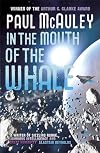
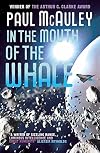
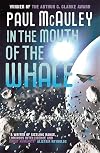
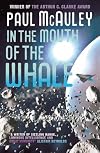
All is not wonderful in this post-human world. Bottom of the heap are the Quicks,who have had humanity's worst traits gene-engineered out, but unluckily for them, this has enabled their enslavement by the True, exo-skeleton-wearing old-style humans, unfortunately still wreaking havoc with those bad old traits. The True want to confirm a hypothesis that a 'mind' inhabits Cthuga but have to defend it against a third post-human clade, the Ghosts, who have an even crazier reason for wanting it. The 'Whale' of the novel's title is a giant True construct which reaches down into Cthuga's gravity well.
All this the reader needs to piece together. What I find worrying is what someone totally new to this 'universe' is going to make of it, as I struggled. Where are the introductory 'info-dumps'? Ironically, they appear and interrupt things at the end, way too late to save newcomers to this universe who may have given up long before.
Finally, this work seems to use more cliched sf elements than the first two novels and the originality that fueled them seems not to be being extended into new areas. There is also a bleakness about it, in that freedoms won in the preceding novels seem to be on the wane again.... show less
One thread was related. It seemed to cover the early life of Maria-Hong Owen's daughter Sri, who became a gene wizard in the previous two books. The other two threads appear not to refer back to anything but cover the growing war for Cthuga (Fomalhaut's gas giant) and the adventures of a pair of 'cyberspace hackers' from the 'Library', who have been a chance to redeem themselves, after an earlier failure, by finding two individuals who have disappeared show more while on an important mission in the Library.
The 'Library' I found unconvincing. The sense of wonder at the the gene- and habitat-engineering carries over from the earlier books but the 'virtual reality' hijinks is hardly much in advance of Gibson, and feels out of place here. Who needs inner space when outer space is available as infinite, real, real estate?
All is not wonderful in this post-human world. Bottom of the heap are the Quicks,who have had humanity's worst traits gene-engineered out, but unluckily for them, this has enabled their enslavement by the True, exo-skeleton-wearing old-style humans, unfortunately still wreaking havoc with those bad old traits. The True want to confirm a hypothesis that a 'mind' inhabits Cthuga but have to defend it against a third post-human clade, the Ghosts, who have an even crazier reason for wanting it. The 'Whale' of the novel's title is a giant True construct which reaches down into Cthuga's gravity well.
All this the reader needs to piece together. What I find worrying is what someone totally new to this 'universe' is going to make of it, as I struggled. Where are the introductory 'info-dumps'? Ironically, they appear and interrupt things at the end, way too late to save newcomers to this universe who may have given up long before.
Finally, this work seems to use more cliched sf elements than the first two novels and the originality that fueled them seems not to be being extended into new areas. There is also a bleakness about it, in that freedoms won in the preceding novels seem to be on the wane again.... show less
Ratings
Members
- Recently Added By
Lists

Useful Space Colonization Non-fiction
40 works; 12 members
Author Information

138+ Works 6,592 Members
Some Editions
Awards and Honors
Distinctions
Notable Lists
Series

Common Knowledge
- Original publication date
- 2012
- People/Characters
- Sri Hong-Owen; Isak; Ori
- Epigraph
- Man has only one life, and must live it so that he does not recall with pain and regret the aimless lost year, and does not blush with shame over his mean and trivial past, so that when he dies he can say, 'All my life has be... (show all)en devoted to the struggle for the liberation of mankind.'
—Nikolai Ostrovsky, How the Steel Was Tempered
It seems ridiculous to suppose the dead miss anything.
—Marilynne Robinson, Gilead - Dedication
- For Georgina
and for John and Judith Clute - First words
- When the Child was a child, a sturdy toddler not quite two years old, she and her mother moved to São Gabriel da Cachoeira, in the northwest corner of the Peixoto family's territory in Greater Brazil.
- Last words
- (Click to show. Warning: May contain spoilers.)Fomalhaut is still the brightest star in our sky. But not, we think, for much longer.
Classifications
Statistics
- Members
- 147
- Popularity
- 222,007
- Reviews
- 5
- Rating
- (3.59)
- Languages
- English
- Media
- Paper, Ebook
- ISBNs
- 4
- ASINs
- 2