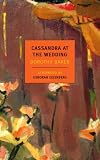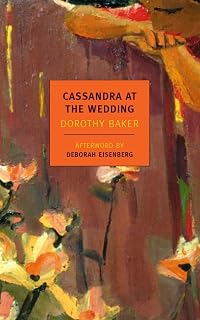
Cassandra at the Wedding
by Dorothy Baker
On This Page
Description
Cassandra Edwards is a graduate student at Berkeley: gay, brilliant, nerve-racked, miserable. At the beginning of this novel, she drives back to her family ranch in the foothills of the Sierras to attend the wedding of her identical twin, Judith, to a nice young doctor from Connecticut. Cassandra, however, is hell-bent on sabotaging the wedding. Dorothy Baker's entrancing tragicomic novella follows an unpredictable course of events in which her heroine appears variously as conniving, show more self-aware, pitiful, frenzied, absurd, and heartbroken-at once utterly impossible and tremendously sympathetic. As she struggles to come to terms with the only life she has, Cassandra reckons with her complicated feelings about the sister who she feels owes it to her to be her alter ego; with her father, a brandy-soaked retired professor of philosophy; and with the ghost of her dead mother. First published in 1962, Cassandra at the Wedding is a book of enduring freshness, insight, and verve. Like the fiction of Jeffrey Eugenides and Jhumpa Lahiri, it is the work of a master stylist with a profound understanding of the complexities of the heart and mind. show lessTags
Recommendations















Member Recommendations
pitjrw California in it's prime and it's discontents
Member Reviews
“So go, girl. We should have been one person all along, not two.”
Cassandra at the Wedding was Dorothy Baker’s final novel – published in 1962 – it is a story far darkly, comic than the deceptively cosy title might lead one to expect. I actually have Young Man with a Horn tbr too – which was Bakers first novel. I wondered whether I should have started with that novel – but something about this appealed far more – it is one I have heard only good things about. The narrative voice is unforgettable – a character that is at once sympathetic and disturbing – Cassandra Edwards is the first person narrator of two of the three sections of the novel – the middle section being narrated by her sister Judith. Right from the show more beginning there is something in Cassandra’s tone that alerts us to trouble ahead.
“ I think all the time I was sizing up the bridge that the strong possibility was I’d go home, attend my sister’s wedding as invited, help hook-and-zip her into whatever she wore, take over the bouquet while she received the ring, through the nose or on the finger, wherever she chose to receive it, and hold my peace when it became a question of speaking now or forever holding it. I’d go, in all likelihood, and do everything an only attendant is expected to do. I’d probably dance attendance.
I didn’t even know who the groom was beyond that he was a graduate medical student she met in New York, and his name was Lynch, or maybe even Finch. Yes. Finch. John Thomas Finch. Where’d she meet him – Birdland?”
Cassandra is an identical twin; eleven minutes older than her sister Judith. On a hot day in June – the longest day in fact – she shuts up her apartment in Berkeley, California and sets off for her family’s ranch. Her sister Judith is getting married, and Cassandra’s attendance is required. Tidying away her thesis and covering up the piano she shared with her sister while they still lived together – Cassandra gets into the Riley that was once her mother’s for the five hour drive to the wedding she has no wish to go to. In the back is a dress she bought on her grandmother’s account to wear at the wedding Cassandra doesn’t believe should be taking place. The sisters have always been close – barely spending time apart – they had originally shared the apartment in Berkeley – until Judith suddenly decided to move to New York. In the apartment the Bösendorfer piano stands as a symbol of their tie to each other.
Cassandra is a brilliant graduate student, seemingly living on her nerves, she is miserable since her sister left for New York – convinced as she is that the two of them together only make one whole. The twins had previously little need of other people, they had existed very much for each other, Judith’s departure for New York was devastating for Cassandra – impacting on her health, her work and her emotions. Cassandra is hell-bent on sabotaging the wedding, barely eating, drinking far too much, she’s in a bitterly conniving mood when she sets off for the Sierras.
Cassandra is gay – she later tries to explain her feeling about men to her sister Judith.
“With men I feel like a bird in the clutch of a cat, terrified, caught in a nightmare of confinement, wanting nothing but to get free and take a shower.”
So struggling a little with her sexuality her grief over her mother’s death; a writer to whom Cassandra fears she is unable to live up to, wrestling with her thesis and missing her sister from whom she has been unused to being apart – Cassandra has become very disturbed. She has been consulting a therapist – and carries with her in a white clutch bag – sleeping pills and uppers. Growing up the two girls – very much at their mother’s instigation – were encouraged to develop their own identity – she had refused point blank to ever allow the girls to dress alike. Only now as Cassandra considers the possibility of Judith moving further away from her – severing the whole she believes them to be – she seems to be losing a sense of her own identity. On the road to her family home – Cassandra stops for a while at a roadside bar – catching sight of herself in the mirrored surface behind the bar.
“By a firm act of will I forced the face between the shelves to stop becoming Judith’s and become mine. My very own face – the face of a nice girl preparing to be a teacher, writing a thesis, being kind to her grandmother, going home a day early instead of a day late or the day I said, and bringing something decent to wear. But it can give me a turn, that face, any time I happen to catch it in a mirror; most particularly at times like this when I’m alone and have to admit it’s really mine because there’s no one else to accuse.”
Judith is engaged to a young doctor Jack Finch; the wedding is due to be quiet – just Judith, Cassandra their philosophy professor father, grandmother and the groom himself. Noticeably absent of course their mother Jane, who died three years earlier – the family ranch, however is filled with her presence. It’s only upon Cassandra’s arrival at the ranch that we meet the rest of the family – the twins’ hard drinking father – who retired from teaching unconventionally young – their well-meaning maternal grandmother, who is keen to feed, and who appears to have replaced her daughter as the mother figure in the household.
With Jack’s arrival the following day expected, and Judith planning to go and pick him up from the airport – Cassandra begins at once to try and put a spoke in the wheel. She shows herself to be selfish, reckless, self-absorbed, bossy and overly reliant on her sister. The reader may not always like her much but surely we can all sympathise with her misery – heartbroken as she is at what she fears she is losing. Baker throws some wonderfully comic touches into this short novel – so that this story never becomes too dark – there’s lightness and shade and some funny one liners – generally spoken by Cassandra – who I really rather loved, despite everything.
This is a wonderfully subtle novel – although it has a very definite sixties setting – there is a classic timelessness to it which prevents it ever feeling dated. I’m very glad I began with Dorothy Baker’s final novel – for me it feels as if it was a great place to start. show less
Cassandra at the Wedding was Dorothy Baker’s final novel – published in 1962 – it is a story far darkly, comic than the deceptively cosy title might lead one to expect. I actually have Young Man with a Horn tbr too – which was Bakers first novel. I wondered whether I should have started with that novel – but something about this appealed far more – it is one I have heard only good things about. The narrative voice is unforgettable – a character that is at once sympathetic and disturbing – Cassandra Edwards is the first person narrator of two of the three sections of the novel – the middle section being narrated by her sister Judith. Right from the show more beginning there is something in Cassandra’s tone that alerts us to trouble ahead.
“ I think all the time I was sizing up the bridge that the strong possibility was I’d go home, attend my sister’s wedding as invited, help hook-and-zip her into whatever she wore, take over the bouquet while she received the ring, through the nose or on the finger, wherever she chose to receive it, and hold my peace when it became a question of speaking now or forever holding it. I’d go, in all likelihood, and do everything an only attendant is expected to do. I’d probably dance attendance.
I didn’t even know who the groom was beyond that he was a graduate medical student she met in New York, and his name was Lynch, or maybe even Finch. Yes. Finch. John Thomas Finch. Where’d she meet him – Birdland?”
Cassandra is an identical twin; eleven minutes older than her sister Judith. On a hot day in June – the longest day in fact – she shuts up her apartment in Berkeley, California and sets off for her family’s ranch. Her sister Judith is getting married, and Cassandra’s attendance is required. Tidying away her thesis and covering up the piano she shared with her sister while they still lived together – Cassandra gets into the Riley that was once her mother’s for the five hour drive to the wedding she has no wish to go to. In the back is a dress she bought on her grandmother’s account to wear at the wedding Cassandra doesn’t believe should be taking place. The sisters have always been close – barely spending time apart – they had originally shared the apartment in Berkeley – until Judith suddenly decided to move to New York. In the apartment the Bösendorfer piano stands as a symbol of their tie to each other.
Cassandra is a brilliant graduate student, seemingly living on her nerves, she is miserable since her sister left for New York – convinced as she is that the two of them together only make one whole. The twins had previously little need of other people, they had existed very much for each other, Judith’s departure for New York was devastating for Cassandra – impacting on her health, her work and her emotions. Cassandra is hell-bent on sabotaging the wedding, barely eating, drinking far too much, she’s in a bitterly conniving mood when she sets off for the Sierras.
Cassandra is gay – she later tries to explain her feeling about men to her sister Judith.
“With men I feel like a bird in the clutch of a cat, terrified, caught in a nightmare of confinement, wanting nothing but to get free and take a shower.”
So struggling a little with her sexuality her grief over her mother’s death; a writer to whom Cassandra fears she is unable to live up to, wrestling with her thesis and missing her sister from whom she has been unused to being apart – Cassandra has become very disturbed. She has been consulting a therapist – and carries with her in a white clutch bag – sleeping pills and uppers. Growing up the two girls – very much at their mother’s instigation – were encouraged to develop their own identity – she had refused point blank to ever allow the girls to dress alike. Only now as Cassandra considers the possibility of Judith moving further away from her – severing the whole she believes them to be – she seems to be losing a sense of her own identity. On the road to her family home – Cassandra stops for a while at a roadside bar – catching sight of herself in the mirrored surface behind the bar.
“By a firm act of will I forced the face between the shelves to stop becoming Judith’s and become mine. My very own face – the face of a nice girl preparing to be a teacher, writing a thesis, being kind to her grandmother, going home a day early instead of a day late or the day I said, and bringing something decent to wear. But it can give me a turn, that face, any time I happen to catch it in a mirror; most particularly at times like this when I’m alone and have to admit it’s really mine because there’s no one else to accuse.”
Judith is engaged to a young doctor Jack Finch; the wedding is due to be quiet – just Judith, Cassandra their philosophy professor father, grandmother and the groom himself. Noticeably absent of course their mother Jane, who died three years earlier – the family ranch, however is filled with her presence. It’s only upon Cassandra’s arrival at the ranch that we meet the rest of the family – the twins’ hard drinking father – who retired from teaching unconventionally young – their well-meaning maternal grandmother, who is keen to feed, and who appears to have replaced her daughter as the mother figure in the household.
With Jack’s arrival the following day expected, and Judith planning to go and pick him up from the airport – Cassandra begins at once to try and put a spoke in the wheel. She shows herself to be selfish, reckless, self-absorbed, bossy and overly reliant on her sister. The reader may not always like her much but surely we can all sympathise with her misery – heartbroken as she is at what she fears she is losing. Baker throws some wonderfully comic touches into this short novel – so that this story never becomes too dark – there’s lightness and shade and some funny one liners – generally spoken by Cassandra – who I really rather loved, despite everything.
This is a wonderfully subtle novel – although it has a very definite sixties setting – there is a classic timelessness to it which prevents it ever feeling dated. I’m very glad I began with Dorothy Baker’s final novel – for me it feels as if it was a great place to start. show less
Cassandra Edwards is a French literature graduate student at Berkeley, who returns to her childhood home for her twin sister’s wedding. She loves her sister Judth fiercely, and although she’s never met her fiancée, Cassandra is determined to stop the wedding from happening.
This is a very difficult novel to explain, because although short, and taking place over the course of a couple of days, there’s a lot going on. Cassandra is one of the oddest people I’ve run into in literature in a long time; although the book is told mostly in the first person from her point of view, I’ve never seen a character who is less self-aware. There are also a number of contradictions to Cassandra’s personality, which makes her an intriguing show more character. For example, if she loves her sister so much, then why is she hell-bent on ruining her happiness? Judging from what happens on the day of the wedding, it’s clear that Cassandra is an incredibly selfish person too, which should make it easy for the reader to dislike her; instead, I get a feeling of pathos when I read Cassandra’s side of the story. The novel is also told from the point of view of Judith, who is a far less interesting character, but she has a number of insights into Cassandra’s character that we wouldn’t have gotten otherwise. As I’ve said before, Cassandra is incredible unself-aware; it’s amazing how the author can tell us things about Cassandra that she isn’t aware of herself. I won’t get into details for fear of spoiling things, but there’s a major bombshell about Cassandra that’s revealed towards the end that I thought was really well done (although this book was written in the ‘60s, so it’s not explicitly said).
The family itself is also very interesting—besides Judith there’s their father, a perpetually drunk philosophy professor; the grandmother; and Judith’s fiancée, the ideal Jack Finch. Also present, but not physically, is the twins’ mother, who has died a couple of years before this novel takes place. If you’re expecting lots of plot, there isn’t much, so part of the strength of this book lies in the characters and how dysfunctional they all seem sometimes. show less
This is a very difficult novel to explain, because although short, and taking place over the course of a couple of days, there’s a lot going on. Cassandra is one of the oddest people I’ve run into in literature in a long time; although the book is told mostly in the first person from her point of view, I’ve never seen a character who is less self-aware. There are also a number of contradictions to Cassandra’s personality, which makes her an intriguing show more character. For example, if she loves her sister so much, then why is she hell-bent on ruining her happiness? Judging from what happens on the day of the wedding, it’s clear that Cassandra is an incredibly selfish person too, which should make it easy for the reader to dislike her; instead, I get a feeling of pathos when I read Cassandra’s side of the story. The novel is also told from the point of view of Judith, who is a far less interesting character, but she has a number of insights into Cassandra’s character that we wouldn’t have gotten otherwise. As I’ve said before, Cassandra is incredible unself-aware; it’s amazing how the author can tell us things about Cassandra that she isn’t aware of herself. I won’t get into details for fear of spoiling things, but there’s a major bombshell about Cassandra that’s revealed towards the end that I thought was really well done (although this book was written in the ‘60s, so it’s not explicitly said).
The family itself is also very interesting—besides Judith there’s their father, a perpetually drunk philosophy professor; the grandmother; and Judith’s fiancée, the ideal Jack Finch. Also present, but not physically, is the twins’ mother, who has died a couple of years before this novel takes place. If you’re expecting lots of plot, there isn’t much, so part of the strength of this book lies in the characters and how dysfunctional they all seem sometimes. show less
Cassandra At the Wedding by Dorothy Baker was originally published in 1962. It has now been re-published by the New York Review of Books Classics Series and made available to today’s audience. This is an intense story about the relationship between two twin sisters, one of whom is about to get married.
Cassandra has returned to her childhood home to attend her twin’s wedding to a nice, young doctor but she is determined to make her sister call the whole thing off. The book has more than one narrator and I really enjoyed Cassandra’s voice. She’s intense, funny and smart with a definite dark side to her personality. Although her selfishness can seem cruel at times, she was quite likeable. When her twin, Judith became the narrator, show more I was surprised that I also enjoyed her thoughts and words as well as she definitely has the calmer, more sober personality of the two but she knows and recognizes Cassandra’s darker side.
It is obvious that Cassandra is a lesbian although that fact is never definitely declared in the book. The lesbian overtones are quite subtle which I suspect has a lot to do with the times that the book was published. The family seems to acknowledge and accept Cassandra as she is although Cassandra herself seems to be struggling at times. Cassandra at the Wedding is beautifully written, darkly witty, clever and atmospheric. Dorothy Baker strikes me as a very accomplished author who knows how to write comedy. She also trusts her readers to understand and draw their own conclusions and so doesn’t lay everything out on a platter. show less
Cassandra has returned to her childhood home to attend her twin’s wedding to a nice, young doctor but she is determined to make her sister call the whole thing off. The book has more than one narrator and I really enjoyed Cassandra’s voice. She’s intense, funny and smart with a definite dark side to her personality. Although her selfishness can seem cruel at times, she was quite likeable. When her twin, Judith became the narrator, show more I was surprised that I also enjoyed her thoughts and words as well as she definitely has the calmer, more sober personality of the two but she knows and recognizes Cassandra’s darker side.
It is obvious that Cassandra is a lesbian although that fact is never definitely declared in the book. The lesbian overtones are quite subtle which I suspect has a lot to do with the times that the book was published. The family seems to acknowledge and accept Cassandra as she is although Cassandra herself seems to be struggling at times. Cassandra at the Wedding is beautifully written, darkly witty, clever and atmospheric. Dorothy Baker strikes me as a very accomplished author who knows how to write comedy. She also trusts her readers to understand and draw their own conclusions and so doesn’t lay everything out on a platter. show less
A beautifully written, albeit oblique novel about Judith and Cassandra - twins who are living apart for the first time in their lives. Cassandra is having a harder time of it and considers herself abandoned by her sister. When she gets to the ranch for the wedding, she has unformed ideas about breaking it up by talking sense to Jude. Those don’t quite gel and instead there is a lot of drinking, frequent really strange conversations, an attempted suicide and eventually, the wedding. I think I’m going to have to read this several times before everything comes clear. If it does.
very well written story of 2 extremely close identical twins and their family. One of the twins is about to be married, and that has caused a major conflict. Much of the story is humorous, but i also found much of it extremely upsetting. The book made me question how much my personal decisions are my own or the result of what i attempt to do for others.
Quirky, nervy little book with wonderful characterizations. Made me think of Chekhov a bit, those slightly fraught, flawed characters and the way your sympathy for them sneaks up on you. Cassandra is a lovely character. Well, they all are, even if Judith is a bit bland—but she's supposed to be, so it's OK. And you end up sympathizing with her for just having had to grow up in the shadow of her sister's wacky brilliance.
The Aristophanes connection is accurate, but it's also kind of simplistic—the book is about a lot more than just the rending of the one from the one true love. There's a whole lot about family—how it gets pulled apart, the traps parents set for their children (that whole "we don't need other people" ethos they grew show more up with), young people trying to pull away and find their own identities in the face of such an overbearing family unit. I got a very strong feeling of someone in middle age musing about what it is to be young, that period of time before your sense of your own self has settled in. Baker would have been what, in her 50s when she wrote this? It's definitely a mature gaze on events, even though the story is told in Cassandra's voice. show less
The Aristophanes connection is accurate, but it's also kind of simplistic—the book is about a lot more than just the rending of the one from the one true love. There's a whole lot about family—how it gets pulled apart, the traps parents set for their children (that whole "we don't need other people" ethos they grew show more up with), young people trying to pull away and find their own identities in the face of such an overbearing family unit. I got a very strong feeling of someone in middle age musing about what it is to be young, that period of time before your sense of your own self has settled in. Baker would have been what, in her 50s when she wrote this? It's definitely a mature gaze on events, even though the story is told in Cassandra's voice. show less
I came across the idea of reading this book because it was all over bookish Twitter last month and then I saw that the hosts of the Backlisted podcast had selected it as their featured book a couple of weeks ago. And it is a gem.
When the novel opens, eponymous Cassandra is on her way home from Berkeley where she is working on her thesis, to her father's ranch in Northern California for her twin sister Judith's wedding. It's the early 1960s and these twins have grown up thinking they only need each other and Cassandra still feels that way. But she now knows that Judith probably doesn't otherwise why would she be getting married and planning to live across the country in NY?They used to share an apartment at Berkeley but earlier that year show more she had moved to NY. And Cassandra is miffed. But she has other problems that are slowly revealed over the short novel's pages but it pretty much all boils down to the relationship between these two sisters.
The writing is stunning. The cast of characters, although quite short, is brilliant: drunken, arrogant father; meek, aim to please grandmother; future perfect husband Jake and the twins, Judith, a brilliant pianist and Cassandra, a brilliant writer if she can allow herself to be because lurking in the background throughout the novel is Jane, the twin's mother for whom they are still grieving after her death a few years prior.
I loved it. But listening to the Backlisted podcast after I read the book added another whole dimension to the appreciation of this book. I'm pretty sure I'll be doing a lot of that in the future. show less
When the novel opens, eponymous Cassandra is on her way home from Berkeley where she is working on her thesis, to her father's ranch in Northern California for her twin sister Judith's wedding. It's the early 1960s and these twins have grown up thinking they only need each other and Cassandra still feels that way. But she now knows that Judith probably doesn't otherwise why would she be getting married and planning to live across the country in NY?They used to share an apartment at Berkeley but earlier that year show more she had moved to NY. And Cassandra is miffed. But she has other problems that are slowly revealed over the short novel's pages but it pretty much all boils down to the relationship between these two sisters.
The writing is stunning. The cast of characters, although quite short, is brilliant: drunken, arrogant father; meek, aim to please grandmother; future perfect husband Jake and the twins, Judith, a brilliant pianist and Cassandra, a brilliant writer if she can allow herself to be because lurking in the background throughout the novel is Jane, the twin's mother for whom they are still grieving after her death a few years prior.
I loved it. But listening to the Backlisted podcast after I read the book added another whole dimension to the appreciation of this book. I'm pretty sure I'll be doing a lot of that in the future. show less
Members
- Recently Added By
Lists

Novels from The Guardian's Great American Novelist Tournament
148 works; 24 members

Books Read in 2023
5,547 works; 145 members

SantaThing 2014 Gifts
299 works; 17 members

Undiscovered Classics to Read
70 works; 15 members

Anti-heroines in fiction
59 works; 9 members

Books Read in 2019
4,052 works; 110 members
Franklit
95 works; 1 member

Books Read in 2016
4,666 works; 199 members

Books Read in 2026
1,958 works; 66 members
Talk Discussions
Past Discussions
148. Cassandra at the Wedding by Dorothy Baker in Backlisted Book Club (March 2022)
Author Information

4+ Works 1,249 Members
Some Editions
Series
Belongs to Publisher Series
Common Knowledge
- Canonical title
- Cassandra at the Wedding
- Original title
- Cassandra at the wedding
- Original publication date
- 1962
- People/Characters
- Cassandra Edwards; Judith Edwards; Jim Edwards; Rowena Abbott; John Thomas Finch; Vera Mercer
- Important places
- Berkeley, California, USA; Putnam, California, USA
- Dedication
- In Memoriam
David Park - First words
- I told them I could be free by the twenty-first, and that I'd come home the twenty-second.
- Quotations
- It had more to do with belonging to a tradition in music and staying in it and working at in in any capacity you can fit into - playing what's being written, and what's been written, composing too if you want to and can, but ... (show all)mostly trying to keep it alive and separate the chaff from the grain and keep them separate. Know which is which, and care, and that's a life work.
He quit teaching because it irked him to have to meet appointments - to shave by the clock and put on a tie and arrive at a particular place at a particular time over and over. It wasn't that way in Athens. A teacher in the... (show all) golden age could stay in his bath however long he happened to wish to, and when he got out, some youth would be there with a towel and dry him off, and by the time he was dry and robed, the work would have got around and the young men would have gathered to question and to be questioned and end up convinced that the unexamined life is not worth living. We were raised that way ourselves; our father was Socrates, we were the youth and we sat at his feet.
Either this or that. But. But I'd never try to have it both ways, I'd never, I swear I'd never choose to come home with a stranger and enact before our household gods the brutal double ceremony of the destruction of Athens ... (show all)and the founding of something that could never at its best equal it. Or come anywhere near it. Or be spoken of in the same breath. From heights you can only descend. Ask anyone. Ask me, preferably.
I hadn't thought about it as being anything peculiar, because I was going home, and one of the things about belonging somewhere is that you can go there without permission because it's where you belong. But did I? Did I bel... (show all)ong, at such a time, where plans were being made and questions of policy being decided, matters of great moment like for example do they have sterling silver of stainless steel?
But I seldom get praised for the hard things I do, and I do some of the hardest things. Things like waking up in the morning and going to sleep at night, all all alone except when I'm with someone; and it's getting harder an... (show all)d harder for me to be really with anyone.
A simple word like yes, for example, can take on fantastic implications if the one-sided hearer is forced to invent the question it's in answer to.
I took a sip and a half of brandy and realized that no matter how elaborately you try substitutions you end up thinking about people. I couldn't even think about a bat without personifying it. So I tried again, at random, a... (show all)s I believed, and I was thinking this time about black widow spiders, which gran also tried to teach us to beware of as deadly. But they never have shown any interest in biting anyone or causing trouble. All on earth they want is to spin a good thick web in a woodpile or under a chair, get rid of their husbands and live in peace. People again.
If right now there were nothing for me but blankness and despair, meaningless loves, pleasureless drinking, no faith in anything except the decayed memory of us as a family, living in a fortress, being self-sufficient and sup... (show all)erior - if it were that way for me, Cass would take over and get me out of it, bring me back, convince me, get me to the shore, turn me into a great musician, a whole-souled human being, a tee-total, anti-barbituate, true believer. She would. She'd do it for me.
But I didn't need it, and I couldn't quite decide whether to rejoice for my sake, or regret it for hers.
Same thing everywhere I'd ever looked. Large amounts of safety; very few risks. Let nothing endanger the proper marriage, the fashionable career, the non-irritating thesis that says nothing new and nothing true. That's how... (show all) they do it. They go along. All but papa, who prefers the skeptics and Five-star Hennessy. And me who what. Who nothing. Who less than nothing. Who tried, but didn't.
"By the time I went back into the bedroom I had my mind made up. As I said, it wasn't really hard, because I couldn't stand what was going to happen, and I knew I couldn't, not now, keep it from happening. So go, girl. We sho... (show all)uld have been one person all along, not two... - Last words
- (Click to show. Warning: May contain spoilers.)It was out of sight a long time before it could have hit the water.
- Blurbers
- McCullers, Carson; Gilvarry, Alex
- Original language
- English
Classifications
Statistics
- Members
- 929
- Popularity
- 28,756
- Reviews
- 28
- Rating
- (3.94)
- Languages
- 7 — Dutch, English, French, German, Italian, Spanish, Swedish
- Media
- Paper, Audiobook, Ebook
- ISBNs
- 20
- ASINs
- 12