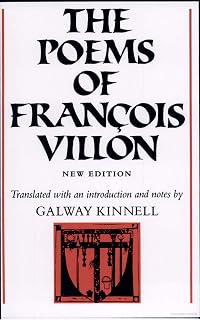
The Poems of Francois Villon
by François Villon
On This Page
Description
Francois Villon was the last of the great medieval poets, as important in his own, more limited, sphere as Chaucer or Dante. His fame surpasses that of any other medieval French lyricist in spite of the modest quantity, uneven quality, and often repellent subject-matter of his work. His poems are largely autobiographical, and are rich in their descriptions of thefts, fights, nocturnal prowling, imprisonment, and exile. However, as Barbara Sargent-Baur points out, when Villon's work is good, show more it is very good, indeed unforgettable. His two major works are the Lais, a series of bequests in anticipation of his prudent departure from Paris, and Testament, which is about his primary topic, himself. There have been many translations of Villon's work into many languages, including English, but this is the first edition of the whole of the corpus utilizing a re-reading of all the manuscript sources and presenting for each poem a single-source text with all emendations accounted for. It is also the first annotated English version based on the best-text principle and respecting both Villon's meaning and his metrics. A modern edition of the French texts is presented beside the English on facing pages. In an extensive commentary, Sargent-Baur identifies the poet's literary and historical allusions, as well as place-names, legatees, and biographical data. show lessTags
Recommendations









Member Reviews
That man is lucky who has nothing
You have to love Francois Villon. He was a kind of literary Caravaggio. He had that similar ability to show piercing light on his poetic canvas. Living in the early 1400s, in a sort of underworld, he was a a rough and ready rascal squeezing out a living on edges of the law, writing poetry, and somehow he got lucky – he got an education and he survived the gallows for the crime of theft. But he cheats death and uses his talent to write poetry.
Not many of us get that chance. What does he do with it? He writes a poetic testament, a long series of poems, autobiographical, current and immediate. He is acutely aware that this testament and the rest of his poems are all he has to leave the world. He tells show more us that he bequeaths these greatest of gifts – his poems and his library to his mother. To the rest of his world he offered his body to be interred into the earth.
For everyone else he knew (and all of us who read him) he also bequeaths an attitude to living. That the pretentions and vanities that we live by are no good to us. Only a poor wretch such as Villon has the wisdom to expose the vanities of the age he lives in. Only when you have nothing to lose, can you write such words as this:
Bien est eureux qui riens n’y a! (That man is lucky who has nothing!)
What do any of us have to offer when we leave this earth? Property? Money? Assets? Cars? Jewellery? Stocks and Shares? Villon knew such things were useless (and told us all for future education). He only had a dirty old threadbare shirt on his back for property. Nothing is something that cannot cause harm.
His legacy to us? Follow his lead and you have nothing to fear. There is so much more to live for without fear – in his view these are love and generosity. Miserliness, status and life without love are the most wretched elements of life. Villon does away with them all and expresses love, not as some unrequited courtly virtue popular since Plutarch but something fleshy and real. He writes of his love for fat Margot, the prostitute. In the world of brothels there is love that inverts poverty, oppression and wretchedness. In the Ballad of Fat Margot, Villon is common and bawdy. You have to love his freedom to make poetry out of these words:
"Then both drunk we sleep like dogs
When we awake, her belly starts to quiver
And she mounts me, to spare love's fruit
I groan, squashed beneath her weight-
This lechery of hers will ruin me."
Or this
"I am a lecher, and she's a lecher with me
Which one of us is better? We're both alike
the one as worthy as the other. bad rat, bad cat
We both love filth and filth pursues us
we flee from honour, honour flees from us"
I love those subversive elements in his writing – and here’s another:
"I give them leave to start a school
where pupil teaches master"
Villon encountered human abjectness and turned into something fresh - a way to live one’s life – a sort of lived poetry. Perhaps this is what drew later writers to him like Rimbaud and Jean Genet. After the human carnage of WW1, Villon’s human acceptance and re-imagining of human abjectness made sense to people like TS Eliot. show less
You have to love Francois Villon. He was a kind of literary Caravaggio. He had that similar ability to show piercing light on his poetic canvas. Living in the early 1400s, in a sort of underworld, he was a a rough and ready rascal squeezing out a living on edges of the law, writing poetry, and somehow he got lucky – he got an education and he survived the gallows for the crime of theft. But he cheats death and uses his talent to write poetry.
Not many of us get that chance. What does he do with it? He writes a poetic testament, a long series of poems, autobiographical, current and immediate. He is acutely aware that this testament and the rest of his poems are all he has to leave the world. He tells show more us that he bequeaths these greatest of gifts – his poems and his library to his mother. To the rest of his world he offered his body to be interred into the earth.
For everyone else he knew (and all of us who read him) he also bequeaths an attitude to living. That the pretentions and vanities that we live by are no good to us. Only a poor wretch such as Villon has the wisdom to expose the vanities of the age he lives in. Only when you have nothing to lose, can you write such words as this:
Bien est eureux qui riens n’y a! (That man is lucky who has nothing!)
What do any of us have to offer when we leave this earth? Property? Money? Assets? Cars? Jewellery? Stocks and Shares? Villon knew such things were useless (and told us all for future education). He only had a dirty old threadbare shirt on his back for property. Nothing is something that cannot cause harm.
His legacy to us? Follow his lead and you have nothing to fear. There is so much more to live for without fear – in his view these are love and generosity. Miserliness, status and life without love are the most wretched elements of life. Villon does away with them all and expresses love, not as some unrequited courtly virtue popular since Plutarch but something fleshy and real. He writes of his love for fat Margot, the prostitute. In the world of brothels there is love that inverts poverty, oppression and wretchedness. In the Ballad of Fat Margot, Villon is common and bawdy. You have to love his freedom to make poetry out of these words:
"Then both drunk we sleep like dogs
When we awake, her belly starts to quiver
And she mounts me, to spare love's fruit
I groan, squashed beneath her weight-
This lechery of hers will ruin me."
Or this
"I am a lecher, and she's a lecher with me
Which one of us is better? We're both alike
the one as worthy as the other. bad rat, bad cat
We both love filth and filth pursues us
we flee from honour, honour flees from us"
I love those subversive elements in his writing – and here’s another:
"I give them leave to start a school
where pupil teaches master"
Villon encountered human abjectness and turned into something fresh - a way to live one’s life – a sort of lived poetry. Perhaps this is what drew later writers to him like Rimbaud and Jean Genet. After the human carnage of WW1, Villon’s human acceptance and re-imagining of human abjectness made sense to people like TS Eliot. show less
You could be excused to think that Villon owns his place in history simply due to his lifestyle and reputation of outlaw, coupled with the fact that, for long, not many poets from the Middle Ages were republished (and so who did we have to compare him to?). And indeed, the myth Villon has become so deeply entrenched that, even some of his poems ended up by being merged to his criminal life, even if unfairly and wrongly. For example, his widely celebrated 'Ballade des Pendus' ('Ballad of the Hanged') is said to have been written in prison and while he awaited execution (for theft -again- and yet another street brawl), a claim which is rather dubious given that it doesn't deal with a coming to term with a sentencing but Christian charity, show more besides not being his only poem hinting at the gallows -far from that! Ha! But never mind. Such myths, after all, contributed to add to an already colourful life.
The thing, though, is that Villon was far more than a petty criminal. True, he widely used the Parisian slang of the poor and then criminal underworld; his verses targeting people who would have been lost to history had they not been named in his 'Testament' otherwise (e.g. fellow delinquents, prostitutes, magistrates, law enforcers, clergy etc.). This, of course, and besides being poetry written in medieval French, can make him very difficult to understand indeed for a modern reader (thank goodness for editions accompanied with explanatory notes!). Yet, his reputation and lifestyle shouldn't fool us; for Villon truly was a maestro of the ballade and the rondeaux, well-established forms in his time perhaps but that he delivered with his own, unique masterful stroke and twist.
The fact is, he used these forms as a way to cock a snook at pretty much everybody (including himself, for his derision could be self-deprecating too) and it's what made him original, or, at least, as distinctive as his evocation of poverty, decline, a life on the margins, and, of course, death.
Even more revealing (and interesting!) is that his poetry was not all about sarcasm and piss taking either. He was, after all, a complex man with his own idiosyncrasies; telling about painful unrequited love while lauding prostitutes, having contempt for authorities and conventions while longing for respectability and acceptance, or, again, exhorting others to mercy and charity while indulging himself in some venomous attacks and cruel railleries. For all his contempt, bitterness, and ridiculing, he could also show himself particularly sentimental too (e.g. 'Ballade pour prier Nostre Dame' about is mother...).
In the end, though, if Villon surely was an 'enfant terrible' of French poetry, one who had nothing to envy to the 'poètes maudits' who would succeed him albeit centuries later, his lifestyle and final demise (he was ultimately pardoned and so escaped the gallows, before disappearing God knows where) shouldn't obscure his obvious talent as a poet. He might have been a gaudy satirist and cruel banterer, mocking from people to conventions and even himself (although not without some sad bitterness) yet there was no one who wrote ballades and rondeaux like he did. He overshadowed all his contemporaries... and rightly so! show less
The thing, though, is that Villon was far more than a petty criminal. True, he widely used the Parisian slang of the poor and then criminal underworld; his verses targeting people who would have been lost to history had they not been named in his 'Testament' otherwise (e.g. fellow delinquents, prostitutes, magistrates, law enforcers, clergy etc.). This, of course, and besides being poetry written in medieval French, can make him very difficult to understand indeed for a modern reader (thank goodness for editions accompanied with explanatory notes!). Yet, his reputation and lifestyle shouldn't fool us; for Villon truly was a maestro of the ballade and the rondeaux, well-established forms in his time perhaps but that he delivered with his own, unique masterful stroke and twist.
The fact is, he used these forms as a way to cock a snook at pretty much everybody (including himself, for his derision could be self-deprecating too) and it's what made him original, or, at least, as distinctive as his evocation of poverty, decline, a life on the margins, and, of course, death.
Even more revealing (and interesting!) is that his poetry was not all about sarcasm and piss taking either. He was, after all, a complex man with his own idiosyncrasies; telling about painful unrequited love while lauding prostitutes, having contempt for authorities and conventions while longing for respectability and acceptance, or, again, exhorting others to mercy and charity while indulging himself in some venomous attacks and cruel railleries. For all his contempt, bitterness, and ridiculing, he could also show himself particularly sentimental too (e.g. 'Ballade pour prier Nostre Dame' about is mother...).
In the end, though, if Villon surely was an 'enfant terrible' of French poetry, one who had nothing to envy to the 'poètes maudits' who would succeed him albeit centuries later, his lifestyle and final demise (he was ultimately pardoned and so escaped the gallows, before disappearing God knows where) shouldn't obscure his obvious talent as a poet. He might have been a gaudy satirist and cruel banterer, mocking from people to conventions and even himself (although not without some sad bitterness) yet there was no one who wrote ballades and rondeaux like he did. He overshadowed all his contemporaries... and rightly so! show less
I liked those yellow-covered Garner editions of great French authors. They seem dated now. He was a rogue, was Villon, and I enjoyed trying to understand his poetry when I was a student. Multiple pencil annotations spoil this copy – my translations of words and phrases. ‘Idea of death, inseparable from idea of woman – makes him think of waning beauty of woman’ I have scribbled pompously at the end of Le testament.
The collected poetic works of François Villon (c. 1431–1463), the best-known French poet of the late Middle Ages. Includes Le Petit Testament, Le Grand Testament, the Ballades, and other poems. Written in Middle French, the works reflect Villon's turbulent life of poverty, crime, and brilliance. 4th edition.
A fine translation which seems to capture the spirit, if not the music, of Villon.
My personal favoritre version of Villon, a very lively author
Members
- Recently Added By
Lists

100 Books to Read in a Lifetime (That Are Older Than 200 Years)
415 works; 174 members

1001 Books You Must Read Before You Die
1,448 works; 1,135 members

Harold Bloom - The Western Canon: B. The Aristocratic Age
231 works; 13 members

Philip Ward's Lifetime Reading Plan
592 works; 22 members

Lectuurlijst
63 works; 1 member
Author Information

Villon is one of the first great French lyric poets and one of the greatest French poets of any age. His "testaments" are mock wills, written in a racy blend of French and underworld slang. Scattered here and there among the ironic items of bequest are exquisite ballads and lyrics, some crystallizing classic themes of medieval literature. Villon's show more poetry uses traditional forms to create a powerful poetic personality during a period in which poetic individualism was rare. Indeed, his exquisite "Ballad of the Hanged Men" ("Ballade des Pendus") (1489) offers one of the most immediate depictions of death in Western poetry. Moreover, his dissolute life, lived among thieves and prostitutes, makes him a prototype of later decadent or bohemian poets. He was at various times arrested, imprisoned, tortured, and nearly put to death; his final sentence was commuted to exile by King Louis XI on accession to the throne, when he declared amnesties of all sorts, according to the usual practice of the time. It is not known how Villon spent his last years, after his release from prison. Villon's poetry has been translated by Rossetti (see Vol. 1), Synge (see Vol. 1), and Swinburne (see Vol. 1). (Bowker Author Biography) show less
Some Editions
Awards and Honors
Awards
Series
Belongs to Publisher Series
Common Knowledge
- People/Characters
- François Villon
- Important places*
- Parijs, Île-de-France, Frankrijk
- Original language
- French
*Some information comes from Common Knowledge in other languages. Click "Edit" for more information.
Classifications
- Genres
- Poetry, Fiction and Literature
- DDC/MDS
- 841.2 — Literature & rhetoric French Literature French poetry Transition period 1400–1500
- LCC
- PQ1590 .A2 — Language and Literature French, Italian, Spanish and Portuguese literatures French literature Old French literature (14th-) 15th century (to ca. 1525)
- BISAC
Statistics
- Members
- 1,156
- Popularity
- 21,801
- Reviews
- 10
- Rating
- (4.23)
- Languages
- 12 — Dutch, English, Finnish, French, French (Middle), German, Hungarian, Italian, Multiple languages, Portuguese, Spanish, Swedish
- Media
- Paper, Ebook
- ISBNs
- 77
- ASINs
- 52