Théophile Gautier (1811–1872)
Author of Mademoiselle de Maupin
About the Author
Theophile Gautier (1811-1872) was a French author whose works encompassed horror and the supernatural.
Image credit: Théophile Gautier vers 1855
Works by Théophile Gautier
Arria Marcella: Le pied de momie - La Vénus d'Ille - Petite discussion avec une momie (2011) — Contributor — 10 copies
The Works of Theophile Gautier, Volume 5 - The Romance of a Mummy and Egypt (2009) — Author — 7 copies
Halloween Collection Treat: 600 Chilling Macabre Classics, Supernatural Mysteries, Gothic Novels & Horror Thrillers (2019) 7 copies
Avatar et autres contes fantastique 5 copies
La muerta enamorada y otros relatos 5 copies
The Works of Theophile Gautier 5 copies
The Works of Theophile Gautier in Twenty-Four Volumes; Vol. XXIII: Art and Criticism; The Magic Hat (2012) 4 copies
Racconti 4 copies
Gli amori impossibili 4 copies
Pages choisies 3 copies
Portraits et souvenirs littéraires : Gérard de Nerval, Madame Émile de Girardin, Henri Heine, Charles Baudelaire, Achim d'Arnim (2015) 3 copies
Trois histoires fantastiques du XIXe siècle. Maupassant, Mérimée, Gautier (2012) — Author — 2 copies
Omphale 2 copies
Poésies choisies 2 copies
Corazón de torero 2 copies
The Complete Works - VII - Travels in Russia; A Trip to Belgium & Holland; A Day in London (1910) 2 copies
Le Roman de la Momie "précédé de trois contes antiques "Une nuit de Cléopâtre - Le Roi Candaule - Arria Marcella — Author — 2 copies
Cuentos fantásticos completos vol 1 2 copies
Écrivains et artistes romantiques 2 copies
El capitán Fracasa. Tomo I 2 copies
The Works of Theophile Gautier in Twenty-Four Volumes; Vol. XXIV: Enamels & Cameos and Other Poems 2 copies
Avatar: jettatura e o pé de múmia — Author — 1 copy
O Ignorado Amor 1 copy
Novellen der Antike 1 copy
La cafetière 1 copy
Nouvelles Tome 3 1 copy
Nouvelles Tome 2 1 copy
Contes humoristiques 1 copy
Il piede della mummia 1 copy
El capitán estruendo 1 copy
Sacountala (1858) ballet-pantomime en deux actes / tiré du drame indien de Calidasâ (French Edition) (2011) 1 copy
Il Capitan Fracassa vol. II 1 copy
Théophile Gautier, un afficionado romantique. Ecrits taurins méconnus de Théophile Gautier (1846-1864). (2010) 1 copy
Pages Choisies: avec une Notice biographique — Author — 1 copy
Clairmonde 1 copy
Kaprysy i zygzaki 1 copy
Fortunio et autres nouvelles 1 copy
Wanderings in Spain 1 copy
Капитан Фракасс 1 copy
Le Chevalier double 1 copy
Fortunio: One of Cleopatra's Nights, King Candaules. The Works of Theophile Gautier Volume Eight [8] (1907) 1 copy
Mademoiselle de Maupin : double love — Author — 1 copy
Contos Fantásticos 1 copy
Nouvelles Tome 1 1 copy
Podróże do Hiszpanii 1 copy
Страх 1 copy
La tauromachie 1 copy
The Louvre ; Constantinople 1 copy
A False Conversion 1 copy
RELATOS DE AMOR Y MUERTE 1 copy
L'"España" de Th. Gautier 1 copy
The Complete Works - VIII 1 copy
Reisen in Andalusien 1 copy
Lettre à la Présidente, voyage en Italie: suivi de Poésies libertines (GRANDS CLASSIQUES) (French Edition) (2018) 1 copy
Romans mumji : powieść 1 copy
Gautier Theophile 1 copy
The Works of Theophile Gautier in Twenty-Four Volumes; Vol. XIX: Captain Fracasse, part three 1 copy
The Complete Works - V 1 copy
The Complete Works - III 1 copy
The Complete Works - II 1 copy
ROMANTİZM'İN TARİHİ 1 copy
Espana and Emaux et Camees 1 copy
A paixao de militona 1 copy
A winter in Russia 1 copy
Deux acteurs pour une rôle 1 copy
Capitan Fracassa 1 copy
Loin de Paris 1 copy
Oeuvres. Poesics 3. Emaux et Camees, Theatre en vers — Author — 1 copy
Les Beaux-Arts en Europe 1 copy
Choix de poésies 1 copy
La chaîne d'or — Author — 1 copy
Romantizm'in Tarihi 1 copy
Associated Works
World Poetry: An Anthology of Verse from Antiquity to Our Time (1998) — Contributor — 497 copies, 2 reviews
Dracula's Guest: A Connoisseur's Collection of Victorian Vampire Stories (2010) — Contributor — 318 copies, 39 reviews
Poems Bewitched and Haunted (Everyman's Library Pocket Poets Series) (2005) — Contributor — 231 copies
The Sophisticated Cat: A Gathering of Stories, Poems, and Miscellaneous Writings About Cats (1992) — Contributor — 112 copies, 1 review
La dimension fantastique, Tome 1 : Treize nouvelles de Hoffmann à Claude Seignolle (1998) — Contributor — 80 copies, 2 reviews
Demons of the Night: Tales of the Fantastic, Madness, and the Supernatural from Nineteenth-Century France (1995) — Contributor — 52 copies
LES CENT ANS DE DRACULA. 8 histoires de vampires de Goethe à Lovecraft (1999) — Contributor — 43 copies, 2 reviews
The Roads from Bethlehem: Christmas Literature from Writers Ancient and Modern (1993) — Contributor — 34 copies, 1 review
The Ghost of Fear and Others: H. P. Lovecraft's Favorite Stories Vol.1 (2014) — Contributor — 27 copies
Neoclassicism and Romanticism, 1750-1850: Sources and Documents (Sources & Documents in History of Art), Volume 2 Restoration / Twilight of Humanism (1970) — Contributor — 22 copies
The Dark Dominion: Eight Terrifying Tales of Vampires and Werewolves (1970) — Contributor — 16 copies, 2 reviews
Tales of the Undead: Vampires and Visitants (1947) — Contributor, some editions — 10 copies, 1 review
Out of the Sand: Mummies, Pyramids, and Egyptology in Classic Science Fiction and Fantasy (2008) — Contributor — 5 copies
Historie osobliwe i fantastyczne : nowela francuska od Cazotte'a do Apollinaire'a — Contributor — 4 copies
Weird Fiction in France: A Showcase Anthology of Its Origins and Development (2020) — Contributor — 3 copies
Life of Henriette Sontag, Countess de Rossi. with Interesting Sketches by Scudo, Hector Berlioz, Louis Boerne, Adolphe Adam, Marie Aycard, Julie de Margueritte, ... Prince… (2012) — Contributor — 2 copies
American Aphrodite: A Quarterly for the Fancy-Free (Volume 3, Number 10) (1953) — Contributor — 2 copies
The dead Leman, and other tales from the French — Contributor — 2 copies
Narrativa romántica francesa — Contributor — 1 copy
BBC Proms 2021 : Prom 16 : Martyn Brabbins and the BBC Symphony Orchestra [programme] (2021) — Text — 1 copy
Opowiadania Pisarzy Francuskich Dziewiętnastego Wieku — Contributor — 1 copy
Ernani (Opera di Roma 29-XI-2013) — Contributor — 1 copy
Summer nights, Op.7 [piano vocal score] — Text — 1 copy
Tagged
Common Knowledge
- Canonical name
- Gautier, Théophile
- Legal name
- Gautier, Pierre Jules Théophile
- Other names
- Le Bon Théo (byname)
- Birthdate
- 1811-08-30
- Date of death
- 1872-10-23
- Gender
- male
- Education
- Collège Louis-le-Grand (withdrew due to illness)
Collège Charlemagne - Occupations
- poet
playwright
novelist
journalist
literary critic
painter - Organizations
- Le Petit Cénacle
- Awards and honors
- Officier de la Légion d'honneur (1858)
"Les fleurs du Mal" de Baudelaire lui sont dédié
De nombreux monuments, voies, infrastructures portent son nom - Relationships
- Nerval, Gerard de (friend)
Mendès, Judith (daughter)
Mendès, Catulle (son-in-law) - Cause of death
- Maladie du coeur
- Nationality
- France
- Birthplace
- Tarbes, France
- Places of residence
- Tarbes, France (birth)
Paris, Île-de-France, France
Neuilly-sur-Seine, France (death) - Place of death
- Neuilly-sur-Seine, Hauts-de-Seine, France
- Burial location
- Cimetière de Montmartre, Paris, Île-de-France, France
- Associated Place (for map)
- France
Members
Discussions
THE DEEP ONES: "Omphale" by Théophile Gautier in The Weird Tradition (October 2022)
Folio Archives 266: Mademoiselle de Maupin by Théophile Gautier 1948 in Folio Society Devotees (April 2022)
THE DEEP ONES: "La Morte Amoureuse" by Theophile Gautier in The Weird Tradition (April 2016)
Reviews
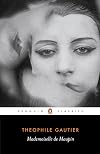
My second Gautier book and a second triumph. Gautier has a very verbose style and never uses one metaphor when 8 will do, however his writing is so lyrical and poetic that it rarely seems too long.
They say people today have a warped view of the opposite sex due to film, porn, celebrity magazines etc. but evidently this is not so modern a problem, as our male 19th century hero is the same and all he had to work with was poetry and oil paintings, he despairs of ever finding a woman who meets show more his fantastic ideal. Our heroine on the other hand is determined to truly understand men before giving herself to one.
This is a romance i guess, although one of those very realistic ones something along the lines of '500 Days of Summer' . It has really interesting things to say about sexuality aswell, which again makes it seem quite modern.
Overall this is a beautifully written, funny, interesting and remarkably... human story (for want of a better description :) ).
Note: Some prior knowledge of Shakespeare's 'As You Like It' might be beneficial. show less
They say people today have a warped view of the opposite sex due to film, porn, celebrity magazines etc. but evidently this is not so modern a problem, as our male 19th century hero is the same and all he had to work with was poetry and oil paintings, he despairs of ever finding a woman who meets show more his fantastic ideal. Our heroine on the other hand is determined to truly understand men before giving herself to one.
This is a romance i guess, although one of those very realistic ones something along the lines of '500 Days of Summer' . It has really interesting things to say about sexuality aswell, which again makes it seem quite modern.
Overall this is a beautifully written, funny, interesting and remarkably... human story (for want of a better description :) ).
Note: Some prior knowledge of Shakespeare's 'As You Like It' might be beneficial. show less
Super-self-consciously beautiful poems about beautiful things and horrors, with little in-between. Gautier drank deeply of German Romanticism and assumed its dark motifs, but he's much sexier.
I’ll start off by saying spoiler alert. Actually, even if you know the plot, which you probably do to have heard of this book, it’s still well worth reading, because it’s not really a book about the plot.
A young man named d’Albert has precise and idealistic views of perfect beauty (hint: he seems a bit obsessed by classical statues), and sets out to find a mistress capable of satisfying him. He begins an affair with Rosette. It seems she loves him more than he does her, but we’ll show more find out later that she secretly harbors a love far greater for Theodore de Sevannes, a man she had met earlier and tried very hard to seduce. Theodore arrives on the scene, and d’Albert also falls head over heels in love with him, wondering how to reconcile this homosexual urge with “what’s right”. And so ends part one, with the shocking confession “I am in love with a man!“
Part two, published a year later, reveals that Theodore is in fact a woman, Madeleine de Maupin, dressed as a man ostensibly to learn about how men really are when women aren’t around. In reality, she’s probably the first example of post-binary gender choice in literature; she dresses this way because she identifies as male and wants the freedoms society grants them. Rosette is therefore in love with a woman, and all three are conflicted and sometimes confused in a novel that questions traditional gender roles, sexual freedom, and preferences.
It’s a landmark work for all of those reasons, but I also found the book to have great depth. Gautier used differing forms to write the story, and his thoughts on love have a beautiful, lyric quality. d’Albert feels a solitude that borders on existential. Relationships between men and women are explored, with some aspects unique to 19th century France, and others timeless. There are a few erotic scenes, but they’re not over-the-top, and rely on seduction and the imagination to titillate. The book has d’Albert spouting on about how important physical beauty is early on, but then Madeline pointing out how unfair it is for women to be held back in schools, and not allowed to pursue their desires.
As Patricia Duncker explains in the introduction, Madeline appears in the novel first as a man, then as a woman dressed as a man, then while performing as Rosalind in As You Like It as a woman dressed as a man dressed as a woman, and in the final scene with d’Albert, as a woman undressed. She has offered herself up to the traditional role of being admired and sexually enjoyed by a man, and yet shortly afterwards leaves him to go to Rosette’s bedroom, and then rides off, leaving both of them. It’s an amazing ending, particularly for 1836, with d’Albert and Rosette left in her wake.
Quotes:
On aloneness in a crowd:
“The sight of a man or woman actually there in front of me does not leave a more vivid impression upon my soul than would an imaginary vision or dream. All around me is a pale world peopled by ghosts, real or unreal shades murmuring confusedly, in the middle of which I find myself as completely alone as I could be; none has any effect upon me for good or ill and they seem quite different from me in kind. If I speak to them and they answer me in words which have a more or less common meaning, I am as astonished as if my dog or cat were suddenly to pipe up and join the conversation. The sound of their voices always takes me by surprise and I should be happy to think they are only ephemeral visions and that I am the objective mirror. I may be inferior or superior, but I am definitely not of their kind.”
On beauty:
“Beauty is the only thing which cannot be acquired, forever inaccessible to those who do not have it in the first place, that fragile and fast-fading flower which grows unsown, a pure gift of God. It is the most radiant diadem chance can crown a forehead with, wonderful and precious like everything which is out of man’s reach; the azure firmament, the golden star, the scented lily of the seraphim. One can change one’s stool for a throne, one can conquer the world, and may have done so. But who would not go down on his knees before Beauty, that pure incarnation of the mind of God?”
And:
“And how wonderfully poetic the soft undulations of her curves, more smooth and velvety than swans’ necks! If there were any words to express what I feel, I would write you a description lasting fifty pages; but languages were invented by oafs who never looked at the back or front of a woman carefully enough, and we don’t have half enough of the most essential expressions.”
To the beloved:
“When you pass by in the woods the birds twitter and whistle their prettiest melodies for you and incline their little striped heads to have a better view. The amorous moon rises earlier to kiss you with her silvery lips, for it is for your sake that she has left her shepherd. The wind takes care not to wipe out the delicate print of your adorable footstep on the sand. When you lean over the fountain it becomes smoother, clearer than crystal, lest it wrinkle or distort the image of your heavenly face. The modest violets themselves open their little hearts and flirt outrageously with you. The strawberry, stung by jealousy, tries to emulate the divine crimson of your mouth.”
And:
“As soon as I saw you, I was torn asunder, a veil was lifted, a door was opened. I felt as if I were being flooded by waves of light. I realized that my life was before me, and that I had at last arrived at a major crossroads. The lost, obscure parts of the half-illuminated figure which I was trying to make out in the darkness suddenly lit up. The cloudy colours which filled the depths of the picture slowly cleared. A soft pinkish glow stole in to the greenish aquamarine in the distance. The trees which before had only seemed like vague silhouettes began to stand out more clearly. Flowers, heavy with dew, made brilliant dots in the dull green of the grass. …. From the morning the sun of love rose in my life everything changed.”
On gender identity:
“Many men are more female than I am. All that is female about me is my bosom, a few more curves and more delicate hands. The skirt is round my waist, not my mind. It is often the case that the sex of the soul does not correspond to that of the body and that is a contradiction which invariably creates dreadful confusion. If, for example, I had not taken this decision, which may seem crazy but is basically sensible, to give up the clothes of a sex which is only mine materially and fortuitously, I should have been miserable. I love horses, fencing, all violent exercise, I enjoy climbing and running around everywhere like a boy; I get bored sitting with my feet together and my elbows tucked in, keeping my gaze lowered, talking in little fluted, honeyed tones and pushing a piece of wool ten million times through the holes in a canvas. I am not in the least partial to doing what I am told and the words I repeat most often are ‘I want.’”
And this one; I love the directness of it, well, well ahead of its time:
“The reality is that neither of these two sexes is mine. I possess neither the foolish submissiveness, nor the shyness, nor the mean-spiritedness of women. I do not have the vices of men, their disgusting, vile nature and their brutal inclinations. I am of a third, separate sex which does not yet have a name; higher or lower than them, inferior or superior. I have the body and soul of a woman, the mind and strength of a man, and I have too much or not enough of the one or the other to be able to pair up with either.
…
My dream, a chimera, would be to have both sexes in turn, to satisfy this dual nature. Man today, woman tomorrow…”
On goodbye; how great is it that the woman writes these words; far from being the jilted or used lover:
“You adore me, and I you. You haven’t the slightest thing to reproach me for, and I have nothing at all to complain of as far as you are concerned. I have been perfectly faithful to you all the time we have been in love. I have not in any way deceived you. I have not been false to you in either body or soul. You were kind enough to tell me I was still more beautiful than you could have imagined. In exchange for the beauty I have given you, you have given me a great deal of pleasure. We are quits. I am going one way, you another, and perhaps we shall meet up again in the Antipodes.
Live in that hope.”
On love:
“Yes, this is exactly what I imagined love would be like. I am now feeling what I always dreamed of. The sleepless nights, both marvelous and terrible, when roses are thistles and thistles roses; this is indeed the sweet agony, the poor happiness, that indescribable anxiety which floats around you in a golden cloud and makes objects sway about in front of your eyes as though you were intoxicated, this ringing in the ears where the last syllable of the beloved name echoes again and again, these pallors, these blushes, the sudden spasms, the burning but icy sweat; it is all that; the poets are not lying.”
And:
“Her lissome, supple body moulded itself round mine like wax, and took on my external shape as nearly as it could. Water seeping round the body could not have fitted it more closely. Thus clinging to my side, she looked like the double line that painters add to the shaded parts of their drawings to give them more body and fullness. Only a woman in love can wind and twine that way. Ivies and willows don’t come anywhere near it.”
And:
“Full of silent, trusting surrender, she was disarmingly and chastely affectionate with me; her heart was brimming over and her beautiful nature poured forth all its treasures unstintingly. She had none of that petty small-mindedness that nearly all women have, even those who are the most favoured. She did not seek to disguise it in the least, but unashamedly allowed me to see the depth of her passion for me. That I did not respond to all these advances did not affect her self-esteem one bit, for pride walks out of one’s heart the day love enters it. And if ever anybody was loved, I was by Rosette.”
On love unrequited; I liked the pearl analogy:
“Oh, if I were a poet I should dedicate my poems to those who have missed out in life; those whose arrows have never found their target, who have died with words unspoken on their lips, without pressing the hand held out to them; to everything which has not reached its full term or has gone unremarked: to passion stifled, to genius that has not found expression, to the pearl lying unrecognized on the ocean bed; to everything which has loved without being loved in return; to everything which has suffered and not complained. This would be a noble task.”
On love which plays hard to get:
“She’s the only woman who has ever forestalled me, and for that reason I’ve a certain amount of respect for her. She possesses the most delicate little refinements of voluptuousness and the supreme art of pretending that you must get from her by force what she in fact accords most freely. Which makes every favour that she grants as exciting as if you were violating her. You will find ten lovers of hers around here who will swear on their honour she is the most virtuous creature they have ever seen. She is the exact opposite. It is a curious experiment anatomizing that virtue on a pillow.”
On love which is submissive; I smiled over the bear…whaaat?:
“I can see her all day, and all night too if I want to. I can do whatever I want to with her. I can have her naked or clothed, in town or in the country. She is untiringly complaisant and enters wholeheartedly into my every whim, however bizarre. One evening I was obsessed by the idea of having her in the middle of the salon with the candelabra and the candles all lit up, a fire in the hearth, the armchairs arranged in a circle as though for some grand reception, with her wearing a ball gown, bouquet and fan, all her diamonds on her throat and fingers, feathers on her head, the most splendid costume; and me dressed as a bear.”
This one too; sad:
“She says wonderful things to me. She composes beautiful love songs in my honour. She sits at my knees and behaves exactly like a humble slave with her lord and master; which suits me very well, for I am something of an oriental despot and like these little servile gestures. She won’t do anything without checking with me first, and seems to have completely given up on her own imagination and desires. She tries to guess my thoughts and anticipate them. She swamps me with wit, tenderness, and indulgence. She is so perfect I could strangle her.”
On thinking of others when making love; I was surprised to see this; it seems cruel:
“Very often the kisses you give her are not for her. It is the idea of another woman one embraces in her person, and she profits more than once, if you can call it profit, from the desires inspired by somebody else. Oh, how many times, my poor Rosette, has your body served my dreams and given substance to your rivals! To how many acts of infidelity have you been the unwitting accomplice? Had you but realized, at the moment my arms were holding you in a tight embrace and my mouth was so close to yours, that your love, your beauty meant nothing, that in my mind you were a thousand miles away from me.”
On marriage:
“It is a dreadful thing to think, and one avoids the thought, how very little we know of the life and behavior of those who apparently love us and whom we shall marry. Their true lives are as completely unknown to us as if they lived on Saturn or some other planet a hundred million leagues from our own sublunar sphere. You would think they were another species, and there is not the slightest intellectual connection between the two sexes; the virtues of the one are the vices of the other, and what is admired in men is shameful in women.”
On meaninglessness:
“…lives are not like fables, each chapter does not have a moral in rhyme at the end of it. Very often the meaning of life is that it is not death.”
On oneness with nature; I thought this was beautiful:
“I was not thinking, nor was I dreaming, but I was at one with nature all around me; I felt myself tremble with the leaves, shine with the water, glow with the moonbeam and open up with the flower. I was no more myself than I was the tree, the water or the scented night-flower. I was all of them. I don’t believe anyone could have felt more remote from himself than I was at that moment. Suddenly, as though something completely untoward was about to happen, the leaf remained unshed on the tip of the branch; the drop of water did not fall in the fountain but hung, suspended in the air. The silver streak from the edge of the moon stopped halfway in its track. Only the loud thumping of my heart seemed to fill this great space with noise. When it stopped, there was such total silence you could almost hear the grass growing, and someone whisper two hundred leagues away. Then the nightingale, who was probably waiting for just that moment to begin, trilled forth such piercing, ringing notes from her little throat that I heard it as much with my heart as with my ears. The sound suddenly spilled forth into the silence of a crystal sky, creating a wonderful harmony, and the rest of the notes followed after with a fluttering of wings. I perfectly understood her song, as though I knew the secret of language of birds.”
On sex, this in a scene where Rosette is trying to seduce Theodore, not knowing she’s with a woman:
“She came over to me, and in a trice she was on my knees with her arms around my neck. She clasped her hands behind my head and latched her mouth on to mine in a furious embrace. I felt her angry, half-naked breasts springing against my chest and her interlaced fingers clenching my hair. A shudder went through my whole body and my nipples stood on end.
Rosette’s mouth clung to mine. Her lips enveloped mine, her teeth touched mine and our breath mingled. For a moment I drew back and turned my head two or three times to avoid her kiss, but an irresistible attraction made me go on again and I returned her kiss almost as ardently as it had been given. I do not know what would have happened had a loud barking and a noise of scratching feet not been heard outside the door…”
On women, and past loves:
“At least with women who have had one or more lovers one has the ineffable advantage of not hearing about one’s predecessor all the time, which is no small consideration. Women have too much respect for rules and etiquette not to make certain they keep quiet if this is what has occurred, and they consign them to the history books as soon as they possibly can. It goes without saying that one is always the first lover in a woman’s life.”
And this one; shortly after men’s pride is acknowledged to be “completely twisted and warped”:
“What a bitter and shameful thought it is that you are wiping away the tears of someone else and that there is perhaps nowhere on this forehead, on these lips, on this neck, on these shoulders, on all this body which is now yours that has not been reddened or marked by the lips of a stranger; that those divine murmurs which come to the help of language when words are not enough have already been heard by someone else. That it is not from you that these senses, which have been so aroused, have learned their rapture and ecstasy and that over there, tucked right away in one of those little unvisited corners of the soul, is a memory which persists in comparing former pleasures with the pleasures of today.” show less
A young man named d’Albert has precise and idealistic views of perfect beauty (hint: he seems a bit obsessed by classical statues), and sets out to find a mistress capable of satisfying him. He begins an affair with Rosette. It seems she loves him more than he does her, but we’ll show more find out later that she secretly harbors a love far greater for Theodore de Sevannes, a man she had met earlier and tried very hard to seduce. Theodore arrives on the scene, and d’Albert also falls head over heels in love with him, wondering how to reconcile this homosexual urge with “what’s right”. And so ends part one, with the shocking confession “I am in love with a man!“
Part two, published a year later, reveals that Theodore is in fact a woman, Madeleine de Maupin, dressed as a man ostensibly to learn about how men really are when women aren’t around. In reality, she’s probably the first example of post-binary gender choice in literature; she dresses this way because she identifies as male and wants the freedoms society grants them. Rosette is therefore in love with a woman, and all three are conflicted and sometimes confused in a novel that questions traditional gender roles, sexual freedom, and preferences.
It’s a landmark work for all of those reasons, but I also found the book to have great depth. Gautier used differing forms to write the story, and his thoughts on love have a beautiful, lyric quality. d’Albert feels a solitude that borders on existential. Relationships between men and women are explored, with some aspects unique to 19th century France, and others timeless. There are a few erotic scenes, but they’re not over-the-top, and rely on seduction and the imagination to titillate. The book has d’Albert spouting on about how important physical beauty is early on, but then Madeline pointing out how unfair it is for women to be held back in schools, and not allowed to pursue their desires.
As Patricia Duncker explains in the introduction, Madeline appears in the novel first as a man, then as a woman dressed as a man, then while performing as Rosalind in As You Like It as a woman dressed as a man dressed as a woman, and in the final scene with d’Albert, as a woman undressed. She has offered herself up to the traditional role of being admired and sexually enjoyed by a man, and yet shortly afterwards leaves him to go to Rosette’s bedroom, and then rides off, leaving both of them. It’s an amazing ending, particularly for 1836, with d’Albert and Rosette left in her wake.
Quotes:
On aloneness in a crowd:
“The sight of a man or woman actually there in front of me does not leave a more vivid impression upon my soul than would an imaginary vision or dream. All around me is a pale world peopled by ghosts, real or unreal shades murmuring confusedly, in the middle of which I find myself as completely alone as I could be; none has any effect upon me for good or ill and they seem quite different from me in kind. If I speak to them and they answer me in words which have a more or less common meaning, I am as astonished as if my dog or cat were suddenly to pipe up and join the conversation. The sound of their voices always takes me by surprise and I should be happy to think they are only ephemeral visions and that I am the objective mirror. I may be inferior or superior, but I am definitely not of their kind.”
On beauty:
“Beauty is the only thing which cannot be acquired, forever inaccessible to those who do not have it in the first place, that fragile and fast-fading flower which grows unsown, a pure gift of God. It is the most radiant diadem chance can crown a forehead with, wonderful and precious like everything which is out of man’s reach; the azure firmament, the golden star, the scented lily of the seraphim. One can change one’s stool for a throne, one can conquer the world, and may have done so. But who would not go down on his knees before Beauty, that pure incarnation of the mind of God?”
And:
“And how wonderfully poetic the soft undulations of her curves, more smooth and velvety than swans’ necks! If there were any words to express what I feel, I would write you a description lasting fifty pages; but languages were invented by oafs who never looked at the back or front of a woman carefully enough, and we don’t have half enough of the most essential expressions.”
To the beloved:
“When you pass by in the woods the birds twitter and whistle their prettiest melodies for you and incline their little striped heads to have a better view. The amorous moon rises earlier to kiss you with her silvery lips, for it is for your sake that she has left her shepherd. The wind takes care not to wipe out the delicate print of your adorable footstep on the sand. When you lean over the fountain it becomes smoother, clearer than crystal, lest it wrinkle or distort the image of your heavenly face. The modest violets themselves open their little hearts and flirt outrageously with you. The strawberry, stung by jealousy, tries to emulate the divine crimson of your mouth.”
And:
“As soon as I saw you, I was torn asunder, a veil was lifted, a door was opened. I felt as if I were being flooded by waves of light. I realized that my life was before me, and that I had at last arrived at a major crossroads. The lost, obscure parts of the half-illuminated figure which I was trying to make out in the darkness suddenly lit up. The cloudy colours which filled the depths of the picture slowly cleared. A soft pinkish glow stole in to the greenish aquamarine in the distance. The trees which before had only seemed like vague silhouettes began to stand out more clearly. Flowers, heavy with dew, made brilliant dots in the dull green of the grass. …. From the morning the sun of love rose in my life everything changed.”
On gender identity:
“Many men are more female than I am. All that is female about me is my bosom, a few more curves and more delicate hands. The skirt is round my waist, not my mind. It is often the case that the sex of the soul does not correspond to that of the body and that is a contradiction which invariably creates dreadful confusion. If, for example, I had not taken this decision, which may seem crazy but is basically sensible, to give up the clothes of a sex which is only mine materially and fortuitously, I should have been miserable. I love horses, fencing, all violent exercise, I enjoy climbing and running around everywhere like a boy; I get bored sitting with my feet together and my elbows tucked in, keeping my gaze lowered, talking in little fluted, honeyed tones and pushing a piece of wool ten million times through the holes in a canvas. I am not in the least partial to doing what I am told and the words I repeat most often are ‘I want.’”
And this one; I love the directness of it, well, well ahead of its time:
“The reality is that neither of these two sexes is mine. I possess neither the foolish submissiveness, nor the shyness, nor the mean-spiritedness of women. I do not have the vices of men, their disgusting, vile nature and their brutal inclinations. I am of a third, separate sex which does not yet have a name; higher or lower than them, inferior or superior. I have the body and soul of a woman, the mind and strength of a man, and I have too much or not enough of the one or the other to be able to pair up with either.
…
My dream, a chimera, would be to have both sexes in turn, to satisfy this dual nature. Man today, woman tomorrow…”
On goodbye; how great is it that the woman writes these words; far from being the jilted or used lover:
“You adore me, and I you. You haven’t the slightest thing to reproach me for, and I have nothing at all to complain of as far as you are concerned. I have been perfectly faithful to you all the time we have been in love. I have not in any way deceived you. I have not been false to you in either body or soul. You were kind enough to tell me I was still more beautiful than you could have imagined. In exchange for the beauty I have given you, you have given me a great deal of pleasure. We are quits. I am going one way, you another, and perhaps we shall meet up again in the Antipodes.
Live in that hope.”
On love:
“Yes, this is exactly what I imagined love would be like. I am now feeling what I always dreamed of. The sleepless nights, both marvelous and terrible, when roses are thistles and thistles roses; this is indeed the sweet agony, the poor happiness, that indescribable anxiety which floats around you in a golden cloud and makes objects sway about in front of your eyes as though you were intoxicated, this ringing in the ears where the last syllable of the beloved name echoes again and again, these pallors, these blushes, the sudden spasms, the burning but icy sweat; it is all that; the poets are not lying.”
And:
“Her lissome, supple body moulded itself round mine like wax, and took on my external shape as nearly as it could. Water seeping round the body could not have fitted it more closely. Thus clinging to my side, she looked like the double line that painters add to the shaded parts of their drawings to give them more body and fullness. Only a woman in love can wind and twine that way. Ivies and willows don’t come anywhere near it.”
And:
“Full of silent, trusting surrender, she was disarmingly and chastely affectionate with me; her heart was brimming over and her beautiful nature poured forth all its treasures unstintingly. She had none of that petty small-mindedness that nearly all women have, even those who are the most favoured. She did not seek to disguise it in the least, but unashamedly allowed me to see the depth of her passion for me. That I did not respond to all these advances did not affect her self-esteem one bit, for pride walks out of one’s heart the day love enters it. And if ever anybody was loved, I was by Rosette.”
On love unrequited; I liked the pearl analogy:
“Oh, if I were a poet I should dedicate my poems to those who have missed out in life; those whose arrows have never found their target, who have died with words unspoken on their lips, without pressing the hand held out to them; to everything which has not reached its full term or has gone unremarked: to passion stifled, to genius that has not found expression, to the pearl lying unrecognized on the ocean bed; to everything which has loved without being loved in return; to everything which has suffered and not complained. This would be a noble task.”
On love which plays hard to get:
“She’s the only woman who has ever forestalled me, and for that reason I’ve a certain amount of respect for her. She possesses the most delicate little refinements of voluptuousness and the supreme art of pretending that you must get from her by force what she in fact accords most freely. Which makes every favour that she grants as exciting as if you were violating her. You will find ten lovers of hers around here who will swear on their honour she is the most virtuous creature they have ever seen. She is the exact opposite. It is a curious experiment anatomizing that virtue on a pillow.”
On love which is submissive; I smiled over the bear…whaaat?:
“I can see her all day, and all night too if I want to. I can do whatever I want to with her. I can have her naked or clothed, in town or in the country. She is untiringly complaisant and enters wholeheartedly into my every whim, however bizarre. One evening I was obsessed by the idea of having her in the middle of the salon with the candelabra and the candles all lit up, a fire in the hearth, the armchairs arranged in a circle as though for some grand reception, with her wearing a ball gown, bouquet and fan, all her diamonds on her throat and fingers, feathers on her head, the most splendid costume; and me dressed as a bear.”
This one too; sad:
“She says wonderful things to me. She composes beautiful love songs in my honour. She sits at my knees and behaves exactly like a humble slave with her lord and master; which suits me very well, for I am something of an oriental despot and like these little servile gestures. She won’t do anything without checking with me first, and seems to have completely given up on her own imagination and desires. She tries to guess my thoughts and anticipate them. She swamps me with wit, tenderness, and indulgence. She is so perfect I could strangle her.”
On thinking of others when making love; I was surprised to see this; it seems cruel:
“Very often the kisses you give her are not for her. It is the idea of another woman one embraces in her person, and she profits more than once, if you can call it profit, from the desires inspired by somebody else. Oh, how many times, my poor Rosette, has your body served my dreams and given substance to your rivals! To how many acts of infidelity have you been the unwitting accomplice? Had you but realized, at the moment my arms were holding you in a tight embrace and my mouth was so close to yours, that your love, your beauty meant nothing, that in my mind you were a thousand miles away from me.”
On marriage:
“It is a dreadful thing to think, and one avoids the thought, how very little we know of the life and behavior of those who apparently love us and whom we shall marry. Their true lives are as completely unknown to us as if they lived on Saturn or some other planet a hundred million leagues from our own sublunar sphere. You would think they were another species, and there is not the slightest intellectual connection between the two sexes; the virtues of the one are the vices of the other, and what is admired in men is shameful in women.”
On meaninglessness:
“…lives are not like fables, each chapter does not have a moral in rhyme at the end of it. Very often the meaning of life is that it is not death.”
On oneness with nature; I thought this was beautiful:
“I was not thinking, nor was I dreaming, but I was at one with nature all around me; I felt myself tremble with the leaves, shine with the water, glow with the moonbeam and open up with the flower. I was no more myself than I was the tree, the water or the scented night-flower. I was all of them. I don’t believe anyone could have felt more remote from himself than I was at that moment. Suddenly, as though something completely untoward was about to happen, the leaf remained unshed on the tip of the branch; the drop of water did not fall in the fountain but hung, suspended in the air. The silver streak from the edge of the moon stopped halfway in its track. Only the loud thumping of my heart seemed to fill this great space with noise. When it stopped, there was such total silence you could almost hear the grass growing, and someone whisper two hundred leagues away. Then the nightingale, who was probably waiting for just that moment to begin, trilled forth such piercing, ringing notes from her little throat that I heard it as much with my heart as with my ears. The sound suddenly spilled forth into the silence of a crystal sky, creating a wonderful harmony, and the rest of the notes followed after with a fluttering of wings. I perfectly understood her song, as though I knew the secret of language of birds.”
On sex, this in a scene where Rosette is trying to seduce Theodore, not knowing she’s with a woman:
“She came over to me, and in a trice she was on my knees with her arms around my neck. She clasped her hands behind my head and latched her mouth on to mine in a furious embrace. I felt her angry, half-naked breasts springing against my chest and her interlaced fingers clenching my hair. A shudder went through my whole body and my nipples stood on end.
Rosette’s mouth clung to mine. Her lips enveloped mine, her teeth touched mine and our breath mingled. For a moment I drew back and turned my head two or three times to avoid her kiss, but an irresistible attraction made me go on again and I returned her kiss almost as ardently as it had been given. I do not know what would have happened had a loud barking and a noise of scratching feet not been heard outside the door…”
On women, and past loves:
“At least with women who have had one or more lovers one has the ineffable advantage of not hearing about one’s predecessor all the time, which is no small consideration. Women have too much respect for rules and etiquette not to make certain they keep quiet if this is what has occurred, and they consign them to the history books as soon as they possibly can. It goes without saying that one is always the first lover in a woman’s life.”
And this one; shortly after men’s pride is acknowledged to be “completely twisted and warped”:
“What a bitter and shameful thought it is that you are wiping away the tears of someone else and that there is perhaps nowhere on this forehead, on these lips, on this neck, on these shoulders, on all this body which is now yours that has not been reddened or marked by the lips of a stranger; that those divine murmurs which come to the help of language when words are not enough have already been heard by someone else. That it is not from you that these senses, which have been so aroused, have learned their rapture and ecstasy and that over there, tucked right away in one of those little unvisited corners of the soul, is a memory which persists in comparing former pleasures with the pleasures of today.” show less
This novel is suffused with a refined naughtiness, which was accentuated by the fact I should have been writing a dry literature review this afternoon. Instead, I read the second, more salacious, half of 'Mademoiselle de Maupin'. This French capital-R Romantic novel is a wonderful comedy-drama of gender and sexuality, largely set in a country château in summer. It is mostly epistolary, making me wonder what the correspondents thought of the extravagant and shocking letters they received. I show more suppose their response is that of the reader?
After a preface that rails at moralising critics, Gautier begins the novel by giving the point of view to d'Albert. Like Kiyoaki in 'Spring Snow', here we have an idle aristocrat in love with the idea of beauty and love, utterly self-absorbed and distinctly directionless. (Is this the ideal of the Romantic Hero?) He writes lengthy letters to a friend named Silvio, describing the ideal mistress that he yearns for. He unselfconsciously expounds his misogynistic view of women as objects of beauty, lacking intellectual calibre and never equal to men. His letters are dense with classical allusions and hyperbole. After tiring of lazing about sighing, interspersed with the odd bit of hunting, d'Albert deigns to take a mistress named Rosette. She can't live up to his ideals of perfection, but nonetheless they have fun together. Including a hilarious-sounding amorous adventure during which he dresses up as a bear. D'Albert is convinced that Rosette loves him utterly.
This relatively stable arrangement is thrown into disarray when d'Albert and Rosette end up staying at a castle and encounter the dashing Théodore. At this point, the narrative shifts to Théodore's letters to a friend named Graciosa and we discover that he is actually a woman called Madeline. It emerges that the persona of Théodore was invented by Madeline so that she could learn what men were really like. She was horrified by what she found. This part of the book is the most serious and striking, as it rings so true even now. As Madeline discovers, there is a terrible double standard for male and female behaviour. When talking to each other, men are cruel and dismissive of women. Madeline remains Théodore, finding that she cannot bear to go back to the limitations of female existence. Gautier critiques the gender binary impressively thoroughly, considering he was writing in the early 19th century.
I found Théodore/Madeline to be a wonderfully sympathetic and appealing character. She gleefully overturns assumptions of gender and sexuality, throwing d'Albert into an agony of confusion that his letters made me think he richly deserved. Initially taking Théodore at face value, d'Albert comes to terms with the fact that his ideal of beauty is in fact male. Moreover, it emerges that Rosette has never been in love with him, but has only ever truly loved Théodore! After the château guests put on a performance of 'As You Like It', with all its cross-dressing and gender confusion, these passions finally come to a head. The ending is best described as satisfying.
The whole novel is very enjoyable, sensuous but ironic, deliberately subverting conventions. The eponymous hero/heroine was a real person, a bisexual singer who dressed as a man, fought duels, and apparently burned down a convent whilst in pursuit of a lover there. I'd love to read a biography of her, as Gautier gives us a glimpse of what are clearly only a few of her adventures. To the other characters, she remains an elusive, fascinating, and confusing object of adoration. I can very well see why. The reader cannot help but love her at least a little.
It's also worth noting that this edition includes an excellent introduction by Patricia Duncker, whose novels I've previously enjoyed. As is apparently always the case with classic novels, it absolutely vital not to read this introduction first, otherwise the plot will be spoiled. (I always avoid such introductions now, after having too many endings ruined.) It makes for an interesting read afterwards, though. show less
After a preface that rails at moralising critics, Gautier begins the novel by giving the point of view to d'Albert. Like Kiyoaki in 'Spring Snow', here we have an idle aristocrat in love with the idea of beauty and love, utterly self-absorbed and distinctly directionless. (Is this the ideal of the Romantic Hero?) He writes lengthy letters to a friend named Silvio, describing the ideal mistress that he yearns for. He unselfconsciously expounds his misogynistic view of women as objects of beauty, lacking intellectual calibre and never equal to men. His letters are dense with classical allusions and hyperbole. After tiring of lazing about sighing, interspersed with the odd bit of hunting, d'Albert deigns to take a mistress named Rosette. She can't live up to his ideals of perfection, but nonetheless they have fun together. Including a hilarious-sounding amorous adventure during which he dresses up as a bear. D'Albert is convinced that Rosette loves him utterly.
This relatively stable arrangement is thrown into disarray when d'Albert and Rosette end up staying at a castle and encounter the dashing Théodore. At this point, the narrative shifts to Théodore's letters to a friend named Graciosa and we discover that he is actually a woman called Madeline. It emerges that the persona of Théodore was invented by Madeline so that she could learn what men were really like. She was horrified by what she found. This part of the book is the most serious and striking, as it rings so true even now. As Madeline discovers, there is a terrible double standard for male and female behaviour. When talking to each other, men are cruel and dismissive of women. Madeline remains Théodore, finding that she cannot bear to go back to the limitations of female existence. Gautier critiques the gender binary impressively thoroughly, considering he was writing in the early 19th century.
I found Théodore/Madeline to be a wonderfully sympathetic and appealing character. She gleefully overturns assumptions of gender and sexuality, throwing d'Albert into an agony of confusion that his letters made me think he richly deserved. Initially taking Théodore at face value, d'Albert comes to terms with the fact that his ideal of beauty is in fact male. Moreover, it emerges that Rosette has never been in love with him, but has only ever truly loved Théodore! After the château guests put on a performance of 'As You Like It', with all its cross-dressing and gender confusion, these passions finally come to a head. The ending is best described as satisfying.
The whole novel is very enjoyable, sensuous but ironic, deliberately subverting conventions. The eponymous hero/heroine was a real person, a bisexual singer who dressed as a man, fought duels, and apparently burned down a convent whilst in pursuit of a lover there. I'd love to read a biography of her, as Gautier gives us a glimpse of what are clearly only a few of her adventures. To the other characters, she remains an elusive, fascinating, and confusing object of adoration. I can very well see why. The reader cannot help but love her at least a little.
It's also worth noting that this edition includes an excellent introduction by Patricia Duncker, whose novels I've previously enjoyed. As is apparently always the case with classic novels, it absolutely vital not to read this introduction first, otherwise the plot will be spoiled. (I always avoid such introductions now, after having too many endings ruined.) It makes for an interesting read afterwards, though. show less
Lists
Romans (1)
French Books (1)
Awards
You May Also Like
Associated Authors
Statistics
- Works
- 372
- Also by
- 78
- Members
- 3,936
- Popularity
- #6,425
- Rating
- 3.9
- Reviews
- 99
- ISBNs
- 722
- Languages
- 21
- Favorited
- 20


