On This Page
Description
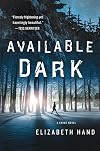
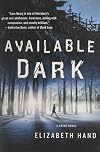
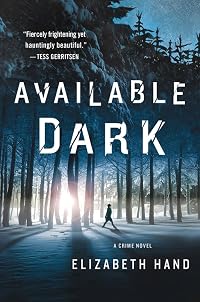
Fleeing for her life after she is shown photographs of ritual killings during a mysterious job in Helsinki, Cass Neary encounters a former lover and exiled musician in Iceland only to be inundated by a series of unsolved murders.Tags
Recommendations


























Member Recommendations
Member Reviews
What is it about Cass Neary that fascinates me? If I knew her we would not be friends. I wouldn’t even want her at a party. She’s a liar and a thief. A manipulator and an addict. She sees in darkness instead of in light. She values pleasure, but only if its price is pain. A twisted freak, basically. But an engaging one.
Having just come from the abattoir that was her trip to Maine, Cass is desperate to keep herself together and the cops off her back. She receives an invitation to do some consulting in Finland and while there decides to go find her old lover who has recently sent a photo of himself that she took 30 years before. As in Generation Loss, Cass’s own penumbra of grit and despair attracts like and she’s down, down, down show more into a whirlpool of black metal, death photography, neolithic rituals and killing. I think the plot in this one is more deliberately evil than in the last. It feels heavier and more directly aimed at Cass even though she’s an accidental victim...a victim by propinquity.
Like in G.L., Hand’s writing conveys Cass’s inner landscape very well. Shards. Razoring through any and all thoughts she has, shredding them so that Cass has to piece them together again. There’s nothing cohesive about Cass. She’s in pieces. None of them work harmoniously. Her only goal is to stay medicated enough to stay numb to them. She’s her own worst enemy, but eerily indestructible. She takes abuse like no one else because I think she needs it. I think she thinks that’s the only real contact she deserves. I’m anxiously awaiting our next meeting. show less
Having just come from the abattoir that was her trip to Maine, Cass is desperate to keep herself together and the cops off her back. She receives an invitation to do some consulting in Finland and while there decides to go find her old lover who has recently sent a photo of himself that she took 30 years before. As in Generation Loss, Cass’s own penumbra of grit and despair attracts like and she’s down, down, down show more into a whirlpool of black metal, death photography, neolithic rituals and killing. I think the plot in this one is more deliberately evil than in the last. It feels heavier and more directly aimed at Cass even though she’s an accidental victim...a victim by propinquity.
Like in G.L., Hand’s writing conveys Cass’s inner landscape very well. Shards. Razoring through any and all thoughts she has, shredding them so that Cass has to piece them together again. There’s nothing cohesive about Cass. She’s in pieces. None of them work harmoniously. Her only goal is to stay medicated enough to stay numb to them. She’s her own worst enemy, but eerily indestructible. She takes abuse like no one else because I think she needs it. I think she thinks that’s the only real contact she deserves. I’m anxiously awaiting our next meeting. show less
Things get colder and darker and louder for Cass Neary as she flees New York for Helsinki to consult on what turn out to be some beautiful but horrifying pictures. Her next stop is Iceland in search of a very old flame, but it turns out she's left some bodies in her wake and maybe it's the drugs and the booze feeding her paranoia, but she thinks the killer might be coming for her next. Steeped in the angry raw noise of death metal rock and the remnants of a resurgent Nordic religion and some frankly psychotic behaviour that seems even beyond the scope of damage connoisseur Cass Neary to properly process or cope with and in the end it's just about all she can do to survive and get the hell out.
Cass abides out on the far edge of the show more remnants of a long-lost scene, wasted and wasting, and this feels like her European tour of even more frightening and forgotten jagged edges. Hand has an eye and an ear for the relics of deranged sub-cultures and twists their ancient sins into riveting modern thrillers. show less
Cass abides out on the far edge of the show more remnants of a long-lost scene, wasted and wasting, and this feels like her European tour of even more frightening and forgotten jagged edges. Hand has an eye and an ear for the relics of deranged sub-cultures and twists their ancient sins into riveting modern thrillers. show less
This is, except in its villain, is a more satisfying novel than its predecessor, Generation Loss.
There are more bodies, a trail of them across the northern lands of Finland and Iceland, as Cass Neary, leaving her New York City home before Maine law enforcement can question her more closely about events in the earlier novel, accepts a dodgy commission by a sinister Norwegian nightclub owner. He wants some “esoteric” photographic prints authenticated. They turn out to be beautifully composed crime scene photos, the secret, early art of a now famous fashion photographer.
There’s more weirdness as Cass seems, as the novel progresses, to be more than just a “amoral speedfreak crankhead kleptomaniac murderous rage-filled alcoholic show more bisexual heavily-tattooed” photographer of the damaged, dead, and dying. She has a wyrd and a purpose.
No American hippies here cooking up their homemade occultism in a Maine commune. The menace and mystery of the novel is both more ancient but also more modern as Hand shows Scandinavians trying, with murder, music, drugs, and desperation to come to grips with old and new chaos brought to their land by foreigners. In an Iceland reeling from the black swans of economic derivatives (though there are no scenes with the Viking Squad), Hand gives us bleak beauty (and a chance for Cass to put her practical knowledge of street drugs to good use).
To top it off, Cass hears, for the first time in over thirty years, from her old boyfriend, Quinn. He was the center of numinous attraction for the teenaged Cass. The back story of her relationship with Quinn is one of the reasons I’d advise reading Generation Loss first though it’s not absolutely required.
Definitely recommended for those who like their crime stories mixed with something unearthly. show less
There are more bodies, a trail of them across the northern lands of Finland and Iceland, as Cass Neary, leaving her New York City home before Maine law enforcement can question her more closely about events in the earlier novel, accepts a dodgy commission by a sinister Norwegian nightclub owner. He wants some “esoteric” photographic prints authenticated. They turn out to be beautifully composed crime scene photos, the secret, early art of a now famous fashion photographer.
There’s more weirdness as Cass seems, as the novel progresses, to be more than just a “amoral speedfreak crankhead kleptomaniac murderous rage-filled alcoholic show more bisexual heavily-tattooed” photographer of the damaged, dead, and dying. She has a wyrd and a purpose.
No American hippies here cooking up their homemade occultism in a Maine commune. The menace and mystery of the novel is both more ancient but also more modern as Hand shows Scandinavians trying, with murder, music, drugs, and desperation to come to grips with old and new chaos brought to their land by foreigners. In an Iceland reeling from the black swans of economic derivatives (though there are no scenes with the Viking Squad), Hand gives us bleak beauty (and a chance for Cass to put her practical knowledge of street drugs to good use).
To top it off, Cass hears, for the first time in over thirty years, from her old boyfriend, Quinn. He was the center of numinous attraction for the teenaged Cass. The back story of her relationship with Quinn is one of the reasons I’d advise reading Generation Loss first though it’s not absolutely required.
Definitely recommended for those who like their crime stories mixed with something unearthly. show less
Trying to evade trouble she stirred up in Maine (in the novel Generation Loss), Cass Neary accepts a shady job to evaluate some photographs of questionable subject matter in Finland. Just before she is about to leave, she receives from Iceland a photo she took of a long-ago boyfriend, so she goes there next to track him down. And then the murders begin.
As in Generation Loss, this sequel puts Cass in an isolated, desolate setting, the exterior landscape reflecting the interior character. However, this novel is different in tone: less gothic, more noir, with a touch of the weird as it relates to Norse mythology. The writing is good and carries the reader along, Cass is still an intriguing antihero of a character, but the mystery is more show more straightforward and less surprising here, although some of the business related to Odinists and heavy metal music lost me. show less
As in Generation Loss, this sequel puts Cass in an isolated, desolate setting, the exterior landscape reflecting the interior character. However, this novel is different in tone: less gothic, more noir, with a touch of the weird as it relates to Norse mythology. The writing is good and carries the reader along, Cass is still an intriguing antihero of a character, but the mystery is more show more straightforward and less surprising here, although some of the business related to Odinists and heavy metal music lost me. show less
I had not read the blurb summarizing the plot of Available Dark so I was surprised to find it is a sequel to Generation Loss. Yes, I do trust Liz enough to delve into her novels blind but I also know from experience that there's no preparing for the rabbit hole I usually find myself in.
So, we return to the world of pill-popping, punk photog Cass Neary, who is still under suspicion for the way she left things in Maine and is looking to skip town. A fan affords her just the opportunity when he offers to pay a substantial fee for Cass to go to Helsinki and authenticate some one-of-a-kind photos. They are, like her work, on the morbid side and she is instantly captivated by them. It seems the long, bleak Scandinavian winters and the old show more pagan ways combine to create quite a dark place, in more ways than one. A darkness that threatens to envelop Cass, possibly extinguish her light forever.
i have always loved Liz Hand novels. They're part hippie and part punk and all atmosphere and mood. Like Alice in her Wonderland, I find myself lost in the adventure and never sure at the end which was real and which was imagined. She's so evocative and resonate that sometimes it takes a few days to shake off the cloak her book has thrown over me. This one is a solid entry in her cannon - not my favorite but definitely not at the bottom of the pile either. show less
So, we return to the world of pill-popping, punk photog Cass Neary, who is still under suspicion for the way she left things in Maine and is looking to skip town. A fan affords her just the opportunity when he offers to pay a substantial fee for Cass to go to Helsinki and authenticate some one-of-a-kind photos. They are, like her work, on the morbid side and she is instantly captivated by them. It seems the long, bleak Scandinavian winters and the old show more pagan ways combine to create quite a dark place, in more ways than one. A darkness that threatens to envelop Cass, possibly extinguish her light forever.
i have always loved Liz Hand novels. They're part hippie and part punk and all atmosphere and mood. Like Alice in her Wonderland, I find myself lost in the adventure and never sure at the end which was real and which was imagined. She's so evocative and resonate that sometimes it takes a few days to shake off the cloak her book has thrown over me. This one is a solid entry in her cannon - not my favorite but definitely not at the bottom of the pile either. show less
I can't remember what I input, but whichbook.net suggested I would enjoy this. Since I am a fan of Scandinavian crime novels, and the intersection of Scandinavian metal with galdr is of great interest to me, I bought a copy. I was immediately captivated, and although much was quite implausible and the ending outrageously over-the-top, I loved it! I am so curious now as to how/why the author came to focus on this particular topic, and whether my suspicions about who a certain character was based on are correct, that I am off to look for any interviews or FAQ pages.
This is the second of a trilogy, preceded by Generation Loss and followed by Hard Light. I’ve not read the first – the paperback is already out of print in the UK. Available Dark does refer to the events of Generation Loss, but it’s not necessary to have read it. Briefly, in the first book cult photographer Cassie Neary was involved in the murder of another photographer, close enough that she’d be behind bars if her true role were known. At least, that’s how Available Dark presents the events of Generation Loss. Neary has been in an artistic slump for years and is best known for a single book published years earlier. Neary specialises in photographs of dead people – the story throws around names like Joel-Peter Witkin and show more WeeGee – and it’s because of that she’s offered a job by a shady Norwegian character. He wants her to go to Helsinki to view a series of six photos by a famous Finnish fashion photographer. The Finnish photographer was once also into death photography, and the series depicts victims in bizarre murders. Coincidentally, Neary has received a mysterious message from a past lover she had thought long dead. And he’s in Reykjavík. After telling the Norwegian the photos are worth buying, Neary heads to Iceland to track down her old boyfriend. Then the Finnish photographer and his assistant are brutally murdered, and it’s all to do with the Jólasveinar, or Yule Lads, grim Icelandic troll-like figures who were used to scare children, Nordic black metal in the 1990s, the member of one of those bands called Galdur who now lives out in the Icelandic wilderness, his band’s only, and incredibly rare, album, and events in Oslo back in the 1990s at the aforementioned Norwegian’s metal club. And, of course, the series of six photographs. An ignorant puff on the back of the book confuses black metal and death metal – they’re different genres – but Hand has a good, er, handle on the music. Neary, however, is a little too good to be true, a little too much of the sort of unkillable drug addict hard case you’d find in an urban fantasy rather than a realistic crime novel. The Reykjavík of 2012 also apparently bears little resemblance to the Reykjavík I visited in 2016, or even in 2018 (though, to be fair, I saw a number of changes between my two visits). Available Dark started out well enough, a slightly off-kilter thriller about death photography and Norwegian black metal, but the character of Neary sort of ruined it. She was too good to be true, too tough to be realistic. And it all hung on a series of murders from the 1990s that seemed unlikely to have gone undetected. I’ve always preferred novels about female detectives to those about male ones, but Available Dark, while structured like a crime novel, felt more like an urban fantasy. show less
Members
- Recently Added By
Published Reviews
On the surface, the American writer Elizabeth Hand sounds disturbingly like Cass Neary, her central character in Available Dark. Both women are tall, slim, blonde and 55. Both grew up on punk culture, and both present themselves in a kind of outlaw style. Hand favours tattoos, the skin on her left arm vanishing under skeins of ink that portray figures not quite decipherable in the bare-armed show more photos of her on the Internet.
But there has to be a limit to the similarities. After all, Neary comes across in Available Dark as reckless, arrogant and somewhat self-destructive. Surely that can’t describe Hand, as well. And, according to an interview Hand gave not long ago, it doesn’t. Not quite. Neary, Hand says, “is me if my brake lines had been cut.” In writing about Neary, Hand says she was “channeling the worst possible version of myself.”
Hand is a sharply observant writer. Most of her work has been done in the fantasy end of science fiction, and her nine fantasy novels have won her much more than cult popularity. When the World Fantasy Convention gathers next November at Toronto’s Sheraton Parkway Hotel, Hand will appear as the Guest of Honour.
Her two departures from fantasy into crime fiction occur in books featuring Cass Neary. First came Generation Loss in 2007, and now Available Dark. Neary, who depends on Jack Daniels and prescription brands of speed to keep functioning, is a New York art photographer. She’s the old-fashioned kind, no digital for her, which means she gets little work. But she’s much respected for her taste in avant garde photography, and at the beginning of the new book, a Norwegian collector hires her to authenticate six pictures he intends to buy for big bucks from a prominent Finnish photographer.
The book’s first 100 pages, as Neary stokes herself on booze and pills and flies to Helsinki, are brilliant and exhilarating. Readers learn all kinds of fascinating stuff about photography and somewhat less fabulous stuff about black metal rock. The rest of the book gets closer to routine as characters connected to the photographs are murdered, and the scene shifts to Iceland. That’s where Neary goes to look up her boyfriend of 30 years earlier. The mystery and threat of the Helsinki killings seems to follow.
The narrative may lose steam, but Neary remains a riveting figure to whom dreadful things just naturally happen. She suffers more concussions than Sidney Crosby, and is dumped in Iceland’s winter wilderness without hat, gloves or coat. Neary survives, just barely, which is something else she has in common with Elizabeth Hand. Hand has explained in interviews that, at age 21, she was abducted and raped, leaving her “with vast reservoirs of rage and fear.” show less
But there has to be a limit to the similarities. After all, Neary comes across in Available Dark as reckless, arrogant and somewhat self-destructive. Surely that can’t describe Hand, as well. And, according to an interview Hand gave not long ago, it doesn’t. Not quite. Neary, Hand says, “is me if my brake lines had been cut.” In writing about Neary, Hand says she was “channeling the worst possible version of myself.”
Hand is a sharply observant writer. Most of her work has been done in the fantasy end of science fiction, and her nine fantasy novels have won her much more than cult popularity. When the World Fantasy Convention gathers next November at Toronto’s Sheraton Parkway Hotel, Hand will appear as the Guest of Honour.
Her two departures from fantasy into crime fiction occur in books featuring Cass Neary. First came Generation Loss in 2007, and now Available Dark. Neary, who depends on Jack Daniels and prescription brands of speed to keep functioning, is a New York art photographer. She’s the old-fashioned kind, no digital for her, which means she gets little work. But she’s much respected for her taste in avant garde photography, and at the beginning of the new book, a Norwegian collector hires her to authenticate six pictures he intends to buy for big bucks from a prominent Finnish photographer.
The book’s first 100 pages, as Neary stokes herself on booze and pills and flies to Helsinki, are brilliant and exhilarating. Readers learn all kinds of fascinating stuff about photography and somewhat less fabulous stuff about black metal rock. The rest of the book gets closer to routine as characters connected to the photographs are murdered, and the scene shifts to Iceland. That’s where Neary goes to look up her boyfriend of 30 years earlier. The mystery and threat of the Helsinki killings seems to follow.
The narrative may lose steam, but Neary remains a riveting figure to whom dreadful things just naturally happen. She suffers more concussions than Sidney Crosby, and is dumped in Iceland’s winter wilderness without hat, gloves or coat. Neary survives, just barely, which is something else she has in common with Elizabeth Hand. Hand has explained in interviews that, at age 21, she was abducted and raped, leaving her “with vast reservoirs of rage and fear.” show less
added by VivienneR
Lists

Noirvember: The Best Noir
113 works; 56 members

Top Five Books of 2013
1,562 works; 715 members

Must-Read Maine
146 works; 91 members

Female Protagonist
1,056 works; 57 members

Books Read in 2017
4,249 works; 130 members

Best Noir Fiction
160 works; 14 members

Global Reads: Books Set in Western Europe
186 works; 10 members

Reading List (Completed): Women Who Kick Butt
11 works; 1 member

Favorite Science Fiction by Women Authors
737 works; 202 members

Traveling the world in books
24 works; 1 member
Author Information

83+ Works 9,719 Members
Awards and Honors
Series

Common Knowledge
- Canonical title
- Available Dark
- Original title
- Available Dark
- Original publication date
- 2012-02
- People/Characters
- Cass Neary; Quinn O'Boyle
- Important places
- Reykjavik, Iceland; Helsinki, Finland
- Epigraph
- All those young photographers who are at work in the world, determined upon the capture of actuality, do not know that they are agents of Death.
—Camera Lucida, Roland Barthes, translated by Richard Howard
Domine, libera nos a furore normannorum.
—Medieval prayer - Dedication
- For Russell Dunn, 1958-2011,
soul mate, true artist, and fellow traveler in Reykjavík,
with love always - First words
- There had been more trouble, as usual.
- Last words
- (Click to show. Warning: May contain spoilers.)"I can relate," I said, and reached for another whiskey.
- Blurbers
- Gerritsen, Tess; Dunn, Katherine; Steinke, Darcey; Farnsworth, Christopher; Doiron, Paul; McNeil, Legs
- Original language
- English
Classifications
Statistics
- Members
- 250
- Popularity
- 129,928
- Reviews
- 16
- Rating
- (3.73)
- Languages
- English, Finnish, German, Swedish
- Media
- Paper, Audiobook, Ebook
- ISBNs
- 16
- ASINs
- 8