
On This Page
Description
Robert Merivel, son of a glove maker and an aspiring physician, finds his fortunes transformed when he is given a position at the court of King Charles II. Merivel slips easily into a life of luxury and idleness, enthusiastically enjoying the women and wine of the vibrant Restoration age. But when he's called on to serve the king in an unusual role, he transgresses the one law that he is forbidden to break and is brutally cast out from his newfound paradise. Thus begins Merivel's journey to show more self-knowledge, which will take him down into the lowest depths of seventeenth-century society. show lessTags
Recommendations









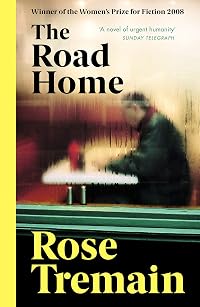

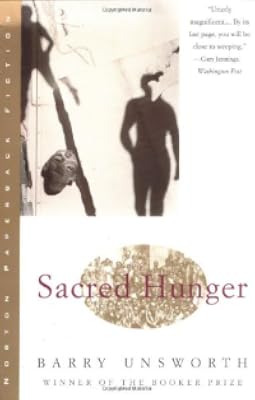




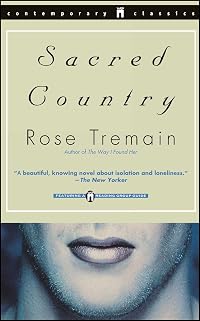
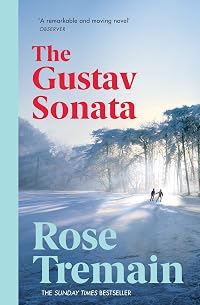


















Member Recommendations
cf66 Se ocupan del mismo período historico
Member Reviews
Merivel happens to cure the king’s sick dog by accident, and as a result is elevated to be part of the court. Officially as doctor for the dogs, but in reality more as a kind of jester – an outlandishly dressed, constantly sloshed, farting and joking clown. Until he is given a more serious task. The king’s favorite mistress needs to get married for the sake of respectability, and Merivel is the king’s choice. Convinced this loud womenizing lout is unable of deeper feelings, the king makes him baron, gives him an estate in the country, and the occasional task of looking after lady Celia. Merivel can’t believe his luck, and lives a more than happy life at his Norfolk manor. Until the unthinkable happens. He falls in love with show more his own wife.
From there on this rude romp takes a much more serious turn – or two - of which little can be said without spoilers. But Merivel’s story is a classical Bildungsroman, and his journey is both gripping and sad as well as funny. Sure, one or two characters are a bit larger than life, but that just adds to the flavor. It’s also refreshing, for once, to find royalty portrayed as actually worthy of the awe and respect they get. Here, king Charles is really both wise and elevated, almost sage-like.
Without stressing it, this is also a well researched book. I especially liked the glimpses into where the medical science stood in the 17th century, and the vivid descriptions of fire in London.
Historical fiction is not my thing, and this is not likely a read I’d picked for myself. Now I’m just happy to see we have another Tremain on our shelves. show less
From there on this rude romp takes a much more serious turn – or two - of which little can be said without spoilers. But Merivel’s story is a classical Bildungsroman, and his journey is both gripping and sad as well as funny. Sure, one or two characters are a bit larger than life, but that just adds to the flavor. It’s also refreshing, for once, to find royalty portrayed as actually worthy of the awe and respect they get. Here, king Charles is really both wise and elevated, almost sage-like.
Without stressing it, this is also a well researched book. I especially liked the glimpses into where the medical science stood in the 17th century, and the vivid descriptions of fire in London.
Historical fiction is not my thing, and this is not likely a read I’d picked for myself. Now I’m just happy to see we have another Tremain on our shelves. show less
The marvelous Rose Tremain renders a highly memorable protagonist—one hesitates to call him a hero—in her 1989 novel Restoration. Sir Robert Merivel, who receives his title during the narrative, is too lustful, too tipsy, and too gluttonous to be an example of virtue, particularly in Restoration England, where our story is set. Charles II takes the throne Parliament restores to its king, the country tired of, as the author says in her Afterword, “… [keeping] their thoughts obediently turned to a Protestant God who commanded civic duty, modesty, hard work and self-sacrifice.” Tremain renders Restoration London, with every trend, every thought, every fashion, and every favor emanating from the Monarch, in such delicious detail, show more that you will be swept up.
Under Charles, Britain rushes to embrace the new mania for personal gain and all things shallow and showy. Robert Merivel reflects this mania, and in fact, seeks to be an exemplar of his time. You could say, without fear of contradiction, that he accomplishes this. I would dare to say that his reverses do nothing to alter our opinion—he’s still an exactly typical man of court. We meet him while he’s studying anatomy at Cambridge. This discipline he falls out of in short order: his father is glove maker to the King, and he brings Robert and introduces him to His Majesty. Robert is overwhelmed in the Royal presence, physically ill and unable to stand and present himself appropriately. Thus does Charles’s presence affect him through the entire book.
By her own account, Tremain wrote Restoration during the 1980s as an indictment of Thatcher’s greedy and preening England. It feels even more timely today, a mirror to modern Western consumerism and income inequality run amok. It remains on point, it exhibits Tremain’s unflagging skill in evoking a time and place, and focuses its first-person energy on a highly entertaining, and at times even sympathetic, character.
https://bassoprofundo1.blogspot.com/2021/08/restoration-by-rose-tremain.html show less
Under Charles, Britain rushes to embrace the new mania for personal gain and all things shallow and showy. Robert Merivel reflects this mania, and in fact, seeks to be an exemplar of his time. You could say, without fear of contradiction, that he accomplishes this. I would dare to say that his reverses do nothing to alter our opinion—he’s still an exactly typical man of court. We meet him while he’s studying anatomy at Cambridge. This discipline he falls out of in short order: his father is glove maker to the King, and he brings Robert and introduces him to His Majesty. Robert is overwhelmed in the Royal presence, physically ill and unable to stand and present himself appropriately. Thus does Charles’s presence affect him through the entire book.
By her own account, Tremain wrote Restoration during the 1980s as an indictment of Thatcher’s greedy and preening England. It feels even more timely today, a mirror to modern Western consumerism and income inequality run amok. It remains on point, it exhibits Tremain’s unflagging skill in evoking a time and place, and focuses its first-person energy on a highly entertaining, and at times even sympathetic, character.
https://bassoprofundo1.blogspot.com/2021/08/restoration-by-rose-tremain.html show less
I've read a couple of other novels by Rose Tremain, and I've always liked her work, but this was the first of her books to really wow me. I thought this book was amazing. It's told from the point of view of a foolish sycophant at the court of Charles II. But Robert Merivel transforms over the course of the book, and the transformation is thoroughly believable.
The writing in Restoration is quite different than Tremain's usual style; it's told in the first-person and the voice reminded me a bit of Sarah Waters's work (although the plot itself is nothing like anything Waters might write). The voice and period details felt very authentic to me. Most importantly, Merivel feels like a real person, and I never felt that Tremain was sneering show more at him. He does foolish things, but Tremain never loses sight of the human underneath, and that focus is what makes this book really work.
Tremain intended this book as a commentary on the excesses of the Eighties, and I think the parallels to consumer culture still work. But even if you ignore the commentary, Restoration works as a marvelous character study of a flawed, vapid, but ultimately redeemable man. show less
The writing in Restoration is quite different than Tremain's usual style; it's told in the first-person and the voice reminded me a bit of Sarah Waters's work (although the plot itself is nothing like anything Waters might write). The voice and period details felt very authentic to me. Most importantly, Merivel feels like a real person, and I never felt that Tremain was sneering show more at him. He does foolish things, but Tremain never loses sight of the human underneath, and that focus is what makes this book really work.
Tremain intended this book as a commentary on the excesses of the Eighties, and I think the parallels to consumer culture still work. But even if you ignore the commentary, Restoration works as a marvelous character study of a flawed, vapid, but ultimately redeemable man. show less
This was my third five-star read out of 71 books read so far this year; I don't hand out that rating very easily, and when I do, it's because the book has surpassed any expectation I may have had, made me want to start again right from the beginning as soon as I'd finished it, and opened up a universe which was somehow magical to me. As far as expectations go, they were pretty high, as this novel first came to my attention because it had been shortlisted for the Booker Prize, and I had read very positive reviews for it, so it had been on my wishlist for a long time. My first book by Rose Tremain, which was among my favourites of 2013, was Music & Silence. There's a certain quality about Tremain's writing, or about the way she tells her show more stories, or about the characters she creates or all of these put together, which I find very exciting. From the first words, I'm willing to follow her wherever she wants to take me.
The story is set in the England of 1665 and is told as a first person account by one Robert Merivel, who relates the events as they are happening, probably in the form of a personal journal. All the events take place over the course of approximately one year, and it's a year filled to the brim with events for Merivel in the England of the Restoration. Introduced by his father, a glovemaker to the King, Young Meviel, a student in medicine, meets Charles II for the first time and immediately falls under his spell, so that when King Charles asks Merivel to save one of his dying dogs (his beloved spaniels of course), Merivel jumps at the chance to be part of the inner circle of Whitehall Palace and successfully cures the dog, mainly by doing nothing. Merivel further captures the king's favour with his comical antics, and the king comes to affectionately call him his fool, which delights Merivel, as being in the king's favour and among his friends is a privilege he revels in. He is given a grand estate, and immediately sets about decorating his large house in an effusion of baroque colours, in the most vivid hues, then takes an interest in painting and music, and indeed he observes all around him with an artist's eye. One day the King tells Robert that he would like him to wed one of his mistresses, Celia Clemens. Merivel is a rather ugly man and uncouth in his manners, liking to amuse the court with his frequent farts, among other things, but the king likes his last name and likes to think of his mistress as the future Mrs Merivel. The one condition he sets it that the marriage must not be consummated, and so enamoured is Merivel with his monarch that he immediately accepts the arrangement. Merivel is a great lover of all the finer things in life; along with the decorative arts, fine cuisine and wines, he also enjoys the company of women and rarely denies himself anything, so of course it follows that he is bound to fall in love with Celia, even though the latter detests him to the core. The trap is set, and what rises must fall, and throughout this novel we follow Merivel's progress from King's physician to wannabe artist and musician, to his time spent in the New Bedlam hospital, in Norfolk, where he tries to cure the insane once he has fallen from grace, a place from which he manages to fall from grace even further. Merivel is a fascinating character and though he doesn't dwell much on why he is so obsessed with the king or any of his inner motivations, he doesn't lack in observational skills and describes his daily life and the happenings among these unusual circles of people in a very amusing manner, though the novel doesn't lack for depth.
I was very happy to discover that Tremain wrote a sequel in 2012, simply called [Merivel], and it won't be long before I pick it up. I listened to this book narrated to perfection by Paul Daneman, one of those narrators I liked so much that I immediately tried to find what other books I could get by him, but unfortunately, this is the only one on offer at present. There will be more Tremain in the near future for me, as she is one of these writers by whom I would love to read the complete works.
Most highly recommended! show less
The story is set in the England of 1665 and is told as a first person account by one Robert Merivel, who relates the events as they are happening, probably in the form of a personal journal. All the events take place over the course of approximately one year, and it's a year filled to the brim with events for Merivel in the England of the Restoration. Introduced by his father, a glovemaker to the King, Young Meviel, a student in medicine, meets Charles II for the first time and immediately falls under his spell, so that when King Charles asks Merivel to save one of his dying dogs (his beloved spaniels of course), Merivel jumps at the chance to be part of the inner circle of Whitehall Palace and successfully cures the dog, mainly by doing nothing. Merivel further captures the king's favour with his comical antics, and the king comes to affectionately call him his fool, which delights Merivel, as being in the king's favour and among his friends is a privilege he revels in. He is given a grand estate, and immediately sets about decorating his large house in an effusion of baroque colours, in the most vivid hues, then takes an interest in painting and music, and indeed he observes all around him with an artist's eye. One day the King tells Robert that he would like him to wed one of his mistresses, Celia Clemens. Merivel is a rather ugly man and uncouth in his manners, liking to amuse the court with his frequent farts, among other things, but the king likes his last name and likes to think of his mistress as the future Mrs Merivel. The one condition he sets it that the marriage must not be consummated, and so enamoured is Merivel with his monarch that he immediately accepts the arrangement. Merivel is a great lover of all the finer things in life; along with the decorative arts, fine cuisine and wines, he also enjoys the company of women and rarely denies himself anything, so of course it follows that he is bound to fall in love with Celia, even though the latter detests him to the core. The trap is set, and what rises must fall, and throughout this novel we follow Merivel's progress from King's physician to wannabe artist and musician, to his time spent in the New Bedlam hospital, in Norfolk, where he tries to cure the insane once he has fallen from grace, a place from which he manages to fall from grace even further. Merivel is a fascinating character and though he doesn't dwell much on why he is so obsessed with the king or any of his inner motivations, he doesn't lack in observational skills and describes his daily life and the happenings among these unusual circles of people in a very amusing manner, though the novel doesn't lack for depth.
I was very happy to discover that Tremain wrote a sequel in 2012, simply called [Merivel], and it won't be long before I pick it up. I listened to this book narrated to perfection by Paul Daneman, one of those narrators I liked so much that I immediately tried to find what other books I could get by him, but unfortunately, this is the only one on offer at present. There will be more Tremain in the near future for me, as she is one of these writers by whom I would love to read the complete works.
Most highly recommended! show less
I've read a couple of other novels by Rose Tremain, and I've always liked her work, but this was the first of her books to really wow me. I thought this book was amazing. It's told from the point of view of a foolish sycophant at the court of Charles II. But Robert Merivel transforms over the course of the book, and the transformation is thoroughly believable.
The writing in Restoration is quite different than Tremain's usual style; it's told in the first-person and the voice reminded me a bit of Sarah Waters's work (although the plot itself is nothing like anything Waters might write). The voice and period details felt very authentic to me. Most importantly, Merivel feels like a real person, and I never felt that Tremain was sneering show more at him. He does foolish things, but Tremain never loses sight of the human underneath, and that focus is what makes this book really work.
Tremain intended this book as a commentary on the excesses of the Eighties, and I think the parallels to consumer culture still work. But even if you ignore the commentary, Restoration works as a marvelous character study of a flawed, vapid, but ultimately redeemable man. show less
The writing in Restoration is quite different than Tremain's usual style; it's told in the first-person and the voice reminded me a bit of Sarah Waters's work (although the plot itself is nothing like anything Waters might write). The voice and period details felt very authentic to me. Most importantly, Merivel feels like a real person, and I never felt that Tremain was sneering show more at him. He does foolish things, but Tremain never loses sight of the human underneath, and that focus is what makes this book really work.
Tremain intended this book as a commentary on the excesses of the Eighties, and I think the parallels to consumer culture still work. But even if you ignore the commentary, Restoration works as a marvelous character study of a flawed, vapid, but ultimately redeemable man. show less
Excellent character study of a man's restoration to usefulness and dignity set against the tawdry goings on of Charles II court, a Quaker refuge for the insane, and work a day London. Robert Merivel relishes being a "man of his time" only to have his time and his passions become his undoing. Cut off from his patron, The King, he seeks out his old friend and fellow anatomy student for help. His friend, John Pearce, is working at a madhouse where Merivel also begins to help, and to rebuild himself, only to fall again. And thus he must remake himself again. Excellent writing; Tremain paces the plot well, neither getting bogged down nor rushing. Merivel is wonderfully crafted, full of pathos, humor and insight, even at his weakest moments.
Excellent character study of a man's restoration to usefulness and dignity set against the tawdry goings on of Charles II court, a Quaker refuge for the insane, and work a day London. Robert Merivel relishes being a "man of his time" only to have his time and his passions become his undoing. Cut off from his patron, The King, he seeks out his old friend and fellow anatomy student for help. His friend, John Pearce, is working at a madhouse where Merivel also begins to help, and to rebuild himself, only to fall again. And thus he must remake himself again. Excellent writing; Tremain paces the plot well, neither getting bogged down nor rushing. Merivel is wonderfully crafted, full of pathos, humor and insight, even at his weakest moments.
Members
- Recently Added By
Lists

Best Historical Fiction
620 works; 258 members

Recommend the 20 best books you've read in the last five years
2,168 works; 608 members

Historical Fiction
889 works; 90 members

Booker Prize
491 works; 62 members
Booker Prize Shortlist: Titles Read
103 works; 10 members

Top Five Books of 2014
1,064 works; 398 members

Man Booker Prize Longlist 1989
6 works; 2 members

A Novel Cure
742 works; 23 members

Books Read in 2023
5,638 works; 147 members

BBC World Book Club
267 works; 5 members

World Book Club (BBC World Service)
212 works; 1 member
Author Information

38+ Works 10,033 Members
Rose Tremain was born in London, England on August 2, 1943. She has written several novels including The Way I Found Her, Merivel: A Man of His Time, and The American Lover. Restoration was adapted into a movie in 1995 and a stage production in 2009. She has won numerous awards including the James Tait Memorial Prize and the Prix Femina Etranger show more for Sacred Country, the Whitbread Novel of the Year Award for Music and Silence, and the Orange Prize for Fiction in 2008 for The Road Home. She was made a CBE in 2007. (Bowker Author Biography) show less
Some Editions
Awards and Honors
Series

Belongs to Publisher Series
Work Relationships
Has the adaptation
Common Knowledge
- Original publication date
- 1989
- People/Characters
- Charles II, King of England, Scotland, and Ireland; Robert Merivel; John Pearce; Celia Clemence; Katherine Wythens; William Gates (show all 9); Elias Finn; Rosie Pierpoint; Meg Storey
- Important places
- London, England, UK; Bidnold; Whittlesea
- Important events
- Great Fire of London (1666); Great Plague (1665 | 1666)
- Related movies
- Restoration (1995 | IMDb)
- Dedication
- For Penelope Hoare.
- First words
- I am, I discover, a very untidy man.
- Last words
- (Click to show. Warning: May contain spoilers.)His name is John Pearce.
- Blurbers
- Weldon, Fay
Classifications
Statistics
- Members
- 1,404
- Popularity
- 16,922
- Reviews
- 51
- Rating
- (3.76)
- Languages
- 9 — Dutch, English, French, German, Italian, Portuguese, Romanian, Spanish, Swedish
- Media
- Paper, Audiobook, Ebook
- ISBNs
- 67
- UPCs
- 2
- ASINs
- 21