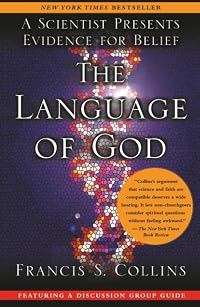
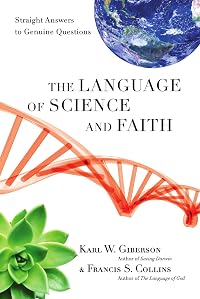
The Language of God: A Scientist Presents Evidence for Belief
by Francis S. Collins
On This Page
Description
An instant bestseller from Templeton Prize–winning author Francis S. Collins, The Language of God provides the best argument for the integration of faith and logic since C.S. Lewis's Mere Christianity.It has long been believed that science and faith cannot mingle. Faith rejects the rational, while science restricts us to a life with no meaning beyond the physical. It is an irreconcilable war between two polar-opposite ways of thinking and living. Written for believers, agnostics, and show more atheists alike, The Language of God provides a testament to the power of faith in the midst of suffering without faltering from its logical stride. Readers will be inspired by Collin's personal story of struggling with doubt, as well as the many revelations of the wonder of God's creation that will forever shape the way they view the world around them. show less
Tags
Recommendations














Member Recommendations
Member Reviews
The author, Francis Sellers Collins, is an American physician-geneticist who discovered the genes associated with a number of diseases and led the Human Genome Project. He is director of the National Institutes of Health in Bethesda, Maryland. Despite the subtitle of this book, Collins presents little in the way of actual evidence for belief in God; rather, he asserts the somewhat less ambitious argument that science and religion are not incompatible and that belief in God is not necessarily irrational.
His principal reason for believing that God exists is the prevalence of what he calls the “Moral Law.” Collins asserts, “the concept of right and wrong appears to be universal among all members of the human species (though its show more application may result in wildly different outcomes).” Collins borrows the concept and the vocabulary of the Moral Law from C. S. Lewis, but idea strongly resembles what Aquinas called “natural law.” Interestingly, Aquinas did not assert that natural law implied the existence of God; rather, he saw natural law as a natural (naturally) consequence of people living together in society. Collins, on the other hand, finds his Moral Law exceedingly difficult to account for as a result of evolution, and hence in need of some extra-scientific (supernatural?) explanation.
[Here Collins elides over the huge field of scientific study into evolutionary biological altruism; that is, the phenomenon of individual organisms behaving in a way that benefits others of its group, at a cost to themselves. By behaving thusly, the altruistic organism reduces the number of offspring it is likely to produce itself, but boosts the number that other similar organisms are likely to produce. Yet somehow, this trait is reproduced continually. As the Stanford Encyclopedia of Philosophy points out, altruistic behavior is common throughout the animal kingdom,]
Collins also argues that modern cosmology points toward something like the Creator described in Genesis. He states: “The Big Bang cries out for a divine explanation. It forces the conclusion that nature had a defined beginning. I cannot see how nature could have created itself. Only a supernatural force that is outside of space and time could have done that.”
He does not seem to be aware that David Hume showed that the concept of ‘cause’ is an empirical one that does not necessarily apply to the process of bringing something into existence ex nihilo.
Collins also argues that the anthropic principle points to God’s existence. The anthropic principle observes that human life could have evolved only in a particular type of universe. The principle states that 15 constants of nature, such as the speed of light and the force of gravity, seem to be fine tuned to allow man’s presence on earth in the universe in that human life could not have evolved if any one of those constants differed even by a small amount. Although Collins recognizes, that “no scientific observation can reach the level of absolute proof of the existence of God,” he still finds that “ for those willing to consider a theistic perspective, the Anthropic Principle certainly provides an interesting argument in favor of a Creator.”
Collins is a biologist, and he is most comfortable in dealing with how the theory of evolution affects belief in God. Interestingly, he uses his understanding of genetics and evolution to refute two common arguments for God’s existence.
The first, which was famously articulated by William Paley in 1802, is the argument from design. Collins asserts that developments in paleontology, molecular biology, and genomics can account for the complexity of life without an appeal to a designer.
A second, related, argument is that the formation of the macro-molecules DNA and RNA, and hence life, could not have arisen spontaneously without violating the Second Law of thermodynamics. Collins responds:
“But this betrays a misunderstanding of the full meaning of the Second Law: order can certainly increase in some part of the system…but that will require an input of energy….In the case of the origin of life, the closed system is essentially the whole universe, energy is available from the sun, and so the local increase in order that would be represented by the first random assembly of macro-molecules would in no way violate this law.”
Collins does not discuss another concept that contravenes the argument from design. Emergence theory adds a whole new dimension to the questions of what can and cannot arise “spontaneously.” Complex systems self organize; the resulting entity has properties its parts do not have on their own, but that emerge only from their interaction.
Collins goes into substantial detail to explain the molecular and genetic mechanisms of evolution in order to assuage the fears of believers that modern science makes God unnecessary. However, in the end he relies on the Moral Law rather than science, design, emergence, or complexity to discover God:
“The comparison of chimp and human [DNA] sequences…does not tell us what it means to be human. In my view, DNA sequence alone, even if accompanied by a vast trove of data on biological function, will never explain certain special human attributes, such as the knowledge of the Moral Law and the universal search for God.”
Collins goes further than merely making an argument for God’s existence—he even asserts that the Bible, at least Genesis, can be read allegorically in a manner consistent with modern scientific thought. I can’t resist being a bit captious in criticizing his biblical exegesis. He says Genesis “implies that God always [emphasis added] existed.” Rather, Genesis implies that god existed before the rest of the universe, but that is not necessarily “always.” Collins also (like Augustine) interprets the act of God in Genesis to be creation ex nihilo. But the actual language is ambiguous: it can be interpreted to assert that God started with a pre-existing “formless void” in which “darkness covered the face of the deep” and that God sent a wind “over the face of the [pre-existing] waters.” But in the end, recognizing that Genesis should not be read literally, Collins concludes:
“Despite twenty-five centuries of debate, it is fair to say that no human knows what the meaning of Genesis 1 and 2 was precisely intended to be.”
Amen.
It may also be fair to say, as both historians and theologians have, that the writers of the Bible were a diverse group who were no more “authorities” on God than Collins is, and who had a political and cultural agenda they were pursuing that structured the stories they canonized.
Collins cites the example of the Galileo controversy as a cautionary tale for believers to avoid attacking scientific findings on the basis of religious beliefs. In that, he follows in the footstep of Augustine who warned in the fifth century:
“If [nonbelievers] find a Christian mistaken in a field which they themselves know well and hear him maintaining his foolish opinions about our books, how are they going to believe these books and matters concerning the resurrection of the dead, the hope of eternal life, and the kingdom of heaven, when they think their pages are full of falsehoods on facts which they themselves have learned from experience in the light of reason?”
Collins has a great deal of trust in the scientific method’s ability to discover some kinds of truth, but he does not fear that science will disprove or obviate religion. He says, “If God is outside of nature, then science can neither prove nor disprove His existence.” On the other hand, he acknowledges that “rational argument can never conclusively prove the existence of God.” His principal message in writing this book is that in the absence of proof either way, “serious thinkers from Augustine to Aquinas to C. S. Lewis have demonstrated that a belief in god is intensely plausible.” Ultimately, he rests his own belief on what he calls mankind’s “universal search for God.”
But is that yearning a “universal search for ‘God’”, or is it in fact a universal desire to understand death and calamity, with many cultures analogizing from human patterns of organization that there must be a powerful being “somewhere” who is overseeing the whole business?
Furthermore, there is, in addition to the desire to understand these issues, the desire to control them. If there is in fact a powerful being, mightn’t one pray to such a being to alter the course of events? This doesn’t seem to me so much a search for “God” that establishes its truth (because everybody believes it? - that hardly constitutes proof), as an appeal to wishful thinking.
This is a thoughtful book by a thoughtful man who is also a distinguished scientist. Nevertheless, his belief in God rests on a perception that what he calls the Moral Law and the search for God are shared by all men. My perception is that not all men share that yearning. Cf., America’s president from 2017 to 2021 and millions of others. With that observation, I must conclude that Collins’s belief rests on pretty shaky grounds.
(JAB) show less
His principal reason for believing that God exists is the prevalence of what he calls the “Moral Law.” Collins asserts, “the concept of right and wrong appears to be universal among all members of the human species (though its show more application may result in wildly different outcomes).” Collins borrows the concept and the vocabulary of the Moral Law from C. S. Lewis, but idea strongly resembles what Aquinas called “natural law.” Interestingly, Aquinas did not assert that natural law implied the existence of God; rather, he saw natural law as a natural (naturally) consequence of people living together in society. Collins, on the other hand, finds his Moral Law exceedingly difficult to account for as a result of evolution, and hence in need of some extra-scientific (supernatural?) explanation.
[Here Collins elides over the huge field of scientific study into evolutionary biological altruism; that is, the phenomenon of individual organisms behaving in a way that benefits others of its group, at a cost to themselves. By behaving thusly, the altruistic organism reduces the number of offspring it is likely to produce itself, but boosts the number that other similar organisms are likely to produce. Yet somehow, this trait is reproduced continually. As the Stanford Encyclopedia of Philosophy points out, altruistic behavior is common throughout the animal kingdom,]
Collins also argues that modern cosmology points toward something like the Creator described in Genesis. He states: “The Big Bang cries out for a divine explanation. It forces the conclusion that nature had a defined beginning. I cannot see how nature could have created itself. Only a supernatural force that is outside of space and time could have done that.”
He does not seem to be aware that David Hume showed that the concept of ‘cause’ is an empirical one that does not necessarily apply to the process of bringing something into existence ex nihilo.
Collins also argues that the anthropic principle points to God’s existence. The anthropic principle observes that human life could have evolved only in a particular type of universe. The principle states that 15 constants of nature, such as the speed of light and the force of gravity, seem to be fine tuned to allow man’s presence on earth in the universe in that human life could not have evolved if any one of those constants differed even by a small amount. Although Collins recognizes, that “no scientific observation can reach the level of absolute proof of the existence of God,” he still finds that “ for those willing to consider a theistic perspective, the Anthropic Principle certainly provides an interesting argument in favor of a Creator.”
Collins is a biologist, and he is most comfortable in dealing with how the theory of evolution affects belief in God. Interestingly, he uses his understanding of genetics and evolution to refute two common arguments for God’s existence.
The first, which was famously articulated by William Paley in 1802, is the argument from design. Collins asserts that developments in paleontology, molecular biology, and genomics can account for the complexity of life without an appeal to a designer.
A second, related, argument is that the formation of the macro-molecules DNA and RNA, and hence life, could not have arisen spontaneously without violating the Second Law of thermodynamics. Collins responds:
“But this betrays a misunderstanding of the full meaning of the Second Law: order can certainly increase in some part of the system…but that will require an input of energy….In the case of the origin of life, the closed system is essentially the whole universe, energy is available from the sun, and so the local increase in order that would be represented by the first random assembly of macro-molecules would in no way violate this law.”
Collins does not discuss another concept that contravenes the argument from design. Emergence theory adds a whole new dimension to the questions of what can and cannot arise “spontaneously.” Complex systems self organize; the resulting entity has properties its parts do not have on their own, but that emerge only from their interaction.
Collins goes into substantial detail to explain the molecular and genetic mechanisms of evolution in order to assuage the fears of believers that modern science makes God unnecessary. However, in the end he relies on the Moral Law rather than science, design, emergence, or complexity to discover God:
“The comparison of chimp and human [DNA] sequences…does not tell us what it means to be human. In my view, DNA sequence alone, even if accompanied by a vast trove of data on biological function, will never explain certain special human attributes, such as the knowledge of the Moral Law and the universal search for God.”
Collins goes further than merely making an argument for God’s existence—he even asserts that the Bible, at least Genesis, can be read allegorically in a manner consistent with modern scientific thought. I can’t resist being a bit captious in criticizing his biblical exegesis. He says Genesis “implies that God always [emphasis added] existed.” Rather, Genesis implies that god existed before the rest of the universe, but that is not necessarily “always.” Collins also (like Augustine) interprets the act of God in Genesis to be creation ex nihilo. But the actual language is ambiguous: it can be interpreted to assert that God started with a pre-existing “formless void” in which “darkness covered the face of the deep” and that God sent a wind “over the face of the [pre-existing] waters.” But in the end, recognizing that Genesis should not be read literally, Collins concludes:
“Despite twenty-five centuries of debate, it is fair to say that no human knows what the meaning of Genesis 1 and 2 was precisely intended to be.”
Amen.
It may also be fair to say, as both historians and theologians have, that the writers of the Bible were a diverse group who were no more “authorities” on God than Collins is, and who had a political and cultural agenda they were pursuing that structured the stories they canonized.
Collins cites the example of the Galileo controversy as a cautionary tale for believers to avoid attacking scientific findings on the basis of religious beliefs. In that, he follows in the footstep of Augustine who warned in the fifth century:
“If [nonbelievers] find a Christian mistaken in a field which they themselves know well and hear him maintaining his foolish opinions about our books, how are they going to believe these books and matters concerning the resurrection of the dead, the hope of eternal life, and the kingdom of heaven, when they think their pages are full of falsehoods on facts which they themselves have learned from experience in the light of reason?”
Collins has a great deal of trust in the scientific method’s ability to discover some kinds of truth, but he does not fear that science will disprove or obviate religion. He says, “If God is outside of nature, then science can neither prove nor disprove His existence.” On the other hand, he acknowledges that “rational argument can never conclusively prove the existence of God.” His principal message in writing this book is that in the absence of proof either way, “serious thinkers from Augustine to Aquinas to C. S. Lewis have demonstrated that a belief in god is intensely plausible.” Ultimately, he rests his own belief on what he calls mankind’s “universal search for God.”
But is that yearning a “universal search for ‘God’”, or is it in fact a universal desire to understand death and calamity, with many cultures analogizing from human patterns of organization that there must be a powerful being “somewhere” who is overseeing the whole business?
Furthermore, there is, in addition to the desire to understand these issues, the desire to control them. If there is in fact a powerful being, mightn’t one pray to such a being to alter the course of events? This doesn’t seem to me so much a search for “God” that establishes its truth (because everybody believes it? - that hardly constitutes proof), as an appeal to wishful thinking.
This is a thoughtful book by a thoughtful man who is also a distinguished scientist. Nevertheless, his belief in God rests on a perception that what he calls the Moral Law and the search for God are shared by all men. My perception is that not all men share that yearning. Cf., America’s president from 2017 to 2021 and millions of others. With that observation, I must conclude that Collins’s belief rests on pretty shaky grounds.
(JAB) show less
A fascinating discussion about the ability of a passionate believer and practitioner of science to also be a passionate believer in God and his journey from agnostic to atheist to theist. Dr. Collins addresses the similarities in multiple cultures and religions regarding ethics. Most of the discussion was about the acceptance of evolution, as described by Darwin, as being perfectly consistent with a belief in a God who is present in our lives. This is termed "theistic" evolution. The strongest part of the argument for God's participation in our development is the Moral Law, which appears to be given only to Man, not to other forms of life. Although this God-given attribute is often broken by religious and nonreligious people alike, he show more states this shows our lack of perfection and knowledge, not the absence of God.
Dr. Collins also discusses various parts of the Bible — some if it being historical and some of it (e.g., Genesis) being allegorical. As a Christian, he is naturally drawn to the New Testament and makes an argument for the resurrection of Jesus. Not being a Christian myself, I did not quite understand that part, but it was still very interesting.
At the end of the book, he has a section on bioethics. While interesting, there are many topics he didn’t discuss. He was careful not to weigh in on the question of whether life begins at conception and the debate about abortion. Because I would like to know the views of one of our top scientists and self-proclaimed theists, I was disappointed but perhaps that is really an entire book in itself. For that the book lost half a star, but it is obviously still a very worthwhile and fascinating read. show less
Dr. Collins also discusses various parts of the Bible — some if it being historical and some of it (e.g., Genesis) being allegorical. As a Christian, he is naturally drawn to the New Testament and makes an argument for the resurrection of Jesus. Not being a Christian myself, I did not quite understand that part, but it was still very interesting.
At the end of the book, he has a section on bioethics. While interesting, there are many topics he didn’t discuss. He was careful not to weigh in on the question of whether life begins at conception and the debate about abortion. Because I would like to know the views of one of our top scientists and self-proclaimed theists, I was disappointed but perhaps that is really an entire book in itself. For that the book lost half a star, but it is obviously still a very worthwhile and fascinating read. show less
Does science necessarily undermine faith in God? Or could it actually support faith? Beyond the flashpoint debates over the teaching of evolution, or stem-cell research, most of us struggle with contradictions concerning life's ultimate question. We know that accidents happen, but we believe we are on earth for a reason. Until now, most scientists have argued that science and faith occupy distinct arenas. Francis Collins, a former atheist as a science student who converted to faith as he became a doctor, is about to change that. Collins's faith in God has been confirmed and enhanced by the revolutionary discoveries in biology that he has helped to oversee. He has absorbed the arguments for atheism of many scientists and pundits, and he show more can refute them. Darwinian evolution occurs, yet, as he explains, it cannot fully explain human nature - evolution can and must be directed by God. He offers an inspiring tour of the human genome to show the miraculous nature of God's instruction book. show less
Collins' treatise telling his personal journey of faith and bringing his scientific perspective to the philosophical wars regarding evolution and creation.
Collins robustly argues for the theistic evolutionist perspective, going after both the materialist and creationist perspectives. His scientific credentials are impressive and he does well at explaining the scientific difficulties on the two sides around him.
His theological credentials, however, are much more fundamentally flawed. His reliance on Augustine and C.S. Lewis is quite apparent. When he presents his theistic evolutionist (or, in his terms, BioLogos) position, he attempts to swat away theological objections, but is rather unsatisfying. His comparisons between adherence to show more Genesis 1-2 literally and the idea of the earth as the center of the universe are not precise enough for his purposes, and while he points to Augustine's view of the passage, does not otherwise clarify that allegorical/spiritual interpretation of the OT was the consistent method of most of the patristics. In the end, it's evident that Collins accepts the scientific perspective and then attempts to reconcile his theology to it, rather than the other way around.
Collins' demonstration that even if evolution were true that such would not disprove God is quite powerful and necessary. The book does suffer, however, from a comparative poverty of strong theology and theological reflection. A good part of the reason that theistic evolution gets so much resistance from the faith community is precisely this: high on science, low on theology or theological justification. show less
Collins robustly argues for the theistic evolutionist perspective, going after both the materialist and creationist perspectives. His scientific credentials are impressive and he does well at explaining the scientific difficulties on the two sides around him.
His theological credentials, however, are much more fundamentally flawed. His reliance on Augustine and C.S. Lewis is quite apparent. When he presents his theistic evolutionist (or, in his terms, BioLogos) position, he attempts to swat away theological objections, but is rather unsatisfying. His comparisons between adherence to show more Genesis 1-2 literally and the idea of the earth as the center of the universe are not precise enough for his purposes, and while he points to Augustine's view of the passage, does not otherwise clarify that allegorical/spiritual interpretation of the OT was the consistent method of most of the patristics. In the end, it's evident that Collins accepts the scientific perspective and then attempts to reconcile his theology to it, rather than the other way around.
Collins' demonstration that even if evolution were true that such would not disprove God is quite powerful and necessary. The book does suffer, however, from a comparative poverty of strong theology and theological reflection. A good part of the reason that theistic evolution gets so much resistance from the faith community is precisely this: high on science, low on theology or theological justification. show less
Francis Collins led the Human Genome Project and he is a Christian. In this book Collins shows how religion and science should not be at war with each other but instead how they can exist in harmony. He also looks into the debate about evolution and shows how evolution does not refute the existence of God. I found Collins arguments to be well reasoned and his call for peace to be refreshing and in tune with the teachings of the Christian faith. Collins does not try to push his religious beliefs on the reader and only really discusses why he decided to become a Christian after being an agnostic until he was in his 30's in the last chapter of the book. As a scientist and a Christian I found the author helped articulate my beliefs in how show more God fits into science. Even if you believe in other faiths or do not believe in God at all I would recommend this book. show less
I read this book as a companion to Richard Dawkins' The God Delusion, because I wanted to get different views from scientists on religion (and Dawkins definitely calls for a differing view!). In all, I found this book scientifically interesting and philosophically/theologically disappointing.
If you want a quick overview of Collins' views, watch this short video or this long video.
I will also summarize his views, with personal commentary.
1. Science
Collins is a scientists who knows what he's doing. He doesn't buy into any of these anti-evolutionary theories, such as creationism or intelligent design. In a few chapters towards the end of the book, he completely refutes both of these pseudoscientific theories. "If God created the universe, show more and the laws that govern it, and if He endowed human beings with intellectual abilities to discern its workings, would He want us to disregard those abilities?" (153)
Chapter three discusses some cosmological theories which point to the existence of God. Collins reviews the anthropic principle (the theory that any planet which could sustain life as we know it is EXTREMELY improbable) and says that this shows a God who directed natural laws to occur in ways that led to our existence. He says that God has the ability to guide these natural laws, and miracles may happen very rarely but not with any regularity, because if they did then we would lose faith in natural laws and science.
(Also, I dislike Collins' reading of Hawking's Brief History of the Universe. He quotes Hawking out of context in a way that makes Hawking sound religious.)
The most sensible interpretation of the anthropic principle - that the universe is improbable but we only know this one because we are in it - isn't seriously tackled by Collins. Of COURSE it is improbable that we are here. But if the universe wasn't just right, we wouldn't be here anyway to observe it. We're either insanely lucky or the multiverse hypothesis is true. But Collins thinks this points to a Creator who fine-tuned the universe.
2. Rejection of Atheism
Collins grew up in a household without religion. He describes this as atheist, but he was not an atheist in the Dawkins sense - he had merely never thought about religion much. However, after becoming a doctor and confronting issues of mortality and seeing how Christian faith made his patients handle horrid medical treatments with grace and calmness, he decided to convert. After reading C. S. Lewis, he became convinced that God exists.
He makes some odd leaps of logic - for example, he rejects agnosticism and deism out of hand, and even hints that atheism leads to immorality (42). In his discussion of atheism, he does distinguish between strong and weak atheism, but explicitly states that he will only discuss strong atheism. He calls Dawkins a strong atheist (he's not!) and proceeds to refute Dawkins' atheist arguments, or at least call them irrelevant. He even calls atheism "blind faith." Yeah, riiiiight.
3. Philosophical and Theological Views
A confession: I can't take any Christian apologetics based on C. S. Lewis seriously. Mere Christianity was a disappointing book.
I knew this book was going downhill when Collins brought in Lewis' idea of the Moral Law, which basically says that our universal human sense of right and wrong point to a Creator who put them in us for His purpose. This is a weak inductive argument, yet Collins even says that he doesn't know of any good refutations to it.
Sadly, it's obvious that Collins is ignorant of even elementary philosophy of science. I was looking for more abstract discussion of what science and religion are, how their epistemological methods differ, and why they will never collide. Instead, I got a stopgap measure: sure, Collins can reconcile his faith and his science NOW, but what if new evidence is discovered that strongly refutes one of the central tenets of his faith?
A god-of-the-gaps fallacy is when any gap in scientific knowledge is taken as proof for the existence of God. These are pathetic inductive arguments that are discarded after science makes more progress. The irony is that Collins spends a few pages elsewhere in the book discussing god-of-the-gaps arguments and why they are fallacious, but the Moral Law is this type of argument. New discoveries in evolutionary psychology provide good reasons for our moral sense: it's the optimal thing for our species.
(Here's some more good commentary)
Oh, and he lists Lee Strobel's Case for Christ in the footnotes, which makes me sad.
Sam Harris wrote a polemic, rabid review of the book too.
In sum, Collins has written a conciliatory book for Christians about the creationism/ID/evolution debate and the value of science, but it is not convincing to an atheist. He writes with the respectful, touchy-feely tone of many religious authors. Instead of providing deductive evidence for his claims of God's existence, he merely provides a lot of facts that make it possible, or can be reconciled with it. However, I would at least recommend the parts on the Human Genome Project and biology in general (chapters four and five), which are very interesting. show less
If you want a quick overview of Collins' views, watch this short video or this long video.
I will also summarize his views, with personal commentary.
1. Science
Collins is a scientists who knows what he's doing. He doesn't buy into any of these anti-evolutionary theories, such as creationism or intelligent design. In a few chapters towards the end of the book, he completely refutes both of these pseudoscientific theories. "If God created the universe, show more and the laws that govern it, and if He endowed human beings with intellectual abilities to discern its workings, would He want us to disregard those abilities?" (153)
Chapter three discusses some cosmological theories which point to the existence of God. Collins reviews the anthropic principle (the theory that any planet which could sustain life as we know it is EXTREMELY improbable) and says that this shows a God who directed natural laws to occur in ways that led to our existence. He says that God has the ability to guide these natural laws, and miracles may happen very rarely but not with any regularity, because if they did then we would lose faith in natural laws and science.
(Also, I dislike Collins' reading of Hawking's Brief History of the Universe. He quotes Hawking out of context in a way that makes Hawking sound religious.)
The most sensible interpretation of the anthropic principle - that the universe is improbable but we only know this one because we are in it - isn't seriously tackled by Collins. Of COURSE it is improbable that we are here. But if the universe wasn't just right, we wouldn't be here anyway to observe it. We're either insanely lucky or the multiverse hypothesis is true. But Collins thinks this points to a Creator who fine-tuned the universe.
2. Rejection of Atheism
Collins grew up in a household without religion. He describes this as atheist, but he was not an atheist in the Dawkins sense - he had merely never thought about religion much. However, after becoming a doctor and confronting issues of mortality and seeing how Christian faith made his patients handle horrid medical treatments with grace and calmness, he decided to convert. After reading C. S. Lewis, he became convinced that God exists.
He makes some odd leaps of logic - for example, he rejects agnosticism and deism out of hand, and even hints that atheism leads to immorality (42). In his discussion of atheism, he does distinguish between strong and weak atheism, but explicitly states that he will only discuss strong atheism. He calls Dawkins a strong atheist (he's not!) and proceeds to refute Dawkins' atheist arguments, or at least call them irrelevant. He even calls atheism "blind faith." Yeah, riiiiight.
3. Philosophical and Theological Views
A confession: I can't take any Christian apologetics based on C. S. Lewis seriously. Mere Christianity was a disappointing book.
I knew this book was going downhill when Collins brought in Lewis' idea of the Moral Law, which basically says that our universal human sense of right and wrong point to a Creator who put them in us for His purpose. This is a weak inductive argument, yet Collins even says that he doesn't know of any good refutations to it.
Sadly, it's obvious that Collins is ignorant of even elementary philosophy of science. I was looking for more abstract discussion of what science and religion are, how their epistemological methods differ, and why they will never collide. Instead, I got a stopgap measure: sure, Collins can reconcile his faith and his science NOW, but what if new evidence is discovered that strongly refutes one of the central tenets of his faith?
A god-of-the-gaps fallacy is when any gap in scientific knowledge is taken as proof for the existence of God. These are pathetic inductive arguments that are discarded after science makes more progress. The irony is that Collins spends a few pages elsewhere in the book discussing god-of-the-gaps arguments and why they are fallacious, but the Moral Law is this type of argument. New discoveries in evolutionary psychology provide good reasons for our moral sense: it's the optimal thing for our species.
(Here's some more good commentary)
Oh, and he lists Lee Strobel's Case for Christ in the footnotes, which makes me sad.
Sam Harris wrote a polemic, rabid review of the book too.
In sum, Collins has written a conciliatory book for Christians about the creationism/ID/evolution debate and the value of science, but it is not convincing to an atheist. He writes with the respectful, touchy-feely tone of many religious authors. Instead of providing deductive evidence for his claims of God's existence, he merely provides a lot of facts that make it possible, or can be reconciled with it. However, I would at least recommend the parts on the Human Genome Project and biology in general (chapters four and five), which are very interesting. show less
In this deeply personal book, Francis Collins tackles the "science vs. religion" debate. Since at least Immanuel Kant, we have known that this is a false dichotomy. However, modernity has in effect turned a deaf ear to Kant. In this book, Collins follows in the footsteps of the Kantian tradition, attempting the great synthesis of the empirical and the spiritual, the pure reason and the practical reason. Like Kant before him, Collins is sure to raise the ire of both sides of the aisle. And that is usually a good sign one is doing something right.
Collins reviews in the first part of the book his personal journey from atheism towards a theistic worldview, and the classical objections against it. His answers are mostly based on the show more apologetics of C.S. Lewis. This debate is much older than C.S. Lewis of course; most of his ideas can be found in St. Augustin, the Stoics, Pascal and Kant. However he does manage to present those arguments from a modern perspective, in an accessible conversational style.
The second part of the book is a popular science exposition, where Collins draws extensively on his considerable scientific background in both physics and biology and, in particular, the leading role he played in the Human Genome project.
The third part of the book is where Collins tries to reach a final conclusion about the issue of "faith in science and faith in God." He reviews his options, from Creationism to Atheism, and settles on the middle -of-the-road worldview he calls BioLogos. He expounds this theistic evolutionary view, according to which orthodox evolution theory is a fact, but also a divine means of creation. Here is where Collins slips a little, by trying to chew too much. While evolution from lower lifeforms seems to be an indisputable fact, the orthodox theory of evolution by natural selection operating on pure chance presupposes a metaphysical naturalist worldview, which is very contrary to a personal God model. From a scientific point of view alone, while evolution is a fact, it is clear that the mechanism of evolution is not yet completely understood (e.g., like Collins himself points out, the evolution of moral behavior has not been satisfactorily explained; but we can also mention the riddle of "junk" DNA, the various observed cases of puzzling "exadaptation," and so on).
One omission that stands out is that Collins never once mentions Martin Gardner, the contemporary philosopher and essayist, also Kantian, who has written extensively on the issues examined in this book. ( show less
Collins reviews in the first part of the book his personal journey from atheism towards a theistic worldview, and the classical objections against it. His answers are mostly based on the show more apologetics of C.S. Lewis. This debate is much older than C.S. Lewis of course; most of his ideas can be found in St. Augustin, the Stoics, Pascal and Kant. However he does manage to present those arguments from a modern perspective, in an accessible conversational style.
The second part of the book is a popular science exposition, where Collins draws extensively on his considerable scientific background in both physics and biology and, in particular, the leading role he played in the Human Genome project.
The third part of the book is where Collins tries to reach a final conclusion about the issue of "faith in science and faith in God." He reviews his options, from Creationism to Atheism, and settles on the middle -of-the-road worldview he calls BioLogos. He expounds this theistic evolutionary view, according to which orthodox evolution theory is a fact, but also a divine means of creation. Here is where Collins slips a little, by trying to chew too much. While evolution from lower lifeforms seems to be an indisputable fact, the orthodox theory of evolution by natural selection operating on pure chance presupposes a metaphysical naturalist worldview, which is very contrary to a personal God model. From a scientific point of view alone, while evolution is a fact, it is clear that the mechanism of evolution is not yet completely understood (e.g., like Collins himself points out, the evolution of moral behavior has not been satisfactorily explained; but we can also mention the riddle of "junk" DNA, the various observed cases of puzzling "exadaptation," and so on).
One omission that stands out is that Collins never once mentions Martin Gardner, the contemporary philosopher and essayist, also Kantian, who has written extensively on the issues examined in this book. ( show less
Members
- Recently Added By
Lists

Mike's Theology Books
74 works; 2 members

The Great Courses: The Darwinian Revolution
50 works; 1 member
Author Information

8+ Works 3,314 Members
Francis S. Collins, M.D., Ph.D., is a pioneer gene hunter. He spent fifteen years as director of the National Human Genome Research Institute, where he led the international Human Genome Project to a successful completion. For his revolutionary contributions to genetic research he was awarded the Presidential Medal of Freedom in 2007, and the show more National Medal of Science in 2009. He is the Director of the National Institutes of Health. show less
Some Editions
Awards and Honors
Awards
Distinctions
Common Knowledge
- Canonical title
- The Language of God: A Scientist Presents Evidence for Belief
- Original title
- The Language of God: A Scientist Presents Evidence for Belief
- Original publication date
- 2006
- Dedication
- To my parents, who taught me to love learning.
- First words
- On a warm summer day just six months into the new millennium, humankind crossed a bridge into a momentous new era.
- Last words
- (Click to show. Warning: May contain spoilers.)The need to succeed at these endeavors is just one more compelling reason why the current battles between the scientific and spiritual worldviews need to be resolved—we desperately need both voices to be at the table, and not to be shouting at each other.
- Publisher's editor
- Nichols, Bruce
- Blurbers
- Miller, Kenneth; Tutu, Desmond; Judd, Naomi; Phillips, William D.; Schuller, Robert H.; Campolo, Tony (show all 11); Gingrich, Newt; Davies, Paul; Nicholi, Armand M., Jr.; McGrath, Alister E.; Coe, Douglas E.
- Original language
- English US
Classifications
- Genres
- Religion & Spirituality, General Nonfiction, Nonfiction, Philosophy
- DDC/MDS
- 215 — Religion Philosophy & theory of religion Science and religion
- LCC
- BL240.3 .C66 — Philosophy, Psychology and Religion Religions. Mythology. Rationalism Religions. Mythology. Rationalism Natural theology Religion and science
- BISAC
Statistics
- Members
- 2,882
- Popularity
- 6,269
- Reviews
- 55
- Rating
- (3.81)
- Languages
- 13 — Czech, Dutch, English, German, Hungarian, Italian, Korean, Polish, Portuguese, Romanian, Russian, Spanish, Swedish
- Media
- Paper, Audiobook, Ebook
- ISBNs
- 31
- UPCs
- 1
- ASINs
- 9