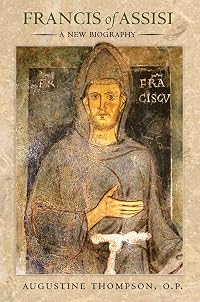
Francis of Assisi: A New Biography
by Augustine Thompson
On This Page
Description
Among the most beloved saints in the Catholic tradition, Francis of Assisi (c. 1181-1226) is popularly remembered for his dedication to poverty, his love of animals and nature, and his desire to follow perfectly the teachings and example of Christ. During his lifetime and after his death, followers collected, for their own purposes, numerous stories, anecdotes, and reports about Francis. As a result, the man himself and his own concerns became lost in legend.In this authoritative and show more engaging new biography, Augustine Thompson, O.P., sifts through the surviving evidence for the life of Francis using modern historical methods. The result is a complex yet sympathetic portrait of the man and the saint. Francis emerges from this account as very much a typical thirteenth-century Italian layman, but one who, when faced with unexpected crises in his personal life, made decisions so radical that they challenge his own society-and ours. Unlike the saint of legend, this Francis never had a unique divine inspiration to provide him with rules for following the teachings of Jesus. Rather, he spent his life reacting to unexpected challenges, before which he often found himself unprepared and uncertain. The Francis who emerges here is both more complex and more conflicted than that of older biographies. His famed devotion to poverty is found to be more nuanced than expected, perhaps not even his principal spiritual concern. Thompson revisits events small and large in Francis's life, including his troubled relations with his father, his contacts with Clare of Assisi, his encounter with the Muslim sultan, and his receiving the Stigmata, to uncover the man behind the legends and popular images.A tour de force of historical research and biographical writing, Francis of Assisi: A New Biography is divided into two complementary parts-a stand alone biographical narrative and a close, annotated examination of the historical sources about Francis. Taken together, the narrative and the survey of the sources provide a much-needed fresh perspective on this iconic figure. "As I have worked on this biography," Thompson writes, "my respect for Francis and his vision has increased, and I hope that this book will speak to modern people, believers and unbelievers alike, and that the Francis I have come to know will have something to say to them today." show lessTags
Recommendations










Member Reviews
Francis of Assisi: A New Biography is exactly what it says it is. Why do we need a new biography about one of the most popular saints ever? Because everyone has mythologized him to the point that it's necessary for us to rediscover the actual man who inspired all these hagiographical legends.
Thompson divides his book into two parts: the actual narrative biography in the first part and the sources and his apologia for what wrote broken down chapter by chapter in the second. It is certainly an impressive piece of scholarship.
But the division also has the benefit of eliminating footnotes from the first section, which makes it very accessible for those readers who find such things intimidating. I've never had that much interest in Francis show more and did not know much about him at all coming into this book, and I was fine.
There is really a lot of interesting information here. The Francis who emerges may not be your Francis (according to the introduction, the myth-making is so strong that everyone these days has their own personal Francis of Assisi built up in their minds), but he's still very much a man worth knowing.
Highly recommended for everyone with an interest in the life of this most important historical figure, layman and scholar alike. show less
Thompson divides his book into two parts: the actual narrative biography in the first part and the sources and his apologia for what wrote broken down chapter by chapter in the second. It is certainly an impressive piece of scholarship.
But the division also has the benefit of eliminating footnotes from the first section, which makes it very accessible for those readers who find such things intimidating. I've never had that much interest in Francis show more and did not know much about him at all coming into this book, and I was fine.
There is really a lot of interesting information here. The Francis who emerges may not be your Francis (according to the introduction, the myth-making is so strong that everyone these days has their own personal Francis of Assisi built up in their minds), but he's still very much a man worth knowing.
Highly recommended for everyone with an interest in the life of this most important historical figure, layman and scholar alike. show less
Augustine Thompson’s biography is “new” in the obvious sense that it is the last in a long line of biographies of St Francis going back to Paul Sabatier’s 1893 Life. Thompson’s, however, is “new” also in that it aims to go back rigorously to historical sources.
This approach is in line with other historians who recently have been sifting through historical records and chipping away at the pious accretions to produce a “plain package” St Francis.
William Hugo, for example, a Capuchin formation director produced in 1996 a “Beginner’s Workbook” "Studying the Life of St Francis", which invites novices to evaluate the historicity of early writings. The Melbourne conference in 2009, out of which came "Interpreting show more Francis and Clare of Assisi", was also historical in ambition, using a variety of academic approaches – documentary, art history and so on – to develop a more historical picture of the saints in their world.
These new studies are pushing out the older Lives of St Francis, which were either pious or interpretive: they sought either to show Francis as an examplar of the Christian life, or they observe St Francis through a particular lens: Jacques Dalarun on Francis and power and Francis and the feminine, and Leonardo Boff on Francis and liberation offer these interpretive visions of Francis.
Augustine Thompson is a Dominican friar, and this gives him an “insider-outsider” perspective. On one hand, he knows what it is to be a friar in an Order founded by a charismatic figure. On the other hand, he has greater clarity of vision when he writes about Francis than do many Franciscans in their familiarity with their founder.
Fr Thompson tells a plain story of a man who had no agenda and who could articulate no particular vision for the movement that formed and swarmed around him. Thompson’s Francis simply wanted to live the Gospel. Even at the end of his life, Francis is still surprised, Thompson claims, that “the Lord gave me brothers”.
Even poverty, the Franciscan value that many believe to be the base of Francis’s vision, is held up to question by Thompson. There’s no doubt that poverty was a part of Francis’s vision, but Francis, as Thompson emphasises, mentions the Eucharist much more often than poverty. Francis’s devotion to churches and priests is because of the celebration of the Eucharist – all to be venerated because there God comes to earth in a perceptible form.
The central insight for me in this “new” biography was precisely Francis’s lack of a programme. Francis, at least in Thompson’s telling, was a man who simply wanted to live the Gospel, to be radically available for God. This, I suspect, is one of the main reasons for Francis’s ongoing attraction.
Thompson’s book also has its attractions. It is divided into two halves. In the first Thompson tells the story of Francis simply and without frills or academic apparatus of any kind. Then follow a helpful list of the major biographies of Francis since Sabatier’s and a bibliography of documents from the 12th Century. In the second half of the book, Thompson argues in detail why he has included some details and discarded others as non-historical. These chapters may be mainly for scholars: most of us, I suspect, will be glad to read the first half as a self-standing account of Francis’s life and be refreshed by it.
http://tedwitham.wordpress.com/2012/11/23/a-plain-package-st-francis-of-assisi/ show less
This approach is in line with other historians who recently have been sifting through historical records and chipping away at the pious accretions to produce a “plain package” St Francis.
William Hugo, for example, a Capuchin formation director produced in 1996 a “Beginner’s Workbook” "Studying the Life of St Francis", which invites novices to evaluate the historicity of early writings. The Melbourne conference in 2009, out of which came "Interpreting show more Francis and Clare of Assisi", was also historical in ambition, using a variety of academic approaches – documentary, art history and so on – to develop a more historical picture of the saints in their world.
These new studies are pushing out the older Lives of St Francis, which were either pious or interpretive: they sought either to show Francis as an examplar of the Christian life, or they observe St Francis through a particular lens: Jacques Dalarun on Francis and power and Francis and the feminine, and Leonardo Boff on Francis and liberation offer these interpretive visions of Francis.
Augustine Thompson is a Dominican friar, and this gives him an “insider-outsider” perspective. On one hand, he knows what it is to be a friar in an Order founded by a charismatic figure. On the other hand, he has greater clarity of vision when he writes about Francis than do many Franciscans in their familiarity with their founder.
Fr Thompson tells a plain story of a man who had no agenda and who could articulate no particular vision for the movement that formed and swarmed around him. Thompson’s Francis simply wanted to live the Gospel. Even at the end of his life, Francis is still surprised, Thompson claims, that “the Lord gave me brothers”.
Even poverty, the Franciscan value that many believe to be the base of Francis’s vision, is held up to question by Thompson. There’s no doubt that poverty was a part of Francis’s vision, but Francis, as Thompson emphasises, mentions the Eucharist much more often than poverty. Francis’s devotion to churches and priests is because of the celebration of the Eucharist – all to be venerated because there God comes to earth in a perceptible form.
The central insight for me in this “new” biography was precisely Francis’s lack of a programme. Francis, at least in Thompson’s telling, was a man who simply wanted to live the Gospel, to be radically available for God. This, I suspect, is one of the main reasons for Francis’s ongoing attraction.
Thompson’s book also has its attractions. It is divided into two halves. In the first Thompson tells the story of Francis simply and without frills or academic apparatus of any kind. Then follow a helpful list of the major biographies of Francis since Sabatier’s and a bibliography of documents from the 12th Century. In the second half of the book, Thompson argues in detail why he has included some details and discarded others as non-historical. These chapters may be mainly for scholars: most of us, I suspect, will be glad to read the first half as a self-standing account of Francis’s life and be refreshed by it.
http://tedwitham.wordpress.com/2012/11/23/a-plain-package-st-francis-of-assisi/ show less
A critical history of the life of Francis of Assisi. While the author discounts the historicity of much of what previously has been written about Francesco, he manages in eight chapters to portray a very human life which nevertheless reveals qualities that make it understandable why even during his life, Francesco was considered to be a saint. A second section of the book is filled with copious footnotes for the earlier chapters. Many of these footnotes explain why the author agrees with or disagrees with earlier historians who have written about Francis of Assisi.
If you would like to share your joy in this book, please Click here
Ratings
Members
- Recently Added By
Lists

Saints and Blesseds
74 works; 4 members

historical biographies : great lives, well told
64 works; 4 members
Author Information
10 Works 259 Members
Augustine Thompson is Associate Professor of Religious Studies and History at the University of Virginia.
Common Knowledge
- Canonical title
- Francis of Assisi: A New Biography
- Original publication date
- 2012-04-20
- People/Characters
- Francis of Assisi
- Important places
- Assisi, Umbria, Italy
- First words
- This book is subtitled A New Biography, by which I mean not just a recent biography, but one that also presents a new portrait of the man known as Saint Francis of Assisi. (Introduction)
To know a medieval Italian was to know his city, and the man we know as Saint Francis was from Assisi. (Chapter 1) - Last words
- (Click to show. Warning: May contain spoilers.)So it remains, perhaps ever more so, to this day.
Classifications
- Genres
- Religion & Spirituality, Nonfiction, Biography & Memoir, History
- DDC/MDS
- 271.302 — Religion History of Christianity Religious congregations and orders in church history Franciscans
- LCC
- BX4700 .F6 .T46 — Philosophy, Psychology and Religion Christian Denominations Christian Denominations Catholic Church Biography and portraits Individual Saints
- BISAC
Statistics
- Members
- 147
- Popularity
- 222,218
- Reviews
- 4
- Rating
- (4.11)
- Languages
- English, Italian, Portuguese
- Media
- Paper, Ebook
- ISBNs
- 6
- ASINs
- 2