On This Page
Description
A novel based on the album "Clockwork Angels" by the rock band Rush follows a young man on a quest through a world of lost cities, pirates, anarchists, and a Watchmaker who imposes precision on all aspects of daily life.Tags
Recommendations











Member Recommendations
Member Reviews
This is basically a novelization of the 2012 album Clockwork Angels by Rush. Which is maybe less weird than it might sound, as Clockwork Angels is one of those concept albums whose lyrics, somewhat loosely, tell a story. In this case, the story is a sort of steampunky homage to Voltaire's Candide. It features a young man who grows up in a society run both like and by clockwork, following the dictates of a godlike figure known as the Watchmaker. The young man goes off and has lots of adventures, during which he comes to question everything he was brought up to believe.
I am, I should probably say at the outset, a huge fan of Rush. But, this isn't my favorite entry in their discography. Heck, it's probably not even my favorite SF-dystopia show more concept album of theirs, even if I do generally prefer their more recent sound to that of their 2112 days. I certainly don't dislike it. It's decent enough. But it's never going to number among my favorites.
The book, however, I did dislike. Possibly more than it deserves. Don't get me wrong, it's not a good book. The writing is rather clunky and simplistic. The story and the characters are flat, and much less interesting than whatever I might have vaguely imagined for myself while listening to the album. And Anderson does an awkwardly obvious job of incorporating the album lyrics, as well as other random bits of lyrics from other Rush songs. No doubt this was intended to be cute and fun, a little easter egg for the fans. But I found it incredibly distracting, as if the author were constantly winking at me and going, "See what I did there?"
Honestly, though, I've read worse SF novels than this one and felt much less irritated by them. I can only conclude that the problem here is that the whole exercise took something I liked okay by an artist I love, and made me like it less, rather than more, made it more boring, rather than more interesting.
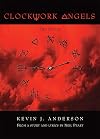
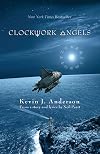
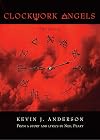
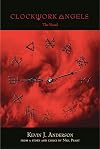
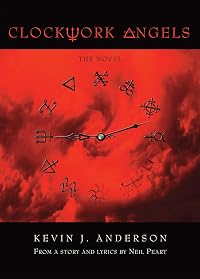
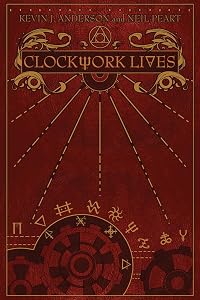
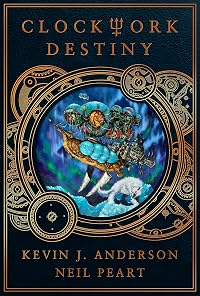
Which is a pity, because it's a very pretty book, physically, with rich, colorful illustrations, and a lovely parchment-y pattern marking the first page of every chapter. Also because I can't help feeling that it would be possible for a really good author to do something worthwhile with the story, something that would add to, rather than detract from, the experience of listening to the album. But Kevin J. Anderson is not that author. And, yes, Neil Peart apparently worked very closely with him on the story. But, look... Neil Peart's lyrics have meant a hell of a lot to me over the years, and seeing him doing his virtuoso drum performance live may be the closest I've come to a spiritual experience in my life. But he's not a novelist, and if a project like this was going to be a real success, I think he needed to be paired with someone more skillful in that area. show less
I am, I should probably say at the outset, a huge fan of Rush. But, this isn't my favorite entry in their discography. Heck, it's probably not even my favorite SF-dystopia show more concept album of theirs, even if I do generally prefer their more recent sound to that of their 2112 days. I certainly don't dislike it. It's decent enough. But it's never going to number among my favorites.
The book, however, I did dislike. Possibly more than it deserves. Don't get me wrong, it's not a good book. The writing is rather clunky and simplistic. The story and the characters are flat, and much less interesting than whatever I might have vaguely imagined for myself while listening to the album. And Anderson does an awkwardly obvious job of incorporating the album lyrics, as well as other random bits of lyrics from other Rush songs. No doubt this was intended to be cute and fun, a little easter egg for the fans. But I found it incredibly distracting, as if the author were constantly winking at me and going, "See what I did there?"
Honestly, though, I've read worse SF novels than this one and felt much less irritated by them. I can only conclude that the problem here is that the whole exercise took something I liked okay by an artist I love, and made me like it less, rather than more, made it more boring, rather than more interesting.
Which is a pity, because it's a very pretty book, physically, with rich, colorful illustrations, and a lovely parchment-y pattern marking the first page of every chapter. Also because I can't help feeling that it would be possible for a really good author to do something worthwhile with the story, something that would add to, rather than detract from, the experience of listening to the album. But Kevin J. Anderson is not that author. And, yes, Neil Peart apparently worked very closely with him on the story. But, look... Neil Peart's lyrics have meant a hell of a lot to me over the years, and seeing him doing his virtuoso drum performance live may be the closest I've come to a spiritual experience in my life. But he's not a novelist, and if a project like this was going to be a real success, I think he needed to be paired with someone more skillful in that area. show less
I should like this book. I love Rush, and I love the album that serves as the inspiration to this novel. So really, I should like this book. But I truly don't. It's horrible.
I've read (more than) enough Kevin J. Anderson to know he's a prolific, and terrifically lazy writer. He gets the job done, like a Big Mac will quench hunger, but it's all empty calories.
In this story, the protagonist, Owen Hardy, essentially gets led by the nose through all of the areas that were conveniently laid out at the beginning of the book. Crown City, the circus, on a supply ship, on an airship, and even strolls around the Seven Cities that no one up to that point have been able to even find. Through it all, he comes to learn he needs to be content, that show more home is where the heart is, or some other boring soundbite.
Don't get me wrong, there were a few moments of brilliance. The disappearing bookstore, the implication of other worlds, the Asimov/Foundation-like ability to predict behaviours, even the Seven Cities, had they not been mishandled so badly.
The problem was, instead of exploring any of these fascinating concepts, they were tiny jewels lobbed out into the vast wasteland of sand. Instead of capturing our attention, we were treated to a travelogue where nothing really exciting happened. Want an example? Owen was hungry, he offered to sweep a baker's floor. When he was done, the baker refused to pay him. So--dun dun DUNNNN! -Owen stole a pie! Gripping stuff, that.
As well, it felt as though Anderson threw in specific scenes simply to get a reference to a Rush lyric or reference to fit. Instead of stating that a tightrope walker performed with grace, he had to state she performed with grace under pressure. Instead of indicating that Owen decided to go his own way, he stated that his choice was to not make a choice, that he chose free will.
Come on. Write me a novel, not a game of find the Rush reference.
Reading Neil Peart's notes at the end, I saw that this book had a lot of its origins in some rather lofty, classic literature.
Then again, I consider the original Frank Herbert Dune series to be lofty, classic literature and Anderson, along with Herbert's son, took that and crapped all over it, so really, why would Anderson change his method now.
Beautiful book to look at. Great companion album to listen to. Terrible story. show less
I've read (more than) enough Kevin J. Anderson to know he's a prolific, and terrifically lazy writer. He gets the job done, like a Big Mac will quench hunger, but it's all empty calories.
In this story, the protagonist, Owen Hardy, essentially gets led by the nose through all of the areas that were conveniently laid out at the beginning of the book. Crown City, the circus, on a supply ship, on an airship, and even strolls around the Seven Cities that no one up to that point have been able to even find. Through it all, he comes to learn he needs to be content, that show more home is where the heart is, or some other boring soundbite.
Don't get me wrong, there were a few moments of brilliance. The disappearing bookstore, the implication of other worlds, the Asimov/Foundation-like ability to predict behaviours, even the Seven Cities, had they not been mishandled so badly.
The problem was, instead of exploring any of these fascinating concepts, they were tiny jewels lobbed out into the vast wasteland of sand. Instead of capturing our attention, we were treated to a travelogue where nothing really exciting happened. Want an example? Owen was hungry, he offered to sweep a baker's floor. When he was done, the baker refused to pay him. So--dun dun DUNNNN! -Owen stole a pie! Gripping stuff, that.
As well, it felt as though Anderson threw in specific scenes simply to get a reference to a Rush lyric or reference to fit. Instead of stating that a tightrope walker performed with grace, he had to state she performed with grace under pressure. Instead of indicating that Owen decided to go his own way, he stated that his choice was to not make a choice, that he chose free will.
Come on. Write me a novel, not a game of find the Rush reference.
Reading Neil Peart's notes at the end, I saw that this book had a lot of its origins in some rather lofty, classic literature.
Then again, I consider the original Frank Herbert Dune series to be lofty, classic literature and Anderson, along with Herbert's son, took that and crapped all over it, so really, why would Anderson change his method now.
Beautiful book to look at. Great companion album to listen to. Terrible story. show less
Prior to reading Clockwork Angels I would have rated Kevin J. Anderson’s outstanding Terra Incognita trilogy as his best work. Kevin has published many superb novels, and while I love them all, I really clicked with the Terra Incognita books. In fact, I had Kevin sign all three of my copies when I met him a few years ago. But Clockwork Angels is a special book. A stand alone novel based upon and inspired by Neil Peart’s lyrics for the Rush album of the same name, Clockwork Angels is a dazzling coming of age story. Part fantasy, part science fiction and part Steampunk, Clockwork Angels tells the story of young Owen Hardy who yearns to see more of the world. He does just that, and soon he discovers that his world isn’t what it show more seems, and his adventures test his endurance and willpower. He finds himself pulled between the forces of order and chaos. Learning to survive on his own, Owen falls in love, travels to remote parts of the world, and experience extreme loneliness and extraordinary adventures. Bibliophiles take note: the paperback edition from ECW Press in Canada includes stunning cover and interior images designed by Hugh Syme thus making this a real collector’s item. Neil Peart’s lyrics are included along with an essay by Peart on the book’s origin. Kevin J. Anderson has crafted a wholly original and heartfelt story that will touch readers of all ages. I really loved this book and I’m rating it a modern classic alongside Neil Gaiman’s Neverwhere. This is one you won’t want to miss. The Anarchist, the Watchmaker, Francesca, Cesar Magnusson and his carnival extravaganza, Commodore Pangloss, the seven cities of gold and other characters and places are all waiting to be discovered in the pages of this wonderful book. show less
Clockwork Angels is the companion book to the new Rush album of the same name. It's a steampunk fantasy describing a young man's dissatisfaction with his safe, ordered life in the Watchmaker's precisely ordered realm (even the rain arrives on time) and his embarkation on an impulsive adventure that rapidly spirals out of control. Through the book, the hero - Owen Hardy - changes from a naive boy to a young man.
However, if you are expecting complex plotting and multi-layered characters, you will not find them. Clockwork Angels is an allegory; Owen's physical journey represents his (and everyone's) journey to maturity, with the inevitable disillusionments and discoveries along the way. As you travel with him, you get to think about the show more virtue of balance, and the fact that extremes of either order or chaos can be equally undesirable; the nature of life and death; the purpose of imagination; and freedom - the freedom to choose, and the freedom to fail; and more. Some of these concepts occur as themes throughout the book (such as freedom) and others as vignettes covered only in one scene or part of a scene.
Anyone with an interest in philosophy or French literature will recognise a strong resemblance to Voltaire's Candide; in some ways, Clockwork Angels might be regarded as a retelling of Candide for a modern audience; the authors - for I include Neil Peart, Rush's drummer - say in an afterword that Candide 'was an early model for the story arc'. For Rush fans, there are also plenty of references to Rush's previous work.
So in conclusion, you can read this just as a steampunk fantasy and enjoy it, but by doing so I think you would miss out on the best bits. Read it slowly, and allocate it the brain space and time for some good thinking. You'll be glad you did. show less
However, if you are expecting complex plotting and multi-layered characters, you will not find them. Clockwork Angels is an allegory; Owen's physical journey represents his (and everyone's) journey to maturity, with the inevitable disillusionments and discoveries along the way. As you travel with him, you get to think about the show more virtue of balance, and the fact that extremes of either order or chaos can be equally undesirable; the nature of life and death; the purpose of imagination; and freedom - the freedom to choose, and the freedom to fail; and more. Some of these concepts occur as themes throughout the book (such as freedom) and others as vignettes covered only in one scene or part of a scene.
Anyone with an interest in philosophy or French literature will recognise a strong resemblance to Voltaire's Candide; in some ways, Clockwork Angels might be regarded as a retelling of Candide for a modern audience; the authors - for I include Neil Peart, Rush's drummer - say in an afterword that Candide 'was an early model for the story arc'. For Rush fans, there are also plenty of references to Rush's previous work.
So in conclusion, you can read this just as a steampunk fantasy and enjoy it, but by doing so I think you would miss out on the best bits. Read it slowly, and allocate it the brain space and time for some good thinking. You'll be glad you did. show less
I discovered this book quite by accident when I (literally) stumbled into the author's booth and saw the novel [2113] in the same booth. The author (not the late Neil Peart) described both books, and I only had the money for one so I bought [2113] first, then this book a year later. And it does not disappoint in the least for the delay!
It tells the story of young Owen Hardy, who inhabits the world described in the final Rush album, "Clockwork Angels." His life is orderly as prescribed by the Watchmaker who ensures that clocks run on time, that life is orderly, that the Hardy's apple orchard will have its rains at the correct time for the harvest and the cider making.
But Owen often looks to the stars and wonders what could be beyond in show more the capital of Albion, Crown City. He takes a steampunk-style train (a combination zeppelin and rail train, something I had a hard time grasping), and gets to finally see the Clockwork Angels perform their mechanized routine from the top of the clock tower.
And Owen wonders more, and finds a team of wandering circus performers, and as he finds there is more to life than living in the "best of all possible worlds" he travels with the players until his heart is broken and then takes ship for the island of Poseidon. Terrible things happen, he makes his escape, and finally goes on his solo venture to find the Seven Cities of Gold that his late mother's book describes in detail.
I love the imagery in this book, the way in which the album is expanded into story, and the bits of Rush lyrics were fun to come across. I think this is the first book of Kevin Anderson's I've read (though I've probably seen episodes of his TV writing), and now that Neil Peart is no longer with us, the insights he provides at the end are especially poignant. show less
It tells the story of young Owen Hardy, who inhabits the world described in the final Rush album, "Clockwork Angels." His life is orderly as prescribed by the Watchmaker who ensures that clocks run on time, that life is orderly, that the Hardy's apple orchard will have its rains at the correct time for the harvest and the cider making.
But Owen often looks to the stars and wonders what could be beyond in show more the capital of Albion, Crown City. He takes a steampunk-style train (a combination zeppelin and rail train, something I had a hard time grasping), and gets to finally see the Clockwork Angels perform their mechanized routine from the top of the clock tower.
And Owen wonders more, and finds a team of wandering circus performers, and as he finds there is more to life than living in the "best of all possible worlds" he travels with the players until his heart is broken and then takes ship for the island of Poseidon. Terrible things happen, he makes his escape, and finally goes on his solo venture to find the Seven Cities of Gold that his late mother's book describes in detail.
I love the imagery in this book, the way in which the album is expanded into story, and the bits of Rush lyrics were fun to come across. I think this is the first book of Kevin Anderson's I've read (though I've probably seen episodes of his TV writing), and now that Neil Peart is no longer with us, the insights he provides at the end are especially poignant. show less
I loved this book. It presents a really cool world, one I wish had more books about it. The concept of intersecting worlds introduced in this story is lovely, and I really love the aesthetics of the clockwork angels. It's also satisfying that while we see in this novel how the seeming utopia of Albion is not perfect, we also see how it does provide a happy, safe, fulfilling lifestyle for most of its people. This is a much more nuanced concept than just criticizing the clockwork society for its restrictiveness, and offered a lot to think about.
This book takes a bit of time to get into, but I'm glad I did. I finished two days after I bought it, so it must be good.
The slow start comes from a pretty bland opening, with a naive, good-hearted dreamer named Owen Hardy as our protagonist. Having grown up in the sleepy rural village of Barrel Arbor, under the absurdly rigid rule of the Watchmaker, he longs for a bit of adventure and excitement before he gets married and his life becomes entirely predictable from there on out.
Aside from the inciting incident (a mysterious man helps Owen hitch a ride on a cargo train to see the magnificent capitol Crown City), nothing much interesting happens for the first half of the book. He sees plenty of interesting sights, and meets some show more interesting characters, but until about halfway through it never feels like there's anything at stake for him, and he's never in any danger. Things get much more exciting then, but this book is about a young man's coming of age, with adventure serving more of a means to an end, rather than the whole focus of the story.
What that leaves us with is sort of a cross between Jeffrey Ford's The Well Built City trilogy and Voltaire's Candide. The latter was actually a heavy influence, and there are numerous references to it throughout the text. There is symbolism in abundance (not as deep as Ford's, though), and the recurring theme is the balance between extreme stability (represented by the benevolent, though misguided Watchmaker) and extreme freedom (represented by the villainous Anarchist). It requires the right mindset to enjoy, I think. Unlike most stories I've read, where something goes terribly wrong right at the beginning and the drama comes from the characters overcoming it, the events in Clockwork Angels just sort of happen, some good, some bad, and we get to see how Owen reacts to them and learns from them.
The setting of this story is excellent, though it also takes some time to become interesting, since it begins in a sleepy rural village, after all. It's steampunk, after a fashion, due to the abundance of clockworks and steam power, but it differs significantly from the usual steampunk by the inclusion of alchemy. All their steam boilers are powered by alchemical reactions, namely a chemical called "coldfire." Throughout the book, their civilization's mastery of alchemy lends the setting a unique feel, where lists of exotic reagents (molybdenum, natrium, potassium, precision gems, moonstone, dreamstone, redfire opals, etc.) can create dazzling, magical effects. What's more, since this is an young man's coming of age adventure, we see numerous locales, each very distinct and very well realized.
The characters are quite good, as well. Though I started off not really liking Owen for his ignorance and naivete, towards the end of the book he becomes a much more well-rounded and self-assured character. Then you have the Watchmaker and his misguided benevolence, the Anarchist, with his pent up anger and dangerous "freedom at all costs" philosophy, a troupe of carnies he travels with for a time, and more. It is a world populated by all sorts.
Though it may have been slow to start, and not exactly the sort of fantasy book I'm accustomed to reading, I found it to be a very enjoyable and refreshing experience. I strongly recommend it. show less
The slow start comes from a pretty bland opening, with a naive, good-hearted dreamer named Owen Hardy as our protagonist. Having grown up in the sleepy rural village of Barrel Arbor, under the absurdly rigid rule of the Watchmaker, he longs for a bit of adventure and excitement before he gets married and his life becomes entirely predictable from there on out.
Aside from the inciting incident (a mysterious man helps Owen hitch a ride on a cargo train to see the magnificent capitol Crown City), nothing much interesting happens for the first half of the book. He sees plenty of interesting sights, and meets some show more interesting characters, but until about halfway through it never feels like there's anything at stake for him, and he's never in any danger. Things get much more exciting then, but this book is about a young man's coming of age, with adventure serving more of a means to an end, rather than the whole focus of the story.
What that leaves us with is sort of a cross between Jeffrey Ford's The Well Built City trilogy and Voltaire's Candide. The latter was actually a heavy influence, and there are numerous references to it throughout the text. There is symbolism in abundance (not as deep as Ford's, though), and the recurring theme is the balance between extreme stability (represented by the benevolent, though misguided Watchmaker) and extreme freedom (represented by the villainous Anarchist). It requires the right mindset to enjoy, I think. Unlike most stories I've read, where something goes terribly wrong right at the beginning and the drama comes from the characters overcoming it, the events in Clockwork Angels just sort of happen, some good, some bad, and we get to see how Owen reacts to them and learns from them.
The setting of this story is excellent, though it also takes some time to become interesting, since it begins in a sleepy rural village, after all. It's steampunk, after a fashion, due to the abundance of clockworks and steam power, but it differs significantly from the usual steampunk by the inclusion of alchemy. All their steam boilers are powered by alchemical reactions, namely a chemical called "coldfire." Throughout the book, their civilization's mastery of alchemy lends the setting a unique feel, where lists of exotic reagents (molybdenum, natrium, potassium, precision gems, moonstone, dreamstone, redfire opals, etc.) can create dazzling, magical effects. What's more, since this is an young man's coming of age adventure, we see numerous locales, each very distinct and very well realized.
The characters are quite good, as well. Though I started off not really liking Owen for his ignorance and naivete, towards the end of the book he becomes a much more well-rounded and self-assured character. Then you have the Watchmaker and his misguided benevolence, the Anarchist, with his pent up anger and dangerous "freedom at all costs" philosophy, a troupe of carnies he travels with for a time, and more. It is a world populated by all sorts.
Though it may have been slow to start, and not exactly the sort of fantasy book I'm accustomed to reading, I found it to be a very enjoyable and refreshing experience. I strongly recommend it. show less
Members
- Recently Added By
Lists

Books featured on I Don't Even Own a Television
167 works; 3 members
Author Information

461+ Works 86,491 Members
Kevin J. Anderson was born on March 27, 1962. Before becoming a full-time author, he worked in California for twelve years as a technical writer and editor at the Lawrence Livermore National Laboratory. His science fiction books include Resurrection, Inc., the Star Wars Jedi Academy Trilogy, the Young Jedi Knights series, Ground Zero, Ruins, show more Climbing Olympus, Blindfold, and The Dark Between the Stars. He has also written several books with Doug Beason including Ignition, Virtual Destruction, Fallout, and Ill Wind. (Bowker Author Biography) Kevin J. Anderson has written twenty seven bestsellers and has been nominated for the Nebula Award, the Bram Stoker Award, and the SFX Reader's Choice Award. He also holds the Guinness world record for "The Largest Single-Author Signing". (Publisher Provided) show less
All Editions
Awards and Honors
Awards
Series

Work Relationships
Is contained in
Is an adaptation of
Has the adaptation
Common Knowledge
- Canonical title
- Clockwork Angels
- Original publication date
- 2012-09
- People/Characters
- Owen Hardy
Classifications
Statistics
- Members
- 425
- Popularity
- 72,629
- Reviews
- 23
- Rating
- (3.39)
- Languages
- English, Portuguese
- Media
- Paper, Audiobook, Ebook
- ISBNs
- 21
- ASINs
- 6