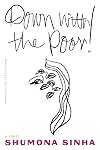
Down with the Poor!
by Shumona Sinha
On This Page
Description
"Over the course of a night in police custody, a young woman tries to understand the rage that led her to assault a refugee on the Paris metro. She too is a foreigner, now earning a living as an interpreter for asylum seekers in the outskirts of the city. Down With the Poor!, which borrows its title from a poem by Baudelaire, is the story of a woman who, little by little, is contaminated by the violence of the world"--Tags
Recommendations
















































Member Recommendations

Member Reviews
Down with the Poor! by Shumona Sinha is a powerful and disturbing novel that highlights how, over time, we can become exactly what we believe ourselves not to be, and the role the society we live in plays a part in that transformation.
There are many books I suggest reading a slower, or at least taking breaks to let the ideas percolate a bit before moving on. Normally, this is exactly the type of book where I make such a suggestion. The writing is poetic but dense, with detailed descriptions and mental wrestling, but is a short book that can make for a quick read. I'm hesitant, however, to suggest spreading it out, mainly because I think the density and the constant rationalization of ugly behavior makes it one that needs to be read in show more one sitting. The reader needs, I think, to feel the full weight of what has happened, both the physical attack and the gradual deterioration of a person's humanity. That isn't to say this is a comfortable experience, it isn't, especially if you also reflect about how you have changed over time, and not always for the better.
I would recommend, however, taking the time to reread it at a more measured pace, giving yourself time every couple of chapters to relate the actions and thoughts in the novel to the world we live in, both the personal and public spheres. After experiencing the novel as a gut punch the first time, rereading with more reflective thought helps to give the reader more, and more impactful, takeaways. At least, it did for me.
I know that some readers absolutely hate to read things that upset them, and for them this will likely be a DNF. If, however, you're a reader who likes at least some books to be more than simply entertainment, you will find yourself carrying some of the ideas here with you after you put it down.
I know I am oversimplifying with my next assessment, but I do think it is a way to grasp the big picture. Namely, the things that are normalized in society, positive or negative, become internalized by the individuals in that society. That general statement includes the topics touched on in this book but is also applicable to any issue. The normalization might be because of the way judgements become institutionalized as facts, or simply because some ways of thinking have been given unwarranted placement in the world. We can even, as is evident in so many areas, become self-loathing without even being fully aware of it.
Reviewed from a copy made available by the publisher via Edelweiss. show less
There are many books I suggest reading a slower, or at least taking breaks to let the ideas percolate a bit before moving on. Normally, this is exactly the type of book where I make such a suggestion. The writing is poetic but dense, with detailed descriptions and mental wrestling, but is a short book that can make for a quick read. I'm hesitant, however, to suggest spreading it out, mainly because I think the density and the constant rationalization of ugly behavior makes it one that needs to be read in show more one sitting. The reader needs, I think, to feel the full weight of what has happened, both the physical attack and the gradual deterioration of a person's humanity. That isn't to say this is a comfortable experience, it isn't, especially if you also reflect about how you have changed over time, and not always for the better.
I would recommend, however, taking the time to reread it at a more measured pace, giving yourself time every couple of chapters to relate the actions and thoughts in the novel to the world we live in, both the personal and public spheres. After experiencing the novel as a gut punch the first time, rereading with more reflective thought helps to give the reader more, and more impactful, takeaways. At least, it did for me.
I know that some readers absolutely hate to read things that upset them, and for them this will likely be a DNF. If, however, you're a reader who likes at least some books to be more than simply entertainment, you will find yourself carrying some of the ideas here with you after you put it down.
I know I am oversimplifying with my next assessment, but I do think it is a way to grasp the big picture. Namely, the things that are normalized in society, positive or negative, become internalized by the individuals in that society. That general statement includes the topics touched on in this book but is also applicable to any issue. The normalization might be because of the way judgements become institutionalized as facts, or simply because some ways of thinking have been given unwarranted placement in the world. We can even, as is evident in so many areas, become self-loathing without even being fully aware of it.
Reviewed from a copy made available by the publisher via Edelweiss. show less
So ganz viel kann ich diesem Buch nicht abgewinnen. Das liegt nicht an der Geschichte, inhaltlich kann ich das Buch verstehen, aber die Form und die erzählende Person erzeugen Widerstand in mir. Vermutlich hätte ich mich mit einem sachlichen Artikel zum Thema leichter getan.
Ich verstehe es so, dass die Autorin einerseits den Finger darauf legt, wie schwierig es für unser Asylsystem ist, Menschen aus den Gründen, die sie tatsächlich haben (in der Regel Armut), zuzulassen. Niemand gibt seine Heimat leichtfertig auf, doch die wahren Gründe zählen nicht und so müssen die Asylbewerber Geschichten erfinden. Und die Mitarbeitenden in den Behörden müssen versuchen, dem Wahrheitsgehalt dieser Geschichten auf die Spur zu kommen. Obwohl show more auf beiden Seiten des Tisches Menschen sitzen, haben Misstrauen und Missachtung oberste Priorität.
Und dann verstehe ich noch, dass die Autorin darstellt, wie eine Frau, die selbst aufgrund ihrer Hautfarbe sofort als Migrantin einsortiert wird, die Menschen (eigentlich ja die Männer!) und ihre Geschichten immer mehr von ihrer eigenen Geschichte abspaltet. Sie selbst nimmt sich anders wahr, integriert und intellektuell. Doch nun, herzuntergezogen durch die neuen Migranten, findet sie sich selbst plötzlich an dem Tisch wieder, an dem sie bisher auf der anderen Seite saß.
Das sind nach meinem Dafürhalten die Themen, doch ich mag trotz des sicher berechtigten Anliegens das Buch nicht und finde sowohl die Kernaussage als auch die Protagonistin schwierig. show less
Ich verstehe es so, dass die Autorin einerseits den Finger darauf legt, wie schwierig es für unser Asylsystem ist, Menschen aus den Gründen, die sie tatsächlich haben (in der Regel Armut), zuzulassen. Niemand gibt seine Heimat leichtfertig auf, doch die wahren Gründe zählen nicht und so müssen die Asylbewerber Geschichten erfinden. Und die Mitarbeitenden in den Behörden müssen versuchen, dem Wahrheitsgehalt dieser Geschichten auf die Spur zu kommen. Obwohl show more auf beiden Seiten des Tisches Menschen sitzen, haben Misstrauen und Missachtung oberste Priorität.
Und dann verstehe ich noch, dass die Autorin darstellt, wie eine Frau, die selbst aufgrund ihrer Hautfarbe sofort als Migrantin einsortiert wird, die Menschen (eigentlich ja die Männer!) und ihre Geschichten immer mehr von ihrer eigenen Geschichte abspaltet. Sie selbst nimmt sich anders wahr, integriert und intellektuell. Doch nun, herzuntergezogen durch die neuen Migranten, findet sie sich selbst plötzlich an dem Tisch wieder, an dem sie bisher auf der anderen Seite saß.
Das sind nach meinem Dafürhalten die Themen, doch ich mag trotz des sicher berechtigten Anliegens das Buch nicht und finde sowohl die Kernaussage als auch die Protagonistin schwierig. show less
Dec 9, 2019German
Passage obligé pour immigrer en France, l'interrogatoire des motivations des candidats à venir en France. Vérité, mensonges, questionnaire , on suit une immigrée d'Inde qui est devenue interpréte pour la police de l'immigration et la justice et qui regarde ces êtres humains démunis, prêt à...
Apr 14, 2012French
Ratings
Members
- Recently Added By
Lists

Novels featuring language professionals
98 works; 12 members

Indian Diaspora
42 works; 2 members

Translingualism
191 works; 4 members
Author Information
6 Works 103 Members
Awards and Honors
Common Knowledge
- Canonical title
- Down with the Poor!
- Original title
- Assommons les pauvres!
- Original publication date
- 2011
- People/Characters*
- Herr K.
- Important places*
- französische Migrationsbehörde; Französische Migrationsbehörde
- First words*
- Erschöpft und mürbe sinke ich auf den feuchten Boden meiner Zelle und denke wieder an diese Leute, die wie ungeliebte Quallen die Meere befallen und sich an fremde Ufer geworfen haben.
- Quotations*
- Menschenrechte enthalten nicht das Recht, dem Elend zu entkommen. Es brauchte einen edleren Grund, einen, der politisches Asyl rechtfertigte. Weder das Elend noch die sich rächende Natur, die ihr Land zerstörte, konnten ihr... (show all) Exil, ihre verzweifelte Hoffnung auf Leben rechtfertigen. Kein Gesetz erlaubte ihnen die Einreise in dieses Land Europas, wenn sie keine politischen oder religiösen Gründe vorbrachten, wenn sie keine sichtbaren Spuren einer Verfolgung an sich nachweisen konnten. Also mussten sie die Wahrheit verstecken, vergessen, verlernen und eine neue erfinden. Die Märchen der menschlichen Zugvögel. Mit gebrochenen Flügeln und schmierigen, stinkenden Federn. Mit Träumen traurig wie Lumpen.
- Original language*
- französisch
*Some information comes from Common Knowledge in other languages. Click "Edit" for more information.
Classifications
Statistics
- Members
- 56
- Popularity
- 548,268
- Reviews
- 3
- Rating
- (3.33)
- Languages
- English, French, German
- Media
- Paper, Ebook
- ISBNs
- 9
- ASINs
- 4