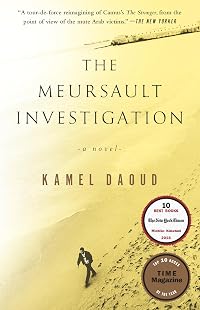
The Meursault Investigation
by Kamel Daoud
On This Page
Description
"This response to Camus's The Stranger is at once a love story and a political manifesto about post-colonial Algeria, Islam, and the irrelevance of Arab lives. He was the brother of "the Arab" killed by the infamous Meursault, the antihero of Camus's classic novel. Seventy years after that event, Harun, who has lived since childhood in the shadow of his sibling's memory, refuses to let him remain anonymous: he gives his brother a story and a name--Musa--and describes the events that led to show more Musa's casual murder on a dazzlingly sunny beach. Harun is an old man tormented by frustration. In a bar in Oran, night after night, he ruminates on his solitude, on his anger with men desperate for a god, and on his disarray when faced with a country that has so disappointed him. A stranger among his own people, he wants to be granted, finally, the right to die. The Stranger is of course central to Daoud's novel, in which he both endorses and criticizes one of the most famous novels in the world. A worthy complement to its great predecessor, The Mersault Investigation is not only a profound meditation on Arab identity and the disastrous effects of colonialism in Algeria, but also a stunning work of literature in its own right, told in a unique and affecting voice."-- show lessTags
Recommendations


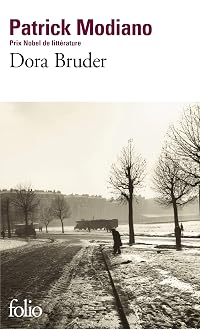
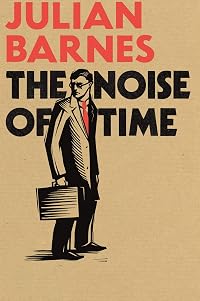
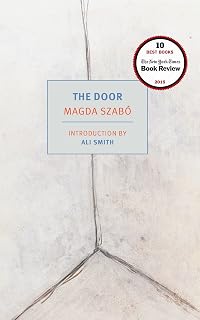
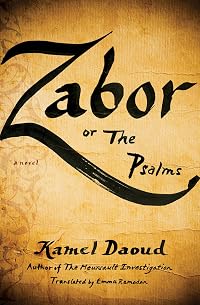


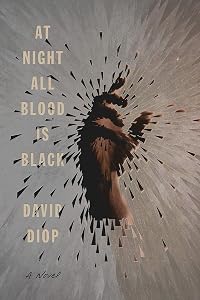
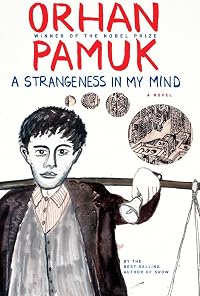
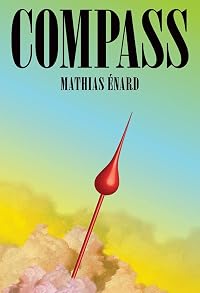
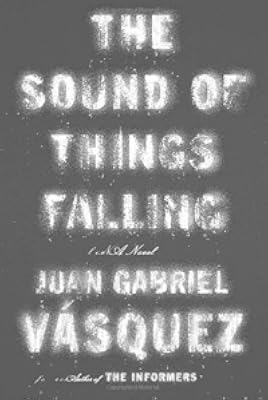


Member Recommendations
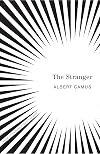
JuliaMaria Meursault ist der Protagonist in dem existentialistischen Roman "Der Fremde", auf den sich Daoud in seiner Gegendarstellung bezieht.
Also recommended by Philosofiction, kjuliff
40
thorold Literary accounts of wars of decolonisation as seen from the side of the colonised.
Member Reviews
Set in the post-modern land of deconstructive textuality, a confessed liar, Harun, affirms his affinity by blood to “the Arab”, the unnamed other in Camus’ famous novel, L’Étranger, the one whom Camus’ narrator, Meursault, murders in cold (or hot) blood on that sandy beach in Algiers one afternoon. Harun names the unnamed victim to be none other than Musa, his brother. Now, fifty years later, in a wine-soaked, maundering rant, Harun wants to share his story. His chosen interlocutor is an unnamed academic, a researcher exploring the broader aspects of Camus’ existentialist novel. Harun describes his mother’s investigation into the death of her son, the empty grave, her abandonment of Algiers with her younger son, and the show more years of lassitude followed by one decisive act in the middle of night on the 5th of July, 1962.
Daoud’s novel is brilliantly set in the shadow of Camus’ novel but equally in the shadow of Algeria itself and its blood-soaked transition from French rule to, most recently, a quasi-religious state. Daoud’s narrator is ambivalent in the extreme but for this one certainty — that he is the brother of the slain unnamed Arab of Camus’ novel. It is a claim both definitive and absurd, as befits an inheritor of Camus’ mantel. Daoud plays with the possibilities, including numerous allusions to Defoe’s savage, himself re-imagined by Michel Tournier in his famous novel Vendredi ou les limbes du Pacifique. Indeed, there are levels of play at work here that only an adept may be able to discern. That, of course, makes Daoud’s novel fascinating but also challenging; neither an easy read nor an entirely satisfying one. Nevertheless, for the sheer audacity of it I could hardly do less than at least gently recommend it. show less
Daoud’s novel is brilliantly set in the shadow of Camus’ novel but equally in the shadow of Algeria itself and its blood-soaked transition from French rule to, most recently, a quasi-religious state. Daoud’s narrator is ambivalent in the extreme but for this one certainty — that he is the brother of the slain unnamed Arab of Camus’ novel. It is a claim both definitive and absurd, as befits an inheritor of Camus’ mantel. Daoud plays with the possibilities, including numerous allusions to Defoe’s savage, himself re-imagined by Michel Tournier in his famous novel Vendredi ou les limbes du Pacifique. Indeed, there are levels of play at work here that only an adept may be able to discern. That, of course, makes Daoud’s novel fascinating but also challenging; neither an easy read nor an entirely satisfying one. Nevertheless, for the sheer audacity of it I could hardly do less than at least gently recommend it. show less
The Meursault Investigation by Kamel Daoud is an Algerian answer to Albert Camus’ story The Stranger in which a Frenchman, Meursault, casually murders an Arab on the beach at Algiers. This short novel is supposedly narrated by the brother of the murdered Arab and is told some 70 years after the event.
In The Stranger much is written about Meursault, his feelings, his reactions, his story and yet the victim of the crime remains a nameless Arab. In this account we are given his name, Musa, and although he is unable to speak for himself, his brother, Harun, tells of his family and home. One of the tragedies of this story is the fact that Harun and his mother were unable to claim the body, as his name is never entered into any of the show more official records. The mother, tremendously grief-stricken becomes obsessed with seeking retribution. In an effort to appease his Mother, Harun kills a French settler, but instead of calling attention by committing a revenge murder, his action is considered a badly-timed killing as it occured shortly after the cease-fire that signalled the end of the war for independence.
The Meursault Investigation is a literary re-telling but in this version it is more than a simple counterpoint to the original. The country of Algeria becomes more than just the setting as the author meditates on the post-colonial failures of his country and doesn’t particularly sing out praises for how it is now being run. The author has received mixed reactions to this book, some shower him with literary acclaim, while many right-wing Muslims feel he should be on trial for blasphemy. show less
In The Stranger much is written about Meursault, his feelings, his reactions, his story and yet the victim of the crime remains a nameless Arab. In this account we are given his name, Musa, and although he is unable to speak for himself, his brother, Harun, tells of his family and home. One of the tragedies of this story is the fact that Harun and his mother were unable to claim the body, as his name is never entered into any of the show more official records. The mother, tremendously grief-stricken becomes obsessed with seeking retribution. In an effort to appease his Mother, Harun kills a French settler, but instead of calling attention by committing a revenge murder, his action is considered a badly-timed killing as it occured shortly after the cease-fire that signalled the end of the war for independence.
The Meursault Investigation is a literary re-telling but in this version it is more than a simple counterpoint to the original. The country of Algeria becomes more than just the setting as the author meditates on the post-colonial failures of his country and doesn’t particularly sing out praises for how it is now being run. The author has received mixed reactions to this book, some shower him with literary acclaim, while many right-wing Muslims feel he should be on trial for blasphemy. show less
This novel is a response to [author:Albert Camus|957894]'s [book:The Stranger|49552]. While The Stranger is all about the pied-noir (French colonizer; born in Algeria) Meursault and his crime of murdering "the Arab", Daoud has written this book to give that Arab a name and family. The book is narrated by Musa's brother, who was just 7 when he was murdered, and Harun's entire life has been dictated by his brother's murder, his mother's grief, his own confusion.
I was expecting something very different from what I got. While Harun names his brother Musa, we don't learn much more about him. Instead Harun rants--about the police who never found/lost his brother's body, the French, the readers of The Stranger, Algerians who expected him to show more fight for independence, religion in general, his own crime, the difficulty his mother had raising him alone. Really he shows (and admits) ho disturbingly similar he and Meursault are, right down to not knowing how old their mothers are (which, among other details irrelevant to his crime, got Meursault executed). So the colonizer was executed for his lack of social graces while his victim was ignored and unnamed, while Harun is let go and his French victim is named--there is a lot here to unpack between the results of their crimes, the similarities between the mothers and the sons and their relationships, their inabilities to fit in "properly". Despite all this, the book was still quite dull to read. show less
I was expecting something very different from what I got. While Harun names his brother Musa, we don't learn much more about him. Instead Harun rants--about the police who never found/lost his brother's body, the French, the readers of The Stranger, Algerians who expected him to show more fight for independence, religion in general, his own crime, the difficulty his mother had raising him alone. Really he shows (and admits) ho disturbingly similar he and Meursault are, right down to not knowing how old their mothers are (which, among other details irrelevant to his crime, got Meursault executed). So the colonizer was executed for his lack of social graces while his victim was ignored and unnamed, while Harun is let go and his French victim is named--there is a lot here to unpack between the results of their crimes, the similarities between the mothers and the sons and their relationships, their inabilities to fit in "properly". Despite all this, the book was still quite dull to read. show less
A French graduate student whose main interest is Albert Camus's novel The Stranger and its characters travels to the Algerian port city of Oran, to learn more about what happened to the unnamed Arab that the protagonist, Meursault, shot to death on a beach in Algiers 70 years ago. In a seedy pub he meets Harun, the younger brother of the victim, an irascible old man who still seethes with resentment over the events of that fateful day and its aftermath. Through Harun we learn that his brother's name was Musa, and that his corpse was never found, which prevented his mother from achieving a sense of closure, and led her and her son on an futile and endless quest to find him and to gain both revenge and peace.
As the student, who like Musa show more in The Stranger is also unnamed and voiceless, listens, Harun shares the story of his own absurd life, which mirrors that of Meursault's in many respects. Although Harun is fiercely critical of Meursault and Camus, who chose to ignore his brother, thus dehumanizing him and, therefore, all Arabs, he knows The Stranger by heart and respects what its author has accomplished in writing it. Through him a portrait of Algeria from an Arab viewpoint emerges, from the colonial days when they were often brutally suppressed by the pied noirs, to the War for Independence, and especially the current state of the troubled country, where the possibility of a restricted society run by Islamic fundamentalists is juxtaposed against the similar restrictions of life under the current government run by the military.
The Meursault Investigation is a superb novel, which both mirrors and expounds upon The Stranger to portray the life of Meursault's victim, critique the actions of Meursault and the limited viewpoint of Camus, and explore the near parallel life of the victim's brother and the absurdity of post-independence Algerian society. I would strongly advise you to read The Stranger before starting this book, as it assumes that the reader is familiar with Camus's novel. You will get much more out of this book if you do so. show less
As the student, who like Musa show more in The Stranger is also unnamed and voiceless, listens, Harun shares the story of his own absurd life, which mirrors that of Meursault's in many respects. Although Harun is fiercely critical of Meursault and Camus, who chose to ignore his brother, thus dehumanizing him and, therefore, all Arabs, he knows The Stranger by heart and respects what its author has accomplished in writing it. Through him a portrait of Algeria from an Arab viewpoint emerges, from the colonial days when they were often brutally suppressed by the pied noirs, to the War for Independence, and especially the current state of the troubled country, where the possibility of a restricted society run by Islamic fundamentalists is juxtaposed against the similar restrictions of life under the current government run by the military.
The Meursault Investigation is a superb novel, which both mirrors and expounds upon The Stranger to portray the life of Meursault's victim, critique the actions of Meursault and the limited viewpoint of Camus, and explore the near parallel life of the victim's brother and the absurdity of post-independence Algerian society. I would strongly advise you to read The Stranger before starting this book, as it assumes that the reader is familiar with Camus's novel. You will get much more out of this book if you do so. show less
What Daoud does is to pretend to take L'Ètranger literally, as the report of a murder, and retell it from the point of view of the victim's family. The man Meursault kills has essentially no identity in Camus's story: all we are told is that he is "an Arab", who is seeking revenge on his sister's pimp, Meursault's neighbour Raymond. Daoud gives him the name Moussa, writes the girl out of the story, and gives him a younger brother, Haroun, who is telling a long-suffering PhD candidate the story of his life in one of the few remaining bars in post-independence Oran.
It soon becomes obvious that we aren't meant to take Haroun's postcolonial rant entirely literally, any more than Camus wants us to take Meursault as a simple projection of show more his own views. For one thing, Haroun lives in a language-space that is almost entirely defined by Camus's French prose. Practically every phrase in the book is an echo of something from L'Ètranger, often inverted or bizarrely repurposed. True to his rhetoric, Haroun never mentions Camus by name, and talks about him as though he and Meursault are one and the same, but nonetheless he never fails to acknowledge him as "votre {the listener's} génie". For another, Haroun is himself at odds with modern Algeria in much the same way that Meursault was with its colonial predecessor. His real crime is that he has also killed someone (a Frenchman, in the closing stages of the war of independence), but what he is condemned for by his neighbours is his consumption of alcohol and refusal to conform to the outward norms of Isalmic society.
There's also obviously a lot of Biblical symbolism going on in the background too. The brothers are Moussa and Haroun, i.e. Moses and Aaron - Moussa being the one associated with a rock and a spring, Haroun the one who gets to see the promised land of independent Algeria; Haroun's sometime girlfriend is Meriem, the Arabic counterpart of Marie, the name of Meursault's young lady; the Frenchman Haroun kills is Joseph, who is symbolically put in a well...
So, I'm not completely convinced, but this is certainly a very clever book, and one that is rather more respectful of Camus's text than might appear at first sight, and I think it also adds some non-obvious insights into the cultural legacy of colonialism. show less
It soon becomes obvious that we aren't meant to take Haroun's postcolonial rant entirely literally, any more than Camus wants us to take Meursault as a simple projection of show more his own views. For one thing, Haroun lives in a language-space that is almost entirely defined by Camus's French prose. Practically every phrase in the book is an echo of something from L'Ètranger, often inverted or bizarrely repurposed. True to his rhetoric, Haroun never mentions Camus by name, and talks about him as though he and Meursault are one and the same, but nonetheless he never fails to acknowledge him as "votre {the listener's} génie". For another, Haroun is himself at odds with modern Algeria in much the same way that Meursault was with its colonial predecessor. His real crime is that he has also killed someone (a Frenchman, in the closing stages of the war of independence), but what he is condemned for by his neighbours is his consumption of alcohol and refusal to conform to the outward norms of Isalmic society.
There's also obviously a lot of Biblical symbolism going on in the background too. The brothers are Moussa and Haroun, i.e. Moses and Aaron - Moussa being the one associated with a rock and a spring, Haroun the one who gets to see the promised land of independent Algeria; Haroun's sometime girlfriend is Meriem, the Arabic counterpart of Marie, the name of Meursault's young lady; the Frenchman Haroun kills is Joseph, who is symbolically put in a well...
So, I'm not completely convinced, but this is certainly a very clever book, and one that is rather more respectful of Camus's text than might appear at first sight, and I think it also adds some non-obvious insights into the cultural legacy of colonialism. show less
I sat down & read both The Stranger & The Meursault Investigation back-to-back.
They compliment each other beautifully.
The Stranger is Camus' famous tale. Clipped & clinical in tone, it weaves a simple, yet absurd, story of malaise & murder. The Meursault Investigation is the rebuttal, almost breathless (& reminiscent of Camus' narrator in The Fall), poured out by the murdered man's brother many, many years later. They are yin & yang, separate, opposite, yet twins too.
For the budding philosophers or literature lovers in your life, both these books together would make an excellent gift set.
They compliment each other beautifully.
The Stranger is Camus' famous tale. Clipped & clinical in tone, it weaves a simple, yet absurd, story of malaise & murder. The Meursault Investigation is the rebuttal, almost breathless (& reminiscent of Camus' narrator in The Fall), poured out by the murdered man's brother many, many years later. They are yin & yang, separate, opposite, yet twins too.
For the budding philosophers or literature lovers in your life, both these books together would make an excellent gift set.
Kamel Daoud: The Meursault Investigation
It is a bold writer who takes an acknowledged classic, Camus's The Stranger (aka The Outsider) and writes a novel that gives the other side of the story as told by the brother of the man who is murdered in the Camus book.
Daoud does it well. First, by giving the murdered man a name. In Camus, he is always just referred to as just "the Arab", but the narrator of Daoud's story, now an older man, Harun, identifies him as his brother, Musa. Something as simple as a name recognizes a common humanity and elevates the impact of the tragedy of the murder. Through Harun, we learn something of Musa as an individual with life, work, personality, interests, family...all snatched away in an instant in the show more broiling sun on a beach that no longer exists.
The novel is more about Harun's life in the decades that have passed since the murder; an event that completely overshadowed, determined, shaped Harun's life and relationships, especially with his mother who spends her life mourning and martyred for the loss of her son, seeking witnesses and testimonies and documents to try to puzzle-out the "why" of the tragedy. But of course, there is no "why", no explanation. In Daoud's novel there is not even a body. In Camus nothing is said about the disposal or mourning or burial of "the Arab"; in Daoud the body has simply vanished thus compounding the deep disorientation and loss.
Daoud's goal is broader than just a clever re-telling of the Camus story from the angle of the victims, i.e. the murdered man and the ripple effects through the lives of Harun and his mother. Musa becomes a metaphor for all the nameless, marginalized, forgotten people in the cauldron of colonialism and who,, more broadly, have always existed, and continue to exist, in all societies. Some, like Musa, are murdered, others are killed in wars and conflicts, and some are "killed" by simply being passed over in silence and forgetfulness--those who are invisible because they are different in colour, class, nationality, religion, sex, age or whatever pigeon-hole is used to classify the "other". Harun says he wants to "speak in the place of the dead man", but in so doing, he speaks to humanity.
Harun is decidedly anti-religion which does not serve him well in the increasingly Islamic society that follows independence from France. He abhors religions, "All of them! Because they falsify the weight of the world" and he applies a novel metaphor: "As far as I'm concerned, religion is public transportation I never use. This God--I like traveling in his direction, on foot if necessary, but I don't want to take an organized trip."
A number of themes weave through the novel. One is the nature of language in structuring the world as enabler of expression and insulator from ideas. Harun learned French because his mother's Arabic is, "...rich, full of imagery, vitality, sudden jolts, and improvisations, but not too big on precision...I had to learn a language other than that one...Books and your hero's language gradually enabled me to name things differently and to organize the world with my own words."
The extension of language is the ability to present it in writing and Harun is full of admiration for how Camus achieved this: "I knew your hero's genius: the ability to tear open the common, everyday language and emerge on the other side, where a more devastating language is waiting to narrate the world in another way. That's it! The reason why your hero tells the story of my brother's murder so well is that he'd reached a new territory, a language that was unknown and grew more powerful in his embrace, the words like pitilessly carved stonse, a language as naked as Euclidian geometry."
Memory is critical. As Harun says in an opening line in the book, "I've rehashed this story in my head so often, I almost can't remember it anymore." The past frames and validates the present, but the past is continually reshaped by the mutability of memory, aside from any deliberate attempts to reframe it to justify actions and experiences. So, where does 'truth' lie? In speaking of a principal character in Camus, Harun says, "...I wonder if he ever existed. Just as I've come to doubt the time of the killing, the presence of salt in the killer's eyes, and even, sometimes, my brother Musa's very existence." The amorphous and sometimes self-serving natures of 'fact' and 'truth' pervade the novel, and life.
Daoud blurs the lines between fiction and reality. The books by Camus and Daoud are stories that take place, "somewhere in someone's head, in mine and yours and in the heads of people like you. In a sort of beyond." But at times Daoud reads almost like a report as Harun rejects key points in the Camus story as fabrications or unproven, and talks about the trial of Musa's killer as if it were a real event. The blurring of lines is interesting and gives a sense of verisimilitude to the stories. As do Daoud's critical comments on modern Algeria itself, from the "oil wells and their surrounding architecture of wholesale relocation; and finally the shantytowns" to Algiers loathed for, "the monstrous chewing sound it makes, its stench of rotten vegetables and rancid oil!" Nor does he spare societal norms in modern Algeria, especially the pressure to conform to conservative Islam, and the disappearance of a type of woman: "free, brash, disobedient, aware of their body as a gift, not as a sin or a shame." Little wonder that Daoud has come into conflict with conservative religious persons in Algeria.
Finally, Daoud's comment on the gratuitousness of death, a phrase that he uses more than once and which fits with Harun's philosophy of life: "the best proof of our absurd existence, by dear friend: Nobody's granted a final day, just an accidental interruption in his life."
I liked the writing which in more sensual than Camus. Camus is the starting point and the lodestar, but this is a book with its own commentary and thought-provoking ideas. For the full flavour, one should read the two books together, Camus first and then Daoud. show less
It is a bold writer who takes an acknowledged classic, Camus's The Stranger (aka The Outsider) and writes a novel that gives the other side of the story as told by the brother of the man who is murdered in the Camus book.
Daoud does it well. First, by giving the murdered man a name. In Camus, he is always just referred to as just "the Arab", but the narrator of Daoud's story, now an older man, Harun, identifies him as his brother, Musa. Something as simple as a name recognizes a common humanity and elevates the impact of the tragedy of the murder. Through Harun, we learn something of Musa as an individual with life, work, personality, interests, family...all snatched away in an instant in the show more broiling sun on a beach that no longer exists.
The novel is more about Harun's life in the decades that have passed since the murder; an event that completely overshadowed, determined, shaped Harun's life and relationships, especially with his mother who spends her life mourning and martyred for the loss of her son, seeking witnesses and testimonies and documents to try to puzzle-out the "why" of the tragedy. But of course, there is no "why", no explanation. In Daoud's novel there is not even a body. In Camus nothing is said about the disposal or mourning or burial of "the Arab"; in Daoud the body has simply vanished thus compounding the deep disorientation and loss.
Daoud's goal is broader than just a clever re-telling of the Camus story from the angle of the victims, i.e. the murdered man and the ripple effects through the lives of Harun and his mother. Musa becomes a metaphor for all the nameless, marginalized, forgotten people in the cauldron of colonialism and who,, more broadly, have always existed, and continue to exist, in all societies. Some, like Musa, are murdered, others are killed in wars and conflicts, and some are "killed" by simply being passed over in silence and forgetfulness--those who are invisible because they are different in colour, class, nationality, religion, sex, age or whatever pigeon-hole is used to classify the "other". Harun says he wants to "speak in the place of the dead man", but in so doing, he speaks to humanity.
Harun is decidedly anti-religion which does not serve him well in the increasingly Islamic society that follows independence from France. He abhors religions, "All of them! Because they falsify the weight of the world" and he applies a novel metaphor: "As far as I'm concerned, religion is public transportation I never use. This God--I like traveling in his direction, on foot if necessary, but I don't want to take an organized trip."
A number of themes weave through the novel. One is the nature of language in structuring the world as enabler of expression and insulator from ideas. Harun learned French because his mother's Arabic is, "...rich, full of imagery, vitality, sudden jolts, and improvisations, but not too big on precision...I had to learn a language other than that one...Books and your hero's language gradually enabled me to name things differently and to organize the world with my own words."
The extension of language is the ability to present it in writing and Harun is full of admiration for how Camus achieved this: "I knew your hero's genius: the ability to tear open the common, everyday language and emerge on the other side, where a more devastating language is waiting to narrate the world in another way. That's it! The reason why your hero tells the story of my brother's murder so well is that he'd reached a new territory, a language that was unknown and grew more powerful in his embrace, the words like pitilessly carved stonse, a language as naked as Euclidian geometry."
Memory is critical. As Harun says in an opening line in the book, "I've rehashed this story in my head so often, I almost can't remember it anymore." The past frames and validates the present, but the past is continually reshaped by the mutability of memory, aside from any deliberate attempts to reframe it to justify actions and experiences. So, where does 'truth' lie? In speaking of a principal character in Camus, Harun says, "...I wonder if he ever existed. Just as I've come to doubt the time of the killing, the presence of salt in the killer's eyes, and even, sometimes, my brother Musa's very existence." The amorphous and sometimes self-serving natures of 'fact' and 'truth' pervade the novel, and life.
Daoud blurs the lines between fiction and reality. The books by Camus and Daoud are stories that take place, "somewhere in someone's head, in mine and yours and in the heads of people like you. In a sort of beyond." But at times Daoud reads almost like a report as Harun rejects key points in the Camus story as fabrications or unproven, and talks about the trial of Musa's killer as if it were a real event. The blurring of lines is interesting and gives a sense of verisimilitude to the stories. As do Daoud's critical comments on modern Algeria itself, from the "oil wells and their surrounding architecture of wholesale relocation; and finally the shantytowns" to Algiers loathed for, "the monstrous chewing sound it makes, its stench of rotten vegetables and rancid oil!" Nor does he spare societal norms in modern Algeria, especially the pressure to conform to conservative Islam, and the disappearance of a type of woman: "free, brash, disobedient, aware of their body as a gift, not as a sin or a shame." Little wonder that Daoud has come into conflict with conservative religious persons in Algeria.
Finally, Daoud's comment on the gratuitousness of death, a phrase that he uses more than once and which fits with Harun's philosophy of life: "the best proof of our absurd existence, by dear friend: Nobody's granted a final day, just an accidental interruption in his life."
I liked the writing which in more sensual than Camus. Camus is the starting point and the lodestar, but this is a book with its own commentary and thought-provoking ideas. For the full flavour, one should read the two books together, Camus first and then Daoud. show less
Members
- Recently Added By
Lists

Books Read in 2016
4,666 works; 199 members

Universtiy of Toronto - NMC473/2173H - Intellectuals of the Arab World
91 works; 2 members
International Dublin Literary Award Longlist 2017
147 works; 3 members

NYT: Notable Books of 2015 (Fiction & Poetry)
20 works; 1 member

Dublin Literary Award Longlist 2017
147 works; 2 members

Books Read in 2020
4,379 works; 124 members

First Novels
373 works; 17 members

Arab and Arab Diaspora Literature We Recommend
112 works; 53 members
Author Information

9 Works 1,324 Members
All Editions
Some Editions
Awards and Honors
Awards
Distinctions
Series
Belongs to Publisher Series
Gallimard, Folio (7237)
Work Relationships
Is a reply to
Common Knowledge
- Canonical title
- The Meursault Investigation
- Original title
- Meursault, contre-enquête
- Alternate titles*
- O caso Meursault
- Original publication date
- 2013-10
- People/Characters
- Harun; Musa; Meriem; Meursault
- Important places
- Algeria
- Important events
- Algerian War
- Epigraph
- The hour of crime does not strike at the
same time for every people. This
explains the permanence of history.
— E.M. Cioran
Syllogismes de l'amertume - Dedication
- For Aïda.
For Ikbel.
My open eyes. - First words
- Mama's still alive today.
- Quotations
- Who was Musa? He was my brother.
Good God, how can you kill someone and then take even his own death away from him? My brother was the one who got shot, not him!
The last day of a man's life doesn't exist. Outside of storybooks there's no hope, nothing but soap bubbles bursting. That's the best proof of our absurd existence, my dear friend: Nobody's granted a final day, just an accide... (show all)ntal interruption in his life. - Last words
- (Click to show. Warning: May contain spoilers.)I too would wish them to be legion, my spectators, and savage in their hate.
- Original language
- French
*Some information comes from Common Knowledge in other languages. Click "Edit" for more information.
Classifications
Statistics
- Members
- 1,049
- Popularity
- 24,630
- Reviews
- 43
- Rating
- (3.49)
- Languages
- 23 — Czech, Danish, Dutch, English, Finnish, French, German, Greek, Hungarian, Italian, Korean, Lithuanian, Norwegian, Polish, Romanian, Serbian, Croatian, Slovenian, Spanish, Swedish, Urdu, Portuguese (Brazil), Chinese, traditional
- Media
- Paper, Audiobook, Ebook
- ISBNs
- 36
- ASINs
- 10