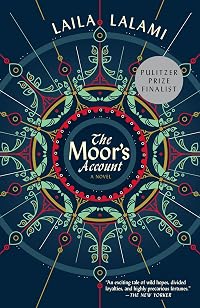
The Moor's Account
by Laila Lalami 
On This Page
Description
Brings us the imagined memoirs of the first black explorer of America--a Moroccan slave whose testimony was left out of the official record. In 1527, the conquistador Pánfilo de Narváez sailed from the port of Sanlúcar de Barrameda with a crew of six hundred men and nearly a hundred horses. His goal was to claim what is now the Gulf Coast of the United States for the Spanish crown and, in the process, become as wealthy and famous as Hernán Cortés. But from the moment the Narváez show more expedition landed in Florida, it faced peril--navigational errors, disease, starvation, as well as resistance from indigenous tribes. Within a year there were only four survivors: the expedition's treasurer, Álvar Núñez Cabeza de Vaca; a Spanish nobleman named Alonso del Castillo Maldonado; a young explorer named Andrés Dorantes de Carranza; and Dorantes's Moroccan slave, Mustafa al-Zamori, whom the three Spaniards called Estebanico. These four survivors would go on to make a journey across America that would transform them from proud conquis-tadores to humble servants, from fearful outcasts to faith healers. show lessTags
Recommendations






















Member Recommendations

Crypto-Willobie A subversive account of a Native American prince who is 'adopted' by the Spaniards in the 1500s. It backfires on the Spaniards...
Member Reviews
“It was slowly dawning upon all of us that Apalache had no gold and there would be no glory. My fantasies of victory for my master and freedom for me had turned so completely awry that, for a moment, all my senses felt numb. I was rooted in my spot, unable to move, and my eyesight blurred. I thought about that night, long ago in Azemmur, when I had agreed to sell my life for a bit of gold. My father and my mother had both warned me about the danger of putting a price on everything, but I had not listened. Now, years later, I had convinced myself that, because I had been the first to find gold in La Florida, my life would be returned to me. But life should not be traded for gold—a simple lesson, which I had had to learn twice.”
This show more book is a fictionalized story based on a real expedition that took place in 1527 - 1536. Lalami creates a story around Mustafa, “The Moor,” a survivor of the Narváez expedition. His goal is to write what truly happened to the explorers sent to claim La Florida for the King of Spain. He intends to refute the “official” account, provided by Cabeza de Vaca, which leaves out anything that makes the explorers seem less than heroic.
As the story opens, protagonist Mustafa is living in Morocco with his mother, father, and brothers. He is an educated man who becomes a merchant, but when circumstances change, he feels he must sell himself into slavery to feed his family. He is renamed Estebanico by Spanish priests. He is purchased by a Spaniard who then offers him to Dorantes to pay a gambling debt. Dorantes takes him to the New World as part of the Narváez expedition.
This is the type of historical fiction I really enjoy. It is an adventure, filled with travels among the native peoples. We get a sense of what life was like in the 1500s in North America. It is believable that the official account would leave out anything that reflected poorly on those telling the story. It is based on the author’s extensive research, with sources provided in the appendix.
Toward the end, there are groups of Indians following the explorers, when they reconnect with the Spanish in Mexico. I felt like I wanted to warn them not to follow! Readers will know this part of history does not turn out well for them. The author made me care deeply about the protagonist and the native people of this historic period. I loved it! show less
This show more book is a fictionalized story based on a real expedition that took place in 1527 - 1536. Lalami creates a story around Mustafa, “The Moor,” a survivor of the Narváez expedition. His goal is to write what truly happened to the explorers sent to claim La Florida for the King of Spain. He intends to refute the “official” account, provided by Cabeza de Vaca, which leaves out anything that makes the explorers seem less than heroic.
As the story opens, protagonist Mustafa is living in Morocco with his mother, father, and brothers. He is an educated man who becomes a merchant, but when circumstances change, he feels he must sell himself into slavery to feed his family. He is renamed Estebanico by Spanish priests. He is purchased by a Spaniard who then offers him to Dorantes to pay a gambling debt. Dorantes takes him to the New World as part of the Narváez expedition.
This is the type of historical fiction I really enjoy. It is an adventure, filled with travels among the native peoples. We get a sense of what life was like in the 1500s in North America. It is believable that the official account would leave out anything that reflected poorly on those telling the story. It is based on the author’s extensive research, with sources provided in the appendix.
Toward the end, there are groups of Indians following the explorers, when they reconnect with the Spanish in Mexico. I felt like I wanted to warn them not to follow! Readers will know this part of history does not turn out well for them. The author made me care deeply about the protagonist and the native people of this historic period. I loved it! show less
I cannot tell you how many times I picked up this book in the bookstore before I bought it -- drawn in by its lovely cover and interesting title. I don't know why I kept putting it back down. But I'm glad I finally carried it to the register.
There are so many things that I loved in this book that I don't know where to begin. From Mustafa's childhood -- in love with the bustle of the marketplace despite the disapproval of his father, who wants him to follow in his footsteps as a notary -- to the indignities of his life as a slave in Spain, where it doesn't take lashings or beatings to drive home that the very denial of self is violence -- to the rising sense of dread when the tiny band of survivors' time in the wilderness comes to an show more end, and they are brought into contact with "civilization" once again. Really, once the story reached that last stage I couldn't stop reading -- hunched over my book while I faked my way through the motions of interacting with my family -- then staying up way into the wee hours of the night to finish.
So much of this story is horrifying to the modern reader -- and I don't mean the mysterious diseases, the starvation, or even the occasional cannibalism. I mean the utter hubris of a group of explorers reading a proclamation to an empty beach about how this land now belongs to God, therefore the crown, therefore us, and therefore you (reminder, the absent you, who never heard the proclamation because you weren't there) will comply with everything we say or we will make war with you. A thing that was real and apparently happened all the time. And that proclamation gave them authority to torture, steal, rape, desecrate, and destroy their way across the continent. But then when the expedition floundered, and handfuls of survivors found themselves dependent on various tribes of natives, oh the bitching and whining at how they were treated!
Maybe this is the era Trump is nostalgic for when he wants to make America great again. He and his fondness for Andrew Jackson. Back when rich white representatives of power could do anything they liked with anyone who was not. "Oh, don't worry!" says the smiling man in charge! "They're not slaves, we're much more civilized than that now!" as he steadfastly refuses to release a group of natives, and nimbly deflects all questions as to why they're being held in the first place.
It's not survival porn, though. Mustafa as a narrator keeps us grounded in humanity, with his longing for home, with his empathy, with his desire to be free.
Such a wonderful book. And important for these times. show less
There are so many things that I loved in this book that I don't know where to begin. From Mustafa's childhood -- in love with the bustle of the marketplace despite the disapproval of his father, who wants him to follow in his footsteps as a notary -- to the indignities of his life as a slave in Spain, where it doesn't take lashings or beatings to drive home that the very denial of self is violence -- to the rising sense of dread when the tiny band of survivors' time in the wilderness comes to an show more end, and they are brought into contact with "civilization" once again. Really, once the story reached that last stage I couldn't stop reading -- hunched over my book while I faked my way through the motions of interacting with my family -- then staying up way into the wee hours of the night to finish.
So much of this story is horrifying to the modern reader -- and I don't mean the mysterious diseases, the starvation, or even the occasional cannibalism. I mean the utter hubris of a group of explorers reading a proclamation to an empty beach about how this land now belongs to God, therefore the crown, therefore us, and therefore you (reminder, the absent you, who never heard the proclamation because you weren't there) will comply with everything we say or we will make war with you. A thing that was real and apparently happened all the time. And that proclamation gave them authority to torture, steal, rape, desecrate, and destroy their way across the continent. But then when the expedition floundered, and handfuls of survivors found themselves dependent on various tribes of natives, oh the bitching and whining at how they were treated!
Maybe this is the era Trump is nostalgic for when he wants to make America great again. He and his fondness for Andrew Jackson. Back when rich white representatives of power could do anything they liked with anyone who was not. "Oh, don't worry!" says the smiling man in charge! "They're not slaves, we're much more civilized than that now!" as he steadfastly refuses to release a group of natives, and nimbly deflects all questions as to why they're being held in the first place.
It's not survival porn, though. Mustafa as a narrator keeps us grounded in humanity, with his longing for home, with his empathy, with his desire to be free.
Such a wonderful book. And important for these times. show less
“It was slowly dawning upon all of us that Apalache had no gold and there would be no glory. My fantasies of victory for my master and freedom for me had turned so completely awry that, for a moment, all my senses felt numb. I was rooted in my spot, unable to move, and my eyesight blurred. I thought about that night, long ago in Azemmur, when I had agreed to sell my life for a bit of gold. My father and my mother had both warned me about the danger of putting a price on everything, but I had not listened. Now, years later, I had convinced myself that, because I had been the first to find gold in La Florida, my life would be returned to me. But life should not be traded for gold—a simple lesson, which I had had to learn twice.”
This show more book is a fictionalized story based on a real expedition that took place in 1527 - 1536. Lalami creates a story around Mustafa, “The Moor,” a survivor of the Narváez expedition. His goal is to write what truly happened to the explorers sent to claim La Florida for the King of Spain. He intends to refute the “official” account, provided by Cabeza de Vaca, which leaves out anything that makes the explorers seem less than heroic.
As the story opens, protagonist Mustafa is living in Morocco with his mother, father, and brothers. He is an educated man who becomes a merchant, but when circumstances change, he feels he must sell himself into slavery to feed his family. He is renamed Estebanico by Spanish priests. He is purchased by a Spaniard who then offers him to Dorantes to pay a gambling debt. Dorantes takes him to the New World as part of the Narváez expedition.
This is the type of historical fiction I really enjoy. It is an adventure, filled with travels among the native peoples. We get a sense of what life was like in the 1500s in North America. It is believable that the official account would leave out anything that reflected poorly on those telling the story. It is based on the author’s extensive research, with sources provided in the appendix.
Toward the end, there are groups of Indians following the explorers, when they reconnect with the Spanish in Mexico. I felt like I wanted to warn them not to follow! Readers will know this part of history does not turn out well for them. The author made me care deeply about the protagonist and the native people of this historic period. I loved it! show less
This show more book is a fictionalized story based on a real expedition that took place in 1527 - 1536. Lalami creates a story around Mustafa, “The Moor,” a survivor of the Narváez expedition. His goal is to write what truly happened to the explorers sent to claim La Florida for the King of Spain. He intends to refute the “official” account, provided by Cabeza de Vaca, which leaves out anything that makes the explorers seem less than heroic.
As the story opens, protagonist Mustafa is living in Morocco with his mother, father, and brothers. He is an educated man who becomes a merchant, but when circumstances change, he feels he must sell himself into slavery to feed his family. He is renamed Estebanico by Spanish priests. He is purchased by a Spaniard who then offers him to Dorantes to pay a gambling debt. Dorantes takes him to the New World as part of the Narváez expedition.
This is the type of historical fiction I really enjoy. It is an adventure, filled with travels among the native peoples. We get a sense of what life was like in the 1500s in North America. It is believable that the official account would leave out anything that reflected poorly on those telling the story. It is based on the author’s extensive research, with sources provided in the appendix.
Toward the end, there are groups of Indians following the explorers, when they reconnect with the Spanish in Mexico. I felt like I wanted to warn them not to follow! Readers will know this part of history does not turn out well for them. The author made me care deeply about the protagonist and the native people of this historic period. I loved it! show less
Map of the 1527 Narváez expedition
Four survivors remained alive at the end of the expedition: 3 Spaniards and an Arab. This is the "Moor's" account.
P.92:
"... Señor dorantes turned around and, as if suddenly noticing me, he said, what are you waiting for, Moro? Go water the horse.
I could feel the heat of his anger and disappointment. He had been pleased with me for finding the pebble of gold, but now he blamed me for his failure to deliver the kingdom. How foolish I had been to expect anything from him. I already knew about his fickle nature -- on the ship that had brought us to la florida, I had seen with my own eyes how quickly he formed friendships, especially when he needed something and how easily his loyalty shifted when his show more needs changed -- why did I think he would be different with me? Perhaps it was because, in those days, I fed my hopes of freedom in whichever way I could, without realizing that I was only hooking myself to different lures."
The Arab had been a prosperous merchant in his City, in Morroco. Then the Portuguese took it from them and he became impoverished. When he could no longer support his brothers, sister and mother, he sold himself into slavery. Señor Dorantes bought him and took him with him on a ship's expedition to the 'New world'.
The Spaniards whip their horses when they won't go forward, for example when they smell smoke. They also eat them, when they run out of food. The murdering of Abejorro, Señor dorantes' horse, whom the Arab had been responsible for caring for, was especially hard.
P.136:
"The first horse to be slaughtered belonged to one of the deserters -- this was a direct order from Narváez, and though the soldier was brought to tears by the idea, he had to surrender the reins. Then the captain's horses were taken one by one behind the big boulders, where they were butchered. And so there came the dreadful day when Abejorro's turn came. Dorantes took him for a long walk on the beach, and then I gave him some of the fruit he liked and took him to the river for a drink and cooed to him and rubbed his nose and his neck, but no matter how long I delayed it the moment came anyway. The butcher took the reins from me and disappeared behind the rocks. Then there was the long dreadful sound of Abejorro's last breath. And the stream of blood that ran toward the ocean swelled once again."
With their numbers much reduced by disease, members of the expedition look for an Indian tribe that will take them in.
P.178:
"... The dwellings we had built for ourselves and the abundance of drinking water curbed the spread of disease in our ranks. We picked oysters and seaweed or looked for bird nests and edible fruit in the wilderness behind our camp. The terrible hunger and constant uncertainty we had felt on the rafts began to recede.
But now we craved hardier fare, especially on evenings when it rained and we lay in our huts shivering with cold. We asked the capoques for meat and they gave us freely of whatever they had -- fish, fowl, squirrel, rabbit -- but very quickly we turned into a tribe of beggars, constantly pleading with them for more. Delenchavan, the casique, put a stop to all of this. He decreed that we were to work for the meat his hunters were giving us: we had to collect firewood or fetch water or grind nuts for it. A fair judgment, but one that, I noticed, several among the castilians appear to resent -- they considered it beneath them to work for the indians."
P.177-8:
"We were feeding the fire for our dinner one night when Ruiz returned. He appeared quietly out of the wilderness, his Black beard so bushy that his eye, small and yellowish, seem to disappear in his face. The dirt and the rain had turned his clothes a greenish shade of brown. So insistent had he been about wanting to stay away from the Capoques that we were stunned to see him venture into our camp, where he could run into the Indians at any moment. Ruiz! One of us said. Is that really you? Where are the others?
They did not come with me.
[After asking him over and over, and getting nonsensical replies, he finally admits:]
I ate them! There, I said it, is this what you wanted to hear?
Gasps of horror greeted this admission. The men stopped their bantering to stare at ruiz. It seemed hardly possible that the great evil he had just confessed had not resulted in some sort of physical transformation. His skin looked ruddy and his beard was flecked with mud, but otherwise he looked much the same as before, which is to say like an ordinary member of our expedition.
In a low voice, he continued: after we went away, Palacios became sick with the bowel disease and died. We were going to bury him, but then Lopes said we should just eat hs flesh. We had not had anything to eat in 5 or 6 days. I said no. I swear to God almighty, I said no. But Lopes did it anyway. And I was so hungry. So hungry. And then Lopes killed sierra. And Corral after him.
Ruiz was the last to partake of human flesh and, having no other means to feed himself, he had decided to return to our camp."
The Survivors must find different Indian tribes to take them in, again and again. Because they have such small talents in survival, they are never tolerated for long. But the Arab, in curing an Indian with herbs he remembered his mother teaching him about, had gained some respect. Staying With the Avavare tribe, he begins to admire the chief's daughter.
P.228-9:
From the start, what struck me about Oyomasot was that she did not care what anyone thought. She did not care that the other of Avavare maidens thought her strange because she preferred going on walks in the woods to sitting by the riverbank with them. She did not care that her father and mother disapproved of her wandering off alone. It was true that she did all her tasks uncomplainingly, whether it was collecting mountains of firewood or washing smelly animal skins, but I cannot say that she did them zealously or expertly. Once her chores were completed, however, she would go set up traps for wild fowl, or she would play a popular game of sticks, but she would often be rebuked, since these were not proper past times for a girl. It was on such days that she would wander off in the woods until it was nearly dark. She seemed to be nursing a resentment that could not be healed.
It was raining one day when I saw her coming back home. The weather had turned abruptly: the sky had been clear one moment and the next it had opened up and poured like a river over the entire camp. we had carried everything inside and huddled in our huts, waiting out the storm. The light was low, but I saw Oyomasot's face clearly -- it was the face of someone who was preparing herself for a burden. As she came into the camp square, her mother stepped out of their hut. Where have you been? She asked. She stood with her legs apart and her hands resting on her hips. I could see that Oyomasot had the same eyes -- large and slightly upturned -- but that was where the similarities ended, for the mother's mouth was set in a contemptuous turn and her voice was grating. You left your brother's furs hanging on their racks, she said.
Why did he not bring them in from the rain? Oyomasot asked. She said this in a level tone, but that only made her mother angrier.
That was your duty, not his.
He would rather they get wet than bring them in himself?
They must be ruined by now. And it is your fault."
Aargh. That made me remember when I was young and my two brothers could do whatever they wanted, but we girls were imprisoned in the double standard.
Becoming a famous healer among the tribes, the Arab marries Oyomasot, and the remaining Spaniards take their own wives. Moving from tribe to tribe, Indians wait to be seen by the Arab and cured by him. They begin to have a following, and when they come across the tracks of some other Spaniards and are taken to their City in Sinaloa, the Indians followers are separated and placed in a horse corral.
P.260-1:
"On our way back to our quarters, an idea occurred to me. We should offer to buy the Indians from díaz, I said. If Díaz could be compensated, surely he would agree to let the Indians go. (Now that I had returned to the old world, it seemed I had also set aside what I had learned in the new: that gold and freedom could not be traded.)
But the others agreed with my suggestion. So the four of us pooled all of our valuables together: five emeralds shaped into arrows, 10 leather pouches of the finest quality, a small bag of oyster pearls, and other things that had been given to us as gifts. Cabeza de Vaca took them to Díaz the next day, but the alcalde said that the value of the gifts was far below that of the indians, and that in any case there was no need for gifts because the Indians were not slaves and did not need to be freed. Conversations with Díaz always had a hint of the absurd about them.
The Indians in the horse run begin to run out of corn and meat and, increasingly, they depended for the meals on whatever the soldiers gave them. many of them were becoming sick with colds and even the fever. In all ways, they looked pitiful, but Díaz remained implacable. Cabeza de vaca's arguments with him continued for 2 months, but they always ended with the same assurances that the Indians would be well treated and that they were not slaves. Then he sent us word that we could not tarry any longer in culiacan -- the governor of Nueva Galicia was expecting us."
And so we are close to closing the Moor's account of the Narváez expedition. Cabeza de Vaca writes his account, and is paid for doing it, allowing him to buy his way back to spain. Señor dorantes leaves his Indian wife and daughter, and also makes his way back to Spain. The moor writes his account, so that his child will know the real story of what happened.
This is a wonderful work done by this author. Though it's historical fiction, so are many of the Spaniards' published accounts, right? We all know that the Spaniards came and raped the land and the people of Mexico and to the South. Now we know a truer version. show less
Four survivors remained alive at the end of the expedition: 3 Spaniards and an Arab. This is the "Moor's" account.
P.92:
"... Señor dorantes turned around and, as if suddenly noticing me, he said, what are you waiting for, Moro? Go water the horse.
I could feel the heat of his anger and disappointment. He had been pleased with me for finding the pebble of gold, but now he blamed me for his failure to deliver the kingdom. How foolish I had been to expect anything from him. I already knew about his fickle nature -- on the ship that had brought us to la florida, I had seen with my own eyes how quickly he formed friendships, especially when he needed something and how easily his loyalty shifted when his show more needs changed -- why did I think he would be different with me? Perhaps it was because, in those days, I fed my hopes of freedom in whichever way I could, without realizing that I was only hooking myself to different lures."
The Arab had been a prosperous merchant in his City, in Morroco. Then the Portuguese took it from them and he became impoverished. When he could no longer support his brothers, sister and mother, he sold himself into slavery. Señor Dorantes bought him and took him with him on a ship's expedition to the 'New world'.
The Spaniards whip their horses when they won't go forward, for example when they smell smoke. They also eat them, when they run out of food. The murdering of Abejorro, Señor dorantes' horse, whom the Arab had been responsible for caring for, was especially hard.
P.136:
"The first horse to be slaughtered belonged to one of the deserters -- this was a direct order from Narváez, and though the soldier was brought to tears by the idea, he had to surrender the reins. Then the captain's horses were taken one by one behind the big boulders, where they were butchered. And so there came the dreadful day when Abejorro's turn came. Dorantes took him for a long walk on the beach, and then I gave him some of the fruit he liked and took him to the river for a drink and cooed to him and rubbed his nose and his neck, but no matter how long I delayed it the moment came anyway. The butcher took the reins from me and disappeared behind the rocks. Then there was the long dreadful sound of Abejorro's last breath. And the stream of blood that ran toward the ocean swelled once again."
With their numbers much reduced by disease, members of the expedition look for an Indian tribe that will take them in.
P.178:
"... The dwellings we had built for ourselves and the abundance of drinking water curbed the spread of disease in our ranks. We picked oysters and seaweed or looked for bird nests and edible fruit in the wilderness behind our camp. The terrible hunger and constant uncertainty we had felt on the rafts began to recede.
But now we craved hardier fare, especially on evenings when it rained and we lay in our huts shivering with cold. We asked the capoques for meat and they gave us freely of whatever they had -- fish, fowl, squirrel, rabbit -- but very quickly we turned into a tribe of beggars, constantly pleading with them for more. Delenchavan, the casique, put a stop to all of this. He decreed that we were to work for the meat his hunters were giving us: we had to collect firewood or fetch water or grind nuts for it. A fair judgment, but one that, I noticed, several among the castilians appear to resent -- they considered it beneath them to work for the indians."
P.177-8:
"We were feeding the fire for our dinner one night when Ruiz returned. He appeared quietly out of the wilderness, his Black beard so bushy that his eye, small and yellowish, seem to disappear in his face. The dirt and the rain had turned his clothes a greenish shade of brown. So insistent had he been about wanting to stay away from the Capoques that we were stunned to see him venture into our camp, where he could run into the Indians at any moment. Ruiz! One of us said. Is that really you? Where are the others?
They did not come with me.
[After asking him over and over, and getting nonsensical replies, he finally admits:]
I ate them! There, I said it, is this what you wanted to hear?
Gasps of horror greeted this admission. The men stopped their bantering to stare at ruiz. It seemed hardly possible that the great evil he had just confessed had not resulted in some sort of physical transformation. His skin looked ruddy and his beard was flecked with mud, but otherwise he looked much the same as before, which is to say like an ordinary member of our expedition.
In a low voice, he continued: after we went away, Palacios became sick with the bowel disease and died. We were going to bury him, but then Lopes said we should just eat hs flesh. We had not had anything to eat in 5 or 6 days. I said no. I swear to God almighty, I said no. But Lopes did it anyway. And I was so hungry. So hungry. And then Lopes killed sierra. And Corral after him.
Ruiz was the last to partake of human flesh and, having no other means to feed himself, he had decided to return to our camp."
The Survivors must find different Indian tribes to take them in, again and again. Because they have such small talents in survival, they are never tolerated for long. But the Arab, in curing an Indian with herbs he remembered his mother teaching him about, had gained some respect. Staying With the Avavare tribe, he begins to admire the chief's daughter.
P.228-9:
From the start, what struck me about Oyomasot was that she did not care what anyone thought. She did not care that the other of Avavare maidens thought her strange because she preferred going on walks in the woods to sitting by the riverbank with them. She did not care that her father and mother disapproved of her wandering off alone. It was true that she did all her tasks uncomplainingly, whether it was collecting mountains of firewood or washing smelly animal skins, but I cannot say that she did them zealously or expertly. Once her chores were completed, however, she would go set up traps for wild fowl, or she would play a popular game of sticks, but she would often be rebuked, since these were not proper past times for a girl. It was on such days that she would wander off in the woods until it was nearly dark. She seemed to be nursing a resentment that could not be healed.
It was raining one day when I saw her coming back home. The weather had turned abruptly: the sky had been clear one moment and the next it had opened up and poured like a river over the entire camp. we had carried everything inside and huddled in our huts, waiting out the storm. The light was low, but I saw Oyomasot's face clearly -- it was the face of someone who was preparing herself for a burden. As she came into the camp square, her mother stepped out of their hut. Where have you been? She asked. She stood with her legs apart and her hands resting on her hips. I could see that Oyomasot had the same eyes -- large and slightly upturned -- but that was where the similarities ended, for the mother's mouth was set in a contemptuous turn and her voice was grating. You left your brother's furs hanging on their racks, she said.
Why did he not bring them in from the rain? Oyomasot asked. She said this in a level tone, but that only made her mother angrier.
That was your duty, not his.
He would rather they get wet than bring them in himself?
They must be ruined by now. And it is your fault."
Aargh. That made me remember when I was young and my two brothers could do whatever they wanted, but we girls were imprisoned in the double standard.
Becoming a famous healer among the tribes, the Arab marries Oyomasot, and the remaining Spaniards take their own wives. Moving from tribe to tribe, Indians wait to be seen by the Arab and cured by him. They begin to have a following, and when they come across the tracks of some other Spaniards and are taken to their City in Sinaloa, the Indians followers are separated and placed in a horse corral.
P.260-1:
"On our way back to our quarters, an idea occurred to me. We should offer to buy the Indians from díaz, I said. If Díaz could be compensated, surely he would agree to let the Indians go. (Now that I had returned to the old world, it seemed I had also set aside what I had learned in the new: that gold and freedom could not be traded.)
But the others agreed with my suggestion. So the four of us pooled all of our valuables together: five emeralds shaped into arrows, 10 leather pouches of the finest quality, a small bag of oyster pearls, and other things that had been given to us as gifts. Cabeza de Vaca took them to Díaz the next day, but the alcalde said that the value of the gifts was far below that of the indians, and that in any case there was no need for gifts because the Indians were not slaves and did not need to be freed. Conversations with Díaz always had a hint of the absurd about them.
The Indians in the horse run begin to run out of corn and meat and, increasingly, they depended for the meals on whatever the soldiers gave them. many of them were becoming sick with colds and even the fever. In all ways, they looked pitiful, but Díaz remained implacable. Cabeza de vaca's arguments with him continued for 2 months, but they always ended with the same assurances that the Indians would be well treated and that they were not slaves. Then he sent us word that we could not tarry any longer in culiacan -- the governor of Nueva Galicia was expecting us."
And so we are close to closing the Moor's account of the Narváez expedition. Cabeza de Vaca writes his account, and is paid for doing it, allowing him to buy his way back to spain. Señor dorantes leaves his Indian wife and daughter, and also makes his way back to Spain. The moor writes his account, so that his child will know the real story of what happened.
This is a wonderful work done by this author. Though it's historical fiction, so are many of the Spaniards' published accounts, right? We all know that the Spaniards came and raped the land and the people of Mexico and to the South. Now we know a truer version. show less
This brutal yet beguiling novel falls into that delightful genre of historical gap-filling. It is the story of Mustafa, an enslaved Moroccan who ended up on Spanish expedition to what would become Florida. The three hundred strong expedition arrived in 1527, but only four members of it ever returned to Spanish-controlled lands. Three were Spanish and their official accounts are documented. Mustafa, renamed Estebanico when enslaved, was the fourth and nothing is known of him except the city he came from. Lalami fills this lacuna with a viscerally convincing work of fiction. Mustafa’s story is fascinating and distinctive, in large part because of his changing dynamics with the Spanish expedition and Native Americans. His perspectives on show more his own enslavement and Spanish aim to enslave the native Floridan population are treated very thoughtfully, yet this is also an exciting against-the-odds survival story. Of course, the whole thing is suffused with great sadness, given the reader’s knowledge of how brutally subsequent history would treat the Native Americans. Nonetheless, there are some extremely powerful moments which nearly drive that from your mind as you read, notably one scene when a starving Spanish survivor desperately tries to barter a gold earring for food. That moment is all the more shocking given that this earring, and the promise of gold it carried, impelled the man trading it away to join the expedition. He only resorts to such an expedient after many disasters, having already lost absolutely everything else. Mustafa recounts this and the rest of his tale in a measured fashion that is both sympathetic and cynical. The whole thing is neatly structured and very well written, in addition to having that rare and precious feature: a really satisfactory ending. show less
After The Other Americans, I wasn't enthusiastic about trying anything else by Laila Lalami, but this one is a literature selection for my daughter's American history curriculum so it ended up on my TBR, too; I'm very glad it did.
The setting is rich and vivid, the characters distinct and realistic, the protagonist/narrator flawed and complex, and the story is paradigm-shifting (at least for me).
The ending is a little tied-up-in-a-bow and Lalami is still stuck on turtledoves (which do not live in North America but appear there twice in this novel, but at least they're not as significant to the plot in this one as they were in The Other Americans), but overall I loved this novel.
The setting is rich and vivid, the characters distinct and realistic, the protagonist/narrator flawed and complex, and the story is paradigm-shifting (at least for me).
The ending is a little tied-up-in-a-bow and Lalami is still stuck on turtledoves (which do not live in North America but appear there twice in this novel, but at least they're not as significant to the plot in this one as they were in The Other Americans), but overall I loved this novel.
And in this relation I tried to tell the story of what really happened when I journeyed to the heart of the continent. The servants of the Spanish empire have given a different story to their king and their bishop, their wives and their friends...Maybe there is no true story, only imagined stories, vague reflections of what we saw and what we heard, what we felt and what we thought. Maybe if our experiences, in all of their glorious, magnificent colors, were somehow added up, they would lead us to the blinding light of the truth.
Sometimes the truth is stranger than fiction, like the time a Spanish expedition of 300 men disappeared into the wilderness of La Florida and eight years later, four survivors were found on the other side of show more the continent: three Spaniards and a Moorish slave. While all three Spaniards wrote their own accounts of the shipwrecks, disease, conflicts with indigenius people, starvation, etc. that plagued their journey (the best known of which is Cabeza de Vaca's), only the diminutive slave name, Estivanico, of the Muslim man remains. This is his story, heavily based on historical documents, but with much embellishment from Ms. Lalami, including the backstory of how the man (whose given name in this novel is Mustafa) came to be a slave.
This fictional account, written in a similar style to memoirs of the time, gives a voice to a marginalized historical figure. Other readers have pointed out that his view of events (including the treatment of indigenous people and women) are anachronistic, at least for European views at the time, but Mustafa is not a European. His enlightened perspective didn't bother me, especially as the backstory Ms. Lalami creates for him makes it believable.
The story stretches a little long, like the journey it describes, but the ending (after the men find their way back to "civilization") is particularly strong and made a very worthwhile read for me. show less
Sometimes the truth is stranger than fiction, like the time a Spanish expedition of 300 men disappeared into the wilderness of La Florida and eight years later, four survivors were found on the other side of show more the continent: three Spaniards and a Moorish slave. While all three Spaniards wrote their own accounts of the shipwrecks, disease, conflicts with indigenius people, starvation, etc. that plagued their journey (the best known of which is Cabeza de Vaca's), only the diminutive slave name, Estivanico, of the Muslim man remains. This is his story, heavily based on historical documents, but with much embellishment from Ms. Lalami, including the backstory of how the man (whose given name in this novel is Mustafa) came to be a slave.
This fictional account, written in a similar style to memoirs of the time, gives a voice to a marginalized historical figure. Other readers have pointed out that his view of events (including the treatment of indigenous people and women) are anachronistic, at least for European views at the time, but Mustafa is not a European. His enlightened perspective didn't bother me, especially as the backstory Ms. Lalami creates for him makes it believable.
The story stretches a little long, like the journey it describes, but the ending (after the men find their way back to "civilization") is particularly strong and made a very worthwhile read for me. show less
Members
- Recently Added By
Lists

Man Booker Prize Longlist 2015
13 works; 9 members

Top Five Books of 2015
811 works; 240 members

Pulitzer Prize for Fiction - Finalists
88 works; 9 members

Top Five Books of 2016
795 works; 229 members

Literature by People of Color
81 works; 9 members

Booker Prize
491 works; 62 members

2017 Goal
18 works; 2 members

Dublin Literary Award Longlist 2016
148 works; 4 members

Phi Beta Kappa reading list
260 works; 8 members
World Books
51 works; 4 members

Books Read in 2024
4,727 works; 128 members

Muslim Women Write: A Year of Fiction
12 works; 1 member

Books Read in 2025
4,128 works; 98 members

Kirkus Reviews Best Fiction of 2014
100 works; 7 members

Books recommended by Calgary Public Library staff
1,588 works; 4 members

Fiction Books Worthy of Reading Again
37 works; 1 member

Tour of Africa
54 works; 2 members

Top Five Books of 2025
954 works; 304 members
Author Information

7+ Works 3,628 Members
Laila Lalami was born and raised in Morocco. She is the author of the short story collection Hope and Other Dangerous Pursuits and the novels Secret Son and The Moor's Account. Her essays and opinion pieces have appeared in several publications including the Los Angeles Times, The Washington Post, The Nation, The Guardian, and The New York Times. show more She is an associate professor of creative writing at the University of California at Riverside. (Bowker Author Biography) show less
Laila Lalami is a LibraryThing Author, an author who lists their personal library on LibraryThing.
Some Editions
Awards and Honors
Awards
Distinctions
Work Relationships
Common Knowledge
- Canonical title
- The Moor's Account
- Original publication date
- 2014-09-09
- People/Characters
- Mustafa ibn Muhammed ibn Abdussalam al-Zamori (Estebanico); Andrés Dorantes de Carranza; Alonso del Castillo Maldonado; Álvar Núñez Cabeza de Vaca
- Important places
- Azemmur, Morocco; Florida, USA
- Important events
- Narváez expedition (1527-1536); 16th century
- Dedication
- For My Daughter
- First words
- In the name of God, most compassionate, most merciful. Praise be to God, the Lord of the worlds, and prayers and blessings be on our prophet Muhammad and upon all his progeny and companions. This book is the humble work of Mu... (show all)stafa ibn Muhammad ibn Abdussalam al-Zamori, being a true account of his life and travels from the city of Azemmur to the Land of the Indians, where he arrived as a slave and, in his attempt to return to freedom, was shipwrecked and lost for many years.
- Quotations
- I could not understand this habit of naming settlements after Spanish cities even when, as in the case of Guadalajara, that city had received its name from those who had conquered it. In Arabic, the name Guadalajara evoked a ... (show all)valley of stones, a valley my ancestors and settled more than eight hundred years earlier. They had carried the disease of empire to Spain, the Spaniards had brought it to the new continent, and someday the people of the new continent would plant it elsewhere. That was the way of the world. Perhaps it was foolish to wish that it were different.
- Last words
- (Click to show. Warning: May contain spoilers.)Maybe if our experiences, in all of their glorious, magnificent colors, were somehow added up, they would lead us to the blinding light of the truth. To God belong the east and the west, whichever way you turn, there is the face of God. God is great.
- Blurbers
- Rushdie, Salman; Gates, Jr., Henry Louis; Thiong'o, Ngugi wa; Shteyngart, Gary; Aslan, Reza; Stavans, Ilan (show all 7); Forna, Aminatta
- Original language
- English
Classifications
Statistics
- Members
- 1,130
- Popularity
- 22,457
- Reviews
- 56
- Rating
- (3.95)
- Languages
- Dutch, English, German
- Media
- Paper, Audiobook, Ebook
- ISBNs
- 19
- UPCs
- 1
- ASINs
- 10