
The Return of Sherlock Holmes
by Arthur Conan Doyle 
Les Aventures de Sherlock Holmes {Conan Doyle} (3), The Return of Sherlock Holmes - short stories 1903-1904 {Conan Doyle} (Collections and Selections — 1 - 13)
On This Page
Description
If you can't get enough of Sherlock Holmes, the cranky, brilliant, and above all, idiosyncratic detective created by Scottish author Arthur Conan Doyle, add this collection of tales to your must-read list. These short stories portray Holmes in top form, solving an array of seemingly impenetrable mysteries and crimes in his inimitable style..
Tags
Recommendations


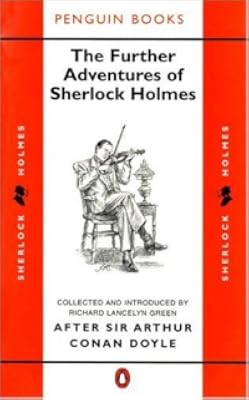
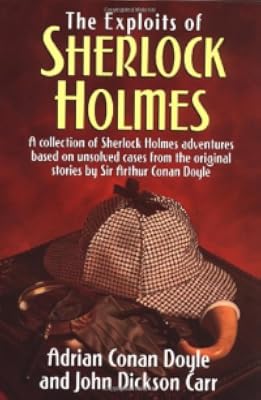
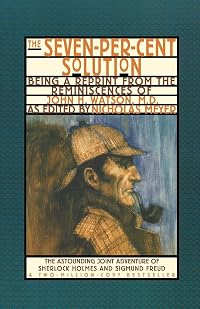








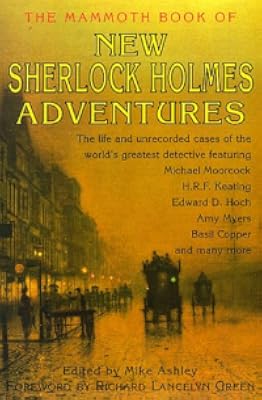
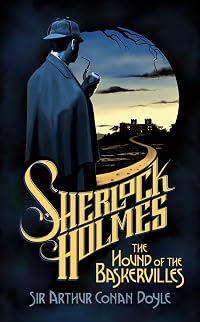






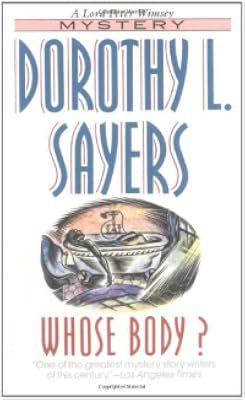


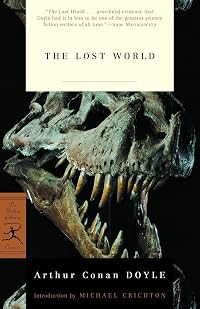

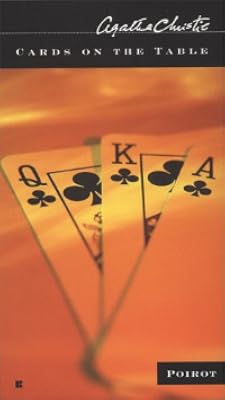

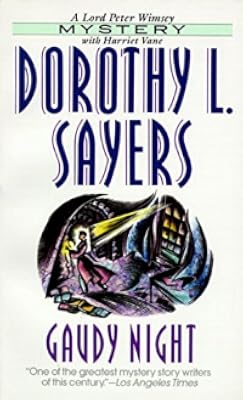



Member Recommendations
Member Reviews
I go back and forth on if this audio version is better than the Stephen Fry one, and here I think Jacobi has it. The Return is one of the most consistent collections of short stories of Doyle's, with the Dancing Men and Six Napoleons standing out, as well as the Empty House where the titular Return happens. From having Holmes sneer at international intrigue he now becomes wrapped up in it himself in The Second Stain, and he will of course eventually become a symbol for the same in The Last Bow. It seems like The Return didn't just resurrect Holmes but remade his purpose.
Well, he’s back. After being presumed dead for three years, Sherlock dramatically reappears. And it IS very dramatic: there’s enough of a narcissist in Sherlock to want to stage his entrance properly. This collection is my dad’s favorite; he says that this book features several years’ worth of ideas that percolated during Doyle’s Sherlock hiatus. It certainly has some memorable stories. “The Norwood Builder,” “The Solitary Cyclist,” “The Dancing Men,” “The Priory School,” “The Six Napoleons,” and “The Golden Pince-Nez” are all top-notch. “The Abbey Grange” is one of my all-time favorites, probably in my top 3, definitely top 5. The writing is solid, and Doyle uses humorous touches to great effect. show more And this collection is bookended by two drastic life events for Sherlock: “The Empty House” is Sherlock’s triumphant return from exile, and “The Second Stain” opens with Watson informing readers that Sherlock has retired to study bees on the Sussex Downs. So no more stories! Yeah, right. ;)
But it’s not all fun and games—this collection also exemplifies what is, for me, the single most frustrating element of these stories: the endings that get dropped. I’m going to make a Shakespeare analogy here, so hang tight. Spoilers for Romeo and Juliet.Okay, here goes: You know how Romeo and Juliet fall in love pretty early on in the story, and you spend the whole play rooting for them to be all right? And in Act IV, they have this scheme with Friar Lawrence, and you kind of let yourself think, just for a moment, that it will end happily, even though you know it won’t? You keep hoping that they’ll get their HEA? And then Act V happens, and it’s so sad, and you understand how and why they die, and despite the tragedy, you at least feel like you’ve followed them on their star-crossed journey? Well, Doyle’s story is the opposite of that. Spoilers for something that happens between “Memoirs” and “Return.” The Sign of Four was the great love story, with John and Mary falling in love and getting married. Now, in this collection, Mary has already died of something, and we don’t see it or know what it was, and we don’t see Watson’s reaction (or anyone else’s, for that matter). She’s dead when it opens, and she’s mentioned ONCE. And not even by name. So this is like Romeo and Juliet, if R&J ended with Act IV, and then the chorus came out with an epilogue in which they said, “Oops! They died, not sure how, too bad you missed it!!” This is THAT level of frustrating, for me. Here’s Mary’s great death scene from “Empty House”: “In some manner he had learned of my own sad bereavement, and his sympathy was shown in his manner rather than in his words. ‘Work is the best antidote to sorrow, my dear Watson,’ said he.” And that’s IT. “Norwood Builder” opens with Watson selling his practice and moving back in with Sherlock, and he finds out afterward that Sherlock had arranged for Watson to get a good price, so Sherlock is looking out for his widowed friend. So that was nice to see. And I know that Mary was more of a side character, so probably my Shakespeare comparison isn’t fair; these stories are not supposed to be about Watson’s marriage. They’re about Watson’s friendship with Holmes. But we, as readers, got to witness their courtship. We had the chance to root for Watson when he felt so unworthy of Mary’s hand. We had the chance to cheer when it looked like things would work out. And then, hey, guess what, she’s been dead for a while already. I’m sure it was done to make it easer for Sherlock and John to have their adventures, and by having it happen in the in-between time, Doyle can have a very sad and lonely Watson who is at his most vulnerable when Sherlock comes back. Even so, I feel cheated. Despite all this, still a very strong collection of stories, with much to recommend it. show less
But it’s not all fun and games—this collection also exemplifies what is, for me, the single most frustrating element of these stories: the endings that get dropped. I’m going to make a Shakespeare analogy here, so hang tight. Spoilers for Romeo and Juliet.
I’m glad Arthur Conan Doyle succumbed to his public’s insatiable appetite for more Sherlock Holmes stories. This collection opens with an improbable account of how Holmes survived his struggle with Professor Moriarty at Reichenbach Falls, followed by a dozen more adventures. They include some of my favorites, such as “The Adventure of the Golden Pince-Nez” and “The Adventure of Abbey Grange,” culminating in Holmes averting the threat of European war in “The Adventure of the Second Stain.”
Once again, high government officials and many (but not all) aristocrats are admirable specimens of humanity. The women are invariably graceful and elegant, even if haunted by past indiscretions.
Holmes, too, remains in some ways the show more same. Post-Reichenbach, he retains his sense of which wrongdoers should avoid facing trial. Yet there are differences as well. The earlier Holmes shunned exercise; his oscillations of intense activity, neglecting sleep and food, followed by indolence when not investigating, somehow kept him fit. Now, he stays conditioned by walking with Watson and in other ways. In keeping with this, Watson has weaned Holmes from cocaine. The one time in this collection Holmes pulls out his hypodermic needle, he employs it to brilliant effect.
In the final story, Doyle again signals his intention to be done with Holmes. Watson tells us that Holmes has retired to beekeeping and studying, and Watson is forbidden from sharing more cases. Let’s see how long that lasts.
In an amusing meta-literary touch, Holmes criticizes his chronicler Watson (Doyle) for his choice of cases to turn into stories and the focus on sensational details rather than the science of investigation. But we wouldn’t want it any other way, would we? show less
Once again, high government officials and many (but not all) aristocrats are admirable specimens of humanity. The women are invariably graceful and elegant, even if haunted by past indiscretions.
Holmes, too, remains in some ways the show more same. Post-Reichenbach, he retains his sense of which wrongdoers should avoid facing trial. Yet there are differences as well. The earlier Holmes shunned exercise; his oscillations of intense activity, neglecting sleep and food, followed by indolence when not investigating, somehow kept him fit. Now, he stays conditioned by walking with Watson and in other ways. In keeping with this, Watson has weaned Holmes from cocaine. The one time in this collection Holmes pulls out his hypodermic needle, he employs it to brilliant effect.
In the final story, Doyle again signals his intention to be done with Holmes. Watson tells us that Holmes has retired to beekeeping and studying, and Watson is forbidden from sharing more cases. Let’s see how long that lasts.
In an amusing meta-literary touch, Holmes criticizes his chronicler Watson (Doyle) for his choice of cases to turn into stories and the focus on sensational details rather than the science of investigation. But we wouldn’t want it any other way, would we? show less
This is the third short story collection, and it felt like the best so far - or maybe I'm just getting more and more into this crime universe. Holmes is returning after his presumed death in the fatal encounter with Moriarty at the Reichenbach Fall (recounted in the last story of "The Memoirs of Sherlock Holmes".
The collection here is a feast of good stories, most of them shows Sherlock Holmes at the top of his game with his brilliant deductive powers. Oh, how Lestrade glows in the second story but guess who gets the last laughter. My favorites were "The Adventure of Charles Augustus Milverton" , "Abbey Grange", "The Second Stain", "Six Napoleons", "Priory School" and "The Norwood Builder".
I like the variety - some scary, some show more intriguing, some comic - most of them just trademark Sherlock-spectacular. Again the Gothic setting of Victorian London is a sheer pleasure. Also there are trips to large estates outside London and a visit at a university.
The perfect chemistry between Holmes and Watson are one of the reasons for the success of these stories. Holmes always five steps ahead of them all, Watson trying to catch up and being surprised all the time. Brilliant. In one of the stories Holmes gets engaged:
“You would not call me a marrying man, Watson?"
"No, indeed!"
"You'll be interested to hear that I'm engaged."
"My dear fellow! I congrat——"
"To Milverton's housemaid."
"Good heavens, Holmes!"
"I wanted information, Watson."
"Surely you have gone too far?"
"It was a most necessary step. I am a plumber with a rising business, Escott, by name.” show less
The collection here is a feast of good stories, most of them shows Sherlock Holmes at the top of his game with his brilliant deductive powers. Oh, how Lestrade glows in the second story but guess who gets the last laughter. My favorites were "The Adventure of Charles Augustus Milverton" , "Abbey Grange", "The Second Stain", "Six Napoleons", "Priory School" and "The Norwood Builder".
I like the variety - some scary, some show more intriguing, some comic - most of them just trademark Sherlock-spectacular. Again the Gothic setting of Victorian London is a sheer pleasure. Also there are trips to large estates outside London and a visit at a university.
The perfect chemistry between Holmes and Watson are one of the reasons for the success of these stories. Holmes always five steps ahead of them all, Watson trying to catch up and being surprised all the time. Brilliant. In one of the stories Holmes gets engaged:
“You would not call me a marrying man, Watson?"
"No, indeed!"
"You'll be interested to hear that I'm engaged."
"My dear fellow! I congrat——"
"To Milverton's housemaid."
"Good heavens, Holmes!"
"I wanted information, Watson."
"Surely you have gone too far?"
"It was a most necessary step. I am a plumber with a rising business, Escott, by name.” show less
Another collection of variable quality, although the female characters in these stories are largely wonderful, and a handful are kickass, self-sufficient women.
Also, the canon support for a Holmes/Watson marriage is all over the place and nothing like subtle, but all in all there's relatively little of Watson in the book. He's narrating every page and he's present in all those scenes, but it seems like earlier books had more of him expressing his own self. The bits and pieces of them sniping at each other make me so fond because it's all too rare that we see that Watson is entirely able to hold his own next to Holmes, but he's self-censoring as narrator. Such interesting characterization. It makes him a great ninja of an unreliable show more narrator because ACD takes such pains to convince us that Watson is impeccably reliable. And yet... *g*
I wish he'd written more novels. show less
Also, the canon support for a Holmes/Watson marriage is all over the place and nothing like subtle, but all in all there's relatively little of Watson in the book. He's narrating every page and he's present in all those scenes, but it seems like earlier books had more of him expressing his own self. The bits and pieces of them sniping at each other make me so fond because it's all too rare that we see that Watson is entirely able to hold his own next to Holmes, but he's self-censoring as narrator. Such interesting characterization. It makes him a great ninja of an unreliable show more narrator because ACD takes such pains to convince us that Watson is impeccably reliable. And yet... *g*
I wish he'd written more novels. show less
... I realised more clearly than I had ever done the loss which the community had sustained by the death of Sherlock Holmes." (pg. 2)
Another fine collection of Sherlock Holmes short stories, with the great detective brought back from the dead by popular demand. As with my previous Conan Doyle experience, the earlier The Adventures of Sherlock Holmes, I marvelled at how easy the book was to read. I often read at a leisurely pace, but I burned through The Return of Sherlock Holmes in no time – and, what is more, it still seemed leisurely even at that faster pace. It is the very definition of 'crowd-pleasing' in its most guiltless form. Return was not as good as Adventures: the crimes were less singular (as Watson would say) and the show more prose less quotable. Nevertheless, starting a story with Holmes bursting into Watson's room crying "The game is afoot!", as Conan Doyle does in 'The Abbey Grange', offers a literary thrill like few others." show less
Another fine collection of Sherlock Holmes short stories, with the great detective brought back from the dead by popular demand. As with my previous Conan Doyle experience, the earlier The Adventures of Sherlock Holmes, I marvelled at how easy the book was to read. I often read at a leisurely pace, but I burned through The Return of Sherlock Holmes in no time – and, what is more, it still seemed leisurely even at that faster pace. It is the very definition of 'crowd-pleasing' in its most guiltless form. Return was not as good as Adventures: the crimes were less singular (as Watson would say) and the show more prose less quotable. Nevertheless, starting a story with Holmes bursting into Watson's room crying "The game is afoot!", as Conan Doyle does in 'The Abbey Grange', offers a literary thrill like few others." show less
A very enjoyable collection of Holmes and Watson mysteries, although there is a decided return to the romantic/melodramatic stylings of the early novels.
After the opening story, which goes to lunatic levels to bring Holmes back (but fair enough), there are some great stories throughout. Watson's narrative voice is pitch-perfect, as is his relationship with Holmes. Beyond this, the various Scotland Yard characters are given more depth, and are able to work WITH Holmes, as opposed to just following him around and always being wrong.
As I said above, though, many of the stories seem to veer toward that very 19th century melodrama feel in their denouements, although Conan Doyle handles it quite emotionlessly, so at least it isn't show more protracted. And many of the stories - those featuring missing people or objects - often seem to end with the same kind of conclusion (I won't say which, but you'll notice the pattern). Still, these weren't initially published in book form, and so I don't hold vague similarities against them.
An enjoyable collection of stories. I'm two-thirds of the way through the canon already! show less
After the opening story, which goes to lunatic levels to bring Holmes back (but fair enough), there are some great stories throughout. Watson's narrative voice is pitch-perfect, as is his relationship with Holmes. Beyond this, the various Scotland Yard characters are given more depth, and are able to work WITH Holmes, as opposed to just following him around and always being wrong.
As I said above, though, many of the stories seem to veer toward that very 19th century melodrama feel in their denouements, although Conan Doyle handles it quite emotionlessly, so at least it isn't show more protracted. And many of the stories - those featuring missing people or objects - often seem to end with the same kind of conclusion (I won't say which, but you'll notice the pattern). Still, these weren't initially published in book form, and so I don't hold vague similarities against them.
An enjoyable collection of stories. I'm two-thirds of the way through the canon already! show less
Members
- Recently Added By
Lists

Crime and Mysteries to Read
746 works; 31 members

British Mystery
469 works; 14 members

Haycraft Queen Cornerstones
181 works; 3 members

Detective Stories
343 works; 5 members
1900s (Decade, not century)
73 works; 17 members

Books Read in 2020
4,379 works; 124 members

Books You Read For University
184 works; 3 members

Out of Copyright
244 works; 14 members

Mind Expanding Books by hackerkid
581 works; 8 members

Novels/Poems/Short Stories/Anything Storytelling Related
112 works; 2 members

221B Baker Street and Beyond
66 works; 1 member

Tagged 19th Century
104 works; 7 members

Books Read in 2014
2,343 works; 89 members

Books Read in 2013
1,630 works; 51 members

BBC Top Books
78 works; 3 members
Books on my Kindle
162 works; 3 members

Short Story Collections and Anthologies
261 works; 42 members

Folio Society
831 works; 53 members

Recommended Reading : 600 Classics Reviewed, Editors of Salem Press, 2015
634 works; 6 members
Author Information

4,012+ Works 169,991 Members
The most famous fictional detective in the world is Arthur Conan Doyle's Sherlock Holmes. However, Doyle was, at best, ambivalent about his immensely successful literary creation and, at worst, resentful that his more "serious" fiction was relatively ignored. Born in Edinburgh, Doyle studied medicine from 1876 to 1881 and received his M.D. in show more 1885. He worked as a military physician in South Africa during the Boer War and was knighted in 1902 for his exceptional service. Doyle was drawn to writing at an early age. Although he attempted to enter private practice in Southsea, Portsmouth, in 1882, he soon turned to writing in his spare time; it eventually became his profession. As a Liberal Unionist, Doyle ran, unsuccessfully, for Parliament in 1903. During his later years, Doyle became an avowed spiritualist. Doyle sold his first story, "The Mystery of the Sasassa Valley," to Chambers' Journal in 1879. When Doyle published the novel, A Study in Scarlet in 1887, Sherlock Holmes was introduced to an avid public. Doyle is reputed to have used one of his medical professors, Dr. Joseph Bell, as a model for Holmes's character. Eventually, Doyle wrote three additional Holmes novels and five collections of Holmes short stories. A brilliant, though somewhat eccentric, detective, Holmes employs scientific methods of observation and deduction to solve the mysteries that he investigates. Although an "amateur" private detective, he is frequently called upon by Scotland Yard for assistance. Holmes's assistant, the faithful Dr. Watson, provides a striking contrast to Holmes's brilliant intellect and, in Doyle's day at least, serves as a character with whom the reader can readily identify. Having tired of Holmes's popularity, Doyle even tried to kill the great detective in "The Final Problem" but was forced by an outraged public to resurrect him in 1903. Although Holmes remained Doyle's most popular literary creation, Doyle wrote prolifically in other genres, including historical adventure, science fiction, and supernatural fiction. Despite Doyle's sometimes careless writing, he was a superb storyteller. His great skill as a popular author lay in his technique of involving readers in his highly entertaining adventures. (Bowker Author Biography) show less
Arthur Conan Doyle has a Legacy Library. Legacy libraries are the personal libraries of famous readers, entered by LibraryThing members from the Legacy Libraries group.
Some Editions
Awards and Honors
Series

Les Aventures de Sherlock Holmes {Conan Doyle}
6 works (3)

The Return of Sherlock Holmes - short stories 1903-1904 {Conan Doyle}
12 works (Collections and Selections — 1 - 13)
Belongs to Publisher Series
Work Relationships
Is contained in
Sherlock Holmes: Complete (56) Stories (Adventures, Memoirs, Return, His Last Bow, & The Case-Book) by Arthur Conan Doyle
The Complete Sherlock Holmes: All 4 Novels and 56 Short Stories by Sir Arthur Conan Doyle (indirect)
Treasury of World Masterpieces "The Celebrated Cases of Sherlock Holmes" & "H.G. Wells (Treasury of World Masterpieces) by Sir Arthur Conan Doyle (indirect)
Sherlock Holmes: The Complete Novels and Stories, Vol. 1 (Bantam Classics 1/2) by Arthur Conan Doyle
Sherlock Holmes: The Complete Novels and Stories, Vol. 1 and 2 (Bantam) by Arthur Conan Doyle (indirect)
The Return of Sherlock Holmes / The Hound of the Baskervilles (The Later Adventures of Sherlock Holmes) by Sir Arthur Conan Doyle
British Mystery Megapack Volume 5 - The Sherlock Holmes Collection: 4 Novels and 43 Short Stories + Extras by Arthur Conan Doyle
The Adventures of Sherlock Holmes / The Memoirs of Sherlock Holmes / The Return of Sherlock Holmes / A Study in Scarlet by Sir Arthur Conan Doyle
Doyle: O. completas. 3. Reaparición de Sherlock Holmes; Su último saludo en el escenario; El Valle by Arthur Conan Doyle
The Sherlock Holmes illustrated omnibus : The adventures of Sherlock Holmes, The memoirs of Sherlock Holmes, The hound of the Baskervilles, The return of Sherlock Holmes : a facsimile of the stories and the adventure as they were first published in the Strand magazine, London by Sir Arthur Conan Doyle
A Study In Scarlet, The Sign of the Four, The Adventures of Sherlock Holmes, The Memoirs of Sherlock Holmes, The Return of Sherlock Holmes (Sherlock Holmes - Bouquin Complete works - volume 1/2) by Arthur Conan Doyle
EL REGRESO DE SHERLOCK HOLMES - SU ÚLTIMO SALUDO - EL ARCHIVO DE SHERLOCK HOLMES by Arthur Conan Doyle
The Adventures of Sherlock Holmes, The Memoirs of Sherlock Holmes, The Return of Sherlock Holmes (Classics Omnibus) by Arthur Conan Doyle
Contains
BBC Sherlock Holmes Short Stories: The Adventure of the Abbey Grange: Part 1 by Arthur Conan Doyle (indirect)
BBC Sherlock Holmes Short Stories: The Adventure of the Abbey Grange: Part 2 by Arthur Conan Doyle (indirect)
BBC Sherlock Holmes Short Stories: The Adventure of the Solitary Cyclist: Part 1 by Arthur Conan Doyle (indirect)
BBC Sherlock Holmes Short Stories: The Adventure of the Solitary Cyclist: Part 2 by Arthur Conan Doyle (indirect)
BBC Sherlock Holmes Short Stories: The Adventure of the Empty House: Part 1 by Arthur Conan Doyle (indirect)
BBC Sherlock Holmes Short Stories: The Adventure of the Norwood Builder: Part 1 by Arthur Conan Doyle (indirect)
BBC Sherlock Holmes Short Stories: The Adventure of the Norwood Builder: Part 2 by Arthur Conan Doyle (indirect)
BBC Sherlock Holmes Short Stories: The Adventure of the Dancing Men Part 1 by Arthur Conan Doyle (indirect)
BBC Sherlock Holmes Short Stories: The Adventure of the Dancing Men Part 2 by Arthur Conan Doyle (indirect)
BBC Sherlock Holmes Short Stories: The Adventure of Black Peter: Part 1 by Arthur Conan Doyle (indirect)
BBC Sherlock Holmes Short Stories: The Adventure of Black Peter: Part 2 by Arthur Conan Doyle (indirect)
BBC Sherlock Holmes Short Stories: The Adventure of Charles Augustus Milverton: Part 1 by Arthur Conan Doyle (indirect)
BBC Sherlock Holmes Short Stories: The Adventure of Charles Augustus Milverton: Part 2 by Arthur Conan Doyle (indirect)
BBC Sherlock Holmes Short Stories: The Adventure of the Six Napoleons Part 1 by Arthur Conan Doyle (indirect)
BBC Sherlock Holmes Short Stories: The Adventure of the Six Napoleons: Part 2 by Arthur Conan Doyle (indirect)
BBC Sherlock Holmes Short Stories: The Adventure of the Three Students: Part 1 by Arthur Conan Doyle (indirect)
Has the adaptation
Is abridged in
Common Knowledge
- Canonical title
- The Return of Sherlock Holmes
- Original title
- The Return of Sherlock Holmes
- Original publication date
- 1905
- People/Characters
- Sherlock Holmes; John H. Watson; Inspector G. Lestrade; Sebastian Moran; Ronald Adair; Mycroft Holmes (show all 50); Shikari; John Hector McFarlane; Jonas Oldacre; Violet Smith; Cyril Morton; Robert Carruthers; Jack Woodley; Ralph Smith; Hilton Cubitt; Elsie Patrick; Inspector Martin; Abe Slaney; Thorneycroft Huxtable; Lord Saltire; Duke of Holdernesse; Heidegger; James Wilder; Reuben Hayes; Inspector Stanley Hopkins; Peter Carey; John Hopley Neligan; Patrick Cairns; Morse Hudson; Horace Harker; Beppo; Pietro Venucci; Josiah Brown; Lucretia Venucci; Hilton Soames; Daulat Ras; Miles McLaren; Willoughby Smith; Cyril Overton; Godfrey Staunton; Lord Mount-James; Leslie Armstrong; Jeremy Dixon; Pompey (dog); Eustace Brackenstall; Theresa Wright; Lord Bellinger; Trelawney Hope; Eduardo Lucas; John Mitton
- Important places
- 221B Baker Street, London, England, UK; London, England, UK; Reichenbach Falls, Meiringen, Bern, Switzerland; Charlington, Surrey, England, UK
- First words
- It was in the spring of the year 1894 that all London was interested, and the fashionable world dismayed, by the murder of the Honourable Ronald Adair under most unusual and inexplicable circumstances.
- Last words
- (Click to show. Warning: May contain spoilers.)"We also have our diplomatic secrets," said he, and picking up his hat he turned to the door.
- Original language
- English
- Disambiguation notice
- There seems to be several different collections that have been called "The Return of Sherlock Holmes", released long after Arthur Conan Doyles death. This collection included the following:
The Adventure of the Empty House... (show all)
The Adventure of the Norwood Builder
The Adventure of the Dancing Men
The Adventure of the Solitary Cyclist
The Adventure of the Priory School
The Adventure of Black Peter
The Adventure of Charles Augustus Milverton
The Adventure of the Six Napoleons
The Adventure of the Three Students
The Adventure of the Golden Pince-nez
The Adventure of the Missing Three-quarter
The Adventure of the Abbey Grange
The Adventure of the Second Stain
Classifications
Statistics
- Members
- 5,085
- Popularity
- 2,732
- Reviews
- 64
- Rating
- (4.12)
- Languages
- 20 — Catalan, Chinese, Czech, Dutch, English, Estonian, French, German, Greek, Hebrew, Hungarian, Indonesian, Italian, Japanese, Norwegian (Bokmål), Spanish, Swedish, Turkish, Portuguese (Portugal), Portuguese (Brazil)
- Media
- Paper, Audiobook, Ebook
- ISBNs
- 430
- UPCs
- 4
- ASINs
- 164