On This Page
Description
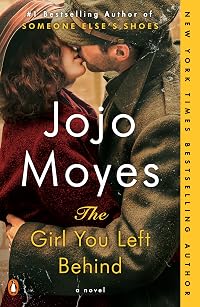
From the New York Times bestselling author of The Giver of Stars and the forthcoming Someone Else's Shoes, a sweeping bestseller of love and loss, deftly weaving two journeys from World War I France to present day London.Paris, World War I. Sophie Lefèvre must keep her family safe while her adored husband, Édouard, fights at the front. When their town falls to the Germans, Sophie is forced to serve them every evening at her hotel. From the moment the new Kommandant sets eyes on show more Sophie’s portrait—painted by her artist husband—a dangerous obsession is born.
Almost a century later in London, Sophie’s portrait hangs in the home of Liv Halston, a wedding gift from her young husband before his sudden death. After a chance encounter reveals the portrait’s true worth, a battle begins over its troubled history and Liv’s world is turned upside all over again. show less
Tags
Recommendations





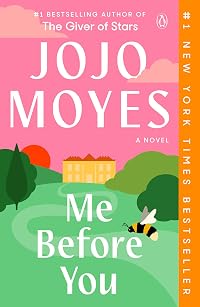
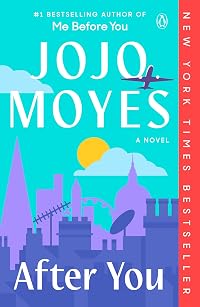
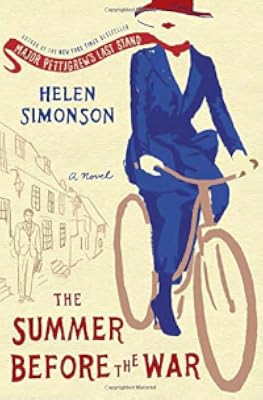
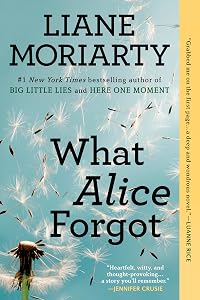







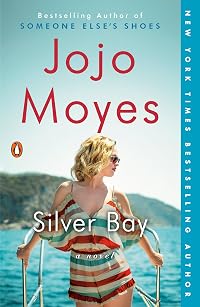
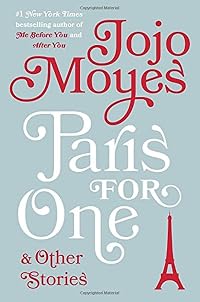





Member Recommendations




Member Reviews
One of the more fascinating aspects of the Jojo Moyes’ The Girl You Left Behind is the World War I setting of Sophie’s story. Not much has been written about this first German occupation, although it is every bit as compelling – if not more so – than the second German occupation of France thirty years later. Ms. Moyes does an excellent job portraying the perilous line between resistance and survival that clouded townspeople’s perceptions and instilled suspicion towards any action that could be construed as helping the German invaders. With her position as a town leader and pub owner, Sophie treads that line more closely than most of her neighbors and friends, and the way in which she is enmeshed into the dangers and politics show more is heartbreaking indeed. Where Sophie’s story really shines is in the aftermath. Her willingness to risk literally everything to see her husband again is compelling drama at its finest. Not only that but the agonizingly slow way in which Ms. Moyes presents Sophie’s fate will keep readers on the edge of their seats, breathless with anticipation.
In addition to being a story about love and loss, The Girl You Left Behind is also about those gray areas of right versus wrong. Sophie’s choices are bleak and limited, damning her as a German sympathizer no matter what she does or does not do. Liv’s choices are not as dire, but in her battle for the painting, her options are just as limited. In both instances, the women are in no-win situations, labeled as money-hungry whores or worse by their supposed friends and neighbors. Liv in particular bears the brunt of the negative publicity and appears as the villain in the battle for the painting’s ownership. Yet, in both instances, and as so often happens in real life, the truth is never as clear-cut as these friends and neighbors believe, something Ms. Moyes drills into her narrative while reminding readers that nothing is black-and-white. It is not only an excellent reminder for empathy but also a fascinating study on the mob mentality and how easy it is to get lost in the hype.
Usually an effective narrative device, The Girl You Left Behind does suffer from the juxtaposition in characters and time. The present simply does not compare to the past. Everything about the story that occurs in 1916 is carefully crafted and remarkably poignant. The backdrop of World War I is refreshing, while the occupation by the Germans of a small French village is definitely unique. Sophie is strong, determined, and resilient, and the gray areas between resistance and survival that occur in an occupied town only add to the drama. Next to such a vibrant personality and vivid landscape, Liv and her personal drama are too trivial.
This is not to say that Liv’s story is not interesting. Her refusal to back down from the fight for ownership reveals a strong woman, one much stronger than she appears to be upon the first introduction, while her battle to move on from the tragedy in her life is touching. Yet, in light of the pain of separation, suspicion, betrayal, and eventual fate that beset Sophie, Liv’s story does not have the same gravitas. It is tragic, but not nearly as tragic or powerful as Sophie’s narrative.
In spite of the superficial weaknesses of the entire story, The Girl You Left Behind is a compelling exploration of love and the depths to which people will descend to protect that love. Sophie puts herself through hell on the mere chance of seeing her husband again, while Liv fights an impossible fight to protect the memory of her husband and their marriage. The refusal by both women to bow under pressure is completely inspiring. More importantly, while Liv’s story is the weaker of the two, it still makes for an amazing story of resilience and the most profound elements of love. show less
In addition to being a story about love and loss, The Girl You Left Behind is also about those gray areas of right versus wrong. Sophie’s choices are bleak and limited, damning her as a German sympathizer no matter what she does or does not do. Liv’s choices are not as dire, but in her battle for the painting, her options are just as limited. In both instances, the women are in no-win situations, labeled as money-hungry whores or worse by their supposed friends and neighbors. Liv in particular bears the brunt of the negative publicity and appears as the villain in the battle for the painting’s ownership. Yet, in both instances, and as so often happens in real life, the truth is never as clear-cut as these friends and neighbors believe, something Ms. Moyes drills into her narrative while reminding readers that nothing is black-and-white. It is not only an excellent reminder for empathy but also a fascinating study on the mob mentality and how easy it is to get lost in the hype.
Usually an effective narrative device, The Girl You Left Behind does suffer from the juxtaposition in characters and time. The present simply does not compare to the past. Everything about the story that occurs in 1916 is carefully crafted and remarkably poignant. The backdrop of World War I is refreshing, while the occupation by the Germans of a small French village is definitely unique. Sophie is strong, determined, and resilient, and the gray areas between resistance and survival that occur in an occupied town only add to the drama. Next to such a vibrant personality and vivid landscape, Liv and her personal drama are too trivial.
This is not to say that Liv’s story is not interesting. Her refusal to back down from the fight for ownership reveals a strong woman, one much stronger than she appears to be upon the first introduction, while her battle to move on from the tragedy in her life is touching. Yet, in light of the pain of separation, suspicion, betrayal, and eventual fate that beset Sophie, Liv’s story does not have the same gravitas. It is tragic, but not nearly as tragic or powerful as Sophie’s narrative.
In spite of the superficial weaknesses of the entire story, The Girl You Left Behind is a compelling exploration of love and the depths to which people will descend to protect that love. Sophie puts herself through hell on the mere chance of seeing her husband again, while Liv fights an impossible fight to protect the memory of her husband and their marriage. The refusal by both women to bow under pressure is completely inspiring. More importantly, while Liv’s story is the weaker of the two, it still makes for an amazing story of resilience and the most profound elements of love. show less
I have just found out I have been chosen to receive this book as a 'first read' and from the reviews it has been given I am very much looking forward to it.
02/10/2012
Have just finished this book and it was just wonderful. Not at all what I was expecting but so much more. I was gripped by the story and was equally torn between my feelings for the protagonists on both sides. The author manages to jump between time frames within the book with ease without confusing the reader, which I have found can happen with some stories that use this format.
I must say that the cover could be very misleading as it looks deceptively like a 'chick lit' type novel, when in fact it is so much more than that. To me it was two love stories, a historical show more fiction and a courtroom drama all rolled into one. It also makes the reader think about the issues involved and about the right or wrongs of ownership disputes that may (and probably are) still ongoing today.
I wonder if anyone will buy the film rights as to me it is crying out to be made into a film. show less
02/10/2012
Have just finished this book and it was just wonderful. Not at all what I was expecting but so much more. I was gripped by the story and was equally torn between my feelings for the protagonists on both sides. The author manages to jump between time frames within the book with ease without confusing the reader, which I have found can happen with some stories that use this format.
I must say that the cover could be very misleading as it looks deceptively like a 'chick lit' type novel, when in fact it is so much more than that. To me it was two love stories, a historical show more fiction and a courtroom drama all rolled into one. It also makes the reader think about the issues involved and about the right or wrongs of ownership disputes that may (and probably are) still ongoing today.
I wonder if anyone will buy the film rights as to me it is crying out to be made into a film. show less
This is a beautifully crafted, unforgettable story by an author who has become one of my favorites.
This book switches back and forth in time between a small town in northern France during World War I, and London in the present day. Unlike many other books using that narrative device, the stories not only are totally relevant to one another but both time periods are of equal interest.
The part from the past takes place in the town of St. Peronne during the occupation of the Germans from 1914-1918. It is interesting that this occupation has received very little attention even in histories of World War I. As one researcher notes:
"In many ways the first occupation was harsher and more destructive than that of 1940 to 1944, as the French show more were largely unprepared for the suffering brought on by occupation and the Germans occupied a smaller area of French territory, allowing them extra resources to control daily life. [Moreover,] [t]he civilian experience, including the personal hardships suffered by the occupied French and collaboration (both forced and voluntary) between German occupier and French occupée, influenced the French culture and identity, as well as Franco-German relations into the 20th century."
The author does an excellent job in chronicling what happened in northern France without giving the reader the least sensation of getting a history lesson. She simply integrates it into the story which is at turns, heartbreaking, heartwarming, inspiring, tragic, and lovely.
In the present, we meet 32-year-old Liv Halston, who after four years is still mourning the untimely death of her husband from heart failure. She draws comfort from the painting he bought for her on their honeymoon. It is a portrait of Sophie Lefevre, who is the woman we learn to know in the part of the book from 1916. Unfortunately, Sophie’s descendants have decided to try to reclaim the now-valuable painting under the rules of the Hague Convention for the recovery of art stolen during wartime.
And there is a further complication: the man in charge of trying to recover her beloved picture is one that Sophie not only knows, but a man she thought just might be the one to help her finally move on from her husband’s death.
Evaluation: This author is such a good writer. She makes you feel all the feelings. Whatever she is writing about, she adds so much passion and imbues it with so many interesting aspects that you feel like your heart has been wrapped in a blanket, your mind has been lit up by a spotlight, and you feel darn happy to be a reader! show less
This book switches back and forth in time between a small town in northern France during World War I, and London in the present day. Unlike many other books using that narrative device, the stories not only are totally relevant to one another but both time periods are of equal interest.
The part from the past takes place in the town of St. Peronne during the occupation of the Germans from 1914-1918. It is interesting that this occupation has received very little attention even in histories of World War I. As one researcher notes:
"In many ways the first occupation was harsher and more destructive than that of 1940 to 1944, as the French show more were largely unprepared for the suffering brought on by occupation and the Germans occupied a smaller area of French territory, allowing them extra resources to control daily life. [Moreover,] [t]he civilian experience, including the personal hardships suffered by the occupied French and collaboration (both forced and voluntary) between German occupier and French occupée, influenced the French culture and identity, as well as Franco-German relations into the 20th century."
The author does an excellent job in chronicling what happened in northern France without giving the reader the least sensation of getting a history lesson. She simply integrates it into the story which is at turns, heartbreaking, heartwarming, inspiring, tragic, and lovely.
In the present, we meet 32-year-old Liv Halston, who after four years is still mourning the untimely death of her husband from heart failure. She draws comfort from the painting he bought for her on their honeymoon. It is a portrait of Sophie Lefevre, who is the woman we learn to know in the part of the book from 1916. Unfortunately, Sophie’s descendants have decided to try to reclaim the now-valuable painting under the rules of the Hague Convention for the recovery of art stolen during wartime.
And there is a further complication: the man in charge of trying to recover her beloved picture is one that Sophie not only knows, but a man she thought just might be the one to help her finally move on from her husband’s death.
Evaluation: This author is such a good writer. She makes you feel all the feelings. Whatever she is writing about, she adds so much passion and imbues it with so many interesting aspects that you feel like your heart has been wrapped in a blanket, your mind has been lit up by a spotlight, and you feel darn happy to be a reader! show less
This is my hundredth book read in 2012, so I'm glad, in an obsessive compulsive round-number way, that such a wonderful book should move me into treble figures. Found via a review in a glossy magazine, the blurb tempted me into downloading the ebook there and then. And I wasn't disappointed. History, romance, humour and a satisfying - if unbelievable - ending, all in one story. I haven't put my Kindle down all weekend.
In 1917, Sophie LeFevre is living with her sister and family in northern France, helping to run the hotel where she was born. Sophie's husband Edouard, a talented artist, is away at war, along with her sister's husband. The part of France where they live is under German occupation, and when a new enemy officer requisitions show more the hotel for his troops, Sophie has no choice but to comply. Her neighbours grumble and start rumours about the special preferences shown to Bessette family at Le Coq Rouge, but Sophie knows where she stands - until the officer starts to show more than a passing interest in a portrait of Sophie painted by her husband, and then in Sophie herself. Labelled as a collaborator, Sophie turns to the German officer with a dangerous plea for help. But what became of Sophie, 'the girl you left behind'? Nearly one hundred years later, a young widow holds the answer to half of the puzzle - a portrait of a vibrant young woman, bought by her late husband as a wedding present - and an unlikely twist of fate leads her to seek out the truth about Sophie LeFevre.
I love how the two halves of this story, past and present, are mirrored so perfectly, yet the individual narratives of Sophie and Liv also stand alone and apart. Sophie's account is haunting, describing the deprivation and despair experienced in occupied France and filling the reader with admiration and sympathy for Sophie. Some novels written in the first person sound like exercises in creative writing, but Jojo Moyes uses the personal perspective to really bring Sophie to life, with all of her faults and fears. She is brave, but also foolhardy, and I wanted to shake her sometimes, for never backing down. Liv's story is more of a traditional chick lit romance, with the hard-won hero, eccentric friends and comfortable lifestyle, but no less enjoyable for that. I thought the contrast of sadness and silliness would be jarring, but the two women complement each other. Liv's grief, living alone in the glass house designed by her unforgettable late husband, is somehow no less real than the high drama of Sophie's day to day existence, and I grew attached to both of them.
I was a bit disappointed by the barrage of unlikely coincidences towards the end - hidden journals, surprise appearances - but realise that ultimately, this is chick lit, where every unlucky in love heroine deserves a happy ever after, so decided to go with the flow. Sophie and Liv would probably face far darker fates in real life, but I don't mind having all the loose ends tie up into a big pink bow when reading such a well-written and emotional fairytale like this. show less
In 1917, Sophie LeFevre is living with her sister and family in northern France, helping to run the hotel where she was born. Sophie's husband Edouard, a talented artist, is away at war, along with her sister's husband. The part of France where they live is under German occupation, and when a new enemy officer requisitions show more the hotel for his troops, Sophie has no choice but to comply. Her neighbours grumble and start rumours about the special preferences shown to Bessette family at Le Coq Rouge, but Sophie knows where she stands - until the officer starts to show more than a passing interest in a portrait of Sophie painted by her husband, and then in Sophie herself. Labelled as a collaborator, Sophie turns to the German officer with a dangerous plea for help. But what became of Sophie, 'the girl you left behind'? Nearly one hundred years later, a young widow holds the answer to half of the puzzle - a portrait of a vibrant young woman, bought by her late husband as a wedding present - and an unlikely twist of fate leads her to seek out the truth about Sophie LeFevre.
I love how the two halves of this story, past and present, are mirrored so perfectly, yet the individual narratives of Sophie and Liv also stand alone and apart. Sophie's account is haunting, describing the deprivation and despair experienced in occupied France and filling the reader with admiration and sympathy for Sophie. Some novels written in the first person sound like exercises in creative writing, but Jojo Moyes uses the personal perspective to really bring Sophie to life, with all of her faults and fears. She is brave, but also foolhardy, and I wanted to shake her sometimes, for never backing down. Liv's story is more of a traditional chick lit romance, with the hard-won hero, eccentric friends and comfortable lifestyle, but no less enjoyable for that. I thought the contrast of sadness and silliness would be jarring, but the two women complement each other. Liv's grief, living alone in the glass house designed by her unforgettable late husband, is somehow no less real than the high drama of Sophie's day to day existence, and I grew attached to both of them.
I was a bit disappointed by the barrage of unlikely coincidences towards the end - hidden journals, surprise appearances - but realise that ultimately, this is chick lit, where every unlucky in love heroine deserves a happy ever after, so decided to go with the flow. Sophie and Liv would probably face far darker fates in real life, but I don't mind having all the loose ends tie up into a big pink bow when reading such a well-written and emotional fairytale like this. show less
I enjoyed this book a lot. It follows parallel lives of Sophie, in 1917 and modern day Liv. liv acquires a painting on her honeymoon called "The Girl You left behind". The subject of this painting is Sophie. So we follow Sophie's life married to an artist Edouard Lefevre who goes to war and she is left to run the bar which gets occupied by Germans during WWI. Meanwhile Liv is a widow lost in grief until she meets Paul. As it turns out Paul works for a firm that retrieves stolen art. He works for the Lefevre family and the obvious happens. However, the novel still has interest as the whole idea of stolen or lost art is very interesting.
Both past and jpresent stories are very strong and the characters rich. very good
Both past and jpresent stories are very strong and the characters rich. very good
Only on rare occasions, am I left reflecting at the end of a novel, feeling so gratified that I can hardly wait to give it five stars. Jojo Moyes’ book, the Girl You Left Behind, is just such a novel. It is a magnificent, turbulent story about a young woman, Sophie LeFevre, who awaits the return of her beloved husband, who has gone off to fight in World War I. When the Germans occupy her town, and Sophie catches the eye of Kommandant Freiderich Hencken (the enemy), Sophie risks everything to reunite with her missing husband, Edouard, a former artist from the Matisse Academy in Paris. Sophie, being the subject of a provocative painting created by Edouard, transcends time to the present day through this incredible work of art. Nearly a show more hundred years later, Sophie’s portrait is given to Liv Halston from her architect husband, shortly before his untimely death. The portrait then becomes the center of controversy in an embroiled court battle to see who will possess the illustrious painting. I loved the parallels between Sophie and Liv, as both women encountered embittered hardships and obstacles in their lives, to which they met with incredible courage. I also loved the unpredictability of the story, which seemed to take various twists and turns along the way. Even at the conclusion, one wonders about the final resolution, as the author suggests that a more pleasing outcome might just be possible. show less
(Excerpt)
And as his hands reached the innermost part of my thighs, some treacherous part of me sparked into life, a warmth that was nothing to do with the fire. Some part of me divorced itself from my heart, and let slip its hunger for touch, for the weight of a body against my own. As his lips traced my skin, I shifted slightly, and out of nowhere a moan escaped my mouth. But the urgency of his response, the quickening of his breath on my face, quelled it as fast as it was born. My skirts were pushed up, my blouse pulled from my chest, and as I felt his mouth on my breast, I found myself turning, like some mythical figure, to stone.
Jojo Moyes The Girl You Left Behind, tells the dual struggles of Sophie, wife of French painter Edouard show more Lefevre, during the First World War; and Liv, a widow who lives like an impoverished princess in the glass house her late husband designed and built high atop a warehouse in modern-day London.
Sophie is courageous in the face of the German army that occupies her tiny French town, where she runs a restaurant with her timid sister and their starving children. Every day some new horror is visited upon them by the occupying army, but the greatest, the most immediate, is the never-ending hunger, which Moyes portrays with the vividness of an actual character.
In the present day story line Liv mourns her late husband, and battles the wealthy Lefevre family descendents, who want the painting of Sophie, known as The Girl You Left Behind, restored to them.
Sophie’s story is told in first person, past tense, and Liv’s in third person, present: a good call which works perfectly, lending Liv’s voice in the present an immediacy, and Sophie’s an historical feel. An avoidance of contractions makes the prose mildly stilted, at times, but despite that, the writing and word choices are very lively and entertaining. I like Moyes’ style: talented and crafty, she knows just how to manipulate the readers perceptions and feelings to best effect, and the writing is often surprising and fun. The characters have believable internal struggles; I especially liked this passage of Liv’s, for its subtle humor:
(excerpt)
Paul does not attempt to push things further. She wonders briefly of she talks too much about David; whether somehow she has made herself off-limits. But then she thinks, almost indignantly, that David is part of who she is, and if Paul wants to be with her, well, he’ll have to accept that. She has several imaginary conversations with him and two imaginary arguments.
I’d had Moyes’ other novel, Me Before You, which I won on Goodreads, on my TBR pile for months, figuring I’d read it when I got to it. But I enjoyed this month’s She Reads selection so much that I read it right after finishing The Girl You Left Behind, and found I liked it just as much. show less
And as his hands reached the innermost part of my thighs, some treacherous part of me sparked into life, a warmth that was nothing to do with the fire. Some part of me divorced itself from my heart, and let slip its hunger for touch, for the weight of a body against my own. As his lips traced my skin, I shifted slightly, and out of nowhere a moan escaped my mouth. But the urgency of his response, the quickening of his breath on my face, quelled it as fast as it was born. My skirts were pushed up, my blouse pulled from my chest, and as I felt his mouth on my breast, I found myself turning, like some mythical figure, to stone.
Jojo Moyes The Girl You Left Behind, tells the dual struggles of Sophie, wife of French painter Edouard show more Lefevre, during the First World War; and Liv, a widow who lives like an impoverished princess in the glass house her late husband designed and built high atop a warehouse in modern-day London.
Sophie is courageous in the face of the German army that occupies her tiny French town, where she runs a restaurant with her timid sister and their starving children. Every day some new horror is visited upon them by the occupying army, but the greatest, the most immediate, is the never-ending hunger, which Moyes portrays with the vividness of an actual character.
In the present day story line Liv mourns her late husband, and battles the wealthy Lefevre family descendents, who want the painting of Sophie, known as The Girl You Left Behind, restored to them.
Sophie’s story is told in first person, past tense, and Liv’s in third person, present: a good call which works perfectly, lending Liv’s voice in the present an immediacy, and Sophie’s an historical feel. An avoidance of contractions makes the prose mildly stilted, at times, but despite that, the writing and word choices are very lively and entertaining. I like Moyes’ style: talented and crafty, she knows just how to manipulate the readers perceptions and feelings to best effect, and the writing is often surprising and fun. The characters have believable internal struggles; I especially liked this passage of Liv’s, for its subtle humor:
(excerpt)
Paul does not attempt to push things further. She wonders briefly of she talks too much about David; whether somehow she has made herself off-limits. But then she thinks, almost indignantly, that David is part of who she is, and if Paul wants to be with her, well, he’ll have to accept that. She has several imaginary conversations with him and two imaginary arguments.
I’d had Moyes’ other novel, Me Before You, which I won on Goodreads, on my TBR pile for months, figuring I’d read it when I got to it. But I enjoyed this month’s She Reads selection so much that I read it right after finishing The Girl You Left Behind, and found I liked it just as much. show less
Members
- Recently Added By
Lists

Top Five Books of 2013
1,562 works; 715 members

Top Five Books of 2015
811 works; 241 members

Suggestions
2 works; 1 member

Lit Lattes Ep 006
12 works; 1 member

BB: Books That Will Keep Your Attention Until The Very Last Page
20 works; 3 members

Favorite Romance Fiction
247 works; 115 members

Bokhylle
5 works; 1 member

el
1,139 works; 1 member
Author Information

36+ Works 42,550 Members
Jojo Moyes was born in London, England on August 4, 1969. She studied at Royal Holloway, University of London and Bedford New College, London University. In 1992, she won a bursary financed by The Independent newspaper to attend the postgraduate newspaper journalism course at City University, London. She subsequently worked for The Independent for show more the next 10 years in various roles including assistant news editor and arts and media correspondent. Her first book, Sheltering Rain, was published in 2002. Her other works include Me Before You, One Plus One, The Girl You Left Behind, Silver Bay, The Ship of Brides, Honeymoon in Paris, After You, Windfallen, Paris for One and Other Stories, and The Horse Dancer. She won the Romantic Novelists' Association's Romantic Novel of the Year Award in 2004 for Foreign Fruit and in 2011 for The Last Letter from Your Lover. (Bowker Author Biography) show less
Some Editions
Series

Work Relationships
Is contained in
Contains
Common Knowledge
- Canonical title
- The Girl You Left Behind
- Original title
- The Girl You Left Behind
- Original publication date
- 2012-09
- People/Characters
- Sophie Lefevre; Edouard Lefevre; Liv Halston; David Halston; Paul McCafferty; Friedrich Hencken
- Important places
- France; Saint-Péronne, Hauts-de-France, France; Germany; London, England, UK
- Important events
- World War I (1914 | 1918)
- Dedication
- To Charles
- First words
- I was dreaming of food.
- Last words*
- (Click to show. Warning: May contain spoilers.)"Du weißt doch, wie gut du darin bist, Sachen zu finden ..."
- Original language*
- Englisch
*Some information comes from Common Knowledge in other languages. Click "Edit" for more information.
Classifications
Statistics
- Members
- 2,665
- Popularity
- 6,994
- Reviews
- 135
- Rating
- (3.96)
- Languages
- 14 — Danish, Dutch, English, Finnish, French, German, Hebrew, Italian, Lithuanian, Polish, Portuguese, Spanish, Swedish, Turkish
- Media
- Paper, Audiobook, Ebook
- ISBNs
- 72
- UPCs
- 1
- ASINs
- 26