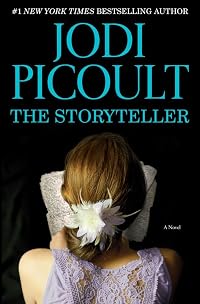
The Storyteller
by Jodi Picoult
On This Page
Description
Becoming friends with Josef Weber, an old man who is particularly loved in her community, Sage Singer is shocked when one day he asks her to kill him and reveals why he deserves to die, causing her to question her beliefs.Tags
Recommendations
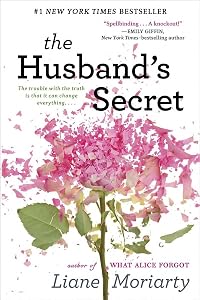
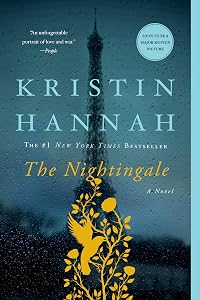
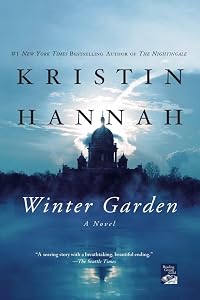
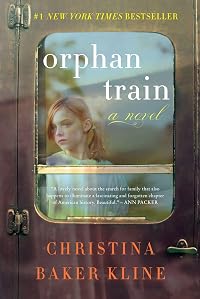
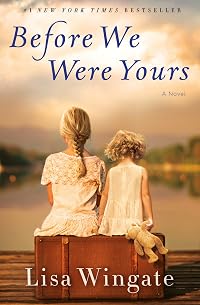
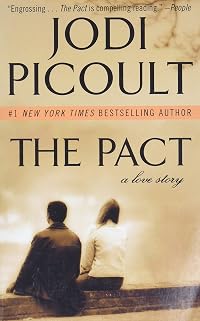
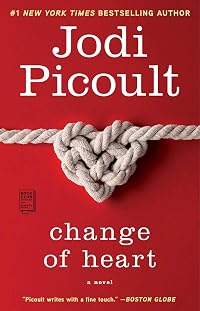
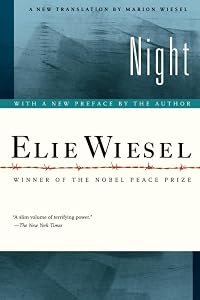
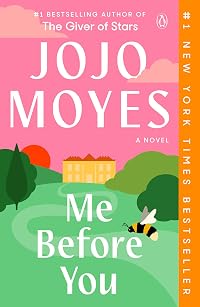
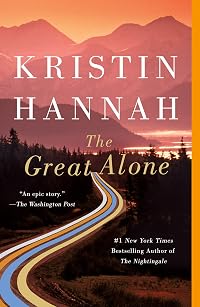
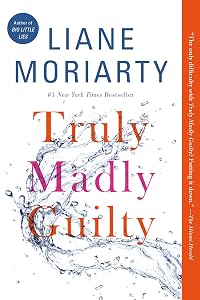
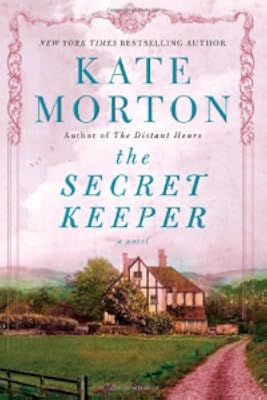
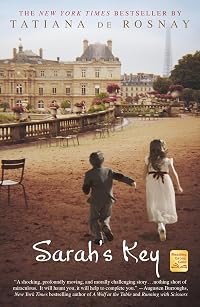
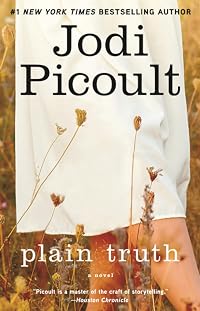
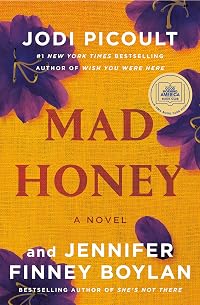
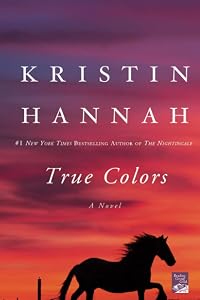
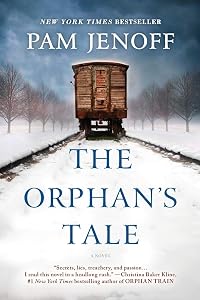
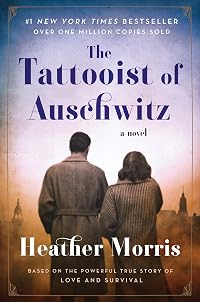

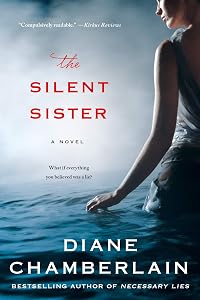
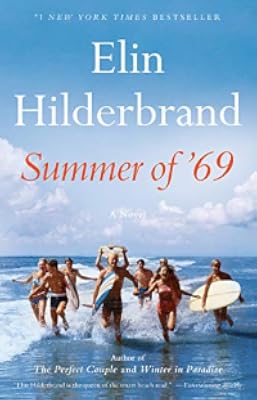
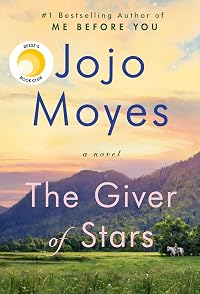
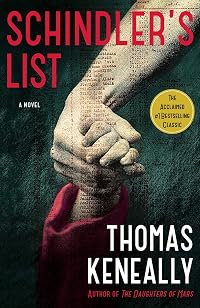
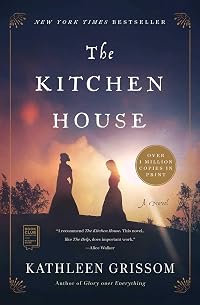
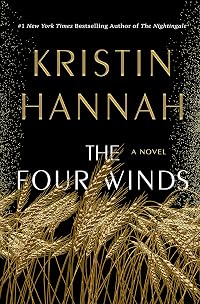
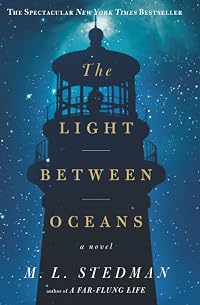
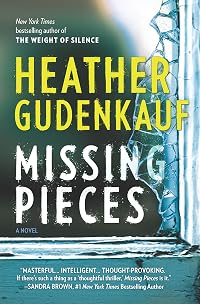
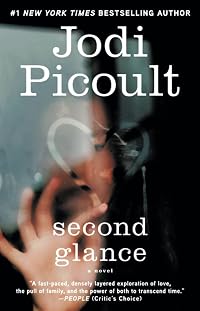
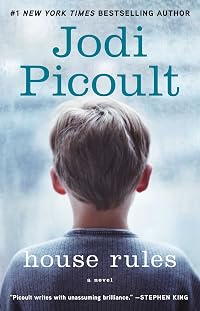
Member Recommendations
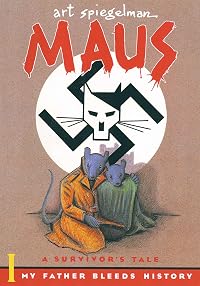
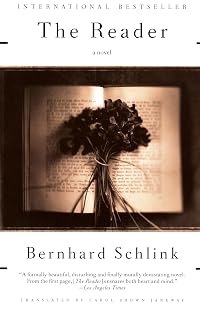
BookshelfMonstrosity These thought-provoking novels examine the atrocious activities and difficult decisions made during the Holocaust, the legacy of World War II, and the links between identity and humanity.
Member Reviews
Is it possible to put a Holocaust story, a vampire story, a love story and a tragic accident in the same novel without it sounding cliched or offensive? Jodi Picoult proves that the answer to this is yes and builds a story about the choices that people make collecting the seemingly mismatching threads into a rich tapestry.
The middle part of the novel is almost heartbreaking to read - the story of the Holocaust as seen by the eyes of a young girl that survives it. Even though you know it is a novel and that the narrator survives (because she is telling the story), it still is a very powerful piece of prose. And the fact that it is not a real survivor story does not make it less powerful.
And around this middle part is the framing story - show more the old Nazi officer Josef that decides to ask forgiveness from a Jewish woman. In her introduction to the novel, Picoult points out that this idea is not her, she found it in Simon Wiesenthal's "The Sunflower" and that she built her novel around the idea. Except that the case in "The Storyteller" is a little different - Josef does not seek one of his victims but Sage - a 20-something baker which is Jewish by birth but claims not to be and that lives in the 21st century. Sage has her own story and secrets - while Josef had lived his life hidden because of what he had done and had built himself a new identity and won the respect of the whole town, Sage had her face marked from an accidents and hides behind her profession and the weird hours that bakers keep.
Add to this Sage's grandmother Minka (who is the survivor that the middle part of the book belong to), a married man that Sage believes to be the best she deserves and a Nazi hunter who is ready to discount the whole story when he first hears it but then realizes that there is something in it, a retired Nun, interesting face showing in a bread (and I still do not see how that connected to the whole story...) and a few other secondary characters that allow the story to flow nicely.
And the main thread in the whole novel is choices - the choices that Josef made as a boy and then as a young man, the choices Minka hd to make in order to survive, the choices that Sage made in her own life and for the story of Josef, the choice that Josef had made when deciding to confess to Sage; choices of death and life (in more than one way); choices of belonging and staying away; of betrayal and honesty. Even the last act of the novel was a choice.
The turning point of the novel is hinted at very early in it and is fully shown long before Sage catches up on it - and that's one of the weak points of the novel. She should have seen it earlier - should have managed to process that information. But then should would not have made the same choice most likely - although I am not so sure that this would have been a bad thing.
And where are the vampires? In a story, where they belong. Between the chapters of the novel in the same way in which they had been written between the hard days of Minka. A story that saves her life and that plays a significant role in her narrative... and as unfinished as the life of a person can be. And a lot of the choices in that fictional story mirror the choices in the lives of the characters - and repeating some of the parts during the novel narration itself serves to show how close is life to an unreal imaginary story... and how powerful a story can be.
At one point, at the final part of the book Picoult defines history: "History isn't about dates and places and wars. It's about the people who fill the spaces between them." And that's one of the best definition I had heard. Because at the end of the day, history is the story of the choices made by people for people about people. And novels can relate these possible stories - because even if that one did not happen, millions of stories did happen in the ghettos and camps of WWII - and most of them cannot be told because noone survived to tell them. But "The Storyteller" is not just a Holocaust story even if it contains one; nor is it a vampire story - it just contains one. It is about memories, forgiveness, choices and hope. show less
The middle part of the novel is almost heartbreaking to read - the story of the Holocaust as seen by the eyes of a young girl that survives it. Even though you know it is a novel and that the narrator survives (because she is telling the story), it still is a very powerful piece of prose. And the fact that it is not a real survivor story does not make it less powerful.
And around this middle part is the framing story - show more the old Nazi officer Josef that decides to ask forgiveness from a Jewish woman. In her introduction to the novel, Picoult points out that this idea is not her, she found it in Simon Wiesenthal's "The Sunflower" and that she built her novel around the idea. Except that the case in "The Storyteller" is a little different - Josef does not seek one of his victims but Sage - a 20-something baker which is Jewish by birth but claims not to be and that lives in the 21st century. Sage has her own story and secrets - while Josef had lived his life hidden because of what he had done and had built himself a new identity and won the respect of the whole town, Sage had her face marked from an accidents and hides behind her profession and the weird hours that bakers keep.
Add to this Sage's grandmother Minka (who is the survivor that the middle part of the book belong to), a married man that Sage believes to be the best she deserves and a Nazi hunter who is ready to discount the whole story when he first hears it but then realizes that there is something in it, a retired Nun, interesting face showing in a bread (and I still do not see how that connected to the whole story...) and a few other secondary characters that allow the story to flow nicely.
And the main thread in the whole novel is choices - the choices that Josef made as a boy and then as a young man, the choices Minka hd to make in order to survive, the choices that Sage made in her own life and for the story of Josef, the choice that Josef had made when deciding to confess to Sage; choices of death and life (in more than one way); choices of belonging and staying away; of betrayal and honesty. Even the last act of the novel was a choice.
The turning point of the novel is hinted at very early in it and is fully shown long before Sage catches up on it - and that's one of the weak points of the novel. She should have seen it earlier - should have managed to process that information. But then should would not have made the same choice most likely - although I am not so sure that this would have been a bad thing.
And where are the vampires? In a story, where they belong. Between the chapters of the novel in the same way in which they had been written between the hard days of Minka. A story that saves her life and that plays a significant role in her narrative... and as unfinished as the life of a person can be. And a lot of the choices in that fictional story mirror the choices in the lives of the characters - and repeating some of the parts during the novel narration itself serves to show how close is life to an unreal imaginary story... and how powerful a story can be.
At one point, at the final part of the book Picoult defines history: "History isn't about dates and places and wars. It's about the people who fill the spaces between them." And that's one of the best definition I had heard. Because at the end of the day, history is the story of the choices made by people for people about people. And novels can relate these possible stories - because even if that one did not happen, millions of stories did happen in the ghettos and camps of WWII - and most of them cannot be told because noone survived to tell them. But "The Storyteller" is not just a Holocaust story even if it contains one; nor is it a vampire story - it just contains one. It is about memories, forgiveness, choices and hope. show less
Over the past few years I have become very disenchanted with Jodi Picoult's books and after the last one I read, said I was not going to read any more written by her. Thank goodness, I didn't follow through. "The Storyteller" was a truly riveting story centred around the Holocaust, with thought-provoking questions about forgiveness and justice. There were a number of narrators, but the one I found most compelling and tragic was young Minka's as she described her battle to stay alive while imprisoned in Auschwitz. From the start, I was hooked on this book and found it hard to put it down. A fabulous read.
my first picoult and i was surprised by how well it’s written and how thoughtful so much of it is. i was also really surprised by what the story ended up being as i went into it blind. which i guess is good because i wouldn’t have chosen a holocaust story on my own. and i think i would have preferred if that entire storyline wasn’t there or was much more condensed, as it’s just not something i need to read about, especially if what we’re doing is humanizing the nazis. that said, this was well done and brought up interesting questions. i’m not sure that i like the decision that sage made in the end, or that i agree with the conclusion she came to (at least in that moment) but i appreciate the question that picoult brings up. show more she’s talking about the ordinariness of evil, the way we all make mistakes, the way something can live inside us forever. she’s asking questions about forgiveness and justice and guilt and i’d probably prefer she didn’t answer them for us, but sage’s decision (against the backdrop of leo’s opinion) makes for interesting discussions, i'm sure. i also really always like the book within a book thing, and that’s true here too, especially in the parallels between that story and the flashback story. still, i would have preferred less of that and more of the contemporary story, as i don’t feel the need to read too many holocaust stories anymore, and it felt like that part took up too many pages and maybe was a little trauma porn-ish at times. and the interesting part is really in the processing and the modern day questions that the holocaust brings up. show less
To write about the ineffable or the incomprehensible is not easy, inherently it can't be. So to write about the Holocaust and the toll it took on its victims and its perpetrators...it must be handled with grace, skill, delicacy, if the work is to be taken seriously as a work of merit or true worth or weight.
And, oddly enough, Jodi Picoult does this...but she also doesn't. On the one hand her writing of the atrocities of what Jews, Poles, Communists et al went through at the hands of the Nazis (following the now well worn progression of 'accepted' anti-semitism to slow disenfranchising, and eventual tightening of the strangle hold and finally the knotting of the noose and the lighting of the ovens) is convincing with a refreshing absence show more of the usual pap and plastic flair and attempt at whimsy many American Jewish authors of late have tried to insert into their shtetl/Holocaust/European Jewish stories (I'm looking at you, Jonathan Safran Foer and your wife Nicole Krauss too!). But where Ms. Picoult falter is, unfortunately, her modern American need for definition and declaration in the realm of a story, real in history, imagined in her mind, that defies analysis.
I have no doubt as to the moral ambiguity inherent to all humanity on a good day, let alone during the conditions of war and microscoped down even more to during the conditions of mechanized genocide. And Picoult understands this well. But some, or almost none, can write about things like this with the gentle but powerful hand it requires. I'm sorry, but Ms. Picoult unfortunately cannot have her cake and eat it too. You can't infer a moral equivalency between the few, the individuals, while bemoaning the absolute evil of the many and the majority.
The power of story as discussed here, as confession, as catharsis, as hope, is a powerful one. But this message is threaded too thinly with too many disparate influences jockeying for attention. The conceit of the literary Nazi officer with a fondness for literature being charmed (or at least made curious) by the bookish leanings of one of his Jewish prisoners has been done before, and better I will add, by David Grossman in his superior See Under: Love, as well as, to a lesser extent, in Yoram Kaniuk's novel Adam Resurrected.
But the book has power and the effort and passion shows. Though I should mention that the modern portions of the book, detailing Sage and her (eventual) romance with government agent Leo Stein, are a pain to outright punishment to sit through. And this brings me back to one of my main concerns regarding not only this story but American storytelling sensibilities as a whole, at least, modern ones.
In essence, the story (despite the genuinely surprising and well crafted twist at the end) is too clean, it's too neat, and aside from the relevant and maddening questions of morality and justice brought up towards story's end, is concluded and wrapped up too neatly. This robs the story of the necessary bravery it needed to be a real literary statement about one of history's most horrific moments. The romance between Sage and Leo is too plastic, too forced and 'cute', too much a piece of wistful and forcibly romantic American pap in the face of something dark, ineffable, incomprehensible, something Hebraic and human, Old Testament and brutal.
As it stands, it's a decent and even good read. But it could have been and maybe should have been something so much more than what we were given. show less
And, oddly enough, Jodi Picoult does this...but she also doesn't. On the one hand her writing of the atrocities of what Jews, Poles, Communists et al went through at the hands of the Nazis (following the now well worn progression of 'accepted' anti-semitism to slow disenfranchising, and eventual tightening of the strangle hold and finally the knotting of the noose and the lighting of the ovens) is convincing with a refreshing absence show more of the usual pap and plastic flair and attempt at whimsy many American Jewish authors of late have tried to insert into their shtetl/Holocaust/European Jewish stories (I'm looking at you, Jonathan Safran Foer and your wife Nicole Krauss too!). But where Ms. Picoult falter is, unfortunately, her modern American need for definition and declaration in the realm of a story, real in history, imagined in her mind, that defies analysis.
I have no doubt as to the moral ambiguity inherent to all humanity on a good day, let alone during the conditions of war and microscoped down even more to during the conditions of mechanized genocide. And Picoult understands this well. But some, or almost none, can write about things like this with the gentle but powerful hand it requires. I'm sorry, but Ms. Picoult unfortunately cannot have her cake and eat it too. You can't infer a moral equivalency between the few, the individuals, while bemoaning the absolute evil of the many and the majority.
The power of story as discussed here, as confession, as catharsis, as hope, is a powerful one. But this message is threaded too thinly with too many disparate influences jockeying for attention. The conceit of the literary Nazi officer with a fondness for literature being charmed (or at least made curious) by the bookish leanings of one of his Jewish prisoners has been done before, and better I will add, by David Grossman in his superior See Under: Love, as well as, to a lesser extent, in Yoram Kaniuk's novel Adam Resurrected.
But the book has power and the effort and passion shows. Though I should mention that the modern portions of the book, detailing Sage and her (eventual) romance with government agent Leo Stein, are a pain to outright punishment to sit through. And this brings me back to one of my main concerns regarding not only this story but American storytelling sensibilities as a whole, at least, modern ones.
In essence, the story (despite the genuinely surprising and well crafted twist at the end) is too clean, it's too neat, and aside from the relevant and maddening questions of morality and justice brought up towards story's end, is concluded and wrapped up too neatly. This robs the story of the necessary bravery it needed to be a real literary statement about one of history's most horrific moments. The romance between Sage and Leo is too plastic, too forced and 'cute', too much a piece of wistful and forcibly romantic American pap in the face of something dark, ineffable, incomprehensible, something Hebraic and human, Old Testament and brutal.
As it stands, it's a decent and even good read. But it could have been and maybe should have been something so much more than what we were given. show less
I have often been of two minds about Picoult: she is an amazing storyteller whose formula is obvious but constantly renewed in a fresh an interesting way; I would even say that it has become her signature. Her conclusions, however, tended to be cowardly - a slight of hand to get her out of the complicated moral situation she had adroitly described.
In this novel, she accomplishes both: a breath-taking story in which she is able to expose the horrors of the war and the points of view of the various characters while coming up with a brilliant and heart-wrenching conclusion. Even though I had guessed the ending, it came as a double edged sword: bringing peace and justice on the one hand, shock and vengeance on the other. In my view, one of show more Picoult's best. show less
In this novel, she accomplishes both: a breath-taking story in which she is able to expose the horrors of the war and the points of view of the various characters while coming up with a brilliant and heart-wrenching conclusion. Even though I had guessed the ending, it came as a double edged sword: bringing peace and justice on the one hand, shock and vengeance on the other. In my view, one of show more Picoult's best. show less
I have read several of Jodi Picoult’s books now, and they are somewhat hit-or-miss for me. There are some that I have definitely enjoyed more than others, and some that I didn’t particularly enjoy at all. Picoult is not a Christian writer, and though she is unafraid to delve deeply into complicated and sensitive issues, her endings often fall flat for me. This one, however, is by far my favourite!
The concept instantly intrigued me: a descendant of a Holocaust survivor encounters a former (and reformed) Nazi soldier. Both the modern day situation and the flashbacks to the war era present the characters with difficult moral decisions, and the flashbacks also reveal the slippery slope that can lead a person to commit such atrocities show more against other human beings. In addition to the present day and historical stories that are playing out, there is another story being told: a fictional tale being composed by a young girl as her world is turned upside down, a tale that parallels her reality and gives it the possibility of a happy ending.
Picoult’s books always reveal a twist near the end, and I can often make a pretty close guess as to what it will be before I get there, or at least have a general idea. Not this time. This one genuinely surprised me! I did not see it coming at all, and I thought it was very well done!
Overall, I really enjoyed this book! The various perspectives were very interesting to read and think about. This is something I will read again someday! show less
The concept instantly intrigued me: a descendant of a Holocaust survivor encounters a former (and reformed) Nazi soldier. Both the modern day situation and the flashbacks to the war era present the characters with difficult moral decisions, and the flashbacks also reveal the slippery slope that can lead a person to commit such atrocities show more against other human beings. In addition to the present day and historical stories that are playing out, there is another story being told: a fictional tale being composed by a young girl as her world is turned upside down, a tale that parallels her reality and gives it the possibility of a happy ending.
Picoult’s books always reveal a twist near the end, and I can often make a pretty close guess as to what it will be before I get there, or at least have a general idea. Not this time. This one genuinely surprised me! I did not see it coming at all, and I thought it was very well done!
Overall, I really enjoyed this book! The various perspectives were very interesting to read and think about. This is something I will read again someday! show less
Good read but be warned: this is a holocaust book. Much of the story is told in flashback, with many details of mass murder and starvation, death and loss. A main character describes being in the Warsaw ghetto, Auschwitz, and the forced march of women before the liberation.
Are some people just evil and will always be that way, or can they be made that way because of upbringing or circumstance? Good questions, and thoughtfully laid out in this novel. But to get there, you'll have to go through hell.
Are some people just evil and will always be that way, or can they be made that way because of upbringing or circumstance? Good questions, and thoughtfully laid out in this novel. But to get there, you'll have to go through hell.
Members
- Recently Added By
Lists

Top Five Books of 2013
1,562 works; 721 members

ALA The Reading List
490 works; 28 members

Top Five Books of 2014
1,064 works; 398 members

Top Five Books of 2021
604 works; 181 members

Book Riot's 100 must-read works of Jewish Fiction
100 works; 8 members

Five star books
1,767 works; 110 members

Books Read in 2015
3,299 works; 126 members

Books about World War II
241 works; 22 members

Deena's Favorites--How Many have you read?
102 works; 3 members

Secrets Books
94 works; 3 members

READ in 2023
244 works; 1 member

Books Read in 2021
5,361 works; 114 members

Struggle for Freedom
69 works; 4 members

World War II Books
34 works; 1 member

Historical Fiction Books
99 works; 5 members

A Smorgasbord of Culinary Fiction
221 works; 94 members

2026 Reading List
50 works; 1 member
Author Information

115+ Works 146,607 Members
Jodi Picoult was born in Nesconset, New York on May 19, 1966. She received a degree in creative writing from Princeton University in 1987 and a master's degree in education from Harvard University. She published two short stories in Seventeen magazine while still in college. Immediately after graduation, she landed a variety of jobs, ranging from show more editing textbooks to teaching eighth-grade English. Her first book, Songs of the Humpback Whale, was published in 1992. Her other works include Picture Perfect, Mercy, The Pact, Salem Falls, The Tenth Circle, Nineteen Minutes, Change of Heart, Handle with Care, House Rules, Sing You Home, Lone Wolf, Leaving Time, and Small Great Things. My Sister's Keeper was made into a movie starring Cameron Diaz. She received the New England Bookseller Award for fiction in 2003. She also wrote five issues of the Wonder Woman comic book series for DC Comics. She writes young adult novels with her daughter Samantha van Leer including Between the Lines and Off the Page. (Bowker Author Biography) show less
Some Editions
Awards and Honors
Awards
Distinctions
Work Relationships
Is contained in
Has as a commentary on the text
Common Knowledge
- Canonical title*
- Pardonne-lui
- Original title
- The Storyteller
- Original publication date
- 2013-02
- People/Characters
- Sage Singer; Josef Weber; Minka; Darija Horowicu; Basia Kaminski; Majer Kaminski (show all 24); Reiner Hartmann; Franz Hartmann; Abram Lewin; Hana Lewin; Josek Szapiro; Leo Stein; Genevra; Mary DeAngelis; Rocco; Adam Lancaster; Shannon Lancaster; Bryan Lancaster; Grace Lancaster; Herr Bauer; Rubin Kaminski; Herr Fassbinder; Pepper; Saffron
- Important places
- Our Daily Bread Bakery; Łódź Ghetto, Łódź, Łódź, Poland; Poland; Westerbrook, New Hampshire, USA; Auschwitz concentration camp, Oświęcim, Lesser Poland, Poland; Łódź, Łódź, Poland (show all 7); Germany
- Important events
- World War II (1939 | 1945); Holocaust (1933 | 1945)
- Epigraph
- How wonderful it is that nobody need wait a single moment before starting to improve the world. Anne Frank, The Diary of a Young Girl
When I reach the age of Twenty I will explore this world of plenty In a motorized bird myself I will sit And soar into space Oh! so brightly lit I will float, I will fly to the world so lovely so far, I will float, I will... (show all) fly above rivers and sea The cloud is my sister, the wind a brother to me. --from "A Dream" by Avraham (Abramek) Koplowicz b. 1930. He was a child of the Lodz ghetto. He was taken from the ghetto on the final transport to Auschwitz-Birknau in 1944 and was murdered there at age fourteen. This poem has been translated from the original Polish by Ida Meretyk-Spinka, 2012 - Dedication
- For my mother, Jane Picoult, because you taught me there is nothing more important than family. And because after twenty years, its your turn again.
- First words
- My father trusted me with the details of his death.
- Quotations
- There are all sorts of losses people suffer—from the small to the large. You can lose your car keys, your glasses, your virginity. You can lose your head, you can lose your heart, you can lose your mind. You can relinquish ... (show all)your home to move into assisted living, or have a child move overseas, or see a spouse vanish into dementia. Loss is more than just death, and grief is the gray shape-shifter of emotion.
That's the paradox of loss: How can something that's gone weigh us down so much?
But my mother also would have been the first to tell me that good people are good people; religion has nothing to do with it.
I cannot justify why I've picked Josef, a virtual stranger, to reveal myself to. Maybe because loneliness is a mirror, and recognizes itself.
And me: I find myself talking about things that I have long packed up, like a spinster's hope chest.
Each memory is like a paper flower stowed up a magician's sleeve: invisible one moment and then so substantial and florid the next I cannot imagine how it stayed hidden all this time. And like those paper flowers, once they'v... (show all)e been let loose in the world, the memories are impossible to tuck away again.
It turns out that sharing the past with someone is different from reliving it when you're alone. It feels less like a wound, more like a poultice.
Shayla is born-again; this isn't a surprise. But it still makes me uncomfortable, as if she is specifically talking about my ineligibility.
"I believe in Hell...but it's here on earth." He shakes his head. "Good people and bad people. As if it were this easy. Everyone is both of these at once."
"Ach. Well. A long time ago, someone once told me that a story will tell itself, when it's ready. I assumed that it wasn't ready."
A twenty-five-year-old disfigured girl and a nonagenarian? I suppose there have been stranger duos.
It reminds me of photos I have seen of soldiers on the eve of being shipped out, wearing too much bravado like a cloying aftershave.
My mind unravels back to Josef, to the Jews in the camp. When you are singled out for torture because of your faith, can religion still be a beacon?
Adam gently ties the sutures so that the mouth cannot drop open but looks naturally set. I imagine Josef dying, his mouth being sewn shut, all his secrets trapped inside.
It was the first time I remember learning that people are never who they seem to be.
"I'm a certified bra fitter," Irene says. "I'm working at Nordstrom." ¶ "Certified," I repeat. I wonder where the legitimizing agency for bra fitters is. If you get grades: A, B, C, D, and DD. "It sounds like a very...unique... (show all) job." ¶ "It's a handful," Irene says, and then she laughs. "Get it?" ¶ "Um. Yeah." ¶ "I'm doing bra fitting now so I can put myself through school and do what I 'really' want." ¶ "Mammography?" I guess.
"It's okay, Leo. Actually, I think it's really sexy." ¶ "What is?" ¶ "The way you can wave your voice around, like it's a flag."
But at any given moment, we are capable of doing what we least expect.
"There was a look in their eyes, sometimes...They weren't dreading the trigger being pulled, even if the gun was already pointed at them. It was as if they ran toward it. I could not fathom this, at first. How could you not w... (show all)ant to draw breath one more day? How could your own life be such a cheap commodity? But then I started to understand: when your existence is hell, death must be heaven."
Inside, in small, tight cursive, words crawl across the page, packed end to end, without any white space, as if that were a luxury. Maybe, back then, it was.
For just a moment, when Josef let his own death mask slip, I could see the man he used to be: the one buried beneath the kindly exterior for so many decades, like a root growing slow beneath pavement, still capable of crackin... (show all)g concrete.
The word 'Jew' makes me shudder, as if such a term should not even be allowed to take up passing residence on his lips.
The cries were soft and hitched together like train cars.
But as I leave Josef's house, I cannot help but wonder if my grandmother is one of the ones he doesn't recall. And if 'he' is one of the ones she has worked so hard to forget. The inequity there makes me sick to my stomach.
It is like he said: we believe what we want to, what we need to. The corollary is that we choose not to see what we'd rather pretend doesn't exist.
"Look, all I'm saying is that it wouldn't hurt you to hold a grudge longer than a single breath." ¶ "Isn't that a little Old Testament for a nun?" ¶ "Ex-nun. And let me tell you, that serenity crap from 'The Sound of Music'... (show all)? Bullshit. Inside the cloister, the sisters are just as petty as people on the outside. There are some you love and some you hate. I did my share of spitting in the Holy Water font before another nun used it. It was totally worth the twenty rosaries I said for penance."
Yet I, who fancied myself a writer, couldn't find a single word to describe not only what I had seen but how everything had changed, as if the earth had tilted slightly on its axis, ashamed of the sun, so that now we would ha... (show all)ve to learn to live in the dark.
During that forty-eight-hour stretch, I passed the gallows six times—going to the bakery, to Darija's, to school. After the first two times, I stopped noticing. It was as if death had become part of the landscape.
I squinted. One moment I could not see past the low light and the shorn head and the bruises on her face. And then the next, I recognized Darija. ¶ Just like that, I became human again.
Nothing grew in Auschwitz. No grass, no mushrooms, no weeds, no buttercups. The landscape was dusty and gray, a wasteland.
There was always a little ripple of awareness when Herr Dybbuk arrived or departed, as if his presence was an electric shock.
There is a reason the word history has, at its heart, the narrative of one's life.
I rolled the yarn up around my arm like a bandage, a tourniquet for a soul that was bleeding out.
I stopped counting the day. They all ran together, like chalk in the rain: shuffling from one side of the camp to the other, standing in line for a bowl of soup that was nothing more than hot water boiled with a turnip. I tho... (show all)ught I had known hunger; I had no idea.
Every morning, being marched to Kanada, I would see Jews waiting in the groves until it was their turn at the crematoria. They were still wearing their clothes, and I wondered how long it might be before I found myself rippin... (show all)g the lining of that wool coat or digging into the pockets of those trousers. As I walked by I kept my gaze trained on the ground. If I had been looking up, they would pity me, with my shaved head and my scarecrow body. If I had been looking up, they would see my face and know that what they were about to be told—that this shower was just a precaution, before they were sent out to work—was a lie. If I had been looking up, I would have been tempted to shout out the truth, to tell them that the smell wasn't from a factory or kitchen but from their own friends and relatives being incinerated. I would have started to scream and maybe I would never have stopped.
Some of the women prayed. I saw no point in that; since if there was a God, He would not have let this happen. Others said that the conditions at Auschwitz were so horrendous God chose not to go there. If I prayed for anythin... (show all)g it was to fall asleep quickly without concentrating on my stomach digesting its own lining.
I began to feel a great responsibility, as if my mind was a vessel, and I had the duty of keeping a record of those who were gone. We had ample opportunity to steal clothing, but the first thing I stole from Kanada was not a ... (show all)scarf or a pair of warm socks. It was someone else's memories.
I didn't see it as stealing. I saw it as archiving. Before I went to sleep I would take out these photos, this growing deck of the dead, and whisper my way through their names. Ania, Herschel, Gerda, Haim. Wolf, Mindla, Dworj... (show all)a, Izrael. Szymon, Elka. Rochl and Chaja, the twins. Eliasz, still wailing after his bris. Szandla, on her wedding day. ¶ As long as I remembered them, then they were still here.
Sometimes all you to live one more day is a good reason to stick around.
Fiction is like that, once it is released into the world: contagious, persistent.
"It turns out that the more you repeat the same action, no matter how reprehensible, the more you can make an excuse for it in your own mind."
Sometimes all it takes to become human again is someone who can see you that way, no matter how you present on the surface.
My mother used to say that sometimes if you turn a tragedy over in your hand, you can see a miracle running through it, like fool's gold in the hardest shard of rock.
Sometimes they would take the living, too. It was an honest mistake; we didn't always know which was which.
I listen to Tauba keening, turned inside out by loss.
The weapons an author has at her disposal are flawed. There are words that feel shapeless and overused. Love, for example. I could write the word love a thousand times and it would mean a thousand different things to differen... (show all)t readers. ¶ What is the point of trying to put down on paper emotions that are too complex, too huge, too overwhelming to be confined by an alphabet? ¶ Love isn't the only word that fails. ¶ Hate does, too.
If you lived through it, you already know there are no words that will ever come close to describing it. ¶ And if you didn't, you will never understand.
History isn't about dates and places and wars. It's about the people who fill the spaces between them.
I don't believe in God. But sitting there, in a room full of those who feel otherwise, I realize that I do believe in people. In their strength to help each other, and to thrive in spite of the odds. I believe that the extrao... (show all)rdinary trumps the ordinary, any day. I believe that having something to hope for—even if it's just a better tomorrow—is the most powerful drug on this planet.
You can believe, for example, that a dead-end job is a career. You can blame your ugliness for keeping people at bay, when in reality you're crippled by the thought of letting another person close enough to potentially scar y... (show all)ou even more deeply. You can tell yourself that it's safer to love someone who will never really love you back, because you can't lose someone you never had.
Sage's house is the visual representation of that favorite sweatshirt you own, the one that you search through your drawer for, because it's so comfortable. The couch is overstuffed, the light creamy and soft. There's always ... (show all)something baking. It is the kind of place you could settle down for a few moments and wake up, years later, because you never left.
It's easy to say you will do what's right and shun what's wrong, but when you get close enough to any given situation, you realize that there is no black or white. There are gradations of gray.
"I don't know what this person did to you, and I am not sure I want to. But forgiving isn't something you do for someone else. It's something you do for yourself. It's saying, 'You're not important enough to have a strangleho... (show all)ld on me.' It's saying, 'You don't get to trap me in the past. I am worthy of a future.'" - Last words
- (Click to show. Warning: May contain spoilers.)I look Leo in the eye, and shake my head.
*Some information comes from Common Knowledge in other languages. Click "Edit" for more information.
Classifications
Statistics
- Members
- 4,361
- Popularity
- 3,444
- Reviews
- 172
- Rating
- (4.08)
- Languages
- 14 — Chinese, Dutch, English, Estonian, French, German, Hungarian, Italian, Norwegian (Bokmål), Norwegian, Polish, Portuguese, Russian, Turkish
- Media
- Paper, Audiobook, Ebook
- ISBNs
- 68
- ASINs
- 13