
Flight Behavior: A Novel
by Barbara Kingsolver
On This Page
Description
Tired of living on a failing farm and suffering oppressive poverty, bored housewife Dellarobia Turnbow, on the way to meet a potential lover, is detoured by a miraculous event on the Appalachian mountainside that ignites a media and religious firestorm that changes her life forever.Tags
Recommendations


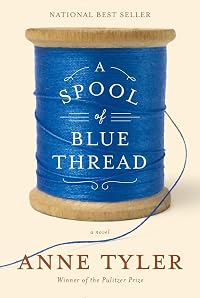
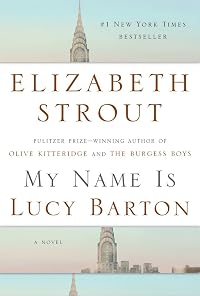
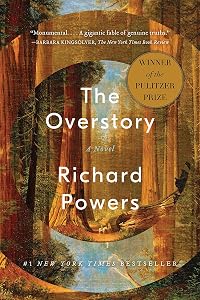
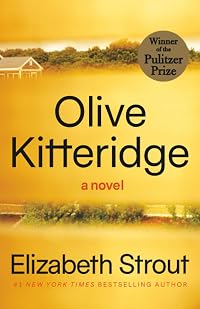





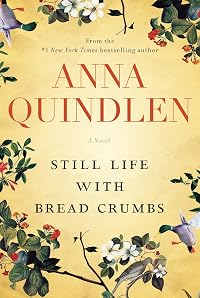


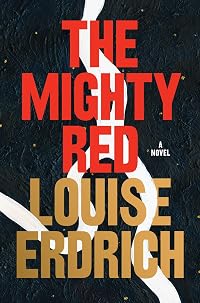




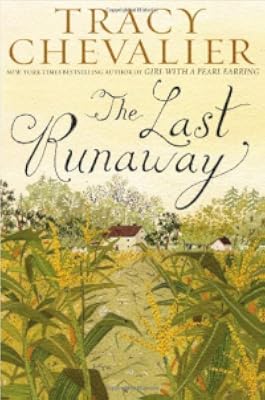
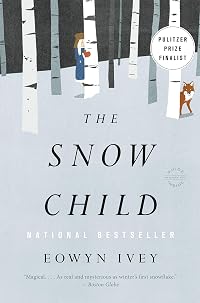






Member Recommendations

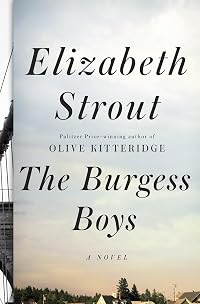
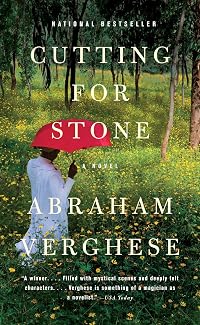
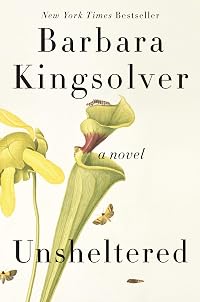
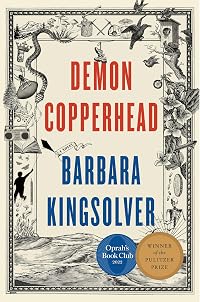
rockyblanco Same author but a very different subject.
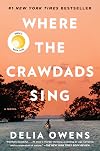
WendyRobyn Strong presence of nature and nature sciences, small town USA, romantic interest between protagonist and sensitive, educated man
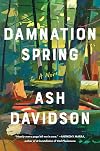
LDVoorberg Connected by style as well as themes of nature and family life.
Member Reviews
Near her hardscrabble sheep farm in Tennessee, Dellarobia Turnbow discovers millions of monarch butterflies who have deviated from their normal migration pattern to Mexico. The discovery brings the world to her doorstep, the tourists, the eco-activists, and the media among them. Also to arrive is Ovid Byron, a lepidopterist who hires Dellarobia to help research why the butterflies have arrived in Appalachia.
The answer soon becomes clear: climate change as a result of global warming. The butterflies’ Mexican home has been destroyed by flooding exacerbated by deforestation. Initially, Dellarobia is not a believer in climate change; gradually, however, she changes her mind as evidence is presented to her. Unfortunately others in the show more community are not so open-minded; her father-in-law, for example, wants to log the mountain which the butterflies have chosen for their winter home. The blindness of climate change deniers is addressed strongly by Ovid: “’What scientists disagree on now . . . is how to express our shock. The glaciers that keep Asia’s watersheds in business are going right away. . . . The Arctic is genuinely collapsing. Scientists used to call these things the canary in the mine. What they say now is, The canary is dead. We are at the top of Niagara Falls . . . in a canoe. . . . We got here by drifting, but we cannot turn around for a lazy paddle back when you finally stop pissing around. We have arrived at the point of an audible roar. Does it strike you as a good time to debate the existence of the falls?’’’ (367)
The serious social message is expertly intertwined with a personal story. Dellarobia is unhappy and frustrated with her life. She feels trapped in her marriage to Cub, a dim-witted, unimaginative, passive man overshadowed by his parents. Though he is decent, good-hearted, and well-meaning, he cannot provide her with an escape from their economically and intellectually impoverished life. Working for Ovid serves as an awakening for Dellarobia. She gains self-confidence as her horizons expand and decides to seek personal fulfillment, searching, like the butterflies, for the place where she belongs. Obviously she metamorphoses from caterpillar to butterfly, although at the end she, again like the butterflies, is faced with an uncertain future.
There are many Biblical allusions in the novel. Dellarobia sees a flaming forest, like Moses saw a burning bush. References to Noah’s flood appear more than once. I foresee students of English literature writing essays analyzing Kingsolver’s use of Biblical allusions to add depth to her novel.
This is literary fiction at its best; it combines an interesting plot and a dynamic protagonist with an urgent message: the world is a “mess made by undisciplined humans” (25) who must stop behaving like “ignorant little dumb-heads” (41) or “the world [will] fall down around them” (25). show less
The answer soon becomes clear: climate change as a result of global warming. The butterflies’ Mexican home has been destroyed by flooding exacerbated by deforestation. Initially, Dellarobia is not a believer in climate change; gradually, however, she changes her mind as evidence is presented to her. Unfortunately others in the show more community are not so open-minded; her father-in-law, for example, wants to log the mountain which the butterflies have chosen for their winter home. The blindness of climate change deniers is addressed strongly by Ovid: “’What scientists disagree on now . . . is how to express our shock. The glaciers that keep Asia’s watersheds in business are going right away. . . . The Arctic is genuinely collapsing. Scientists used to call these things the canary in the mine. What they say now is, The canary is dead. We are at the top of Niagara Falls . . . in a canoe. . . . We got here by drifting, but we cannot turn around for a lazy paddle back when you finally stop pissing around. We have arrived at the point of an audible roar. Does it strike you as a good time to debate the existence of the falls?’’’ (367)
The serious social message is expertly intertwined with a personal story. Dellarobia is unhappy and frustrated with her life. She feels trapped in her marriage to Cub, a dim-witted, unimaginative, passive man overshadowed by his parents. Though he is decent, good-hearted, and well-meaning, he cannot provide her with an escape from their economically and intellectually impoverished life. Working for Ovid serves as an awakening for Dellarobia. She gains self-confidence as her horizons expand and decides to seek personal fulfillment, searching, like the butterflies, for the place where she belongs. Obviously she metamorphoses from caterpillar to butterfly, although at the end she, again like the butterflies, is faced with an uncertain future.
There are many Biblical allusions in the novel. Dellarobia sees a flaming forest, like Moses saw a burning bush. References to Noah’s flood appear more than once. I foresee students of English literature writing essays analyzing Kingsolver’s use of Biblical allusions to add depth to her novel.
This is literary fiction at its best; it combines an interesting plot and a dynamic protagonist with an urgent message: the world is a “mess made by undisciplined humans” (25) who must stop behaving like “ignorant little dumb-heads” (41) or “the world [will] fall down around them” (25). show less
Kingsolver takes on global warming by examining one specific impact in one specific place: monarch butterfly migration at the Turnbow farm in Feathertown, Tennessee. As always, her characters have depth and realism—there are few outright villains here.
One of the things I loved best about this book was the occasions when Dellarobia sticks up for the locals, decrying a late-night talk show that makes fun of an Appalachian man simply for his appearance and accent, clarifying the local perspective on global warming, or silently judging the out-of-towners for their obtuse classism.
One of the things I loved best about this book was the occasions when Dellarobia sticks up for the locals, decrying a late-night talk show that makes fun of an Appalachian man simply for his appearance and accent, clarifying the local perspective on global warming, or silently judging the out-of-towners for their obtuse classism.
Bound together by harsh truths related to poverty, disappointment, and climate change, Kingsolver's Flight Behavior moves forward with her signature lyric prose, weaving worlds that are both foreign and familiar. As always, her characters are not just believable, but engaging and, if anything, too realistic and familiar for comfort. In this novel in particular, the children and the odd mix of central characters are the heart of the work, illustrating the heartbreaking disconnect between devoted naturalists and a community which is necessarily held outside of that world by economic concerns and personal crises of their own.
Even though it took some time for me to engage with Kingsolver's narrator here, I ended up not being able to put the show more book down once I'd moved through maybe a quarter of the novel, and the compelling story that evolves in the work held me in until the end. My only complaint, in the end, is with the ending. The wrap-up felt not only rushed, but unbelievable on some levels of plotting and character, and after such a wonderful tale, I really expected more. Despite the ending, though, the book was well worth reading and passing on.
Overall, recommended. The ending is the only thing that will hold this off from remaining a favorite of mine. show less
Even though it took some time for me to engage with Kingsolver's narrator here, I ended up not being able to put the show more book down once I'd moved through maybe a quarter of the novel, and the compelling story that evolves in the work held me in until the end. My only complaint, in the end, is with the ending. The wrap-up felt not only rushed, but unbelievable on some levels of plotting and character, and after such a wonderful tale, I really expected more. Despite the ending, though, the book was well worth reading and passing on.
Overall, recommended. The ending is the only thing that will hold this off from remaining a favorite of mine. show less
I first discovered Barbara Kingsolver when my sister moved to Arizona—Kingsolver's early books are set in Tucson—I read them many, many years ago. Of course that was long before I understood that Tucson and Phoenix are completely different worlds. I've popped in to read other Kingsolver novels over the years, like The Poisonwood Bible and Prodigal Summer, probably long before I was old enough to really appreciate them but I've moved my copies from rented room to apartment to house for years. But when I read Demon Copperhead last year I knew I wanted to revisit those early books and read what I missed. Last year I had a brief obsession with butterflies and I couldn't get butterfly-related books out of my head so I made a collage show more including Flight Behavior, bought a copy at Bookman's, then proceeded to forget I had it. When I saw a Monarch land on the milkweed in my yard, I remembered all over again.
This is a slow burn of a book that opens with a woman ready to blow up her life until she sees something that opens her eyes to the bigger world around her. In the woods above her house, Dellarobia finds millions of butterflies (her mother-in-law calls them King Billies). When her father-in-law announces a logging company is going to clear cut, she tells her family to go see those woods before making a decision and they see the same miracle that changed her direction. From there, we learn more about why the Monarchs are gathering along with Dellarobia. We meet a scientist who lives in an RV and sets up a lab in their barn. Two different worlds set up in rural Appalachia—a scientist who knows that these butterflies should not be there and the people that live there seeing a miracle. Dellarobia straddles both as she learns more about the reality of climate change and the harsh reality that this is an ecological crisis, the world crying out, not a miracle to bring tourism to the area.
I felt for Dellarobia, her depression mirrored my own experiences in many ways—I also hate everyone and everything when the depresh hits hard. The conversations between Dellarobia and Ovid, the ecologist, were my favorite parts. I kept going back to double check the copyright date because, what do you mean? We've been living in this divisive, divided world for well over a decade? Those conversations felt like they could happen today—they reminded me that the more things change, the more they stay the same.
Since I started learning more and more about birds (migration, species deep-dives, etc), I've also been learning more about climate change. It almost feels like the books are talking to each other, from reading about bird migration (A World on the Wing), to the memoir of a climate scientist (A Billion Butterflies), to climate change impacts in the ocean (Deep Water), to this book, published long before those others but seemingly bringing it all together: facts explored through fiction. One of my favorite ways to learn. show less
This is a slow burn of a book that opens with a woman ready to blow up her life until she sees something that opens her eyes to the bigger world around her. In the woods above her house, Dellarobia finds millions of butterflies (her mother-in-law calls them King Billies). When her father-in-law announces a logging company is going to clear cut, she tells her family to go see those woods before making a decision and they see the same miracle that changed her direction. From there, we learn more about why the Monarchs are gathering along with Dellarobia. We meet a scientist who lives in an RV and sets up a lab in their barn. Two different worlds set up in rural Appalachia—a scientist who knows that these butterflies should not be there and the people that live there seeing a miracle. Dellarobia straddles both as she learns more about the reality of climate change and the harsh reality that this is an ecological crisis, the world crying out, not a miracle to bring tourism to the area.
I felt for Dellarobia, her depression mirrored my own experiences in many ways—I also hate everyone and everything when the depresh hits hard. The conversations between Dellarobia and Ovid, the ecologist, were my favorite parts. I kept going back to double check the copyright date because, what do you mean? We've been living in this divisive, divided world for well over a decade? Those conversations felt like they could happen today—they reminded me that the more things change, the more they stay the same.
Since I started learning more and more about birds (migration, species deep-dives, etc), I've also been learning more about climate change. It almost feels like the books are talking to each other, from reading about bird migration (A World on the Wing), to the memoir of a climate scientist (A Billion Butterflies), to climate change impacts in the ocean (Deep Water), to this book, published long before those others but seemingly bringing it all together: facts explored through fiction. One of my favorite ways to learn. show less
Protagonist Dellarobia Turnbow, an unhappily married mother of two, lives on her in-laws’ property in the Appalachian rural community of Feathertown, Tennessee. A colony of monarch butterflies has migrated to their property, resulting in an online sensation and eco-tourism. A scientist arrives to study the butterflies and enlists Dellarobia’s help. Her father-in-law wants to sell the timber where the butterflies are wintering.
This is an alternative fiction where monarch butterflies have gotten their signals crossed, and instead of wintering in Mexico (as they actually do), they have, instead, migrated to Tennessee. It is climate fiction, where the main conflict is between the patriarch, Bear Turnbow, who wants to sell the woodlands show more to a logging company and Dellarobia who wants to protect and study the butterflies. Bear’s wife, Hester, wants to protect them for religious reasons. It is also a story of an unhappy marriage. Dellarobia and husband, Cub Turnbow, got married as teens when she became pregnant. She had been hoping to go to college.
I very much enjoyed the science-related content, and there is a sizeable amount related to global warming, environmental impact of clear-cutting, migration, entomology, and species extinction. It contains descriptions of farming, particularly related to raising sheep, and the everyday life of a family. There is also a lot of political conflict in this novel, with characters representing climate change deniers in conflict against environmentalists. Education plays a key role in the plot.
The primary drawback is that the science content is presented in lengthy sections of dialogue between the scientist and the protagonist or the protagonist and her children. If done only once or twice, it would be fine, but these types of teaching moments occur throughout. The characters are well-formed, and Kingsolver has a way with words, particularly her descriptions of the natural world. Personally, I prefer a more subtle approach, but overall, I found it well worth reading. show less
This is an alternative fiction where monarch butterflies have gotten their signals crossed, and instead of wintering in Mexico (as they actually do), they have, instead, migrated to Tennessee. It is climate fiction, where the main conflict is between the patriarch, Bear Turnbow, who wants to sell the woodlands show more to a logging company and Dellarobia who wants to protect and study the butterflies. Bear’s wife, Hester, wants to protect them for religious reasons. It is also a story of an unhappy marriage. Dellarobia and husband, Cub Turnbow, got married as teens when she became pregnant. She had been hoping to go to college.
I very much enjoyed the science-related content, and there is a sizeable amount related to global warming, environmental impact of clear-cutting, migration, entomology, and species extinction. It contains descriptions of farming, particularly related to raising sheep, and the everyday life of a family. There is also a lot of political conflict in this novel, with characters representing climate change deniers in conflict against environmentalists. Education plays a key role in the plot.
The primary drawback is that the science content is presented in lengthy sections of dialogue between the scientist and the protagonist or the protagonist and her children. If done only once or twice, it would be fine, but these types of teaching moments occur throughout. The characters are well-formed, and Kingsolver has a way with words, particularly her descriptions of the natural world. Personally, I prefer a more subtle approach, but overall, I found it well worth reading. show less
Another book by Kingsolver that I really loved. This is her newest and it meshes the fictional plight of a monarch butterfly population with the challenges of a family living in rural Tennessee. The book centers around climate change and how it has effected the butterflies, causing them to winter in Tennessee when their normal mountain top in Mexico changes too much to sustain them. A scientist and his team arrive on the property of the Turnbow's where the parents Hester and Bear own the land and their adult child, Cub, and his wife Dellarobia live in a separate house with their two children.
Kingsolver's books work for me because there is always an interesting context (as in climate change here) but she keeps her characters at the show more heart of the novel and never loses sight of them in favor of preaching about a cause. Dellarobia is the heart of this novel and she is a beautifully written character - intelligent and funny (the kind of observant, quick, and occasional wit that you want in a best friend) but also fallible. I loved the character interactions in this book and also loved that the children were part of the story. I feel like children are seldom realistically drawn in a novel and these were done very well, including how Dellarobia felt about them. show less
Kingsolver's books work for me because there is always an interesting context (as in climate change here) but she keeps her characters at the show more heart of the novel and never loses sight of them in favor of preaching about a cause. Dellarobia is the heart of this novel and she is a beautifully written character - intelligent and funny (the kind of observant, quick, and occasional wit that you want in a best friend) but also fallible. I loved the character interactions in this book and also loved that the children were part of the story. I feel like children are seldom realistically drawn in a novel and these were done very well, including how Dellarobia felt about them. show less
I read this for a book club. The book approaches the subject of climate change from an interesting viewpoint: that of Dellarobia, a disillusioned wife and mother of two young children who stumbles across an incredible gathering of monarch butterfly on her Appalachian Tennessee farm. Really, this is an insightful, dead-on representation of what it's like to live in a small southern town where college is a snob's dream, high school sports determine life success, and everything is filtered through the Bible. I found it to be a frustratingly slow read. The first 75 pages were the worst, but there were several other other boggy bits that felt like they needed editing. The end, however, is quite satisfying.
Members
- Recently Added By
Published Reviews
ThingScore 100
Climate change, for every good and topical reason, headlines Barbara Kingsolver’s marvelous eighth novel. But not to be undersold are its characters, rendered so believably and affectionately, they warm the atmosphere on their own.
added by Shortride
...... Kingsolver's masterly evocation of an age – ours, here, now – stumbling wilfully blind towards the abyss is an elegy not just for the endangered monarch butterfly, but for the ambitious, flawed species that conjured the mass extinction of which its loss is a part. Urgent issues demand important art. Flight Behaviour rises – with conscience and majesty – to the occasion of its time.
added by marq
Lists

Favourite books from the 2013 Women's Prize for Fiction (Orange Prize) long
20 works; 17 members

Top Five Books of 2013
1,562 works; 721 members

Female Author
1,234 works; 64 members

Baileys Women's Prize for Fiction Winners and Shortlisted Books
61 works; 11 members

Dishonourable Mentions of 2013
189 works; 63 members

Top Five Books of 2014
1,064 works; 397 members
Top Five Books of 2016
795 works; 229 members

Books Read in 2014
2,343 works; 89 members

Books Set in Small Towns and Villages
278 works; 16 members

BingoDOG - Scientists in Fiction
111 works; 17 members
Favorite Books Published in 2012
57 works; 17 members

Review 3
41 works; 1 member

Books Read in 2019
4,052 works; 108 members

Climate Change
39 works; 2 members
IMPAC Dublin Literary Award 2014 longlist
150 works; 3 members

Books Read in 2024
4,623 works; 126 members

Borrowed Books 2024 (Books We Have Read BUT do NOT Own)
20 works; 1 member

Books We Couldn't Put Down
443 works; 197 members
Author Information

48+ Works 99,156 Members
Barbara Kingsolver was born on April 8, 1955 in Annapolis, Maryland and grew up in Eastern Kentucky. As a child, Kingsolver used to beg her mother to tell her bedtime stories. She soon started to write stories and essays of her own, and at the age of nine, she began to keep a journal. After graduating with a degree in biology form De Pauw show more University in Indiana in 1977, Kingsolver pursued graduate studies in biology and ecology at the University of Arizona in Tucson. She earned her Master of Science degree in the early 1980s. A position as a science writer for the University of Arizona soon led Kingsolver into feature writing for journals and newspapers. Her articles have appeared in a number of publications, including The Nation, The New York Times, and Smithsonian magazines. In 1985, she married a chemist, becoming pregnant the following year. During her pregnancy, Kingsolver suffered from insomnia. To ease her boredom when she couldn't sleep, she began writing fiction Barbara Kingsolver's first fiction novel, The Bean Trees, published in 1988, is about a young woman who leaves rural Kentucky and finds herself living in urban Tucson. Since then, Kingsolver has written other novels, including Holding the Line, Homeland, and Pigs in Heaven. In 1995, after the publication of her essay collection High Tide in Tucson: Essays from Now or Never, Kingsolver was awarded an Honorary Doctorate of Letters from her alma mater, De Pauw University. Her latest works include The Lacuna and Flight Behavior. Barbara's nonfiction book, Animal, Vegetable, Miracle was written with her family. This is the true story of the family's adventures as they move to a farm in rural Virginia and vow to eat locally for one year. They grow their own vegetables, raise their own poultry and buy the rest of their food directly from farmers markets and other local sources. (Bowker Author Biography) show less
Some Editions
Awards and Honors
Awards
Distinctions
Notable Lists
Series
Belongs to Publisher Series
Common Knowledge
- Canonical title*
- Dans la lumière
- Original title
- Flight Behavior
- Original publication date
- 2012-10-30 (1e édition originale américaine, HarperCollins, New York) (1e édition originale américaine, HarperCollins, New York); 2013-08-21 (1e traduction et édition française, Littérature étrangère, Rivages) (1e traduction et édition française, Littérature étrangère, Rivages); 2014-09-24 (Réédition française, Poche, Littérature étrangère, Rivages) (Réédition française, Poche, Littérature étrangère, Rivages)
- People/Characters
- Dellarobia Turnbow; Ovid Byron; Cub Turnbow; Hester Turnbow; Preston Turnbow; Cordelia Turnbow
- Dedication
- For Virginia Henry Kingsolver and Wendell Roy Kingsolver
- First words
- A certain feeling comes from throwing your good life away, and it is one part rapture.
- Quotations
- Realistically, it probably wasn't slave children, but there had to be armies of factory workers making this slapdash stuff, underpaid people cranking out things for underpaid people to buy and use up, living their lives mostl... (show all)y to cancel each other out. A worldwide entrapment of bottom feeders.
If people played their channels right, they could be spared from disagreement for the length of their natural lives. Finally she got it. The need for so many channels. (p.258)
There are always more questions. Science as a process is never complete. It is not a foot race, with a finish line. He warned her about this as a standard point of contention. People will always be waiting at a particular fin... (show all)ish line: journalists with their cameras, impatient crowds eager to call the race, astounded to see the scientists approach, pass the mark, and keep running. It's a common misunderstanding, he said. They conclude there was no race. As long as we won't commit to knowing everything, the presumption is we know nothing.(p.351)
I never learn anything from listening to myself . (p.122)
Mistakes wreck your life. But they make what you have. It's kind of all one. You know what Hester told me when we were working the sheep one time? She said it's no good to complain about your flock, because it's the put-toget... (show all)her of all your past choices. (p.384)
Here is my full statement. What you are doing is unconscionable. You are allowing the public to be duped by a bunch of damned liars.(p.369)
...everything else is in motion while God does not move at all. God sits still, perfectly at rest, the silver dollar at the bottom of the well, the question. (p.351)
It was hard to feel the remotest sympathy for any of the different fools she had been. As opposed to the fool she was probably being now. People hang on for dear life to that one, she thought: the fool they are right now. (p.... (show all)394) - Last words
- (Click to show. Warning: May contain spoilers.)Above the lake of the world, ranked by white mountains, they flew out to a new earth.
- Publisher's editor
- Ottewell, Miranda
- Original language
- English
- Canonical DDC/MDS
- 813.54
- Canonical LCC
- PS3561.I496
*Some information comes from Common Knowledge in other languages. Click "Edit" for more information.
Classifications
Statistics
- Members
- 4,578
- Popularity
- 3,182
- Reviews
- 253
- Rating
- (3.86)
- Languages
- 7 — Dutch, English, French, German, Italian, Polish, Spanish
- Media
- Paper, Audiobook, Ebook
- ISBNs
- 40
- ASINs
- 18