Perrault's Complete Fairy Tales
by Charles Perrault
On This Page
Description
An illustrated collection of eleven tales including such familiar titles as "Cinderella" and "Sleeping Beauty" and less familiar ones such as "Tufty Ricky" and "The Fairies."Tags
Recommendations










Member Recommendations
Member Reviews
Charles Perrault, a minor government official in 17th century France, is best remembered today for the collection of fairy tales he published in 1697, just six years before his death. Perrault, however, was not the author of any of the tales collected in his book. Rather, he rewrote various folk tales, tales of unknown origin snatched from the oral tradition of his time, and published those stories in the versions that most closely resemble the ones children grow up on today.
This new Christopher Betts translation of Perrault’s work presents a few of the stories in simple verse, the rest in prose, and it includes an all-star list of fairy tales. Among the stories in “The Complete Fairy Tales” are: “Little Red Riding-Hood,” show more “Sleeping Beauty,” “Bluebeard,” “Puss in Boots,” “Cinderella,” and a story very similar to that of ”Hansel and Gretel.” But make no mistake about it – these are not the fairy tales you heard from your mother and they are, most definitely, not the ones made famous by Mr. Disney.
Nevertheless, Perrault did intend that his stories be read to small children by their parents. For that reason, his versions of the folk tales are shorter than the stories with which adults of the period would have been more familiar, they encompass a limited number of characters and motivations, and much of the most obvious sexual content has been removed or, at the least, disguised. In addition, within his stories, Perrault emphasizes lessons and warnings about the process of growing up and he attaches at least one moral to the end of each tale. The attached morals, however, do seem to be aimed more at the parent/reader than at the listening children.
Adult readers will be intrigued by the editing process to which Perrault subjected his chosen tales and probably a little shocked by some of the details he excluded. Perrault clearly felt it necessary to clean up the old folk tales before publishing them as children’s entertainment. Who might have imagined, for instance, that Snow White would be raped by her prince and would give birth to twins before she was awakened? Or that Little Red Riding-Hood would be forced by the wolf to eat part of her dismembered grandmother? Or that incest would play a prominent role in some of the tales?
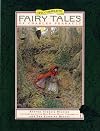
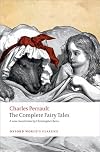
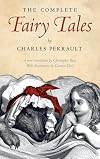
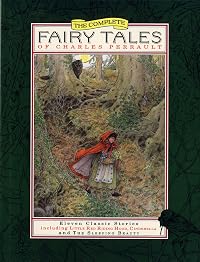
“The Complete Fairy Tales” includes twenty-six remarkable illustrations by 19th century French literary illustrator Gustave Doré (including the book’s cover and the “Cinderella” illustration shown here) and it is amply footnoted. Most intriguing, though, is the book’s presentation of alternate versions of several of today’s most beloved fairy tales, versions that make it obvious why Perrault felt obliged to edit the tales to fit his intended audience. Readers preferring their history in unexpurgated form will much appreciate “The Complete Fairy Tales” as translated by Christopher Betts.
Rated at: 5.0 show less
This new Christopher Betts translation of Perrault’s work presents a few of the stories in simple verse, the rest in prose, and it includes an all-star list of fairy tales. Among the stories in “The Complete Fairy Tales” are: “Little Red Riding-Hood,” show more “Sleeping Beauty,” “Bluebeard,” “Puss in Boots,” “Cinderella,” and a story very similar to that of ”Hansel and Gretel.” But make no mistake about it – these are not the fairy tales you heard from your mother and they are, most definitely, not the ones made famous by Mr. Disney.
Nevertheless, Perrault did intend that his stories be read to small children by their parents. For that reason, his versions of the folk tales are shorter than the stories with which adults of the period would have been more familiar, they encompass a limited number of characters and motivations, and much of the most obvious sexual content has been removed or, at the least, disguised. In addition, within his stories, Perrault emphasizes lessons and warnings about the process of growing up and he attaches at least one moral to the end of each tale. The attached morals, however, do seem to be aimed more at the parent/reader than at the listening children.
Adult readers will be intrigued by the editing process to which Perrault subjected his chosen tales and probably a little shocked by some of the details he excluded. Perrault clearly felt it necessary to clean up the old folk tales before publishing them as children’s entertainment. Who might have imagined, for instance, that Snow White would be raped by her prince and would give birth to twins before she was awakened? Or that Little Red Riding-Hood would be forced by the wolf to eat part of her dismembered grandmother? Or that incest would play a prominent role in some of the tales?
“The Complete Fairy Tales” includes twenty-six remarkable illustrations by 19th century French literary illustrator Gustave Doré (including the book’s cover and the “Cinderella” illustration shown here) and it is amply footnoted. Most intriguing, though, is the book’s presentation of alternate versions of several of today’s most beloved fairy tales, versions that make it obvious why Perrault felt obliged to edit the tales to fit his intended audience. Readers preferring their history in unexpurgated form will much appreciate “The Complete Fairy Tales” as translated by Christopher Betts.
Rated at: 5.0 show less
I actually read these while I was in France, but I reread a couple of them this week while my online group was discussing them. The online discussion reminded me how dark these stories were, full of violence and terror and unpredictability. The things we face in life, in other words. The things we seek out in books.
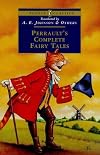
Perrault’s Complete Fairy Tales totaled fourteen in the Puffin Classics volume, including Cinderella, Sleeping Beauty, and Puss in Boots. I much preferred reading Perrault’s fairy tales to reading those by the brothers Grimm. Perrault’s were gentler. While they did were more didactic (with “morals” at the end), they also tended toward happy endings. They also seemed to be written directly for children, even though they claim to be a direct translation from the French.
The complete fairy tales of Charles Perrault
Liked hearing of the stories and also about the author who wrote these in the 1670's.
Some of them are quite scary and gruesome and they all come with a moral or two at the end.
Had never heard of Bluebeard and Hop of My Thumb and Donkeyskin.
About the author and translations done are included at the end.
I received this book from National Library Service for my BARD (Braille Audio Reading Device).
Liked hearing of the stories and also about the author who wrote these in the 1670's.
Some of them are quite scary and gruesome and they all come with a moral or two at the end.
Had never heard of Bluebeard and Hop of My Thumb and Donkeyskin.
About the author and translations done are included at the end.
I received this book from National Library Service for my BARD (Braille Audio Reading Device).
i didn't realize that perrault had written so few stories. anderson and grimm have huge volumes. it's interesting to see the differences in stories. an interesting history by betts. i chose this book because it was illustrated by dore. we saw his great summer exhibition at the nag this past summer.
Not the most enchanting edition (Clarion, 1993) of these tales I would have thought, but it gets the job done.
Charles Perrault's fairy tales with a moral at the end of each one along with three additional tales by Mme. Leprince de Beaumont and Mme. Aulnoy are included. Whether the last three are each by both writers or one is by one and two by the other is left unclear in the dust jacket comments. Nor does it say who the "others' are who also translated the stories. The Prefatory Note explains that "The Ridiculous Wishes," "Donkey-Skin" and "Patient Griselda" were originally written in "a rather florid and diffuse verse form" and, hence, not usually included in collections of Perrault's fairy tales; they have been "paraphrased" here by the other translators, who also did the morals. The preface's unattributed author notes that "Patient show more Griselda" appears in works by Boccaccio and Chaucer. Mme. Leprince de Beaumont wrote "Beauty and the Beast" and Mme. Aulnoy the final two stories.
The reviews in LibraryThing mention illustrations by Dore. This book does not have them. It also does not have comments at the end.
It contains:
The Sleeping Beauty in the Woods
Puss in Boots
Little Tom Thumb
The Fairies
Ricky of the Tuft
Cinderella
Little Red Riding Hood
Blue Beard
The Ridiculous Wishes
Donkey-Skin
Patient Griselda
Beauty and the Beast
The Friendly Frog
Princess Rosette show less
The reviews in LibraryThing mention illustrations by Dore. This book does not have them. It also does not have comments at the end.
It contains:
The Sleeping Beauty in the Woods
Puss in Boots
Little Tom Thumb
The Fairies
Ricky of the Tuft
Cinderella
Little Red Riding Hood
Blue Beard
The Ridiculous Wishes
Donkey-Skin
Patient Griselda
Beauty and the Beast
The Friendly Frog
Princess Rosette show less
Members
- Recently Added By
Author Information

990+ Works 9,267 Members
Charles Perrault was born in Paris on January 12, 1628. He was the son of an upper-class burgeois family and attended the best schools, becoming a lawyer in 1651. After being a lawyer for some time, he was appointed chief clerk in the king's building, superintendent's office in 1664. While there, he induced Colbert to establish a fund called Liste show more des Bienfaits du Roi, to give pensions to writers and savants not only in France but in Europe. He took part in the creation of the Academy of Sciences as well as the restoration of the Academy of Painting. When the Academy of Inscriptions and Belles-Lettres was founded by Colbert in 1663, Perrault was made secretary for life. Having written but a few popular poems, he was elected to the French Academy in 1671, and on the day of his inauguration he invited the public to be admitted to the meeting, a privilege that has ever since been continued. Perrault laid the foundations for a new literary genre, the fairy tale, with his works derived from pre-existing folk tales. The best known of his tales include Le Petit Chaperon rouge (Little Red Riding Hood), Cendrillon (Cinderella), Le Chat Botté (Puss in Boots), La Belle au bois dormant (The Sleeping Beauty) and La Barbe bleue (Bluebeard). His stories continue to be printed and have been adapted to opera, ballet (for example, Tchaikovsky's Sleeping Beauty), theatre, and film. He also wrote Parallèles des Anciens et des Modernes (the Parallels between the Ancients and the Moderns), from 1688 to 1697, which compared the authors of antiquity unfavorably to more modern writers, and caused a debate that lasted for years. Charles Perrault died on May 16, 1703. (Bowker Author Biography) show less
Some Editions
Awards and Honors
Series
Belongs to Publisher Series
Work Relationships
Contains
Is retold in
Common Knowledge
- Canonical title
- Perrault's Complete Fairy Tales
- Original title
- Histoires ou contes du temps passé, avec des moralités; Contes de ma Mère l'Oye
- Original publication date
- 1697
- People/Characters
- Griselda; Sleeping Beauty; Little Red Riding Hood; Bluebeard; Puss in Boots; Cinderella (show all 8); Riquet with the Tuft; Hop o' my Thumb
- Important places
- France
- First words
- Once upon a time there lived a king and queen who were grieved, more grieved than words can tell, because they had no children.
- Last words
- (Click to show. Warning: May contain spoilers.)Yet it's Little Thumbling may bring them fortune one fine day!
- Original language
- French
- Disambiguation notice
- The Oxford world classics edition 9780199585809 contains "Tales in verse" not included in the Dover edition 0486223116. These should perhaps be separated. What do other editions contain?
Classifications
Statistics
- Members
- 704
- Popularity
- 40,343
- Reviews
- 8
- Rating
- (3.90)
- Languages
- 12 — Chinese, Danish, Dutch, English, French, German, Italian, Norwegian (Bokmål), Norwegian, Croatian, Spanish, Swedish
- Media
- Paper, Audiobook, Ebook
- ISBNs
- 74
- UPCs
- 4
- ASINs
- 21