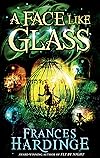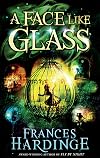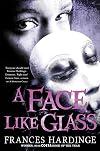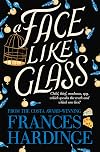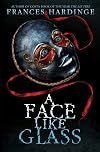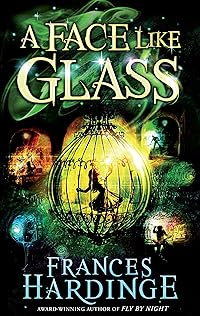
A Face Like Glass
by Frances Hardinge
On This Page
Description
In the underground city of Caverna the world's most skilled craftsmen toil in the darkness to create delicacies beyond compare - wines that can remove memories, cheeses that can make you hallucinate and perfumes that convince you to trust the wearer, even as they slit your throat. The people of Caverna are more ordinary, but for one thing: their faces are as blank as untouched snow. Expressions must be learned, and only the famous Facesmiths can teach a person to show (or fake) joy, despair show more or fear - at a price. Into this dark and distrustful world comes Neverfell, a little girl with no memory of her past and a face so terrifying to those around her that she must wear a mask at all times. For Neverfell's emotions are as obvious on her face as those of the most skilled Facesmiths, though entirely genuine. And that makes her very dangerous indeed. show lessTags
Recommendations



Member Recommendations
Member Reviews
I haven't said so before, I'll say it now: I fucking LOVE Frances Hardinge. I've read four of her books and they haven't just been good, they have been AMAZING. She is so good at worldbuilding and making these weird alternate realities, where the rules don't have to be laid out in great details, because you still understand them.
I read a book a while ago where everyone had tails, except this one girl who was secretely a human, and it disappointed me because the tails didn't seem to be part of that society at all. Like they used them for decorations, but nothing else, and it bothered me because I felt that the human should constantly be feeling like she couldn't communicate properly, since tails probably would be a big part of body show more language in that culture.
All that is to say that in this book, where the people have to be taught expressions and our heroine, a human, can do them just any human can, so much thought had been put into how that would affect the society. What would happen if you weren't given the opportunity to actually express your emotions? And how much would it suck to be the ONLY person around who couldn't hide your every thought? It's so interesting and well-done.
And Neverfell is another great heroine, as all of Hardinge's heroines are. She manages to be very unpredictable and impulsive (a bit mad, as she says herself) without it being annoying or just convenient for the plot. It's just how she is, and you accept that.
Yup, I loved it. I'm gonna go get my hands of some more of her books ASAP. show less
I read a book a while ago where everyone had tails, except this one girl who was secretely a human, and it disappointed me because the tails didn't seem to be part of that society at all. Like they used them for decorations, but nothing else, and it bothered me because I felt that the human should constantly be feeling like she couldn't communicate properly, since tails probably would be a big part of body show more language in that culture.
All that is to say that in this book, where the people have to be taught expressions and our heroine, a human, can do them just any human can, so much thought had been put into how that would affect the society. What would happen if you weren't given the opportunity to actually express your emotions? And how much would it suck to be the ONLY person around who couldn't hide your every thought? It's so interesting and well-done.
And Neverfell is another great heroine, as all of Hardinge's heroines are. She manages to be very unpredictable and impulsive (a bit mad, as she says herself) without it being annoying or just convenient for the plot. It's just how she is, and you accept that.
Yup, I loved it. I'm gonna go get my hands of some more of her books ASAP. show less
I've been reading and reading to find another Frances Hardinge book that lives up to the astonishing worldbuilding, social commentary, and twists & turns of my beloved [book:The Lost Conspiracy|6293900], and here it finally is. For anyone who thinks they're bored of fantasy because the same stuff happens over and over, or who appreciates a glorious worldbuilding puzzle into which all the pieces slot surprisingly but perfectly. Someday young readers of Hardinge are going to fall in love with [book:Grass|104342] or [author:Iain M Banks|16114377] or [author:China Miéville|33918], so if you are an adult fan of those authors, may I suggest you turn right around and fall in love with Frances Hardinge?
I bought this because I thought the Lie Tree was the best book I'd read for years, and then this blew me away even more. Amazing. There's a strong air of Northern Lights about it - a young adult story about a wild child with a mystery past, in a world which is similar to ours, but exploring a strange difference about the people. In this case, instead of daemons, it's that people can only use the expressions they've been taught, which makes Faces expensive and powerful.
The world is in many ways broad brush and over the top - a city in caves, crazed cartographers, magical wines and cheeses and perfumes, a ruler who never sleeps, but thinks with only half of his brain at any time, prison cells which are small cages suspended over a lake show more they can be lowered down into - and in many ways subtle and nuanced - all the characters do what they do for understandable, in character reasons, and the plot is beautifully crafted so that all the strands come together like harmony in a song and suddenly you understand, enthralled... show less
The world is in many ways broad brush and over the top - a city in caves, crazed cartographers, magical wines and cheeses and perfumes, a ruler who never sleeps, but thinks with only half of his brain at any time, prison cells which are small cages suspended over a lake show more they can be lowered down into - and in many ways subtle and nuanced - all the characters do what they do for understandable, in character reasons, and the plot is beautifully crafted so that all the strands come together like harmony in a song and suddenly you understand, enthralled... show less
An incredibly inventive story, with beautifully drawn characters, plot, and, most of all, incredible world-building.
I read a review that compared Face Like Glass to an Alice in Wonderland inspired tale, which is not accurate at all. I guess both stories have the same aspect of the surreal treated as banal, but Hardinge's story and Carroll's have nothing else in common, plot-wise. Of course, if you like Alice in Wonderland, you'd like this story
Much has been made of Neverfell's naivete and annoying-ness, but it truly does work. She starts out so incredibly sheltered that, while you're begging her not to, she can't help but fall for every little bit of manipulation she encounters. And Caverna is full of master manipulators, with their show more plots and their faces and their Wines. But her heart is truly so good that you can't helped but be won over by her kindness and wonder. And by the wonderful world she inhabits.
Side note: at the very end, the boy the encounter calls them "faeries," and I think that's an incredible way to think of the people of Caverna. Slightly mad, incredibly capricious with the potential for great cruelty and selfishness, and bursting with wonderful magics. show less
I read a review that compared Face Like Glass to an Alice in Wonderland inspired tale, which is not accurate at all. I guess both stories have the same aspect of the surreal treated as banal, but Hardinge's story and Carroll's have nothing else in common, plot-wise. Of course, if you like Alice in Wonderland, you'd like this story
Much has been made of Neverfell's naivete and annoying-ness, but it truly does work. She starts out so incredibly sheltered that, while you're begging her not to, she can't help but fall for every little bit of manipulation she encounters. And Caverna is full of master manipulators, with their show more plots and their faces and their Wines. But her heart is truly so good that you can't helped but be won over by her kindness and wonder. And by the wonderful world she inhabits.
You know you look great. Great. Painfully stunning. Then the person waiting for you looks up and their face says you are the last thing they want to see and possibly you also have half a biscuit stuck in your teeth.
It sucks to see disappointment, fear (unless you are trying to scare someone) or disgust (maybe you picked that nose on purpose, who knows) on a face, but it's still information to help us process the situation.
We need people's faces - nonverbal communication typically counting for more than half of the information exchanged in our conversations to give us clues. Now imagine a society where everyone just has a series of learned configurations to represent everything they are feeling or thinking.
In A Face Like Glass, we meet show more Neverfell, a preteen orphan with a past she can't remember, who is growing up in Caverna, a sprawling underground civilisation that was created after horrible things devastated the cities on the surface. Many generations later, the inhabitants still don't believe it is safe to leave so they party/drudge/court eyesight problems and asthma in their city below. It's a very hierarchical scene with drudges doing all the dirty work, tradesmen making delicacies just to keep their ruler The Steward from getting bored and nobility playing mind games.
Of course there's a statement about injustice and entitlement, but the part of the book that just kept fascinating me and creeping me right the hell out was the facial thing. Caverna infants come out "blank as eggs" and are taught a few expressions during their time in massive crèches. Lower-class babies are taught about what you'd expect for a servant (i.e., automaton who can't complain), usually amounting to only 3 or 4 expressions. No matter if they are sick, dying, furious, joyful or what; they can only make the "I'm eager to serve" or "I understand your need to punish me" or "I'm happy that I sleep on rocks" faces. Upper-class kids are given more and can buy lessons from Facesmiths ("Face 57, the Willow Bows Before the Gale" is an actual thing) as they get older.
The unique Neverfell has a 'face like glass,' in that it allows you to see through to whatever she is thinking or feeling. No Facesmiths required, lots of suspicions raised. Of course this makes her very special and very upsetting to the status quo. When she gets caught up in a rich girl's scheme, Neverfell starts seeing things she can't unsee and finding out more about who she is - and why it's so important that nobody rocks The Steward's boat.
Her story was frustrating at times but that actually worked to make it more believable. Of course someone's going to get busted half a dozen times when they have no Face 372, Dawn Breaking Over Ohio or whatever to cover up their intentions. Hardinge does a good job of building a world that is sprawling and vivid - it startled me all over again when someone's carriage was hoisted from cave to cave or people fed the lamps hanging over everything. I felt like I was right there (and then remembered I was also claustrophobic. Maybe don't read this in a small, enclosed space.)
Usually I refuse to recommend post-apocalyptic stories but this was so far post and the scenario was so strange that I just have to tell people to read it. Also there's no teen romance, vampires or boarding schools, so if you're inundated with all three, this is a nice break. Hope you enjoy the book, try Hardinge's other work or, at the very least, feel relieved that all those cringeworthy selfie faces didn't have to be paid for. show less
It sucks to see disappointment, fear (unless you are trying to scare someone) or disgust (maybe you picked that nose on purpose, who knows) on a face, but it's still information to help us process the situation.
We need people's faces - nonverbal communication typically counting for more than half of the information exchanged in our conversations to give us clues. Now imagine a society where everyone just has a series of learned configurations to represent everything they are feeling or thinking.
In A Face Like Glass, we meet show more Neverfell, a preteen orphan with a past she can't remember, who is growing up in Caverna, a sprawling underground civilisation that was created after horrible things devastated the cities on the surface. Many generations later, the inhabitants still don't believe it is safe to leave so they party/drudge/court eyesight problems and asthma in their city below. It's a very hierarchical scene with drudges doing all the dirty work, tradesmen making delicacies just to keep their ruler The Steward from getting bored and nobility playing mind games.
Of course there's a statement about injustice and entitlement, but the part of the book that just kept fascinating me and creeping me right the hell out was the facial thing. Caverna infants come out "blank as eggs" and are taught a few expressions during their time in massive crèches. Lower-class babies are taught about what you'd expect for a servant (i.e., automaton who can't complain), usually amounting to only 3 or 4 expressions. No matter if they are sick, dying, furious, joyful or what; they can only make the "I'm eager to serve" or "I understand your need to punish me" or "I'm happy that I sleep on rocks" faces. Upper-class kids are given more and can buy lessons from Facesmiths ("Face 57, the Willow Bows Before the Gale" is an actual thing) as they get older.
The unique Neverfell has a 'face like glass,' in that it allows you to see through to whatever she is thinking or feeling. No Facesmiths required, lots of suspicions raised. Of course this makes her very special and very upsetting to the status quo. When she gets caught up in a rich girl's scheme, Neverfell starts seeing things she can't unsee and finding out more about who she is - and why it's so important that nobody rocks The Steward's boat.
Her story was frustrating at times but that actually worked to make it more believable. Of course someone's going to get busted half a dozen times when they have no Face 372, Dawn Breaking Over Ohio or whatever to cover up their intentions. Hardinge does a good job of building a world that is sprawling and vivid - it startled me all over again when someone's carriage was hoisted from cave to cave or people fed the lamps hanging over everything. I felt like I was right there (and then remembered I was also claustrophobic. Maybe don't read this in a small, enclosed space.)
Usually I refuse to recommend post-apocalyptic stories but this was so far post and the scenario was so strange that I just have to tell people to read it. Also there's no teen romance, vampires or boarding schools, so if you're inundated with all three, this is a nice break. Hope you enjoy the book, try Hardinge's other work or, at the very least, feel relieved that all those cringeworthy selfie faces didn't have to be paid for. show less
In the underground city of Caverna, the worlds most skilled craftsmen toil in the darkness to create delicacies beyond compare wines that remove memories, cheeses that make you hallucinate, and perfumes that convince you to trust the wearer, even as they slit your throat. On the surface, the people of Caverna seem ordinary, except for one thing: their faces are as blank as untouched snow. Expressions must be learned, and only the famous Facesmiths can teach a person to express (or fake) joy, despair, or fear at a steep price. Into this dark and distrustful world comes Neverfell, a girl with no memory of her past and a face so terrifying to those around her that she must wear a mask at all times. Neverfell's expressions are as varied and show more dynamic as those of the most skilled Facesmiths, except hers are entirely genuine. And that makes her very dangerous indeed. show less
Pros: fascinating world-building, interesting characters, twisting plot
Cons:
Neverfell was found around the age of five in the tunnels of Cheesemaster Grandible. Seven years later, a series of errors has her emerging into the wider world of Caverna and the mysterious Court that rules it. For in a world where Faces must be learned and lying is a fact of life, Neverfell’s face can change expression with her emotions, and lying is beyond her skill.
The world of Caverna is fascinating. You’re introduced to it - and all of its various workings - slowly, through Neverfell’s eyes and experiences. While she’s told early on that everyone lies and manipulates, her own trusting and trustworthy natures make it hard for her to protect herself show more from the plots of others. As the book progresses, you learn more about the world and the darknesses it’s based on.
The plot takes a lot of turns I wasn’t expecting, which was a real joy. Neverfell’s a great character and her constant curiosity has her acting in unpredictable ways. She starts off hopelessly naive, but over the course of the book learns what society is like, and that not everyone she meets has her best interests in mind. The Kleptomancer is really fun, and I’d have loved seeing more of him and of the brilliantly insane cryptomancers.
This is a fun book, one that briefly touches on numerous discussion points, so it would make a great book club novel. show less
Cons:
Neverfell was found around the age of five in the tunnels of Cheesemaster Grandible. Seven years later, a series of errors has her emerging into the wider world of Caverna and the mysterious Court that rules it. For in a world where Faces must be learned and lying is a fact of life, Neverfell’s face can change expression with her emotions, and lying is beyond her skill.
The world of Caverna is fascinating. You’re introduced to it - and all of its various workings - slowly, through Neverfell’s eyes and experiences. While she’s told early on that everyone lies and manipulates, her own trusting and trustworthy natures make it hard for her to protect herself show more from the plots of others. As the book progresses, you learn more about the world and the darknesses it’s based on.
The plot takes a lot of turns I wasn’t expecting, which was a real joy. Neverfell’s a great character and her constant curiosity has her acting in unpredictable ways. She starts off hopelessly naive, but over the course of the book learns what society is like, and that not everyone she meets has her best interests in mind. The Kleptomancer is really fun, and I’d have loved seeing more of him and of the brilliantly insane cryptomancers.
This is a fun book, one that briefly touches on numerous discussion points, so it would make a great book club novel. show less
Members
- Recently Added By
Lists

Children's Fantasy
73 works; 10 members

Top Five Books of 2022
736 works; 272 members

Top Five Books of 2014
1,064 works; 398 members

Top Five Books of 2019
387 works; 111 members

KayStJ's to-read list
1,616 works; 11 members

Books Read in 2022
5,168 works; 114 members

Books Read in 2020
4,379 works; 124 members

Biggest Disappointments
606 works; 164 members
Author Information

23+ Works 8,445 Members
Frances Hardinge was born in 1973 in the United Kingdom. Her first novel, Fly By Night, won the Bradford Boase Award in 2006. Her other books include Verdigris Deep / Well Witched, Twilight Robbery, and A Face Like Glass. Cuckoo Song won the Robert Holdstock Award for Best Novel at the British Fantasy Awards in 2015 and The Lie Tree won the 2015 show more Costa Book of the Year award. (Bowker Author Biography) show less
Some Editions
Awards and Honors
Awards
Common Knowledge
- Canonical title
- A Face Like Glass
- Original publication date
- 2012
- Important places
- Caverna
- Dedication
- To my one-year-old nephew Isaac, in whose eyes I see the world reflected, and find it to be wondrous and full of surprises.
- First words
- One dark season, Grandible became certain that there was something living in his domain within the cheese tunnels.
- Last words
- (Click to show. Warning: May contain spoilers.)As she clenched the grass between her bare toes, her smile was like the sun swimming through blue eternities.
Classifications
Statistics
- Members
- 876
- Popularity
- 30,987
- Reviews
- 28
- Rating
- (4.35)
- Languages
- English
- Media
- Paper, Audiobook, Ebook
- ISBNs
- 16
- ASINs
- 6