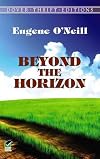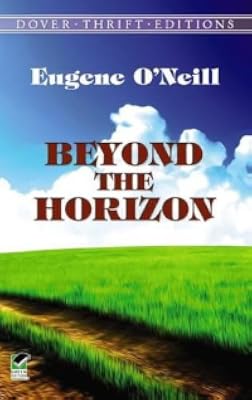
Beyond the Horizon
by Eugene O'Neill
On This Page
Description
The first of O'Neill's three Pulitzer Prize-winning plays, Beyond the Horizon was written in 1918. The drama revolves around two brothers, Robert and Andy, who live on their family's farm and both love the same woman, Ruth. While Robert longs to escape the farm and experience a long sea voyage, Andy wishes to remain on the Mayo farm and remain close to the land. Neither of these men realize their wishes, however, for Ruth's choice of husband begins the tragic downward spiral of the entire show more family. A story at once about the conflict of dreams and responsibility, choices and happiness, Beyond the Horizon is the innovative play of a dramatist destined to become one of America's greatest playwrights. show lessTags
Recommendations



















Member Reviews
I don't know why I was surprised by the abject misery. Themes a little dated, but a good read.
Oltre l'orizzonte, che conquistò il premio Pulitzer nel 1920, fu un dramma ambientato nei campi agricoli e nella campagna, nel quale l'autore mise in evidenze le passioni primitive ed i sentimenti. In questa opera O'Neill cercò un filo conduttore con gli eroi del teatro greco ed orientale, e lo intravide nella difficoltà che i protagonisti incontrano nella lotta per la sopravvivenza.
Oct 21, 2013Italian
Ratings
Members
- Recently Added By
Author Information

290+ Works 13,229 Members
Eugene O'Neill was born in New York City on October 16, 1888, the son of popular actors James O'Neill and Ellen Quinlan. As a young child, he frequently went on tour with his father and later attended a Catholic boarding school and a private preparatory school. He entered Princeton University but stayed for only a year. He took a variety of jobs, show more including prospecting for gold, shipping out as a merchant sailor, joining his father on the stage, and writing for newspapers. In 1912, he was hospitalized for tuberculosis and emotional exhaustion. While recovering, he read a great deal of dramatic literature and, after his release from the sanitarium, began writing plays. O'Neill got his theatrical start with a group known as the Provincetown Players, a company of actors, writers, and other theatrical newcomers, many of whom went on to achieve commercial and critical success. His first plays were one-act works for this group, works that combined realism with experimental forms. O'Neill's first commercial successes, Beyond the Horizon (1920) and Anna Christie (1921) were traditional realistic plays. Anna Christie is still frequently performed. It is the story of a young woman, Anna, whose hard life has led her to become a prostitute. Anna comes to live with her long-lost father, who is unaware of her past, and she falls in love with a sailor, who is also unaware. When Anna finds the two men fighting over her as though she were property, she is so angry and disgusted that she insists on telling them the truth. The man she loves rejects her at first, but then later returns to marry her. Soon O'Neill began to experiment more, and over the next 12 years used a wide variety of unusual techniques, settings, and dramatic devices. It is no exaggeration to say that, virtually on his own, O'Neill created a tradition of serious American theater. His influence on the playwrights who followed him has been enormous, and much of what is taken today for granted in modern American theater originated with O'Neill. A major legacy has been the nine plays he wrote between 1924 and 1931, tragedies that made heavy use of the new Freudian psychology just coming into fashion. His one comedy, Ah, Wilderness (1933), was the basis for the musical comedy, Oklahoma!, itself a groundbreaking event in American theater. O'Neill later began to write the intense, brooding, and highly autobiographical plays that are now considered to his best work. The Iceman Cometh (1946) is set in a bar in Manhattan's Bowery, or skid-row district. In the course of the play, a group of apparently happy men are forced to recognize the true emptiness of their lives. In A Long Day's Journey into Night (1956), O'Neill examines his own family and their tormented lives, a subject he continues in A Moon for the Misbegotten (1957). O'Neill's work was highly honored. He was awarded the Nobel Prize for literature in 1936 and Pulitzer Prizes for Anna Christie, Beyond the Horizon, Strange Interlude (1928), and A Long Day's Journey Into Night, which also received the New York Drama Critics Circle Award. O'Neill died in Room 401 of the Sheraton Hotel on Bay State Road in Boston, on November 27, 1953, at the age of 65. He was also born in a hotel room in Times Square, NYC. (Bowker Author Biography) show less
Awards and Honors
Awards
Work Relationships
Common Knowledge
- Canonical title
- Beyond the Horizon
- Original title
- Beyond the Horizon
- Original publication date
- 1920
- Related movies
- Great Performances: Beyond the Horizon (1975 | IMDb)
Classifications
Statistics
- Members
- 123
- Popularity
- 264,444
- Reviews
- 2
- Rating
- (3.07)
- Languages
- English, German, Swedish
- Media
- Paper, Ebook
- ISBNs
- 17
- UPCs
- 1
- ASINs
- 3