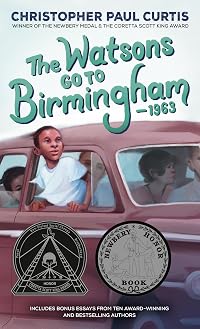
The Watsons Go to Birmingham—1963
by Christopher Paul Curtis
On This Page
Description
The ordinary interactions and everyday routines of the Watsons, an African American family living in Flint, Michigan, are drastically changed after they go to visit Grandma in Alabama in the summer of 1963.Tags
Recommendations
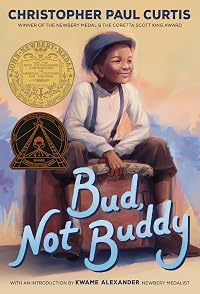
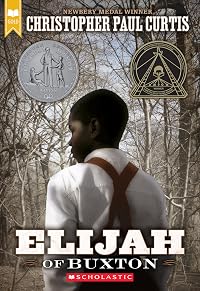
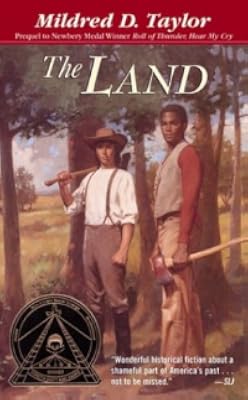
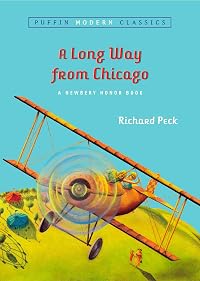
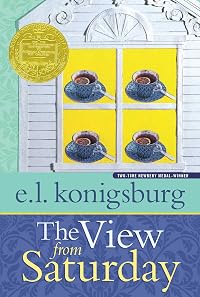
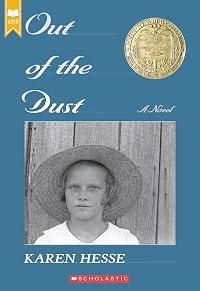
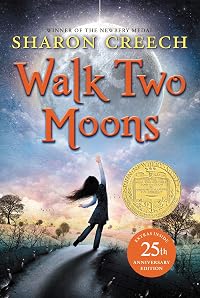
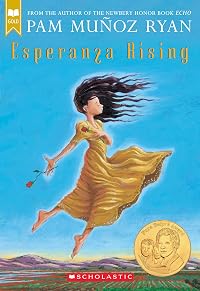
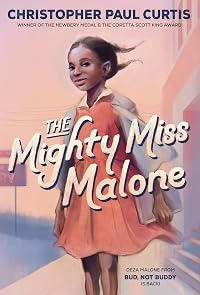
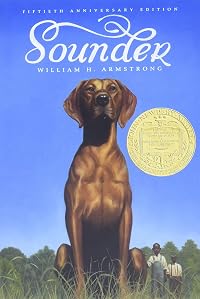
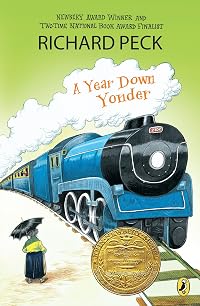

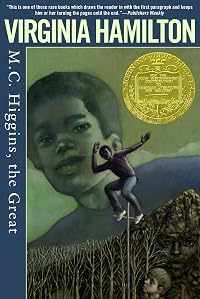
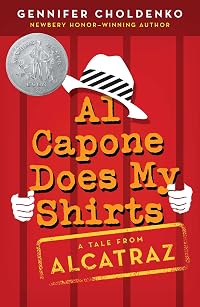

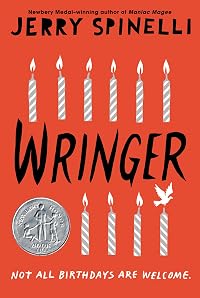
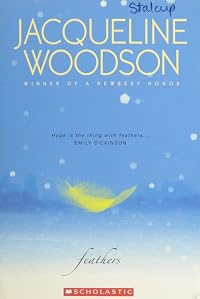
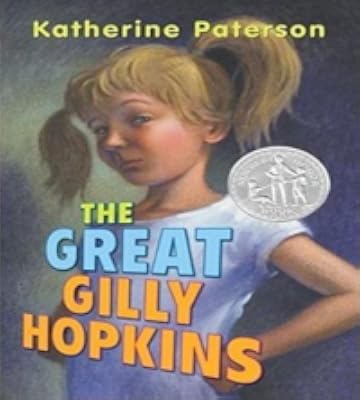

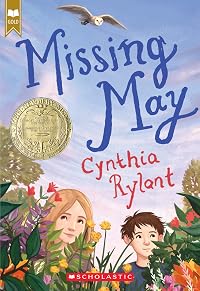
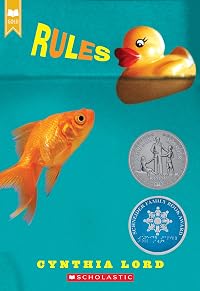
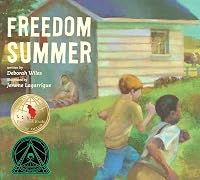
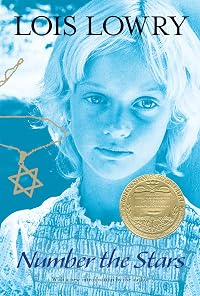
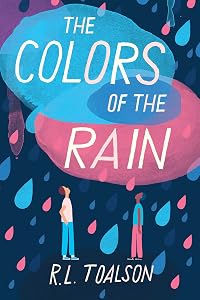
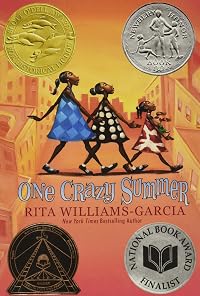
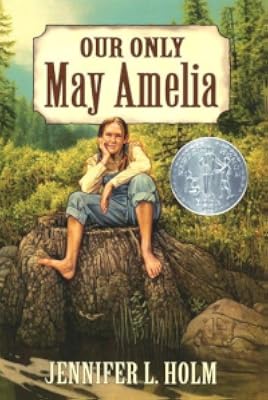

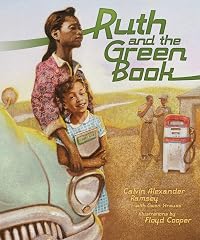
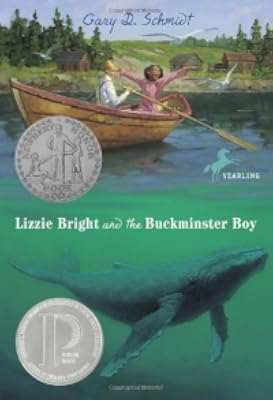
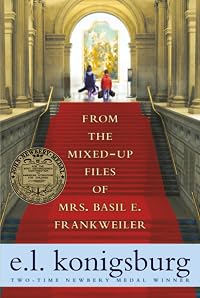
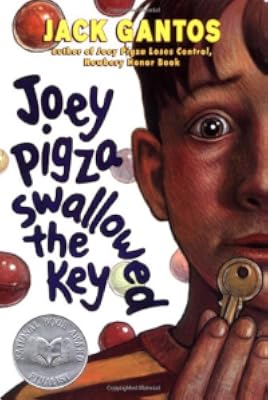

Member Recommendations
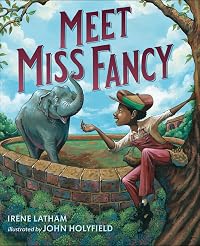
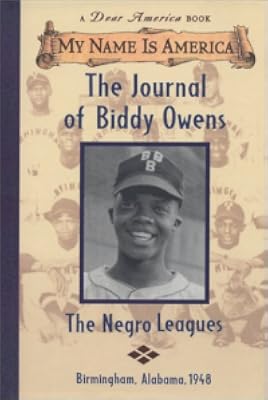
jacqueline065 I was reminded of the historical accout when I read this book. For Historical Fiction Lovers
Member Reviews
It's sort of easy to forget the title of this book, as the trip to Birmingham doesn't even come up until well past the halfway point. And by then I was enjoying the slice of life family interactions in Flint, Michigan, so much I was sort of sad when the Watsons did hit the road. The trip also brought with it an unexpected excursion into magical realism, which I don't always welcome, but the reference to Winnie the Pooh that came along with it helped ease my pain.
The Watson family is so likable they anchor the book even through its most drastic tone shifts.
The Watson family is so likable they anchor the book even through its most drastic tone shifts.
Before I started kindergarten, I spent the days with my grandparents. I would nap in the gap behind their chairs and couch in the living room -- not because I was attempting to heal and forgive myself, but because it was a cozy place to nap.
The Watsons starts as a warm family story with vibes similar to A Christmas Story, and then BAM: remember the turmoil of the South in 1963? This book tells the story of the "Weird Watsons", a family with a big brown car that has a record player installed. The same car that eldest child Byron got his lips stuck to the window during a harsh winter. A car that was already old when they got it but with lots of tender-loving care, it carries them to Birmingham, Alabama from Flint, Michigan one show more summer.
They're traveling to visit family and to drop off Byron, who's been behaving like an absolute menace (starting fires, bullying, straightening his hair!). All seems well when they arrive, but they can't escape the horrors of 1960s Alabama for long. First, Kenny meets the Wool Pooh, Winnie's evil twin, a terrible beast that tries to drown kids. After meeting Wool Pooh, Kenny knows blind panic. Then, a few days later, a bomb explodes and blows up any sense of safety he had left.
One of my favorite parts is watching Byron step up. The same kid who’s been acting like a juvenile delinquent becomes an older brother who knows exactly what to do when Kenny disappears into himself -- pulling him back from behind the couch and helping him heal.
Reading this now also has that extra layer of UGH! HISTORY JUST KEEPS REPEATING: people letting fear-driven hate eat away at their humanity—and still claiming the high ground. It’s depressing how old that pattern is.
Ultimately, this book is about family and is full of love and humor. I finished it feeling a mix of love-for-family and fury-at-history. I didn’t love it quite as much as The Mighty Miss Malone (I adored Deza's verbosity), but I’m definitely in for more Christopher Paul Curtis.
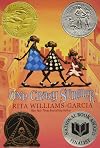
(I'm trying to read books I own this year so I'm thinking next I'll visit 1968 with the Gaither Sisters in One Crazy Summer by Rita Williams-Garcia.) show less
The Watsons starts as a warm family story with vibes similar to A Christmas Story, and then BAM: remember the turmoil of the South in 1963? This book tells the story of the "Weird Watsons", a family with a big brown car that has a record player installed. The same car that eldest child Byron got his lips stuck to the window during a harsh winter. A car that was already old when they got it but with lots of tender-loving care, it carries them to Birmingham, Alabama from Flint, Michigan one show more summer.
They're traveling to visit family and to drop off Byron, who's been behaving like an absolute menace (starting fires, bullying, straightening his hair!). All seems well when they arrive, but they can't escape the horrors of 1960s Alabama for long. First, Kenny meets the Wool Pooh, Winnie's evil twin, a terrible beast that tries to drown kids. After meeting Wool Pooh, Kenny knows blind panic. Then, a few days later, a bomb explodes and blows up any sense of safety he had left.
One of my favorite parts is watching Byron step up. The same kid who’s been acting like a juvenile delinquent becomes an older brother who knows exactly what to do when Kenny disappears into himself -- pulling him back from behind the couch and helping him heal.
Reading this now also has that extra layer of UGH! HISTORY JUST KEEPS REPEATING: people letting fear-driven hate eat away at their humanity—and still claiming the high ground. It’s depressing how old that pattern is.
Ultimately, this book is about family and is full of love and humor. I finished it feeling a mix of love-for-family and fury-at-history. I didn’t love it quite as much as The Mighty Miss Malone (I adored Deza's verbosity), but I’m definitely in for more Christopher Paul Curtis.
(I'm trying to read books I own this year so I'm thinking next I'll visit 1968 with the Gaither Sisters in One Crazy Summer by Rita Williams-Garcia.) show less
Enter the hilarious world of ten-year-old Kenny and his family, the Weird Watsons of Flint, Michigan. There's Momma, Dad, little sister Joetta, and brother Byron, who's thirteen and an "official juvenile delinquent." When Momma and Dad decide it's time for a visit to Grandma, Dad comes home with the amazing Ultra-Glide, and the Watsons set out on a trip like no other. They're heading South. They're going to Birmingham, Alabama, toward one of the darkest moments in America's history.
In a sometimes episodic depiction of a Northern black family in the 60s, Christopher Paul Curtis has managed to create probably one of the funniest and saddest young adult books of the 20th century.
First published in 1998 (and republished by Laurel Leaf in 2000), The Watsons Go to Birmingham 1963 is more than a recounting of a family trip, despite the title. The book starts out with the various dealings of its protagonist and precocious 10-year old narrator, Kenny Watson, with his older brother (the troubled Byron), his younger sister (the sweet and sometimes annoying Joetta), and his parents.
Kenny's is a voice not easily forgotten. Charming and hilarious, he is probably one of my favorite fictional narrators. All that's needed to get show more an idea of the type of voice he possesses is to list some of his chapter titles:
1. And You Wonder Why We Get Called the Weird Watsons
4. Froze-Up Southern Folks
7. Every Chihuahua in America Lines Up to Take a Bite out of Byron
13. I Meet Winnie's Evil Twin Brother, the Wool Pooh
When Kenny's older brother plays one too many pranks and gets in trouble one too many times, the parents discuss in hushed whispers, and finally in boisterous somewhat staged voices, their intentions to take Byron to Birmingham to get disciplined and a good hard dose of reality living under the belligerent strictness of their Grandma Sands.
Their mom relating that Grandma Sands "says that that stuff on TV isn't happening around her" (119) is the first hint that all isn't as it is cracked up to be in Birmingham, something that Kenny does not quite understand or realize until it is too late to get the searing images of reality out of his head, or the readers. As Kenny says, their home of Flint is "about two million miles" from Alabama.
Kenny's experience as they make an unscheduled stop in the middle of nowhere, more a frightened reaction to the nervousness experienced by her mom and Byron about the realities of racism (Byron says to Kenny, "they'd hang you now, then eat you later"), is later magnified when he comes across the wreckage of a church bombing (based on Sixteenth Street Baptist Church that was bombed on September 15, 1963) that changes the family's lives forever.
While a bit jarring (such is life, I suppose), the switch from comedy to drama is one that is best rectified through the consistent voice of the narrator, whose voice and experience of the world is utterly convincing, and a great way to deal with very delicate subject matter of racism and children's death.
The delicate subject matter makes me think that parents should read this first before broaching the subject with children, but that this is a good way to bring it into focus (the epilogue gives a historical foundation for looking more into the history of segregation and civil rights.
That being said, the Watsons are a loving and lovable family. Moments of sibling rivalry and Kenny's unique perspective can make you laugh out loud, while the chilling realities seep in and transform the narrative into something that important enough to be shared across classrooms in this country.
The back cover recommends this for ages 10 and up - I would still read it first before handing it over to a 10-year old. show less
First published in 1998 (and republished by Laurel Leaf in 2000), The Watsons Go to Birmingham 1963 is more than a recounting of a family trip, despite the title. The book starts out with the various dealings of its protagonist and precocious 10-year old narrator, Kenny Watson, with his older brother (the troubled Byron), his younger sister (the sweet and sometimes annoying Joetta), and his parents.
Kenny's is a voice not easily forgotten. Charming and hilarious, he is probably one of my favorite fictional narrators. All that's needed to get show more an idea of the type of voice he possesses is to list some of his chapter titles:
1. And You Wonder Why We Get Called the Weird Watsons
4. Froze-Up Southern Folks
7. Every Chihuahua in America Lines Up to Take a Bite out of Byron
13. I Meet Winnie's Evil Twin Brother, the Wool Pooh
When Kenny's older brother plays one too many pranks and gets in trouble one too many times, the parents discuss in hushed whispers, and finally in boisterous somewhat staged voices, their intentions to take Byron to Birmingham to get disciplined and a good hard dose of reality living under the belligerent strictness of their Grandma Sands.
Their mom relating that Grandma Sands "says that that stuff on TV isn't happening around her" (119) is the first hint that all isn't as it is cracked up to be in Birmingham, something that Kenny does not quite understand or realize until it is too late to get the searing images of reality out of his head, or the readers. As Kenny says, their home of Flint is "about two million miles" from Alabama.
Kenny's experience as they make an unscheduled stop in the middle of nowhere, more a frightened reaction to the nervousness experienced by her mom and Byron about the realities of racism (Byron says to Kenny, "they'd hang you now, then eat you later"), is later magnified when he comes across the wreckage of a church bombing (based on Sixteenth Street Baptist Church that was bombed on September 15, 1963) that changes the family's lives forever.
While a bit jarring (such is life, I suppose), the switch from comedy to drama is one that is best rectified through the consistent voice of the narrator, whose voice and experience of the world is utterly convincing, and a great way to deal with very delicate subject matter of racism and children's death.
The delicate subject matter makes me think that parents should read this first before broaching the subject with children, but that this is a good way to bring it into focus (the epilogue gives a historical foundation for looking more into the history of segregation and civil rights.
That being said, the Watsons are a loving and lovable family. Moments of sibling rivalry and Kenny's unique perspective can make you laugh out loud, while the chilling realities seep in and transform the narrative into something that important enough to be shared across classrooms in this country.
The back cover recommends this for ages 10 and up - I would still read it first before handing it over to a 10-year old. show less
Kenny is growing up in freezing-cold Flint, Michigan with his delinquent brother Byron, his little sister Joey, and his realistically odd and wonderful parents. They are known as the "Weird Watsons" by neighbors, and a lot of that has to do with Byron. Through the eyes of Kenny, readers experience a series of episodes that paint a clear portrait of the trouble-making teen: from narcissism to thievery and vandalism to pyromania, it's one thing after another until his parents decide he needs to be sent to live with Grandma in Alabama to straighten him out. The family packs up the Brown Bomber and prepares for the 1000-mile drive south. Kenny's innocence keeps him from fully understanding the careful preparations that his parents have made show more to keep their family safe from the racism of the South, but readers will understand the reasons for his mother's careful planning and his father's decision to make the entire trip without stopping for anything but gasoline. Everything seems fine to Kenny until his grandma's church is bombed (hinting at the bombing of the 16th Street Baptist Church in 1963) throwing his reality into chaos, which he overcomes with the help of his big brother.
This historical novel feels like watching old family movies, although few of the scenes are things that a family might choose to record. It is nostalgic but genuine and conversational in tone, as it brings readers into the Watson family and with them into the racial tension of 1960s Jim Crow South. The narration turns rather bizarre and then a bit didactic near the end as Kenny works to process some mysterious and troubling events, which may in fact be a realistic portrayal of how a boy like Kenny might come to terms with his experience.
This highly descriptive novel will appeal to fans of realistic and historical American fiction. It is ideal for middle and early high school school students, but voracious elementary-age readers will enjoy it as well. This Newbery Honor and Coretta Scott King Honor book should be a part of every public and school library collection and could be an effective component of an interdisciplinary English and Social Studies curriculum on topics such as historical fiction and the Civil Rights movement. The audiobook is superbly narrated by LeVar Burton (of Reading Rainbow and Star Trek fame) and is a fantastic choice for a family road trip. show less
This historical novel feels like watching old family movies, although few of the scenes are things that a family might choose to record. It is nostalgic but genuine and conversational in tone, as it brings readers into the Watson family and with them into the racial tension of 1960s Jim Crow South. The narration turns rather bizarre and then a bit didactic near the end as Kenny works to process some mysterious and troubling events, which may in fact be a realistic portrayal of how a boy like Kenny might come to terms with his experience.
This highly descriptive novel will appeal to fans of realistic and historical American fiction. It is ideal for middle and early high school school students, but voracious elementary-age readers will enjoy it as well. This Newbery Honor and Coretta Scott King Honor book should be a part of every public and school library collection and could be an effective component of an interdisciplinary English and Social Studies curriculum on topics such as historical fiction and the Civil Rights movement. The audiobook is superbly narrated by LeVar Burton (of Reading Rainbow and Star Trek fame) and is a fantastic choice for a family road trip. show less
This is a book that has been on the shelf of my classroom library for years and I'm embarrassed to say that I hadn't read it until now! I actually listened to the audiobook version, which was lovely as it was read by Lavar Burton!
The author writes in way that is relatable and makes you feel like you are having a conversation with the narrator, Kenny! The title of chapter 1 drew me right in--"And You Wonder Why We Get Called the Weird Watsons" and the stories of Kenny kept me reading! The narrator's humor connected the reader to him and his stories were entertaining. I was laughing as I heard about the whirlpool (Wool Pooh)! The anecdotes connect us to Kenny and his family and starts with lighthearted fun, then gets to more serious show more topics towards the end. As the family visits their grandma in Birmingham, they witness an atrocity, the Birmingham Church Bombing. The author does a great job of capturing how a kid would react to a serious situation, especially since Kenny initially thought his sister might be involved. This book opens the door for further conversations about the Civil Rights Movement and key historical events of that era. show less
The author writes in way that is relatable and makes you feel like you are having a conversation with the narrator, Kenny! The title of chapter 1 drew me right in--"And You Wonder Why We Get Called the Weird Watsons" and the stories of Kenny kept me reading! The narrator's humor connected the reader to him and his stories were entertaining. I was laughing as I heard about the whirlpool (Wool Pooh)! The anecdotes connect us to Kenny and his family and starts with lighthearted fun, then gets to more serious show more topics towards the end. As the family visits their grandma in Birmingham, they witness an atrocity, the Birmingham Church Bombing. The author does a great job of capturing how a kid would react to a serious situation, especially since Kenny initially thought his sister might be involved. This book opens the door for further conversations about the Civil Rights Movement and key historical events of that era. show less
The Watsons Go To Birmingham- 1963 is a historical fiction chapter book that is set during the time of the Civil Rights movement. I really liked how the author used realistic language in the character’s dialogue. It realistically depicted African American dialect during the time period and included improper grammar that was very conversational. Examples include ain’t, I’ma, ‘cause, ‘bout, Momma, and gonna. I also really enjoyed Kenny’s character because of his real, honest, tells it how it is attitude many ten-year-olds have. He is extremely relatable and an example of that is how he is embarrassed of his family. Throughout the novel, he refers to them as the “Weird Watsons.” We can all relate to being embarrassed of show more parents and siblings multiple times while growing up. The big idea of this story is that the world can be very different based on where you are living. There are differences in values and norms, and we saw that when it came to accepting African Americans into society in the North compared to the South. This book captured the huge differences between the North and South during the time of the Civil Rights Era in the 1960s. show less
Members
- Recently Added By
Lists

Best Newbery Honor Books
257 works; 32 members

Newbery Honor Books By year - II - 1981-2035
143 works; 4 members

Book Talks 9/13/17
46 works; 1 member

6th Grade
68 works; 4 members

Youth: BLM
265 works; 1 member
Before Austen Comes Aesop
318 works; 9 members
SYES Library Wishlist
1,080 works; 4 members

Literature for Children and Teens
41 works; 2 members

Historical Fiction
889 works; 91 members
GCS 6th grade summer reading list
171 works; 4 members

Black Authors
384 works; 32 members

Historical fiction -- children's/young adult fiction
39 works; 3 members

Historical Fiction Lovers
88 works; 4 members

Books Read in 2016
4,666 works; 199 members

Struggle for Freedom
69 works; 4 members

Read on.... from Kwame Alexander's book \ BOOKED
31 works; 1 member

Honey For a Child's Heart
1,152 works; 25 members
NPRs Ultimate Backseat Bookshelf: 100 Must-Reads for kids 9-14
222 works; 30 members

Books Read in 2022
5,168 works; 111 members
Author Information

18+ Works 29,446 Members
Newbery Medal-winning children's book author Christopher Paul Curtis was born in Flint, Michigan on May 10, 1953 and graduated from The University of Michigan. While there he won the Avery and Jules Hopwood Prizes for poetry and a draft of one of his early books. Curtis spent thirteen years on an assembly line hanging car doors. His story The show more Watsons Go to Birmingham-1963 received a Newbery Honor and a Coretta Scott King Honor, and Bud, Not Buddy became the first novel to win both of these awards. Elijah of Buxton received the 2008 Scott O'Dell Historical Fiction Award, the Coretta Scott King Award, and a Newbery Honor. Curtis also won the 2009 Anne V. Zarrow Award for Young Readers' Literature. (Bowker Author Biography) show less
Awards and Honors
Awards
Distinctions
Notable Lists
Series
Belongs to Publisher Series
Work Relationships
Is contained in
Christopher Paul Curtis Set of 5 Award Winning Paperbacks Includes the Madman of Piney Woods, the Watsons Go to Birmingham, Bud, Not Buddy, Elijah of Buxton & the Mighty Miss Malone by Christopher Paul Curtis
Has the adaptation
Has as a reference guide/companion
Has as a student's study guide
Common Knowledge
- Canonical title
- The Watsons Go to Birmingham—1963
- Original publication date
- 1995-10-02
- People/Characters
- Kenny Watson (Kenneth Bernard Watson); Byron Watson; Wilona Watson; Daniel Watson; Joetta Watson; Grandma Sands
- Important places
- Flint, Michigan, USA; Birmingham, Alabama, USA
- Important events
- Church bombing in Birmingham, Alabama, 1963
- Related movies
- The Watsons Go to Birmingham (2013 | IMDb)
- Epigraph
- In memory of
Addie Mae Collins
Born 4/18/49, died 9/15/63
Denise McNair
Born 11/17/51, died 9/15/63
Carole Robertson
Born 4/24/49, died 9/15/63
Cynthia Wesley
Born 4/30/49, died 9/15/63
the toll f... (show all)or one day in one city - Dedication
- This book is dedicated to my parents, Dr. Herman and Leslie Lewis Curtis, who have given their children both roots and wings and encouraged us to soar; my sister, Cydney Eleanor Curtis, who has been unfailingly supportive, k... (show all)ind and herself; and above all to my wife, Kaysandra Anne Sookram Curtis, who has provided a warmth and love that have allowed me to laugh, to grow and, most importantly, to dream.
- First words
- It was one of those super-duper-cold Saturdays.
- Quotations
- "Some of the time I wondered if something really was wrong with me. Byron had just told me that someone had dropped a bomb on Joey's church, hadn't he? If that was true why was I only thinking about how much trouble By was g... (show all)oing to be in when they heard how loud he'd slammed the screen door, and asking myself why hadn't he put on his shoes? His socks wouldn't last two minutes on the Alabama mud."
- Last words
- (Click to show. Warning: May contain spoilers.)Come on in, Joey.
- Original language
- English
Classifications
- Genres
- Kids, Children's Books, Fiction and Literature
- DDC/MDS
- 813.54 — Literature & rhetoric American literature in English American fiction in English 1900-1999 1945-1999
- LCC
- PZ7 .C94137 .W — Language and Literature Fiction and juvenile belles lettres Fiction and juvenile belles lettres Juvenile belles lettres
- BISAC
Statistics
- Members
- 9,092
- Popularity
- 1,173
- Reviews
- 419
- Rating
- (4.10)
- Languages
- 7 — Dutch, English, French, German, Italian, Spanish, Portuguese (Portugal)
- Media
- Paper, Audiobook, Ebook
- ISBNs
- 70
- ASINs
- 33