
Tenth of December: Stories
by George Saunders
On This Page
Description
A collection of stories which includes "Home," a wryly whimsical account of a soldier's return from war; "Victory lap," a tale about an inventive abduction attempt; and the title story, in which a suicidal cancer patient saves the life of a young misfit.Tags
Recommendations



Member Recommendations
Member Reviews
I doubt that George Saunders is everybody's taste. His stories here are very funny, but dark -- funny in a way that makes you wonder, when you are laughing, if you aren't laughing at yourself, at things you might want to give some second thought to. It's a nervous laughter.
Saunders often places into his characters' lives something very, very odd, or even just plain wrong, but so blended into the ordinary that we are encouraged to wonder why we think there's something wrong going on. The characters accept the perversity of their life just because it is their life.
Many times he takes aim at the consumer culture, or the culture of status -- the need for standing out among our peers. What takes its starting point in the normal need for show more respect, or the need to keep up with the Jonses, in one story, The Semplica Girl Diaries, spirals into something truly grotesque and perverse. But it does it in a way that makes us reflect on the not so outrageous but maybe just as perverse things we do ourselves -- things that aggrandize our lives at the expense, even the tragic expense of others. Saunders has a gift for imagining these things, exaggerating them to give them humor and distance but at the same time provoking reflection about the root of it in our real lives.
Another story, Exhortation, is a farce -- dropping business-speak around the management of execution. That's the great thing about business-speak. It doesn't care what the business is that it speaks about.
Those themes aren't new to Saunders in these stories -- they are repeated throughout his novels and short stories. They are uncomfortable. You have to like being uncomfortable to like Saunders. show less
Saunders often places into his characters' lives something very, very odd, or even just plain wrong, but so blended into the ordinary that we are encouraged to wonder why we think there's something wrong going on. The characters accept the perversity of their life just because it is their life.
Many times he takes aim at the consumer culture, or the culture of status -- the need for standing out among our peers. What takes its starting point in the normal need for show more respect, or the need to keep up with the Jonses, in one story, The Semplica Girl Diaries, spirals into something truly grotesque and perverse. But it does it in a way that makes us reflect on the not so outrageous but maybe just as perverse things we do ourselves -- things that aggrandize our lives at the expense, even the tragic expense of others. Saunders has a gift for imagining these things, exaggerating them to give them humor and distance but at the same time provoking reflection about the root of it in our real lives.
Another story, Exhortation, is a farce -- dropping business-speak around the management of execution. That's the great thing about business-speak. It doesn't care what the business is that it speaks about.
Those themes aren't new to Saunders in these stories -- they are repeated throughout his novels and short stories. They are uncomfortable. You have to like being uncomfortable to like Saunders. show less
George Saunders's newest collection of short stories left me wishing it had been longer. Despite including only ten stories, it was a diverse group, ranging from ordinary events in ordinary lives to futuristic and somewhat gory scenarios. The most successful stories were the ones involving the most pedestrian of characters. In Puppy, the strongest story here, a woman takes her two young children to buy a puppy. This story hits like a bullet, but only upon reflection. The title story is similarly strong. Saunders tells the stories in a claustrophobic first person stream of consciousness, which means that several paragraphs can go by before the reader can grasp what is going on, but he makes this work. Most of the stories contain a wealth show more of human frailty and emotion and a sense of connections between people missed or misfiring; the unseen emotion behind the callous act. Not all stories succeeded; My Chivalric Fiasco felt like David Foster Wallace channeled through Karen Russell. It was clever, but the cleverness took too much away from the heart of the story. Still, this is a fantastic collection of stories and I'll be reading more by this author. show less
Really enjoyable! I hardly recall ever reading anything this quickly.
Saunders is a master at realistically (how would I know, though?) capturing the chaotic and often illogical inner voices that people talk to themselves with. This book was so compulsively readable precisely because the words on the pages are so alike the voice that everyone is most familiar with; their own, in their head.
The stories, ranging from contemporary to futuristic, build up a sense of unease in the reader. In almost every one, one realizes from the start that something is looming beneath the surface, about to be revealed. In others, everything already seems to be out in the open; the protagonist just has to come to terms with it.
I don't refer specifically show more to the stories because if I would then I'd probably only focus on those that moved me the most; Victory Lap, Puppy, Escape from Spiderhead, Al Roosten, and Tenth of December. While Saunders is often funny as hell, this collection stood out to me because of the feeling I got while reading when the author managed to capture all that can go wrong in modern life, or perhaps, life in all ages, past and yet to come. show less
Saunders is a master at realistically (how would I know, though?) capturing the chaotic and often illogical inner voices that people talk to themselves with. This book was so compulsively readable precisely because the words on the pages are so alike the voice that everyone is most familiar with; their own, in their head.
The stories, ranging from contemporary to futuristic, build up a sense of unease in the reader. In almost every one, one realizes from the start that something is looming beneath the surface, about to be revealed. In others, everything already seems to be out in the open; the protagonist just has to come to terms with it.
I don't refer specifically show more to the stories because if I would then I'd probably only focus on those that moved me the most; Victory Lap, Puppy, Escape from Spiderhead, Al Roosten, and Tenth of December. While Saunders is often funny as hell, this collection stood out to me because of the feeling I got while reading when the author managed to capture all that can go wrong in modern life, or perhaps, life in all ages, past and yet to come. show less
Judging from all the commentary, George Saunders is--and has been--the most significant American writer that I've never heard of. His name didn't even ring a bell, but the reviews I skimmed treat him on par with Don DeLillo, Thomas Pynchon and Kurt Vonnegut.
The collection of his stories in The Tenth of December fell somewhat short of the hype, but only somewhat. The stories are funny, the language is fresh, the shifting perspectives of the narration in many of the stories interesting, and many of the stories were well constructed with clear denouements or twists or other forms of resolution (unlike Karen Russell's first collection of stories, for example).
The thematic consistencies between the stories are also interesting, including show more mind altering drugs, amusement parks, soulless corporations and bureaucracies, and misfits/loners functioning in that environment. A couple of the stories were particularly striking: Victory Lap (shifting in perspective between a light-headed teenage girl, a mentally deranged attempted rapist, and a boy next store debating whether to intervene), Escape from Spiderhead (about experiments with mind-altering drugs on prisoners, alternating between intense love/happiness drugs and deeply depressing ones), The Semplica Girl Diaries (about a lower-middle class family that wins the lottery and in an attempt to keep up with their neighbors buys a set of what are called SGs, which are third world refugees who are strung up as lawn ornaments), My Chivalric Fiasco (about a worker at a medieval recreation given a drug to make him think/talk like a knight and the fiasco that follows, the language in this one is particularly fun), and the Tenth of December (shifting in perspective between a man trying to drown himself and an imaginative boy who almost drowns believing he is going to save him, but then needs to be saved in turn).
The stories, however, transcend humor and satire to present a compelling vision of very real, very humane characters who are struggling to function in the very difficult world around them. show less
The collection of his stories in The Tenth of December fell somewhat short of the hype, but only somewhat. The stories are funny, the language is fresh, the shifting perspectives of the narration in many of the stories interesting, and many of the stories were well constructed with clear denouements or twists or other forms of resolution (unlike Karen Russell's first collection of stories, for example).
The thematic consistencies between the stories are also interesting, including show more mind altering drugs, amusement parks, soulless corporations and bureaucracies, and misfits/loners functioning in that environment. A couple of the stories were particularly striking: Victory Lap (shifting in perspective between a light-headed teenage girl, a mentally deranged attempted rapist, and a boy next store debating whether to intervene), Escape from Spiderhead (about experiments with mind-altering drugs on prisoners, alternating between intense love/happiness drugs and deeply depressing ones), The Semplica Girl Diaries (about a lower-middle class family that wins the lottery and in an attempt to keep up with their neighbors buys a set of what are called SGs, which are third world refugees who are strung up as lawn ornaments), My Chivalric Fiasco (about a worker at a medieval recreation given a drug to make him think/talk like a knight and the fiasco that follows, the language in this one is particularly fun), and the Tenth of December (shifting in perspective between a man trying to drown himself and an imaginative boy who almost drowns believing he is going to save him, but then needs to be saved in turn).
The stories, however, transcend humor and satire to present a compelling vision of very real, very humane characters who are struggling to function in the very difficult world around them. show less
What makes a short story good? I mean the kind where you get to the end and maybe sit there thinking, "What just happened?" and further "What just happened to me?" The writer took you somewhere unexpected, but once arrived, you can't avoid facing that it's the right place (often a place you didn't really want to go.) The final story, "The Tenth of December" is especially like that and I am going to keep this book around to remind me of the point it makes, which I can't take apart here or I would be spoiling it for you. You could argue that his stories and a couple of others, because they have (in a way) "happy" (not really) endings that they are sentimental, but how can a story about a boy finding his courage be sappy? Most of the time, show more in fact, people notice, say, that the baby is crawling too near the pool or about to pull the tablecloth off the loaded table; most of the time, you brake, you swerve, you do the right thing. Sometimes there is no right choice to make, they are all bad and Saunders writes about that with profound compassion and rightness. The majority of the stories are about the way circumstances can force a person to make those hard choices, to give in or to find the strength (courage) to resist, or act or do whatever the circumstances require of them. Sometimes a character does the right thing for the wrong reasons and ends up somewhere new and we watch a their surprise and we end up surprised too, but with a slightly additional (parental?) layer of knowing how hard this new resolve or insight is going to be for that person to hang onto. Saunder's writing style will either drive you mad or you will fall into its embrace, and yes, I wrote this review just slightly under his spell because that is the effect reading Saunders has; he brings out that hesitating layered way we actually think, two steps forward, one back. I've read pretty much all of these in the NYer at one time or another and was thrilled to revisit. One of my very favorites is "My Chivalric Fiasco" which is just funny-awful but somehow full of charm. ***** show less
Astonishingly assured writing of characters so hesitant and fragile that your heart breaks for them. This is George Saunders at his best. With stories so lean that each individual word is vitally important. And even the nuance is nuanced.
Every story in this collection deserves mention as both typical of Saunders’ earlier style, and adventurously striking new ground. With “Escape from Spiderhead” and “My Chivalric Fiasco” we see the satirical Saunders’ alternate future, complete with chemically induced mood, emotion and diction. These are at once lighter than some of his previous satires but perhaps (or because of that) even more cutting. A Saunders protagonist may hope for, even expect, at least within in his own mind, the show more world to bend itself to his needs and goals, but will find himself almost invariably brought back to reality, or lower, when the world insists on its own integrity.
Saunders is a master of the exorbitant monologue, here represented by “Exhortation” and “The Semplica Girl Diaries”, or the sad sack “Al Roosten”. But perhaps even more impressive are the stories which function as dualistic monologues—not dialogues, to be sure, but rather alternating monologues. Both the opening, shockingly surprising, story, “Victory Lap”, and the concluding title story, “Tenth of December”, take this form. The latter must surely stand as one of the finest, saddest, and bravest short stories I have ever encountered. With characters so vulnerable, so susceptible to destruction by themselves and others, only Saunders’ love for them can sustain them, even help them succeed beyond their own imaginings.
The writing is so swift and spare that a story almost sweeps past you. So take the opportunity to read it again and you will find that you will want to read it yet again, even. Highly recommended. show less
Every story in this collection deserves mention as both typical of Saunders’ earlier style, and adventurously striking new ground. With “Escape from Spiderhead” and “My Chivalric Fiasco” we see the satirical Saunders’ alternate future, complete with chemically induced mood, emotion and diction. These are at once lighter than some of his previous satires but perhaps (or because of that) even more cutting. A Saunders protagonist may hope for, even expect, at least within in his own mind, the show more world to bend itself to his needs and goals, but will find himself almost invariably brought back to reality, or lower, when the world insists on its own integrity.
Saunders is a master of the exorbitant monologue, here represented by “Exhortation” and “The Semplica Girl Diaries”, or the sad sack “Al Roosten”. But perhaps even more impressive are the stories which function as dualistic monologues—not dialogues, to be sure, but rather alternating monologues. Both the opening, shockingly surprising, story, “Victory Lap”, and the concluding title story, “Tenth of December”, take this form. The latter must surely stand as one of the finest, saddest, and bravest short stories I have ever encountered. With characters so vulnerable, so susceptible to destruction by themselves and others, only Saunders’ love for them can sustain them, even help them succeed beyond their own imaginings.
The writing is so swift and spare that a story almost sweeps past you. So take the opportunity to read it again and you will find that you will want to read it yet again, even. Highly recommended. show less
A brilliant collection of ten short stories from George Saunders – funny, poignant, and touching on things like class, aging, and the dehumanizing aspects of modern science. There is creativity and breadth here, an easy flow to the writing, and great pace. I also liked the excerpt of the conversation Saunders had with David Sedaris about the writing process itself that was present in this volume, which also talked about the semi-sacred, near-holy aspect of reading.
Favorites:
Tenth of December – the title story is actually last in the collection, but is so brilliant and memorable that I put at the top of the list. In it, an elderly man with a terminal illness elects to end his (and his family’s) suffering by hiking out into the snow show more of a deserted area. A boy with an active imagination is also out there, however, and they’re destined to meet. The imaginations of these two people, at such opposite ends of life, their struggles, and the great humanism in how the story plays out were masterful. Considering my own father at the end of his days while reading this was devastating.
Victory Lap – a story of a kidnapping attempt cleverly told through the eyes of three people – a teenage girl (the intended victim), the criminal, and the teenage boy across the street. The boy’s parents are very strict, making the description of his life pretty funny, and we hear their voices in his mind, just as we hear the criminal’s parents’ voices in his. Parenting styles are thus reflected in these people – e.g. probably loving and supporting (resulting in a fanciful imagination and maybe naively opening the door to a stranger), cruel (resulting in cruelty), and ridiculously structured (resulting in rebelling in imagined obscenities but still feeling the heaviness of their instructions within his mind). A very well-executed story.
Puppy – also very well done, and another window into parenting, this time with mom who is fully invested and supportive of her kids (tellingly a reaction to how poor her own mother had been), travelling to look at a puppy that’s up for adoption. Even in how the woman thinks of the playfulness of her husband, and the strength of her faith and optimism, we sense that the kids are in a wonderful family. Once they get to the place with the puppy, however, they get a disturbing glimpse into a family living in filth with a ‘problem child’ chained up in the back, which is quite a contrast. Saunders wisely humanizes the mother in that environment and gives her a lovely thought: “Love was liking someone how he was and doing things to help him get even better,” but still paints a pretty horrifying picture.
Escape from Spiderhead – really enjoyed this one, a tale of near-futuristic experimentation on prisoners, where scientists inject them with advanced drugs to cause specific reactions. We see a broad spectrum of drugs, including one that induce the person to see another as their deepest possible soulmate, and one that causes horrible feelings of pain and depression. I loved it because it hints at how delicate our brain chemistries are, just a little tweak here and there and suddenly our entire outlooks are changed, which rings true, and because it touches on how cruel people can be, thinking they’re acting for the greater good. Well written, and could see this one expanded and made into a film.
The Semplica Girl Diaries – a story that parodies a man through his diary entries, recounting his attempts to be a good parent and to have the better things in life like his daughter’s rich friends. It’s got some of those same elements of humor, but then the horror of what the rich friends have gradually unfolds, giving the story a very dark edge. The only thing that wore on me a bit was the semi-literate narration from the diary entries, which pushed the boundaries of enjoyability given this story’s length, 60 pages.
My Chivalric Fiasco – A janitor at a medieval theme park stumbles across his boss raping a co-worker, and in the effort to insuring his silence, finds himself promoted to playing one of the costumed roles. As part of that role he’s given a designer drug meant to make him speak as a knight would, but it has the side effect that it also makes him more honorable – thus making it hard for him to hold his tongue about the crime. It’s a creative, funny story, and the narration that’s modulated to the drug’s onset and gradual withdrawal is clever.
Others:
Sticks – literally two pages long, detailing a family ritual of decorating a metal pole in the yard, and how it reflects the psyche of the father in increasingly blunt ways as he gets older. An interesting little vignette that speaks to regret and loss, but it would have been nice if it had been further developed.
Exhortation – An email sent to the employees of a company asking them to work harder, where the humor comes from just how non-self-aware the manager is, and how he contradicts himself in his lame attempt to improve morale. Lots of fun probably for anyone who has been in a corporate environment.
Al Roosten – A middle-aged man who runs a failing business volunteers himself for a fundraising auction where people bid on having lunch with him and others, including a more successful and attractive man that he alternately envies, hates, and befriends in his imagination. It’s funny how he consistently sees himself as better than he is, e.g. during the auction or thinking he can become mayor, and so when Saunders shows him thinking he’s better than the homeless, who he refers to as “hobos” and thinks of in an old-fashioned way of stealing pies off windowsills, we see even more how out of touch he is (and how he may become homeless someday).
Home – Probably the least successful story for me; a veteran who was dishonorably discharged returns to his hometown to see his mother, who is living with a deadbeat, and his sister and her husband. While Saunders is talking about class in this story and several others, here it just felt rather dull, and I wish he had delved a little more into the vet’s psyche after what he had seen and taken part in while in the military. show less
Favorites:
Tenth of December – the title story is actually last in the collection, but is so brilliant and memorable that I put at the top of the list. In it, an elderly man with a terminal illness elects to end his (and his family’s) suffering by hiking out into the snow show more of a deserted area. A boy with an active imagination is also out there, however, and they’re destined to meet. The imaginations of these two people, at such opposite ends of life, their struggles, and the great humanism in how the story plays out were masterful. Considering my own father at the end of his days while reading this was devastating.
Victory Lap – a story of a kidnapping attempt cleverly told through the eyes of three people – a teenage girl (the intended victim), the criminal, and the teenage boy across the street. The boy’s parents are very strict, making the description of his life pretty funny, and we hear their voices in his mind, just as we hear the criminal’s parents’ voices in his. Parenting styles are thus reflected in these people – e.g. probably loving and supporting (resulting in a fanciful imagination and maybe naively opening the door to a stranger), cruel (resulting in cruelty), and ridiculously structured (resulting in rebelling in imagined obscenities but still feeling the heaviness of their instructions within his mind). A very well-executed story.
Puppy – also very well done, and another window into parenting, this time with mom who is fully invested and supportive of her kids (tellingly a reaction to how poor her own mother had been), travelling to look at a puppy that’s up for adoption. Even in how the woman thinks of the playfulness of her husband, and the strength of her faith and optimism, we sense that the kids are in a wonderful family. Once they get to the place with the puppy, however, they get a disturbing glimpse into a family living in filth with a ‘problem child’ chained up in the back, which is quite a contrast. Saunders wisely humanizes the mother in that environment and gives her a lovely thought: “Love was liking someone how he was and doing things to help him get even better,” but still paints a pretty horrifying picture.
Escape from Spiderhead – really enjoyed this one, a tale of near-futuristic experimentation on prisoners, where scientists inject them with advanced drugs to cause specific reactions. We see a broad spectrum of drugs, including one that induce the person to see another as their deepest possible soulmate, and one that causes horrible feelings of pain and depression. I loved it because it hints at how delicate our brain chemistries are, just a little tweak here and there and suddenly our entire outlooks are changed, which rings true, and because it touches on how cruel people can be, thinking they’re acting for the greater good. Well written, and could see this one expanded and made into a film.
The Semplica Girl Diaries – a story that parodies a man through his diary entries, recounting his attempts to be a good parent and to have the better things in life like his daughter’s rich friends. It’s got some of those same elements of humor, but then the horror of what the rich friends have gradually unfolds, giving the story a very dark edge. The only thing that wore on me a bit was the semi-literate narration from the diary entries, which pushed the boundaries of enjoyability given this story’s length, 60 pages.
My Chivalric Fiasco – A janitor at a medieval theme park stumbles across his boss raping a co-worker, and in the effort to insuring his silence, finds himself promoted to playing one of the costumed roles. As part of that role he’s given a designer drug meant to make him speak as a knight would, but it has the side effect that it also makes him more honorable – thus making it hard for him to hold his tongue about the crime. It’s a creative, funny story, and the narration that’s modulated to the drug’s onset and gradual withdrawal is clever.
Others:
Sticks – literally two pages long, detailing a family ritual of decorating a metal pole in the yard, and how it reflects the psyche of the father in increasingly blunt ways as he gets older. An interesting little vignette that speaks to regret and loss, but it would have been nice if it had been further developed.
Exhortation – An email sent to the employees of a company asking them to work harder, where the humor comes from just how non-self-aware the manager is, and how he contradicts himself in his lame attempt to improve morale. Lots of fun probably for anyone who has been in a corporate environment.
Al Roosten – A middle-aged man who runs a failing business volunteers himself for a fundraising auction where people bid on having lunch with him and others, including a more successful and attractive man that he alternately envies, hates, and befriends in his imagination. It’s funny how he consistently sees himself as better than he is, e.g. during the auction or thinking he can become mayor, and so when Saunders shows him thinking he’s better than the homeless, who he refers to as “hobos” and thinks of in an old-fashioned way of stealing pies off windowsills, we see even more how out of touch he is (and how he may become homeless someday).
Home – Probably the least successful story for me; a veteran who was dishonorably discharged returns to his hometown to see his mother, who is living with a deadbeat, and his sister and her husband. While Saunders is talking about class in this story and several others, here it just felt rather dull, and I wish he had delved a little more into the vet’s psyche after what he had seen and taken part in while in the military. show less
Members
- Recently Added By
Published Reviews
ThingScore 100
No one writes more powerfully than George Saunders about the lost, the unlucky, the disenfranchised, those Americans who struggle to pay the bills, make the rent, hold onto a job they might detest — folks who find their dreams slipping from their grasp as they frantically tread water, trying to keep from drowning.
added by ozzer
Lists

Top Five Books of 2013
1,564 works; 722 members

Best Contemporary Literary Fiction (Around the Last 30 Years)
388 works; 124 members

Favorite Short Fiction
228 works; 99 members

Slipstream or Interstitial Fiction
160 works; 19 members

The Guardian's 100 best books of the 21st century
100 works; 21 members

Short Story Collections and Anthologies
260 works; 42 members

Favourite Books
1,817 works; 316 members

Best Science Fiction Novels
816 works; 430 members
National Book Award Finalists - Fiction
377 works; 11 members

Top Five Books of 2022
736 works; 272 members

Speculative Fiction: Slipstream Literature
166 works; 16 members

50 Books from the Past 50 Years
50 works; 8 members

Reiny
17 works; 2 members

NPR Readers Poll: 100 Favorite Funny Books
100 works; 5 members

Five star books
1,755 works; 108 members

Contemporary Fiction
109 works; 7 members

Books With Numbers in the Title
308 works; 13 members

Books Read in 2016
4,666 works; 197 members

Top Five Books of 2012
55 works; 10 members

Books Read in 2022
5,164 works; 113 members
SantaThing 2014 Gifts
299 works; 17 members

Kirkus Reviews Best Fiction of 2013
99 works; 6 members

Books discovered on LibraryThing
256 works; 36 members

Short Story and Novella Collections
47 works; 6 members

Books With Time Words in the Title
160 works; 4 members

Books With Winter Words in the Title
42 works; 6 members

Phoebe Bridgers
29 works; 1 member

Books Read in 2021
5,361 works; 114 members
Books Read in 2012
815 works; 34 members
NYT 100 best books of 21st C
100 works; 31 members

NYT Readers best of 21st C
100 works; 8 members

.
184 works; 1 member
Best 21st Century Books (So Far)
670 works; 86 members
Author Information

50+ Works 25,490 Members
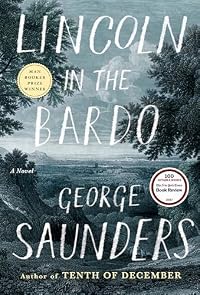
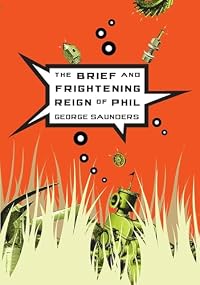
George Saunders is the author of CivilWarLand in Bad Decline and Pastoralia. (Publisher Provided) George Saunders was born in Amarillo, Texas on December 2, 1958. He received a bachelor's degree in geophysical engineering and a master's degree in creative writing from Syracuse University. He is a professor at Syracuse University and a writer of show more short stories, essays, novellas, and children's books. He won the National Magazine Award for fiction in 1994, 1996, 2000, and 2004 His books include CivilWarLand in Bad Decline, Pastoralia, The Very Persistent Gappers of Frip, The Brief and Frightening Reign of Phil, In Persuasion Nation, and Tenth of December: Stories, which won the inaugural Folio Prize in 2014. His debut novel, Lincoln in the Bardo, received the Man Booker Prize in 2017. (Bowker Author Biography) show less
Some Editions
Awards and Honors
Awards
Distinctions
Notable Lists
Series
Belongs to Publisher Series
Mirmanda (115)
Work Relationships
Is contained in
Contains
Common Knowledge
- Canonical title
- Tenth of December: Stories
- Original title
- Tenth of December
- Original publication date
- 2013
- Dedication
- For Pat Pacino
- First words
- Three days shy of her fifteenth birthday, Alison Pope paused at the top of the stairs.
- Quotations
- Based on the experience of my life, which I have not exactly hit out of the park, I tend to agree with that thing about, If it's not broke, don't fix it. And would go even further to: Even if it is broke, leave it alone, you'... (show all)ll probably make it worse.
- Last words
- (Click to show. Warning: May contain spoilers.)She came to him now, stumbling a bit on a swell in the floor of this stranger's house.
- Blurbers
- Smith, Zadie; Franzen, Jonathan; Hosseini, Khaled; Egan, Jennifer
- Original language
- English
Classifications
Statistics
- Members
- 4,517
- Popularity
- 3,234
- Reviews
- 200
- Rating
- (3.95)
- Languages
- 13 — Catalan, Danish, Dutch, English, Finnish, French, German, Italian, Polish, Portuguese, Spanish, Swedish, Turkish
- Media
- Paper, Audiobook, Ebook
- ISBNs
- 38
- ASINs
- 16
