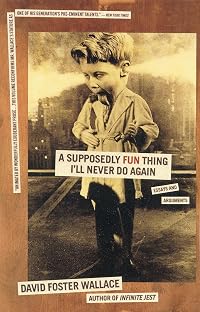
A Supposedly Fun Thing I'll Never Do Again: Essays and Arguments
by David Foster Wallace 
On This Page
Description
In this exuberantly praised book - a collection of seven pieces on subjects ranging from television to tennis, from the Illinois State Fair to the films of David Lynch, from postmodern literary theory to the supposed fun of traveling aboard a Caribbean luxury cruiseliner - David Foster Wallace brings to nonfiction the same curiosity, hilarity, and exhilarating verbal facility that has delighted readers of his fiction, including the bestselling Infinite Jest.Tags
Recommendations
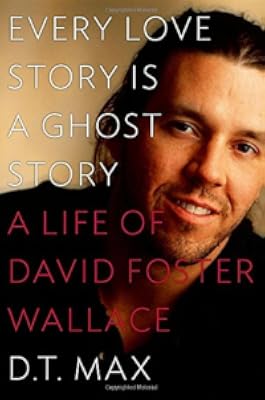






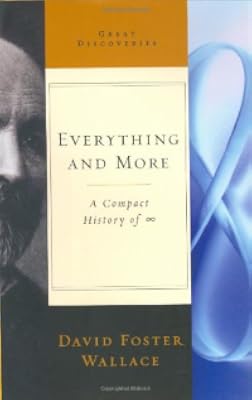
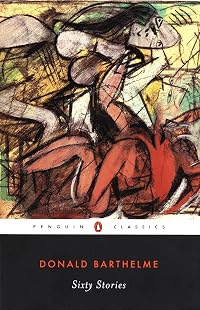

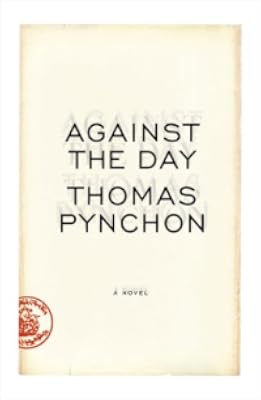


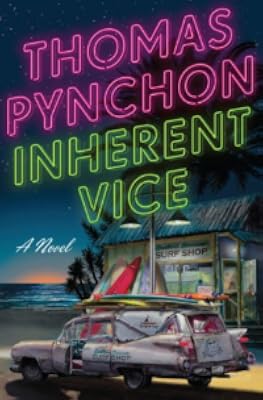

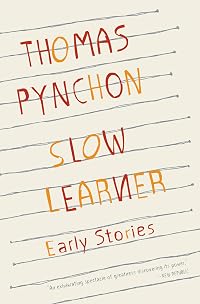
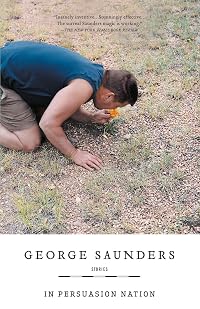
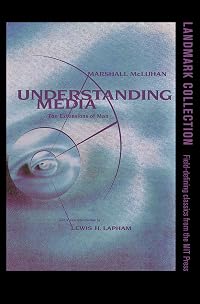
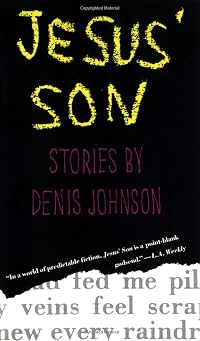
Member Recommendations
by anonymous user
Member Reviews
I have long believed that David Foster Wallace was a great writer. In his novels though, he is a good writer. His novels always make me feel that while they were painful for him to write they are more painful still for the reader to read. It is in his essays and journalism and arguments that we hear the great writer and we are extremely fortunate that rich American journals and magazines commissioned so many pieces from him some of which are collected here. Would that the UK had ever had such a healthy subset of the publishing industry.
Some of these essays and arguments are very good and some are exquisite. In one notable essay DFW revisits a topic I have read him cover before and the topic where I think his writing is at it peak: show more professional tennis. In this piece, and some others here too, he is a modern equal of Hazlitt albeit in a more modern mode. On tennis he brings enthusiasm, knowledge, humour and awe to bear on a subject which he clearly loves. His insights on tennis technicalities, trigonometry and the signification of professional sporting achievement to society at large make this text shine like a gem. It is in every particular the equal of his famous piece on Roger Federer but benefits from focussing on a lower order player and his relationship to the elite of the professional game. It is a model essay and if you are even mildly interested in tennis then the book is worth its price for this one piece alone.
In his novels DFW is wryly, cleverly witty and dryly humorous, but in most of these essays and arguments he is laugh out loud funny. In 2 I shall recall forever: one on Americans cruising the Caribbean and one on a visit to a State fair he had tears running down my face. And it gets better yet, where in his novels his penchant for copious and often overly-lengthy footnotes ( when reading Infinite Jest I had to have 4 separate bookmarks running) gets away from him to the detriment of the reader here in his essays he deploys the footnote to wonderfully digressive erudition. And best yet, his Will Self-like obsession for littering his clear and shining text with obscure vocabulary that will force almost all readers at some point to a dictionary (and a good dictionary at that) in the arguments and essays this is never the chore that it becomes in his novels.
The essay as a form is as distinct from the novel as the novel is from the short story and DFW was clearly a master of the form. Would that we had more like him. Would that we had more essays if they were this good. show less
Some of these essays and arguments are very good and some are exquisite. In one notable essay DFW revisits a topic I have read him cover before and the topic where I think his writing is at it peak: show more professional tennis. In this piece, and some others here too, he is a modern equal of Hazlitt albeit in a more modern mode. On tennis he brings enthusiasm, knowledge, humour and awe to bear on a subject which he clearly loves. His insights on tennis technicalities, trigonometry and the signification of professional sporting achievement to society at large make this text shine like a gem. It is in every particular the equal of his famous piece on Roger Federer but benefits from focussing on a lower order player and his relationship to the elite of the professional game. It is a model essay and if you are even mildly interested in tennis then the book is worth its price for this one piece alone.
In his novels DFW is wryly, cleverly witty and dryly humorous, but in most of these essays and arguments he is laugh out loud funny. In 2 I shall recall forever: one on Americans cruising the Caribbean and one on a visit to a State fair he had tears running down my face. And it gets better yet, where in his novels his penchant for copious and often overly-lengthy footnotes ( when reading Infinite Jest I had to have 4 separate bookmarks running) gets away from him to the detriment of the reader here in his essays he deploys the footnote to wonderfully digressive erudition. And best yet, his Will Self-like obsession for littering his clear and shining text with obscure vocabulary that will force almost all readers at some point to a dictionary (and a good dictionary at that) in the arguments and essays this is never the chore that it becomes in his novels.
The essay as a form is as distinct from the novel as the novel is from the short story and DFW was clearly a master of the form. Would that we had more like him. Would that we had more essays if they were this good. show less
Absolutely perfect. Cream through and through, with flawless, clarion prose that just peels off your skull and unravels your brain, neuron by neuron. All of the essays are essentially PROPHECY hammered out in DFW's lovely rambling, warm, hyper-articulate REAL TALK voice. And despite the grimness of the subjects, Wallace's palpable intelligence and sensitivity and just plain humane warmth swaddle the despair in a woozy, weirdly-comforting optimism.
All of the essays make you palpably ache for DFW, and ache hard for his particular breed of care and respect and dignity that softens his truly-intimidating intelligence and seeming infinite capacity for self-analysis. His occasional jabs sting all that much more for their raw honesty, but show more they never reach that level of teeth-sucking elitism and rank hatred of the avg HAWHAW FAT MIDWESTERNERS sneer. So, uh, yeah.
Also! If that wasn't enough! Features the best fucking analysis of television and pop culture and fiction and irony and just plain everything in Television and US Fiction. Seriously. That single essay reads like the Rosetta Stone for, uh, just about anything from 1970 on. Explains Youtube, Jersey Shore, Lady Gaga, ChatRoulette, Gawker. Everything.
So, IN SUMMARY: Everyone else? Give the fuck up. Goddamn. show less
All of the essays make you palpably ache for DFW, and ache hard for his particular breed of care and respect and dignity that softens his truly-intimidating intelligence and seeming infinite capacity for self-analysis. His occasional jabs sting all that much more for their raw honesty, but show more they never reach that level of teeth-sucking elitism and rank hatred of the avg HAWHAW FAT MIDWESTERNERS sneer. So, uh, yeah.
Also! If that wasn't enough! Features the best fucking analysis of television and pop culture and fiction and irony and just plain everything in Television and US Fiction. Seriously. That single essay reads like the Rosetta Stone for, uh, just about anything from 1970 on. Explains Youtube, Jersey Shore, Lady Gaga, ChatRoulette, Gawker. Everything.
So, IN SUMMARY: Everyone else? Give the fuck up. Goddamn. show less
A Supposedly Fun Thing I’ll Never Do Again is a volume of seven non-fictional essays that David Foster Wallace originally published in various magazines and academic journals between 1990 and 1995. The years of publication are important to consider here because, by now, each of these pieces feels somewhere in the range from slightly dated to very out of date. The essays in this collection cover a broad range of seemingly random topics, from a highly esoteric analysis of the struggle faced by post-modern novelists to effectively mock current televised cultural trends to a profile of filmmaker David Lynch to more accessible pieces chronicling the author’s attendance at a state fair or a luxury sea cruise that he took.
During his show more brilliant and all-too-brief career, Wallace’s prose makes it abundantly clear that he was an incredibly bright, well-read guy. This only became a problem when he seemed intent on making sure we knew it, as he does in “E Unibus Pluram”, “Greatly Exaggerated”, and “David Lynch Keeps His Head”. However, when he used his acute—and frequently hilarious—powers of observation as a force for good, the results are both compelling and highly satisfying. Examples of this include “Getting Away from Already Being Pretty Much Away from It All” and the book’s title piece, as well as his remarkably insightful (and surprisingly still relevant) description of a professional tennis tournament in “Tennis Player Michael Joyce’s Professional Artistry”. So, while re-reading A Supposedly Fun Thing I’ll Never Do Again about a quarter-century after it first appeared definitely had its drawbacks, it was a pleasure to be reminded of just how great a writer Wallace could often be. show less
During his show more brilliant and all-too-brief career, Wallace’s prose makes it abundantly clear that he was an incredibly bright, well-read guy. This only became a problem when he seemed intent on making sure we knew it, as he does in “E Unibus Pluram”, “Greatly Exaggerated”, and “David Lynch Keeps His Head”. However, when he used his acute—and frequently hilarious—powers of observation as a force for good, the results are both compelling and highly satisfying. Examples of this include “Getting Away from Already Being Pretty Much Away from It All” and the book’s title piece, as well as his remarkably insightful (and surprisingly still relevant) description of a professional tennis tournament in “Tennis Player Michael Joyce’s Professional Artistry”. So, while re-reading A Supposedly Fun Thing I’ll Never Do Again about a quarter-century after it first appeared definitely had its drawbacks, it was a pleasure to be reminded of just how great a writer Wallace could often be. show less
I suspect that if all the topics DFW takes up in these essays interest you: tennis, academic literary philosophy of the last forty years, state fairs in the midwest (Illinois in this case), more tennis, and spending a week on a luxury megacruiser . . . then you would be in a state of ecstasy and wonderment. I wasn't sure I was interested in any of these topics, and that proved to be true for tennis and also for the deconstructionists etcetera, which has always struck me as the kind of foolishness that (appropriately) gives academia a bad name. However the two on 'human folly' are brilliant, beyond brilliant. In both cases Harper magazine paid DFW to investigate these phenomena in person, to give his unvarnished unblinking take. In the show more state fair piece, he wanders the fairgrounds in 90 plus degree heat for six or seven days, watching people, among other things, eat, show off farm animals, dance, throw batons, and take rides guaranteed to make them throw up. Throughout, both the fair and the luxury cruise, he exists mostly in a state of uncomfortable bafflement and shame that he can't understand not even one tiny bit why anyone would want to go the a huge fair or on a cruise, to the degree that no doubt he couldn't help wondering if he wasn't some kind of alien being. The operant word in the cruise was 'pamper' -- and I expect that overlap of diaper and being taken care of like a baby -- got fixed in his mind then and used later to such effect in IJ. The writing is sublime and there is humour, pathos, startling insight, brutally clear description and always the kindness to the foibles of humanity that DFW is known for .. all the qualities that made him so amazing. I found myself missing his presence among us terribly. We could use his insights now. ****1/2 (five stars for the Fair and the Cruise) show less
"Statisticians report that television is watched over six hours a day in the average American household. I don't know any fiction writers who live in average American households. ... Actually I have never seen an average American household. Except on TV."
This is a collection of seven essays originally published between 1992 and 1996, combined into a volume that shows off a good range of Wallace's talents. The subjects covered include tennis, a Midwestern state fair, a Caribbean cruise, literary theory, the film director David Lynch, and the relationship between television and American fiction.
Wallace is an extraordinarily clever writer; at times in the past I've thought he indulges himself a little too much in showing this off. Here, show more for the most part, he doesn't do so. (The essay on literary theory may be impenetrable, but that's true of pretty much all literary theory, to the untutored, and at least it has the virtue of brevity.)
Half of the essays see him in the role of outsider observer, going back to the kinds of people and activities that he once left behind to join the east-coast intelligentsia. But he is seldom scornful; although he's clearly glad to have moved away, he still has connections with, and sympathy for, his subjects. His relationships with Trudy on the cruise, and tennis player Michael Joyce, seem as warm as circumstances allow.
Wallace has a pleasant style, and uses his wit well. He's able to flit from observations of mundane surroundings, to challenging insights into modern society, and back again, without jarring. One highlight for me was the description of the childrens' baton-twirling contest at the state fair, which had me laughing out loud. Another was his terror of being seen, during the cruise, as part of a herd ("boviscopophobia") -- which I think is rather prevalent in some circles, and which I've never seen described so clearly.
Highly recommended. show less
This is a collection of seven essays originally published between 1992 and 1996, combined into a volume that shows off a good range of Wallace's talents. The subjects covered include tennis, a Midwestern state fair, a Caribbean cruise, literary theory, the film director David Lynch, and the relationship between television and American fiction.
Wallace is an extraordinarily clever writer; at times in the past I've thought he indulges himself a little too much in showing this off. Here, show more for the most part, he doesn't do so. (The essay on literary theory may be impenetrable, but that's true of pretty much all literary theory, to the untutored, and at least it has the virtue of brevity.)
Half of the essays see him in the role of outsider observer, going back to the kinds of people and activities that he once left behind to join the east-coast intelligentsia. But he is seldom scornful; although he's clearly glad to have moved away, he still has connections with, and sympathy for, his subjects. His relationships with Trudy on the cruise, and tennis player Michael Joyce, seem as warm as circumstances allow.
Wallace has a pleasant style, and uses his wit well. He's able to flit from observations of mundane surroundings, to challenging insights into modern society, and back again, without jarring. One highlight for me was the description of the childrens' baton-twirling contest at the state fair, which had me laughing out loud. Another was his terror of being seen, during the cruise, as part of a herd ("boviscopophobia") -- which I think is rather prevalent in some circles, and which I've never seen described so clearly.
Highly recommended. show less
As I've said at least once, reading David Foster Wallace is both exhilarating and heartbreaking -- exhilarating because he's so brilliant and heartbreaking because for all his brilliance, he couldn't go on. I hate using the word "brilliant" because it's become so overused -- amusing comic strips, for example, seem to get described that way about half the time -- but for DFW, the term is apt.
I admit to being a little disappointed when I learn that someone whose taste I generally admire doesn't like DFW, usually on the grounds that he's meandering or something like that. No arguing with that, of course -- he is meandering. But his wanderings aren't made simply in the service of pyrotechnics; they all seem completely organic, as though show more he's feeling his way into his subjects and once there, is so taken with thinking about them that he goes on tangents, unable to stop his thoughts from peeling off down every visible (and not so visible) road. And that's part of what makes it so heartbreaking to read his work: you can tell how much he wanted to be -- and in fact was -- connected to others. For example, this passage from the essay "Tennis Player Michael Joyce's Professional Artistry as a Paradigm of Certain Stuff About Choice, Freedom, Limitation, Joy, Grotesquerie, and Human Completeness" (yep, that's actually the name of the essay):
It makes me genuinely sad that we won't get to see any more of DFW's writing. show less
I admit to being a little disappointed when I learn that someone whose taste I generally admire doesn't like DFW, usually on the grounds that he's meandering or something like that. No arguing with that, of course -- he is meandering. But his wanderings aren't made simply in the service of pyrotechnics; they all seem completely organic, as though show more he's feeling his way into his subjects and once there, is so taken with thinking about them that he goes on tangents, unable to stop his thoughts from peeling off down every visible (and not so visible) road. And that's part of what makes it so heartbreaking to read his work: you can tell how much he wanted to be -- and in fact was -- connected to others. For example, this passage from the essay "Tennis Player Michael Joyce's Professional Artistry as a Paradigm of Certain Stuff About Choice, Freedom, Limitation, Joy, Grotesquerie, and Human Completeness" (yep, that's actually the name of the essay):
It turns out that what Michael Joyce says rarely has any kind of spin or slant on it; he mostly just reports what he sees, rather like a camera. You couldn't even call him sincere, because it's not like it seems ever to occur to him to try to be sincere or nonsincere. For a while I thought that Joyce's rather bland candor was a function of his not being very bright. This judgment was partly informed by the fact that Joyce didn't go to college and was only marginally involved in his high school academics (stuff I know because he told me it right away). What I discovered as the tournament wore on was that I can be kind of a snob and an asshole, and that Michael Joyce's affectless openness is a sign not of stupidity but of something else.
It makes me genuinely sad that we won't get to see any more of DFW's writing. show less
This is the second collection of essay I have read by DFW and I am so in awe of his brilliance, and not for the intellectual, academic analysis of Television ans American Fiction (admittedly the one essay that was beyond me). The brilliance is his ability to write about mundane, boring topics and transform them into objects of fascination. I know nothing of tennis, have never played it, never watched, never had the faintest of interest in it, but read with pleasure not one, but two essays, focused on tennis. There is something about his writing style that provokes curiosity. I have never googled so many tidbits as I did while reading the essay on David Lynch. But most of all, I love the irreverent post-modern authorship, how present he show more is in his writing. Hopefully in case of the title essay, it was an exaggerated persona put on for greater effect. The title essay is astonishing. Nothing i type can do it justice. If you read nothing else by David foster Wallace, go read the title essay immediately. show less
Members
- Recently Added By
Lists

Books Read in 2013
1,630 works; 51 members

Top Five Books of 2013
1,562 works; 721 members

Books worth rereading
21 works; 1 member

100 New Classics
101 works; 13 members

98
14 works; 1 member

1990s
309 works; 17 members

Summer Books
82 works; 9 members

Books With the Most Memorable Titles
478 works; 158 members

Non-Fiction
68 works; 1 member

Personal 2026 reads
32 works; 1 member
Author Information

89+ Works 47,878 Members
Writer David Foster Wallace was born in Ithaca, New York on February 21, 1962. He received a B.A. from Amherst College in Massachusetts. He was working on his master's degree in creative writing at the University of Arizona when he published his debut novel The Broom of the System (1987). Wallace published his second novel Infinite Jest (1996) show more which introduced a cast of characters that included recovering alcoholics, foreign statesmen, residents of a halfway house, and high-school tennis stars. He spent four years researching and writing this novel. His first collection of short stories was Girl with Curious Hair (1989). He also published a nonfiction work titled Signifying Rappers: Rap and Race in the Urban Present. He committed suicide on September 12, 2008 at the age of 46 after suffering with bouts of depression for 20 years. (Bowker Author Biography) show less
David Foster Wallace has a Legacy Library. Legacy libraries are the personal libraries of famous readers, entered by LibraryThing members from the Legacy Libraries group.
Some Editions
Awards and Honors
Series
Belongs to Publisher Series
Work Relationships
Is contained in
Contains
Has as a student's study guide
Common Knowledge
- Canonical title
- A Supposedly Fun Thing I'll Never Do Again: Essays and Arguments
- Original title
- A Supposedly Fun Thing I'll Never Do Again
- Alternate titles*
- Tennis, TV, trigonometria, tornado e altre cose divertenti che non farò mai più
- Original publication date
- 1997-02-01
- People/Characters
- David Lynch; Michael Joyce; David Foster Wallace; Native Companion; Scott Peterson
- Important places
- Illinois, USA
- Dedication
- To Colin Harrison and Michael Pietsch
- First words
- When I left my boxed township of Illinois farmland to attend my Dad's alma mater in the lurid jutting Berkshires of western Massachusetts, I all of a sudden developed a jones for mathematics.
- Quotations
- Lonely people tend, rather, to be lonely because they decline to bear the psychic costs of being around other humans. They are allergic to people. People affect them too strongly.
Rural Midwesterners live surrounded by unpopulated land, marooned in a space whose emptiness starts to become both physical and spiritual. It's not just people you get lonely for. You're alienated from the very space around y... (show all)ou, in a way, because out here the land's less an environment than a commodity. - Publisher's editor
- Pietsch, Michael
- Blurbers
- Glassie, John; Miller, Laura; Abramovich, Alex; Frase, Brigitte; Marshall, John; Begley, Adam (show all 18); Gates, David; Webb, Kane; Daley, David; Hinkemeyer, Joan; Alford, Steven E.; Wood, James; Leisgang, Jef; Bonca, Cornel; Sulllivan, Margaret; Kakutani, Michiko; Harrington, Maureen; Lezard, Nicholas
- Original language*
- Inglese
- Disambiguation notice
- This entry should contain the essay collection; please do not combine with single essays!
*Some information comes from Common Knowledge in other languages. Click "Edit" for more information.
Classifications
Statistics
- Members
- 5,364
- Popularity
- 2,539
- Reviews
- 85
- Rating
- (4.12)
- Languages
- 9 — Catalan, Dutch, English, French, German, Italian, Polish, Portuguese, Spanish
- Media
- Paper, Audiobook, Ebook
- ISBNs
- 41
- ASINs
- 20