On This Page
Description
In 20th century Princeton, New Jersey, a powerful curse, which besets the wealthiest of families, causes the disappearance of a young bride, and when her brother sets out to find her, he crosses paths with the town's most formidable people, including Grover Cleveland and Upton Sinclair.Tags
Recommendations



Member Recommendations
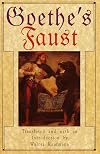
WSB7 The protagonist of The Accursed makes a deal with God. How does this compare with Faust's deal with the devil?
Member Reviews
This pandemic has brought its fair share of surprises, not the least of me having time to once again pick up a damn book. I won't tax you with tales of the woes that led to this, only with the results: Having finally read a book I purchased in 2013 thanks to a Stephen King review in the New York Times - Joyce Carol Oates' The Accursed.
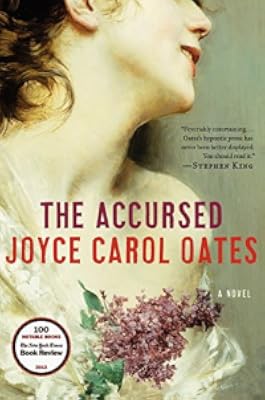
In all honesty, until this morning I could not remember why I had purchased this hefty and confusing novel while it was still in its infancy, and therefore an expensive hardcover. It wasn't until I started checking in with the web to see how other readers had handled this sprawling para-naturalistic story that I ran across King's review, and the Tomer Hanuka illustration at the top, that I remembered show more quite vividly my initial interest and desire to read what promised to be a strange pastoral gothic anti-romance.
In fact I can tell you for certain that I probably hit BUY right after reading this line:
Joyce Carol Oates has written what may be the world's first postmodern Gothic novel: E.L. Doctorow's Ragtime set in Dracula's castle.
I only wish that I could tell you that the book lived up to even that; unfortunately it proves to be more American Gothic than Gothic.
There are definitely shades of Ragtime - the characters of the two novels are contemporaries, yet do not cross paths (save for one mention in passing of Emma Goldman); both have a cast of historical figures corralled into a specific city block of time and space and are forced through a conspiratorial web to interact both with each other, and with original characters; and one gets a sense that Oates, like Doctorow, might be interested in highlighting the causal but deliberate racism that is almost as prevalent in 2020 as it was one hundred and twenty years ago, but she doesn't go nearly as far with it.
Unlike Ragtime, however, it's not the realities of society's systemic flaws that'll kill you, it's a vengeful god. Or demon. Or vampire? Or avenging angel. Or what have you. And that's my biggest problem with the novel - the what have you.
We're presented with a narrator who is purportedly gleaning information from stacks of diaries and records, and yet we get scenes that cannot have been illuminated by said diaries in any way, shape, or form. An example is a scene in which the narrator's own father is confronted by a demon dressed up as Sherlock Holmes (presumably a manifestation of the character's paranoia and determination), after which the character (spoiler alert for many a character in the novel) dies.
We're presented with a depiction of then-Princeton University-President President Woodrow Wilson's character that is too tepid to be interesting, and yet too scathing to be ignored; yet in the end, he proves so irrelevant to the story that you wonder why on earth he was included at all, except perhaps to give the town of Princeton in 1905 some weight on this side of reality.
The goings on of the university were the least interesting part of the entire novel and did not help characterize the main themes or plot of the novel except to say "Woodrow Wilson was at such a place when such a thing happened to happen to some other person." The book all-but opens with Wilson being begged by his cousin (who, it is revealed to him subsequently, has mixed parentage) to publicly denounce the lynching of two Black siblings that took place two towns over. Wilson, unsurprisingly, does nothing, the effect of which is also practically nothing. His presence is nothing less than frustrating, and the author's casual throwing-in of a hate crime is maddening.
There are two passages that I saw as noteworthy in this novel, and neither had to do with Woodrow Wilson, despite his unrelenting presence. The first was Upton Sinclair finally meeting his Marxist hero Jack London and being irreconcilably disappointed in the odious man. The other is such a classic trope and manages to be the best thing that Oates writes in the entire novel - a simple game played by a child and a demon, with life on the line. If the book were a painting, these would be the only bits in color. The latter is the only passage where you can believe that the stakes are real, and where you care about the outcome. I could do without nearly everything that comes before, and just about everything that comes after.
Coincidentally, both are scenes that occur outside of the locus of our attention, the latter in an otherwold, and the former in New York City. And perhaps there's something to be said for that. I don't think Oates set out to say that Princeton, New Jersey was the worst place in the world, but I do think she did an awfully good job making the case for it.
www.theliterarygothamite.com show less
In all honesty, until this morning I could not remember why I had purchased this hefty and confusing novel while it was still in its infancy, and therefore an expensive hardcover. It wasn't until I started checking in with the web to see how other readers had handled this sprawling para-naturalistic story that I ran across King's review, and the Tomer Hanuka illustration at the top, that I remembered show more quite vividly my initial interest and desire to read what promised to be a strange pastoral gothic anti-romance.
In fact I can tell you for certain that I probably hit BUY right after reading this line:
Joyce Carol Oates has written what may be the world's first postmodern Gothic novel: E.L. Doctorow's Ragtime set in Dracula's castle.
I only wish that I could tell you that the book lived up to even that; unfortunately it proves to be more American Gothic than Gothic.
There are definitely shades of Ragtime - the characters of the two novels are contemporaries, yet do not cross paths (save for one mention in passing of Emma Goldman); both have a cast of historical figures corralled into a specific city block of time and space and are forced through a conspiratorial web to interact both with each other, and with original characters; and one gets a sense that Oates, like Doctorow, might be interested in highlighting the causal but deliberate racism that is almost as prevalent in 2020 as it was one hundred and twenty years ago, but she doesn't go nearly as far with it.
Unlike Ragtime, however, it's not the realities of society's systemic flaws that'll kill you, it's a vengeful god. Or demon. Or vampire? Or avenging angel. Or what have you. And that's my biggest problem with the novel - the what have you.
We're presented with a narrator who is purportedly gleaning information from stacks of diaries and records, and yet we get scenes that cannot have been illuminated by said diaries in any way, shape, or form. An example is a scene in which the narrator's own father is confronted by a demon dressed up as Sherlock Holmes (presumably a manifestation of the character's paranoia and determination), after which the character (spoiler alert for many a character in the novel) dies.
We're presented with a depiction of then-Princeton University-President President Woodrow Wilson's character that is too tepid to be interesting, and yet too scathing to be ignored; yet in the end, he proves so irrelevant to the story that you wonder why on earth he was included at all, except perhaps to give the town of Princeton in 1905 some weight on this side of reality.
The goings on of the university were the least interesting part of the entire novel and did not help characterize the main themes or plot of the novel except to say "Woodrow Wilson was at such a place when such a thing happened to happen to some other person." The book all-but opens with Wilson being begged by his cousin (who, it is revealed to him subsequently, has mixed parentage) to publicly denounce the lynching of two Black siblings that took place two towns over. Wilson, unsurprisingly, does nothing, the effect of which is also practically nothing. His presence is nothing less than frustrating, and the author's casual throwing-in of a hate crime is maddening.
There are two passages that I saw as noteworthy in this novel, and neither had to do with Woodrow Wilson, despite his unrelenting presence. The first was Upton Sinclair finally meeting his Marxist hero Jack London and being irreconcilably disappointed in the odious man. The other is such a classic trope and manages to be the best thing that Oates writes in the entire novel - a simple game played by a child and a demon, with life on the line. If the book were a painting, these would be the only bits in color. The latter is the only passage where you can believe that the stakes are real, and where you care about the outcome. I could do without nearly everything that comes before, and just about everything that comes after.
Coincidentally, both are scenes that occur outside of the locus of our attention, the latter in an otherwold, and the former in New York City. And perhaps there's something to be said for that. I don't think Oates set out to say that Princeton, New Jersey was the worst place in the world, but I do think she did an awfully good job making the case for it.
www.theliterarygothamite.com show less
The Indescribable
What a wonderment Joyce Carol Oates has wrought: an enigmatic gothic wrapped in a historical period piece plopped down in the middle of a quintessential university town populated by elitists, and her home for the past 35 years, Princeton, NJ. Her imagination has never been darker, her prose has never been more tuned to a period and purpose of a novel, her characterizations have never been more engaging or more satirically biting, and her observations on perennial issues — classism, racism, feminism, corporatism, and spiritualism — has never been more provocative. In particular, her recasting of the accepted belief system in the final chapter, "The Covenant," rendering fire and brimstone mere warm ash by comparison, show more will surely set some readers spinning and gyrating as if stuck with St. Vitus Dance.
Mr. M. W. von Dyck II, lifelong of Princeton, of the town's old families, introduces us to his new history of the disturbing and startling events overtaking the town in the first decade of the 20th century, variously known as the Crosswicks Curse and the Vampire Murders, criticizing the extant histories, putting forth his credentials, and inadvertently revealing his prejudices and his imperial tone. Then he launches into his recounting based on primary source documents available to or understood only by him.
Many things happen, puzzling things, not just by their nature but also in how we readers are to assemble them into a tale with meaning. Outlined, so as not to spoil your own discovery, a mysterious stranger appears, Axson Mayte (also Count English von Gneist and François D'Apthorp, maybe), who abducts Annabel Slade from the altar as she is about to marry Dabney Bayard, transporting her to the horrifying Bog Kingdom, a gray hell of decay and abuse. The abduction sets in motion terrifying consequences for the Slade family, among them deaths and startling revelations that evolve into something of a unified theory of everything bizarre transpiring in Princeton between 1905 and 1906.
As the Slades contend with their hardships, Woodrow Wilson does battle with Professor Andrew West, a demonic foe in Wilson's view, over the separation or integration of the graduate school onto the main campus, in addition to warring to end the university's dining clubs tradition, while contending with his multitude of aliments, his distaste of many people, among them Samuel Clemens, fretting over mixed race relations in his family's history, and resisting the seduction of Cybella Peck, presenting herself first as temptress and finally as his devi (or an ally of the Count?).
Living on the outskirts of town, Upton Sinclair extols the socialist principles he knows will transform the world into something like heaven, only to suffer terribly at the hands of the great god of socialism who proves himself a drunken and pugnacious buffoon, Jack London, and his "pug face" bride, Charmian.
Then there's among the oddest person of the bunch, though not in the least peculiar to us 21st century denizens, but an anomaly among her set. That is Wilhelmina Burr, "Yearning, yet headstrong Miss Wilhelmina Burr!" A handsome young woman, but not a flower like Annabel, she lacks suitors. Untroubled, for the most part, since her affection lies with a seemingly unattainable Slade, the rampaging, peripatetic, and ultimately traitor to his class, Josiah. Truly, though, she wishes more than marriage; she wishes a career; she wishes to be fulfilled by social usefulness.
Looming over everything, visited upon different folks, but in particular Annabel, the model of young womanhood, is what our historical shaman calls The Unspeakable. There are several unspeakable acts committed throughout the telling, among them how the proper citizens ignore a downstate lynching, how some addled men delude themselves with suspicions about their wives, a concealed sin of a principal character, and other unsavory incidents.
Unspeakable acts can lead to absurdity in straight-laced upper crust Princeton society, as the chapter "The Unspeakable II" illustrates, absurdity and humor. As in calling a meeting that cannot be recorded or spoken of, at which Woodrow Wilson concludes, "We are agreed, what is unspeakable cannot be articulated, yet, it must be acted upon — swiftly. 'Justice delayed is justice denied.'" Wilson reveals his expulsion of the miscreant students, fiat. A professor asks about defense. Wilson replies, "What is unspeakable is also indefensible. I think we are in agreement?"
If it sounds as if Oates has jammed the novel with a confusion of events and large cast of characters, your ears deceive you not. You may have to reference back to earlier characters to renew your knowledge of who is who. You'll find the effort worth it. And never fear. While Oates excels at mayhem, she's not adverse to Hollywood happiness.
In addition to many fictional characters, she has embellished the novel to great effect with a cast of contemporaneous luminaries. None come off very well, though often drip with sardonic humor: Woodrow Wilson: hidebound and a hypochondriac. Upton Sinclair: whiney and tone death. Jack London: an alcoholic, self-absorbed bully. Grover Cleveland: an obese glutton. Teddy Roosevelt: blustery and crude. Samuel Clemens: a mischievous demon.
Highly recommended for ranking among Oates best outings, featuring some of her best prose, and as a terrific tale of either the supernatural or the delusions of society or both, and especially for the "The Covenant," a head-spinning take on a wrathful god.
As a final note, Oates references Wieland (1798) by Charles Brockden Brown. His first novel and purported to be the first American gothic, Brown offers up a cautionary on religious zealotry, interesting in light of the religious aspects of Oates's novel. More to the point of her book, however, might be The Private Memoirs (1824) by Scottish author James Hogg. It is a psychological mystery of a sort that focuses on a troubled young man who either hears and acts on the suggestions of his alter ego or the devil. What makes it most compelling is how Hogg attacks the Calvinist doctrine of predestination. Though more nuanced a doctrine than simply they who are saved cannot undo their salvation with evil deeds, it is this popularized feature of Calvinism Hogg assails. Oates certainly fills her novel with the Presbyterian righteous acting without righteousness. And Presbyterianism derives from Calvinism and also originated in Scotland.
Well, that's the kind of novel The Accursed is: one that sets you musing in all sorts of ways. show less
What a wonderment Joyce Carol Oates has wrought: an enigmatic gothic wrapped in a historical period piece plopped down in the middle of a quintessential university town populated by elitists, and her home for the past 35 years, Princeton, NJ. Her imagination has never been darker, her prose has never been more tuned to a period and purpose of a novel, her characterizations have never been more engaging or more satirically biting, and her observations on perennial issues — classism, racism, feminism, corporatism, and spiritualism — has never been more provocative. In particular, her recasting of the accepted belief system in the final chapter, "The Covenant," rendering fire and brimstone mere warm ash by comparison, show more will surely set some readers spinning and gyrating as if stuck with St. Vitus Dance.
Mr. M. W. von Dyck II, lifelong of Princeton, of the town's old families, introduces us to his new history of the disturbing and startling events overtaking the town in the first decade of the 20th century, variously known as the Crosswicks Curse and the Vampire Murders, criticizing the extant histories, putting forth his credentials, and inadvertently revealing his prejudices and his imperial tone. Then he launches into his recounting based on primary source documents available to or understood only by him.
Many things happen, puzzling things, not just by their nature but also in how we readers are to assemble them into a tale with meaning. Outlined, so as not to spoil your own discovery, a mysterious stranger appears, Axson Mayte (also Count English von Gneist and François D'Apthorp, maybe), who abducts Annabel Slade from the altar as she is about to marry Dabney Bayard, transporting her to the horrifying Bog Kingdom, a gray hell of decay and abuse. The abduction sets in motion terrifying consequences for the Slade family, among them deaths and startling revelations that evolve into something of a unified theory of everything bizarre transpiring in Princeton between 1905 and 1906.
As the Slades contend with their hardships, Woodrow Wilson does battle with Professor Andrew West, a demonic foe in Wilson's view, over the separation or integration of the graduate school onto the main campus, in addition to warring to end the university's dining clubs tradition, while contending with his multitude of aliments, his distaste of many people, among them Samuel Clemens, fretting over mixed race relations in his family's history, and resisting the seduction of Cybella Peck, presenting herself first as temptress and finally as his devi (or an ally of the Count?).
Living on the outskirts of town, Upton Sinclair extols the socialist principles he knows will transform the world into something like heaven, only to suffer terribly at the hands of the great god of socialism who proves himself a drunken and pugnacious buffoon, Jack London, and his "pug face" bride, Charmian.
Then there's among the oddest person of the bunch, though not in the least peculiar to us 21st century denizens, but an anomaly among her set. That is Wilhelmina Burr, "Yearning, yet headstrong Miss Wilhelmina Burr!" A handsome young woman, but not a flower like Annabel, she lacks suitors. Untroubled, for the most part, since her affection lies with a seemingly unattainable Slade, the rampaging, peripatetic, and ultimately traitor to his class, Josiah. Truly, though, she wishes more than marriage; she wishes a career; she wishes to be fulfilled by social usefulness.
Looming over everything, visited upon different folks, but in particular Annabel, the model of young womanhood, is what our historical shaman calls The Unspeakable. There are several unspeakable acts committed throughout the telling, among them how the proper citizens ignore a downstate lynching, how some addled men delude themselves with suspicions about their wives, a concealed sin of a principal character, and other unsavory incidents.
Unspeakable acts can lead to absurdity in straight-laced upper crust Princeton society, as the chapter "The Unspeakable II" illustrates, absurdity and humor. As in calling a meeting that cannot be recorded or spoken of, at which Woodrow Wilson concludes, "We are agreed, what is unspeakable cannot be articulated, yet, it must be acted upon — swiftly. 'Justice delayed is justice denied.'" Wilson reveals his expulsion of the miscreant students, fiat. A professor asks about defense. Wilson replies, "What is unspeakable is also indefensible. I think we are in agreement?"
If it sounds as if Oates has jammed the novel with a confusion of events and large cast of characters, your ears deceive you not. You may have to reference back to earlier characters to renew your knowledge of who is who. You'll find the effort worth it. And never fear. While Oates excels at mayhem, she's not adverse to Hollywood happiness.
In addition to many fictional characters, she has embellished the novel to great effect with a cast of contemporaneous luminaries. None come off very well, though often drip with sardonic humor: Woodrow Wilson: hidebound and a hypochondriac. Upton Sinclair: whiney and tone death. Jack London: an alcoholic, self-absorbed bully. Grover Cleveland: an obese glutton. Teddy Roosevelt: blustery and crude. Samuel Clemens: a mischievous demon.
Highly recommended for ranking among Oates best outings, featuring some of her best prose, and as a terrific tale of either the supernatural or the delusions of society or both, and especially for the "The Covenant," a head-spinning take on a wrathful god.
As a final note, Oates references Wieland (1798) by Charles Brockden Brown. His first novel and purported to be the first American gothic, Brown offers up a cautionary on religious zealotry, interesting in light of the religious aspects of Oates's novel. More to the point of her book, however, might be The Private Memoirs (1824) by Scottish author James Hogg. It is a psychological mystery of a sort that focuses on a troubled young man who either hears and acts on the suggestions of his alter ego or the devil. What makes it most compelling is how Hogg attacks the Calvinist doctrine of predestination. Though more nuanced a doctrine than simply they who are saved cannot undo their salvation with evil deeds, it is this popularized feature of Calvinism Hogg assails. Oates certainly fills her novel with the Presbyterian righteous acting without righteousness. And Presbyterianism derives from Calvinism and also originated in Scotland.
Well, that's the kind of novel The Accursed is: one that sets you musing in all sorts of ways. show less
The Indescribable
What a wonderment Joyce Carol Oates has wrought: an enigmatic gothic wrapped in a historical period piece plopped down in the middle of a quintessential university town populated by elitists, and her home for the past 35 years, Princeton, NJ. Her imagination has never been darker, her prose has never been more tuned to a period and purpose of a novel, her characterizations have never been more engaging or more satirically biting, and her observations on perennial issues — classism, racism, feminism, corporatism, and spiritualism — has never been more provocative. In particular, her recasting of the accepted belief system in the final chapter, "The Covenant," rendering fire and brimstone mere warm ash by comparison, show more will surely set some readers spinning and gyrating as if stuck with St. Vitus Dance.
Mr. M. W. von Dyck II, lifelong of Princeton, of the town's old families, introduces us to his new history of the disturbing and startling events overtaking the town in the first decade of the 20th century, variously known as the Crosswicks Curse and the Vampire Murders, criticizing the extant histories, putting forth his credentials, and inadvertently revealing his prejudices and his imperial tone. Then he launches into his recounting based on primary source documents available to or understood only by him.
Many things happen, puzzling things, not just by their nature but also in how we readers are to assemble them into a tale with meaning. Outlined, so as not to spoil your own discovery, a mysterious stranger appears, Axson Mayte (also Count English von Gneist and François D'Apthorp, maybe), who abducts Annabel Slade from the altar as she is about to marry Dabney Bayard, transporting her to the horrifying Bog Kingdom, a gray hell of decay and abuse. The abduction sets in motion terrifying consequences for the Slade family, among them deaths and startling revelations that evolve into something of a unified theory of everything bizarre transpiring in Princeton between 1905 and 1906.
As the Slades contend with their hardships, Woodrow Wilson does battle with Professor Andrew West, a demonic foe in Wilson's view, over the separation or integration of the graduate school onto the main campus, in addition to warring to end the university's dining clubs tradition, while contending with his multitude of aliments, his distaste of many people, among them Samuel Clemens, fretting over mixed race relations in his family's history, and resisting the seduction of Cybella Peck, presenting herself first as temptress and finally as his devi (or an ally of the Count?).
Living on the outskirts of town, Upton Sinclair extols the socialist principles he knows will transform the world into something like heaven, only to suffer terribly at the hands of the great god of socialism who proves himself a drunken and pugnacious buffoon, Jack London, and his "pug face" bride, Charmian.
Then there's among the oddest person of the bunch, though not in the least peculiar to us 21st century denizens, but an anomaly among her set. That is Wilhelmina Burr, "Yearning, yet headstrong Miss Wilhelmina Burr!" A handsome young woman, but not a flower like Annabel, she lacks suitors. Untroubled, for the most part, since her affection lies with a seemingly unattainable Slade, the rampaging, peripatetic, and ultimately traitor to his class, Josiah. Truly, though, she wishes more than marriage; she wishes a career; she wishes to be fulfilled by social usefulness.
Looming over everything, visited upon different folks, but in particular Annabel, the model of young womanhood, is what our historical shaman calls The Unspeakable. There are several unspeakable acts committed throughout the telling, among them how the proper citizens ignore a downstate lynching, how some addled men delude themselves with suspicions about their wives, a concealed sin of a principal character, and other unsavory incidents.
Unspeakable acts can lead to absurdity in straight-laced upper crust Princeton society, as the chapter "The Unspeakable II" illustrates, absurdity and humor. As in calling a meeting that cannot be recorded or spoken of, at which Woodrow Wilson concludes, "We are agreed, what is unspeakable cannot be articulated, yet, it must be acted upon — swiftly. 'Justice delayed is justice denied.'" Wilson reveals his expulsion of the miscreant students, fiat. A professor asks about defense. Wilson replies, "What is unspeakable is also indefensible. I think we are in agreement?"
If it sounds as if Oates has jammed the novel with a confusion of events and large cast of characters, your ears deceive you not. You may have to reference back to earlier characters to renew your knowledge of who is who. You'll find the effort worth it. And never fear. While Oates excels at mayhem, she's not adverse to Hollywood happiness.
In addition to many fictional characters, she has embellished the novel to great effect with a cast of contemporaneous luminaries. None come off very well, though often drip with sardonic humor: Woodrow Wilson: hidebound and a hypochondriac. Upton Sinclair: whiney and tone death. Jack London: an alcoholic, self-absorbed bully. Grover Cleveland: an obese glutton. Teddy Roosevelt: blustery and crude. Samuel Clemens: a mischievous demon.
Highly recommended for ranking among Oates best outings, featuring some of her best prose, and as a terrific tale of either the supernatural or the delusions of society or both, and especially for the "The Covenant," a head-spinning take on a wrathful god.
As a final note, Oates references Wieland (1798) by Charles Brockden Brown. His first novel and purported to be the first American gothic, Brown offers up a cautionary on religious zealotry, interesting in light of the religious aspects of Oates's novel. More to the point of her book, however, might be The Private Memoirs (1824) by Scottish author James Hogg. It is a psychological mystery of a sort that focuses on a troubled young man who either hears and acts on the suggestions of his alter ego or the devil. What makes it most compelling is how Hogg attacks the Calvinist doctrine of predestination. Though more nuanced a doctrine than simply they who are saved cannot undo their salvation with evil deeds, it is this popularized feature of Calvinism Hogg assails. Oates certainly fills her novel with the Presbyterian righteous acting without righteousness. And Presbyterianism derives from Calvinism and also originated in Scotland.
Well, that's the kind of novel The Accursed is: one that sets you musing in all sorts of ways. show less
What a wonderment Joyce Carol Oates has wrought: an enigmatic gothic wrapped in a historical period piece plopped down in the middle of a quintessential university town populated by elitists, and her home for the past 35 years, Princeton, NJ. Her imagination has never been darker, her prose has never been more tuned to a period and purpose of a novel, her characterizations have never been more engaging or more satirically biting, and her observations on perennial issues — classism, racism, feminism, corporatism, and spiritualism — has never been more provocative. In particular, her recasting of the accepted belief system in the final chapter, "The Covenant," rendering fire and brimstone mere warm ash by comparison, show more will surely set some readers spinning and gyrating as if stuck with St. Vitus Dance.
Mr. M. W. von Dyck II, lifelong of Princeton, of the town's old families, introduces us to his new history of the disturbing and startling events overtaking the town in the first decade of the 20th century, variously known as the Crosswicks Curse and the Vampire Murders, criticizing the extant histories, putting forth his credentials, and inadvertently revealing his prejudices and his imperial tone. Then he launches into his recounting based on primary source documents available to or understood only by him.
Many things happen, puzzling things, not just by their nature but also in how we readers are to assemble them into a tale with meaning. Outlined, so as not to spoil your own discovery, a mysterious stranger appears, Axson Mayte (also Count English von Gneist and François D'Apthorp, maybe), who abducts Annabel Slade from the altar as she is about to marry Dabney Bayard, transporting her to the horrifying Bog Kingdom, a gray hell of decay and abuse. The abduction sets in motion terrifying consequences for the Slade family, among them deaths and startling revelations that evolve into something of a unified theory of everything bizarre transpiring in Princeton between 1905 and 1906.
As the Slades contend with their hardships, Woodrow Wilson does battle with Professor Andrew West, a demonic foe in Wilson's view, over the separation or integration of the graduate school onto the main campus, in addition to warring to end the university's dining clubs tradition, while contending with his multitude of aliments, his distaste of many people, among them Samuel Clemens, fretting over mixed race relations in his family's history, and resisting the seduction of Cybella Peck, presenting herself first as temptress and finally as his devi (or an ally of the Count?).
Living on the outskirts of town, Upton Sinclair extols the socialist principles he knows will transform the world into something like heaven, only to suffer terribly at the hands of the great god of socialism who proves himself a drunken and pugnacious buffoon, Jack London, and his "pug face" bride, Charmian.
Then there's among the oddest person of the bunch, though not in the least peculiar to us 21st century denizens, but an anomaly among her set. That is Wilhelmina Burr, "Yearning, yet headstrong Miss Wilhelmina Burr!" A handsome young woman, but not a flower like Annabel, she lacks suitors. Untroubled, for the most part, since her affection lies with a seemingly unattainable Slade, the rampaging, peripatetic, and ultimately traitor to his class, Josiah. Truly, though, she wishes more than marriage; she wishes a career; she wishes to be fulfilled by social usefulness.
Looming over everything, visited upon different folks, but in particular Annabel, the model of young womanhood, is what our historical shaman calls The Unspeakable. There are several unspeakable acts committed throughout the telling, among them how the proper citizens ignore a downstate lynching, how some addled men delude themselves with suspicions about their wives, a concealed sin of a principal character, and other unsavory incidents.
Unspeakable acts can lead to absurdity in straight-laced upper crust Princeton society, as the chapter "The Unspeakable II" illustrates, absurdity and humor. As in calling a meeting that cannot be recorded or spoken of, at which Woodrow Wilson concludes, "We are agreed, what is unspeakable cannot be articulated, yet, it must be acted upon — swiftly. 'Justice delayed is justice denied.'" Wilson reveals his expulsion of the miscreant students, fiat. A professor asks about defense. Wilson replies, "What is unspeakable is also indefensible. I think we are in agreement?"
If it sounds as if Oates has jammed the novel with a confusion of events and large cast of characters, your ears deceive you not. You may have to reference back to earlier characters to renew your knowledge of who is who. You'll find the effort worth it. And never fear. While Oates excels at mayhem, she's not adverse to Hollywood happiness.
In addition to many fictional characters, she has embellished the novel to great effect with a cast of contemporaneous luminaries. None come off very well, though often drip with sardonic humor: Woodrow Wilson: hidebound and a hypochondriac. Upton Sinclair: whiney and tone death. Jack London: an alcoholic, self-absorbed bully. Grover Cleveland: an obese glutton. Teddy Roosevelt: blustery and crude. Samuel Clemens: a mischievous demon.
Highly recommended for ranking among Oates best outings, featuring some of her best prose, and as a terrific tale of either the supernatural or the delusions of society or both, and especially for the "The Covenant," a head-spinning take on a wrathful god.
As a final note, Oates references Wieland (1798) by Charles Brockden Brown. His first novel and purported to be the first American gothic, Brown offers up a cautionary on religious zealotry, interesting in light of the religious aspects of Oates's novel. More to the point of her book, however, might be The Private Memoirs (1824) by Scottish author James Hogg. It is a psychological mystery of a sort that focuses on a troubled young man who either hears and acts on the suggestions of his alter ego or the devil. What makes it most compelling is how Hogg attacks the Calvinist doctrine of predestination. Though more nuanced a doctrine than simply they who are saved cannot undo their salvation with evil deeds, it is this popularized feature of Calvinism Hogg assails. Oates certainly fills her novel with the Presbyterian righteous acting without righteousness. And Presbyterianism derives from Calvinism and also originated in Scotland.
Well, that's the kind of novel The Accursed is: one that sets you musing in all sorts of ways. show less
A big, sprawling gothic smorgasbord of a book. The Princeton, New Jersey of 1905 may seem idyllic, but there are deep and frightening currents swirling beneath the surface. While the prosperous Slade family seems to have everything going for them, when a malevolent force begins to manifest itself in the town, it is the grandchildren of Rev. Winslow Slade who feel the brunt of its power. But "the curse," as it becomes known, does not limit itself to any particular family or group: many in and around Princeton fall under its dark influence, sometimes to deadly effect.
Oates includes amongst her large cast of characters many real-life historical figures, from former president Grover Cleveland to Princeton president Woodrow Wilson to show more muckraker Upton Sinclair, all of whom end up experiencing the effects of the curse in some way.
I liked the way this was framed, written in the form of a historical study by the elderly son of one of the participants in the events at hand, including excepts from diaries and manuscripts and other documents from the earlier period. Sometimes this framing device fails miserably, but it worked well here.
While perhaps another editorial pass would have served to tighten up the narrative a bit, on the whole I thought this was a fascinating and absorbing read. show less
Oates includes amongst her large cast of characters many real-life historical figures, from former president Grover Cleveland to Princeton president Woodrow Wilson to show more muckraker Upton Sinclair, all of whom end up experiencing the effects of the curse in some way.
I liked the way this was framed, written in the form of a historical study by the elderly son of one of the participants in the events at hand, including excepts from diaries and manuscripts and other documents from the earlier period. Sometimes this framing device fails miserably, but it worked well here.
While perhaps another editorial pass would have served to tighten up the narrative a bit, on the whole I thought this was a fascinating and absorbing read. show less
Oates Responds to D.W. Griffith
In 1901, Princeton professor Woodrow Wilson published "A History of the American People". Ten years later (1905), Wilson's long-time friend Thomas Dixon Jr wrote the play "The Clansman". Ten years thereafter (1915), DW Griffith turned that play into "Birth of a Nation", using quotes from Wilson's book as occasional captions. Upon its release, US President Woodrow Wilson screened that movie at the White House, the first film ever so honored. Today, a century later, Princeton professor Joyce Carol Oates has responded to all these works with "The Accursed", an attempt to bury the demons of this country's antebellum past.
Her book is a long discursive Victorian-era novel -- presented as the work of an elderly show more Princetonian amateur historian -- with elements of alternate history, supernatural fiction, political treatise and social commentary. It has two major story arcs: (1) the exploration of a supernatural curse visited upon the heirs of Winslow Slade, fictitious Presbyterian minister, once president of Princeton University and Governor of New Jersey, now a wealthy and distinguished member of the Princeton elite; and (2) the sociopolitical awakening of Upton Sinclair, the historical author who becomes a socialist revolutionary, and who lives near Princeton while he attempts to make something of his budding career, and un-wealthy family.
Much has been made among online reviewers about the evils lurking in the background of this story. Racism is the most obvious, but the abuses of capitalism are central to the tale as well. Oates presents Upton Sinclair as an idealist trying to lead the United States away from both evils, but why does she choose the setting she has? Why is Winslow Slade made an ex-President of that University, as well as a clergyman, and an ex-Governor of New Jersey? Why does she use Woodrow Wilson, as the current president of Princeton, soon-to-be Governor of New Jersey, later-to-be President of the United States? What is the connection? And why does she push and pull upon American history like a taffy, bending facts here and there -- ever-so-gently -- to make Sinclair's story dovetail Wilson's? (Not to mention Mark Twain's and Jack London's.)
I think Winslow Slade -- and perhaps Princeton itself -- represents America's past, with all its inherent social ill. Wilson represents the reactionary old guard trying to protect this unhealthy past. And Upton Sinclair represents the socialist future. While "Birth of a Nation" took this country's racist past as grounds to justify rise of the Klan, "The Accursed" takes the same past -- and the same intellectual starting point in Woodrow Wilson -- as grounds to justify the rise of anti-capitalism.
As to the sub-story about socialism, Oates was extremely careful to place the novel in the years before the Soviet Revolution, before all those horrible attempts at latter-day imperialism in the name of "workers' rights". Which is to say that it is not necessary for anyone -- least of all Oates herself -- to believe in socialism, or to disdain capitalism, much less organized religion or old wealth. This novel is specifically about the abuses of our past, and the way those abuses flowed from those three qualities of America, and the way socialism was an attempt to redress it all. All that is required is to believe our past contained abuse, and that we should still be vigilant in addressing it.
I have no idea whether or not Oates had DW Griffith's film specifically in mind. I did not find anything in her text that might suggest either way. It only seems fascinating to me that the storylines are somewhat parallel, and begin in the same setting, but lead in exactly opposite directions.
It has also been said many times in online reviews that this is an extremely long novel, whose length is not justified by the plot. I agree. But I think there's a good reason for it. The plot of this novel is extremely simple. It doesn't require much explanation. In fact there are plenty of times when facts and anecdotes are repeated, sometimes multiple times. I think Oates is telling us to stop worrying about the plot. She'll hold your hand through all the details of who did what, and who's related to whom, and whose name is what. You should instead pay attention instead to the atmosphere, the environment, the currents moving through the book, under it and over it.
Pay attention to the bubblings of the past, represented by men and women of Winslow Slade's era, protected by the men and women of Woodrow Wilson's present, and combated by the men and women of Upton Sinclair's future; and while Oates goes on at length, use the entirety of your mind to think about what you're reading, reflect upon the truths and lies of the past, and be inspired to the thoughtfulness which this novel promotes. It was a good read, and I'm glad I read it. show less
In 1901, Princeton professor Woodrow Wilson published "A History of the American People". Ten years later (1905), Wilson's long-time friend Thomas Dixon Jr wrote the play "The Clansman". Ten years thereafter (1915), DW Griffith turned that play into "Birth of a Nation", using quotes from Wilson's book as occasional captions. Upon its release, US President Woodrow Wilson screened that movie at the White House, the first film ever so honored. Today, a century later, Princeton professor Joyce Carol Oates has responded to all these works with "The Accursed", an attempt to bury the demons of this country's antebellum past.
Her book is a long discursive Victorian-era novel -- presented as the work of an elderly show more Princetonian amateur historian -- with elements of alternate history, supernatural fiction, political treatise and social commentary. It has two major story arcs: (1) the exploration of a supernatural curse visited upon the heirs of Winslow Slade, fictitious Presbyterian minister, once president of Princeton University and Governor of New Jersey, now a wealthy and distinguished member of the Princeton elite; and (2) the sociopolitical awakening of Upton Sinclair, the historical author who becomes a socialist revolutionary, and who lives near Princeton while he attempts to make something of his budding career, and un-wealthy family.
Much has been made among online reviewers about the evils lurking in the background of this story. Racism is the most obvious, but the abuses of capitalism are central to the tale as well. Oates presents Upton Sinclair as an idealist trying to lead the United States away from both evils, but why does she choose the setting she has? Why is Winslow Slade made an ex-President of that University, as well as a clergyman, and an ex-Governor of New Jersey? Why does she use Woodrow Wilson, as the current president of Princeton, soon-to-be Governor of New Jersey, later-to-be President of the United States? What is the connection? And why does she push and pull upon American history like a taffy, bending facts here and there -- ever-so-gently -- to make Sinclair's story dovetail Wilson's? (Not to mention Mark Twain's and Jack London's.)
I think Winslow Slade -- and perhaps Princeton itself -- represents America's past, with all its inherent social ill. Wilson represents the reactionary old guard trying to protect this unhealthy past. And Upton Sinclair represents the socialist future. While "Birth of a Nation" took this country's racist past as grounds to justify rise of the Klan, "The Accursed" takes the same past -- and the same intellectual starting point in Woodrow Wilson -- as grounds to justify the rise of anti-capitalism.
As to the sub-story about socialism, Oates was extremely careful to place the novel in the years before the Soviet Revolution, before all those horrible attempts at latter-day imperialism in the name of "workers' rights". Which is to say that it is not necessary for anyone -- least of all Oates herself -- to believe in socialism, or to disdain capitalism, much less organized religion or old wealth. This novel is specifically about the abuses of our past, and the way those abuses flowed from those three qualities of America, and the way socialism was an attempt to redress it all. All that is required is to believe our past contained abuse, and that we should still be vigilant in addressing it.
I have no idea whether or not Oates had DW Griffith's film specifically in mind. I did not find anything in her text that might suggest either way. It only seems fascinating to me that the storylines are somewhat parallel, and begin in the same setting, but lead in exactly opposite directions.
It has also been said many times in online reviews that this is an extremely long novel, whose length is not justified by the plot. I agree. But I think there's a good reason for it. The plot of this novel is extremely simple. It doesn't require much explanation. In fact there are plenty of times when facts and anecdotes are repeated, sometimes multiple times. I think Oates is telling us to stop worrying about the plot. She'll hold your hand through all the details of who did what, and who's related to whom, and whose name is what. You should instead pay attention instead to the atmosphere, the environment, the currents moving through the book, under it and over it.
Pay attention to the bubblings of the past, represented by men and women of Winslow Slade's era, protected by the men and women of Woodrow Wilson's present, and combated by the men and women of Upton Sinclair's future; and while Oates goes on at length, use the entirety of your mind to think about what you're reading, reflect upon the truths and lies of the past, and be inspired to the thoughtfulness which this novel promotes. It was a good read, and I'm glad I read it. show less
J-Co's done it again.
She has created a world so complete, that even the supernatural seems plausible -- and she's given the reader an extraordinary amount of information about turn-of-the-last-century Princeton, NJ, without any infodumps.
Her cast of characters includes the sickly neurotic, Woodrow Wilson, an ascetic and idealistic Upton Sinclair, and unflattering cameos of Mark Twain and Jack London, all centered around the story of how the Devil came to Princeton and did some nasty work. The Devil, who took human form, but who manifested himself in racial, class, and sexual violence among the Princeton Brahmins -- beginning with the rape and murder of a young black girl fifty years previously by a pious, upstanding, and frightened show more young man, called Winslow Slade.
J-Co's role of "historian," as she casts herself, is never, ever compromised. Even her footnotes are done in the impeccable (though wordy) style of an aged (and antisemitic) historian writing in 1984 (who may...but I won't spoil it here.)
Enjoyable, first-class writing. show less
She has created a world so complete, that even the supernatural seems plausible -- and she's given the reader an extraordinary amount of information about turn-of-the-last-century Princeton, NJ, without any infodumps.
Her cast of characters includes the sickly neurotic, Woodrow Wilson, an ascetic and idealistic Upton Sinclair, and unflattering cameos of Mark Twain and Jack London, all centered around the story of how the Devil came to Princeton and did some nasty work. The Devil, who took human form, but who manifested himself in racial, class, and sexual violence among the Princeton Brahmins -- beginning with the rape and murder of a young black girl fifty years previously by a pious, upstanding, and frightened show more young man, called Winslow Slade.
J-Co's role of "historian," as she casts herself, is never, ever compromised. Even her footnotes are done in the impeccable (though wordy) style of an aged (and antisemitic) historian writing in 1984 (who may...but I won't spoil it here.)
Enjoyable, first-class writing. show less
A gothic tale set among the academic elite of Princeton at the turn of the century, this narrative follows the so-called "curse" that befalls the Slade family. First among the unfortunates is Anabelle Slade, who disappears in the middle of her wedding ceremony - the victim of some sort of monstrous abduction.
The plot only gets stranger from there, with ghosts, monsters, and vampires making an appearance next to famous authors and political figures of the time. A grand, sweeping story that artfully blends supernatural elements and historical events and personages to create a heady blend of fiction and reality that feels like a waking dream. A beautiful and haunting masterpiece.
The plot only gets stranger from there, with ghosts, monsters, and vampires making an appearance next to famous authors and political figures of the time. A grand, sweeping story that artfully blends supernatural elements and historical events and personages to create a heady blend of fiction and reality that feels like a waking dream. A beautiful and haunting masterpiece.
Members
- Recently Added By
Published Reviews
ThingScore 75
Some novels are almost impossible to review, either because they’re deeply ambiguous or because they contain big surprises the reviewer doesn’t wish to give away. In the case of “The Accursed,” both strictures apply. What I wish I could say is simply this: “Joyce Carol Oates has written what may be the world’s first postmodern Gothic novel: E. L. Doctorow’s ‘Ragtime’ set in show more Dracula’s castle. It’s dense, challenging, problematic, horrifying, funny, prolix and full of crazy people. You should read it. I wish I could tell you more.” show less
added by ozzer
Lists

Best Campus Novels
99 works; 18 members

Gaslamp Fantasy
87 works; 15 members

Kirkus Reviews Best Fiction of 2013
99 works; 6 members

Spooky United States: The Scariest Books Set in Each State
50 works; 3 members

75 Books Challenge 2015 Halloween Read long list
45 works; 4 members

Shirley Jackson Award Winners and Shortlist 2007-2020
77 works; 6 members
Author Information

481+ Works 62,330 Members
Joyce Carol Oates was born on June 16, 1938 in Lockport, New York. She received a bachelor's degree in English from Syracuse University and a master's degree in English from the University of Wisconsin. She is the author of numerous novels and collections of short stories. Her works include We Were the Mulvaneys, Blonde, Bellefleur, You Must show more Remember This, Because It Is Bitter, Because It Is My Heart, Solstice, Marya : A Life, and Give Me Your Heart. She has received numerous awards including the National Book Award for Them, the PEN/Malamud Award for Excellence in Short Fiction, and the F. Scott Fitzgerald Award for Lifetime Achievement in American Literature. She was a finalist for the 2015 Pulitzer Prize for Fiction with her title Lovely, Dark, Deep. She also wrote a series of suspense novels under the pseudonym Rosamond Smith. In 2015, her novel The Accursed became listed as a bestseller on the iBooks chart. She worked as a professor of English at the University of Windsor, before becoming the Roger S. Berlind Distinguished Professor of Humanities at Princeton University. She and her late husband Raymond J. Smith operated a small press and published a literary magazine, The Ontario Review. (Bowker Author Biography) Joyce Carol Oates is one of the most eminent and prolific literary figures and social critics of our times. She has won the National Book Award and several O. Henry and Pushcart prizes. Among her other awards are an NEA grant, a Guggenheim fellowship, the PEN/Malamud Lifetime Achievement Award, and the F. Scott Fitzgerald Award for Lifetime Achievement in American Literature. (Publisher Provided) show less
Some Editions
Awards and Honors
Awards
Distinctions
Notable Lists
Series

Common Knowledge
- Canonical title*
- Il maledetto
- Original title
- The Accursed
- Original publication date
- 2013-03-05
- People/Characters
- M. W. van Dyck II (narrator); Winslow Slade (retired Presbyterian minister); Annabelle Slade (Winslow's lovely granddaughter); Josiah Slade (Annabelle's loving brother); Todd Slade (Annabelle and Josiah's young cousin); Woodrow Wilson (as the president of Princeton University) (show all 18); Upton Sinclair (his THE JUNGLE is being serialized); Meta Fuller Sinclair (Upton's wife); David Sinclair (infant son of Upton & Meta); Axson Mayte (not a gentleman at all); Adelaide Burr (invalid wife in name only of Horace); Horace Burr (loves his little 'Puss,' wishes she'd be his wife in fact as well as name); Grover Cleveland (no longer US President); Frances Cleveland (a force to be feared in Princeton society); Pearce van Dyck (M. W.'s father, a big Sherlock Holmes fan); Dabney Bayard (Annabelle's betrothed); Wilhemina Burr (intelligent friend of Annabelle, loves Josiah, niece of Horace); Count English von Gneist (a mysterious man)
- Important places
- Princeton, New Jersey, USA; Princeton University, Princeton, New Jersey, USA; Bahamas
- Epigraph
- From an obscure little village we have become the capital of America. - Ashbel Green, Speaking of Princeton, New Jersey, 1783
All diseases of Christians are to be ascribed to demons. - St. Augusstine - Dedication
- For my husband and first reader, Charlie Gross; and for my dear friends Elaine Pagels and James Cone
- First words
- It is an afternoon in autumn, near dusk.
- Canonical DDC/MDS
- 813.54
- Canonical LCC
- PS3565.A8
*Some information comes from Common Knowledge in other languages. Click "Edit" for more information.
Classifications
- Genres
- Fiction and Literature, General Fiction, Horror, Historical Fiction, Fantasy
- DDC/MDS
- 813.54 — Literature & rhetoric American literature in English American fiction in English 1900-1999 1945-1999
- LCC
- PS3565 .A8 — Language and Literature American literature American literature Individual authors 1961-
- BISAC
Statistics
- Members
- 1,041
- Popularity
- 24,809
- Reviews
- 40
- Rating
- (3.30)
- Languages
- 6 — Danish, English, French, German, Italian, Swedish
- Media
- Paper, Audiobook, Ebook
- ISBNs
- 25
- ASINs
- 7