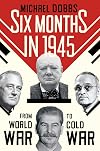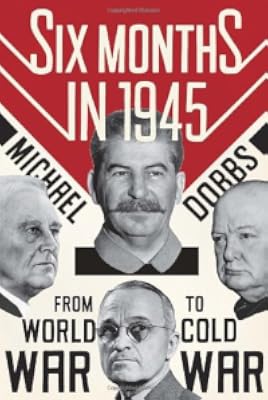
Six Months in 1945: FDR, Stalin, Churchill, and Truman--from World War to Cold War
by Michael Dobbs
Cold War Trilogy (1)
On This Page
Description
A riveting account of the pivotal six-month period spanning the end of World War II, the dawn of the nuclear age, and the beginning of the Cold War.Tags
Recommendations


Member Reviews
Summary: An account of the six months from Yalta to Hiroshima and how the decisions and events of those months shaped the post-war world.
Michael Dobbs contends that the six months from February to August of 1945 profoundly shaped the post-war world dashing the hopes for world peace, replacing it with a “cold” war between the two major superpowers to emerge from the world. How did Allies against Germany become adversaries?
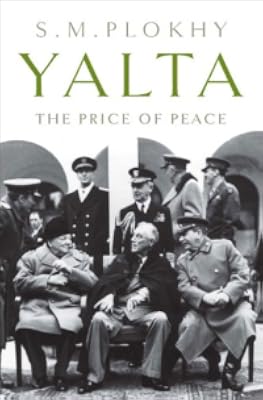
The account begins with the conference at Yalta in the Crimea. Planned to accommodate Stalin, it represented an arduous journey via ship, air, rail, and auto for a dying president and a recently ill prime minister. Neither Roosevelt nor Churchill arrived at the top of their game. What they found at the conference show more was a Stalin who was. Given that his country had borne the brunt of the war against Germany (and the casualties), he came with terms on which he would not yield about the borders and government of Poland and his influence in Eastern Europe. Dobbs shows how Roosevelt and Churchill, sometimes with vagueness of wording, tried to reach agreements about the shape of the post-war world that preserved self-autonomy for these countries and preservation of the unity of Germany. Roosevelt described their efforts as “the best I could do.” For Churchill, the handwriting was on the wall for his influence and the British empire. He recognized that he now was junior to the two great powers.
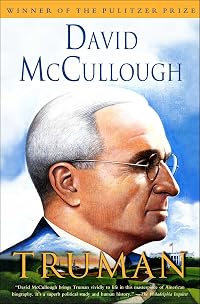
The second part traces the conclusion of the war, the race for Berlin, the death of Roosevelt, the linkup and the zones of occupation. The new president, Harry Truman almost immediately had to stand up to Molotov on the matter of Poland and honoring the agreements of Yalta. But as the old saying goes, possession is nine-tenths of the law, and the Russians were in possession of most of what they wanted. Amid all this, Dobbs captures the momentary joy of the meet-up of forces.
Part Three covers the conference in Potsdam, the tenuous balance of standing up to Stalin as an “iron curtain” descends on Eastern Europe and Poland’s government is dominated by pro-Communist leaders., even while Stalin’s help is still sought to deal with Japan. During the conference, Churchill learns that the elections he called turned him out of office. And Truman learned that the test of atomic weapons was devastatingly successful. Japan would be warned, resist, be bombed twice, at Hiroshima and Nagasaki, and capitulate, even as Russia was turning back forces in Manchuria but was still short of all the prizes sought in the East.
A foreign service officer from the U.S. in Russia sent his famous “long telegram” with his analysis of Russian intent and recommendation of an American policy of containment, which became our foreign policy until 1989 (and may be once more). Reading this made me wonder if the combination of weariness and perhaps naivete of Roosevelt, and the divorce of military strategy and geopolitical assessment led to this outcome. Churchill saw this coming. But he was also the one so cautious about a cross-channel invasion. Great Britain and America’s late engagement, after the Russians’ years of fighting and dying and turning back the German threat left them in a place where all they could do was say “pretty please” to a country who held most of the cards.
For those whose knowledge of this history is a few vaguely remembered paragraphs in a history book, this is a detailed plunge into these six defining months exploring the personalities, the changing power dynamics, the events and the geopolitics that shaped the post-war world. The account balances depth and pace in a way that always fascinates and never plods. It demonstrates that nothing may be so dangerous as a charming vision of world peace between ideological and geopolitical adversaries. Yalta was the wake-up call, and Potsdam the effort to contain the damages. But the amity of a wartime alliance would be no more. show less
Michael Dobbs contends that the six months from February to August of 1945 profoundly shaped the post-war world dashing the hopes for world peace, replacing it with a “cold” war between the two major superpowers to emerge from the world. How did Allies against Germany become adversaries?
The account begins with the conference at Yalta in the Crimea. Planned to accommodate Stalin, it represented an arduous journey via ship, air, rail, and auto for a dying president and a recently ill prime minister. Neither Roosevelt nor Churchill arrived at the top of their game. What they found at the conference show more was a Stalin who was. Given that his country had borne the brunt of the war against Germany (and the casualties), he came with terms on which he would not yield about the borders and government of Poland and his influence in Eastern Europe. Dobbs shows how Roosevelt and Churchill, sometimes with vagueness of wording, tried to reach agreements about the shape of the post-war world that preserved self-autonomy for these countries and preservation of the unity of Germany. Roosevelt described their efforts as “the best I could do.” For Churchill, the handwriting was on the wall for his influence and the British empire. He recognized that he now was junior to the two great powers.
The second part traces the conclusion of the war, the race for Berlin, the death of Roosevelt, the linkup and the zones of occupation. The new president, Harry Truman almost immediately had to stand up to Molotov on the matter of Poland and honoring the agreements of Yalta. But as the old saying goes, possession is nine-tenths of the law, and the Russians were in possession of most of what they wanted. Amid all this, Dobbs captures the momentary joy of the meet-up of forces.
Part Three covers the conference in Potsdam, the tenuous balance of standing up to Stalin as an “iron curtain” descends on Eastern Europe and Poland’s government is dominated by pro-Communist leaders., even while Stalin’s help is still sought to deal with Japan. During the conference, Churchill learns that the elections he called turned him out of office. And Truman learned that the test of atomic weapons was devastatingly successful. Japan would be warned, resist, be bombed twice, at Hiroshima and Nagasaki, and capitulate, even as Russia was turning back forces in Manchuria but was still short of all the prizes sought in the East.
A foreign service officer from the U.S. in Russia sent his famous “long telegram” with his analysis of Russian intent and recommendation of an American policy of containment, which became our foreign policy until 1989 (and may be once more). Reading this made me wonder if the combination of weariness and perhaps naivete of Roosevelt, and the divorce of military strategy and geopolitical assessment led to this outcome. Churchill saw this coming. But he was also the one so cautious about a cross-channel invasion. Great Britain and America’s late engagement, after the Russians’ years of fighting and dying and turning back the German threat left them in a place where all they could do was say “pretty please” to a country who held most of the cards.
For those whose knowledge of this history is a few vaguely remembered paragraphs in a history book, this is a detailed plunge into these six defining months exploring the personalities, the changing power dynamics, the events and the geopolitics that shaped the post-war world. The account balances depth and pace in a way that always fascinates and never plods. It demonstrates that nothing may be so dangerous as a charming vision of world peace between ideological and geopolitical adversaries. Yalta was the wake-up call, and Potsdam the effort to contain the damages. But the amity of a wartime alliance would be no more. show less
Nokkuð góð yfirferð yfir atburðarrásina frá fundi Stalíns, Churchills og Roosevelts í Yalta á Krímskaga í febrúar 1945 þar til Bandaríkjamenn sprengja kjarnorkusprengjurnar í Japan í ágústmánuði. Dobbs bendir m.a. á hve stóran þátt mismunandi hugmyndafræði átti í ágreiningi stórveldanna og einnig tvöfeldni vestrænu ríkjanna þegar þau ívilnana af hendi Sovétríkjunum sem þau töldu sig ekki þurfa að standa sjálf við, s.s. sjálfstæði ríkja í A.-Evrópu á meðan Indland var nýlenda Breta og BNA áskyldi sér rétt til að ráðskast með Suður og Mið Ameríku. Þau gagnrýndu einnig rán Sovétmanna á verksmiðjum og verðmætum í Þýskalandi um leið og þau stálu þýskum show more vísindamönnum og þekkingu til eigin nota. Umdeilanlegir þættir en engu að síður siðferðislega vafasamir. show less
A great read about how the Allied leaders of World War II went about ending the war and managing the following peace. Dobbs covers the six months between the Yalta conference (Feb. 1945) and the Hiroshima atomic bombing (Aug. 1945). We get some great insights into the strengths and weaknesses of the advisors of Stalin, Roosevelt, Churchill, and Truman, as well as what these Big 4 leaders themselves were trying to accomplish during these six months. If Eastern European geopolitics aren't your thing, then this may be a long read (the details about the Communist coup in Romania were the most difficult parts for me to get through). I wish there had been more about Clement Attlee, but it could be that by the time his story was starting, the show more larger story was nearly finished. Reading this book about the beginning of the Cold War makes me want to read Dobbs' book about the end of the Cold War, [b:Down with Big Brother: The Fall of the Soviet Empire|381549|Down with Big Brother The Fall of the Soviet Empire|Michael Dobbs|https://images.gr-assets.com/books/1390188029s/381549.jpg|371334]. Terrific research and writing! show less
4.7 Terrific! Fresh look at events of Feb - Aug 1945 including Yalta, FDRs death, Churchill’s ouster, Potsdam and Hiroshima. This lead to the start of the Cold War … Dobbs is a great writer. As a reporter, his writing reads like a news article more than a book.
The title kind of says it all. The book begins with the Yalta Conference then Potsdam and ending with the dropping of the atom bombs. The theme is the relations between the WWII Allies and the men at their head. The coverage is almost completely political with very little of the military history events discussed.
At the Yalta Conference FDR is a sick old man with not much longer to live. The author does a thorough portrayal of Stalin seemingly expecting his readers to have the least knowledge about him among the Big Three. In my case that was correct so it worked out well. Churchill is trying to hold up the image that Great Britain is an equal partner when everyone knows that they are slipping.
There is a good use of primary sources show more including diplomatic cables and narration of the proceedings at the conferences. After flying to Teheran and having a bad flight Stalin insists on holding the next conference at a place he can reach by train, Yalta. The description of the living quarters at Yalta and Potsdam was extensive and interesting. Truman is in place at Potsdam which changes the whole chemistry of the group. It is at Potsdam that Truman received notice of the successful atom bomb test. Churchill left Potsdam to get the results on the British election and never returned, having been voted out of office.
The section on the Potsdam Conference goes into the horrible conditions in Germany at the end of the war. The communist countries in the new Eastern Bloc made refugees out of 40 million Germans who were relocated to fit the new Russian map of Eastern Europe. The friction between the Americans and Russians is already flaring up in Berlin as the good feeling between the Allies evaporates with the beginning of the Cold War.
The writing was rather dry with few of the human details of the situation besides those that tended to be depressing. Or maybe there just was not a lot of happy things in the situation to write about. The dropping of the atom bomb was not debated much at all. The U.S. had spent a lot of money developing this new weapon and they had few qualms about using them on the country that bombed Pearl Harbor on December 7, 1941. The book is adequate but I cannot recommend it highly. Three stars. show less
At the Yalta Conference FDR is a sick old man with not much longer to live. The author does a thorough portrayal of Stalin seemingly expecting his readers to have the least knowledge about him among the Big Three. In my case that was correct so it worked out well. Churchill is trying to hold up the image that Great Britain is an equal partner when everyone knows that they are slipping.
There is a good use of primary sources show more including diplomatic cables and narration of the proceedings at the conferences. After flying to Teheran and having a bad flight Stalin insists on holding the next conference at a place he can reach by train, Yalta. The description of the living quarters at Yalta and Potsdam was extensive and interesting. Truman is in place at Potsdam which changes the whole chemistry of the group. It is at Potsdam that Truman received notice of the successful atom bomb test. Churchill left Potsdam to get the results on the British election and never returned, having been voted out of office.
The section on the Potsdam Conference goes into the horrible conditions in Germany at the end of the war. The communist countries in the new Eastern Bloc made refugees out of 40 million Germans who were relocated to fit the new Russian map of Eastern Europe. The friction between the Americans and Russians is already flaring up in Berlin as the good feeling between the Allies evaporates with the beginning of the Cold War.
The writing was rather dry with few of the human details of the situation besides those that tended to be depressing. Or maybe there just was not a lot of happy things in the situation to write about. The dropping of the atom bomb was not debated much at all. The U.S. had spent a lot of money developing this new weapon and they had few qualms about using them on the country that bombed Pearl Harbor on December 7, 1941. The book is adequate but I cannot recommend it highly. Three stars. show less
This is a great over view of the period which set the basis for the cold war and shaped the world as it is today. Fast paced and well written. If you have an interest in the history of the last 60 years, this is a msut read.
Ratings
Members
- Recently Added By
Author Information

9+ Works 1,753 Members
Born in 1948 Michael Dobb was Chief of Staff and later Deputy Chairman of the Conservative Party. He has a doctorate in nuclear defense studies. Dobbs has also been Deputy Chairman of Saatchi & Saatchi, he presented the BBC TV current affairs program Despatch Box and was a columnist for The Mail on Sunday. Dobbs recently penned the hugely show more acclaimed theatre play, 'The Turning Point'. He is also the author of the Harry Jones Thrillers, Churchill Novels, and the Parliamentary Novels Series. The immensely popular Netflix series House of Cards is based on book 1 of the Parliamentary Novels by the same name. Michael became Lord Dobbs of Wylye in December 2010 after a long career in and around politics. (Bowker Author Biography) show less
Some Editions
Series

Common Knowledge
- Original publication date
- 2012
- People/Characters
- Harry S. Truman; Winston Churchill; Joseph Stalin
Classifications
Statistics
- Members
- 238
- Popularity
- 137,271
- Reviews
- 6
- Rating
- (3.94)
- Languages
- 5 — Danish, English, French, Polish, Portuguese
- Media
- Paper, Audiobook, Ebook
- ISBNs
- 18
- UPCs
- 1
- ASINs
- 3