
The Moon and Sixpence
by W. Somerset Maugham 
On This Page
Description
The Moon and Sixpence is a fictional novel heavily influenced by the life of French painter Paul Gauguin. The novel is told first-person, dipping episodically into the mind of the artist. Charles Strickland is an English stock broker, who leaves everything behind him in his middle age to live in defiant squalor in Paris as an artist. His genius is eventually recognized by a Dutch painter..
Tags
Recommendations















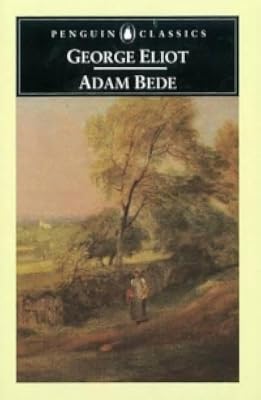


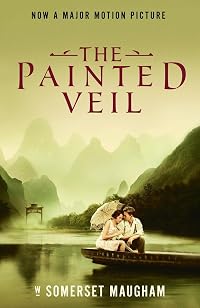

Member Recommendations

anonymous user Chapter 5 - "A Beachcomber in Marseilles" - contains the material on which WSM based Strickland's adventures in chapter 47 of The Moon and Sixpence. See also the 1935 preface to the novel in The Collected Edition where WSM, having been accused of plagiarizing Mr Franck's work, admitted his debt and argued that "books of facts are a legitimate quarry for the imaginative writer". Mr Franck's book is available online.
Member Reviews
Rispetto a Il velo dipinto (che adoro) questo libro è scritto in modo più articolato e Somerset Maugham instaura un vero e proprio dialogo a senso unico con il lettore interrogando sulle vicende descritte da diversi punti di vista. In La luna e sei soldi traspare la visione pessimista e cinica dell'autore verso...beh, praticamente qualsiasi cosa! In particolare l'amore passionale ne esce piuttosto male ("l'amore dà corpo a un'illusione") mentre l'unica fiamma che resta sempre accesa nel cuore dell'uomo è l'arte e la ricerca della bellezza attraverso questa. Il suo stile asciutto e privo di vocaboli obsoleti rende i suoi romanzi moderni e capaci di "parlare" con i suoi lettori ancora oggi.
I came to this book having read a few others by Somerset Maugham, all of which I had greatly enjoyed.
Maugham always, to my mind, describes facets of character extremely keenly, and here I find the device of having the story told by a character acqauinted with the protagonist (if you can call him that) very effective: do we trust what he says, are we being told Maugham's views on the issues raised by this portrayal and how do we take slightly confessional asides?
There is no doubt that Maugham was often concerned with what it is to be an artist (or writer, more specifically), and I think he is here exploring one extreme personality trait that he is perhaps worried that he at times exhibits himself, rationalising it perhaps as pure show more selfishness: when put under the spotlight like this, that would be a too facile interpretation and he comes here more to seeing it as a complete disjunct with modern, Western societal norms, and esxamines those mores somewhat through this prism. If taken to extremes, behaviour such as Strickland's could be seen as some kind of analogue to Ayn Rand's objectivism.
The other issue seems to be about the nature of art, and whether or not we should take into account such things as the character of the person who produced it.
Ultimately I am not sure that Maugham comes to any conclusions about this, and the narrative method he chooses allows the issues raised to be left open, to my mind, and I have to say I thoroughly enjoyed reading this book, even if it isn't quite what I was expecting, or as enjoyable as I found, for example, Cakes and Ale. show less
Maugham always, to my mind, describes facets of character extremely keenly, and here I find the device of having the story told by a character acqauinted with the protagonist (if you can call him that) very effective: do we trust what he says, are we being told Maugham's views on the issues raised by this portrayal and how do we take slightly confessional asides?
There is no doubt that Maugham was often concerned with what it is to be an artist (or writer, more specifically), and I think he is here exploring one extreme personality trait that he is perhaps worried that he at times exhibits himself, rationalising it perhaps as pure show more selfishness: when put under the spotlight like this, that would be a too facile interpretation and he comes here more to seeing it as a complete disjunct with modern, Western societal norms, and esxamines those mores somewhat through this prism. If taken to extremes, behaviour such as Strickland's could be seen as some kind of analogue to Ayn Rand's objectivism.
The other issue seems to be about the nature of art, and whether or not we should take into account such things as the character of the person who produced it.
Ultimately I am not sure that Maugham comes to any conclusions about this, and the narrative method he chooses allows the issues raised to be left open, to my mind, and I have to say I thoroughly enjoyed reading this book, even if it isn't quite what I was expecting, or as enjoyable as I found, for example, Cakes and Ale. show less
How despicable are you "allowed" to be, provided you have some amazing talent? How much can people tolerate misconduct in someone they admire or worship? According to Maugham's masterly prose here, a lot. The novel follows the distasteful ascension of the protagonist Charles Strickland to artistic glory, whose unprovoked rudeness and thoughtlessness to everyone are pardoned by his flocking fans due to this genius they perceive in him or excused as some primal, sensual behaviour.
Despite some casual racism - it drops the n-word twice that I remember, as well as Chinese slurs - and misogyny - conversations associating violence upon women with manliness and signs of true love, from both men AND women, and also the general sidelining of show more women or painting them as possessive shrews - , the novel is thought provoking in its question of how much people - who eventually turn into human casualties of Strickland's abuse - are willing to tolerate genius when it comes in the form of a despicable, selfish person. Judging from my nonetheless high opinion of the book, it seems like I'm willing to tolerate some for this work.
Aside - the first few pages deserve a mention, as it is here we are treated to the thesis of the story, carefully considered and articulated:
- how and why the "greatness" of a man depends on public opinion The faculty for myth is innate in the human race.. It is the protest of romance against the commonplace of life.,
- the point of books as creations and the pointlessness of the writer's objective in creating art other than for their own enjoyment (a contentious point),
- cyclical ideologies, these gallant words which seem so novel to those that speak them were said in accents scarcely changed a hundred times before, how people celebrated one day may be overshadowed the next day by those they initially deemed as unworthy, gimmicky and unoriginal. show less
Despite some casual racism - it drops the n-word twice that I remember, as well as Chinese slurs - and misogyny - conversations associating violence upon women with manliness and signs of true love, from both men AND women, and also the general sidelining of show more women or painting them as possessive shrews - , the novel is thought provoking in its question of how much people - who eventually turn into human casualties of Strickland's abuse - are willing to tolerate genius when it comes in the form of a despicable, selfish person. Judging from my nonetheless high opinion of the book, it seems like I'm willing to tolerate some for this work.
Aside - the first few pages deserve a mention, as it is here we are treated to the thesis of the story, carefully considered and articulated:
- how and why the "greatness" of a man depends on public opinion The faculty for myth is innate in the human race.. It is the protest of romance against the commonplace of life.,
- the point of books as creations and the pointlessness of the writer's objective in creating art other than for their own enjoyment (a contentious point),
- cyclical ideologies, these gallant words which seem so novel to those that speak them were said in accents scarcely changed a hundred times before, how people celebrated one day may be overshadowed the next day by those they initially deemed as unworthy, gimmicky and unoriginal. show less
Somerset Maugham writes skillfully and beautifully. His descriptions of characters are perceptive, and he delves into motivations and connections with the precision of laser surgery.
The Moon and Sixpence tells the story of Charles Strickland, who at 40 years of age, leaves his job as a stockbroker and his wife and children because of an overwhelming desire to paint. The story is based on the life of Paul Gaugin.
My one disappointment is that Stickland was portrayed as almost singularly unfeeling, and was contrasted by Dirk Stroeve, who was unfailingly good and compassionate. The contrast was, in my view, over done, with both men becoming almost caricatures rather than real people.
But, that was (to me) a small fault in what was an show more engrossing read. show less
The Moon and Sixpence tells the story of Charles Strickland, who at 40 years of age, leaves his job as a stockbroker and his wife and children because of an overwhelming desire to paint. The story is based on the life of Paul Gaugin.
My one disappointment is that Stickland was portrayed as almost singularly unfeeling, and was contrasted by Dirk Stroeve, who was unfailingly good and compassionate. The contrast was, in my view, over done, with both men becoming almost caricatures rather than real people.
But, that was (to me) a small fault in what was an show more engrossing read. show less
Wow.
Oh. That can't stand as a review, right? Dang. It expressed my feelings about this book exactly.
Hmm. Maugham uses three or four facts from the life of Paul Gauguin and spins a tale of selfishness, art, and social commentary. It's an amazing tour de force, not a term I use lightly. Reading this is like watching some horrid event that you can't turn away from.
Our narrator is reliable, within his frame of knowledge, but is surely one the most unlikable narrators in literature. His mean, nasty remarks, which unfortunately are cunningly acute, give the book a bitter taste.
The main character, artist Charles Strickland, is a beast of self-interest, without a care or even a thought as to how his behavior might blight the lives of others. show more People are no more important to him than a suit of old clothes. A man (Dirk Stroeve, the only likable character in the book, who is mocked without mercy by everyone) saves his life. Strickland repays him by stealing away his beloved wife, and his studio into the bargain. (Not a spoiler; the reader can see this the instant they meet.)
The artist/genius is portrayed here as being above the norms and mores of society. Society is portrayed as empty and venal. A person of genuine kindness and selflessness is portrayed as an amiable but contemptible buffoon. And the ending? Oh my. Nature and life at its cruelest.
And yet...and yet. This is a compulsively readable book which I couldn't put down until I finished it. Something about it rings so horribly true, so life-like, that the reader comes to the appalled conclusion that life and society is pretty awful after all; might as well admit that right up front and get on with it.
Whew! 5 depressed stars show less
Oh. That can't stand as a review, right? Dang. It expressed my feelings about this book exactly.
Hmm. Maugham uses three or four facts from the life of Paul Gauguin and spins a tale of selfishness, art, and social commentary. It's an amazing tour de force, not a term I use lightly. Reading this is like watching some horrid event that you can't turn away from.
Our narrator is reliable, within his frame of knowledge, but is surely one the most unlikable narrators in literature. His mean, nasty remarks, which unfortunately are cunningly acute, give the book a bitter taste.
The main character, artist Charles Strickland, is a beast of self-interest, without a care or even a thought as to how his behavior might blight the lives of others. show more People are no more important to him than a suit of old clothes. A man (Dirk Stroeve, the only likable character in the book, who is mocked without mercy by everyone) saves his life. Strickland repays him by stealing away his beloved wife, and his studio into the bargain. (Not a spoiler; the reader can see this the instant they meet.)
The artist/genius is portrayed here as being above the norms and mores of society. Society is portrayed as empty and venal. A person of genuine kindness and selflessness is portrayed as an amiable but contemptible buffoon. And the ending? Oh my. Nature and life at its cruelest.
And yet...and yet. This is a compulsively readable book which I couldn't put down until I finished it. Something about it rings so horribly true, so life-like, that the reader comes to the appalled conclusion that life and society is pretty awful after all; might as well admit that right up front and get on with it.
Whew! 5 depressed stars show less
Another well written, insightful, and thought provoking book by SM. Paul Gaugin's life is loosely told as that of an Englishman, Charles Strickland. He sacrifices society and creature comforts on a personal quest who's search for expression and beauty leads him to Paris and Tahiti. He finally achieves this but then suffers a terrible death. All after leaving a trail ruined lives of family and friends. SM doesn't answer if it was worth it or not. He just poses the question with his story.
SM's English is sharp and his thoughts provoking. I am interested in the real life of Gaugin and how close it was to this book. I would also like to see the 1942 movie.
Almost a 4.5 but the ending was one sentence too long.
SM's English is sharp and his thoughts provoking. I am interested in the real life of Gaugin and how close it was to this book. I would also like to see the 1942 movie.
Almost a 4.5 but the ending was one sentence too long.
It must be said up front that I am a huge fan of Maugham. I like his writing style, which always makes me feel as if I am sitting with a friend and he is telling me about someone he actually knows. With this conversational tone, Maugham leads you into the depths of the human soul and sometimes leaves you to find your own way out.
Based very loosely on the life of Paul Gauguin, this novel is a study in how much a true artist will do for the sake of his art: not only how much he will endure, but how much he will inflict upon others. You cannot like Maugham's character, Strickland, nor, I think, can you truly understand him. Even our narrator never manages to understand the man, and he has been observing him for a lifetime. I can't help show more wondering how much Maugham felt that he was, himself, a man who had to follow his art at any cost. Of course, for Strickland and anyone who happens to come too close to him, the costs are extreme.
One of the important questions Maugham raises in this novel is what makes up success and who gets to decide if you are successful. Is it truly about how much you acquire outwardly or how much you acquire inwardly?
"I wondered if Abraham really had made a hash of life. Is to do what you want, to live under the conditions that please you, in peace with yourself, to make a hash of life; and is it success to be an eminent surgeon with ten thousand a year and a beautiful wife? I suppose it depends on what meaning you attach to life, the claim which you acknowledge to society, and the claim of the individual."
I think Maugham thought that we too often attach the wrong meaning to life, that we strive too often for what others tell us should be our want instead of the things that our soul cries out for in the night. None of us wishes to be Strickland. Hell, we don't even want to know Strickland, but each of us is faced with his same choice--cut our own path or follow the dictates of society--and too often we make the wrong decision. show less
Based very loosely on the life of Paul Gauguin, this novel is a study in how much a true artist will do for the sake of his art: not only how much he will endure, but how much he will inflict upon others. You cannot like Maugham's character, Strickland, nor, I think, can you truly understand him. Even our narrator never manages to understand the man, and he has been observing him for a lifetime. I can't help show more wondering how much Maugham felt that he was, himself, a man who had to follow his art at any cost. Of course, for Strickland and anyone who happens to come too close to him, the costs are extreme.
One of the important questions Maugham raises in this novel is what makes up success and who gets to decide if you are successful. Is it truly about how much you acquire outwardly or how much you acquire inwardly?
"I wondered if Abraham really had made a hash of life. Is to do what you want, to live under the conditions that please you, in peace with yourself, to make a hash of life; and is it success to be an eminent surgeon with ten thousand a year and a beautiful wife? I suppose it depends on what meaning you attach to life, the claim which you acknowledge to society, and the claim of the individual."
I think Maugham thought that we too often attach the wrong meaning to life, that we strive too often for what others tell us should be our want instead of the things that our soul cries out for in the night. None of us wishes to be Strickland. Hell, we don't even want to know Strickland, but each of us is faced with his same choice--cut our own path or follow the dictates of society--and too often we make the wrong decision. show less
Members
- Recently Added By
Lists

20th Century Literature
1,161 works; 54 members

1910s
90 works; 16 members

Harold Bloom - The Western Canon: D. The Chaotic Age
833 works; 24 members

Out of Copyright
244 works; 14 members

Allie's Favourite 150 Books
145 works; 3 members

real people in fiction circumstances
74 works; 10 members

The Novels of W. Somerset Maugham
22 works; 2 members

Books Set on Islands
190 works; 24 members

My favourite books
96 works; 3 members

Armed Services Editions
150 works; 1 member

Books available on Open Library
171 works; 4 members

Books Read in 2011
684 works; 19 members

Stephen King's 'On Writing' reading list
95 works; 4 members

The Five Books That Represent Us
391 works; 150 members
Author Information

709+ Works 46,790 Members
Writer William Somerset Maugham was born in Paris on January 25, 1874. He attended St. Thomas's Medical School in London. A prolific writer, Maugham produced novels, short stories, plays, and an autobiographical novel, "Of Human Bondage." Although he remains popular for his novels and short stories, when he was alive his plays, now dated, were show more also popular, and in 1908 four of his plays ran simultaneously. Maugham died in Nice, France, on December 16, 1965. (Bowker Author Biography) show less
W. Somerset Maugham has a Legacy Library. Legacy libraries are the personal libraries of famous readers, entered by LibraryThing members from the Legacy Libraries group.
Some Editions
Awards and Honors
Series
Belongs to Publisher Series
detebe (35/VI)
Medusa [Mondadori] (181)
Los jet de Plaza & Janes (209)
Heritage Press (1941)
Oscar Narrativa (187)
De twintigste eeuw (24)
Ullstein Buch (470)
Biblioteca Adelphi (424)
Gli Adelphi [Adelphi] (434)
Gli Oscar [Mondadori] (346)
Work Relationships
Is contained in
Has the adaptation
Has as a student's study guide
Common Knowledge
- Canonical title*
- Silbermond und Kupfermünze
- Original title
- The Moon and Sixpence
- Alternate titles*
- Het donkere vuur
- Original publication date
- 1919, Heinemann, First Edition; 1935, Heinemann, The Collected Edition, New Preface
- People/Characters
- Charles Strickland; Paul Gauguin; Ashenden [narrator]; Dirk Stroeve; Blanche Stroeve; Amy Strickland (show all 14); Ata; Doctor Coutras; MacAndrew; Tiare Johnson; Tough Bill; Col. Fred MacAndrew; Geoffrey Wolfe; Capt. Sandy Nichols
- Important places
- London, England, UK; Polynesia; Paris, France; Tahiti
- Related movies
- The Moon and Sixpence (1942 | IMDb); The Moon and Sixpence (1959 | IMDb)
- First words
- I confess that when first I made acquaintance with Charles Strickland I never for a moment discerned that there was in him anything out of the ordinary.
- Quotations
- I have an idea that some men are born out of their due place. Accident has cast them amid certain surroundings, but they have always a nostalgia for a home they know not. They are strangers in their birthplace, and the leafy ... (show all)lanes they have known from childhood or the populous streets in which they have played, remain but a place of passage. They may spend their whole lives aliens among their kindred and remain aloof among the only scenes they have ever known. Perhaps it is this sense of strangeness that sends men far and wide in the search for something permanent, to which they may attach themselves. Perhaps some deeprooted atavism urges the wanderer back to lands which his ancestors left in the dim beginnings of history. Sometimes a man hits upon a place to which he mysteriously feels that he belongs. Here is the home he sought, and he will settle amid scenes that he has never seen before, among men he has never known, as though they were familiar to him from his birth. Here at last he finds rest.
- Last words
- (Click to show. Warning: May contain spoilers.)He remembered the days when you could get thirteen Royal Natives for a shilling.
- Original language
- English
*Some information comes from Common Knowledge in other languages. Click "Edit" for more information.
Classifications
Statistics
- Members
- 3,813
- Popularity
- 4,181
- Reviews
- 69
- Rating
- (3.93)
- Languages
- 25 — Catalan, Chinese, Czech, Danish, Dutch, English, Estonian, Finnish, French, German, Hebrew, Hungarian, Italian, Japanese, Korean, Lithuanian, Norwegian (Bokmål), Polish, Portuguese, Romanian, Russian, Slovenian, Spanish, Swedish, Turkish
- Media
- Paper, Audiobook, Ebook
- ISBNs
- 245
- UPCs
- 1
- ASINs
- 164