On This Page
Description
What terrors lurk in the ruins of the Well-Built City? Where manufactured order once reigned, now there is peace. In this second volume of the Well-Built City Trilogy, the dominion has fallen, and its vicious ruler, Drachton Below, has been defeated. Cley has renounced the title of physiognomist, striking out on his own to establish the idyllic village of Wenau, where he lives as a healer and the inhabitants' protector. But when the villagers suddenly start to succumb to a lethal sleeping show more sickness, Cley is pulled back into the struggle he thought he had left behind. In order to cure his community of this horrible malady, Cley journeys back to the Well-Built City, braving dangerous ruins teeming with mechanical birds and werewolves. Amid the wreckage, he finds the deposed ruler, Drachton Below, comatose from the same sickness that has overtaken Cley's village. Below created this disease, and he is the only one with the knowledge to cure it. In order to create an antidote, Cley must venture into Drachton Below's mind to gather the information he needs from the source before the disease ravages the village--and Below's mind--forever. show lessTags
Recommendations






Member Reviews
This second volume of the Well-Built City trilogy does include some incidental exposition to refresh readers on the events of the first book, but I don't think it would read well in the complete absence of the prior text. Unlike its predecessor, it finishes with a clear pointer toward its sequel.
The style and format are consistent with the first book: short, limpid chapters narrated by the former Physiognomist First Class Cley, who has found a new life as the doctor of the village of Wenau made up of refugees from the now-ruined Well-Built City. But Drachton Below, the malign demiurge of the Well-Built City, is still alive, and he mobilizes a devious plot to bring the villagers under his control. Memoranda is Cley's odyssey to confront show more his former Master so that he can rescue his new neighbors, a confrontation that takes place in a surprising and exotic interior environment.
It is a really wonderful and artful fantasy, reminding me more than a little of the Hypnerotomachia and The Neverending Story. I have compared its predecessor The Physiognomy to the Terry Gilliam film Brazil, and this one equally deserves comparison to The Imaginarium of Dr. Parnassus. Author Ford provides a prefatory note acknowledging the importance of Frances Yates' works on traditional memory arts in the composition of this novel, a fact that could not have been missed anyway by readers familiar with that subject matter.
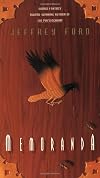
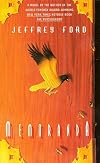
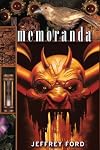
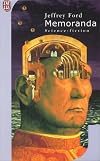
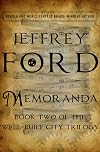
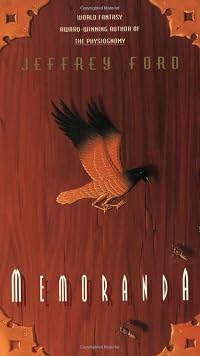
By the way, John Picacio's cover art for the 21st-century Golden Gryphon edition of the trilogy is sublime.
These books are not for children. But if you're a jaded adult who wants the vertiginous pleasure that good fantasy provides to children, they can deliver. Exquisite. show less
The style and format are consistent with the first book: short, limpid chapters narrated by the former Physiognomist First Class Cley, who has found a new life as the doctor of the village of Wenau made up of refugees from the now-ruined Well-Built City. But Drachton Below, the malign demiurge of the Well-Built City, is still alive, and he mobilizes a devious plot to bring the villagers under his control. Memoranda is Cley's odyssey to confront show more his former Master so that he can rescue his new neighbors, a confrontation that takes place in a surprising and exotic interior environment.
It is a really wonderful and artful fantasy, reminding me more than a little of the Hypnerotomachia and The Neverending Story. I have compared its predecessor The Physiognomy to the Terry Gilliam film Brazil, and this one equally deserves comparison to The Imaginarium of Dr. Parnassus. Author Ford provides a prefatory note acknowledging the importance of Frances Yates' works on traditional memory arts in the composition of this novel, a fact that could not have been missed anyway by readers familiar with that subject matter.
By the way, John Picacio's cover art for the 21st-century Golden Gryphon edition of the trilogy is sublime.
These books are not for children. But if you're a jaded adult who wants the vertiginous pleasure that good fantasy provides to children, they can deliver. Exquisite. show less
ORIGINALLY POSTED AT Fantasy Literature.
"In waking from a dream, we obliterate worlds, and in calling up a memory, we return the dead to life again and again only to bring them face to face with annihilation as our attention shifts to something else."
After the destruction of the Well-Built City (detailed in The Physiognomy), Physiognomist Cley has been living in a village in the wilderness, acting as herbalist and midwife. One day a mechanical bird, obviously built by evil Master Drachton Below, arrives in the village, explodes, and releases a gas that puts many of the villagers to sleep. Cley is the only person who’s equipped to find the antidote, so the villagers supply him with an old dog and an older horse and off he goes (looking show more a bit like Don Quixote) to the ruins of the Well-Built City.
The City is a real-life construction of Drachton Below’s Memory Palace, which is based on the mnemonic device called the Method of Loci. Everything in the city represents something he wants to remember, but the city has been destroyed, so Master Below has started a new Memory Palace in his mind. Unfortunately, Below is now unconscious because he’s been infected with his own poisonous gas, so Cley must enter Below’s mind and search there if he wants to find the antidote. When he gets in, he finds that he’s not alone in there and that there’s more going on in the Memory Palace than mere storage of Drachton Below’s memories.
In my review of The Physiognomy, I said it was “sometimes brilliant and always bizarre” and the same holds true for Memoranda. It’s got an original and fascinating setting, interesting symbolism, and thought-provoking ideas about memory, time, love, addiction, and evil.
The villain Drachton Below doesn’t quite live up to expectations here, since he’s asleep for most of the novel, but I liked the other characters better this time. Physiognomist Cley, who used to be an arrogant bigot, is now quite pleasant. The best characters, though, are Drachton Below’s adopted demon son who wears spectacles because he thinks it makes him look smart and has eschewed raw meat for salads, and a creature called The Delicate who is similar to J.K. Rowling’s Dementors, except that he’s exceedingly polite while he sucks out your soul. This was very funny, especially as narrated by Christian Rummel whose voices had me laughing frequently.
In general, the plot of Memoranda works better than The Physiognomy’s plot (which kind of fell apart at the end). Don’t look too close, though. I sincerely doubt that it all made sense, but a tight plot is hardly the point of these books. It’s supposed to be bizarre, a little bit silly and, perhaps more than anything, ironic.
If you do audiobooks, you definitely want to read Memoranda that way. Audible Frontiers’ production is flawless and Rummel’s narration is brilliant and adds quite a bit of humor. show less
"In waking from a dream, we obliterate worlds, and in calling up a memory, we return the dead to life again and again only to bring them face to face with annihilation as our attention shifts to something else."
After the destruction of the Well-Built City (detailed in The Physiognomy), Physiognomist Cley has been living in a village in the wilderness, acting as herbalist and midwife. One day a mechanical bird, obviously built by evil Master Drachton Below, arrives in the village, explodes, and releases a gas that puts many of the villagers to sleep. Cley is the only person who’s equipped to find the antidote, so the villagers supply him with an old dog and an older horse and off he goes (looking show more a bit like Don Quixote) to the ruins of the Well-Built City.
The City is a real-life construction of Drachton Below’s Memory Palace, which is based on the mnemonic device called the Method of Loci. Everything in the city represents something he wants to remember, but the city has been destroyed, so Master Below has started a new Memory Palace in his mind. Unfortunately, Below is now unconscious because he’s been infected with his own poisonous gas, so Cley must enter Below’s mind and search there if he wants to find the antidote. When he gets in, he finds that he’s not alone in there and that there’s more going on in the Memory Palace than mere storage of Drachton Below’s memories.
In my review of The Physiognomy, I said it was “sometimes brilliant and always bizarre” and the same holds true for Memoranda. It’s got an original and fascinating setting, interesting symbolism, and thought-provoking ideas about memory, time, love, addiction, and evil.
The villain Drachton Below doesn’t quite live up to expectations here, since he’s asleep for most of the novel, but I liked the other characters better this time. Physiognomist Cley, who used to be an arrogant bigot, is now quite pleasant. The best characters, though, are Drachton Below’s adopted demon son who wears spectacles because he thinks it makes him look smart and has eschewed raw meat for salads, and a creature called The Delicate who is similar to J.K. Rowling’s Dementors, except that he’s exceedingly polite while he sucks out your soul. This was very funny, especially as narrated by Christian Rummel whose voices had me laughing frequently.
In general, the plot of Memoranda works better than The Physiognomy’s plot (which kind of fell apart at the end). Don’t look too close, though. I sincerely doubt that it all made sense, but a tight plot is hardly the point of these books. It’s supposed to be bizarre, a little bit silly and, perhaps more than anything, ironic.
If you do audiobooks, you definitely want to read Memoranda that way. Audible Frontiers’ production is flawless and Rummel’s narration is brilliant and adds quite a bit of humor. show less
**Here Be Spoilers**
One of the things that I liked about The Physiognomy, the first book of the Well-Built City trilogy, was that it told the story of a world that felt small, almost local. The evil magus genius Drachton Below didn't have the makings of a demi-god or a flaming eye in the sky, but rather of a small, petty, paranoid dictator. The quest for saving the world (or indeed Paradise) thus felt mostly like an act of rebellion in some small caribbean country. With lots of weirdness thrown in of course.
The second book kind of takes this concept even further. The surviviors from the Well-Built City now live in the woods in a little village, but even with his powers taken away from him, Below seeks his vengeance. He infects the show more people with a sleeping disease. Clay, now working as a mid-wife in the village, gets the mission to go back to the ruins of the Well-Built City and find a cure. Unfortunately Below turns out to having accidently infected himself and Clay is forced to literally go inside his mind to find the cure. Most of this book is set within a mnemo-technic world where Below stores his memories, which Clay is helped to enter by Below's spectable-bearing demon-with-a-conscience son. Does that sound weird? Trust me, you haven't even heard the start of it.
Ford is not one to dwell on long descriptions, which makes the transitions between episodes rather dreamlike. The whole thing becomes a ride you sort of just have to accept to go along with. "Oh, is there a little bottle of green liquid inside the flying head? Which might be needed to open the door to the Panopticon? Alright then!"
This is not quite the book The Physiognomy was, though. In the end, explanations of how Below's memory world works become a little strained to try and tie all knots together, and there's a bit of deus ex machina going on. But this remains one fascinating world to visit, and I won't wait long until I go for the concluding part. show less
One of the things that I liked about The Physiognomy, the first book of the Well-Built City trilogy, was that it told the story of a world that felt small, almost local. The evil magus genius Drachton Below didn't have the makings of a demi-god or a flaming eye in the sky, but rather of a small, petty, paranoid dictator. The quest for saving the world (or indeed Paradise) thus felt mostly like an act of rebellion in some small caribbean country. With lots of weirdness thrown in of course.
The second book kind of takes this concept even further. The surviviors from the Well-Built City now live in the woods in a little village, but even with his powers taken away from him, Below seeks his vengeance. He infects the show more people with a sleeping disease. Clay, now working as a mid-wife in the village, gets the mission to go back to the ruins of the Well-Built City and find a cure. Unfortunately Below turns out to having accidently infected himself and Clay is forced to literally go inside his mind to find the cure. Most of this book is set within a mnemo-technic world where Below stores his memories, which Clay is helped to enter by Below's spectable-bearing demon-with-a-conscience son. Does that sound weird? Trust me, you haven't even heard the start of it.
Ford is not one to dwell on long descriptions, which makes the transitions between episodes rather dreamlike. The whole thing becomes a ride you sort of just have to accept to go along with. "Oh, is there a little bottle of green liquid inside the flying head? Which might be needed to open the door to the Panopticon? Alright then!"
This is not quite the book The Physiognomy was, though. In the end, explanations of how Below's memory world works become a little strained to try and tie all knots together, and there's a bit of deus ex machina going on. But this remains one fascinating world to visit, and I won't wait long until I go for the concluding part. show less
Not quite so compelling as *The Physiognomy*, but then the journey of self-discovery, fall from grace (even though it was not really grace to begin with, and rather a rise than a fall, as far as Cley's humanity is concerned), and redemption that drove the first book is not so strong in this one. Again, the story is personal while having the flavor of legend, though the tone is a bit more concrete.
Not many mysteries are explained from the first book, but the world he has created is strengthened and expanded, and there are more of the vibrant images that occur in the first book (e.g., Silencio in *Physiognomy*, and The Fetch and The Delicate in *Memoranda*.)
It's difficult to put thoughts on this book into words, due to both its style and show more its content. The two reviews on the back of the edition I have are:
"Ford's symbolic view of memory and desire is as intriguing as it is haunting" ( from Publishers Weekly)
and
"Jeffrey Ford is a fascinatingly unconventional writer" (from Locus Magazine)
and they don't really do justice to either the author or his work. show less
Not many mysteries are explained from the first book, but the world he has created is strengthened and expanded, and there are more of the vibrant images that occur in the first book (e.g., Silencio in *Physiognomy*, and The Fetch and The Delicate in *Memoranda*.)
It's difficult to put thoughts on this book into words, due to both its style and show more its content. The two reviews on the back of the edition I have are:
"Ford's symbolic view of memory and desire is as intriguing as it is haunting" ( from Publishers Weekly)
and
"Jeffrey Ford is a fascinatingly unconventional writer" (from Locus Magazine)
and they don't really do justice to either the author or his work. show less
Truly a remarkable book. The mnemonic world introduced in the first book is fully explored here. Sort of a bit metaphysical and drug-induced, but with a clear direction.
Sequel to "The Physiognomy", gives us more information about the evil Drachton Below. Interesting that both Ford and Crowley (in the Aegypt series) are use material from Frances Yates' books on Giordano Bruno and memory palaces. Both start there, but go in different directions with the ideas.
En La Fisiognomía , ganadora del World Fantasy Award, Jeffrey Ford concibió un genio de mente satánica que imaginó, construyó y dominó una metrópolis de pesadilla llamada la Ciudad Bien Construida. Esa mente es el oscuro lugar que el antiguo fisiognomista Cley se verá obligado a explorar si quiere salvar a sus amigos de una terrible enfermedad del sueño. Ocho años después de la destrucción de la Ciudad Bien Construida, Cley vive en el pequeño pueblo rural de Wenau, dedicado a ayudar a sus vecinos. Pero un día, el Amo Below reaparece y esparce una virulenta nube amarilla que provoca un profundo sueño. Cley debe emprender la búsqueda de Below en las ruinas de la antigua ciudad con la esperanza de encontrar un antídoto. show more Pero el tirano ha caído víctima de su propia enfermedad del sueño y la única esperanza para encontrar la formula está en la adormecida memoria de Below, en la ilusoria casa de los sueños, recuerdos e imaginación de un loco. show less
Aug 1, 2022Spanish
Members
- Recently Added By
Lists

New Weird Fiction
69 works; 12 members
Author Information

95+ Works 3,689 Members
Jeffrey Ford is the author of nine novels and five short story collections. He has received the World Fantasy, Shirley Jackson, Nebula, and Edgar awards among others. A college English teacher of writing and literature for thirty years, he lives with his wife Lynn in a century-old farm house in a land of slow clouds and endless fields.
Series

Work Relationships
Is contained in
Common Knowledge
- Original publication date
- 1999
Classifications
Statistics
- Members
- 211
- Popularity
- 155,037
- Reviews
- 8
- Rating
- (3.89)
- Languages
- English, French, Polish, Spanish
- Media
- Paper, Audiobook, Ebook
- ISBNs
- 9
- ASINs
- 3