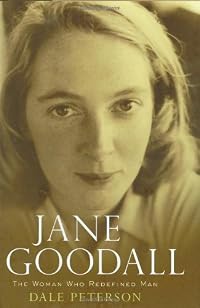
Jane Goodall: The Woman Who Redefined Man
by Dale Peterson
On This Page
Description
When Goodall first presented her discoveries about chimpanzees at a scientific conference, she was ridiculed by the chairman. She was too young, too blond, too pretty to be a serious scientist, and worse yet, she had virtually no formal scientific training. She had been a secretarial school graduate whom Leakey had sent out to study chimps only when he couldn't find anyone better qualified. And he couldn't tell her what to do in the field--nobody could--because no one before had made such an show more intensive and long-term study. Biographer Peterson shows how remarkable Goodall's accomplishments were, detailing not only how she revolutionized the study of primates, our closest relatives, but how she helped set radically new standards and a new intellectual style in the study of animal behavior. And he reveals the very private quest that led to another sharp turn in her life, from scientist to activist.--From publisher description. show lessTags
Recommendations
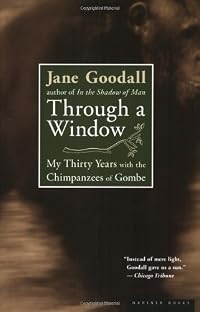




Member Recommendations
Member Reviews
This book came out in 2006, so two decades before Goodall died, but my feeling is that it's probably definitive enough and unlikely to be surpassed, with almost 700 pages of content covering her life. I really only knew Goodall's deal in the broadest of strokes: she studied chimpanzees with a somewhat new technique. Here, you get that all laid out in detail that is quite thorough but never tedious, from her childhood to her time in Gombe to her shift into advocacy. Peterson paints a portrait of a deeply empathetic woman, whose empathy took many forms. Her work in Gombe is particularly detailed,* but I found it all quite fascinating, and I read this long, dense book in just a few days. So many interesting things: her dad the racecar show more driver, her lifelong interest in Africa, her almost falling into the research project, the details of how she set up her research project and kept it going, her fledgling writing career and how she was used by National Geographic, the attack on her research project by terrorists.
One thing I did not really expect was the sheer number of married men who would hit on her during her time in Africa, but it came to make sense; Jane was so open and empathetic in everything she did, and that clearly caused these lonely men to grab onto her. But it was the same empathy she extended to chimps, and that drove her activism later in life; it was all manifestations of same phenomenon.
* Peterson devotes almost 300 pages to Jane's life in the 1960s, so about thirty pages per year of her life. By comparison, just over 100 pages to the 1970s, and only about 40 pages to the 1980s. He clearly spends time where it needs to be spent, but I did feel that Jane's personal life largely dropped out of the narrative after the death of her second husband. Did she ever find or pursue love again? What did her son get up to? I would guess these things were probably too sensitive and recent to discuss while she was still alive. My guess is it wouldn't take too much to update this book to cover the remaining two decades of her life; I wonder if that will happen. show less
One thing I did not really expect was the sheer number of married men who would hit on her during her time in Africa, but it came to make sense; Jane was so open and empathetic in everything she did, and that clearly caused these lonely men to grab onto her. But it was the same empathy she extended to chimps, and that drove her activism later in life; it was all manifestations of same phenomenon.
* Peterson devotes almost 300 pages to Jane's life in the 1960s, so about thirty pages per year of her life. By comparison, just over 100 pages to the 1970s, and only about 40 pages to the 1980s. He clearly spends time where it needs to be spent, but I did feel that Jane's personal life largely dropped out of the narrative after the death of her second husband. Did she ever find or pursue love again? What did her son get up to? I would guess these things were probably too sensitive and recent to discuss while she was still alive. My guess is it wouldn't take too much to update this book to cover the remaining two decades of her life; I wonder if that will happen. show less
She's a personal hero of mine, so I had to read the book. I feel you could remove 400 pages without missing anything about the subject--do we really need to know about the ancestry of everyone she met? The minutia sometimes overwhelms the subject. That said, it's impossible not to fall in love with a woman of such character--intelligence, perseverance, compassion, and above all courage. The book mourns the passing of each of her loved ones, both human and not, and I can't help thinking how much better whe world would be if we all shared her view of it.
A hefty, very thorough biography on Dr. Jane Goodall... I was fascinated and awed by what this amazing woman has done with her life, and the things she discovered about our closest living relative, chimpanzees. The book tells about her early life- she was born in England, grew up in a nice family, always had an interest in animals from a young age... Then her early secretarial jobs, and the many young men who tried to gain her favor. It tells how she met the famed anthropologist Louis Leakey, who wanted someone to study great apes in the wild, thinking they would give us glimpses into how early man had lived and behaved... I’d had the impression that Jane Goodall went very suddenly to Gombe to study the chimpanzees, but in reality she show more worked for Leakey several years while he sought funding for the project. When she finally got there, she spent months trying to habituate the chimpanzees to her presence, and it finally paid off. She was able to observe them closely, doing all their normal everyday activities, and made the shocking (for that time) discoveries that chimpanzees make and use rudimentary tools, and hunt and eat meat on occasion. Her methods were unheard of at the time- and her habit of giving the animals names and describing their behavior in a manner anyone could understand, made her material accessible to the public...
There’s a lot of details in this book about supporting people in Jane Goodall’s life- her family and friends, Louis Leakey, the Nat Geo photographer Hugo van Lawick who became her first husband, the many many people who came and went from Gombe as the project grew. Eventually Jane Goodall had assistants trained to also follow the chimpanzees and make observations, resulting in one of the longest sustained study on a group of animals in the wild, ever. Many graduate students came to Gombe to do their own research projects on different aspects of chimpanzee behavior. Jane Goodall found herself as the years went on doing more of the administrative work and less of the studies herself. She travelled all over the world giving lectures and attending conferences- at first to share her findings about chimpanzees, then to advocate protecting them and preserving the wild habitat. Near the end of the book her focus shifted again to urge world peace, to encourage young people in finding ways to better the world around them, and to improve the lives of chimpanzees and other simian species that live in zoos or were used in research... As far as I know, Dr. Goodall is still working tirelessly to further the causes she believes in so deeply.
There’s so much in this book I have barely touched on any of it. Her work at Cambridge University to earn a Ph.D. (so she would have credentials to get published in scientific circles) even though she hadn’t done any undergraduate work. An early job she had at the London Zoo assisting the filmmaker who produced a popular television show about wildlife. Her mother Vanne wrote a romantic fiction book set in a rain forest! How her son Hugo nicknamed Grub, grew up more or less in the research camp. The many mishaps, frustrations and dangerous moments during fieldwork in Africa- especially when political situations made it unsafe. Glimpses into the lives of the chimpanzees. Why she and Hugo didn’t write the sequel to Innocent Killers (another book I loved- it was about hyenas, jackals and wild dogs in the Serengeti. The sequel was supposed to be on studies of leopards, lions and cheetahs). Her second marriage to Derek Bryceson (and how both marriages eventually ended in divorce). The many many famous people she has met. Her lively, humorous and energetic writing style- as numerous passages are quoted from letters, diaries and field journals. Normally I might feel distracted and annoyed at so much being presented in a biography about other people- Louis Leakey’s childhood for example- but in this case I was already familiar enough with the main person that I found all the secondary stories interesting and insightful. Even the brief ones about people who cooked in her camp, or worked as her secretaries, or helped her care for her pets (small wild animals when she was younger, lots of different dogs later on).
Maybe this is rambling, and it sure is a lot, but that’s my grand impression of this long and detailed book on the life of an awe-inspiring person. Sure did revive my desire to read her other books on chimpanzees, conservation work, etc.
more at the Dogear Diary show less
There’s a lot of details in this book about supporting people in Jane Goodall’s life- her family and friends, Louis Leakey, the Nat Geo photographer Hugo van Lawick who became her first husband, the many many people who came and went from Gombe as the project grew. Eventually Jane Goodall had assistants trained to also follow the chimpanzees and make observations, resulting in one of the longest sustained study on a group of animals in the wild, ever. Many graduate students came to Gombe to do their own research projects on different aspects of chimpanzee behavior. Jane Goodall found herself as the years went on doing more of the administrative work and less of the studies herself. She travelled all over the world giving lectures and attending conferences- at first to share her findings about chimpanzees, then to advocate protecting them and preserving the wild habitat. Near the end of the book her focus shifted again to urge world peace, to encourage young people in finding ways to better the world around them, and to improve the lives of chimpanzees and other simian species that live in zoos or were used in research... As far as I know, Dr. Goodall is still working tirelessly to further the causes she believes in so deeply.
There’s so much in this book I have barely touched on any of it. Her work at Cambridge University to earn a Ph.D. (so she would have credentials to get published in scientific circles) even though she hadn’t done any undergraduate work. An early job she had at the London Zoo assisting the filmmaker who produced a popular television show about wildlife. Her mother Vanne wrote a romantic fiction book set in a rain forest! How her son Hugo nicknamed Grub, grew up more or less in the research camp. The many mishaps, frustrations and dangerous moments during fieldwork in Africa- especially when political situations made it unsafe. Glimpses into the lives of the chimpanzees. Why she and Hugo didn’t write the sequel to Innocent Killers (another book I loved- it was about hyenas, jackals and wild dogs in the Serengeti. The sequel was supposed to be on studies of leopards, lions and cheetahs). Her second marriage to Derek Bryceson (and how both marriages eventually ended in divorce). The many many famous people she has met. Her lively, humorous and energetic writing style- as numerous passages are quoted from letters, diaries and field journals. Normally I might feel distracted and annoyed at so much being presented in a biography about other people- Louis Leakey’s childhood for example- but in this case I was already familiar enough with the main person that I found all the secondary stories interesting and insightful. Even the brief ones about people who cooked in her camp, or worked as her secretaries, or helped her care for her pets (small wild animals when she was younger, lots of different dogs later on).
Maybe this is rambling, and it sure is a lot, but that’s my grand impression of this long and detailed book on the life of an awe-inspiring person. Sure did revive my desire to read her other books on chimpanzees, conservation work, etc.
more at the Dogear Diary show less
In my childhood, I enjoyed National Geographic specials about a slight English woman who would sit in the Tanzanian forest by the Gombe River and observe chimpanzees. In college I read one of her books, Through a Window: My Thirty Years With the Chimpanzees of Gombe and became even more deeply enamored with the woman and her works. When Jane Goodall received an honorary degree from the College of William & Mary on Charter Day in 1993, my roommate Hal joked that they would need security to keep me from swooping in from the rafters and abducting her. Thus it was natural for me to read the comprehensive biography Jane Goodall: The Woman Who Redefined Man (2006) by Dale Peterson.
Peterson relies on a wealth of source material including show more interviews with Goodall, her family, colleagues and researchers; a huge volume of Goodall's correspondence; and Goodall's voluminous notes and published writings. From early childhood, Jane Goodall seemed to be fated to her future work by observing farm animals, starting science clubs with her friends, and studying the behavior of her many family pets. At times, the detail of Goodall's childhood seems a bit too much. I swear there's an entire chapter that just lists the names of young men who fancied the teenage Jane.
The strength of this biography is the portion of Jane's life from the late-1950's to the mid-1970's. Starting with her affiliation with Louis Leakey anthropological & archaeological works in Africa, Jane set off on a new bold path with her quiet observation of the chimpanzees of Gombe, recognizing the chimps as individuals, and building up a detailed record of behavior over time. Her methods were considered unscientific by some, yet at the same time she recieved pressure from her sponsors at National Geographic to make her writing less scientific (National Geographic doesn't come off well in this book due to a often tempestous relationship with Goodall and the Gombe Stream reserve.) Goodall's family life is fascinating as well, including her mother Vanne and sister Judy who both accompanied Jane to Gombe at times, her two husbands - photographer Hugo and Tanzanian politician Derek, and son Grub who grew up at the research station. Most of the biography is related in a strict chronological manner although there are some artistic details such as a chapter where the regime changes among Gombe's alpha male chimpanzees are intertwinned with the changes of administration from National Geographic support to a more independent Jane Goodall Institute.
For the excess of detail in the early part of the book, the last portion of the book from the mid-1970's to the present feels rushed. The death of Goodall's second husband seems to be just a few paragraphs tacked onto a chapter about Idi Amin's invasion of Tanzania and inexplicably long passages about the family dogs. Thirty years of Goodall's life - during a period when she became a traveling activist for both wild and captive chimpanzees - seems to be nothing more than a list of awards, appearances, and accomplishments. I like this book because I love Jane Goodall for her remarkable accomplishments as a scientist, teacher and educator, but Peterson's writing can be plodding and uneven at times. I've added Goodall's own book Reason For Hope; A Spiritual Journey to my reading list for 2009 to learn even more.
In the meantime, check out The Jane Goodall Institute website for lots of neat resources. show less
Peterson relies on a wealth of source material including show more interviews with Goodall, her family, colleagues and researchers; a huge volume of Goodall's correspondence; and Goodall's voluminous notes and published writings. From early childhood, Jane Goodall seemed to be fated to her future work by observing farm animals, starting science clubs with her friends, and studying the behavior of her many family pets. At times, the detail of Goodall's childhood seems a bit too much. I swear there's an entire chapter that just lists the names of young men who fancied the teenage Jane.
The strength of this biography is the portion of Jane's life from the late-1950's to the mid-1970's. Starting with her affiliation with Louis Leakey anthropological & archaeological works in Africa, Jane set off on a new bold path with her quiet observation of the chimpanzees of Gombe, recognizing the chimps as individuals, and building up a detailed record of behavior over time. Her methods were considered unscientific by some, yet at the same time she recieved pressure from her sponsors at National Geographic to make her writing less scientific (National Geographic doesn't come off well in this book due to a often tempestous relationship with Goodall and the Gombe Stream reserve.) Goodall's family life is fascinating as well, including her mother Vanne and sister Judy who both accompanied Jane to Gombe at times, her two husbands - photographer Hugo and Tanzanian politician Derek, and son Grub who grew up at the research station. Most of the biography is related in a strict chronological manner although there are some artistic details such as a chapter where the regime changes among Gombe's alpha male chimpanzees are intertwinned with the changes of administration from National Geographic support to a more independent Jane Goodall Institute.
For the excess of detail in the early part of the book, the last portion of the book from the mid-1970's to the present feels rushed. The death of Goodall's second husband seems to be just a few paragraphs tacked onto a chapter about Idi Amin's invasion of Tanzania and inexplicably long passages about the family dogs. Thirty years of Goodall's life - during a period when she became a traveling activist for both wild and captive chimpanzees - seems to be nothing more than a list of awards, appearances, and accomplishments. I like this book because I love Jane Goodall for her remarkable accomplishments as a scientist, teacher and educator, but Peterson's writing can be plodding and uneven at times. I've added Goodall's own book Reason For Hope; A Spiritual Journey to my reading list for 2009 to learn even more.
In the meantime, check out The Jane Goodall Institute website for lots of neat resources. show less
An exceptionally detailed portrait of Goodall's extraordinary life. A recommended read for all.
Ratings
Members
- Recently Added By
Lists

Allie's List of Books I Want To Read
93 works; 1 member
Author Information

15+ Works 1,198 Members
Dale Peterson is also the author of "The Deluge & the Ark" & "Storyville" & is the coauthor with Jane Goodall of "Visions of Caliban" & with Richard Wrangham of "Demonic Males". He resides in Arlington, Massachusetts. (Bowker Author Biography)
Awards and Honors
Common Knowledge
- People/Characters
- Jane Goodall
- Important places
- Gombe, Tanzania
- Blurbers
- Rhodes, Richard; Thomas, Elizabeth Marshall
Classifications
Statistics
- Members
- 262
- Popularity
- 123,146
- Reviews
- 5
- Rating
- (4.00)
- Languages
- English
- Media
- Paper, Ebook
- ISBNs
- 3
- UPCs
- 1
- ASINs
- 3