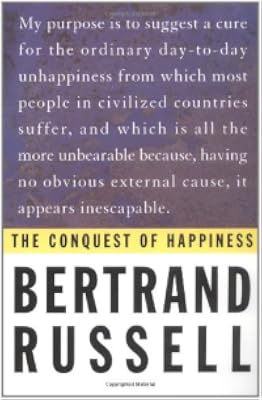
The Conquest of Happiness
by Bertrand Russell
On This Page
Description
This metaphysical self-help classic instills happiness within and urges individuals to pursue a content life without sin, boredom, or contempt. Written decades ago with post-war depression in mind, this text has transcended time and continues to give applicable advice for modern-day individuals.Tags
Recommendations






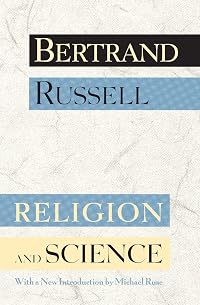
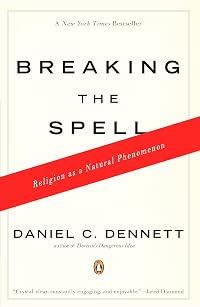








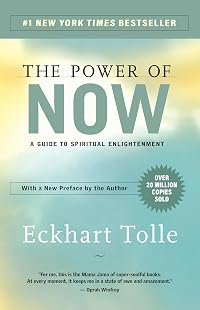





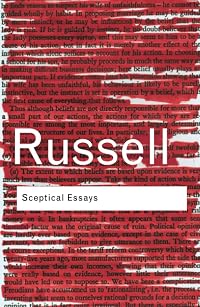



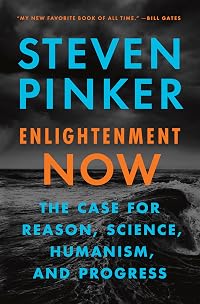
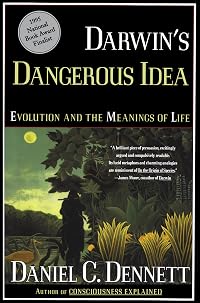
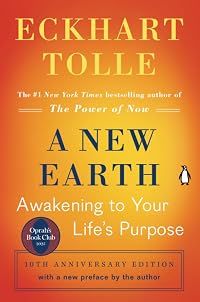



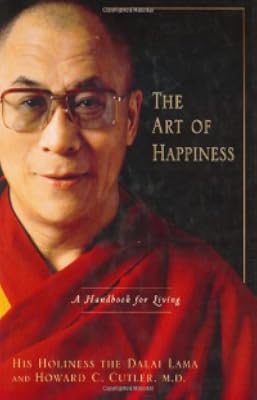





Member Recommendations

Member Reviews
I had my doubts: how can a privileged white, male philosopher tell me, a modern-day female minority about the conquest of happiness via a book that was written before my dad was born? How could we possibly have anything in common? Color me surprised. It's striking how relevant his writing is, to our society today.
I started reading this book after a stressful year in my life where I got too caught up with feelings of anxiety and lack of achievement despite working hard most days. I will not go through the gory details because I doubt they will be relatable or useful to anyone, but nothing that I did or read during that year helped till this book arrived. I needed a "why", and this book gave me an answer to that, and to "how".
Keep in mind show more that this book is not going to be helpful to anyone who suffers from real tragedy or grief, it's simply meant to be used as a framework to understanding why you are unhappy despite having a semi-comfortable life. Which I think applies to most people who are capable of reading for leisure. Russell starts out with declaring that most of your unhappiness stems from a preoccupation with yourself and a lack of genuine interest with the external objects. The book is divided into two main parts: Causes of unhappiness, and causes of happiness. I found the first part to be most insightful because I suffered from every, single, cause, that he mentioned, to some degree.
CAUSES OF UNHAPPINESS
1. Byronic Unhappiness: I frequently attributed some of my sorrows to how devastatingly bad and evil the world can be.
2. Competition: Competitive success is too dearly purchased if you sacrifice all other ingredients to happiness in order to obtain it. It's also damaging in the sense that success should not be represented as the purpose of life, since after obtaining it, you're bound to fall prey to boredom and listlessness because you do not know what to do with it... so you occupy yourself with making more success. It's a harmful cycle.
3. Boredom and Excitement: It's true that we are less bored than our ancestors were, but we are more terrified of being bored. A life full of excitement is not to be desired since it is exhausting and a certain amount of boredom and inactivity is required in order for you to be able to achieve the important things in your life. No great achievement is possible without persistent work. "A certain power of enduring boredom is essential to a happy life".
4. Fatigue: Probably my favorite chapter in the book. I highlighted all of it.
5. Envy.
6. The Sense of Sin: Speaks about what it really means to have your conscience prick you.
7. Persecution Mania: It's very easy to fall prey to this mania in a world where you see people getting ahead not based on merit alone, and when you are too preoccupied with yourself.
8. Fear of Public Opinion: "One should as a rule respect public opinion in so far as is necessary to avoid starvation and keep out prison, but anything that goes beyond this is voluntary submission to an unnecessary tyranny." I found this chapter incredibly insightful.
I cannot believe how underrated this book is. I mean, it is true, that it's speckled with classist remarks and an abundance of gender stereotypes/roles; but it was the 1930's... it's quite remarkable - and depressing - how close it is Saudi Arabia's 2017. But, please, do not dismiss this book because of it.
Recommended. show less
I started reading this book after a stressful year in my life where I got too caught up with feelings of anxiety and lack of achievement despite working hard most days. I will not go through the gory details because I doubt they will be relatable or useful to anyone, but nothing that I did or read during that year helped till this book arrived. I needed a "why", and this book gave me an answer to that, and to "how".
Keep in mind show more that this book is not going to be helpful to anyone who suffers from real tragedy or grief, it's simply meant to be used as a framework to understanding why you are unhappy despite having a semi-comfortable life. Which I think applies to most people who are capable of reading for leisure. Russell starts out with declaring that most of your unhappiness stems from a preoccupation with yourself and a lack of genuine interest with the external objects. The book is divided into two main parts: Causes of unhappiness, and causes of happiness. I found the first part to be most insightful because I suffered from every, single, cause, that he mentioned, to some degree.
CAUSES OF UNHAPPINESS
1. Byronic Unhappiness: I frequently attributed some of my sorrows to how devastatingly bad and evil the world can be.
2. Competition: Competitive success is too dearly purchased if you sacrifice all other ingredients to happiness in order to obtain it. It's also damaging in the sense that success should not be represented as the purpose of life, since after obtaining it, you're bound to fall prey to boredom and listlessness because you do not know what to do with it... so you occupy yourself with making more success. It's a harmful cycle.
3. Boredom and Excitement: It's true that we are less bored than our ancestors were, but we are more terrified of being bored. A life full of excitement is not to be desired since it is exhausting and a certain amount of boredom and inactivity is required in order for you to be able to achieve the important things in your life. No great achievement is possible without persistent work. "A certain power of enduring boredom is essential to a happy life".
4. Fatigue: Probably my favorite chapter in the book. I highlighted all of it.
5. Envy.
6. The Sense of Sin: Speaks about what it really means to have your conscience prick you.
7. Persecution Mania: It's very easy to fall prey to this mania in a world where you see people getting ahead not based on merit alone, and when you are too preoccupied with yourself.
8. Fear of Public Opinion: "One should as a rule respect public opinion in so far as is necessary to avoid starvation and keep out prison, but anything that goes beyond this is voluntary submission to an unnecessary tyranny." I found this chapter incredibly insightful.
I cannot believe how underrated this book is. I mean, it is true, that it's speckled with classist remarks and an abundance of gender stereotypes/roles; but it was the 1930's... it's quite remarkable - and depressing - how close it is Saudi Arabia's 2017. But, please, do not dismiss this book because of it.
Recommended. show less
My introduction to Mr. Russell, and I will be reading more of his work. True to its title, Russell's book is a guide to the perplexed who ask, "Why can't I be happy?" Divided into two sections - firstly, why people who are unhappy are unhappy, and secondly, why people who are happy are. The former is stronger than the latter. Mainly common sense, but oh how difficult to change the habits which lead to unhappiness! Readers should also note that this work was originally written in the late 1920s (copyright date 1930), and Russell was definitely a man of his time, with comments about race (he spends several pages at one point discussing the declining birth rate among "the white races" with it clearly being seen by him as a problem) and show more gender roles which would be shocking to read if not seen in context of the time. Despite these shortcomings, Russell has something worthwhile to say here, and I would recommend it to anyone, with the caveat that you may want to hurl the book across the room at times. show less
In The Conquest of Happiness Bertrand Russell proves better at speculating about causes of unhappiness than at providing prescriptions to achieve the conquest (strange word) of happiness. Russell had one of those Victorian upbringings famous for under nourishing one’s instinctual well-being, and what happiness he achieved may have needed a triumphal psychology. But “cultivation” of happiness through decisions and actions better expresses what he’s after: Happiness is not a monolith out there you cause to tumble at your feet; you raise it within. Russell’s task is to diagnose how Victorian morality can impede pleasure and how any age’s commercialism potentially fatigues and diminishes the vital self. He then advises how not show more to be their victim.
Interesting observations appear throughout but they aren’t enough, I think, to fulfill the promise made by the book’s title. It says something that the short epigraph from Whitman’s “Song of Myself” may be the most memorable thing here.* Next best is Russell’s argument that happiness is likeliest found when a person is not wholly preoccupied by his own self, while still taking care and time to discover his deepest impulses and allow an independent personality to flourish that’s consonant with them. It is for those puzzled by that prescription, and who are open to a rational man’s advice, that the book has its greatest value.
Unfortunately, there is an excess of not well-supported pronouncements by the happy author, pronouncements which are true because . . . why? Because he has said them? This disinclination to substantiate disputable assertions ill befits a man aware of the virtues of weighing evidence and not just saying stuff. Let’s call his book My Claims about Happiness. After all, just saying stuff is a privilege restricted to book reviewers (e.g., me) and politicians and sports columnists and such.
To sum up, The Conquest of Happiness falls short despite that there is in it much that’s sensible. More could have been done here to convince us. Perhaps Russell couldn’t do it. Or could not care to.
* In the Liveright paperback reset and reissued in 1996, the epigraph has a misspelling. In “the mania of owing,” “owing” should be “owning.” Important difference! show less
Interesting observations appear throughout but they aren’t enough, I think, to fulfill the promise made by the book’s title. It says something that the short epigraph from Whitman’s “Song of Myself” may be the most memorable thing here.* Next best is Russell’s argument that happiness is likeliest found when a person is not wholly preoccupied by his own self, while still taking care and time to discover his deepest impulses and allow an independent personality to flourish that’s consonant with them. It is for those puzzled by that prescription, and who are open to a rational man’s advice, that the book has its greatest value.
Unfortunately, there is an excess of not well-supported pronouncements by the happy author, pronouncements which are true because . . . why? Because he has said them? This disinclination to substantiate disputable assertions ill befits a man aware of the virtues of weighing evidence and not just saying stuff. Let’s call his book My Claims about Happiness. After all, just saying stuff is a privilege restricted to book reviewers (e.g., me) and politicians and sports columnists and such.
To sum up, The Conquest of Happiness falls short despite that there is in it much that’s sensible. More could have been done here to convince us. Perhaps Russell couldn’t do it. Or could not care to.
* In the Liveright paperback reset and reissued in 1996, the epigraph has a misspelling. In “the mania of owing,” “owing” should be “owning.” Important difference! show less
I'd never read any Bertrand Russell, so when I found this book in my boyfirends' stash and asked him what he thought and he said, "AMAZING!" I thought I would take it for a whirl. I was not disappointed. In this book, Russell tackles the problem every day unhappiness. I like the fact that he put a disclaimer on the scope of his work. He recognized healthily, that there are times in life when one should be unhappy such during a tragic loss or illness. However, Russell methodically, rationally describes causes of garden variety unhappiness among moderns humans. The chief of those causes, according to Russell, is a narcissistic preoccupation with one's self. I don't think Russell is referring here to the ability to self-reflect. I think show more he's talking about preoccupation with one's inner moods to the preclusion of external occupations. And I agree with him. Happiness is a mix of knowing one's self and maintaining a healthy interest in people and things external to one's own psyche. While I don't think necessarily that getting a hobby or studying is a cure all, I do believe that if one can find an interest that takes up some of the mental space spent on ruminating that one can, in effect, forget to be unhappy.
Of course, Russell doesn't frame finding happiness as a formula. He spends several chapters highlighting causes of unhappiness and suggesting remedies. Of particular note is Russell's idea that we create much of our own unhappiness by adhering to strict, idealistic moral codes that are rooted in outdated assumptions. We fail to live up to unattainable standards and then compensate with inner thought flagellations that do little to improve our behavior. I love the idea of examining morals throughout one's life and even though it can be difficult to disentangle from dogmatic thinking, I believe Russell makes a good case for doing so. show less
Of course, Russell doesn't frame finding happiness as a formula. He spends several chapters highlighting causes of unhappiness and suggesting remedies. Of particular note is Russell's idea that we create much of our own unhappiness by adhering to strict, idealistic moral codes that are rooted in outdated assumptions. We fail to live up to unattainable standards and then compensate with inner thought flagellations that do little to improve our behavior. I love the idea of examining morals throughout one's life and even though it can be difficult to disentangle from dogmatic thinking, I believe Russell makes a good case for doing so. show less
I love how Russell helped me learn new and valuable ways of thinking about many important things in life. He also validated many of my views regarding human nature gained in my many years of work as a psychotherapist. I highly recommend this book in order to truly gain practical tips on increasing happiness in life.
Russell is through and through a rationalist. In The Conquest of Happiness, Russell employs the reductionist approach of reasoning from first principles. He proposes solutions for freeing oneself from unhappiness and attaining happiness. Standing on the shoulders of giants who've ventured to talk publicly about social problems they haven't spent much time thinking about (Einstein, my grandma, Richard Dawkins) and being well-received because of their success in other fields (relativity, pancakes, nothing at all) Bertrand Russell got his attempt at conquering happiness published.
Russell, over 50 by the time he wrote this book, relies too heavily on personal experience and sometimes unconscious prejudice (most notably in his examples with show more women) to give suggest common-sense one-word solutions to problems that are more complicated than he assumes. The book begins with a promise of practical methods to rid the average man of the curse of unhappiness, with a definitive anti-establishment tone towards the intelligentsia of the day. It quickly devolves into consistently boring examples which don't solve the bigger problem and a boringly consistent tone of delivery for the solutions to these examples.
He divides the causes both happiness and unhappiness into chapters, and divides those chapters further into cases, corner cases, and exceptions to the rule. Sounds like a fair enough approach to a problem like happiness, right?
...right?
1. The cases and examples are not exhaustive and sometimes too simple. Russell makes no attempt to hide this for it is assumed that all these cases are in service of proving a bigger point in the chapter. Unfortunately, the bigger point never comes. Also in most cases the remedies fix just the case and not the problem of happiness. This is more a critique of the epistemology of reductionism than it is of this book. Sometimes answers to the reduced problem donot simultaneously address the original problem, especially when problems lack inherent hierarchy of structure. Human emotion is a great example and unfortunately enough, it is precisely what Russell has chosen to battle for his "conquest".
2. He rarely REALLY gets behind anything he says, the hardest he pushes a point is "a wise man would do X" instead of "if you want happiness do X". This leaves the reader with a looming lack of confidence in the text, which is far from feeling of knowing absolute truth you'd expect from determinism and rationality-based approach as Russell's. This might explain the unexplainable dissatisfaction I felt finishing this book, like watching SNL and finding out the musical guest is Coldplay.
3. You can read the book, agree with everything, and still walk away learning nothing new.
Ofcourse one can argue, that this probably WAS Russell's point. That you already know everything you need to be happy, you just forget it time to time (especially when you need it) and that's why you need this book. But in that case, a two-page infographic pamphlet would've sufficed to communicate the points that Russell was making, instead of a 200-page book with a self-important title. The medium is the message, and in this case there's nothing new to learn from either.
This book was my introduction to Russell. Now the rest of his books, with their big questions and his even bigger name on them, seem to be calling out from their place in my bookshelf "I have a solution to some of the biggest problems of mankind, read me first" only to offer "common wisdom" digested in under 200 pages, with the tone of casual aloofness that only the guarantee of being taken seriously can bring. Or winning a Nobel prize. Hopefully, after a few more doses of the Russellian rationalist medicine™, I will stand a changed man. But I can say with certainty the contents of my review for this book will not.
Highlight chapters: Byronic Unhappiness, Zest (can be read independently) show less
Russell, over 50 by the time he wrote this book, relies too heavily on personal experience and sometimes unconscious prejudice (most notably in his examples with show more women) to give suggest common-sense one-word solutions to problems that are more complicated than he assumes. The book begins with a promise of practical methods to rid the average man of the curse of unhappiness, with a definitive anti-establishment tone towards the intelligentsia of the day. It quickly devolves into consistently boring examples which don't solve the bigger problem and a boringly consistent tone of delivery for the solutions to these examples.
He divides the causes both happiness and unhappiness into chapters, and divides those chapters further into cases, corner cases, and exceptions to the rule. Sounds like a fair enough approach to a problem like happiness, right?
...right?
1. The cases and examples are not exhaustive and sometimes too simple. Russell makes no attempt to hide this for it is assumed that all these cases are in service of proving a bigger point in the chapter. Unfortunately, the bigger point never comes. Also in most cases the remedies fix just the case and not the problem of happiness. This is more a critique of the epistemology of reductionism than it is of this book. Sometimes answers to the reduced problem donot simultaneously address the original problem, especially when problems lack inherent hierarchy of structure. Human emotion is a great example and unfortunately enough, it is precisely what Russell has chosen to battle for his "conquest".
2. He rarely REALLY gets behind anything he says, the hardest he pushes a point is "a wise man would do X" instead of "if you want happiness do X". This leaves the reader with a looming lack of confidence in the text, which is far from feeling of knowing absolute truth you'd expect from determinism and rationality-based approach as Russell's. This might explain the unexplainable dissatisfaction I felt finishing this book, like watching SNL and finding out the musical guest is Coldplay.
3. You can read the book, agree with everything, and still walk away learning nothing new.
Ofcourse one can argue, that this probably WAS Russell's point. That you already know everything you need to be happy, you just forget it time to time (especially when you need it) and that's why you need this book. But in that case, a two-page infographic pamphlet would've sufficed to communicate the points that Russell was making, instead of a 200-page book with a self-important title. The medium is the message, and in this case there's nothing new to learn from either.
This book was my introduction to Russell. Now the rest of his books, with their big questions and his even bigger name on them, seem to be calling out from their place in my bookshelf "I have a solution to some of the biggest problems of mankind, read me first" only to offer "common wisdom" digested in under 200 pages, with the tone of casual aloofness that only the guarantee of being taken seriously can bring. Or winning a Nobel prize. Hopefully, after a few more doses of the Russellian rationalist medicine™, I will stand a changed man. But I can say with certainty the contents of my review for this book will not.
Highlight chapters: Byronic Unhappiness, Zest (can be read independently) show less
Bertrand Russell has always been one of the most fascinating philosophers to me, and this is such an excellent piece of work by him. Sure, it is dated, and has a lot of genderisms and society talk and even underlying racism, but its pretty easy to pack away and say 'product of its time' and say its the old British style. There is a charm to his old folksy / British ways of writing things and sayings that underpins the racist sounding terms or the male-centric nature of things. I also imagine that if Bertrand Russell was alive today (2020) and writing, his style would be much different, and more inline with our cultural norms of today.
Russell certainly depicts people in a certain way in this. Men are X and women are Y. Norms are Z and A. show more There isn't a lot of wiggle room in his thinking in this volume. His comments on what makes people anxious or upset or unhappy are because of these symptoms - B through G - and thats all there is to it. Some might label this as 'narrow-minded' which might be apt, but I think its more a product of how society was then, what the norms were, and his attempts at doing more psychology than philosophy in this volume.
He talks mainly of what leads to unhappiness, primarily through mental fatigues and the such. He discusses what one can do to KEEP happiness or CREATE happiness. Mental fatigue, anxiety, etc is pretty much the root of the evil in his opinion; and that kind of leads me to say this is a far more psychological outlook at happiness than a philosophical one. This isn't a complaint or a problem, just more or less my commentary and notes on this piece of work.
I think there is very much a level of 'your mileage may vary' on this volume. Some might get a lot of out of it, some might not get much at all. I think men might find it more interesting than women, as his depictions of women are ...rather Victorian... "housewife" type ideas of women. (And remember, Russell was a women's rights activist). I do think, no matter what, this is something anyone looking into happiness, or the 'right life' or 'living well' should read. show less
Russell certainly depicts people in a certain way in this. Men are X and women are Y. Norms are Z and A. show more There isn't a lot of wiggle room in his thinking in this volume. His comments on what makes people anxious or upset or unhappy are because of these symptoms - B through G - and thats all there is to it. Some might label this as 'narrow-minded' which might be apt, but I think its more a product of how society was then, what the norms were, and his attempts at doing more psychology than philosophy in this volume.
He talks mainly of what leads to unhappiness, primarily through mental fatigues and the such. He discusses what one can do to KEEP happiness or CREATE happiness. Mental fatigue, anxiety, etc is pretty much the root of the evil in his opinion; and that kind of leads me to say this is a far more psychological outlook at happiness than a philosophical one. This isn't a complaint or a problem, just more or less my commentary and notes on this piece of work.
I think there is very much a level of 'your mileage may vary' on this volume. Some might get a lot of out of it, some might not get much at all. I think men might find it more interesting than women, as his depictions of women are ...rather Victorian... "housewife" type ideas of women. (And remember, Russell was a women's rights activist). I do think, no matter what, this is something anyone looking into happiness, or the 'right life' or 'living well' should read. show less
Members
- Recently Added By
Lists

The Works of Bertrand Russell
62 works; 1 member

Filosofía - Clásicos
217 works; 1 member

The Joe Rogan Experience Library
254 works; 3 members
Author Information

431+ Works 39,547 Members
Bertrand Arthur William Russell (1872-1970) was a British philosopher, logician, essayist and social critic. He was best known for his work in mathematical logic and analytic philosophy. Together with G.E. Moore, Russell is generally recognized as one of the main founders of modern analytic philosophy. Together with Kurt Gödel, he is regularly show more credited with being one of the most important logicians of the twentieth century. Over the course of a long career, Russell also made contributions to a broad range of subjects, including the history of ideas, ethics, political and educational theory, and religious studies. General readers have benefited from his many popular writings on a wide variety of topics. After a life marked by controversy--including dismissals from both Trinity College, Cambridge, and City College, New York--Russell was awarded the Order of Merit in 1949 and the Nobel Prize for Literature in 1950. Noted also for his many spirited anti-nuclear protests and for his campaign against western involvement in the Vietnam War, Russell remained a prominent public figure until his death at the age of 97. (Bowker Author Biography) show less
Some Editions
Awards and Honors
Notable Lists
Series
Belongs to Publisher Series
Common Knowledge
- Canonical title
- The Conquest of Happiness
- Original title
- The Conquest of Happiness
- Original publication date
- 1930
- First words
- PREFACE -- THIS BOOK is not addressed to highbrows, or to those who regard a practical problem as merely something to be talked about. No profound philosophy or deep erudition will be found in the following pages. I have aim... (show all)ed only at putting together some remarks which are inspired by what I hope is common sense. All that I claim for the recipes offered to the reader is that they are such as are confirmed by my own experience and observation, and that they have increased my own happiness whenever I have acted in accordance with them.
- Quotations
- All our affections are at the mercy of death, which may strike down those we love at any moment. It is therefore necessary that our lives should not have that narrow intensity which puts the whole meaning and purpose of our l... (show all)ife at the mercy of accident.
- Last words
- (Click to show. Warning: May contain spoilers.)The happy man is the man who does not suffer from either of these failures of unity, whose personality is neither divided against itself nor pitted against the world. Such a man feels himself a citizen of the universe, enjoying freely the spectacle that it offers and the joys that it affords, untroubled by the thought of death because he feels himself not really separate from those who will come after him. It is in such profound instinctive union with the stream of life that the greatest joy is to be found. -- THE END
- Original language
- English
Classifications
Statistics
- Members
- 2,068
- Popularity
- 10,050
- Reviews
- 24
- Rating
- (3.85)
- Languages
- 17 — Chinese, Danish, Dutch, English, Finnish, French, German, Hebrew, Italian, Japanese, Korean, Portuguese, Romanian, Serbian, Spanish, Swedish, Turkish
- Media
- Paper, Audiobook, Ebook
- ISBNs
- 71
- ASINs
- 43