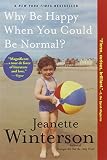
Why Be Happy When You Could Be Normal?
by Jeanette Winterson
On This Page
Description
This memoir is a tough-minded search for belonging, for love, an identity, a home, and a mother by the author of "Oranges Are Not the Only Fruit"--winner of the Whitbread First Novel award and the inspiration behind the award-winning BBC television adaptation "Oranges."Tags
Recommendations
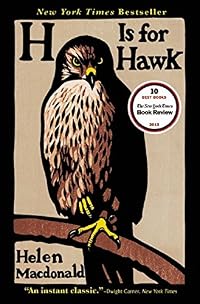
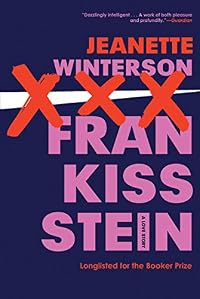
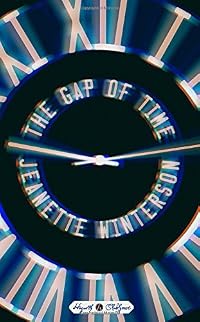
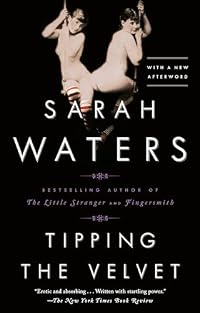

Member Recommendations
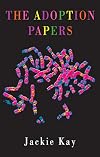
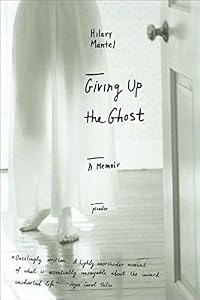
thorold Scottish poet vs. Lancashire novelist in a race to discover their biological parents...
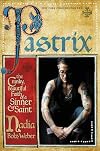
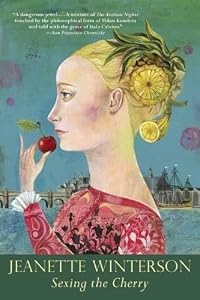
akblanchard Both writers survive fundamentalist childhoods and difficult young adulthoods to attain a measure of serenity in middle age.
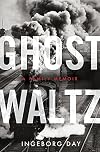
sparemethecensor Different subject matter but similar nonlinear styles and reflective prose.
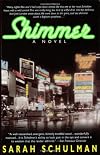
KayCliff Both books feature a lonely, gay child growing up, finding salvation in books.
Member Reviews
I find it infinitely easier to write about books that I have an intellectual response to, as opposed to those which produce a largely emotional response. ‘Why Be Happy When You Could Be Normal?’ is a memoir of painful honesty and emotional rawness. Winterson uses her formidable writing talents to recount her harrowing upbringing and subsequent search for her biological mother. The writing is beautiful and never tries to simplify the complexity of her feelings. This is thus a powerful and upsetting book to read, as the reader cannot help but care for and empathise with Winterson. I think she was incredibly brave to write it.
Jeanette Winterson is the author of several novels, including Oranges are not the Only Fruit, which brought her recognition and fame, especially in the UK. Oranges was semi-autobiographical; this memoir is the real story of her unconventional upbringing. The adopted daughter of a domineering, sexually repressed, fanatically religious mother, Jeanette was subject to emotional and physical abuse until she left home at sixteen. Through a near miracle she earned a place at Oxford and was able to realize her dream of becoming a writer. But while she appeared outwardly successful, the scars of abuse had not even begun to heal. Convinced she had never been loved and was unable to love others, she became estranged from her parents and found it show more difficult to be in relationship with others.
Jeanette’s journey through these trials is fascinating and turbulent. It took me a while to become
emotionally invested in her story, but I got there, and when she began searching for her birth mother, I admired her tenacity and was reminded of a quote early in the book:
I have noticed that doing the sensible thing is only a good idea when the decision is quite small. For the life-changing things, you must risk it.
I admire Jeanette Winterson for never doing “the sensible thing.” show less
Jeanette’s journey through these trials is fascinating and turbulent. It took me a while to become
emotionally invested in her story, but I got there, and when she began searching for her birth mother, I admired her tenacity and was reminded of a quote early in the book:
I have noticed that doing the sensible thing is only a good idea when the decision is quite small. For the life-changing things, you must risk it.
I admire Jeanette Winterson for never doing “the sensible thing.” show less
Winterson's autobiography details her childhood, growing up with her deeply religious and deeply abusive adoptive parents in northern England. Winterson spends her child wondering about her birth mother, a woman Mrs. Winterson regularly denigrates for her sexual activity. Jeanette's adopted mother dishes out all manner of abuse; she locks Jeanette out of the house overnight, and sometimes shuts her in the coal store.
This book offers a history of an undeniably unusual and sad childhood. It is also a story of a successful woman trying to find her place in the world, to learn more about her origins, and about how familial love actually works. Winterson spent much of her childhood trying to hide the meaningful elements of her life from her show more mother: her girlfriends, her books, her learning.
This is one of the better childhood memoirs I've read, and it certainly is better written than many child abuse memoirs, presumably because the author is an experienced and talented professional. Winterson has already written an autobiographical novel about her experiences, so this is a second visit to a familiar subject. The narrative is much more accessible than I expected a prize-winning author's autobiography to be. It is at the same time engaging and horrifying. show less
This book offers a history of an undeniably unusual and sad childhood. It is also a story of a successful woman trying to find her place in the world, to learn more about her origins, and about how familial love actually works. Winterson spent much of her childhood trying to hide the meaningful elements of her life from her show more mother: her girlfriends, her books, her learning.
This is one of the better childhood memoirs I've read, and it certainly is better written than many child abuse memoirs, presumably because the author is an experienced and talented professional. Winterson has already written an autobiographical novel about her experiences, so this is a second visit to a familiar subject. The narrative is much more accessible than I expected a prize-winning author's autobiography to be. It is at the same time engaging and horrifying. show less
How can a memoir be so intensely heartbreaking and uplifting at the same time? And also poignantly funny and full of extraordinary language? Too much in this book resonates with me – I could read it over and over again. A little more breathtakingly honest than Oranges are not the only Fruit, if you can imagine that, it’s more to the story of adoption, abandonment and embracing of self as only she can tell it.
Beautifully written, engrossing, and suffused with a love of the saving power of literature.
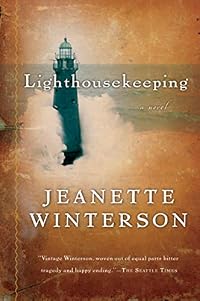
This is the truer, grittier, more analytical version of Oranges are Not the Only Fruit (my review HERE), with an update of Winterson's very recent attempts to trace her birth mother, and interspersed with thoughts on words, writing, literature and a dash of politics of family, class, feminism and sexuality. It is better if you are familiar with Oranges, but not essential. There also seem to be significant autobiographical aspects to Lighthousekeeping, as explained in my review HERE).
NOT "MISERY LIT"
When I read Oranges many years ago, it was before the vogue for "misery lit", a genre I have avoided. However, reading this, I realise that despite show more the erudition and humour, both books are perhaps in that category. Don't let that put you off. Much of Winterson's upbringing was awful: neglect, psychological bullying, deceit and most importantly, lack of love, and yet she comes through it all the stronger and even when she has a major breakdown in later life, still realises that her pain has made her who she is.
PLOT SUMMARY
The story is now well-known, but to recap, Jeanette was adopted by a poor, middle aged, dysfunctional couple who belonged to a Pentecostal church. Most of the time, they all act as if their quirks and cruelty are entirely normal. She escaped into forbidden books and grammar school (an academically-focused school), but fell foul of her family when she fell in love with a girl.
PARENTS = MRS WINTERSON and DAD
Her mother is almost entirely referred to as "Mrs Winterson" (just occasionally "my mum", but never just "Mum"), whereas her father is "Dad" and mostly in the background until old age. Mrs W is the far more vividly drawn character:
"a flamboyant depressive... I think Mrs Winterson was afraid of happiness”.
She was also hypocritical (a supposedly secret smoker who neither believed not practised all the teachings of her chosen church) and who had unexplained disappearances, whereas Dad is just weak, or perhaps too peaceful to stand up to her, who "hated him - not in an angry way, but with a toxic submissive resentment".
“My father was unhappy. My mother was disordered. We were like refugees in our own life.”
“There was a barrier between us, transparent but real.”
“She was her own Enigma code and me and my dad were not Bletchley Park.”
And specifically about Mrs W:
“Our conversations were like two people using phrase books to say things neither understands.”
But despite all the pain, as a middle aged woman, Winterson notes:
“I hate Ann criticising Mrs Winterson. She was a monster but she was my monster.”
ABANDONMENT
The undercurrent of the book and Winterson’s life is abandonment: given up by her birth mother, unloved and abused by her adopted mother, and abandoned by her first lover as soon as they were caught. In her troublesome teens, she wonders:
“Were we endlessly ransacking the house, the two of us, looking for evidence of each other? I think we were – she, because I was fatally unknown to her, and she was afraid of me. Me, because I had no idea what was missing but felt the missing-ness of the missing.”
As an adult:
“I have never felt wanted… And I have loved most extravagantly where my love could not be returned… but I did not know how to love.”
LOVE OF LANGUAGE AND LITERATURE
"Books don’t make a home – they are one, in the sense that just as you do with a door, you open a book, and you go inside. Inside there is a different kind of time and a different kind of space.”
One of the aspects of this book that I most enjoyed was Winterson's feel and passion for language and literature, enhanced by the lengths she had to go to to enjoy them.
"She [Mrs W] knew full well that writers were sex-crazed bohemians who broke the rules and didn't go out to work. Books had been forbidden in our house."
The perverse exception was murder mysteries:
"The trouble with a book is that you never know what's in it until it's too late."
But for Winterson:
literature "isn't a hiding place. It is a finding place... She was right. A book is a magic carpet that flies you off elsewhere... Do you come back?"
She was not a high flier at school, and yet:
“I knew how words worked in the way that some boys knew how engines worked.”
The best thing about Oxford University was:
“Its seriousness of purpose and the unquestioned belief that the life of the mind was at the heart of civilised life… It was like living in a library and that was where I had always been happiest.”
Writing is even more powerful, and there are two kinds: "the one you write and the one that writes you. The one that writes you is dangerous." The other side of that coin is that at her lowest point, which is brutally and bravely documented, “language left me”. Terrifying for anyone, let alone a writer. And not for the first time, it is poetry that rescues her, “All that poetry I learned when I had to keep my library inside me now offered a rescue rope… If poetry was a rope, then the books themselves were rafts. At my most precarious I balanced on a book, and the books rafted me over the tides of feelings that left me soaked and shattered”. “The poem finds the word that finds the feeling.”
Winterson also analyses the narrative of her own life, "Adopted children are self-invented... adoption drops you into the story after it has started". Regarding Mrs W's reaction to Oranges, "What you leave out says as much as those things you include... Mrs W objected to what I had put in, but it seemed to me that what I had left out was the story's silent twin." And both twins change when she traces her birth mother. Until then, “My whole identity was built around being an orphan – and an only child”. The meeting is visceral, traumatic, comic, but ultimately somewhat unresolved.
A couple of other wonderful books that have this theme in different ways:
Stoner, my review HERE
Cold Mountain, my review HERE
ANALYSING HERSELF
“I would rather be this me… than the me I might have become without books, without education.”
That education comes to the fore towards the end, in a short chapter called “The Wound” where she compares lots of myths about wounds (literal and metaphorical), adoption, mistaken identity etc. It’s a powerful and erudite exploration of some of the themes in the book, but doesn’t quite fit in style.
There is understandable bitterness towards Mrs W, but despite rejecting the church, she is also grateful to it in some ways. Belief in God helped her when she was small (“God made sense of uncertainty”) and she saw many working class people "living a deeper, more thoughtful life than would have been possible without the church... Bible study worked their brains". An unintended consequence being that familiarity with the 1611 Bible and daily use of thee and thou in their own speech, made Shakespeare was relatively accessible.
She documents the contradictions of her church (some unpleasant, some merely comical) with a degree of fondness. When homeless and living in a car, she observes, “I was lucky in one way because our church had always emphasised how important it is to concentrate on good things”! In a similar vein, "The one good thing about being shut in a coal hole is that it prompts reflection"! I’m not sure that would be benefit enough to appease a social worker.
PURSUIT OF HAPPINESS
Her life is about the pursuit of happiness, "life-long, and it is not goal-centred". She says that as a child, she always wanted to escape her life, as did Mrs W in a different way (every night she prayed "Lord, let me die"). However, she also says, “I don’t know anyone, including me, who felt trapped and hopeless”, albeit more in terms of church putting poverty into perspective.
Applying to Oxford was apparently not so much about escape but “because it was the most impossible thing I could do”. In working class areas of the north in the 1970s, men were still in charge, and women undervalued, “My world was full of strong able women who were ‘housewives’ and had to defer to their men”. The result of this strange and traumatic upbringing is that:
“The things that I regret in life are not errors of judgement but failures of feeling.”
TYPES OF ENDING
"When we write we offer the silence as much as the story. Words are the part of silence that can be spoken. Mrs Winterson would have preferred it if I had been silent."
It would be easy to summarise the book in the lines:
“She longed for me to be free and did everything she could to make sure it never happened.”
and:
"All she ever wanted was for me to go away. And when I did she never forgave me."
However, that would do it a disservice, because it is really far more about the necessity of love – understanding it and fully experiencing it.
Winterson herself categorises three types of ending: revenge, tragedy and forgiveness; this book contains all three. show less
This is the truer, grittier, more analytical version of Oranges are Not the Only Fruit (my review HERE), with an update of Winterson's very recent attempts to trace her birth mother, and interspersed with thoughts on words, writing, literature and a dash of politics of family, class, feminism and sexuality. It is better if you are familiar with Oranges, but not essential. There also seem to be significant autobiographical aspects to Lighthousekeeping, as explained in my review HERE).
NOT "MISERY LIT"
When I read Oranges many years ago, it was before the vogue for "misery lit", a genre I have avoided. However, reading this, I realise that despite show more the erudition and humour, both books are perhaps in that category. Don't let that put you off. Much of Winterson's upbringing was awful: neglect, psychological bullying, deceit and most importantly, lack of love, and yet she comes through it all the stronger and even when she has a major breakdown in later life, still realises that her pain has made her who she is.
PLOT SUMMARY
The story is now well-known, but to recap, Jeanette was adopted by a poor, middle aged, dysfunctional couple who belonged to a Pentecostal church. Most of the time, they all act as if their quirks and cruelty are entirely normal. She escaped into forbidden books and grammar school (an academically-focused school), but fell foul of her family when she fell in love with a girl.
PARENTS = MRS WINTERSON and DAD
Her mother is almost entirely referred to as "Mrs Winterson" (just occasionally "my mum", but never just "Mum"), whereas her father is "Dad" and mostly in the background until old age. Mrs W is the far more vividly drawn character:
"a flamboyant depressive... I think Mrs Winterson was afraid of happiness”.
She was also hypocritical (a supposedly secret smoker who neither believed not practised all the teachings of her chosen church) and who had unexplained disappearances, whereas Dad is just weak, or perhaps too peaceful to stand up to her, who "hated him - not in an angry way, but with a toxic submissive resentment".
“My father was unhappy. My mother was disordered. We were like refugees in our own life.”
“There was a barrier between us, transparent but real.”
“She was her own Enigma code and me and my dad were not Bletchley Park.”
And specifically about Mrs W:
“Our conversations were like two people using phrase books to say things neither understands.”
But despite all the pain, as a middle aged woman, Winterson notes:
“I hate Ann criticising Mrs Winterson. She was a monster but she was my monster.”
ABANDONMENT
The undercurrent of the book and Winterson’s life is abandonment: given up by her birth mother, unloved and abused by her adopted mother, and abandoned by her first lover as soon as they were caught. In her troublesome teens, she wonders:
“Were we endlessly ransacking the house, the two of us, looking for evidence of each other? I think we were – she, because I was fatally unknown to her, and she was afraid of me. Me, because I had no idea what was missing but felt the missing-ness of the missing.”
As an adult:
“I have never felt wanted… And I have loved most extravagantly where my love could not be returned… but I did not know how to love.”
LOVE OF LANGUAGE AND LITERATURE
"Books don’t make a home – they are one, in the sense that just as you do with a door, you open a book, and you go inside. Inside there is a different kind of time and a different kind of space.”
One of the aspects of this book that I most enjoyed was Winterson's feel and passion for language and literature, enhanced by the lengths she had to go to to enjoy them.
"She [Mrs W] knew full well that writers were sex-crazed bohemians who broke the rules and didn't go out to work. Books had been forbidden in our house."
The perverse exception was murder mysteries:
"The trouble with a book is that you never know what's in it until it's too late."
But for Winterson:
literature "isn't a hiding place. It is a finding place... She was right. A book is a magic carpet that flies you off elsewhere... Do you come back?"
She was not a high flier at school, and yet:
“I knew how words worked in the way that some boys knew how engines worked.”
The best thing about Oxford University was:
“Its seriousness of purpose and the unquestioned belief that the life of the mind was at the heart of civilised life… It was like living in a library and that was where I had always been happiest.”
Writing is even more powerful, and there are two kinds: "the one you write and the one that writes you. The one that writes you is dangerous." The other side of that coin is that at her lowest point, which is brutally and bravely documented, “language left me”. Terrifying for anyone, let alone a writer. And not for the first time, it is poetry that rescues her, “All that poetry I learned when I had to keep my library inside me now offered a rescue rope… If poetry was a rope, then the books themselves were rafts. At my most precarious I balanced on a book, and the books rafted me over the tides of feelings that left me soaked and shattered”. “The poem finds the word that finds the feeling.”
Winterson also analyses the narrative of her own life, "Adopted children are self-invented... adoption drops you into the story after it has started". Regarding Mrs W's reaction to Oranges, "What you leave out says as much as those things you include... Mrs W objected to what I had put in, but it seemed to me that what I had left out was the story's silent twin." And both twins change when she traces her birth mother. Until then, “My whole identity was built around being an orphan – and an only child”. The meeting is visceral, traumatic, comic, but ultimately somewhat unresolved.
A couple of other wonderful books that have this theme in different ways:
Stoner, my review HERE
Cold Mountain, my review HERE
ANALYSING HERSELF
“I would rather be this me… than the me I might have become without books, without education.”
That education comes to the fore towards the end, in a short chapter called “The Wound” where she compares lots of myths about wounds (literal and metaphorical), adoption, mistaken identity etc. It’s a powerful and erudite exploration of some of the themes in the book, but doesn’t quite fit in style.
There is understandable bitterness towards Mrs W, but despite rejecting the church, she is also grateful to it in some ways. Belief in God helped her when she was small (“God made sense of uncertainty”) and she saw many working class people "living a deeper, more thoughtful life than would have been possible without the church... Bible study worked their brains". An unintended consequence being that familiarity with the 1611 Bible and daily use of thee and thou in their own speech, made Shakespeare was relatively accessible.
She documents the contradictions of her church (some unpleasant, some merely comical) with a degree of fondness. When homeless and living in a car, she observes, “I was lucky in one way because our church had always emphasised how important it is to concentrate on good things”! In a similar vein, "The one good thing about being shut in a coal hole is that it prompts reflection"! I’m not sure that would be benefit enough to appease a social worker.
PURSUIT OF HAPPINESS
Her life is about the pursuit of happiness, "life-long, and it is not goal-centred". She says that as a child, she always wanted to escape her life, as did Mrs W in a different way (every night she prayed "Lord, let me die"). However, she also says, “I don’t know anyone, including me, who felt trapped and hopeless”, albeit more in terms of church putting poverty into perspective.
Applying to Oxford was apparently not so much about escape but “because it was the most impossible thing I could do”. In working class areas of the north in the 1970s, men were still in charge, and women undervalued, “My world was full of strong able women who were ‘housewives’ and had to defer to their men”. The result of this strange and traumatic upbringing is that:
“The things that I regret in life are not errors of judgement but failures of feeling.”
TYPES OF ENDING
"When we write we offer the silence as much as the story. Words are the part of silence that can be spoken. Mrs Winterson would have preferred it if I had been silent."
It would be easy to summarise the book in the lines:
“She longed for me to be free and did everything she could to make sure it never happened.”
and:
"All she ever wanted was for me to go away. And when I did she never forgave me."
However, that would do it a disservice, because it is really far more about the necessity of love – understanding it and fully experiencing it.
Winterson herself categorises three types of ending: revenge, tragedy and forgiveness; this book contains all three. show less
When I heard that Jeanette Winterson had revisited the childhood and youth she had depicted in her autobiographical debut novel, Oranges Aren’t the Only Fruit, in the form of a memoir, I wondered why. But my wife read it and assured me it was not a retread. One reason is apparent when she writes that she is often asked by readers of Oranges if her childhood was that bad. It wasn’t, she invariably answers: it was worse. I may never shake the image of the child locked in the coal bin singing “Cheer Up, Ye Saints of God” at the top of her lungs.
The other reason is that the account of Winterson’s life until she leaves home at sixteen is accompanied by a sequel, in which she goes mad, attempts to end her life, then tracks down and show more meets her birth mother. I appreciated the honesty with which Winterson observed and reported her meetings with Ann. There is the recognition of physical and mental similarities, as well as Ann’s assurance, “You were wanted.” Yet this is no treacly instant family moment, beloved of genealogy-based television shows; Winterson also records her explosion at their third meeting, as she boils over with rage over the abandonment that is the deepest level of her psyche.
One woman birthed her, another raised her, and the latter, the imposing figure for whom “life was a pre-death experience,” formed Winterson. The unloved child discovered words as her refuge, books as doors to other worlds. She read her way through the local library, English Literature, A-Z. A recurrent theme is how institutions like the library and the Mechanics’ Institute, where working-class men took evening courses for improvement, sustained a community in the small town she grew up in. She is unsparing in her criticism of how the hollowing of those institutions has impoverished life.
Another institution that formed her was the Pentecostal church she attended with Mr. and Mrs. Winterson. It was another thing she left behind when she left home, but she also offers a positive description of her own baptism by immersion when she was thirteen, and she describes many of the ways the congregation added to a sense of community.
Jeanette Winterson can be unsparing both toward herself and others, but this book’s overall tone is life-affirming. show less
The other reason is that the account of Winterson’s life until she leaves home at sixteen is accompanied by a sequel, in which she goes mad, attempts to end her life, then tracks down and show more meets her birth mother. I appreciated the honesty with which Winterson observed and reported her meetings with Ann. There is the recognition of physical and mental similarities, as well as Ann’s assurance, “You were wanted.” Yet this is no treacly instant family moment, beloved of genealogy-based television shows; Winterson also records her explosion at their third meeting, as she boils over with rage over the abandonment that is the deepest level of her psyche.
One woman birthed her, another raised her, and the latter, the imposing figure for whom “life was a pre-death experience,” formed Winterson. The unloved child discovered words as her refuge, books as doors to other worlds. She read her way through the local library, English Literature, A-Z. A recurrent theme is how institutions like the library and the Mechanics’ Institute, where working-class men took evening courses for improvement, sustained a community in the small town she grew up in. She is unsparing in her criticism of how the hollowing of those institutions has impoverished life.
Another institution that formed her was the Pentecostal church she attended with Mr. and Mrs. Winterson. It was another thing she left behind when she left home, but she also offers a positive description of her own baptism by immersion when she was thirteen, and she describes many of the ways the congregation added to a sense of community.
Jeanette Winterson can be unsparing both toward herself and others, but this book’s overall tone is life-affirming. show less
This book is a new addition to my most favorite books ever! I must have used about a half a tin of those little copper page markers, there were just so many poignant events and wonderful insights throughout this book. This is the story of Jeanette, whose adoptive mother was difficult and unloving, to say the least. Abusive comes to mind. And yet, Jeanette rises above it, buffered by a few key individuals and by her boundless love of books. Lest this scare any readers away, I did not find this to be a sad book. There are sad moments, but it is also, reflective, very funny, and so wise. The stories are unforgettable and I cannot wait to read more by this amazing author.
First, a taste of her sad childhood: "When she knew I was keeping a show more diary she said, 'I never kept secrets from my mother...but I am not your mother, am I?' And after that she never was. When I wanted to learn to play her piano she said, ' When you come back from school I will have sold it.' She had."
On a lighter note, here is one of Winterson's literary insights from Jack and the Beanstalk. "The bridge (the Beanstalk) between the two worlds is unpredictable and very surprising. And later, when the giant tries to climb after Jack, the beanstalk has to be chopped down pronto. This suggests to me that the pursuit of happiness, which we may as well call life, is full of surprising temporary elements -- we get somewhere we couldn't go otherwise and we profit from the trip, but we can't stay there, it isn't our world, and we shouldn't let that world come crashing down into the one we inhabit. The beanstalk has to be chopped down. But the large-scale riches from the 'other world' can be brought into ours, just as Jack makes off with the singing harp and the golden hen. Whatever we 'win' will accommodate itself to our size and form..."
And as to how Winterson writes, in a nonlinear form (which I loved!): Her mother discovered Jeanette's hidden trove of books and immediately suspected the worst: Satanism and pornography. She took all her books and threw them out the window into the backyard. Then she set them on fire while Jeanette watched.
"I watched them blaze and blaze and remember thinking how warm it was, how light, on the freezing Saturnian January night. And books have always been light and warmth to me.
"I had bound them all in plastic because they were precious. Now they were gone.
"In the morning there were stray bits of text all over the yard and in the alley. Burnt jigsaws of books. I collected some of the scraps.
"It is probably why I write as I do -- collecting the scraps, uncertain of continuous narrative. What does Eliot say? 'These fragments have I shored against my ruin...'"
From these ashes, a wonderful story and a great writer, one who appreciates how her bitter youth made her the woman she is today. Highly recommended. 5 stars. show less
First, a taste of her sad childhood: "When she knew I was keeping a show more diary she said, 'I never kept secrets from my mother...but I am not your mother, am I?' And after that she never was. When I wanted to learn to play her piano she said, ' When you come back from school I will have sold it.' She had."
On a lighter note, here is one of Winterson's literary insights from Jack and the Beanstalk. "The bridge (the Beanstalk) between the two worlds is unpredictable and very surprising. And later, when the giant tries to climb after Jack, the beanstalk has to be chopped down pronto. This suggests to me that the pursuit of happiness, which we may as well call life, is full of surprising temporary elements -- we get somewhere we couldn't go otherwise and we profit from the trip, but we can't stay there, it isn't our world, and we shouldn't let that world come crashing down into the one we inhabit. The beanstalk has to be chopped down. But the large-scale riches from the 'other world' can be brought into ours, just as Jack makes off with the singing harp and the golden hen. Whatever we 'win' will accommodate itself to our size and form..."
And as to how Winterson writes, in a nonlinear form (which I loved!): Her mother discovered Jeanette's hidden trove of books and immediately suspected the worst: Satanism and pornography. She took all her books and threw them out the window into the backyard. Then she set them on fire while Jeanette watched.
"I watched them blaze and blaze and remember thinking how warm it was, how light, on the freezing Saturnian January night. And books have always been light and warmth to me.
"I had bound them all in plastic because they were precious. Now they were gone.
"In the morning there were stray bits of text all over the yard and in the alley. Burnt jigsaws of books. I collected some of the scraps.
"It is probably why I write as I do -- collecting the scraps, uncertain of continuous narrative. What does Eliot say? 'These fragments have I shored against my ruin...'"
From these ashes, a wonderful story and a great writer, one who appreciates how her bitter youth made her the woman she is today. Highly recommended. 5 stars. show less
Members
- Recently Added By
Published Reviews
ThingScore 75
Where Winterson's debut, a tragic-comic tale of a young girl who is adopted by Pentecostal missionaries in Accrington, offered us a semi-fictionalised version of her childhood, her latest describes the reality. And what a hellish reality it was. Winterson's story is one of abandonment, loneliness, madness and defiance. It is both inspiring and appalling, its cruellest details only made show more digestible by the restrained elegance of Winterson's prose. show less
added by thorold
This is certainly the most moving book of Winterson's I have ever read, and it also feels like the most turbulent and the least controlled.
added by thorold
Lists

Best Lesbian Fiction (And Narrative Non-Fiction)
155 works; 36 members

Feminists' memoirs/autobiographies
38 works; 11 members

Best Autobiographies and Memoirs
370 works; 66 members

Best Biographies, Autobiographies and Memoirs
464 works; 156 members

Best family memoirs
28 works; 11 members

Favorite Memoirs
64 works; 12 members

The Guardian's 100 best books of the 21st century
100 works; 21 members

Top Five Books of 2013
1,564 works; 722 members

Dysfunctional Families
133 works; 7 members

Biographies: Women
112 works; 1 member

Memoirs by Writers
6 works; 1 member

Not the NYT list of top 100 21st century books
100 works; 6 members
list-to-share-test
1 work; 1 member
Club Read's Recommended Nonfiction Written by Women
618 works; 30 members

Mothers and Daughters
114 works; 11 members

Books Mentioned in the A+ Autostraddle Pop Up Discords Nov 2022 & Dec 2022
223 works; 3 members

Llibres que he llegit el 2021
54 works; 1 member

Books Read in 2013
1,629 works; 51 members

2013 Notable Books for Adults
26 works; 5 members

Books With Interesting Titles
173 works; 14 members

1001 Books You Must Read Before You Die
1,448 works; 1,132 members
Author Information

54+ Works 37,035 Members
Jeanette Winterson was born in Manchester, England in 1959 and graduated from St. Catherine's College, Oxford. Her book, Oranges Are Not the Only Fruit, is a semi-autobiographical account of her life as a child preacher (she wrote and gave sermons by the time she was eight years old). The book was the winner of the Whitbread Prize for best first show more fiction and was made into an award-winning TV movie. The Passion won the John Llewelyn Rhys Memorial Prize for best writer under thirty-five, and Sexing the Cherry won the American Academy of Arts and Letters' E. M. Forster Award. (Bowker Author Biography) Jeanette Winterson lives in London & the Cotswolds. (Publisher Provided) show less
Some Editions
Awards and Honors
Awards
Distinctions
Work Relationships
Is retold in
Common Knowledge
- Canonical title
- Why Be Happy When You Could Be Normal?
- Original title
- Why Be Happy When You Could Be Normal?
- Original publication date
- 2011
- People/Characters
- Jeanette Winterson; La Sra. Winterson (su madre)
- Important places
- Accrington, Lancashire, England, UK
- Dedication
- To my three mothers:
Constance Winterson
Ruth Rendell
Ann S - First words
- When my mother was angry with me, which was often, she said, 'The Devil led us to the wrong crib.'
- Quotations
- When love is unreliable and you are a child, you assume that it is the nature of love - its quality - to be unreliable. Children do not find fault with their parents until later. In the beginning the love you get is the love ... (show all)that sets.
Me he dado cuénta de que hacer lo más inteligente solo es una buena idea cuando se trata de decisiones pequeñas. Para las cosas que te cambian la vida hay que arriesgarse. - Last words
- (Click to show. Warning: May contain spoilers.)I have no idea what happens next.
- Original language
- English
- Canonical DDC/MDS
- 823.914
- Canonical LCC
- PR6073.I558
Classifications
Statistics
- Members
- 2,359
- Popularity
- 8,273
- Reviews
- 104
- Rating
- (4.06)
- Languages
- 10 — Catalan, Dutch, English, French, German, Hungarian, Italian, Spanish, Swedish, Turkish
- Media
- Paper, Audiobook, Ebook
- ISBNs
- 49
- UPCs
- 1
- ASINs
- 18