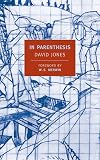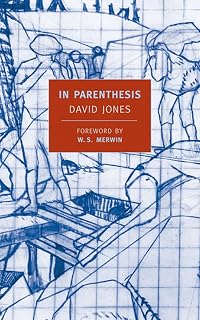
In Parenthesis
by David Jones
On This Page
Description
No poetry has touched readers' hearts more deeply than the soldier poets of the First World War. Published to commemorate the centenary of 1914, this stunning set of books, with specially commissioned covers by leading print makers, is an essential gathering of our most beloved war poets introduced by leading poets and biographers of our present day.'In Parenthesis was first published in London in 1937. I am proud to share the responsibility for that first publication. On reading the book in show more typescript I was deeply moved. I then regarded it, and still regard it, as a work of genius... Here is a book about the experience of one soldier in the war of 1914-18. It is also a book about War, and about many other things also, such as Roman Britain, the Arthurian Legend, and divers matters which are given association by the mind of the writer.' T.S. Eliot'This writing has to do with some things I saw, felt, and was part of ': with quiet modesty, David Jones begins a work that is among the most powerful imaginative efforts to grapple with the carnage of the First World War. Fusing poetry and prose, gutter talk and high music, wartime terror and ancient myth, Jones, who served as an infantryman on the Western Front, presents a picture at once panoramic and intimate of a world of interminable waiting and unforeseen death. And yet throughout he remains alert to the flashes of humanity that light up the wasteland of war.' W.S. Merwin show lessTags
Recommendations


















Member Reviews
‘In Parenthesis’ is an extended prose poem of great beauty, recounting a soldier and his company joining the front line of the 1915 Western Front. It is dense with allusions to the bible, Malory, Welsh mythology, and contemporary culture that are explained in part by a pleasantly readable set of author notes (‘...which I seem to have heard about somewhere’). I greatly approve of T.S. Eliot’s introduction, which states, ‘Those who read ‘In Parenthesis’ for the first time, need to know nothing more than this… Good commentaries can be very helpful: but to study even the best commentary on a work of literary art is likely to be a waste of time unless we have first read and been excited by the text commented on without show more understanding it’. (This is why I wish editions of literary classics did not include analysis before the text. Why would you read that first, without having had your own experience of the book? T.S. Eliot gets it.)
In any event, it would require very detailed commentary for me to unlock a fraction of this poem’s secrets, given my lack of grounding in the referenced legends (although I found [b:Le Morte D'Arthur|24518506|Le Morte D'Arthur (Illustrated)|Thomas Malory|https://images.gr-assets.com/books/1421371483s/24518506.jpg|1361856] very entertaining). It was nonetheless a powerful and evocative vision of the trenches and the men who fought in them. I was reminded of Zola’s [b:La Débâcle|28419|La Débâcle (Les Rougon-Macquart, #19)|Émile Zola|https://images.gr-assets.com/books/1167946518s/28419.jpg|3522286], which may not be poetry but is also a barely-fictionalised account of unimportant soldiers experiences in war. In both works, the troops are confused and demoralised by constant marching, bad provisions, and lack of confidence in their commanders. They rely on bonds between themselves to survive.
David Jones’ use of language is sometimes too advanced for my comprehension, however much of it is incredible. To pick an arbitrary example:
In any event, it would require very detailed commentary for me to unlock a fraction of this poem’s secrets, given my lack of grounding in the referenced legends (although I found [b:Le Morte D'Arthur|24518506|Le Morte D'Arthur (Illustrated)|Thomas Malory|https://images.gr-assets.com/books/1421371483s/24518506.jpg|1361856] very entertaining). It was nonetheless a powerful and evocative vision of the trenches and the men who fought in them. I was reminded of Zola’s [b:La Débâcle|28419|La Débâcle (Les Rougon-Macquart, #19)|Émile Zola|https://images.gr-assets.com/books/1167946518s/28419.jpg|3522286], which may not be poetry but is also a barely-fictionalised account of unimportant soldiers experiences in war. In both works, the troops are confused and demoralised by constant marching, bad provisions, and lack of confidence in their commanders. They rely on bonds between themselves to survive.
David Jones’ use of language is sometimes too advanced for my comprehension, however much of it is incredible. To pick an arbitrary example:
No man’s land whitened rigid: all its contours silver filigreed, as damascened. With the coming dark, ground-mist creeps back to regain the hollow places; across the the rare atmosphere you could hear foreign men cough, and stamp with foreign feet. Things seen precisely just now lost exactness. Biez wood became only a darker shape uncertainly expressed. Your eyes began to strain after escaping definitions. Whether that picket-iron moved forward or some other fell away, or after all is it an animate thing just there by the sap-head or only the slight frosted-sway of suspended wire.show less
A long way off a machine-gunner seemed as one tuning an instrument, who strikes the same note quickly, several times, and now a lower one, singly; while scene-shifters thud and scrape behind expectant curtaining; and impatient shuffling of the feet - in the stalls they take out watches with a nervous hand, they can hardly bear it.
Beautifully written. I read this back in graduate school in the mid-70s and I resolved to reread it this year for the WW1 centennial. I think I may have a better appreciation for it than I did some forty years ago, but still, it's not (despite its relatively short length) a book for the faint-hearted; and, as T.S. Eliot suggests in his Introduction, it's a book that requires multiple readings — just as Jeanette Winterson suggests in an Introduction to Djuna Barnes's Nightwood, except that Nightwood is a book to which I think I'd more likely devote the effort of such multiple readings.
A supermassive, hyper-allusive, unclassifiable piece of writing about some things the author ‘saw, felt, & was part of’ during the First World War. It is one of the most fascinating examples of the modernist project that I've ever read, though it also suffers from modernism's most conspicuous flaws – chiefly that kind of dense rebarbativeness that perhaps encourages study more than immediate enjoyment.
Not to say there isn't lots to enjoy, because there is. Jones is detail-driven, with the mystical, somewhat spaced-out tone of someone running on too little sleep, so that the smallest routines of daily life acquire a gentle transcendence:
How cold the morning is and blue, and how mysterious in cupped hands glow the match-lights of a show more concourse of men, moving so early in the morning.
The book begins in rhythmic, free sentences of this sort; but increasingly, even that flexible prose is not enough, and line-breaks become a crucial element of Jones's punctuation, his descriptions shattering into poetry. Sometimes this happens halfway through a sentence, as for instance when he comes across an artillery crew:
Night-lines twinkle above the glistening vegetable damp: men standing illusive in the dark light about some systemed task, transilient, regularly spaced, at kept intervals, their feet firm stanced apart, their upper bodies to and fro…
slid through live, kindly fingers
cylindrical shining
death canistering
the dark convenient dump, momentarily piling.
These techniques are used gradually to build up layer after layer of allusion on to the basic story of Private John Ball's part in the assault on Mametz Wood, during the First Battle of the Somme. The conceit of In Parenthesis is that nothing here is really new; what the soldiers are enacting, in this industrialised way, is the same story that has been told again and again through history, literature and (especially) legend. The point is not to reclaim some kind of glory, but rather to mark everything that happens with an element of timelessness – and also, I think, to set up a series of unexpected contrasts that allow you to see both the war and its mythic progenitors in a new way.
So, for Jones, a piece of mangled iron protruding from a waterlogged shell-hole is a ‘dark excalibur, by perverse incantation twisted’. Men he sees unconscious in their trenches are like barrow-wights, ‘tranquil as a fer sídhe sleeper, under fairy tumuli, fair as Mac Óg sleeping’. And comrades machine-gunned in the woods are
like those others who fructify the land
like Tristram
Lamorak de Galis
Alisand le Orphelin
Beaumains who was youngest
or all of them in shaft-shade
at strait Thermopylae…
But this is barely to touch upon the scope of the referential network Jones constructs for his story. For a better look at his approach, consider the following passage, where John Ball's unit first sees the entrance to the front-line trenches, lit up by a sudden flare:
This gate of Mars armipotente, the grisly place, like flat painted scene in top-lights' crude disclosing. Low sharp-stubbed tree-skeletons, stretched slow moving shadows; faintest mumbling heard just at ground level. With the across movement of that light's shining, showed long and strait the dark entry, where his ministrants go, by tunnelled ways, whispering.
This is not easy to unpick, unless you know that Jones has in mind a passage from Chaucer's Knight's Tale:
Al peynted was the wal, in lengthe and brede,
Lyk to the estres of the grisly place
That highte the grete temple of Mars in Trace,
In thilke colde, frosty regioun
Ther as Mars hath his sovereyn mansioun.
First on the wal was peynted a forest,
In which ther dwelleth neither man ne best,
With knotty, knarry, bareyne trees olde,
Of stubbes sharpe and hidouse to beholde,
In which ther ran a rumbel in a swough,
As though a storm sholde bresten every bough.
And dounward from an hille, under a bente,
Ther stood the temple of Mars armypotente,
Wroght al of burned steel, of which the entree
Was long and streit, and gastly for to see.
Chaucer's description underlies Jones's; the ‘knotty, knarry trees’ from Chaucer's painting have for Jones been made horribly real as ‘tree-skeletons’ in no-man's land; the ‘rumbel’ in the forest has become a ‘mumbling’ of shells. And indeed the entire episode in Chaucer from which I've taken this extract influences how you read Jones, full as Chaucer is of black smoke and explosions and evil people moving half-underground.
This is a simple example, because there is only one primary source. Many other passages of In Parenthesis draw simultaneously on two, three or more sources, of which Chaucer and Malory are just the most prominent. And underlying the entire work is the early Welsh poem [book:Y Gododdin|1250908], about a band of Celts raiding an English town; extracts from Y Gododdin are placed at the head of every chapter.
In a sense, Jones is writing not on blank paper but on older manuscripts; In Parenthesis is not an individual work but a palimpsest.
The denseness of what results means that when Jones gives you a straight, simple line of his own, it has an extraordinary power. When John Ball is shot in the legs, we have this, which in its tone of mild reproach seems to me one of the most exquisite comments on the whole conflict:
He thought it disproportionate in its violence considering the fragility of us.
There is nothing adversarial about In Parenthesis. Indeed it is dedicated in part to ‘the enemy front-fighters who shared our pains against whom we found ourselves by misadventure’. And this is one effect of Jones's carefully-layered context: what he describes is applicable to all sides, indeed to all times. Though the conflicts men are forced into are obscene, insane – still they're just men, and, as Jones concludes, ‘they're worthy of an intelligent song for all the stupidity of their contest.’ show less
Not to say there isn't lots to enjoy, because there is. Jones is detail-driven, with the mystical, somewhat spaced-out tone of someone running on too little sleep, so that the smallest routines of daily life acquire a gentle transcendence:
How cold the morning is and blue, and how mysterious in cupped hands glow the match-lights of a show more concourse of men, moving so early in the morning.
The book begins in rhythmic, free sentences of this sort; but increasingly, even that flexible prose is not enough, and line-breaks become a crucial element of Jones's punctuation, his descriptions shattering into poetry. Sometimes this happens halfway through a sentence, as for instance when he comes across an artillery crew:
Night-lines twinkle above the glistening vegetable damp: men standing illusive in the dark light about some systemed task, transilient, regularly spaced, at kept intervals, their feet firm stanced apart, their upper bodies to and fro…
slid through live, kindly fingers
cylindrical shining
death canistering
the dark convenient dump, momentarily piling.
These techniques are used gradually to build up layer after layer of allusion on to the basic story of Private John Ball's part in the assault on Mametz Wood, during the First Battle of the Somme. The conceit of In Parenthesis is that nothing here is really new; what the soldiers are enacting, in this industrialised way, is the same story that has been told again and again through history, literature and (especially) legend. The point is not to reclaim some kind of glory, but rather to mark everything that happens with an element of timelessness – and also, I think, to set up a series of unexpected contrasts that allow you to see both the war and its mythic progenitors in a new way.
So, for Jones, a piece of mangled iron protruding from a waterlogged shell-hole is a ‘dark excalibur, by perverse incantation twisted’. Men he sees unconscious in their trenches are like barrow-wights, ‘tranquil as a fer sídhe sleeper, under fairy tumuli, fair as Mac Óg sleeping’. And comrades machine-gunned in the woods are
like those others who fructify the land
like Tristram
Lamorak de Galis
Alisand le Orphelin
Beaumains who was youngest
or all of them in shaft-shade
at strait Thermopylae…
But this is barely to touch upon the scope of the referential network Jones constructs for his story. For a better look at his approach, consider the following passage, where John Ball's unit first sees the entrance to the front-line trenches, lit up by a sudden flare:
This gate of Mars armipotente, the grisly place, like flat painted scene in top-lights' crude disclosing. Low sharp-stubbed tree-skeletons, stretched slow moving shadows; faintest mumbling heard just at ground level. With the across movement of that light's shining, showed long and strait the dark entry, where his ministrants go, by tunnelled ways, whispering.
This is not easy to unpick, unless you know that Jones has in mind a passage from Chaucer's Knight's Tale:
Al peynted was the wal, in lengthe and brede,
Lyk to the estres of the grisly place
That highte the grete temple of Mars in Trace,
In thilke colde, frosty regioun
Ther as Mars hath his sovereyn mansioun.
First on the wal was peynted a forest,
In which ther dwelleth neither man ne best,
With knotty, knarry, bareyne trees olde,
Of stubbes sharpe and hidouse to beholde,
In which ther ran a rumbel in a swough,
As though a storm sholde bresten every bough.
And dounward from an hille, under a bente,
Ther stood the temple of Mars armypotente,
Wroght al of burned steel, of which the entree
Was long and streit, and gastly for to see.
Chaucer's description underlies Jones's; the ‘knotty, knarry trees’ from Chaucer's painting have for Jones been made horribly real as ‘tree-skeletons’ in no-man's land; the ‘rumbel’ in the forest has become a ‘mumbling’ of shells. And indeed the entire episode in Chaucer from which I've taken this extract influences how you read Jones, full as Chaucer is of black smoke and explosions and evil people moving half-underground.
This is a simple example, because there is only one primary source. Many other passages of In Parenthesis draw simultaneously on two, three or more sources, of which Chaucer and Malory are just the most prominent. And underlying the entire work is the early Welsh poem [book:Y Gododdin|1250908], about a band of Celts raiding an English town; extracts from Y Gododdin are placed at the head of every chapter.
In a sense, Jones is writing not on blank paper but on older manuscripts; In Parenthesis is not an individual work but a palimpsest.
The denseness of what results means that when Jones gives you a straight, simple line of his own, it has an extraordinary power. When John Ball is shot in the legs, we have this, which in its tone of mild reproach seems to me one of the most exquisite comments on the whole conflict:
He thought it disproportionate in its violence considering the fragility of us.
There is nothing adversarial about In Parenthesis. Indeed it is dedicated in part to ‘the enemy front-fighters who shared our pains against whom we found ourselves by misadventure’. And this is one effect of Jones's carefully-layered context: what he describes is applicable to all sides, indeed to all times. Though the conflicts men are forced into are obscene, insane – still they're just men, and, as Jones concludes, ‘they're worthy of an intelligent song for all the stupidity of their contest.’ show less
Long narrative poem in 7 parts depicting the author’s experiences in the trenches on the Western Front from December 1915 to the summer offensive on the Somme in July 1916. Parts 1 to 4 describe the mustering in England, the voyage to France, and the arrival at night in the trenches; part 5 largely takes place behind the lines in a café; part 6 describes the redeployment of the author’s battalion to the Somme, and part 7 describes the offensive itself.
The trenches of the Western front were so extensive, so complex and so permanent, give or take the few metres of ground exchanged from time to time at a huge cost of life, that they gave rise to what can only be called a civilisation. Jones captures this civilisation, complete with show more its vanished mores, social structures, languages, incidents, preserving for us the texture of daily life in the trenches. The footnotes are especially good on this aspect of preservation:
We used to sing a variation of the song ‘Where are the boys of the village tonight’ which seemed to suggest that the object of the BEF was to enjoy the charms of the Emperor’s daughter.
The poem attempts to heroise the experience of the common soldier by incorporating a range of mythological British and Celtic texts, including, Chaucer, Malory, Shakespeare’s history plays, Arthurian legends, and the Welsh epics Mabinogion and Y Goddodin. At the same time, it attempts to bring the war into the purlieu of a longer epic tradition. To do this, Jones employs a variety of styles, including a kind of heightened, poetic prose, and free verse. As poetry, the work is gripping, intense, beautiful and grand.
But three things are curiously absent from it right up until the final part: fear, death and a sense of anger at the waste. When death does appear, it does so in the guise of a metaphysical conceit wholly in keeping with the mood of Jones’s medieval source texts, but unaccompanied by a sense of outrage that the carnage is someone’s fault:
But sweet sister death has gone debauched today and stalks on this high ground with strumpet confidence, makes no coy veiling of her appetite but leers from you to me with all her parts discovered.
In the closing pages, as a group of men reach the copse which is their objective, the Queen of the Woods appears to garland them with flowers.
But, is this really an adequate response to the trenches? Without satirical anger is a modernist tapestry of texts enough? Doesn’t Jones’s attempt to heroise the experience of the trenches ultimately play into the hands of those who were responsible for their creation? show less
The trenches of the Western front were so extensive, so complex and so permanent, give or take the few metres of ground exchanged from time to time at a huge cost of life, that they gave rise to what can only be called a civilisation. Jones captures this civilisation, complete with show more its vanished mores, social structures, languages, incidents, preserving for us the texture of daily life in the trenches. The footnotes are especially good on this aspect of preservation:
We used to sing a variation of the song ‘Where are the boys of the village tonight’ which seemed to suggest that the object of the BEF was to enjoy the charms of the Emperor’s daughter.
The poem attempts to heroise the experience of the common soldier by incorporating a range of mythological British and Celtic texts, including, Chaucer, Malory, Shakespeare’s history plays, Arthurian legends, and the Welsh epics Mabinogion and Y Goddodin. At the same time, it attempts to bring the war into the purlieu of a longer epic tradition. To do this, Jones employs a variety of styles, including a kind of heightened, poetic prose, and free verse. As poetry, the work is gripping, intense, beautiful and grand.
But three things are curiously absent from it right up until the final part: fear, death and a sense of anger at the waste. When death does appear, it does so in the guise of a metaphysical conceit wholly in keeping with the mood of Jones’s medieval source texts, but unaccompanied by a sense of outrage that the carnage is someone’s fault:
But sweet sister death has gone debauched today and stalks on this high ground with strumpet confidence, makes no coy veiling of her appetite but leers from you to me with all her parts discovered.
In the closing pages, as a group of men reach the copse which is their objective, the Queen of the Woods appears to garland them with flowers.
But, is this really an adequate response to the trenches? Without satirical anger is a modernist tapestry of texts enough? Doesn’t Jones’s attempt to heroise the experience of the trenches ultimately play into the hands of those who were responsible for their creation? show less
A witness to the trench warfare of WWI. Such beautiful, yet powerful prose and poetry for such a horrible time/place. If you let Jones draw you in to the story, (which may mean slipping past much of the slang, Welsh, and archaic language, and literary references), you can ride on this river with its wide slow currents interrupted at times with sudden rapids. I recommend reading the first time through with only occasionally interrupting the flow by referring to the author's notes. It's quite a ride.
It is a portrayal of the confused, fragmented experience of a soldier in WWI. His often stunning prose is interspersed with poetry, fragments of popular songs, allusions to Celtic and English legends and random associations. It is mostly baffling with moments of lyrical beauty. I can see why T. S. Eliot loved it. But I can also why it did not become part of the literary cannon -- the associations are too individual and too specific to pre-WWI times.
This is the most difficult book I've read this year -- both stylistically and subject-wise. It's also a work of High Modern brilliance. As a war epic, it belongs alongside The Iliad
The NYBR reprint of David Jones' 1937 novel/epic has 3 introductions: one by W.S. Merwin for this 2003 edition, one by T.S. Eliot for the 1961 reprint, and one by the poet himself for the original edition. Eliot was partially responsible for its original publication by Faber and Faber. At the time and in his later introduction, he said of the book, "On reading the book in typescript I was deeply moved. I then regarded it, and I still regard it, as a work of genius."
David Jones was born in 1895 to a Welsh father and English mother.
During WWI he served as a show more member of the Welsh Fusiliers in a company that consisted of Londoners and Welshmen. The period covered in the book moves from December 1915 to July 1916 as his infantry company marched into the flooded trenches on the Western Front and then onto the Battle of the Somme and the attack on Mametz Wood.
In his introduction, David Jones says that the title to this book [In Parenthesis] alludes to the war -- a parenthetical time in the lives of amateur soldiers -- a kind of space between: "how glad we were to step outside its brackets at the end of '18 -- and also because our curious type of existence here is altogether in parenthesis."
The intensity of Jones' work is hard to describe -- it is both novel and poetic epic. It's the work of a Welsh bard modelled on Aneirin's Y Gododdin and a thoroughly Modern sensibility determined to bring the "nowness" of the battlefield imagery -- auditory, visual, tactile, olfactory -- to the reader. To a reader who has never experienced the battlefield, it is a dream/nightmare experience, but one that is seared into the memory. I would imagine to someone who has been there, it would create an even more visceral response.
Like the High Modern masters -- Yeats, Eliot, Pound -- Jones is highly allusive and brings to bear the weight of Western civilization. Anything that touches on the battlefield comes into play -- from the ancient Welsh epics and Old Testament tales to Malory and The Song of Roland and Shakespeare's Henry V . But he is also completely of his time with music hall songs, hymns, folklore and, most especially, the Cockney rhyming slang that was the common parlance of all British NCOs.
The intensely heightened language ranges from descriptive prose to stream-of consciousness to dialogue to rhythmic open verse. The experience of reading In Parenthesis was so intense that I couldn't concentrate on more than 20 or so pages at a time. This is not a long work -- and Jones himself provided 20 some pages of notes to explain his allusions -- but it thoroughly plunges its readers into the concrete, specific experience of the soldiers at the time. their camaraderie, and the overall horror of war.
The rats in the trenches:
You can hear his carrying parties rustle out corruptions through the night-seeds -- contest the choicest morsels in his tiny conduits, bead-eyed feast on us; but a rule of his nature, at night-fest on the broken of us.
Those broad pinioned;
blue-burnished, or brinded-back;
whose proud eyes watched
the broken emblems
droop and drag dust,
suffer with us this metamorphosis.
These too have shed their fine feathers; these too have slimed their dark bright coats; these too have condescended to dig in.
The white-tailed eagle at the battle ebb,
where the sea wars against the river-
the speckled kite of Maldon
and the crow
have naturally selected to be un-winged;
to go on the belly, to
sap sap sap
with festered spines, arched under the moon, furrit with
whiskered snouts the secret parts of us.
When it's all quiet you can hear them:
scrut, scrut, scrut
when it's as quiet as this is,
It's so very still.
Your body fits the crevice of the bay in the most comfortable fashion imaginable.
It's cushy enough. show less
The NYBR reprint of David Jones' 1937 novel/epic has 3 introductions: one by W.S. Merwin for this 2003 edition, one by T.S. Eliot for the 1961 reprint, and one by the poet himself for the original edition. Eliot was partially responsible for its original publication by Faber and Faber. At the time and in his later introduction, he said of the book, "On reading the book in typescript I was deeply moved. I then regarded it, and I still regard it, as a work of genius."
David Jones was born in 1895 to a Welsh father and English mother.
During WWI he served as a show more member of the Welsh Fusiliers in a company that consisted of Londoners and Welshmen. The period covered in the book moves from December 1915 to July 1916 as his infantry company marched into the flooded trenches on the Western Front and then onto the Battle of the Somme and the attack on Mametz Wood.
In his introduction, David Jones says that the title to this book [In Parenthesis] alludes to the war -- a parenthetical time in the lives of amateur soldiers -- a kind of space between: "how glad we were to step outside its brackets at the end of '18 -- and also because our curious type of existence here is altogether in parenthesis."
The intensity of Jones' work is hard to describe -- it is both novel and poetic epic. It's the work of a Welsh bard modelled on Aneirin's Y Gododdin and a thoroughly Modern sensibility determined to bring the "nowness" of the battlefield imagery -- auditory, visual, tactile, olfactory -- to the reader. To a reader who has never experienced the battlefield, it is a dream/nightmare experience, but one that is seared into the memory. I would imagine to someone who has been there, it would create an even more visceral response.
Like the High Modern masters -- Yeats, Eliot, Pound -- Jones is highly allusive and brings to bear the weight of Western civilization. Anything that touches on the battlefield comes into play -- from the ancient Welsh epics and Old Testament tales to Malory and The Song of Roland and Shakespeare's Henry V . But he is also completely of his time with music hall songs, hymns, folklore and, most especially, the Cockney rhyming slang that was the common parlance of all British NCOs.
The intensely heightened language ranges from descriptive prose to stream-of consciousness to dialogue to rhythmic open verse. The experience of reading In Parenthesis was so intense that I couldn't concentrate on more than 20 or so pages at a time. This is not a long work -- and Jones himself provided 20 some pages of notes to explain his allusions -- but it thoroughly plunges its readers into the concrete, specific experience of the soldiers at the time. their camaraderie, and the overall horror of war.
The rats in the trenches:
You can hear his carrying parties rustle out corruptions through the night-seeds -- contest the choicest morsels in his tiny conduits, bead-eyed feast on us; but a rule of his nature, at night-fest on the broken of us.
Those broad pinioned;
blue-burnished, or brinded-back;
whose proud eyes watched
the broken emblems
droop and drag dust,
suffer with us this metamorphosis.
These too have shed their fine feathers; these too have slimed their dark bright coats; these too have condescended to dig in.
The white-tailed eagle at the battle ebb,
where the sea wars against the river-
the speckled kite of Maldon
and the crow
have naturally selected to be un-winged;
to go on the belly, to
sap sap sap
with festered spines, arched under the moon, furrit with
whiskered snouts the secret parts of us.
When it's all quiet you can hear them:
scrut, scrut, scrut
when it's as quiet as this is,
It's so very still.
Your body fits the crevice of the bay in the most comfortable fashion imaginable.
It's cushy enough. show less
Members
- Recently Added By
Published Reviews
ThingScore 75
added by booksaplenty1949
Lists

Narrative verse for pleasure
75 works; 8 members

Books about World War I
80 works; 14 members

World War I Fiction
94 works; 15 members

Harold Bloom - The Western Canon: D. The Chaotic Age
833 works; 24 members
1,001 BYMRBYD Concensus
723 works; 27 members

Folio Society
831 works; 53 members

r/AskHistorians' Recommended Books
1,068 works; 18 members

Philip Ward's Lifetime Reading Plan
592 works; 22 members
THE WAR ROOM
813 works; 24 members
Author Information

Some Editions
Awards and Honors
Series
Belongs to Publisher Series
Work Relationships
Is contained in
Common Knowledge
- Canonical title
- In Parenthesis
- Original title
- In Parenthesis
- Original publication date
- 1937
- Important events
- World War I
Classifications
Statistics
- Members
- 705
- Popularity
- 40,393
- Reviews
- 14
- Rating
- (3.90)
- Languages
- Dutch, English, Italian
- Media
- Paper
- ISBNs
- 9
- ASINs
- 17