
W. S. Merwin (1927–2019)
Author of The Shadow of Sirius
About the Author
W. S. Merwin was born William Stanley Merwin in New York City on September 30, 1927. He received a bachelor's degree from Princeton University in 1948 and did some graduate work there in Romance languages. He worked as a tutor and translator while writing poetry. In 1952, his first collection of show more poetry, A Mask for Janus, was awarded the Yale Younger Poets Prize. He wrote numerous collections of poetry including Green with Beasts, The Moving Target, The Lice, The Compass Flower, The Rain in the Trees, The River Sound, The Moon Before Morning, and Garden Time. He won the Pulitzer Prize in 1971 for The Carrier of Ladders and in 2009 for The Shadow of Sirius, the National Book Award in 2005 for Migration: New and Selected Poems, and the Lenore Marshall Poetry Prize for The Vixen. He also published essays, short fiction, memoirs, and translations of Dante, Pablo Neruda, and Osip Mandelstam. Merwin's other works included Unframed Originals, The Lost Upland, The Ends of the Earth, and Summer Doorways. He also received the Bollingen Prize, the Ruth Lilly Poetry Prize, the PEN Translation Prize, the Shelley Memorial Award, the Tanning Prize and the Lila Wallace-Reader's Digest Writers' Award. He died on March 15, 2019 at the age of 91. (Bowker Author Biography) show less
Image credit: Robert W. Woodruff Library, Emory University
Works by W. S. Merwin
Medieval epics : Beowulf; The Song of Roland; The Nibelungenlied; The Poem of the Cid. (1959) — Translator — 234 copies
The Second Four Books of Poems: The Moving Target / The Lice / The Carrier of Ladders / Writings to an Unfinished Accomp (1992) 191 copies, 2 reviews
Products of the Perfected Civilization: The Selected Writings of Chamfort (English and French Edition) (1984) — Editor — 71 copies
Sir Gawain and the Green Knight 5 copies
Feathers From the Hill 3 copies
Japanese Figures 3 copies
La rosa Náutica 1 copy
Runas para una mesa redonda 1 copy
L'ESSENZIALE II Poesie 1 copy
The Fountain 1 copy
A Sonnet by Dante 1 copy
Robert ParkeHarrison 1 copy
For an undersea library 1 copy
To Dana For Her Birthday 1 copy
Associated Works
Walden and On the Duty of Civil Disobedience (1854) — Introduction, some editions — 8,811 copies, 60 reviews
Twenty Love Poems and a Song of Despair (1924) — Translator, some editions — 4,386 copies, 70 reviews
The Making of a Poem: A Norton Anthology of Poetic Forms (2000) — Contributor — 1,474 copies, 9 reviews
Literature: An Introduction to Fiction, Poetry, and Drama (1995) — Contributor, some editions — 1,017 copies, 7 reviews
A Book of Luminous Things: An International Anthology of Poetry (1996) — Contributor — 945 copies, 12 reviews
For the Love of Books: 115 Celebrated Writers on the Books They Love Most (1999) — Contributor — 479 copies, 4 reviews
Lost Classics: Writers on Books Loved and Lost, Overlooked, Under-read, Unavailable, Stolen, Extinct, or Otherwise Out of Commission (2000) — Contributor — 319 copies, 6 reviews
Poetry Speaks Expanded: Hear Poets Read Their Own Work from Tennyson to Plath (2007) — Contributor — 158 copies, 2 reviews
The Norton Anthology of American Literature, Volume 2: 1865 to Present (1979) — Contributor, some editions — 137 copies
War No More: Three Centuries of American Antiwar and Peace Writing (2016) — Contributor — 111 copies, 2 reviews
The Sonnets: A Dual-Language Edition with Parallel Text (Penguin Classics) (2010) — Translator, some editions — 85 copies, 2 reviews
A Controversy of Poets: An Anthology of Contemporary American Poetry, (1965) — Contributor — 83 copies
The Poem Is You: 60 Contemporary American Poems and How to Read Them (2016) — Contributor — 78 copies
Buzz Words: Poems About Insects (Everyman's Library Pocket Poets Series) (2021) — Contributor — 56 copies
On Entering the Sea: The Erotic and Other Poetry of Nizar Qabbani (1995) — Translator, some editions — 42 copies
The Serpent and the Fire: Poetries of the Americas from Origins to Present (2024) — Contributor — 18 copies
Firsts: 100 Years of Yale Younger Poets (Yale Series of Younger Poets) (2019) — Contributor — 15 copies
New World Writing: Eighth Mentor Selection - A New Adventure in Modern Reading (1955) — Contributor — 8 copies
Everything is Going to be All Right: Poems for When You Really Need Them (2021) — Contributor — 8 copies
New World Writing - Number 12 — Contributor — 7 copies
Antaeus No. 23, Autumn 1976 — Contributor — 1 copy
Tagged
Common Knowledge
- Canonical name
- Merwin, W. S.
- Legal name
- Merwin, William Stanley
- Birthdate
- 1927-09-30
- Date of death
- 2019-03-15
- Gender
- male
- Education
- Princeton University (BA|1948)
Wyoming Seminary
West Scranton Jurnior High School - Occupations
- poet
translator
conservationist - Organizations
- American Academy of Arts and Letters (Literature, 1972)
- Awards and honors
- Bollingen Prize (1979)
Ruth Lilly Poetry Prize (1998)
Shelley Memorial Award (1973/1974)
Wallace Stevens Award (1994)
Fellowship of the Academy of American Poets (1973)
Lannan Literary Award (2004) (show all 17)
American Academy of Arts and Letters Academy Award (1957)
Gold Medal, American Academy of Arts and Letters (2003)
Poet Laureate Consultant in Poetry to the Library of Congress (2010-2011)
Kenyon Review Award for Literary Achievement (2010)
Aiken Taylor Award (1990)
Zbigniew Herbert Literary Award (2013)
Pulitzer Prize for Poetry (1971, 2009)
National Book Award for Poetry (2005)
Tanning Prize (1994)
Lenore Marshall Poetry Prize (1994)
PEN Translation Prize (1969) - Nationality
- USA
- Birthplace
- New York, New York, USA
- Places of residence
- Union City, New Jersey, USA
Scranton, Pennsylvania, USA - Place of death
- Haiku-Pauwela, Hawaii, USA
- Associated Place (for map)
- USA
Members
Reviews
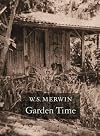
This review was written in September 2016. I've reread the collection three times since, the last time upon learning of Merwin's death in March 2019.
In part dictated to his wife Paula when he was losing his eyesight, William Stanley Merwin’s new book of poetry is a heartbreaking elegy to the evanescence of life, a celebration of a life lived through love, and a bittersweet journey into the world of darkness from the world of light and books.
Who knows, maybe Merwin, who turns 89 later this show more month (on 30 September), will have more poems to give us still, but reading this book is like reading his farewell. From a man who has been remarkably consistent in his art, and even in the company of his award-winning The Shadow of Sirius (2008) and the collected Migration (2004), his latest collection, Garden Time (2016) might be his most breathtaking work yet. In its 96 pages and 61 poems, starting with "The Morning" (which could just as well be "The Mourning" it sounds alike when read aloud), he lets us enter the titular garden, their garden, the place of comfort, quietude, peace and inspiration for him, as if he was saying his last goodbyes to it. And by the time we leave with the last poem, "The Present", we have realized that for him, those images and memories are a goodbye already due to the loss of his eyesight. “I forget that,” as he writes in "December Morning,"
Merwin’s poetry has always celebrated the here and now with great dignity and admiration, but here his poems have added significance, as a man at the end of his life sits down to write about its beauty - the moment that is forgotten, regardless of the yearning to grasp it, cling to it and remember it forever; that the happiness of the moment wishes to be remembered, only to join the river of our passing through this world, not for us to own but glance and let go.
19 September,
2016 show less
In part dictated to his wife Paula when he was losing his eyesight, William Stanley Merwin’s new book of poetry is a heartbreaking elegy to the evanescence of life, a celebration of a life lived through love, and a bittersweet journey into the world of darkness from the world of light and books.
Who knows, maybe Merwin, who turns 89 later this show more month (on 30 September), will have more poems to give us still, but reading this book is like reading his farewell. From a man who has been remarkably consistent in his art, and even in the company of his award-winning The Shadow of Sirius (2008) and the collected Migration (2004), his latest collection, Garden Time (2016) might be his most breathtaking work yet. In its 96 pages and 61 poems, starting with "The Morning" (which could just as well be "The Mourning" it sounds alike when read aloud), he lets us enter the titular garden, their garden, the place of comfort, quietude, peace and inspiration for him, as if he was saying his last goodbyes to it. And by the time we leave with the last poem, "The Present", we have realized that for him, those images and memories are a goodbye already due to the loss of his eyesight. “I forget that,” as he writes in "December Morning,"
I am almost blind and I see the piles
of books I was going to read next
there they wait like statues of sitting dogs
faithful to someone they used to know
but happiness has a shape made of air
it was never owned by anyone
it comes when it will in its own time
Merwin’s poetry has always celebrated the here and now with great dignity and admiration, but here his poems have added significance, as a man at the end of his life sits down to write about its beauty - the moment that is forgotten, regardless of the yearning to grasp it, cling to it and remember it forever; that the happiness of the moment wishes to be remembered, only to join the river of our passing through this world, not for us to own but glance and let go.
19 September,
2016 show less
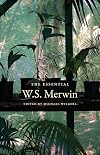
The old saying goes when in Rome, do as the Romans do. That may still hold true, but when I’m in Paris, I include a stop at Shakespeare and Company, the legendary bookstore close to the Seine. It’s no longer located where Sylvia Beach hosted Pound, Joyce, and a host of others, but it’s close enough (and you can browse through some of her own old books upstairs).
Negotiating the narrow aisles filled with other book-lovers takes some patience, as does finding what one is looking for along show more the crowded shelves. But on my latest venture there, I managed to find what I sought, a book on the history of Paris, and then — serendipity of serendipities — I found something I wasn’t looking for. Slightly disoriented, I found myself in the deepest recess of the shop, devoted to poetry. I wasn’t in the market for any, and if I were to purchase one, how to select? In the end, I think this book found me. My eyes roved the room, slightly dazed, then rested on the name Merwin printed in white letters on a black spine. A half-century ago, when I read a lot of poetry, he was one I read.
So I walked out of the store with two books.
This volume collects poems from throughout Merwin’s prolific career and is a good place to start reading him. From the aspiring young poet who wrote the carefully-structured and richly allusive “Dictum: For a Masque of Deluge,” to the poet who abandoned punctuation, which opened the possibility of a variety of readings, depending on how one combined adjacent words in one’s head. He soon employed this looser technique in vitriolic protest against war and environmental destruction, then lived long enough to use it to convey the poignancy and confusion of aging.
Along the way, there were recurring themes. One was the sense of irrevocable loss we’re inflicting on the planet. His prose-poem “Unchopping a Tree“ is no less urgent now, as fires devastate the rain forest than when it was written. Another is the fluidity of identity. In a variety of ways, the poet voices the feeling of being a stranger in familiar surroundings, ever on the verge of taking leave. Above all, there is Merwin’s fascination with language. Speaking not of himself, but of departed contemporary poets he admired, he writes: “the clear note they were hearing never promised anything but the true sound of brevity that will go on after me” (“Lament for the Makers”). Language is inexorably tied to existence, yet Merwin seems to be on a self-defeating quest: that even if one could hone language with precision — a daunting task, always out of reach — it would do nothing but depict transience and document our mutual incomprehension. Yet the struggle yields wonderful, life-affirming results.
Merwin is an elegist of the elusive, of that which is glimpsed out of the corner of the eye. At the same time, he somehow manages to convey a sense of timelessness.
I try to reserve a five-star rating for books that are not only excellent examples of their genre but that I feel everyone should read. I hesitated with this, knowing that even among the small tribe of readers, those who read poetry are a tiny subset. But I’m so high on this book I can’t give it less than five. Here’s a suggestion: take it off the shelf at a nearby bookstore or library, try just one, “Wild Oats,” for instance — or even the poem printed on the back cover, “Noah’s Raven.” I bought the book on the strength of that one poem; it was a good purchase. show less
Negotiating the narrow aisles filled with other book-lovers takes some patience, as does finding what one is looking for along show more the crowded shelves. But on my latest venture there, I managed to find what I sought, a book on the history of Paris, and then — serendipity of serendipities — I found something I wasn’t looking for. Slightly disoriented, I found myself in the deepest recess of the shop, devoted to poetry. I wasn’t in the market for any, and if I were to purchase one, how to select? In the end, I think this book found me. My eyes roved the room, slightly dazed, then rested on the name Merwin printed in white letters on a black spine. A half-century ago, when I read a lot of poetry, he was one I read.
So I walked out of the store with two books.
This volume collects poems from throughout Merwin’s prolific career and is a good place to start reading him. From the aspiring young poet who wrote the carefully-structured and richly allusive “Dictum: For a Masque of Deluge,” to the poet who abandoned punctuation, which opened the possibility of a variety of readings, depending on how one combined adjacent words in one’s head. He soon employed this looser technique in vitriolic protest against war and environmental destruction, then lived long enough to use it to convey the poignancy and confusion of aging.
Along the way, there were recurring themes. One was the sense of irrevocable loss we’re inflicting on the planet. His prose-poem “Unchopping a Tree“ is no less urgent now, as fires devastate the rain forest than when it was written. Another is the fluidity of identity. In a variety of ways, the poet voices the feeling of being a stranger in familiar surroundings, ever on the verge of taking leave. Above all, there is Merwin’s fascination with language. Speaking not of himself, but of departed contemporary poets he admired, he writes: “the clear note they were hearing never promised anything but the true sound of brevity that will go on after me” (“Lament for the Makers”). Language is inexorably tied to existence, yet Merwin seems to be on a self-defeating quest: that even if one could hone language with precision — a daunting task, always out of reach — it would do nothing but depict transience and document our mutual incomprehension. Yet the struggle yields wonderful, life-affirming results.
Merwin is an elegist of the elusive, of that which is glimpsed out of the corner of the eye. At the same time, he somehow manages to convey a sense of timelessness.
I try to reserve a five-star rating for books that are not only excellent examples of their genre but that I feel everyone should read. I hesitated with this, knowing that even among the small tribe of readers, those who read poetry are a tiny subset. But I’m so high on this book I can’t give it less than five. Here’s a suggestion: take it off the shelf at a nearby bookstore or library, try just one, “Wild Oats,” for instance — or even the poem printed on the back cover, “Noah’s Raven.” I bought the book on the strength of that one poem; it was a good purchase. show less
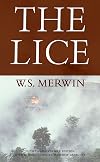
Merwin was born 30 September 1927, and died in March 2019. I first encountered his poetry in 2010, after seeing him in a documentary about the life of the Buddha. His even-tempered, self-deprecating way of puncturing the Deadly Seriousness of the other talking heads in the film was memorable; his poetic voice had to be as lovely, right?
Um. Rain in the Trees didn't wow me. It's from the 1980s sometime, and permaybehaps forty years of poeting had worn him down. It wasn't for me, as the polite show more formulation of "what the actual FUCK *is* this crapola anyway?!?" is phrased.
He died; I ran across that fact on Wikipedia; connected him with the nice old buffer in the Buddha thing and ILL'd this 1967 collection of Vietnam War-era stuff. It's a darn good thing I did. THIS poetry I like! Here is where the fortysomething poet whose professional life was contemporaneous with Ted Hughes, Robert Bly, Sylvia Plath, and Denise Levertov (all friends of his) and the Beats (not friends of his), those slashers-and-burners of whatever rules there were at that point, were working.
Merwin wasn't going to be a Beat, they were too raucous for him. He got Pulitzers (twice!) for poetry, he was the United States Poet Laureate, he translated Neruda, he translated Euripides, he translated Gawain and the Green Knight in 2002; he was a busy professional poet. His legacy will last a while longer, though I doubt he'll be as enduringly popular as Seamus Heaney or Neruda...not enough there, there...and he will find his way into anthologies for a while after that.
But this collection, second that I've read, is worthy of your eyeblinks. It says something deeply meaningful in a personal yet relatable way. Merwin wasn't a groundbreaking iconoclast, and some of his early stuff I've run across was so pretentious and self-important that I am amazed the same man wrote it as wrote these poems. His later stuff was, well, in a word it was tired. Overworked the vein, it collapsed. But this? Prime-of-life, peak-of-powers poetical punditry. Every poems means something, both on its surface and on its interior. Read a poem one way, it's pretty; read it another, it's shattering.
The thing that makes this book so lovely is that it includes a dozen or so facsimiles of Merwin's hand-written or typed manuscript pages, some on glossy photo paper and two printed inside the paper cover, that really bring the reader into Merwin's emotional orbit. Seeing the pages that he composed his thoughts on makes the typeset version of the poem that much more meaningful. His presence, albeit in mechanically reproduced form, is *there* and that causes no small amount of spiritual-connection thrums through my non-poetical soul. show less
Um. Rain in the Trees didn't wow me. It's from the 1980s sometime, and permaybehaps forty years of poeting had worn him down. It wasn't for me, as the polite show more formulation of "what the actual FUCK *is* this crapola anyway?!?" is phrased.
He died; I ran across that fact on Wikipedia; connected him with the nice old buffer in the Buddha thing and ILL'd this 1967 collection of Vietnam War-era stuff. It's a darn good thing I did. THIS poetry I like! Here is where the fortysomething poet whose professional life was contemporaneous with Ted Hughes, Robert Bly, Sylvia Plath, and Denise Levertov (all friends of his) and the Beats (not friends of his), those slashers-and-burners of whatever rules there were at that point, were working.
Merwin wasn't going to be a Beat, they were too raucous for him. He got Pulitzers (twice!) for poetry, he was the United States Poet Laureate, he translated Neruda, he translated Euripides, he translated Gawain and the Green Knight in 2002; he was a busy professional poet. His legacy will last a while longer, though I doubt he'll be as enduringly popular as Seamus Heaney or Neruda...not enough there, there...and he will find his way into anthologies for a while after that.
But this collection, second that I've read, is worthy of your eyeblinks. It says something deeply meaningful in a personal yet relatable way. Merwin wasn't a groundbreaking iconoclast, and some of his early stuff I've run across was so pretentious and self-important that I am amazed the same man wrote it as wrote these poems. His later stuff was, well, in a word it was tired. Overworked the vein, it collapsed. But this? Prime-of-life, peak-of-powers poetical punditry. Every poems means something, both on its surface and on its interior. Read a poem one way, it's pretty; read it another, it's shattering.
The thing that makes this book so lovely is that it includes a dozen or so facsimiles of Merwin's hand-written or typed manuscript pages, some on glossy photo paper and two printed inside the paper cover, that really bring the reader into Merwin's emotional orbit. Seeing the pages that he composed his thoughts on makes the typeset version of the poem that much more meaningful. His presence, albeit in mechanically reproduced form, is *there* and that causes no small amount of spiritual-connection thrums through my non-poetical soul. show less
There were a couple of Merwin poems I loved already before I picked up this book ("For the Anniversary of my Death" and ("Yesterday"). I loved them for the perfect music of those unpunctuated lines, for the interrupted breaths of his line lengths and the subtle caesuras, and for the poet's willingness to face and to wonder about life, death, time, and connections between people, without harshness but without flinching. Those poems I already loved did not try to settle the questions we have show more about our place in the world, but instead expressed those questions, leaving them suspended in mid-air, putting into words what cannot be put into words.
I never found it easy to navigate Merwin's other poems, and often gave up trying to understand them because I just didn't have the time or the patience. To be fair, relatively early in his career, he gave up punctuation except for the capital letter at the beginning, and though his poems are in complete sentences it requires careful reading, re-reading (and usually, reading aloud) to find out how they progress. That deliberately cryptic habit can be daunting.
I resolved this year to read something that is not social media first thing in the morning, and decided on this chronologically-arranged anthology, which I had bought in the hopeful belief that I could investigate Merwin with the respect I thought he might deserve. I took the book, a pencil, and my phone downstairs with me, opened the book at the beginning, and began to make my own attempts at reading carefully and closely.
I just completed reading it, now have 20 more "favorite" Merwin poems, and am sorry the journey is over. I learned a great deal about poetry in general, and specifically about Merwin's poetry, and it was time well spent.
The selected poems in this book span his career. I could have done without the translations, but they are representative of Merwin's interests (he is a prolific translator).
His earliest poems show knowledge of poetic forms, tremendous erudition, virtuosity, and self-importance, as I suppose the early poems of a young poet should. They cover many of the themes that appear in his later work, but they're sometimes overwrought. I loved "On the Subject of Poetry" and the macabre "Burning the Cat."
Beginning with "The Lice," he began to write without punctuation but with the passion of the 1960s about war, the destruction of the environment, and the human bewilderment about mortality. "The Last One" and "For the Anniversary of My Death" are here. Though he continued to experiment throughout his career, his voice began to steady and his treatment of the more general themes that drew me to him were expressed with greater and greater lucidity and music.
I usually read one or two poems in depth every morning, and glanced at the next.
When I glanced, I began by scanning. I asked: How long is it? How long are the lines? What is its shape? What jumps out at you? And then I put it aside. That initial encounter is simply like shaking the birthday present to see what's inside.
For the in-depth attack, I usually read the poem aloud to myself (Merwin's craft is far more apparent when you hear it). With a pencil, I marked the poem into sections (Merwin makes masterful use of turns) and asked, "Who is speaking? To whom? What does it remind me of? (His simplicity of diction is deceptive; the poems are laden with allusions to all manner of literature and life, even though he often uses a restricted vocabulary of recurring signs and motifs). Marking it into sections allowed me to see how he was developing the poem and bringing all its forces to bear on the often astonishing final lines.
Then I looked up the poem. Merwin's often-inscrutable, occasionally riddling style has attracted plenty of analysis by poets, critics, academics, and bloggers. Often, I found that someone else wrote about this particular poem, or that Merwin himself read it aloud in a videotaped or recorded interview and talked about it. I wrote more in the margins, and dogeared pages of poems I wanted to remember.
Merwin is not for everyone. He's bleak. I have said elsewhere that he is a "minor major poet" meaning that he doesn't have the popular appeal of those who are more famous, but as a former Poet Laureate and recipient of many major prizes he is without a doubt a major literary figure. It occurs to me that Merwin never made his living as a teacher, unlike many of his colleagues, and so lacks the efforts of acolytes that have promoted others. Also, (as of this writing) he is not dead and so cannot be properly laid to rest by would-be summarizers of his career. Despite his lifelong fascination with the possibility of mortality, the man kept going and kept writing poetry. This anthology was published in 2016 and the last selections are from Garden Time, also published in 2016 and full of gentle wonder that he is still here.
In short, the book is highly recommended, if you love poetry and if you take your time. show less
I never found it easy to navigate Merwin's other poems, and often gave up trying to understand them because I just didn't have the time or the patience. To be fair, relatively early in his career, he gave up punctuation except for the capital letter at the beginning, and though his poems are in complete sentences it requires careful reading, re-reading (and usually, reading aloud) to find out how they progress. That deliberately cryptic habit can be daunting.
I resolved this year to read something that is not social media first thing in the morning, and decided on this chronologically-arranged anthology, which I had bought in the hopeful belief that I could investigate Merwin with the respect I thought he might deserve. I took the book, a pencil, and my phone downstairs with me, opened the book at the beginning, and began to make my own attempts at reading carefully and closely.
I just completed reading it, now have 20 more "favorite" Merwin poems, and am sorry the journey is over. I learned a great deal about poetry in general, and specifically about Merwin's poetry, and it was time well spent.
The selected poems in this book span his career. I could have done without the translations, but they are representative of Merwin's interests (he is a prolific translator).
His earliest poems show knowledge of poetic forms, tremendous erudition, virtuosity, and self-importance, as I suppose the early poems of a young poet should. They cover many of the themes that appear in his later work, but they're sometimes overwrought. I loved "On the Subject of Poetry" and the macabre "Burning the Cat."
Beginning with "The Lice," he began to write without punctuation but with the passion of the 1960s about war, the destruction of the environment, and the human bewilderment about mortality. "The Last One" and "For the Anniversary of My Death" are here. Though he continued to experiment throughout his career, his voice began to steady and his treatment of the more general themes that drew me to him were expressed with greater and greater lucidity and music.
I usually read one or two poems in depth every morning, and glanced at the next.
When I glanced, I began by scanning. I asked: How long is it? How long are the lines? What is its shape? What jumps out at you? And then I put it aside. That initial encounter is simply like shaking the birthday present to see what's inside.
For the in-depth attack, I usually read the poem aloud to myself (Merwin's craft is far more apparent when you hear it). With a pencil, I marked the poem into sections (Merwin makes masterful use of turns) and asked, "Who is speaking? To whom? What does it remind me of? (His simplicity of diction is deceptive; the poems are laden with allusions to all manner of literature and life, even though he often uses a restricted vocabulary of recurring signs and motifs). Marking it into sections allowed me to see how he was developing the poem and bringing all its forces to bear on the often astonishing final lines.
Then I looked up the poem. Merwin's often-inscrutable, occasionally riddling style has attracted plenty of analysis by poets, critics, academics, and bloggers. Often, I found that someone else wrote about this particular poem, or that Merwin himself read it aloud in a videotaped or recorded interview and talked about it. I wrote more in the margins, and dogeared pages of poems I wanted to remember.
Merwin is not for everyone. He's bleak. I have said elsewhere that he is a "minor major poet" meaning that he doesn't have the popular appeal of those who are more famous, but as a former Poet Laureate and recipient of many major prizes he is without a doubt a major literary figure. It occurs to me that Merwin never made his living as a teacher, unlike many of his colleagues, and so lacks the efforts of acolytes that have promoted others. Also, (as of this writing) he is not dead and so cannot be properly laid to rest by would-be summarizers of his career. Despite his lifelong fascination with the possibility of mortality, the man kept going and kept writing poetry. This anthology was published in 2016 and the last selections are from Garden Time, also published in 2016 and full of gentle wonder that he is still here.
In short, the book is highly recommended, if you love poetry and if you take your time. show less
Lists
Coming of Age (1)
Awards


You May Also Like


Associated Authors
Statistics
- Works
- 90
- Also by
- 79
- Members
- 4,056
- Popularity
- #6,204
- Rating
- 4.0
- Reviews
- 59
- ISBNs
- 120
- Languages
- 6
- Favorited
- 21

