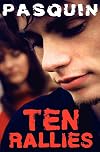
Ten Rallies
by Pasquin
On This Page
Description
Seventeen-year-old Reed wasn't looking to change the world, just graduate high school. He didn't know he would first have to choose between who he loves and what is right.Tags
Recommendations



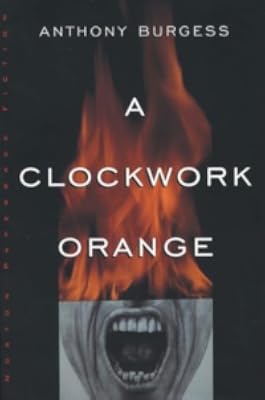
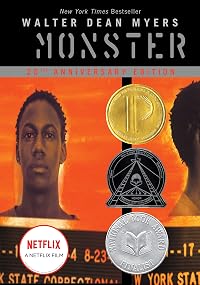
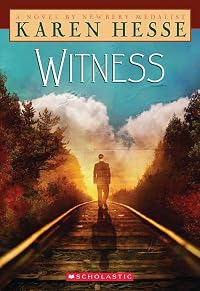
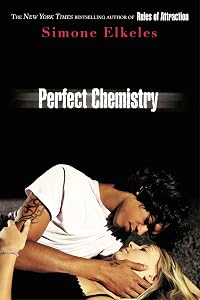
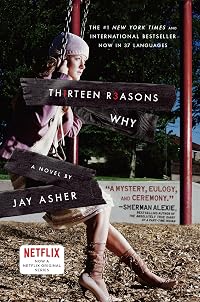
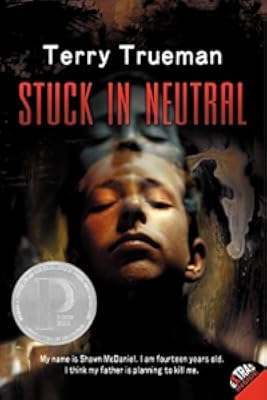
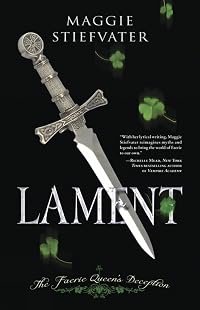
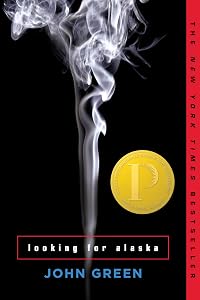

Member Recommendations
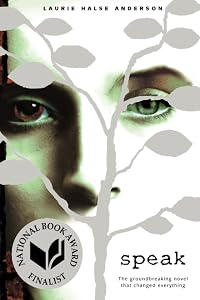
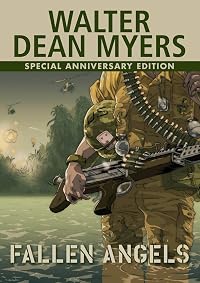
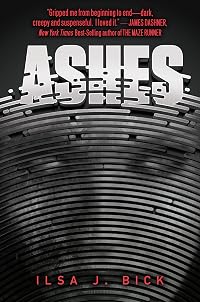
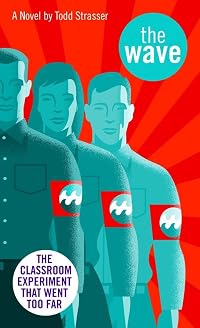
PghDragonMan Telling examples of group dynamics and how they can have unintended consequences.
PghDragonMan Do the needs of the many outweigh the value of the individual?
Member Reviews
I just finished reading TEN RALLIES, by Pasquin, a book I won through LibraryThing’s Early Reviewers program. The cover art looked promising, and I was hoping it’d be a book I could share with my high-school students, but it sadly turns out that this is the type of poorly written propaganda I always encourage my students to question and criticize.
TEN RALLIES follows the protagonist, Reed, as his school enters the CoreAmerica challenge in which students at the school must choose and commit to a side: groupism (which is compared to communism and even to being a part of a union!) or soloism (compared to democracy and societies where government is almost non-existent). Both groups remain separate from each other and run their side of show more the school according to the ideals of the side they chose. Reed struggles with his loyalties and is influenced by other students, his girlfriend, his father, and the media. At the end, one side is supposed to be deemed the winner as the rest of the nation watches this controversial political experiment during an important election year.
There are so many holes in this story that I frequently found myself shaking my head because many aspects of the setting and plot are very implausible. One such problem is that there is no way students would be allowed to run the building while custodial and cafeteria staff are on paid leave. Aside from the budget crises that plague all public schools today, there are very specific regulations regarding health and sanitation in schools, and the students in TEN RALLIES never even received any information or training about how to clean or prepare food.
Another thing that made this book difficult to read was the way it was written. I don’t know how many books – if any at all – Pasquin has written before, but he/she clearly does not have a command of the language. There is a reason that second person point of view is rarely used in prose. This book is a great example of why that is: it’s awkward and annoying. Making it worse is the book referring to the reader as “bro” every page or two. I am an adult woman, and I do not wish to be called “bro.” The voice is, as Holden Caulfield would say, “phony,” the dialogue is forced and inauthentic, and the vocabulary does not reflect that of modern-day teenagers. In addition, Pasquin’s voice of reason is not a subtle whisper, but a shout, ramming the author’s political ideas down readers’ throats at the expense of the narrative, which completely falls apart by the end of the book.
…Which brings me to the worst part: Pasquin’s political agenda. On the surface, this is just a book about a kid dealing with school, girls, and figuring out his place in the world. However, about two-thirds of the way through this book, I realized that Pasquin was using this book to demonstrate his ideas about education, teachers, unions, and government – thoughts that are unsubstantiated opinions posing as facts and resembling typical propaganda. According to this book, American public schools are horrible (while charter schools are wonderful); teachers are dumb and overpaid (and apparently should be considered part-time workers!); and unions are malicious groups who only get in the way of progress. As a proud unionized public-school teacher who has earned credits beyond a Masters degree and works from 7:30 am until the late hours of the night – and throughout the weekends, breaks, and summer – I am disgusted and offended about the message of this book. Pasquin clearly has no idea what schools and teaching look like today, and his/her ignorance created the many misguided notions presented in this novel.
Books are some of my most valuable possessions, but this piece of propaganda is going in the garbage. show less
TEN RALLIES follows the protagonist, Reed, as his school enters the CoreAmerica challenge in which students at the school must choose and commit to a side: groupism (which is compared to communism and even to being a part of a union!) or soloism (compared to democracy and societies where government is almost non-existent). Both groups remain separate from each other and run their side of show more the school according to the ideals of the side they chose. Reed struggles with his loyalties and is influenced by other students, his girlfriend, his father, and the media. At the end, one side is supposed to be deemed the winner as the rest of the nation watches this controversial political experiment during an important election year.
There are so many holes in this story that I frequently found myself shaking my head because many aspects of the setting and plot are very implausible. One such problem is that there is no way students would be allowed to run the building while custodial and cafeteria staff are on paid leave. Aside from the budget crises that plague all public schools today, there are very specific regulations regarding health and sanitation in schools, and the students in TEN RALLIES never even received any information or training about how to clean or prepare food.
Another thing that made this book difficult to read was the way it was written. I don’t know how many books – if any at all – Pasquin has written before, but he/she clearly does not have a command of the language. There is a reason that second person point of view is rarely used in prose. This book is a great example of why that is: it’s awkward and annoying. Making it worse is the book referring to the reader as “bro” every page or two. I am an adult woman, and I do not wish to be called “bro.” The voice is, as Holden Caulfield would say, “phony,” the dialogue is forced and inauthentic, and the vocabulary does not reflect that of modern-day teenagers. In addition, Pasquin’s voice of reason is not a subtle whisper, but a shout, ramming the author’s political ideas down readers’ throats at the expense of the narrative, which completely falls apart by the end of the book.
…Which brings me to the worst part: Pasquin’s political agenda. On the surface, this is just a book about a kid dealing with school, girls, and figuring out his place in the world. However, about two-thirds of the way through this book, I realized that Pasquin was using this book to demonstrate his ideas about education, teachers, unions, and government – thoughts that are unsubstantiated opinions posing as facts and resembling typical propaganda. According to this book, American public schools are horrible (while charter schools are wonderful); teachers are dumb and overpaid (and apparently should be considered part-time workers!); and unions are malicious groups who only get in the way of progress. As a proud unionized public-school teacher who has earned credits beyond a Masters degree and works from 7:30 am until the late hours of the night – and throughout the weekends, breaks, and summer – I am disgusted and offended about the message of this book. Pasquin clearly has no idea what schools and teaching look like today, and his/her ignorance created the many misguided notions presented in this novel.
Books are some of my most valuable possessions, but this piece of propaganda is going in the garbage. show less
 This review was written for LibraryThing Early Reviewers.
The storyline does a nice job of explaining socialism and capitalism through a interesting storyline. I think young adults can better grasp the concept through this fictional example then maybe a dry textbook. As a teacher, some of the digs towards public education were hard not to take personally and the relationship between the protagonist and antagonist will prevent me from being able to share this with my middle school students. It was a fast read and I overall liked this creative way to show how different forms of government can affect society. It would be a great book for post discussion when making text to world literary connections.
This review was written for LibraryThing Early Reviewers.As usual I received this book from GoodReads as part of a giveaway. Also as usual, despite the very kind and generous consideration of getting a free book, I give my candid opinions below.
To nutshell the story, our protagonist is a high school senior who finds himself at the mercy of an experiment in sociology. His first day at school after summer break finds him choosing between two groups that will each run half the school. In the Groupism faction everything will be governed with the greatest common good in mind. Competing against them we have the Soloism faction which will be governed with the precept that whatever is good for the individual is ultimately best. These two fictional combatants are pitted against each other over the show more course of 10 weeks to see which one produces the more optimum society.
As I'm sure I need not tell you, this is at heart a rather thinly veiled political novel pitting Socialism/Liberalism (Groupism) against Capitalism/Conservatism (Soloism). The writing itself is at times a bit sketchy but overall the whole thing comes together rather nicely. Of all the diatribes of its sort, this one is one of the best as it makes its point effectively while also managing to tell a reasonably amusing story. The writer's use of the common vernacular of modern youth is also well executed and entertaining.
In the vein of deeper content beyond the mere arc of the story, this book is really just a conservative cautionary tale describing the way schools and society are run in the United States. It does tend to paint the situation in a rather binary and oversimplified manner but it does represent the conservative side of the argument in a coherent and readable way.
When pondering the next person to whom to pass this book, it will have clear appeal to the socially conservative among us and perhaps to others if they look at it with sufficiently open minds or are prepared with a moderately large grain of salt.
In summary, "Ten Rallies" has a political point to make and it makes it well. It is a reasonable investment of a few reading hours that entertains on a several different levels even if you don't entirely (or, in fact at all) agree with its underlying social premise. show less
To nutshell the story, our protagonist is a high school senior who finds himself at the mercy of an experiment in sociology. His first day at school after summer break finds him choosing between two groups that will each run half the school. In the Groupism faction everything will be governed with the greatest common good in mind. Competing against them we have the Soloism faction which will be governed with the precept that whatever is good for the individual is ultimately best. These two fictional combatants are pitted against each other over the show more course of 10 weeks to see which one produces the more optimum society.
As I'm sure I need not tell you, this is at heart a rather thinly veiled political novel pitting Socialism/Liberalism (Groupism) against Capitalism/Conservatism (Soloism). The writing itself is at times a bit sketchy but overall the whole thing comes together rather nicely. Of all the diatribes of its sort, this one is one of the best as it makes its point effectively while also managing to tell a reasonably amusing story. The writer's use of the common vernacular of modern youth is also well executed and entertaining.
In the vein of deeper content beyond the mere arc of the story, this book is really just a conservative cautionary tale describing the way schools and society are run in the United States. It does tend to paint the situation in a rather binary and oversimplified manner but it does represent the conservative side of the argument in a coherent and readable way.
When pondering the next person to whom to pass this book, it will have clear appeal to the socially conservative among us and perhaps to others if they look at it with sufficiently open minds or are prepared with a moderately large grain of salt.
In summary, "Ten Rallies" has a political point to make and it makes it well. It is a reasonable investment of a few reading hours that entertains on a several different levels even if you don't entirely (or, in fact at all) agree with its underlying social premise. show less
I graduated high school with decent grades. I also graduated from college with an educated secretary and bookkeeping degree. But I had damn good grades and I worked my ass off to make sure I was prepared after I graduated. However, six months after graduating, I am unemployed. With that being said, here is my review.
It is one thing when a book makes me think. It is another thing when a book makes me think, and regroup all current thoughts I have about one certain topic.
Ten Rallies had a major impact on how I’m seeing the school system now.
There is one part in particular in this book that has really stuck with me. Neutron was talking about standardized tests. He said they are pretty much just tests to see how good the teacher is, and show more if the teachers don’t pass they should get fired.
Now, when I was in high school, my Spanish teacher wasn’t much of a teacher. We watched more movies in that class unrelated to Spanish than I care to admit. (Borat was among the selection.) If my class were to have taken a standardized test related to Spanish, we would all fail miserably. (I’ve honestly learned more Spanish from watching Dora the Explorer when I baby-sit than I did in my two years of high school Spanish.) Not only was this teacher a horrible instructor, she didn’t even have a freaking degree in Spanish! She had no license. To this day, I have no idea why she is still a teacher there.
Anyways, this book is fairly spot on about the education system.
I also really loved the way this book was written. Very straight forward. Great POV.
If you’re willing to listen to what Pasquin has to say, read this book. It is good stuff. show less
It is one thing when a book makes me think. It is another thing when a book makes me think, and regroup all current thoughts I have about one certain topic.
Ten Rallies had a major impact on how I’m seeing the school system now.
There is one part in particular in this book that has really stuck with me. Neutron was talking about standardized tests. He said they are pretty much just tests to see how good the teacher is, and show more if the teachers don’t pass they should get fired.
Now, when I was in high school, my Spanish teacher wasn’t much of a teacher. We watched more movies in that class unrelated to Spanish than I care to admit. (Borat was among the selection.) If my class were to have taken a standardized test related to Spanish, we would all fail miserably. (I’ve honestly learned more Spanish from watching Dora the Explorer when I baby-sit than I did in my two years of high school Spanish.) Not only was this teacher a horrible instructor, she didn’t even have a freaking degree in Spanish! She had no license. To this day, I have no idea why she is still a teacher there.
Anyways, this book is fairly spot on about the education system.
I also really loved the way this book was written. Very straight forward. Great POV.
If you’re willing to listen to what Pasquin has to say, read this book. It is good stuff. show less
This review was written for LibraryThing Early Reviewers.Ten Rallies by Pasquin is probably best summed up as Atlas Shrugged Lite. In this case, lite does not mean dumbed down, well, not too much anyway, but rather rewritten in a contemporary context and meant to be read by junior high or late middle school readers. I have some literary gripes with the author’s style, but I will admit that in reading Ten Rallies, I could see this being introduced into a classroom and discussion of the story being an active part of the class.
The book is squarely aimed at teen to older teen readers: it takes place in a high school, there is something of a teen romance involved, a main character from a broken home and conflict between the nerd set and non-nerds. No, there are no supernatural creatures show more involved, but one girl is a vamp of another kind. Make no mistake, though, this is no Cory Doctorow novel; it just does not flow that smoothly.
While Pasquin adequately captures teen angst, the dialog is not quite right. I have problems with high school seniors saying “crap sandwich” and “bull crap”. I would have no problem with the same characters saying what most kids that age would, something far less equivocal than “crap” and far more realistic.
Therein lays the problem. I think the intent was to see this book used in school and the author was afraid rougher language would keep the book out of school. I have no problem with that goal, but I’d rather the book had two releases: one for the educational use and one with real street language. I am not a fan of scatological dialog just for the sake of using the words, but in this case, it would have added to the realism of the characters.
I had a little problem buying into the premise of a high school being used as a national experiment in education of political purposes, but it was not that much of a suspension of my belief to accept it. The dividing of the school into two groups, Soloism and Groupism, and letting them succeed or fail on their own merits was a little heavy handed way of comparing Free Market versus Socialism / Communism, but that’s what is sometimes need for a school discussion. There is also a subthread, not as blatant, about the state of educational systems as practiced in the US today. At least as of 2012, the rankings of education are indeed accurate. That this educational system could be coopted for influencing the outcome of an election is not exactly outside of the realm of possibility.
I also have some gripes with the relationship of Reed and his father. Alright, Reed’s dad is not a Rhodes Scholar. He’s not necessarily the greatest guy in the world. I get it. Pasquin sketched him as a caricature of a caricature. To have him this dead ended, this worthless, and have Reed transform him in the final pages was a little too much. Yes, he was a supporting character in this story and yes, he is needed to portray the archetype loser saved by the hero, but this was just too much of a leap for me. Deus ex machina works on the stage, but for this story, a gradual softening, the dad showing some initiative would have gone a long way to making the ending more believable and consistent with the theme of the book.
So, how to rate this book, that’s another problem. I see a lot of potential here. There is a lot to like, but the negatives just pull at me too much. I liked the basic premise, I was hooked into the story enough I did not feel like I was forcing myself to continue, but the dialog was not right for this book. Other works, like The Wave, I felt covered this type of material much better for a YA audience and it is no match for any of Ayn Rand’s works as a condemnation of Communism. It is enjoyable, it is thought provoking, and will probably be around for a while. Overall, I’m going to go just above middle of the road and awarding three and a half stars to Ten Rallies. show less
The book is squarely aimed at teen to older teen readers: it takes place in a high school, there is something of a teen romance involved, a main character from a broken home and conflict between the nerd set and non-nerds. No, there are no supernatural creatures show more involved, but one girl is a vamp of another kind. Make no mistake, though, this is no Cory Doctorow novel; it just does not flow that smoothly.
While Pasquin adequately captures teen angst, the dialog is not quite right. I have problems with high school seniors saying “crap sandwich” and “bull crap”. I would have no problem with the same characters saying what most kids that age would, something far less equivocal than “crap” and far more realistic.
Therein lays the problem. I think the intent was to see this book used in school and the author was afraid rougher language would keep the book out of school. I have no problem with that goal, but I’d rather the book had two releases: one for the educational use and one with real street language. I am not a fan of scatological dialog just for the sake of using the words, but in this case, it would have added to the realism of the characters.
I had a little problem buying into the premise of a high school being used as a national experiment in education of political purposes, but it was not that much of a suspension of my belief to accept it. The dividing of the school into two groups, Soloism and Groupism, and letting them succeed or fail on their own merits was a little heavy handed way of comparing Free Market versus Socialism / Communism, but that’s what is sometimes need for a school discussion. There is also a subthread, not as blatant, about the state of educational systems as practiced in the US today. At least as of 2012, the rankings of education are indeed accurate. That this educational system could be coopted for influencing the outcome of an election is not exactly outside of the realm of possibility.
I also have some gripes with the relationship of Reed and his father. Alright, Reed’s dad is not a Rhodes Scholar. He’s not necessarily the greatest guy in the world. I get it. Pasquin sketched him as a caricature of a caricature. To have him this dead ended, this worthless, and have Reed transform him in the final pages was a little too much. Yes, he was a supporting character in this story and yes, he is needed to portray the archetype loser saved by the hero, but this was just too much of a leap for me. Deus ex machina works on the stage, but for this story, a gradual softening, the dad showing some initiative would have gone a long way to making the ending more believable and consistent with the theme of the book.
So, how to rate this book, that’s another problem. I see a lot of potential here. There is a lot to like, but the negatives just pull at me too much. I liked the basic premise, I was hooked into the story enough I did not feel like I was forcing myself to continue, but the dialog was not right for this book. Other works, like The Wave, I felt covered this type of material much better for a YA audience and it is no match for any of Ayn Rand’s works as a condemnation of Communism. It is enjoyable, it is thought provoking, and will probably be around for a while. Overall, I’m going to go just above middle of the road and awarding three and a half stars to Ten Rallies. show less
This review was written for LibraryThing Early Reviewers.This book surprised me more than anything. When I first began to read it, I was actually shocked that it was told in 2nd-person--I didn't have too much experience reading a book that has been written in this manner, and being an eighteen-year-old girl, the fact that I had to picture myself as a senior boy did not strike me as the most pleasant. But, as I read on, I was able to delve into the book and understand what was occurring within the book itself. Honestly, I was shocked that so much of the author's personal opinions were placed into the book in such a way that it told am intriguing story. Though I was not a firm believer in everything the author stood for, I appreciated the book in its full form. It was well-written, and I loved show more the connections with the characters. Something that seemed a bit too overdone though, was how hard it seemed the author was trying to portray a senior boy. The added "bro"s and--what I found to be--cheesy thought processes were a little overdone. The end effect was reminiscent of a "happily ever after" story, but in the case of this story in particular, I think it fits wonderfully. Altogether well-written and definitely a page-turner. show less
This review was written for LibraryThing Early Reviewers.As usual I received this book from GoodReads as part of a giveaway. Also as usual, despite the very kind and generous consideration of getting a free book, I give my candid opinions below.
To nutshell the story, our protagonist is a high school senior who finds himself at the mercy of an experiment in sociology. His first day at school after summer break finds him choosing between two groups that will each run half the school. In the Groupism faction everything will be governed with the greatest common good in mind. Competing against them we have the Soloism faction which will be governed with the precept that whatever is good for the individual is ultimately best. These two fictional combatants are pitted against each other over the show more course of 10 weeks to see which one produces the more optimum society.
As I'm sure I need not tell you, this is at heart a rather thinly veiled political novel pitting Socialism/Liberalism (Groupism) against Capitalism/Conservatism (Soloism). The writing itself is at times a bit sketchy but overall the whole thing comes together rather nicely. Of all the diatribes of its sort, this one is one of the best as it makes its point effectively while also managing to tell a reasonably amusing story. The writer's use of the common vernacular of modern youth is also well executed and entertaining.
In the vein of deeper content beyond the mere arc of the story, this book is really just a conservative cautionary tale describing the way schools and society are run in the United States. It does tend to paint the situation in a rather binary and oversimplified manner but it does represent the conservative side of the argument in a coherent and readable way.
When pondering the next person to whom to pass this book, it will have clear appeal to the socially conservative among us and perhaps to others if they look at it with sufficiently open minds or are prepared with a moderately large grain of salt.
In summary, "Ten Rallies" has a political point to make and it makes it well. It is a reasonable investment of a few reading hours that entertains on a several different levels even if you don't entirely (or, in fact at all) agree with its underlying social premise. show less
To nutshell the story, our protagonist is a high school senior who finds himself at the mercy of an experiment in sociology. His first day at school after summer break finds him choosing between two groups that will each run half the school. In the Groupism faction everything will be governed with the greatest common good in mind. Competing against them we have the Soloism faction which will be governed with the precept that whatever is good for the individual is ultimately best. These two fictional combatants are pitted against each other over the show more course of 10 weeks to see which one produces the more optimum society.
As I'm sure I need not tell you, this is at heart a rather thinly veiled political novel pitting Socialism/Liberalism (Groupism) against Capitalism/Conservatism (Soloism). The writing itself is at times a bit sketchy but overall the whole thing comes together rather nicely. Of all the diatribes of its sort, this one is one of the best as it makes its point effectively while also managing to tell a reasonably amusing story. The writer's use of the common vernacular of modern youth is also well executed and entertaining.
In the vein of deeper content beyond the mere arc of the story, this book is really just a conservative cautionary tale describing the way schools and society are run in the United States. It does tend to paint the situation in a rather binary and oversimplified manner but it does represent the conservative side of the argument in a coherent and readable way.
When pondering the next person to whom to pass this book, it will have clear appeal to the socially conservative among us and perhaps to others if they look at it with sufficiently open minds or are prepared with a moderately large grain of salt.
In summary, "Ten Rallies" has a political point to make and it makes it well. It is a reasonable investment of a few reading hours that entertains on a several different levels even if you don't entirely (or, in fact at all) agree with its underlying social premise. show less
Members
- Recently Added By
Author Information
1 Work 21 Members
Common Knowledge
- Original publication date
- 2012
- People/Characters
- Reed; Everett Page; Timothy "Neuron"; Walter Marks; Candida Lum; Hodder
- Important places
- Rae Edna Rock High School
- First words
- Teacher doesn't like you reading this, bro. Don't blame me if they knock this book right out of your hand.
Classifications
- Genre
- Fiction and Literature
- BISAC
Statistics
- Members
- 21
- Popularity
- 1,234,336
- Reviews
- 14
- Rating
- (2.59)
- Languages
- English
- Media
- Paper, Ebook
- ISBNs
- 1
- ASINs
- 1