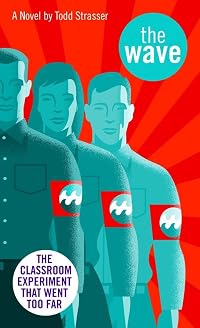
The Wave
by Todd Strasser
On This Page
Description
This novel dramatizes an incident that took place in a California school in 1969. A teacher creates an experimental movement in his class to help students understand how people could have followed Hitler. The results are astounding. The highly disciplined group, modeled on the principles of the Hilter Youth, has its own salute, chants, and special ways of acting as a unit and sweeps beyond the class and throughout the school, evolving into a society willing to give up freedom for show more regimentation and blind obedience to their leader. All will learn a lesson that will never be forgotten.. show less
Tags
Recommendations


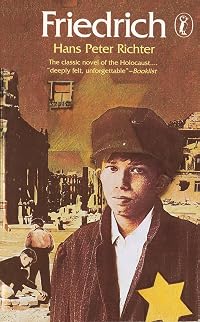
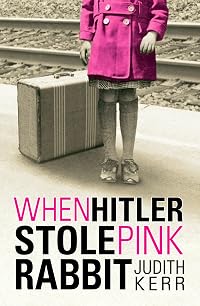
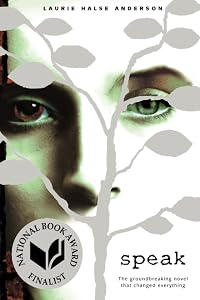
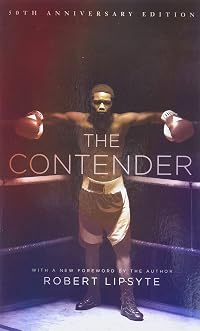
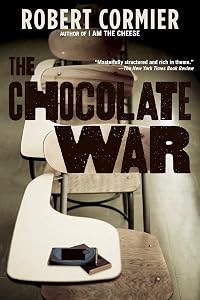
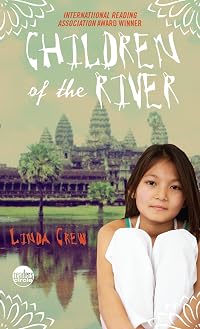
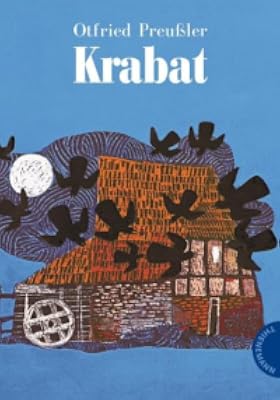
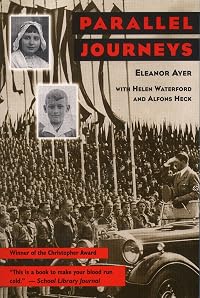



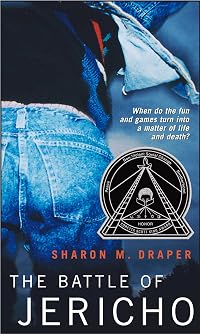
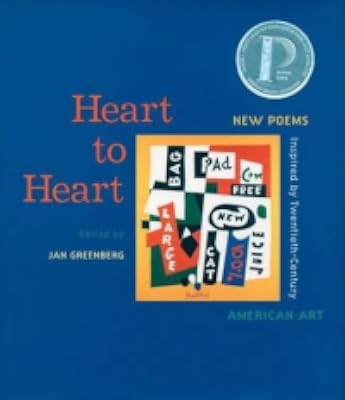
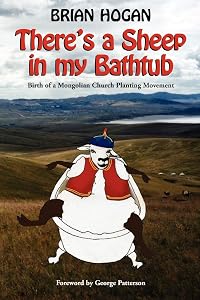
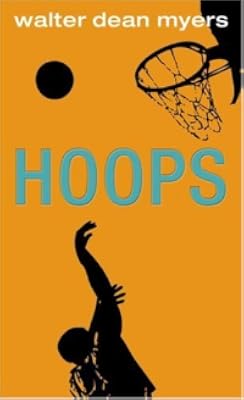



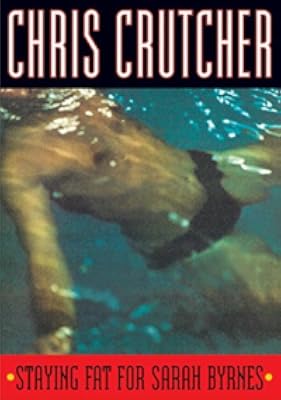

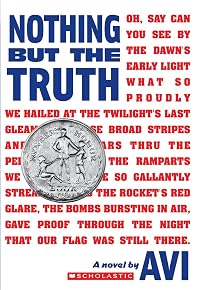


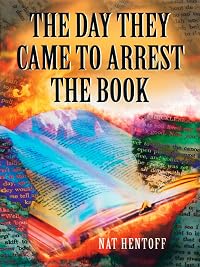

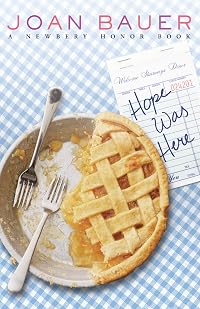


Member Recommendations
by kaledrina

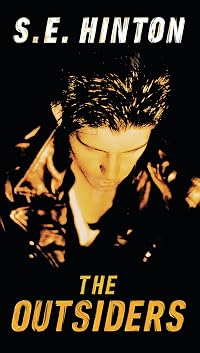
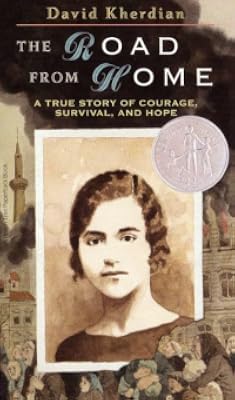
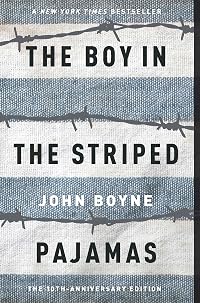
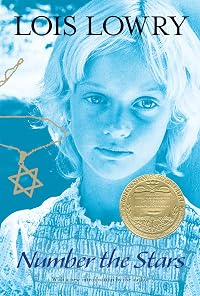
PghDragonMan Telling examples of group dynamics and how they can have unintended consequences.
Member Reviews
This is the novelization of a true story about a History teacher's social experiment and its consequences. Taking nazi Germany's authoritarian regime as the ground in which to base his experiment, the teacher leads the students from uniformity (and the people's natural tendency to follow and be part of a group) to the extremes of segregation of the ones who do not belong. The movement's name is called the 'Wave'. The main question being 'how could people in Germany have followed and encouraged Hitler's regime?', there is no straight answer but that the sociological peer pressures and wanting to be part of a selected community are enough to lead to extremes. Some students are excluded from the Wave, aggressivity grows and incidents are show more proving the teacher right and his position at the school is in jeopardy. Without giving any spoilers, the book should be part of any school's curriculum, if only to get students to reflect on the evils of social apathy in the face of an authoritarian regime and that to blindly follow doesn't require much efforts - the damages are the exclusion of 'others', or worse. The face of evil can indeed be found among us, family or neighbours, people we think are our friends too. The roots of exclusion could be simple jealousy or wanting to dominate with a sense of entitlement. This is a great read, especially for high school students and as an introduction to the study of peer pressure. show less
A compelling story about how Nazi Germany could have been created--how the minority controlled the majority, and how the majority allowed themselves to be controlled. It's based on the true story of The Third Wave experiment, which demonstrated fascism as a part of teaching about WWII.
But the writing of this book. Oh, the writing. It hurts. It should be noted that in tiny print on the copyright page, it does note that this is a novelization of a teleplay that was an adaptation of the original teacher's essay about the experiment. Once you're that far removed, I'm not sure it's possible to write a good book, but oh, the writing is just bad. And I can also make some allowances for it being 1981 when he wrote it. The second sentence of show more the book is "She was a pretty girl with short light-brown hair and an almost perpetual smile that only disappeared when she was upset or chewing on Bic pens." (Sentence 1 established that she was, in fact, chewing on a Bic pen.) And the whole book sounds like that.
It's a valuable book for a curriculum, but I do wish we could have students read the original essay instead, just as a matter of literary quality. show less
But the writing of this book. Oh, the writing. It hurts. It should be noted that in tiny print on the copyright page, it does note that this is a novelization of a teleplay that was an adaptation of the original teacher's essay about the experiment. Once you're that far removed, I'm not sure it's possible to write a good book, but oh, the writing is just bad. And I can also make some allowances for it being 1981 when he wrote it. The second sentence of show more the book is "She was a pretty girl with short light-brown hair and an almost perpetual smile that only disappeared when she was upset or chewing on Bic pens." (Sentence 1 established that she was, in fact, chewing on a Bic pen.) And the whole book sounds like that.
It's a valuable book for a curriculum, but I do wish we could have students read the original essay instead, just as a matter of literary quality. show less
I read a copy of this I bought at a library book sale, because I remember my BookCrossing friend, ResQgeek, speaking well of it at a book festival. After finishing it, I discovered a copy of this book has been on my BookCrossing bookcase UNJOURNALED for years now! Oh no! I'm glad to have finally read it so I can pass it on.
This is a novelization of a teleplay based on a short story based on a real event. I'm sure somewhere in there details got excluded or overdramatized. But I certainly don't have any trouble believing some version of this did in fact take place in a high school (knowing so well the way students behave and feel). To watch these confused and vulnerable students get swept up into a group proporting to make them better show more and do good things for others and then to have that snowball into something less than healthy certainly makes it easier to understand how the Hitler Youth gained such popularity. Society gets dangerous when people stop questioning; I'm just glad the teacher was able to stop it before this social experiment got even further out of control, in this case.
I felt the writing was a little simplistic and didn't really get to the core of emotions for each of the characters--teacher or students. I would also have liked more points of view, such as that of Robert Billings (who changed so dramatically and had others' opinions about him change as well) or of the students who get victimized by members of The Wave, not because the story needed it but because it would be nice to get into their heads as well.
I did enjoy the book, and it gave me a lot to think about.
Pop Sugar Reading Challenge: A book you got from a used book sale show less
This is a novelization of a teleplay based on a short story based on a real event. I'm sure somewhere in there details got excluded or overdramatized. But I certainly don't have any trouble believing some version of this did in fact take place in a high school (knowing so well the way students behave and feel). To watch these confused and vulnerable students get swept up into a group proporting to make them better show more and do good things for others and then to have that snowball into something less than healthy certainly makes it easier to understand how the Hitler Youth gained such popularity. Society gets dangerous when people stop questioning; I'm just glad the teacher was able to stop it before this social experiment got even further out of control, in this case.
I felt the writing was a little simplistic and didn't really get to the core of emotions for each of the characters--teacher or students. I would also have liked more points of view, such as that of Robert Billings (who changed so dramatically and had others' opinions about him change as well) or of the students who get victimized by members of The Wave, not because the story needed it but because it would be nice to get into their heads as well.
I did enjoy the book, and it gave me a lot to think about.
Pop Sugar Reading Challenge: A book you got from a used book sale show less
"In spring 1967, in Palo Alto, California, history teacher Ron Jones conducted an experiment with his class of 15-year-olds to sample the experience of the attraction and rise of the Nazis in Germany before World War II. In a matter of days the experiment began to get out of control, as those attracted to the movement became aggressive zealots and the rigid rules invited confusion and chaos... The original experiment was named "The Third Wave" and occurred at Cubberley Senior High School in Palo Alto, California, in March/April 1967. Teacher Ron Jones wrote a short story about the experience that was published in spring 1976. This was followed by a TV movie ("The Wave") by famed producer Norman Lear on October 4, 1981. The subsequent show more 1981 book "The Wave" is a novelization of the Lear movie, and was written by Todd Strasser (aka Morton Rhue)." http://www.thewavehome.com/
I remembered seeing a movie/documentary about this at school in the 1980s so when my daughter brought 'The Wave' home from school it sounded familiar so I read the book. I thought it was well done, a book that teens could get through relatively quickly whilst understanding the concepts and deepening their understanding of Nazi Germany. show less
I remembered seeing a movie/documentary about this at school in the 1980s so when my daughter brought 'The Wave' home from school it sounded familiar so I read the book. I thought it was well done, a book that teens could get through relatively quickly whilst understanding the concepts and deepening their understanding of Nazi Germany. show less
A fictionalized account of real life events.
A high school teacher dismayed by his students laid back, disinterest to his lesson about Hitler and the Holocaust decides to try an experiment.
What if, a society could be invented, stressing group conformity vs. individual thought; social equality for all members; and rigid adherence to discipline? And so began the Wave.
At first all seemed well. More attentive students, more material covered, increased group and individual pride and most of all a sense of belonging. Sounds good, huh? But at what cost?
If in fact I did not know that this in fact DID happen (Ron Jones 1967), with disastrous results I would not have believed it still possible. However, such groups offer some gains, but can show more also invite mindless conformity, violence and even mob rule.
Hopefully this book helps teach a very important lesson to us all. Be yourself, whatever that may be. And even more importantly, think for yourself. We'll all be better off if you do! show less
A high school teacher dismayed by his students laid back, disinterest to his lesson about Hitler and the Holocaust decides to try an experiment.
What if, a society could be invented, stressing group conformity vs. individual thought; social equality for all members; and rigid adherence to discipline? And so began the Wave.
At first all seemed well. More attentive students, more material covered, increased group and individual pride and most of all a sense of belonging. Sounds good, huh? But at what cost?
If in fact I did not know that this in fact DID happen (Ron Jones 1967), with disastrous results I would not have believed it still possible. However, such groups offer some gains, but can show more also invite mindless conformity, violence and even mob rule.
Hopefully this book helps teach a very important lesson to us all. Be yourself, whatever that may be. And even more importantly, think for yourself. We'll all be better off if you do! show less
I'm not quite sure why I've heard good things about this one. It does tell an important story about the dangers of mindless group-think but it could have been written much better. It's not good when you are reading something and it reminds you of stories you wrote during your own school days.
One things that really bothers me about books written for teens is that some, including this one, write in a style that is too simplistic. Thankfully the assumption that teens aren't able to understand more sophisticated styles is slowly being overturned. Much like Ally Condie (please don't flame me saying that her series is awful, it's definitely better written than this) did a retelling of The Giver, I hope that someone can one day take this idea show more and retell it with with more compelling characters and hopefully a bit more dramatic tension. show less
One things that really bothers me about books written for teens is that some, including this one, write in a style that is too simplistic. Thankfully the assumption that teens aren't able to understand more sophisticated styles is slowly being overturned. Much like Ally Condie (please don't flame me saying that her series is awful, it's definitely better written than this) did a retelling of The Giver, I hope that someone can one day take this idea show more and retell it with with more compelling characters and hopefully a bit more dramatic tension. show less
I read this to see if I'd want to assign it to my class. I'm going to assign it although I have reservations. The writing is really weak, but the lesson is strong. We won't spend a lot of time reading the book (it's a quick read), but it'll be a good springboard into deeper discussions.
As far as the book, Strasser's writing is too simplistic. He either underestimates teen readers, or just wasn't up to the task himself. The character development isn't really there either and the story ends so abruptly it's as if he was working to hit a word count and made it, so called it a day.
What ultimately helped me decide to go with assigning the book is the fact that National Poetry Month is coming up in April, so I'll have the opportunity to put show more real talent and artistry in front of students at that point. show less
As far as the book, Strasser's writing is too simplistic. He either underestimates teen readers, or just wasn't up to the task himself. The character development isn't really there either and the story ends so abruptly it's as if he was working to hit a word count and made it, so called it a day.
What ultimately helped me decide to go with assigning the book is the fact that National Poetry Month is coming up in April, so I'll have the opportunity to put show more real talent and artistry in front of students at that point. show less
Members
- Recently Added By
Lists

1001 Children's Books You Must Read Before You Grow Up
774 works; 101 members

Sonlight Books
1,487 works; 25 members

Books I recommend to everyone
29 works; 1 member

The Story of the World: Activity Book Four: The Modern Age
333 works; 2 members

Author Information

169+ Works 17,479 Members
Todd Strasser was born in New York City. While still a child, Strasser and his parents moved to Roslyn Heights, New York on Long Island. Strasser attended the I.U. Willets Elementary school and then the Wheatley School for junior high and high school. Strasser went to college at New York University for a few years, before dropping out. He lived on show more a commune, and then in Europe, where he was a street musician. While he was in Europe, Strasser wrote songs and poems in letters to his friends. He decided to try writing. Upon his return to the United States, Strasser enrolled at Beloit College where he studied literature and writing. After graduating, Strasser worked at the Middletown Times Herald-Record newspaper in Middletown, New York, and later at Compton Advertising in New York City. In 1978, he sold his first novel, Angel Dust Blues. Strasser used the money to start the Dr. Wing Tip Shoo fortune cookie company. For the next 12 years, Todd sold more fortune cookies than books. n 1990, Strasser moved to Westchester County, N.Y., where during the next few years, he wrote various movie novelizations, including Home Alone, Free Willy, Ferris Bueller's Day Off and Jumanji. In 1993 he wrote Help! I'm Trapped in My Teacher's Body and since then has written 16 more Help! I'm Trapped... books, as well as several other series. All together, he has published more than 100 books. Strasser is alos a speaker at schools and conferences when he is not busy writing Strasser has won numerous awards in the course of his career, including the 1995 New York State Library Association Award for Outstanding Children's Literature for the Help! I'm Trapped Series, several State Literature Awards, the 1996 International Reading Association Children's Choice as well as the 1996 Children's Book Council Children's Choice for Give a Boy a Gun and the 1996 American Library Association Best Book for Teens. He won the 1997 American Library Association Notable Book for Abe Lincoln for Class President, the 1988 American Bookseller Pick of the Lists, and was a 1988 Edgar Allan Poe nominee from the Mystery Writers of America. (Bowker Author Biography) show less
Some Editions
Awards and Honors
Awards
Work Relationships
Has the adaptation
Is abridged in
Has as a reference guide/companion
Common Knowledge
- Canonical title
- The Wave
- Original title
- La Vague
- Original publication date
- 1981
- People/Characters
- Ben Ross; Laurie Saunders; Amy Smith; Christy Ross; Robert Billings; Brian Ammon (show all 7); David Collins
- Important places
- Gordon High School
- Related movies*
- The Wave (1981); Die Welle (2008)
- First words
- Laurie Sanders sat in the publications office at Gordon High School chewing on the end of a Bic pen.
- Last words
- (Click to show. Warning: May contain spoilers.)“There are some things I think we should talk about.”
- Original language*
- Anglais américain
- Canonical DDC/MDS
- 813.54
- Canonical LCC
- PS3568.H8
*Some information comes from Common Knowledge in other languages. Click "Edit" for more information.
Classifications
Statistics
- Members
- 2,740
- Popularity
- 6,716
- Reviews
- 50
- Rating
- (3.49)
- Languages
- 11 — Catalan, Dutch, English, French, German, Greek, Hungarian, Italian, Spanish, Swedish, Portuguese (Portugal)
- Media
- Paper, Audiobook, Ebook
- ISBNs
- 76
- ASINs
- 33