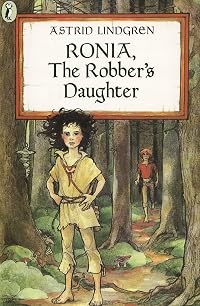
Ronia, the Robber's Daughter
by Astrid Lindgren 
On This Page
Description
Ronia, who lives with her father and his band of robbers in a castle in the woods, causes trouble when she befriends the son of a rival robber chieftain.Tags
Recommendations



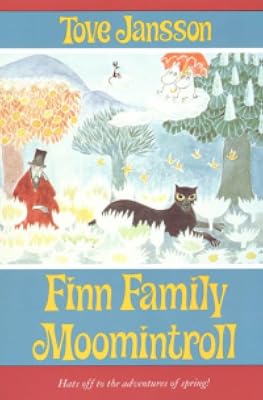








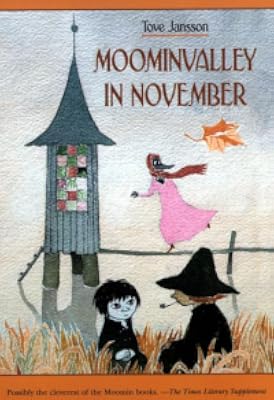
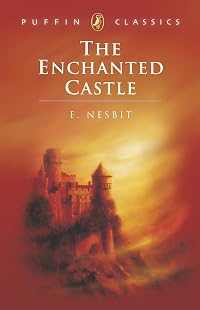


Member Recommendations
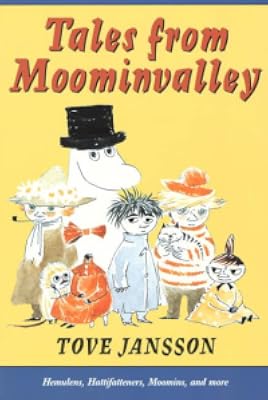
mybookshelf Female heroines who do not just sit back and accept the status quo
ammodramus88 Both of these stories feature young women with minds of their own living in a northern European environment filled with folkloric beings. The mood is different in each story (Ronia's story seems to be a happier one, while Travel Light is more of an elegy for things going away), but there is a basic similarity between them.
Member Reviews
I read this to my grandkids over several visits. From one month to the next they remembered what was going on in the story and where we left off. We all enjoyed it greatly: Ronia's temper, so much like her father's, scary times with dwarves and harpies (not too many), taming wild horses, living in a cave and swimming in the river, her mother's bedtime song and homemade bread. They are robbers, however, and the ethics of this aren't really addressed; but this setting does allow for a feeling of freedom/independence and a lifestyle that is outside the cultural norms in which strong characters are fostered. This book shows Ronia's character developing, albeit reluctantly, and learning to accept a friendship with someone her family show more considers an enemy. Also shows her father's parallel reluctant change, something not often seen in a children's book. show less
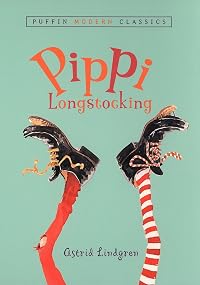
This one was given to me by the person with the best taste in children’s literature of anyone I’ve met. Obviously I had to read it! I actually enjoyed it even more than Pippi Longstocking. Where Pippi is all about an unusual girl dropped into the midst of regular society, Ronia is all about a girl living in the wild.
She is the only daughter of the leader of a band of robbers. They live in the forest and her boisterous father and strong-willed mother give Ronia plenty of freedom to explore her surroundings as she grows up. When she makes friends with a young boy in the forest she has no idea that it’s the son of her father’s nemesis.
BOTTOM LINE: Another adventurous female protagonist from Lindgren. I can’t wait to share her show more books with my daughter. Ronia is a wonderful example of being brave, kind, and generous of spirit. show less
She is the only daughter of the leader of a band of robbers. They live in the forest and her boisterous father and strong-willed mother give Ronia plenty of freedom to explore her surroundings as she grows up. When she makes friends with a young boy in the forest she has no idea that it’s the son of her father’s nemesis.
BOTTOM LINE: Another adventurous female protagonist from Lindgren. I can’t wait to share her show more books with my daughter. Ronia is a wonderful example of being brave, kind, and generous of spirit. show less
I didn't read this book as a child, probably because I was just a bit too old for it when it came out. But reading it to my own children I was impressed with the beauty and subtlety of the story.
To me, it really is a story about growing up and finding out not everything your parents told you may be true. A story about love and friendship, as well. But most importantly, with just a few strokes she paints a real world of believable characters.
To me, it really is a story about growing up and finding out not everything your parents told you may be true. A story about love and friendship, as well. But most importantly, with just a few strokes she paints a real world of believable characters.
I know this is intended for younger readers, but I thoroughly enjoyed this book. It's an absolutely delightful tale with wonderful characters that are so much fun to follow. It's fantasy that does not feel too different from the real world; more like a light dusting of whimsical fantasy, mostly in the form of mythical and folkloric creatures, sprinkled over the setting of a lush, enchanting wood and a cavernous castle on the hill. It's beautifully written with touches of humor here and there and moves at a leisurely pace that allows you to enjoy the world and its colorful characters. Very enjoyable!
Today I treated myself to a reread of an old childhood favorite, Ronia, the Robber's Daughter by Astrid Lindgren. I just love this book. It's set in a fantasy world with harpies and rumphobs and gray dwarfs. It reminds me a bit of another little gem of a fantasy, The Farthest-Away Mountain by Lynne Reid Banks. Ronia is the daughter of a robber chieftain, Matt, and they live in the forest in Matt's robber stronghold with Ronia's mother Lovis and a ragtag band of robbers. Early on, Ronia learns to hate their rival Borka's robber band, until one day when she reluctantly saves the life of Borka's son, Birk. The two children adopt one another as brother and sister, but their friendship is threatened by the hatred between the two bands.
I show more really enjoy how Lindgren describes Ronia's consciousness and thought processes — she really understands how children's minds work. The characters are wonderful, with such strong personalities written in so few words (a nod is certainly due to Lindgren's translator, Patricia Crampton — great job!). It's a lovely little story with not a word out of place. Highly, highly recommended. show less
I show more really enjoy how Lindgren describes Ronia's consciousness and thought processes — she really understands how children's minds work. The characters are wonderful, with such strong personalities written in so few words (a nod is certainly due to Lindgren's translator, Patricia Crampton — great job!). It's a lovely little story with not a word out of place. Highly, highly recommended. show less
Swedish writer Astrid Lindgren is famous mostly as the creator of Pippi Longstocking; her fans, however, know that she wrote many other great children’s books. I read The Brothers Lionheart years ago, but while I appreciated the world-building, I was disturbed by her almost cavalier attitude towards the child mortality. I might never have picked up this book if a friend and fellow LT-er had not assigned it as part of a mutual YA challenge—and now I must say, I am thrilled that she did!
Ronia, the Robber’s Daughter is a deceptively simple tale, about the daughter of robber chieftain Matt. She was born on the stormiest night that anyone can remember, when a lightning bolt rent Matt’s Fort in two. She becomes the pride and boast of show more the entire robber clan, but remains in the dark as to what robbers really do. Her passion is for the forest itself, and throughout spring, summer, and fall she whiles her time away happily there. Then one day she discovers that a rival robber band, driven out of their former hideaway, has moved into the part of Matt's Fort that now lies on the other side of Hell’s Gap. At this discovery, the enmity between Matt's men and Borka’s escalates; meanwhile, Ronia forges a shaky and unlikely friendship with Borka’s son, Birk. Can the fondness between these two children overcome their parents’ hate?
I’ve often read that a children’s book is the hardest thing to write, and reading Ronia, I began to have an inkling as to why: a great children’s author has to master the art of saying a lot with a very little. Take the character of Ronia’s mother, Lovis. There are not many of words spent describing her, and she speaks little, but she is central to the story and to the life of the robber band. And there is a simple beauty to Lindgren’s descriptions, as translated by Patricia Crampton. One in particular stuck out to me, of the change that the smell of chicken soup wrought on the robbers, after they had eaten salted meat all winter. Scenes like seem all the warmer and more jovial when one considers how dark and dangerous the world Lindgren creates really is.
Moreover, this book invests its child characters with dignity and innocent wisdom, without trying to broadcast a message that adults are all evil or stupid. That is unusual for YA fiction, and very much welcome.
Astrid Lindgren crafted a lovely little book in Ronia. This is one I can see myself returning to, and reading to my own children someday. Recommended. show less
Ronia, the Robber’s Daughter is a deceptively simple tale, about the daughter of robber chieftain Matt. She was born on the stormiest night that anyone can remember, when a lightning bolt rent Matt’s Fort in two. She becomes the pride and boast of show more the entire robber clan, but remains in the dark as to what robbers really do. Her passion is for the forest itself, and throughout spring, summer, and fall she whiles her time away happily there. Then one day she discovers that a rival robber band, driven out of their former hideaway, has moved into the part of Matt's Fort that now lies on the other side of Hell’s Gap. At this discovery, the enmity between Matt's men and Borka’s escalates; meanwhile, Ronia forges a shaky and unlikely friendship with Borka’s son, Birk. Can the fondness between these two children overcome their parents’ hate?
I’ve often read that a children’s book is the hardest thing to write, and reading Ronia, I began to have an inkling as to why: a great children’s author has to master the art of saying a lot with a very little. Take the character of Ronia’s mother, Lovis. There are not many of words spent describing her, and she speaks little, but she is central to the story and to the life of the robber band. And there is a simple beauty to Lindgren’s descriptions, as translated by Patricia Crampton. One in particular stuck out to me, of the change that the smell of chicken soup wrought on the robbers, after they had eaten salted meat all winter. Scenes like seem all the warmer and more jovial when one considers how dark and dangerous the world Lindgren creates really is.
Moreover, this book invests its child characters with dignity and innocent wisdom, without trying to broadcast a message that adults are all evil or stupid. That is unusual for YA fiction, and very much welcome.
Astrid Lindgren crafted a lovely little book in Ronia. This is one I can see myself returning to, and reading to my own children someday. Recommended. show less
”Livet är en sak som man måste vara rädd om, förstår du inte det?”
Detta är inte endast en av Astrid Lindgrens bästa verk, detta är ett av de bästa verken i allmänhet. Det är så mycket jag skulle vilja säga, men mest vill jag bara läsa om den. Igen och igen.
Detta är inte endast en av Astrid Lindgrens bästa verk, detta är ett av de bästa verken i allmänhet. Det är så mycket jag skulle vilja säga, men mest vill jag bara läsa om den. Igen och igen.
Members
- Recently Added By
Lists

Favorite Childhood Books
1,651 works; 519 members
1001 Children's Books You Must Read Before You Grow Up
774 works; 101 members

Best Fantasy Originally Published in a Language Other Than English
84 works; 25 members

Best Children's Books You've Read
197 works; 74 members

Read the book and saw the movie
1,170 works; 195 members

Female Protagonist
1,056 works; 57 members

A Child's Book Tour of Sweden
38 works; 3 members

Elevenses
316 works; 88 members

Satori Smiles Children's Book List
262 works; 7 members
Books with a Character's Name as the Title
129 works; 9 members

Books We Loved As Children
603 works; 252 members

Favorite Books in Translation
320 works; 133 members

Five star books
1,767 works; 110 members

EU Fiction: 1950-2022
223 works; 70 members

Books related to Films By Studio Ghibli
12 works; 3 members

Speculative Fiction from around the World
610 works; 18 members

Books Read in 2018
4,360 works; 110 members

Fantasy novels with a female protagonist
76 works; 15 members

KayStJ's to-read list
1,616 works; 11 members

Best Fantasy Novels
821 works; 361 members

NPR Books You Love: 100 Favorite Books For Young Readers
100 works; 1 member
Author Information

827+ Works 46,006 Members
Astrid Lindgren: November 7, 1907 - January 28, 2002 There are few children's authors more famous than Astrid Lindgren, creator of the feisty, legendary heroine, Pippi Longstocking. Lindgren was born on November 14, 1907, in Sweden. Her work has been acclaimed with many prestigious awards, among them the Hans Christian Andersen Medal (1958), the show more Lewis Carroll Shelf Award (1978), and the International Book Award (1993). This truly internationally known author was the recipient of the Albert Schweitzer Medal and has been honored repeatedly in her native Sweden. There is a bronze statue of her in a Stockholm park. Her picture is on a postage stamp. The "World of Astrid Lindgren" is a theme park featuring the wholesome characters of her books. The annual children's literature award is known as the Astrid Lindgren Prize. The inspiration for this long and illustrious career, spanning five decades, is the author's own childhood. Her memories - of free and often wild play with her brothers and sister, of loving parents, of a close-knit farm community, of reading about heroines like Pollyanna and Anne of Green Gables - became the foundations of her books. Lindgren has said, "I write to amuse the child within me, and I can only hope that in this way other children as well can have a little fun." Lindgren amused her own children by telling them stories. Her daughter, Karin, named Pippi Longstocking, and the first written story was given to Karin as a birthday gift. The next year, 1945, Pippi Longstocking won a best children's book competition and Lindgren began writing the perennially child-pleasing stories that make up her enormous body of work, some of which are the series based on "Children of Noisy Village", the fable "The Tomten", the rambunctious "Karlson-On-the-Roof", the irrepressible"Lotta on Troublemaker Street" , the controversial "The Brothers Lionheart", and the unforgettable, wildly funny superheroine, Pippi, was featured in other books and became a star of stage, screen and television. Lindgren has been called the world's most read author of children's books. She is hailed as the third most translated children's book author after H.C. Andersen and the Grimm brothers. Her impact on the world of children's literature is immeasurable. Astrid Lindgren died in her sleep, in her home in Sweden on January 28, 2002 at the age of 94. (Bowker Author Biography) show less
Astrid Lindgren has a Legacy Library. Legacy libraries are the personal libraries of famous readers, entered by LibraryThing members from the Legacy Libraries group.
Some Editions
Awards and Honors
Awards
Notable Lists
Series
Belongs to Publisher Series
Geef een boek cadeau! (2018)
ATB (138)
Work Relationships
Is contained in
Has the adaptation
Is abridged in
Common Knowledge
- Canonical title
- Ronia, the Robber's Daughter
- Original title
- Ronja rövardotter
- Original publication date
- 1981; 1982 (deutsch) (deutsch)
- People/Characters
- Ronja; Birk Borkason; Mattis; Borka; Lovis; Undis (show all 14); Skalle-Per; Lill-Klippen; Pelje; Fjosok; Joen; Tjegge; Tjorm; Sturkas
- Important places*
- Mattisborgen; Mattisskogen
- Related movies
- Ronja Rövardotter (1984 | IMDb); Sanzoku no musume Rônya (2014 | IMDb)
- First words
- Den natten då Ronja föddes gick åskan över bergen, ja, det var en åsknatt så att allt oknytt som höll till i Mattisskogen förskrämt kröp undan i sina hålor och gömslen, bara de grymma vildvittrorna gillade åskvä... (show all)der mer än alla andra väder och flög med tjut och skrik runt rövarborgen på Mattisberget.
- Last words
- (Click to show. Warning: May contain spoilers.)Och hon skrek, gällt som en fågel, ett jubelskrik så att det hördes långt bort i skogen.
- Original language
- Swedish
*Some information comes from Common Knowledge in other languages. Click "Edit" for more information.
Classifications
- Genres
- Children's Books, Fiction and Literature
- DDC/MDS
- 839.7374 — Literature & rhetoric German & related literatures Other Germanic literatures Swedish literature Swedish fiction 1900-1999 1945-1999
- LCC
- PZ7 .L6585 .R — Language and Literature Fiction and juvenile belles lettres Fiction and juvenile belles lettres Juvenile belles lettres
- BISAC
Statistics
- Members
- 2,769
- Popularity
- 6,635
- Reviews
- 49
- Rating
- (4.36)
- Languages
- 38 — Bulgarian, Catalan, Czech, Danish, Dutch, English, Esperanto, Estonian, Finnish, French, Frisian, Georgian, German, Hebrew, Hungarian, Icelandic, Indonesian, Italian, Japanese, Korean, Kurdish, Latvian, Lithuanian, Norwegian (Bokmål), Norwegian, Polish, Portuguese, Russian, Serbian, Croatian, Slovak, Slovenian, Sami, Spanish, Swedish, Thai, Ukrainian, Vietnamese
- Media
- Paper, Audiobook, Ebook
- ISBNs
- 140
- ASINs
- 14