On This Page
Description
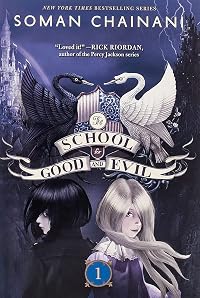
THE SCHOOL FOR GOOD AND EVIL will soon be a major motion picture from Netflix—starring Academy Award winner Charlize Theron, Kerry Washington, Laurence Fishburne, Michelle Yeoh, Sofia Wylie, Sophie Anne Caruso, Jamie Flatters, Earl Cave, Kit Young, and more!The New York Times bestselling School for Good and Evil series is an epic journey into a dazzling new world, where the only way out of a fairy tale is to live through one. Start here to follow Sophie, Agatha, and everyone at school show more from the beginning!
With her glass slippers and devotion to good deeds, Sophie knows she'll earn top marks at the School for Good and join the ranks of past students like Cinderella, Rapunzel, and Snow White. Meanwhile, Agatha, with her shapeless black frocks and wicked black cat, seems a natural fit for the villains in the School for Evil.
The two girls soon find their fortunes reversed—Sophie's dumped in the School for Evil to take Uglification, Death Curses, and Henchmen Training, while Agatha finds herself in the School for Good, thrust among handsome princes and fair maidens for classes in Princess Etiquette and Animal Communication.
But what if the mistake is actually the first clue to discovering who Sophie and Agatha really are?
Don't miss the thrilling conclusion to the beloved series, The School for Good and Evil #6: One True King!
. show less
Tags
Recommendations

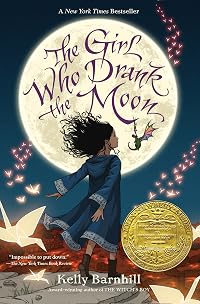
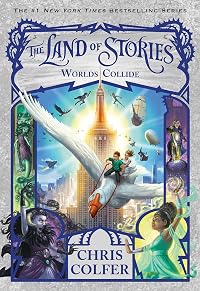
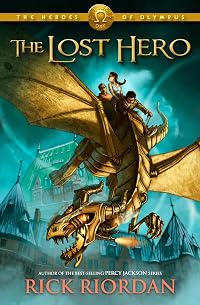

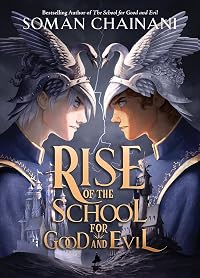



Member Recommendations
ablachly Another tale of young women finding their way in a world defined in the black and white terms of good and evil.
20
by anonymous user
Member Reviews
Due to my love of fairy tales and fairy tale revisions, I was drawn to this young adult novel about a school for heroes and villains of fairy tales. The novel ended up being quite different from what I expected, but I still enjoyed it as much as I hoped I would.
The story begins in the small village of Gavaldon, where every four years a mysterious shadow kidnaps two children. The villagers eventually discovered that the creature was a school master for some place called The School for Good and Evil. They began to call him the School Master, and tried to guard their families against him. They knew he always took one exceptionally good and one exceptionally bad child. Every four years, they tried to make their good children act awful and show more their bad children to clean up, in the hopes of escaping the School Master's Curse. The novel begins in the final days leading up to the chosen time, and introduces readers to two girls, Sophie and Agatha. Sophie is the first child who wants to be kidnapped. She is a lovely girl - physically - and spends an immense amount of time keeping herself princess pretty. She is tired of drab village life, and wants her own fairy tale and dashing prince. Although she considers herself a good girl, the best girl, the reader soon sees that she is shallow, vain, and insensitive to the feelings of others. Agatha, on the other hand, is withdrawn and unlovely. She wears shapeless black dresses and clumpy shoes, and doesn't bother with cleaning or her hair. Yet, Agatha and Sophie are best friends. It began with Sophie befriending Agatha because she wanted to chalk up another good deed to guarantee her entry into the Good School, but soon Sophie genuinely began to care for Agatha. Agatha saw her true personality, and still liked her. While Sophie deludes herself with dreams and fantasies (including wishful thinking about herself), Agatha is grounded in common sense. She hopes the School Master will leave them both alone.
Not so. After a harrowing night, both girls are spirited away to The School for Good and Evil. One problem: Sophie is sent plummeting into the School of Evil, while Agatha is deposited in the School of Good. The next several chapters describe the schools, which are polar opposites in everything from decorations to food, and narrate Sophie's frantic attempts to prove to anyone that she was placed in the wrong school. Both girls struggle in their classes, subjects that are so contrary to their normal habits. Their friendship is also strained, with Sophie frequently blaming Agatha for stealing her place, and Agatha insisting that they need to focus on escaping the school. Sophie is infatuated with Prince Tedros, the king of the boys on the Ever side, and just wants to grab her prince and move to her rightful place in the Good side. When Agatha and Sophie get a clue from the School Master that they only way to go home is to help Sophie get what villains can never have - true love's kiss - they both work together to convince Tedros he loves Sophie. Agatha believes Sophie will leave with her when that happens, but Sophie's intentions are far from clear.
A fascinating aspect of this novel is the way characters constantly switch sides. The School for Good and Evil is built on the premise that some people are good, some are evil, and there is no in between. If someone feels something of the opposite nature, they have to grind it out of their system. Then Agatha and Sophie arrive. Agatha dresses like a witch, and doesn't like people, but is very moral and kind inside. Sophie is as beautiful as a princess, and thinks she is therefore good, but is consumed with herself and capable of great acts of cruelty. Yet she can be truly good, and Agatha can be bad, too. Tedros plays into this idea, as well. He falls for Sophie, not realizing that Agatha is who he really was choosing, and then spurns Sophie when he learns that she tricked him. However, he is still attracted to Sophie when she embraces her evil side. Then he starts to fall for Agatha. The reactions of the other students also constantly change. At first, the Nevers hate Sophie and admire Agatha. Then they embrace Sophie as their hero. Then they fear she will unleash war and try to stop her. During the climax of the book, allegiances switch so rapidly that eventually the children are trapped in outright chaos. Is it true that people are only one thing, or do they have both good and evil inside them? This theme is developed through the very conclusion of the story.
One reason the book surprised me was it was much darker than I expected. The School for Evil is truly evil, not cartoon evil where the grimmer elements are absent, but actually bad. Villains relish the thought of murder and carnage. The decor is scary. When Sophie is taken to the Doom Room for torture, and kills the beast, I was shaken. Not that I mark this trait as bad; it actually enhances the story, because it embraces the very dark flip side of original fairy tales. Still, consider it reading for older children, maybe even teenagers.
Another surprise was the romance angle. Are Agatha and Sophie in love? What about Tedros? He is the third most developed character, and clearly not just a foil for the girls. His cry at the end of the book is haunting. Also, both girls seemed to have real feelings for him. Yet it was very satisfying when Sophie asked who needs princes in a fairy tale, and that idea linked to another strong motif in the book. Girls don't always need to be saved, they can save themselves. Stories don't have to follow preestablished rules, characters can make their own destinies. Actually, a lot of clever themes and reinterpretations play out in the novel. My synopsis above only covers the first half of the book, with many more twists and turns, not to mention plenty of action, to follow. In addition, the world is original and well developed. The school is a fascinating place. The abrupt ending suggests at least one more book in the series (actually, I check online, and the second one is already out) and I certainly plan on reading it. show less
The story begins in the small village of Gavaldon, where every four years a mysterious shadow kidnaps two children. The villagers eventually discovered that the creature was a school master for some place called The School for Good and Evil. They began to call him the School Master, and tried to guard their families against him. They knew he always took one exceptionally good and one exceptionally bad child. Every four years, they tried to make their good children act awful and show more their bad children to clean up, in the hopes of escaping the School Master's Curse. The novel begins in the final days leading up to the chosen time, and introduces readers to two girls, Sophie and Agatha. Sophie is the first child who wants to be kidnapped. She is a lovely girl - physically - and spends an immense amount of time keeping herself princess pretty. She is tired of drab village life, and wants her own fairy tale and dashing prince. Although she considers herself a good girl, the best girl, the reader soon sees that she is shallow, vain, and insensitive to the feelings of others. Agatha, on the other hand, is withdrawn and unlovely. She wears shapeless black dresses and clumpy shoes, and doesn't bother with cleaning or her hair. Yet, Agatha and Sophie are best friends. It began with Sophie befriending Agatha because she wanted to chalk up another good deed to guarantee her entry into the Good School, but soon Sophie genuinely began to care for Agatha. Agatha saw her true personality, and still liked her. While Sophie deludes herself with dreams and fantasies (including wishful thinking about herself), Agatha is grounded in common sense. She hopes the School Master will leave them both alone.
Not so. After a harrowing night, both girls are spirited away to The School for Good and Evil. One problem: Sophie is sent plummeting into the School of Evil, while Agatha is deposited in the School of Good. The next several chapters describe the schools, which are polar opposites in everything from decorations to food, and narrate Sophie's frantic attempts to prove to anyone that she was placed in the wrong school. Both girls struggle in their classes, subjects that are so contrary to their normal habits. Their friendship is also strained, with Sophie frequently blaming Agatha for stealing her place, and Agatha insisting that they need to focus on escaping the school. Sophie is infatuated with Prince Tedros, the king of the boys on the Ever side, and just wants to grab her prince and move to her rightful place in the Good side. When Agatha and Sophie get a clue from the School Master that they only way to go home is to help Sophie get what villains can never have - true love's kiss - they both work together to convince Tedros he loves Sophie. Agatha believes Sophie will leave with her when that happens, but Sophie's intentions are far from clear.
A fascinating aspect of this novel is the way characters constantly switch sides. The School for Good and Evil is built on the premise that some people are good, some are evil, and there is no in between. If someone feels something of the opposite nature, they have to grind it out of their system. Then Agatha and Sophie arrive. Agatha dresses like a witch, and doesn't like people, but is very moral and kind inside. Sophie is as beautiful as a princess, and thinks she is therefore good, but is consumed with herself and capable of great acts of cruelty. Yet she can be truly good, and Agatha can be bad, too. Tedros plays into this idea, as well. He falls for Sophie, not realizing that Agatha is who he really was choosing, and then spurns Sophie when he learns that she tricked him. However, he is still attracted to Sophie when she embraces her evil side. Then he starts to fall for Agatha. The reactions of the other students also constantly change. At first, the Nevers hate Sophie and admire Agatha. Then they embrace Sophie as their hero. Then they fear she will unleash war and try to stop her. During the climax of the book, allegiances switch so rapidly that eventually the children are trapped in outright chaos. Is it true that people are only one thing, or do they have both good and evil inside them? This theme is developed through the very conclusion of the story.
One reason the book surprised me was it was much darker than I expected. The School for Evil is truly evil, not cartoon evil where the grimmer elements are absent, but actually bad. Villains relish the thought of murder and carnage. The decor is scary. When Sophie is taken to the Doom Room for torture, and kills the beast, I was shaken. Not that I mark this trait as bad; it actually enhances the story, because it embraces the very dark flip side of original fairy tales. Still, consider it reading for older children, maybe even teenagers.
Another surprise was the romance angle. Are Agatha and Sophie in love? What about Tedros? He is the third most developed character, and clearly not just a foil for the girls. His cry at the end of the book is haunting. Also, both girls seemed to have real feelings for him. Yet it was very satisfying when Sophie asked who needs princes in a fairy tale, and that idea linked to another strong motif in the book. Girls don't always need to be saved, they can save themselves. Stories don't have to follow preestablished rules, characters can make their own destinies. Actually, a lot of clever themes and reinterpretations play out in the novel. My synopsis above only covers the first half of the book, with many more twists and turns, not to mention plenty of action, to follow. In addition, the world is original and well developed. The school is a fascinating place. The abrupt ending suggests at least one more book in the series (actually, I check online, and the second one is already out) and I certainly plan on reading it. show less
Prepare for a breaking of the heart, twisting of the spirit and warping of any illusions you have about Good and Evil!
Read my Interview with the Author @ Not Yet Read and see the awesome FanArt Dolls my sister made!
The School for Good and Evil, it sounds like a light breezy read doesn't it? What it really is *flabbergasted for the right word* is well, downright MAGNIFICENT! I haven't loved a book so much in a very long time, and I devour books like a maniac. It literally went above and beyond any expectation I could have conceived for it. I picked it up thinking: "This will be quite the fluffy fairytale," but was blown away because it was nothing of the kind.
Lets begin with the description: I love that it tells you exactly what The show more School for Good and Evil is about without giving even an inkling of just how this tale is going to be delivered. This is a book that can definitely be enjoyed by fairy tale lovers of all ages. Especially if you don't mind your fairy tales having a bit of a dark side. Not too dark mind you but just the right amount. Yes JUST RIGHT!!
There are wonderful comic moments, that I couldn't help but smirk at. I felt like the author was making fun of so many things and it tickled me pink to no end. However, there are some moments that tightened my chest and throat. You know what I'm talking about, that's right when you are biting back the tears. I'm not normally a crier...I'm a laugh-er. So I don't think I can explain well enough why this book touched me so much. Also, it is full of illustrations! At least one for the start of each chapter. These added the perfect storybook touch.
What surprised and absolutely delighted me was how much I loved all of the characters. I grew attached to all of them! From main, to sidekicks, to little supplemental characters. They were all given realism and depth of character that made each unique and memorable. My favorite is Hort...you'll hear me gush about him again. *smirk*
I was captured immediately by the wry sense of humor one of the main characters Agatha possessed. She looks like your typical fairy tale witch but somehow ends up in the School for Good! As you can see from the quote below. She is a snappy girl and I couldn't help but love her.
"Graveyards have their benefits," Agatha said. "No nosy neighbors. No drop-in salesmen. No fishy 'friends' bearing face masks and diet cookies, telling you you're going to Evil School in Magic Fairy Land."
Soman Chainani writes characters that we can see reflected back in ourselves. These are the children that we once were, or hey for those young readers, perhaps who they still are. I think he was delving deep trying to get his readers to challenge those childhood tropes of Good and Evil. Are you beautiful with flawless skin and impeccable clothes? Are you ugly with warts and foul body odor? Does eating lots of sweets really lead you down a road of sin and temptation? Well shucks folks, I MUST be Evil because I'm a total greedy gobbler!
Prepare yourself for the "Evers" and the "Nevers" - that's what these kids call themselves, for that's how their stories go. But onto my favorite character Hort, of course he is a "Never," attending the School for Evil. He was such a sad pathetic looking little guy, but he was excitable and friendly and hey he was Evil right? This quote is when I first met him - and the little girl in me that loves the underdog had high hopes for him.
He looked like a sinister little weasel.
"The bird ate my shirt," he said. "Can I touch your hair?" Sophie backed up.
"They don't usually make villains with princess hair," he said, dog-paddling towards her."
Then in unexpected moments my heart would break...and frequently it was Hort that would do this to me.
"Dad told me villains can't love. That it's unnatural and disgusting."
...
"So I definitely can't love," Hort said.
...
"But if I could love, I'd love you."
If that isn't sad...unrequited love, then blast I don't know what is!
Agatha sums up the best element of this tale for me and precisely how I feel about villains! They are a major part of what makes a story worth reading. Often I feel like some authors treat them just as a way to make the good guy look better or "grow" into that strong character that the reader wants to love. But me? I'm usually secretly rooting for the bad guy.
"She had always found villains more exciting than heroes. They had ambition, passion. They made the stories happen. Villains didn't fear death. No, they wrapped themselves in death like suits of armor! As she inhaled the school's graveyard smell, Agatha felt her blood rush. For like all villains, death didn't scare her. It made her feel alive."
The School for Good and Evil captures the true spirit of the human heart in so many ways that I was laughing, cringing, weeping and just dying to get to the end to know how this fairy tale would end. And now?...now I'm so sad that it's over. I know this book will become a hearthstone in my library, one that I will read my own child when he gets older and that I will return to time and again.
So consider this readers...
What's the one thing Evil can never have...and the one thing Good can never do without?
P.S. There is already a film being planned for 2015! show less
While this one is filed under Middle-Grade, I don't see why it can't be enjoyed by all ages. I'm a strong believer in that fairy tales are not just for children, that the stories and characters in folkloric fantasy can appeal to a much wider audience -- and it's especially entertaining when familiar concepts like "fairy tale romance" or "happily ever after" are being parodied or turned on their heads.
That's the idea behind this book; in a village called Gavaldon, two children are kidnapped every four years, never to be seen again. One was always beautiful and good, the other an outcast and strange. It didn't take long for the village children to speculate where these missing boys and girls go. They say a mysterious schoolmaster takes show more them to the fabled School for Good and Evil, where storybook heroes and villains are made.
For as long as she can remember, Sophie has dreamed of being whisked away to the School of Good, imagining a magical world of pretty dresses and handsome princes. On the other hand, she figures her friend Agatha with her homely face and frumpy black clothes would be a perfect fit for the School of Evil. So it's no surprise then when the two were the ones taken way this year. However, when they arrive at the Endless Woods, Sophie is dumped into the school for Evil, while Agatha ends up in the School for Good! This has to be just a terrible mix-up, right? Or is it?
How cool is this idea? Let's face it, traditional fairy tales aren't about character development; off the top of my head, Prince Charming and others like him are good examples of characters that don't go beyond being a mere caricature. We don't tend to think beyond what is presented, and that's what makes this book so great. You know the kind of satire we see in Shrek? It's similar here, poking fun at how shallow princesses must be for obsessing only about their beauty and who will take them to the formal ball. It also makes you wonder about the villains, like, do any of them have hopes and ambitions other than cooking up nefarious schemes? Who gets to determine what is good and evil, anyway?
Obviously, there also some good messages here. "Beauty is only skin deep" and "believe in yourself" are only a couple amongst many, but it's presented very well in this original and magical tale, all wrapped up in a whimsical package. There are lovely illustrations scattered throughout the book as well, and I can't help but feel grumpy now about the lack of pretty drawings in my adult fantasy novels. Is there a rule or something that pictures can only belong in children's books?! Regardless, this book is so much fun. At once ridiculous and full of heart, I couldn't help but melt for this story and its characters. Oh so cute at times, but sinister and dark at others, this book will enchant you and make you smile. show less
That's the idea behind this book; in a village called Gavaldon, two children are kidnapped every four years, never to be seen again. One was always beautiful and good, the other an outcast and strange. It didn't take long for the village children to speculate where these missing boys and girls go. They say a mysterious schoolmaster takes show more them to the fabled School for Good and Evil, where storybook heroes and villains are made.
For as long as she can remember, Sophie has dreamed of being whisked away to the School of Good, imagining a magical world of pretty dresses and handsome princes. On the other hand, she figures her friend Agatha with her homely face and frumpy black clothes would be a perfect fit for the School of Evil. So it's no surprise then when the two were the ones taken way this year. However, when they arrive at the Endless Woods, Sophie is dumped into the school for Evil, while Agatha ends up in the School for Good! This has to be just a terrible mix-up, right? Or is it?
How cool is this idea? Let's face it, traditional fairy tales aren't about character development; off the top of my head, Prince Charming and others like him are good examples of characters that don't go beyond being a mere caricature. We don't tend to think beyond what is presented, and that's what makes this book so great. You know the kind of satire we see in Shrek? It's similar here, poking fun at how shallow princesses must be for obsessing only about their beauty and who will take them to the formal ball. It also makes you wonder about the villains, like, do any of them have hopes and ambitions other than cooking up nefarious schemes? Who gets to determine what is good and evil, anyway?
Obviously, there also some good messages here. "Beauty is only skin deep" and "believe in yourself" are only a couple amongst many, but it's presented very well in this original and magical tale, all wrapped up in a whimsical package. There are lovely illustrations scattered throughout the book as well, and I can't help but feel grumpy now about the lack of pretty drawings in my adult fantasy novels. Is there a rule or something that pictures can only belong in children's books?! Regardless, this book is so much fun. At once ridiculous and full of heart, I couldn't help but melt for this story and its characters. Oh so cute at times, but sinister and dark at others, this book will enchant you and make you smile. show less
Great reimagining of what fairy tales are all about, with some pointed commentary on the nature of princesses and heroes in our modern culture.
Excellent story of two best friends who are whisked off to the terrifying and fabled School for Good and Evil, where one will become the wickedest of witches, and the other's compassionate nature will reveal her to be the most lovely spirited of princesses. At least, that's how it's supposed to work. But Agatha (witch) and Sophie (princess) accidentally get dropped into the wrong schools, and end up re-writing all the tales. A fresh and sometimes humorous take on the subject, with plot twist after plot twist to keep the action moving along.
I particularly like how incidental the prince is to the show more story. This is a story about a friendship between girls. Girls have complicated friendships, and this one is a doozy. show less
Excellent story of two best friends who are whisked off to the terrifying and fabled School for Good and Evil, where one will become the wickedest of witches, and the other's compassionate nature will reveal her to be the most lovely spirited of princesses. At least, that's how it's supposed to work. But Agatha (witch) and Sophie (princess) accidentally get dropped into the wrong schools, and end up re-writing all the tales. A fresh and sometimes humorous take on the subject, with plot twist after plot twist to keep the action moving along.
I particularly like how incidental the prince is to the show more story. This is a story about a friendship between girls. Girls have complicated friendships, and this one is a doozy. show less
Sophie hesitated. “Well, it’s just that in fairy tales, different usually turns out, um . . . evil.”
“You’re saying I’m going to turn out a Grand Witch,” said Agatha, hurt.
“I’m saying whatever happens, you’ll have a choice,” Sophie said gently. “Both of us will choose how our fairy tale ends.”
3.5 stars?
I really loved the clever way this book played with fairytale tropes of good and evil and spun them around.
Good only defends and talks to animals, evil must destroy their nemesis or they will not be happy.
Yet Sophie uses ‘good’ animals for ‘evil’ by making bees sting and Agatha wishes for something truly Good instead of true love because she thinks true love is not for the likes of her.
I also liked the show more grim tone, reminiscent of old fairytales. The school makes their top students villains, their average students henchmen and dooming those who fail to life as a creature.
The whole fairytale world has its cracks. Evil is not truly evil, if they have friends and Good is not truly good if they fail their students like that.
The concept that Sophie was never truly ‘Good’ and her good deeds were only to get into the school of Good made for a truly interesting corruption arc, while Agatha’s insistence on being bitter and average looking questions whether ‘Good’ in this world focuses too much on appearances.
However, some fairytale tropes felt annoyingly basic. For a book that is meant to subvert and play around with stock elements, some were used in a very standard way.
The true love’s kiss from a prince Sophie barely knows is used as a serious plot point. She doesn’t know him? And they’re 13? This would have been a great opportunity to twist the idea of fairytale true love but the book doesn’t.
Secondly, the fact that ‘good’ is filled with pretty blonde princesses and sword fighting knights while ‘evil’ has ugly dark haired witches with terrible curses feels off. What about all the kids who are just born with dark hair? Are they all Agatha, doomed to question whether their appearance makes them evil?
I know Agatha’s story is about learning that she is still good despite her appearance, but why is it necessary for every not blonde person to go through ChARActer DEVELopmENT go gain the confidence blond people are gifted naturally show less
“You’re saying I’m going to turn out a Grand Witch,” said Agatha, hurt.
“I’m saying whatever happens, you’ll have a choice,” Sophie said gently. “Both of us will choose how our fairy tale ends.”
3.5 stars?
I really loved the clever way this book played with fairytale tropes of good and evil and spun them around.
Good only defends and talks to animals, evil must destroy their nemesis or they will not be happy.
Yet Sophie uses ‘good’ animals for ‘evil’ by making bees sting and Agatha wishes for something truly Good instead of true love because she thinks true love is not for the likes of her.
I also liked the show more grim tone, reminiscent of old fairytales. The school makes their top students villains, their average students henchmen and dooming those who fail to life as a creature.
The whole fairytale world has its cracks. Evil is not truly evil, if they have friends and Good is not truly good if they fail their students like that.
The concept that Sophie was never truly ‘Good’ and her good deeds were only to get into the school of Good made for a truly interesting corruption arc, while Agatha’s insistence on being bitter and average looking questions whether ‘Good’ in this world focuses too much on appearances.
However, some fairytale tropes felt annoyingly basic. For a book that is meant to subvert and play around with stock elements, some were used in a very standard way.
The true love’s kiss from a prince Sophie barely knows is used as a serious plot point. She doesn’t know him? And they’re 13? This would have been a great opportunity to twist the idea of fairytale true love but the book doesn’t.
Secondly, the fact that ‘good’ is filled with pretty blonde princesses and sword fighting knights while ‘evil’ has ugly dark haired witches with terrible curses feels off. What about all the kids who are just born with dark hair? Are they all Agatha, doomed to question whether their appearance makes them evil?
I know Agatha’s story is about learning that she is still good despite her appearance, but why is it necessary for every not blonde person to go through ChARActer DEVELopmENT go gain the confidence blond people are gifted naturally show less
No one knows a girls’ friendship like a guy, amIrite? Just kidding, totally sexist of me, just like this entire hetronormative mess of a Hogwarts derivative with more contradictory messaging than a Miss Universe pagent. It can’t decide if it wants to deconstruct fairy tales or affirm them (think Shrek, with less humor); similarly, the definitions of ‘beauty’ and ‘ugly’ (I hearby challenge Chainani to read [b:The Beauty Myth|39926|The Beauty Myth|Naomi Wolf|https://i.gr-assets.com/images/S/compressed.photo.goodreads.com/books/1388197585l/39926._SY75_.jpg|836516] by Naomi Wolf), as well as definitions of ‘good’ and ‘bad.’ I will tell you the truth: what it ultimately does is affirm all of those things in the most show more conventional fashion. (In some cases, literally through fashion.) Add the final scene, which will feel like a semi-cliff-hanger to some, and you have a hot mess of a book.
Chainani clearly did his Rowling research and thought “how can I capitalize on this magical school goldmine?” But instead of wasting time in the mundane world and spreading development over seven books, he accelerates full speed into the magical school with classes, contests, secret night adventures, and survival in the woods. There’s a remote castle in the woods where ‘Good’ and ‘Evil’ are taught. There are teachers who are present but have virtually no authority and a mysterious School Master. Magical creatures abound to enforce the rules. There is even a culminating trial where only one house/side can win (and it’s been Good for two hundred years), followed by a fancy dress ball. If all of this sounds Potter-iffic, I think that’s because it’s meant to, and I believe that’s why it appeals to many readers despite it’s inherent and profuse problems.
The lead characters are Sophie, a beauty-obsessed twelve year-old looking for a Prince, and Agatha, the introverted and ‘ugly’ daughter of a village ‘witch,’ and her only friend. Every four years, two children disappear from this isolated village, perhaps to become lead characters in a future fairy tale. One person becomes the ‘good’ character and one person the ‘bad' lead. Sophie’s been primping for the ‘Good’ role for years (because according to their definitions, ‘good’ means ‘lovely,’ along with a token good deed or two). However, when Sophie is kidnapped, Agatha follows, trying to save her friend. Pink and primped Sophie is dropped at the dark, scary School for Evil, staffed by wolves and goblins, and homely, sloppy Agatha is left at the School for Good, staffed by fairies and princesses. Although she's certain she's in the wrong school, Sophie still sees it as the chance to find her Prince while Agatha focuses on returning home.
Worth seeing what happens, maybe? At first, Chainani seems to be doing something interesting with making both schools equally horrible, just using a different kind of metric. Also like Hogwarts, we get a variety of hands-on learning, but what’s unique is that it is about being ‘ugly’ or ‘beautiful’ as much as magic. Classes on the ‘good’ side include 'how to be beautiful,' and classes on the ‘evil’ side include ‘uglification.' (It's worth noting that classes follow conventional definitions of these words).
Eventually some classes are combined between Team Good and Team Evil so that we get to see the two interact. These situations particularly suck because the lessons in ‘identifying good’ and ‘identifying your prince/princess,’ set up Sophie and Agatha in opposition to each other over a particularly heroic Prince. Sophie becomes obsessed with the idea that she is both in the wrong school and deserves the Prince while Agatha spends her time helping Sophie achieve her goal, because a kiss from a Prince will solve a riddle.
So, let’s see: a three-way love triangle. Attractiveness is about your image, not your behaviors. Friendship is a tool to accomplish a goal. Being the subservient ‘helper-friend’ is okay, as long as your friend does some personal growth in the end. Girls operating under the philosophy of “If your true love kisses you, then you can’t be a villain,” with the corollary, “For every Ever, there is only one true love,” followed by “So if a girl doesn’t get asked to the Ball, then she fails and suffers a punishment worse than death. But if a boy doesn’t go to the Ball, he gets half ranks.” Categories of good and evil both suck, except when they don’t. Friendship means being a doormat to your friend’s needs, and not expecting reciprocation in respect or understanding.
Do I have that about right? Man (again, I mean this literally), this is some stellar messaging.
I had stayed with it because–major spoiler here–I had read Agatha and Sophie kiss at the end, so I thought the path getting there was going to be normative-deconstructive.
Spoiler: It wasn’t. It was super hetro-normative. And total nonsense, by the way. If you read enough of your fairy tales, you know that evil comes in very beautiful disguises (all the better to fool you with), and that the quality of most young heroes and heroines isn’t that they are beautiful, but that they are kind (to animals, to mysterious old ladies, etc) and that trying to ‘win’ anything without humility only gets you bloody feet, thrown in prison, turned into a goose, or other terrible things.
I would never, ever, ever, recommend this book to anyone, and certainly never give it to a young woman as a present (it's so girl-beauty centric, it's clearly not meant for hetro-norm boys). [b:Castle Hangnail|22504710|Castle Hangnail|Ursula Vernon|https://i.gr-assets.com/images/S/compressed.photo.goodreads.com/books/1408312316l/22504710._SX50_.jpg|41951499] takes a much better look at an essentially ‘good’ girl trying on an ‘evil’ role for young people. My ultimate standard of how you can really start deconstructing ‘good’ and ‘bad’ is The Good Place–which would have been expecting a lot, I grant you, but I was at least hoping for some elementary work on what ‘good’ really means. Since Chainani never separated out the idea of ‘ugly’ from ‘bad,’ and ‘good’ from ‘beautiful,’ I guarantee that both this book and any tie-ins aren’t going to win any Good Awards in my world.
One-and-a-half-stars, rounding down because I read the next book is even worse with it's messaging.
Update: so this is a movie/series now? Gross. More people looking at a cash cow and not for the next generation of queens. show less
Chainani clearly did his Rowling research and thought “how can I capitalize on this magical school goldmine?” But instead of wasting time in the mundane world and spreading development over seven books, he accelerates full speed into the magical school with classes, contests, secret night adventures, and survival in the woods. There’s a remote castle in the woods where ‘Good’ and ‘Evil’ are taught. There are teachers who are present but have virtually no authority and a mysterious School Master. Magical creatures abound to enforce the rules. There is even a culminating trial where only one house/side can win (and it’s been Good for two hundred years), followed by a fancy dress ball. If all of this sounds Potter-iffic, I think that’s because it’s meant to, and I believe that’s why it appeals to many readers despite it’s inherent and profuse problems.
The lead characters are Sophie, a beauty-obsessed twelve year-old looking for a Prince, and Agatha, the introverted and ‘ugly’ daughter of a village ‘witch,’ and her only friend. Every four years, two children disappear from this isolated village, perhaps to become lead characters in a future fairy tale. One person becomes the ‘good’ character and one person the ‘bad' lead. Sophie’s been primping for the ‘Good’ role for years (because according to their definitions, ‘good’ means ‘lovely,’ along with a token good deed or two). However, when Sophie is kidnapped, Agatha follows, trying to save her friend. Pink and primped Sophie is dropped at the dark, scary School for Evil, staffed by wolves and goblins, and homely, sloppy Agatha is left at the School for Good, staffed by fairies and princesses. Although she's certain she's in the wrong school, Sophie still sees it as the chance to find her Prince while Agatha focuses on returning home.
Worth seeing what happens, maybe? At first, Chainani seems to be doing something interesting with making both schools equally horrible, just using a different kind of metric. Also like Hogwarts, we get a variety of hands-on learning, but what’s unique is that it is about being ‘ugly’ or ‘beautiful’ as much as magic. Classes on the ‘good’ side include 'how to be beautiful,' and classes on the ‘evil’ side include ‘uglification.' (It's worth noting that classes follow conventional definitions of these words).
Eventually some classes are combined between Team Good and Team Evil so that we get to see the two interact. These situations particularly suck because the lessons in ‘identifying good’ and ‘identifying your prince/princess,’ set up Sophie and Agatha in opposition to each other over a particularly heroic Prince. Sophie becomes obsessed with the idea that she is both in the wrong school and deserves the Prince while Agatha spends her time helping Sophie achieve her goal, because a kiss from a Prince will solve a riddle.
So, let’s see: a three-way love triangle. Attractiveness is about your image, not your behaviors. Friendship is a tool to accomplish a goal. Being the subservient ‘helper-friend’ is okay, as long as your friend does some personal growth in the end. Girls operating under the philosophy of “If your true love kisses you, then you can’t be a villain,” with the corollary, “For every Ever, there is only one true love,” followed by “So if a girl doesn’t get asked to the Ball, then she fails and suffers a punishment worse than death. But if a boy doesn’t go to the Ball, he gets half ranks.” Categories of good and evil both suck, except when they don’t. Friendship means being a doormat to your friend’s needs, and not expecting reciprocation in respect or understanding.
Do I have that about right? Man (again, I mean this literally), this is some stellar messaging.
I had stayed with it because–major spoiler here–
Spoiler: It wasn’t. It was super hetro-normative. And total nonsense, by the way. If you read enough of your fairy tales, you know that evil comes in very beautiful disguises (all the better to fool you with), and that the quality of most young heroes and heroines isn’t that they are beautiful, but that they are kind (to animals, to mysterious old ladies, etc) and that trying to ‘win’ anything without humility only gets you bloody feet, thrown in prison, turned into a goose, or other terrible things.
I would never, ever, ever, recommend this book to anyone, and certainly never give it to a young woman as a present (it's so girl-beauty centric, it's clearly not meant for hetro-norm boys). [b:Castle Hangnail|22504710|Castle Hangnail|Ursula Vernon|https://i.gr-assets.com/images/S/compressed.photo.goodreads.com/books/1408312316l/22504710._SX50_.jpg|41951499] takes a much better look at an essentially ‘good’ girl trying on an ‘evil’ role for young people. My ultimate standard of how you can really start deconstructing ‘good’ and ‘bad’ is The Good Place–which would have been expecting a lot, I grant you, but I was at least hoping for some elementary work on what ‘good’ really means. Since Chainani never separated out the idea of ‘ugly’ from ‘bad,’ and ‘good’ from ‘beautiful,’ I guarantee that both this book and any tie-ins aren’t going to win any Good Awards in my world.
One-and-a-half-stars, rounding down because I read the next book is even worse with it's messaging.
Update: so this is a movie/series now? Gross. More people looking at a cash cow and not for the next generation of queens. show less
YA - I listened to this in preparation for the author's visit to our school in May - he is now promoting a prequel and has created a fascinating world of magic and thoughtful ideas of what it means to be 'good' and 'evil.' Every 4 years the "Schoolmaster" slips through the town of Gabaldon, selecting 2 children who will later appear in fairy tales - one good and one evil. Sophie has waited for this her whole young life, desperately wanting to leave the drab predictable village, and wanting to be ensconced as a Princess, so sure is she to be chosen for the School of Good. Her beauty and her acts of charity - which are a little forced upon those she 'helps,' and all her knowledge of skincare and fashion and comportment surely point toward show more that conclusion. She is sort of 'pity friends' with Agatha, the town outcast girl, daughter of a witch, disheveled and misanthropic, believing this will help her case for Good. Aggie believes they are true friends and does not want Sophie to go, so interferes with the Schoolmaster's 'kidnapping' (or so it seems) and is picked up along with Sophie. However, Agatha is dropped off in the School for Good and Sophie is dropped into the School for Evil. Surely someone can remedy this grave mistake! But it is a pretty done deal, according to rules of magic, with an exception from the Schoolmaster himself: solving a riddle and living up to its premise can send them both home. Aggie is intent on doing this, but Sophie is merely intent on making it into her rightful school. Great world building as each separate castle is just as lovely and awful as you would imagine. The 'Evers' and the 'Nevers' share lunch time/space and 1 or 2 classes, though there is endless friction between them, culminating in 3 big school events that either side must win (Evil has not won for over 200 years!) Adding to the stakes is handsome, gallant Tedros, son of Merlin, who Sophie is convinced must be her prince, though she would have to prove herself good first. Schemes abound. What is so artfully done is forcing the examination of these polar opposites - what qualifies someone for either school? appearance? ability? actions? Patterns emerge for the reader, but the characters are a little slower to get it. Six books in the series - Book 1 definitely ended on a cliffhanger - and now a duology for what came before. Great fairytale stuff with an edge. show less
Members
- Recently Added By
Lists

Magic School Kidlit
43 works; 3 members

Princess Tales
130 works; 4 members

Top Five Books of 2016
795 works; 229 members

Dishonourable Mentions of 2013
189 works; 63 members

Books Read in 2019
4,052 works; 110 members

Books Read in 2020
4,379 works; 124 members

First Novels
373 works; 17 members

Books Read in 2018
4,360 works; 110 members

SYES Library Wishlist
1,080 works; 4 members

Books Read in 2017
4,249 works; 130 members

Books recommended by Calgary Public Library staff
1,588 works; 4 members

Library Action/Adventure - Junior and Teenage
158 works; 1 member
Author Information

28+ Works 12,054 Members
Soman Chainani is a graduate of the MFA Film Program at Columbia University, and the recipient of the school's top prize, the FMI Fellowship for Writing and Directing. His short films, DAVY & STU and KALI MA, have played over 150 international film festivals, won over 30 jury and audience awards, and racked up over 1,000,000 YouTube hits. His show more writing awards include honors from Big Bear Lake, the Sun Valley Writer's Fellowship, and the coveted Shasha Grant, awarded by a jury of international film executives. He was also nominated for a NewNowNext Award, sponsored by MTV. Chainani graduated Harvard University summa cum laude, with a degree in English & American Literature. While at Harvard, he focused on fairy tales and wrote his thesis on why evil women make such irresistible fairy-tale villains, winning the Thomas Hoopes Prize and Briggs Prize for his work. Chainani's first novel, The School For Good And Evil, also the title of his trilogy, debuted on the New York Times Bestseller List, has been on ABA's National Indie Bestseller List, has been translated into languages across six continents, and will soon be a major motion picture from Universal Studios. His second novel in the trilogy A World Without Princes, appeared on the New York Times Bestseller List in April of 2014. He also made the list in 2015 with his title The Last Ever After. (Bowker Author Biography) show less
Some Editions
Awards and Honors
Awards
Notable Lists
Series

Work Relationships
Is contained in
The School for Good and Evil: The Complete 6-Book Box Set: The School for Good and Evil, The School for Good and Evil: A World Without Princes, The ... A Crystal of Time, The School for Good and by Soman Chainani
Has the adaptation
Common Knowledge
- Canonical title
- The School for Good and Evil
- Original title
- The school for good and evil
- Original publication date
- 2013-05-14
- People/Characters
- Sophie; Agatha; Radley; Tedros
- Important places
- Gavaldon; Endless Woods; The School for Good; The School for Evil
- Related movies
- The School for Good and Evil (2022)
- Epigraph
- IN THE FOREST PRIMEVAL
A SCHOOL FOR GOOD AND EVIL
TWO TOWERS LIKE TWIN HEADS
ONE FOR THE PURE
ONE FOR THE WICKED
TRY TO ESCAPE YOU'LL ALWAYS FAIL
THE ONLY WAY OUT IS
THROUGH A FAIRY TALE - First words
- Sophie had waited all her life to be kidnapped.
- Last words
- (Click to show. Warning: May contain spoilers.)Light slipped through his fingers.
They were gone. - Blurbers
- Maguire, Gregory; Stine, R.L.; Martin, Ann M.; Magee, David; Seidler, Tor; Tatar, Maria
- Original language
- English
- Canonical LCC
- 2012418717
Classifications
Statistics
- Members
- 4,167
- Popularity
- 3,681
- Reviews
- 138
- Rating
- (3.70)
- Languages
- 11 — Czech, Dutch, English, French, German, Italian, Polish, Portuguese, Romanian, Spanish, Turkish
- Media
- Paper, Audiobook, Ebook
- ISBNs
- 66
- UPCs
- 1
- ASINs
- 12