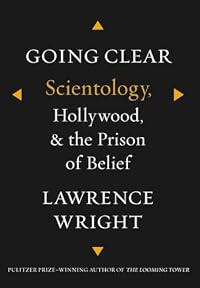
Going Clear: Scientology, Hollywood, and the Prison of Belief
by Lawrence Wright
On This Page
Description
National Book Award FinalistA clear-sighted revelation, a deep penetration into the world of Scientology by the Pulitzer Prize-winning author of The Looming Tower, the now-classic study of al-Qaeda’s 9/11 attack. Based on more than two hundred personal interviews with current and former Scientologists—both famous and less well known—and years of archival research, Lawrence Wright uses his extraordinary investigative ability to uncover for us the inner workings of the Church of show more Scientology.
At the book’s center, two men whom Wright brings vividly to life, showing how they have made Scientology what it is today: The darkly brilliant science-fiction writer L. Ron Hubbard, whose restless, expansive mind invented a new religion. And his successor, David Miscavige—tough and driven, with the unenviable task of preserving the church after the death of Hubbard.
We learn about Scientology’s complicated cosmology and special language. We see the ways in which the church pursues celebrities, such as Tom Cruise and John Travolta, and how such stars are used to advance the church’s goals. And we meet the young idealists who have joined the Sea Org, the church’s clergy, signing up with a billion-year contract.
In Going Clear, Wright examines what fundamentally makes a religion a religion, and whether Scientology is, in fact, deserving of this constitutional protection. Employing all his exceptional journalistic skills of observation, understanding, and shaping a story into a compelling narrative, Lawrence Wright has given us an evenhanded yet keenly incisive book that reveals the very essence of what makes Scientology the institution it is. show less
Tags
Recommendations

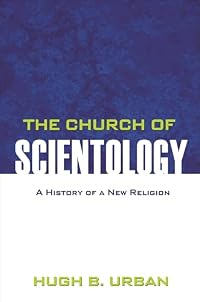
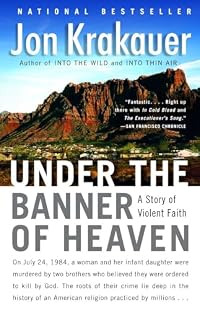
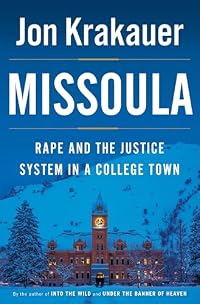
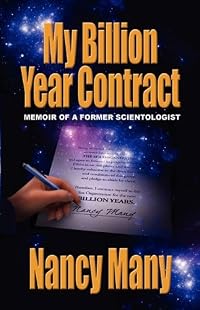
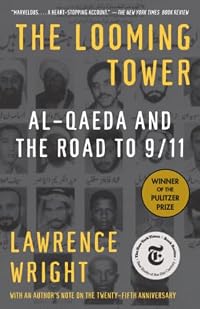
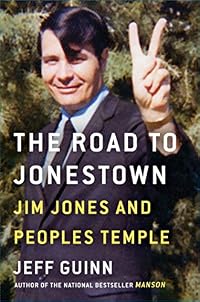

















Member Recommendations
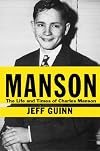
akblanchard Although he never joined the group, Manson dabbled in Scientology. It is interesting to draw parallels between Manson's treatment of his "Family" and life in the Scientology's Sea Org.
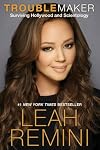
akblanchard Both books deal with the Hollywood-Scientology connection.
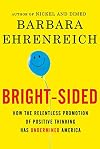
Bright-Sided: How the Relentless Promotion of Positive Thinking Has Undermined America by Barbara Ehrenreich
aulsmith Although Wright missed it completely, Scientology seems to be yet another in a long line of American religions/self-help groups influenced by the Positive Thinking Movement. If you want a wider vision of how these groups function, I highly recommend Ehrenreich.
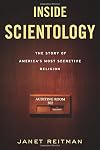
sparemethecensor Two similar journalistic exposes of Scientology, both of which take a surprisingly even-handed view of the group. I preferred Inside Scientology, although both are great primers on what is going on under David Miscavige's regime.
Member Reviews
Ay carumba! This book has the intimacy of a diary and the good sense of a death ship. Sample from L. Ron Hubbard's notes to self:
"You have no urge to talk of the navy life. You do not like to talk of it. You never illustrate your point with bogus stories. It is not necessary for you to lie to be amusing and witty.
You like to have your intimate friends approve of and love you for what you are. This desire to be loved does not amount to a psychosis.
You can sing beautifully."
There is so much exposed ego in this book. It's like the skin of a turtle. Spoiler alert, it gets even better when celebrities join.
"I'm just a hammer. This is the man that wields me."
A nonstop roller coaster ride of terror and comedy that I will not finish in time show more for Xmas tomorrow. show less
"You have no urge to talk of the navy life. You do not like to talk of it. You never illustrate your point with bogus stories. It is not necessary for you to lie to be amusing and witty.
You like to have your intimate friends approve of and love you for what you are. This desire to be loved does not amount to a psychosis.
You can sing beautifully."
There is so much exposed ego in this book. It's like the skin of a turtle. Spoiler alert, it gets even better when celebrities join.
"I'm just a hammer. This is the man that wields me."
A nonstop roller coaster ride of terror and comedy that I will not finish in time show more for Xmas tomorrow. show less
Scientology and its founder L. Ron Hubbard are an enigma. It is sometimes denigrated as a cult, yet also attracts some of the biggest names in Hollywood, most famously Tom Cruise. Using hundreds of interviews with folks who have left, journalist Lawrence Wright gives a systematic and detailed biography of Hubbard, the starting of the religion, and what happened after Hubbard's death.
Though the seed for this book started with an article Wright wrote for The New Yorker profiling Paul Haggis, a Hollywood screenwriter who defected from the church of Scientology, this book is no mere expanding on a short article. Wright has thoroughly researched, interviewed, and worked with fact checkers throughout. His copious footnotes include places show more where the church denies the eyewitness accounts, and he keeps a carefully neutral, serious tone throughout leaving the reader to make their own conclusions and, if I may speak for myself, be completely shocked and appalled by some of the stranger stories in this tome. Hubbard was not a great guy. He had some pretty whackadoodle beliefs (though, to be fair, Wright points out that many new religions do, and so do established ones, when we sit back and look at them). Wright himself appears only in the final chapters when he meets with a spokesperson for the church. Truly fascinating, and a great read if you're at all interested in the subject. show less
Though the seed for this book started with an article Wright wrote for The New Yorker profiling Paul Haggis, a Hollywood screenwriter who defected from the church of Scientology, this book is no mere expanding on a short article. Wright has thoroughly researched, interviewed, and worked with fact checkers throughout. His copious footnotes include places show more where the church denies the eyewitness accounts, and he keeps a carefully neutral, serious tone throughout leaving the reader to make their own conclusions and, if I may speak for myself, be completely shocked and appalled by some of the stranger stories in this tome. Hubbard was not a great guy. He had some pretty whackadoodle beliefs (though, to be fair, Wright points out that many new religions do, and so do established ones, when we sit back and look at them). Wright himself appears only in the final chapters when he meets with a spokesperson for the church. Truly fascinating, and a great read if you're at all interested in the subject. show less
Lawrence Wright's epilogue to Going Clear sums up my feelings about this book quite succinctly. No matter how shocked or horrified or disgusted or scared or baffled you are with the underpinnings of Scientology and the ongoing behaviors of its believers, just study any other religion and you will uncover religious principles, stories and directives lacking in any fact basis; human rights abuses; disgruntled former believers who now feel duped and disillusioned; and lots of financial resources sheltered from government taxation. What makes Scientology especially disturbing to me, though, is the emphasis on self-centeredness, narcissism, and individual gain at the exclusion of all others. Wright's book focuses on the celebrity show more Scientologists just like the religion itself focuses on the celebrity Scientologists. There are definitely the haves and the have-nots within this church. Out of curiousity, I tried to find the nearest Scientology center to me in Birmingham, Alabama, and was not so surprised to find that there is a Scientology Celebrity Centre in Nashville, Tennessee. There apparently are not enough celebrities in Alabama to warrant any other presence by the church. That is OK with me. This book got me thinking and talking - definitely worth a read. show less
This book chronicles the rise of Scientology starting with the life of the founder - L. Ron Hubbard. I wasn't familiar with the details of Scientology before reading this book and I can barely believe what I read. A religion founded by a madman and taken over by opportunistic megalomaniacs and powered by what is essentially slavery. I get why someone would sign up for a program that promises super powers, but how does everyone not immediately quit when they don't get superpowers? I suppose it's the same force that keeps abused wives in their marriage. It's pitiful and sinister and grim beyond belief.
I can't say I enjoyed this book, but it was certainly enlightening.
I can't say I enjoyed this book, but it was certainly enlightening.
Scientology is a strange thing. Based on the writings of the late L. Ron Hubbard, a science fiction writer, it was achieved the dubious distinction of being, arguably, the most controversial "religion" currently practiced. Adherents like Tom Cruise claim life-changing and enriching experiences. But wrapped up in these experiences is a demand for total adherence to the philosophy's precepts mixed with continuing demands for bigger donations -- to the extent where many well-to-do people have found themselves bankrupt.
On top of these demands is the oddness of the belief system, something so peculiar that I'm not sure I can relate them fairly or honestly. For me, this is extraordinary since I have spent most of my life in studying the show more religions of the world, looking for one that would fit my cosmology and philosophy. There are times, in fact, when Scientology almost feels like that serpent who penetrated the Garden of Eden.
Lawrence Wright has done an excellent job in presenting both the positives and negatives of the religion. It is a good read even if, in the end, you have more questions than answers. show less
On top of these demands is the oddness of the belief system, something so peculiar that I'm not sure I can relate them fairly or honestly. For me, this is extraordinary since I have spent most of my life in studying the show more religions of the world, looking for one that would fit my cosmology and philosophy. There are times, in fact, when Scientology almost feels like that serpent who penetrated the Garden of Eden.
Lawrence Wright has done an excellent job in presenting both the positives and negatives of the religion. It is a good read even if, in the end, you have more questions than answers. show less
When the Dianetics movement subsided, Hubbard was unable to restore the momentum that had given it such a rocket-powered launch. Imitators and competitors came onto the field, some even rivaling Hubbard himself. He was determined not to make the same mistakes with Scientology. From now on, he would exercise total control. His word was law. He was not just the founder, he was “Source”—the last word, whose every pronouncement was scripture.
MASTURBATION CHAIN. 1st incident embryo. 80 succeeding incidents. Mother masturbating with fingers, jolting child and injuring child with orgasm.
Some times, the line between genius and madness is blurred. With scientology, it is not.
As with all cults, dismissing them as stuff that only affects show more weak-minded persons, I think is utterly wrong and dangerous. And yes, I am referring to other things than just watching Tom Cruise freak out on furniture.
Most of my friends know a lot about the scientology movement thanks to knowledge sources that actual scientologists are not allowed to check, e.g. Internet and TV-series "South Park", where you can find out that theirs is a science fiction world where the intergalactic overlord Xenu rules and has basically trapped the souls of people, and yes, scientology is the only thing that can clear your mind and make you well again.
And that makes scientology easy to dismiss. Which is partly why it's dangerous.
When visiting a scientology center or speaking to a scientologist, you will most likely meet people who are very charismatic and very well trained to lure you in, to make you feel safe - in short, way more effectively than any politician will get you.
Lawrence Wright brings the history of L. Ron Hubbard to the table. What drove him? What were his ambitions? Is it true that he was a war hero God with infinite knowledge?
As one of the obligatory firsts regarding cults most often includes isolation of the victim from its parents, friends and work place, it's not surprising that Hubbard made his initial followers go on a long boat ride with him; I'm talking years here. While on his boat - the perfect isolation - things gradually got extremely weird:
When the girls became old enough to start wearing makeup, Hubbard was the one who showed them how to apply it. He also helped them do their hair.
While the book lets the reader know about the mentally insane stuff, e.g. this:
Hubbard’s depression had lifted and he seemed completely in control—relaxed and confident, even jovial. The crew were mainly drinking Spanish wines, but Hubbard favored rum and Coke—an eighth of a glass of Coke and seven-eighths rum—one after another through the evening. The heavens seemed very close in the dark harbor. Hubbard would point to the sky and say, “That is where the Fifth Invaders came from. They’re the bad guys, they’re the ones who put us here.” He said he could actually spot their spaceships crossing in front of the stars, and he would salute them as they passed overhead, just to let them know that they had been seen.
...and this:
The years at sea were critical ones for the future of Scientology. Even as Hubbard was inventing the doctrine, each of his decisions and actions would become enshrined in Scientology lore as something to be emulated—his cigarette smoking, for instance, which is still a feature of the church’s culture at the upper levels, as are his 1950s habits of speech, his casual misogyny, his aversion to perfume and scented deodorants, and his love of cars and motorcycles and Rolex watches. More significant is the legacy of his belittling behavior toward subordinates and his paranoia about the government. Such traits stamped the religion as an extremely secretive and sometimes hostile organization that saw enemies on every corner.
...it also lets the reader know of torture:
When Otto Roos, a Sea Org executive from Holland, failed to lash a steel cable to a bollard on the dock during a terrible storm in Tunisia, Hubbard ordered him thrown from the ship’s bridge into the sea, a height of about four stories. Hana Eltringham wrote a concerned report to Hubbard that night, explaining that the storm had been so furious that Roos simply couldn’t hang on when trying to secure the ship. The report was returned to her with the comment “Never question LRH.”5 Roos survived his punishment, only to set a dismal precedent. After that, overboardings became routine, but mostly from the lower poop deck. Nearly every morning, when the crew was mustered, there would be a list of those sentenced to go over the side, even in rough seas. They would be fished out and hauled back onboard through the old cattle doors that led to the hold. The overboardings contributed to the decision of the Greek government to expel the Scientology crew from Corfu in March 1969. That didn’t stop the practice. None except Hubbard family members were spared. John McMaster, the second “first Clear,” was tossed over the side six times, breaking his shoulder on the last occasion. He left the church not long afterward. Eltringham had to stand with Hubbard and his aides on the deck when the punishments were meted out. If the crewman seemed insufficiently cowed by the prospect, Hubbard would have his hands and feet bound. Whitfield remembered one American woman, Julia Lewis Salmen, sixty years old, a longtime Scientology executive, who was bound and blindfolded before being thrown overboard. “She screamed all the way down,” Eltringham said. “When the sound stopped, Hubbard ordered a deck hand to jump in after her. Had he not, I think Julia may have drowned.” Hubbard chose a different punishment for another of the older members of the crew, Charlie Reisdorf. He and two other Sea Org crew were made to race each other around the rough, splintery decks while pushing peanuts with their noses. “They all had raw, bleeding noses, leaving a trail of blood behind them,” a senior auditor recalled. The entire crew was ordered to watch the spectacle. “Reisdorf was in his late fifties, probably. His two daughters were Messengers; they were eleven or twelve at the time, and his wife was there also. It was hard to say which was worse to watch: this old guy with a bleeding nose or his wife and kids sobbing and crying and being forced to watch this. Hubbard was standing there, calling the shots, yelling, ‘Faster, faster!’ ” Hubbard increasingly turned his wrath on children, who were becoming a nuisance on the ship. He thought that they were best raised away from their parents, who were “counter-intention” to their children. As a result, he became their only—stern as well as neglectful—parent. Children who committed minor infractions, such as laughing inappropriately or failing to remember a Scientology term, would be made to climb to the crow’s nest, at the top of the mast, four stories high, and spend the night, or sent to the hold and made to chip rust.
Other young children were sentenced to the locker for infractions—such as chewing up a telex—for as long as three weeks. Hubbard ruled that they were Suppressive Persons. One little girl, a deaf mute, was placed in the locker for a week because Hubbard thought it might cure her deafness.
And then, as scientology grew bigger:
VERY EARLY ONE MORNING in July 1977, the FBI, having been tipped off about Operation Snow White, carried out raids on Scientology offices in Los Angeles and Washington, DC, carting off nearly fifty thousand documents. One of the files was titled “Operation Freakout.” It concerned the treatment of Paulette Cooper, the journalist who had published an exposé of Scientology, The Scandal of Scientology, six years earlier. After having been indicted for perjury and making bomb threats against Scientology, Cooper had gone into a deep depression. She stopped eating. At one point, she weighed just eighty-three pounds. She considered suicide. Finally, she persuaded a doctor to give her sodium pentothal, or “truth serum,” and question her under the anesthesia. The government was sufficiently impressed that the prosecutor dropped the case against her, but her reputation was ruined, she was broke, and her health was uncertain. The day after the FBI raid on the Scientology headquarters, Cooper was flying back from Africa, on assignment for a travel magazine, when she read a story in the International Herald Tribune about the raid. One of the files the federal agents discovered was titled “Operation Freakout.” The goal of the operation was to get Cooper “incarcerated in a mental institution or jail.”
I found it hard to wrap my head around the fact that scientology went all-in where it came to not only toppling minds, but governments and psychiatry, not only by infiltrating, persecuting and brain-washing people, but also by using filibuster techniques to try and drown out all types of critique.
All in all, it's a good book that is well researched. Check it out if you want to plunge deep into a very different world. show less
I've always had an interest in Scientology--the whole 'charismatic redhead scifi author invents religion, defrauds millions, sails around on yacht' thing sounded like a dream. But Scientology as it exists is a nightmare, a brainwashing cult that at best charges extortionate amounts for nonsense and at worst, cuts a person off from their family and imprisons them in slave labor camps.
Going Clear is the definitive account of Scientology as it exists today, a massive corporation run for the benefit of David Miscavige and a handful of Hollywood superstars. Wright is most interested in the chaos at the top, as viewed through the eyes of a number of senior defectors, but he also delves into the history of Scientology. His account is more show more favorable to L. Ron Hubbard than many-treating him as a brilliant charlatan who immense life work is of value mainly because of its scope and amibition, rather than its coherence or utility. Operation Snow White, the largest domestic espionage operation in US history, is also treated briefly. But these flaws cannot detract from the authoritative collection of narratives that Wright has gathered on one of modernity's most evil movements. show less
Going Clear is the definitive account of Scientology as it exists today, a massive corporation run for the benefit of David Miscavige and a handful of Hollywood superstars. Wright is most interested in the chaos at the top, as viewed through the eyes of a number of senior defectors, but he also delves into the history of Scientology. His account is more show more favorable to L. Ron Hubbard than many-treating him as a brilliant charlatan who immense life work is of value mainly because of its scope and amibition, rather than its coherence or utility. Operation Snow White, the largest domestic espionage operation in US history, is also treated briefly. But these flaws cannot detract from the authoritative collection of narratives that Wright has gathered on one of modernity's most evil movements. show less
Members
- Recently Added By
Published Reviews
ThingScore 100
That crunching sound you hear is Lawrence Wright bending over backward to be fair to Scientology. Every deceptive comparison with Mormonism and other religions is given a respectful hearing. Every ludicrous bit of church dogma is served up deadpan. This makes the book’s indictment that much more powerful.
added by lorax
Lists

Vote: Science, Religion, and History Group Reads
30 works; 17 members

Top Five Books of 2013
1,564 works; 722 members

Non-Fiction Worth Reading
1,015 works; 254 members

Recommend the 20 best books you've read in the last five years
2,168 works; 601 members

Books Read in 2013
1,629 works; 51 members

Penguin Random House
458 works; 4 members

Books Read in 2019
4,052 works; 110 members

Books Read in 2018
4,360 works; 110 members

Books Read in 2024
4,623 works; 126 members

Extremism
31 works; 1 member
Talk Discussions
Past Discussions
Going Clear -- SHR group read in 75 Books Challenge for 2014 (April 2014)
Author Information

22+ Works 9,287 Members
Lawrence Wright (born August 2, 1947), Pulitzer Prize winning author, graduated from Tulane University and spent two years teaching at the American University in Cairo, Egypt. Wright is a staff writer for The New Yorker and a fellow at the Center on Law and Security at New York University School of Law. Wright is the author of the books God Save show more Texas: A Journey into the Soul of the Lone Star State (2018), Going Clear: Scientology, Hollywood, and the Prison of Belief (2013), Pulitzer Prize winning non-fiction The Looming Tower: Al-Qaeda and the Road to 9/11 (2006), Noriega: God's Favorite (2000), Twins: And What They Tell Us About Who We Are (1999), Remembering Satan (1994), Saints & Sinners (1993), In the New World: Growing Up in America, 1964-1984 (1987), and City Children, Country Summer: A Story of Ghetto Children Among the Amish (1979). (Bowker Author Biography) show less
Awards and Honors
Awards
Distinctions
Work Relationships
Has the adaptation
Common Knowledge
- Canonical title
- Going Clear: Scientology, Hollywood, and the Prison of Belief
- Original title
- Going Clear: Scientology, Hollywood, and the Prison of Belief
- Original publication date
- 2013
- People/Characters
- L. Ron Hubbard; David Miscavige; Paul Haggis; Tom Cruise; John Travolta
- Related movies
- Going Clear: Scientology & the Prison of Belief (2015 | IMDb)
- Dedication
- To my colleagues at The New Yorker
- First words
- Introduction
Scientology plays an outsize role in the cast of new religions that have arisen in the twentieth century and survived into the twenty-first.
London, Ontario, is a middling manufacturing town halfway between Toronto and Detroit, once known for its cigars and breweries. - Last words
- (Click to show. Warning: May contain spoilers.)He added: "I don't have to answer your questions anymore."
(Click to show. Warning: May contain spoilers.)Epilogue
The believers are still waiting for his return. - Blurbers
- Filkins, Dexter; Gallagher, Tom; Bergen, Peter; Kakutani, Michiko; Kurtz-Phelan, Daniel; Weinberg, Steve
- Canonical DDC/MDS
- 299.936
- Canonical LCC
- BP605.S2
Classifications
- Genres
- Religion & Spirituality, General Nonfiction, Nonfiction, History, Biography & Memoir
- DDC/MDS
- 299.936 — Religion Other religions Religions not provided for elsewhere Religions of other origin Religions of eclectic and syncretistic origin Scientology
- LCC
- BP605 .S2 — Philosophy, Psychology and Religion Islam. Bahaism. Theosophy, etc. Islam. Bahai Faith. Theosophy, etc. Other beliefs and movements
- BISAC
Statistics
- Members
- 2,331
- Popularity
- 8,410
- Reviews
- 132
- Rating
- (4.08)
- Languages
- 7 — English, French, German, Italian, Polish, Portuguese, Spanish
- Media
- Paper, Audiobook, Ebook
- ISBNs
- 18
- ASINs
- 14