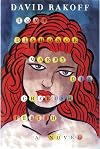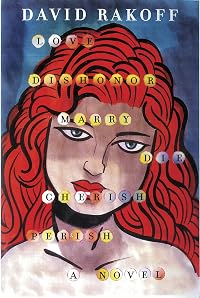
Love, Dishonor, Marry, Die, Cherish, Perish: A Novel
by David Rakoff
On This Page
Description
From the incomparable David Rakoff, a poignant, beautiful, witty, and wise novel in verse whose scope spans the twentieth centuryThrough his books and his radio essays for NPR's This American Life, David Rakoff has built a deserved reputation as one of the finest and funniest essayists of our time. Written with humor, sympathy, and tenderness, this intricately woven novel proves him to be the master of an altogether different art form.
LOVE, DISHONOR, MARRY, DIE, CHERISH, PERISH leaps show more cities and decades as Rakoff sings the song of an America whose freedoms can be intoxicating, or brutal.
The characters' lives are linked to each other by acts of generosity or cruelty. A daughter of Irish slaughterhouse workers in early-twentieth-century Chicago faces a desperate choice; a hobo offers an unexpected refuge on the rails during the Great Depression; a vivacious aunt provides her clever nephew a path out of the crushed dream of postwar Southern California; an office girl endures the casually vicious sexism of 1950s Manhattan; the young man from Southern California revels in the electrifying sexual and artistic openness of 1960s San Francisco, then later tends to dying friends and lovers as the AIDS pandemic devastates the community he cherishes; a love triangle reveals the empty materialism of the Reagan years; a marriage crumbles under the distinction between self-actualization and humanity; as the new century opens, a man who has lost his way finds a measure of peace in a photograph he discovers in an old box—an image of pure and simple joy that unites the themes of this brilliantly conceived work.
Rakoff's insistence on beauty and the necessity of kindness in a selfish world raises the novel far above mere satire. A critic once called Rakoff "magnificent," a word that perfectly describes this wonderful novel in verse. show less
Tags
Recommendations




Member Reviews
I picked this up after reading "Someone Who Will Love You in All Your Damaged Glory." One of the stories in that book is a pastiche of the rhyming couplets Rakoff employs in this slim novel. And it is very slight (read it in one sitting at the library). It hit me hard. There are many narratives running through the book, and some of them lightly intersect with others. Supporting characters in one chapter become protagonists in another. Decades pass. History, personal and political, takes its toll. I have to say I'm a sucker for the whole non-linear interweaving narratives thing. The twist here is in the couplets. There's an amazing review of the book by Alexandra Schwartz (linked below) which points out the key advantage of the couplet: show more there are beginnings and endings in every line. The hard part is not allowing the reader to anticipate what that ending might be, or how it will sound, even if they know the first line in the couplet. Then, at key moments, make the obvious rhyme. It's a great technique. It creates sense of gravity and inevitability in the prose that keeps the narratives from spiraling out of control.
When I caught the reference to this book in the earlier story collection, I remembered hearing an NPR story about David Rakoff's death. I think it probably mentioned this novel. I remember thinking that I would never read something so squishy and boring and twee as a public radio-endorsed novel-in-couplets about love and death (I was 18). Well I sure showed me.
https://www.newyorker.com/books/page-turner/david-rakoffs-heroic-couplets show less
When I caught the reference to this book in the earlier story collection, I remembered hearing an NPR story about David Rakoff's death. I think it probably mentioned this novel. I remember thinking that I would never read something so squishy and boring and twee as a public radio-endorsed novel-in-couplets about love and death (I was 18). Well I sure showed me.
https://www.newyorker.com/books/page-turner/david-rakoffs-heroic-couplets show less
What a wonderful little piece. I listened to the audio, read by the author, and absolutely recommend it. It is one of the few books I think would likely suffer from being read rather than heard. I went into this having no idea David Rakoff passed away just 2 weeks after recording this book and was aware of his impending death throughout the whole of the writing process. About half way through the book I came to Goodreads to see the thoughts of others, and the first comment started with that fact. The knowledge did change my experience, how could it not. That said, this epic poem, or novel in verse, or whatever you want to call it was beautiful and moving and funny and heartbreaking from start to finish and I think the knowledge that it show more was written by a man in his 40s staring imminent death in the face did not change the emotional effect, but simply sharpened each feeling.
I went with a 4.5 thought I loved this. The first part of the tale is just a bit too overwrought and aggressively joyless for me to go to a 5. There are moments of light and humor in every life, no matter how overwhelmingly bleak. I expect Rakoff, whose sense of play really comes out later in the book knew that better than anyone. show less
I went with a 4.5 thought I loved this. The first part of the tale is just a bit too overwrought and aggressively joyless for me to go to a 5. There are moments of light and humor in every life, no matter how overwhelmingly bleak. I expect Rakoff, whose sense of play really comes out later in the book knew that better than anyone. show less
This is the definition of a swan song. That unmistakable Rakoff voice (whether written or spoken) nearly sings these verses, his last writing on earth. Hearing this rhyme, I suddenly realized what has bugged me about Rakoff all these years - he was born to narrate Seuss. And now he takes the Seussian rhyme to places it was meant to be - sarcasm, cynicism, with compassion and a calm urgency - that Seuss did not take it. Reading this book, or hearing it read by Rakoff himself, is a joyous farewell to a unique and loving writer.
You must have this book in your library. Lend it out, but demand that it be read and heard and cared for, then returned to you, because you will need it again. Rakoff should not be able to disappear from your life - show more not that easily.
Os (yes, I'm a fan) show less
You must have this book in your library. Lend it out, but demand that it be read and heard and cared for, then returned to you, because you will need it again. Rakoff should not be able to disappear from your life - show more not that easily.
Os (yes, I'm a fan) show less
This is the definition of a swan song. That unmistakable Rakoff voice (whether written or spoken) nearly sings these verses, his last writing on earth. Hearing this rhyme, I suddenly realized what has bugged me about Rakoff all these years - he was born to narrate Seuss. And now he takes the Seussian rhyme to places it was meant to be - sarcasm, cynicism, with compassion and a calm urgency - that Seuss did not take it. Reading this book, or hearing it read by Rakoff himself, is a joyous farewell to a unique and loving writer.
You must have this book in your library. Lend it out, but demand that it be read and heard and cared for, then returned to you, because you will need it again. Rakoff should not be able to disappear from your life - show more not that easily.
Os. show less
You must have this book in your library. Lend it out, but demand that it be read and heard and cared for, then returned to you, because you will need it again. Rakoff should not be able to disappear from your life - show more not that easily.
Os. show less
Well, I did it.
I read David Rakoff's last book.
I've had the book since shortly after it came out, but I've put off reading it just because I knew there wouldn't be any more after this one.
And I liked the book, but reading it was bittersweet because there was no reading it without hearing Rakoff's voice speaking of hope and heartbreak and the unfairness of everything ending just when you think you've figured out how to be happy. There's this beautiful thing there about people loving us more than we love ourselves, and then this other thing about the many things that stand in our way of loving one another, and still another about how loving can both free us and trap us and how we don't necessarily get to choose which, all in rhyming show more anapestic tetrameter.* It reminded me of "What's the Matter Here," 10,000 Maniacs' peppy-sounding song about child abuse: The delivery both makes it easier to take in and makes the hurt all the more stark.
I have no way of knowing if I would have found this book so poignant if it weren't Rakoff's last, but I think I would have.
*(Using only my old English Lit books, I initially identified the meter as dactylic tetrameter, but smarter people than I say otherwise. I suspect that this trouble with rhythm might be why I've never been a good dancer.) show less
I read David Rakoff's last book.
I've had the book since shortly after it came out, but I've put off reading it just because I knew there wouldn't be any more after this one.
And I liked the book, but reading it was bittersweet because there was no reading it without hearing Rakoff's voice speaking of hope and heartbreak and the unfairness of everything ending just when you think you've figured out how to be happy. There's this beautiful thing there about people loving us more than we love ourselves, and then this other thing about the many things that stand in our way of loving one another, and still another about how loving can both free us and trap us and how we don't necessarily get to choose which, all in rhyming show more anapestic tetrameter.* It reminded me of "What's the Matter Here," 10,000 Maniacs' peppy-sounding song about child abuse: The delivery both makes it easier to take in and makes the hurt all the more stark.
I have no way of knowing if I would have found this book so poignant if it weren't Rakoff's last, but I think I would have.
*(Using only my old English Lit books, I initially identified the meter as dactylic tetrameter, but smarter people than I say otherwise. I suspect that this trouble with rhythm might be why I've never been a good dancer.) show less
Love, Dishonor, Marry, Die,
Cherish, Perish: A Novel by
David Rakoff is quite the treat:
Tender and moving, though bittersweet.
Penned on the eve of the author's passing,
It fastens on victims of harassing,
Hate, misfortune, spite, remorse,
AIDS, dementia, and divorce.
And yet, shining life through this vile prism,
Rakoff wallows not in nihilism,
Rendering all sorrow with compassion
(And in a most poetic fashion),
He makes mean existence seem a bit more nice.
So reader, please, take my advice:
Love, Dishonor, Marry, Die,
Cherish, Perish you should buy.
Cherish, Perish: A Novel by
David Rakoff is quite the treat:
Tender and moving, though bittersweet.
Penned on the eve of the author's passing,
It fastens on victims of harassing,
Hate, misfortune, spite, remorse,
AIDS, dementia, and divorce.
And yet, shining life through this vile prism,
Rakoff wallows not in nihilism,
Rendering all sorrow with compassion
(And in a most poetic fashion),
He makes mean existence seem a bit more nice.
So reader, please, take my advice:
Love, Dishonor, Marry, Die,
Cherish, Perish you should buy.
I didn't know if I'd be up to a book in verse, but I was able to slip effortlessly into Rakoff's tale. The empathy he has for his characters (well, most of them--those who deserve it) is stunning. These verses do, in their well-chosen couplets, what very few, much longer novels manage in many thousands of words (create worlds). I would say that the only thing wrong is that I wish it were a longer book, but anything additional would be unnecessary, would dilute the power of the novel, so that would be selfish of me.
Members
- Recently Added By
Lists

Top Five Books of 2013
1,562 works; 715 members

Recommend the 20 best books you've read in the last five years
2,168 works; 606 members

Favourite Books
1,820 works; 316 members

Books You Couldn't Finish
202 works; 32 members
Author Information

9+ Works 4,046 Members
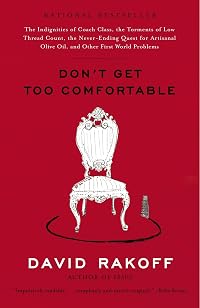
David Rakoff was born in Montreal, Canada on November 27, 1964. He received a bachelor's degree in East Asian studies from Columbia University in 1986. He briefly worked in Japan as a translator before being diagnosed with Hodgkin's lymphoma. He moved back to Canada for more than a year of treatment and remained free of cancer for two decades. show more Before becoming a full-time writer, he worked as an editor and publicist for various publishers. His essays appeared in numerous publications including The New York Times, GQ, Details, Salon, and Slate. He also wrote three essay collections. Fraud and Don't Get Too Comfortable received Lambda Literary Awards and Half Empty received the Thurber Prize for American Humor. He appeared frequently on This American Life. He also acted in several stage plays written by David Sedaris. He wrote the screen adaptation for, and starred in, a 20-minute film, The New Tenants, which won the Academy Award for best live-action short film in 2009. He died from cancer on August 9, 2012 at the age of 47. (Bowker Author Biography) show less
Awards and Honors
Awards
Common Knowledge
- Original publication date
- 2013
Classifications
Statistics
- Members
- 500
- Popularity
- 60,428
- Reviews
- 26
- Rating
- (3.99)
- Languages
- English
- Media
- Paper, Audiobook, Ebook
- ISBNs
- 8
- ASINs
- 3