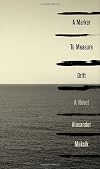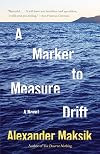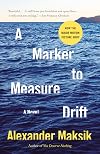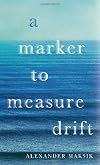
A Marker to Measure Drift
by Alexander Maksik 
On This Page
Description
An electrifying novel tracks a woman's journey from the horrors of Charles Taylor's Liberia to abject poverty and self-exile on a Greek island, where she must grapple with a haunted past and find a way back into human society.Tags
Recommendations














Member Reviews
"It's about how we live with what we know"
By sally tarbox on 6 March 2017
Format: Kindle Edition
I read the whole book in a day, and I think it's a narrative which gains from being 'blitzed', as you totally get into the feel of it and the existence of illegal immigrant Jacqueline.
The protagonist has just arrived on the Greek island of Santorini and is patently in shock at some unspecified events in her recent past. An educated woman of good family in Liberia, she now finds herself poverty-stricken and driven to sleeping in a cave.
Day follows day, and very little happens - an occasional friendly word, a meal here, a change of location - all narrated in a kind of dream-like way which conveys Jacqueline's frame of mind as day melts into show more identical day. The only constant companion is her mother who, in her mind, comments on her actions, criticising or encouraging.
Only at the end do we learn the details of what has happened in Liberia.
Very powerful read. show less
By sally tarbox on 6 March 2017
Format: Kindle Edition
I read the whole book in a day, and I think it's a narrative which gains from being 'blitzed', as you totally get into the feel of it and the existence of illegal immigrant Jacqueline.
The protagonist has just arrived on the Greek island of Santorini and is patently in shock at some unspecified events in her recent past. An educated woman of good family in Liberia, she now finds herself poverty-stricken and driven to sleeping in a cave.
Day follows day, and very little happens - an occasional friendly word, a meal here, a change of location - all narrated in a kind of dream-like way which conveys Jacqueline's frame of mind as day melts into show more identical day. The only constant companion is her mother who, in her mind, comments on her actions, criticising or encouraging.
Only at the end do we learn the details of what has happened in Liberia.
Very powerful read. show less
This deeply unsettling novel focuses on Jacqueline, a 23-year-old refugee from Liberia who has escaped that country’s brutal second civil war, which lasted from 1999-2003 and resulted in the overthrow of the corrupt regime of Charles Taylor, who was exiled to Nigeria, and the installation of a transitional government. Jacqueline has landed on the Greek island of Santorini in the Aegean Sea, a popular tourist spot, at the height of summer. She has come there with the clothes on her back and little else: a change of underwear, a couple of extra t-shirts, a few toiletries, and no money. She knows no one on the island. Initially, Jacqueline spends her days in solitary fashion. Suspicious of everyone, she drifts from place to place, trying show more to blend in with the tourists and avoiding activities that will attract unwanted attention, scavenging food only when she can be sure no one is watching. Her only company are her memories of the horrors she witnessed and the imaginary voice of her mother, with which she carries on a continuous bantering conversation. Gradually we learn that Jacqueline’s family was well-off and privileged. Her father was a minister in Taylor’s government. Her younger sister Saifa was a pampered, unruly but perpetually happy teenager who became pregnant, and her mother a domineering alcoholic. Jacqueline herself went to school in England, and after graduating, against her mother’s strong advice, returned home, where, as the fighting started, she became embroiled in an affair with a French journalist named Bernard. In Santorini she finds a cave near a beach and sets herself up with a bed made of cardboard and her meagre belongings. But when some men in the town notice her, she becomes fearful of their intentions, abandons this refuge and walks to another town, where she finds a place to sleep in a half-constructed hotel near another beach. Driven by the need to eat and replenish her supplies, she poses as a student visiting the island who is raising money for her studies by performing foot-rubs for tourists, and with this ruse manages to acquire enough Euros to feed herself and buy a few things. Her other craving, every bit as urgent and one that inevitably wears her down, is her need for human contact, and near the end of the book she befriends a young waitress named Katerina and finally tells her story. From the beginning, Jacqueline’s story is the crisis point to which Alexander Maksik’s suspenseful narrative is building, and though the reader will probably have guessed the gist of what is revealed from the clues that are dropped along the way, it does not prepare us for the full horror of the details. A Marker to Measure Drift, deliberately paced, often dreamlike, is a novel that engages the reader with a promise of the revelation of past events rather than the more customary “what happens next” enticement that many novels dangle to keep the reader turning pages. We keep reading because Jacqueline is as fascinating as she is sympathetic: any uneasiness we might feel about the shock and revulsion we know are in store for us is more than offset by the desire to learn the why and the wherefore of Jacqueline’s tragic story. show less
There are stories that are difficult to tell. Ones that many writers veer away from, or attempt to write and fail. Maksik seems not even to stutter or stumble with these stories. A Marker to Measure Drift is the account of a woman who is drawn to the edges of the world after running from the gruesome violence that took place in her home during the Liberian civil war. It would be easier to over-dramatize this, but in choosing a wise moment for readers to meet the main character and in employing simple, stripped-down language, readers are able to meet the character at a level they understand--one of basic human survival.
We meet the main character, Jacqueline, at a time when she is on the fringes. She sleeps in a cave, bathes in the show more ocean, and scavenges for food. But even at this moment she is relatable, as she finds herself doing exactly what she would be doing if she had access to basic essentials. Maksik writes: "The instinct is to protect yourself. To build and organize, to form your days, to apply patterns and repeat them. And she has done all of this without intention. She has built a home without meaning to. And now she wants to know what happens next." She finds herself adhering to a schedule, creating a routine, habits, a home. And once all is solidified, she begins to look towards the future--bleak or bright.
There is comfort in this familiarity, but at the same time, you are still aware that Jacqueline's mental state is deteriorating and her past is constantly haunting her. Still, Maksik withholds Jacqueline's full story and the circumstances that led her to this place where she drifts in and out of the real world like a ghost, and drifts further and further from her own sanity. Those who momentarily fade in and out of her life are tourists whose indifference to Jacqueline and their obliviousness to Liberia, seem to make it even easier for her to vacillate in and out of the present world.
There are hints at her past, but you’re constantly looking for more. As she drifts further into her madness, you find yourself hoping she’ll reveal her story before it’s too late, before the full-on madness takes hold. Reading this is like watching the sun recede at the end of the day. Little by little, it fades, but no matter what you do, you can’t stop the sun from setting. It’s going to set. There’s beauty in it even though the light is being taken away.
While her sanity recedes, you're painstakingly aware of the fact that she is merely surviving physically. Emotionally, she cannot carry on much longer. It is when she finally allows herself to trust another and share her story that there is hope in Jacqueline's emotional survival. Because of Jacqueline's need, the eventual reveal of her experience feels natural. show less
We meet the main character, Jacqueline, at a time when she is on the fringes. She sleeps in a cave, bathes in the show more ocean, and scavenges for food. But even at this moment she is relatable, as she finds herself doing exactly what she would be doing if she had access to basic essentials. Maksik writes: "The instinct is to protect yourself. To build and organize, to form your days, to apply patterns and repeat them. And she has done all of this without intention. She has built a home without meaning to. And now she wants to know what happens next." She finds herself adhering to a schedule, creating a routine, habits, a home. And once all is solidified, she begins to look towards the future--bleak or bright.
There is comfort in this familiarity, but at the same time, you are still aware that Jacqueline's mental state is deteriorating and her past is constantly haunting her. Still, Maksik withholds Jacqueline's full story and the circumstances that led her to this place where she drifts in and out of the real world like a ghost, and drifts further and further from her own sanity. Those who momentarily fade in and out of her life are tourists whose indifference to Jacqueline and their obliviousness to Liberia, seem to make it even easier for her to vacillate in and out of the present world.
There are hints at her past, but you’re constantly looking for more. As she drifts further into her madness, you find yourself hoping she’ll reveal her story before it’s too late, before the full-on madness takes hold. Reading this is like watching the sun recede at the end of the day. Little by little, it fades, but no matter what you do, you can’t stop the sun from setting. It’s going to set. There’s beauty in it even though the light is being taken away.
While her sanity recedes, you're painstakingly aware of the fact that she is merely surviving physically. Emotionally, she cannot carry on much longer. It is when she finally allows herself to trust another and share her story that there is hope in Jacqueline's emotional survival. Because of Jacqueline's need, the eventual reveal of her experience feels natural. show less
Right from the start, I have to say that I really enjoyed Alexander Maksik’s atmospheric character story, A Marker to Measure Drift. Told from the first-person perspective of Jacqueline, Maksik shows a deft touch juggling her physical trials with her unreliable mental state. Maksik’s writing is hypnotic and creates an authentic and unique character in Jacqueline. While the narration allows us to get a feel for what has brought Jacqueline to the edge of madness – and arguable over the edge – it isn’t until the very end that we actually confront the full horror of what has wrecked her young life and the immense courage it takes to even attempt to go on, no matter how haltingly.
I was completely absorbed by A Marker to Measure show more Drift. At 240 pages, it is a perfect length for the story it tells and is written with remarkable ability. I’m not going to call this the best novel I have read this year, but it is certainly one of the better ones. Some readers might have difficulty with the unreliable narrator or the lack of a clean conclusion, but for me, this was one of the best parts. A Marker to Measure Drift is certainly worth putting on your reading list. show less
I was completely absorbed by A Marker to Measure show more Drift. At 240 pages, it is a perfect length for the story it tells and is written with remarkable ability. I’m not going to call this the best novel I have read this year, but it is certainly one of the better ones. Some readers might have difficulty with the unreliable narrator or the lack of a clean conclusion, but for me, this was one of the best parts. A Marker to Measure Drift is certainly worth putting on your reading list. show less
Alexander Maksik's A Marker to Measure Drift is a title which will be difficult to recall. It is a hypnotic read, the story of a homeless woman on a Greek Island and her memory of events in her native country of Liberia under the Charles Taylor regime. It made me curious about the history of that African country and I ordered a couple of the movies mentioned by the author in his acknowledgments. The writing was very good, musical. Even though her days ran together in similar patterns as she tried to find food and a place for the night, the story held my interest as a diary does. Written in the third person, it has the same mesmerizing quality as if the main character were talking. There is little dialogue except the voices in her show more head.
As Paul from City Lights Bookstore said of the book: "Visceral and gripping, extraordinary in its depiction of physical and spiritual hungers, Alexander Maksik's A Marker to Measure Drift is a novel about ruin and faith, barbarism and love, and the devastating memories that contain the power both to destroy us and to redeem us." show less
As Paul from City Lights Bookstore said of the book: "Visceral and gripping, extraordinary in its depiction of physical and spiritual hungers, Alexander Maksik's A Marker to Measure Drift is a novel about ruin and faith, barbarism and love, and the devastating memories that contain the power both to destroy us and to redeem us." show less
A remarkable book about surviving a horrific trauma when everything, including your country, has been taken from you. Maksik's prose is luminous, and the story he tells about a young, well-educated, formerly wealthy woman who has escaped from the civil war which has engulfed Liberia is heart-breaking, completely believable, and full of a profound kind of grace which makes her journey bearable.
Now everyone knows that the author is a pedophile. But I started reading this before I knew that. This book is a story that I immersed myself in. Jacqueline is the last member of her family after a brutal political coup takes place in Liberia. By her ex-boyfriend's help, she has a Spanish visa. Now she has made her way to the a Grecian island and she must find a way to survive as a homeless person.
Members
- Recently Added By
Lists

Books Set on Islands
190 works; 24 members

Books That Deserve A Wider Audience
36 works; 1 member
Author Information
8+ Works 762 Members
Awards and Honors
Common Knowledge
- Original publication date
- 2013
- People/Characters
- Jacqueline; Saifa; Katarina; Etweda (mother); Father
- Important places
- Fira, Santorini; Oia, Santorini; Liberia
- Important events
- Liberian civil war
- Epigraph
- The excursion is the same when you go looking for your sorrow as when you go looking for your joy. - Eudora Welty, "The Wide Net"
Take your delight in momentariness,/ Walk between dark and dark - a shining space/ With the grave's narrowness, though not its peace. - Robert Graves, "Sick Love" - Dedication
- For the tall man alone in the gardens of the Reggia di Colorno
- First words
- Now it was night.
- Last words
- (Click to show. Warning: May contain spoilers.)Jaja, my love, my heart.
- Blurbers
- Fountain, Ben; Silver, Marisa; Sonnenberg, Susanna
- Original language
- English
Classifications
Statistics
- Members
- 192
- Popularity
- 170,641
- Reviews
- 15
- Rating
- (3.95)
- Languages
- 5 — English, French, German, Norwegian (Bokmål), Swedish
- Media
- Paper, Audiobook, Ebook
- ISBNs
- 22
- ASINs
- 4