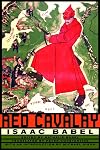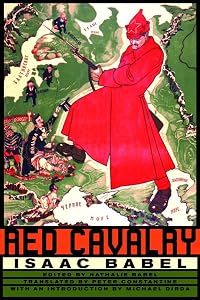
Red Cavalry
by Isaak Babel
On This Page
Description
"The brutalities and dualities of war and religion unflinchingly depicted by this major Russian-Jewish writer War's mess and muddle, the brutality and the inanity of fighting-few have better captured this than Isaac Babel, who was a journalist with the Soviet First Cavalry Army. His unflinching portrayal of the murderous havoc of battle is offset by an unexpected and wry humour: having seen the fighting up close, Babel is able to find the funny side of war while depicting its bloody side-in show more all its mesmerising and casual violence. The lyricism and bitterness that characterise the thirty-five short stories of Red Cavalry are stunningly reproduced in this new translation by the award-winning Boris Dralyuk" -- show lessTags
Recommendations









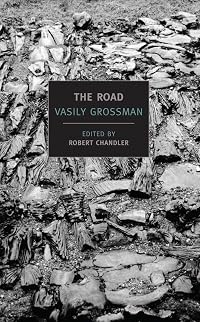
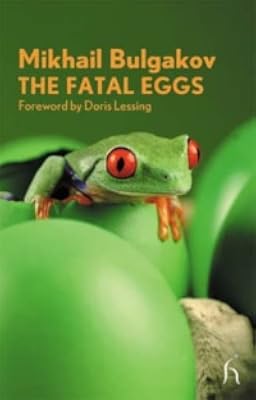
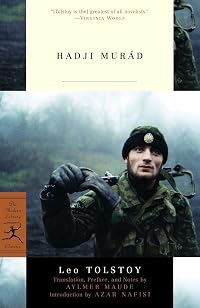
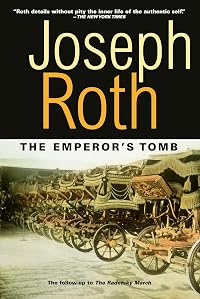

Member Recommendations

Member Reviews
(2014 Boris Dralyuk translation)
A remarkable assembly of short pieces of writing, somewhere between journalism, short-story collection and novel, making up a composite picture of the experience of war in a Cossack Red Army cavalry unit fighting against the Poles in 1920.
This isn't an anti-war book, of course - as far as Babel and his readers were concerned, their country was being attacked from all sides and had every reason to defend itself - but it's a book that makes no attempt to conceal the cruelty and disorder that go with the suspension of the normal limits of civil society. Passages that seem to be celebrating the exuberance, skill and bloody-mindedness of the Cossacks are set against descriptions of rapes, brutal torture and show more casual vandalism, and those in turn with lyrical passages where the narrator caught up in the beauty of something in the towns and villages that they are all busy destroying.
The Catholic and Jewish religion of the locals is particularly involved in this: the narrator feels obliged to mock the superstition and exploitation that goes with it, but clearly still has the relics of a religious (urban Jewish) upbringing and the respect for religious leaders and sites that goes with that: in a church with excrement and holy relics scattered over the floor, we get a loving and detailed description of the wonderful naive wall-paintings in which the saints are clearly all modelled on local characters. There are similar tensions going on when the narrator comes into contact with local Jews. He's clearly simultaneously attracted and disgusted by the Hasidic shtetl-culture.
This must have been a very tricky book to translate, as Babel is constantly switching voices and registers without warning, drawing on everything from high literary language to extremely coarse dialect. Dralyuk seems to have done very well and most of the text reads quite naturally, but this isn't a book where you can ever escape from the awareness that what you are reading is a translation. Dialect is always a problem: I found it disconcerting that his Cossacks were using so many Americanisms, but of course it's almost impossible to write earthy dialect that doesn't have some sort of regional marker to it. There were passages I had some trouble making sense of at first, but that probably comes from Dralyuk's poetic instinct to render the full complexity of Babel's layering of images, leaving the reader with a lot of unpacking to do (one of these is the "milk" passage Dralyuk discusses in his English Pen article).
Very interesting, and definitely a book that increased my motivation to learn Russian (although I suspect that it would be quite challenging for a beginner...). show less
A remarkable assembly of short pieces of writing, somewhere between journalism, short-story collection and novel, making up a composite picture of the experience of war in a Cossack Red Army cavalry unit fighting against the Poles in 1920.
This isn't an anti-war book, of course - as far as Babel and his readers were concerned, their country was being attacked from all sides and had every reason to defend itself - but it's a book that makes no attempt to conceal the cruelty and disorder that go with the suspension of the normal limits of civil society. Passages that seem to be celebrating the exuberance, skill and bloody-mindedness of the Cossacks are set against descriptions of rapes, brutal torture and show more casual vandalism, and those in turn with lyrical passages where the narrator caught up in the beauty of something in the towns and villages that they are all busy destroying.
The Catholic and Jewish religion of the locals is particularly involved in this: the narrator feels obliged to mock the superstition and exploitation that goes with it, but clearly still has the relics of a religious (urban Jewish) upbringing and the respect for religious leaders and sites that goes with that: in a church with excrement and holy relics scattered over the floor, we get a loving and detailed description of the wonderful naive wall-paintings in which the saints are clearly all modelled on local characters. There are similar tensions going on when the narrator comes into contact with local Jews. He's clearly simultaneously attracted and disgusted by the Hasidic shtetl-culture.
This must have been a very tricky book to translate, as Babel is constantly switching voices and registers without warning, drawing on everything from high literary language to extremely coarse dialect. Dralyuk seems to have done very well and most of the text reads quite naturally, but this isn't a book where you can ever escape from the awareness that what you are reading is a translation. Dialect is always a problem: I found it disconcerting that his Cossacks were using so many Americanisms, but of course it's almost impossible to write earthy dialect that doesn't have some sort of regional marker to it. There were passages I had some trouble making sense of at first, but that probably comes from Dralyuk's poetic instinct to render the full complexity of Babel's layering of images, leaving the reader with a lot of unpacking to do (one of these is the "milk" passage Dralyuk discusses in his English Pen article).
Very interesting, and definitely a book that increased my motivation to learn Russian (although I suspect that it would be quite challenging for a beginner...). show less
Ravaged countrysides, ravaged people turning on each other. Cosacks weeping over dead horses while corpses pile up. Civilians trying to survive. Hayrides armed with machine guns. Our hero finds himself pissing on a dead Polish soldier, covered in ripped up propaganda leaflets. Synagogues burning, 20 years before Hitler made it official. The word "Czernobyl" pops up once or twice for extra emphasis. Even harsher in hindsight.
Stories of the Cossacks' campaigns in the Soviet-Polish War of 1920, they are brief impressions of chaotic and horrific times. Babel has a beguiling style, wry and condensed, but I also found it a challenge to string together. There is little narrative thread between each story; this is no standard reportage. To be honest I sometimes glazed over trying to piece together the meaning, but loved some of the dark comedy. In particular "My First Goose", when the narrator is ridiculed by the Cossacks as one who "has suffered on the fields of learning" and is exposed to "zero-zero caliber" volleys of farts, but gains their favour by cracking the head of a goose and forcing an old peasant woman to cook it.
Recopilatorio de cuentos breves inspirado por la participación de Babel en la guerra polaco-soviética con personajes y situaciones muy bien descritos en unas pocas frases.
Aunque el tono es claramente pro-soviético, está claro que el realismo y la crudeza de lo narrado no debió agradar mucho a la censura comunista (Por más que fuera probable que en en asesinato del autor influyeran otros motivos)
Aunque el tono es claramente pro-soviético, está claro que el realismo y la crudeza de lo narrado no debió agradar mucho a la censura comunista (Por más que fuera probable que en en asesinato del autor influyeran otros motivos)
Reading this book while hearing the Red Army Choir. This collection of short stories is like an intricate embroidering where characters and stories are entwined together. I really liked that it shows many aspects of war; some surprising, some sad and some joyful.
I don't have too many thoughts about the stories in the Red Cavalry cycle. Isaac Babel doesn't leave much room for interpretation, which makes sense, seeing as this is basically a chronicle of the Polish-Soviet War with a few names changed. As far as what I've read in this genre, Babel stands out, but this style has never been the kind of thing to pique my interest. I struggle to fully appreciate quality prose when it's chopped up into so many different snapshots of war.
My appreciation for the book is also certainly affected by the fact that I didn't read the last 100 pages, which were made up of Babel's diary from 1920. I admit I don't have too many principles, but I feel very uncomfortable with reading someone's personal thoughts that show more they neither sent to anyone else nor intended to ever publish. I totally get the value of such a source and don't judge anyone for reading it (and I'm fine with Babel's daughter deciding to publish it), but I'm not going to read something if I don't feel like I was ever meant to read it.
If you're looking for conclusions to draw from the book, there's really only one that stands out. Being a Jew in Poland in the first half of the 20th century must've just been the worst. If you find that compelling, check the book out. Other than that, unfortunately, Red Cavalry felt supplemental to me rather than essential. show less
My appreciation for the book is also certainly affected by the fact that I didn't read the last 100 pages, which were made up of Babel's diary from 1920. I admit I don't have too many principles, but I feel very uncomfortable with reading someone's personal thoughts that show more they neither sent to anyone else nor intended to ever publish. I totally get the value of such a source and don't judge anyone for reading it (and I'm fine with Babel's daughter deciding to publish it), but I'm not going to read something if I don't feel like I was ever meant to read it.
If you're looking for conclusions to draw from the book, there's really only one that stands out. Being a Jew in Poland in the first half of the 20th century must've just been the worst. If you find that compelling, check the book out. Other than that, unfortunately, Red Cavalry felt supplemental to me rather than essential. show less
Short vignette length pieces plucked from chaotic violence, these are dense and powerful glimpses of life at the nearly starved front of early 20th century war.
Members
- Recently Added By
Lists

Russian Literature
187 works; 36 members

A Ukraine Reading List
129 works; 91 members

Best Historical Fiction
620 works; 262 members

Historical Fiction
889 works; 91 members

Jewish Books
367 works; 24 members

Best War Stories
87 works; 16 members

In and About the 1920s
181 works; 31 members

Canon de la narrativa universal del siglo XX
254 works; 6 members

Stories of War and Revolution
146 works; 55 members

Five star books
1,767 works; 110 members

War Literature
101 works; 19 members

Books about Russia and the former USSR
67 works; 12 members
1920s
141 works; 6 members

Books Read in 2023
5,638 works; 147 members

Books Read in 2016
4,666 works; 199 members
Kirkus Starred Fiction Reviews of Books Published in 2015
310 works; 6 members
Tablet Magazine's List of 101 Great Jewish Books
103 works; 9 members
Read These Too
458 works; 9 members

1001 Books You Must Read Before You Die
1,448 works; 1,137 members
Author Information

167+ Works 4,410 Members
Isaac Babel was born in Odessa, Russia, in 1894. He won early success with stories about his native Odessa and about the exploits of the Bolshevik cavalry in the Polish campaign of 1920-21. During the 1930s his output was small, but his talent remained undiminished. He was arrested in May 1939 during the Great Purge, and his manuscripts were show more confiscated. His exact fate remains unknown. Although Babel's reputation was restored in 1956, he was still published only occasionally in the Soviet Union-the very strong Jewish element in his stories, as well as the ambiguous positions he took on war and revolution, made his stories uncomfortable for Soviet authorities. For a Russian reader, the Odessa Tales (1916) are particularly exotic. Their protagonists, members of the city's Jewish underworld, are presented in romantic, epic terms. The Red Cavalry stories are noted for their account of the horrors of war. In both cycles Babel relies on precisely constructed short plots, on paradox of situation and of character response, and on nonstandard, captivating language-be it the combination of Yiddish, slang, and standard Russian in the Odessa Tales or of uneducated Cossack speech and standard Russian in the Red Cavalry cycle. The result of such features is a prose heritage rare in the history of Russian literature. Isaac Babel passed away in 1941. (Bowker Author Biography) Isaac Babel was born on July 13, 1894 in Odessa, Russia, to a middle-class Jewish family. He attended the Institute of Business Studies. His life was filled with persecution, which greatly influenced his writing. During the civil war that followed the Russian Revolution, Babel served as a soldier in Poland. This experience provided him with material for Red Cavalry, a collection of his stories. Later, in the Odessa Tales, published in 1931, Babel drew on his Jewish heritage to create colorful and memorable characters. As with many great artists in Russia, Babel's creative style was unpopular with the Stalin regime. Babel admitted to a long association with Trotskyites, but denied this testimony at his trial. He was ultimately found guilty of espionage and shot in Moscow in 1939, although, nearly a year later, his wife and the general public were told that he died in a labor camp. (Bowker Author Biography) show less
All Editions
Some Editions
Awards and Honors
Awards
Distinctions
Notable Lists
Series
Belongs to Publisher Series
Work Relationships
Is contained in
Common Knowledge
- Canonical title
- Red Cavalry
- Original title
- Конармия
- Original publication date
- 1926
- Important events
- Russian Civil War
- Quotations*
- Dertig dagen vecht ik nu in de achterhoede, om het onoverwinnelijke eerste cavalerieleger te dekken en word ik actief onder vuur genomen door vijandelijke artillerie en vliegtuigen. Tardyj is gesneuveld, Loechmannikov is gesn... (show all)euveld, Lykosjenko is gesneuveld, Goelevoj is gesneuveld, Troenov is gesneuveld en de witte hengst draagt me niet langer, verwacht dus overeenkomstig de kentering van het krijgsgeluk niet uw geliefde divisiecommandant Savitski terug te zien, kameraad Chlebnikov. Nee, om eerlijk te zijn: we zien elkaar in het koninkrijk der hemelen, maar het gerucht gaat dat de oude in de hemel geen koninkrijk heeft, maar een eersteklas bordeel, en druipers hebben we op aarde al genoeg, dus misschien zien we elkaar ook nooit meer. Daarmee zeg ik u vaarwel, kameraad Chlebnikov.
- Blurbers
- Battersby, Eileen
- Original language
- Russian
- Disambiguation notice*
- Please DO NOT combine with "Red Cavalry and Other Stories".
*Some information comes from Common Knowledge in other languages. Click "Edit" for more information.
Classifications
- Genres
- General Fiction, Fiction and Literature
- DDC/MDS
- 891.7342 — Literature & rhetoric Literatures of other languages East Indo-European and Celtic literatures Russian and East Slavic languages Russian fiction USSR 1917–1991 Early 20th century 1917–1945
- LCC
- PG3476 .B2 .K613 — Language and Literature Slavic languages and literatures. Baltic languages. Albanian language Slavic. Baltic. Albanian Russian literature Individual authors and works 1917-1960
- BISAC
Statistics
- Members
- 906
- Popularity
- 29,836
- Reviews
- 28
- Rating
- (3.84)
- Languages
- 19 — Catalan, Chinese, Dutch, English, Finnish, French, German, Greek, Hungarian, Italian, Japanese, Norwegian (Bokmål), Norwegian, Portuguese (Portugal), Russian, Serbian, Spanish, Swedish, Turkish
- Media
- Paper, Audiobook, Ebook
- ISBNs
- 82
- ASINs
- 18