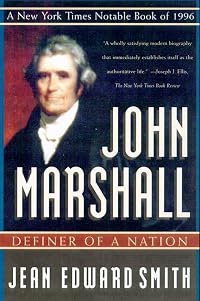
John Marshall: Definer of a Nation
by Jean Edward Smith
On This Page
Description
When, in 1801, John Marshall became Chief Justice of the United States, the Supreme Court was little more than a clause in the Constitution and a gaggle of conflicting opinions. For the next thirty-five years, Marshall was to mold the Court into a major force. Under his leadership, it learned to speak with one voice, becoming a powerful and respected third branch of government. It enunciated the principle of judicial review, established itself as the arbiter of constitutional authority, and show more affirmed the Constitution as an instrument of the people, not of the states. As a result, the implied powers of the federal government took on definition, the workings of the national government gained authority, and the economic system was made viable through a sophisticated understanding of the commerce clause. In truth, if George Washington founded the nation, John Marshall defined it. But who was this son of yeoman Virginia stock, this soldier who endured the terrible suffering at Valley Forge, this lawyer who was a moving force behind Virginia's ratification of the Constitution, this diplomat who outwitted Talleyrand and thereby raised the profile of a raw young country in the capitals of Europe? Confidant of presidents, friend to the founding fathers, statesman, envoy, and legislator: who was this man who gave up a flourishing legal practice to take on the thankless task of shaping the Court and went on to make it into the institution we see today? Working from primary sources, Jean Edward Smith draws an elegant portrait of this remarkable man. Lawyer, jurist, scholar; soldier, comrade, friend; and, most especially, lover of fine Madeira, good food, and animated table talk: the Marshall who emerges from this book is as noteworthy for his very human qualities as for his piercing intellect, and perhaps most extraordinary for his talents as a leader of men and a molder of consensus. show lessTags
Recommendations






Member Reviews
I bought the book about a year ago and was reminded of it at an event recently where Chief Justice Roberts, citing this book as the best biography of John Marshall, mentioned that if he could work with anyone, it would be Marshall. The book is rather conventional biography and chronicles Marshall's life rather well though I have four major complaints. 1) On pg 189, the author mistakenly refers to Hamilton as a governor of New York [he never was, this stuck out to me as odd, since Hamilton consistently had conflicts with the state government], 2) the discussion of Marshall's views on the Alien and Sedition act and first amendment failed to mention at all, the scholarly work on the Framer's understanding of the first amendment and how show more that is shaped by Blackstone's views on prior restraint [scholarly work indicates that many Framers thought the first amendment only prohibited prior restraint, not seditious libel, while this book seems to indicate that most people thought the Sedition act was violation of the first amendment] 3) the general use of the high Federalist, federalist and republican labels without regard to the nuances of the first "party" system, where there is at least a good argument that politicians did not think of themselves in permanent parties. The Federalists thought of themselves as the government, while the Republicans thought of themselves as a temporary faction that would dissolve after overturning the "tyranny" of the federalists. 4) the normality of having judges also be involved in politics, which the author seems to recognize and contradict himself by portraying it as an unusual practice.
However, those complaints aside, the book is a good chronicle of Marshall's life. Marshall comes off as fascinating character, who was a political moderate (though this may be overwrought in the book), who had good personal relations regardless of cross politics (except with Jefferson his cousin, they apparently hated each other) and knew how to have a good time [often dining out and famous for his love of wine]. The book covers Marshall's time as a light infantyman in the revolution, to his legal practice, state legislator [and previous state experience that demonstrated that he was a convert to the independence of the judiciary and the separation of powers from a young age], his role in Virginia's ratification convention, envoy to Paris, Congressman, secretary of state and finally Chief justice (while having the time to write a definitive 5 volume biography of Washington). It was interesting to me that Marshall had been nominated and senate confirmed for a few positions, but turned them down in order to focus on his private practice. It seems like a primary reason he was one of the envoys to the XYZ affair was to find private financing for his Fairfax land acquisition deal (but he so honorably handled the affair, that he was widely celebrated by the country and even political enemies such as Patrick Henry). Marshall apparently only ran for Congress (off of an anti-Alien/Sedition platform) after being beat browed into it by Washington.
Being a law student, I of course was mostly interested in Marshall's time on the court. The biography stresses a few themes of Marshall's cases which are the generally strongly pro-Union stance taken, cases that helped anchor early capitalistic growth in America (particularly in not allowing state legislatures to impair contracts, and corporate charters as well as striking down a state granted steam boat monopoly), and the unamity that Marshall encouraged along with a keen moderatism that gave something to all sides (in Marbury for example, Marshall pleased republicans by finding that the court could not issue a writ of mandamus by striking down the congressional statute that gave the court authority to issue the writ, the first case to claim judicial review). The book stresses the very purposeful unamity that Marshall strived for in the decisions (helped by his congenial personality) to give clearer guidance to the bar and enhanced the reputation of the court (something Jefferson hated and thought allowed justices to be lazy and be manipulated by Marshall). The descriptions of the major cases are pretty standard, with a good background and summary of the holding. I was pretty interested in the role of the court in Burr's treason trial, which definitively rejected constructive treason in favor of a very strict textual reading of the constitution's treason clause (also an unflattering portrayal of Jefferson's eagerness to disregard due process and judicial independence to convict Burr). It is unbelievable to me how vulnerable the court was in the early stages, which Congress and Jefferson agitating to strip the judiciary of its independence, or state rights theorists who attacked the nationalist decisions that the Marshall court handed down. Overall a recommended reading, though I cannot confirm the legal analysis, not having taken constitutional law yet.
The book was also filled with some pretty fascinating anecdotes. While courting his future wife Polly, Marshall has his marriage proposal turned down. Marshall simply got on his horse and rode away, until Polly sent after him with a lock of her hair. After their marriage Polly wore the lock of her hair in a locket until she died, at which point Marshall wore the locket until he died. In another story, Justice Story related to his friend that the court only drank wine when it was raining, but Marshall after asking Story to feel the weather outside the window always responded that the court's jurisdiction was so wide it must be raining somewhere! Marshall apparently was famous for being slothenly dressed, in one anecdote while he was shopping in the market, a man who recently moved into the neighborhood and did not recognize the Chief Justice paid the justice a tip to carry his turkey home for him. show less
However, those complaints aside, the book is a good chronicle of Marshall's life. Marshall comes off as fascinating character, who was a political moderate (though this may be overwrought in the book), who had good personal relations regardless of cross politics (except with Jefferson his cousin, they apparently hated each other) and knew how to have a good time [often dining out and famous for his love of wine]. The book covers Marshall's time as a light infantyman in the revolution, to his legal practice, state legislator [and previous state experience that demonstrated that he was a convert to the independence of the judiciary and the separation of powers from a young age], his role in Virginia's ratification convention, envoy to Paris, Congressman, secretary of state and finally Chief justice (while having the time to write a definitive 5 volume biography of Washington). It was interesting to me that Marshall had been nominated and senate confirmed for a few positions, but turned them down in order to focus on his private practice. It seems like a primary reason he was one of the envoys to the XYZ affair was to find private financing for his Fairfax land acquisition deal (but he so honorably handled the affair, that he was widely celebrated by the country and even political enemies such as Patrick Henry). Marshall apparently only ran for Congress (off of an anti-Alien/Sedition platform) after being beat browed into it by Washington.
Being a law student, I of course was mostly interested in Marshall's time on the court. The biography stresses a few themes of Marshall's cases which are the generally strongly pro-Union stance taken, cases that helped anchor early capitalistic growth in America (particularly in not allowing state legislatures to impair contracts, and corporate charters as well as striking down a state granted steam boat monopoly), and the unamity that Marshall encouraged along with a keen moderatism that gave something to all sides (in Marbury for example, Marshall pleased republicans by finding that the court could not issue a writ of mandamus by striking down the congressional statute that gave the court authority to issue the writ, the first case to claim judicial review). The book stresses the very purposeful unamity that Marshall strived for in the decisions (helped by his congenial personality) to give clearer guidance to the bar and enhanced the reputation of the court (something Jefferson hated and thought allowed justices to be lazy and be manipulated by Marshall). The descriptions of the major cases are pretty standard, with a good background and summary of the holding. I was pretty interested in the role of the court in Burr's treason trial, which definitively rejected constructive treason in favor of a very strict textual reading of the constitution's treason clause (also an unflattering portrayal of Jefferson's eagerness to disregard due process and judicial independence to convict Burr). It is unbelievable to me how vulnerable the court was in the early stages, which Congress and Jefferson agitating to strip the judiciary of its independence, or state rights theorists who attacked the nationalist decisions that the Marshall court handed down. Overall a recommended reading, though I cannot confirm the legal analysis, not having taken constitutional law yet.
The book was also filled with some pretty fascinating anecdotes. While courting his future wife Polly, Marshall has his marriage proposal turned down. Marshall simply got on his horse and rode away, until Polly sent after him with a lock of her hair. After their marriage Polly wore the lock of her hair in a locket until she died, at which point Marshall wore the locket until he died. In another story, Justice Story related to his friend that the court only drank wine when it was raining, but Marshall after asking Story to feel the weather outside the window always responded that the court's jurisdiction was so wide it must be raining somewhere! Marshall apparently was famous for being slothenly dressed, in one anecdote while he was shopping in the market, a man who recently moved into the neighborhood and did not recognize the Chief Justice paid the justice a tip to carry his turkey home for him. show less
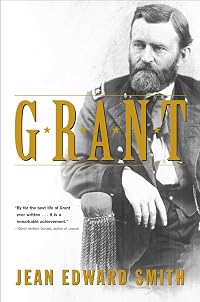
- My first book by JES and it was outstanding…so good I will definitely purchase and read his other biographies on Grant and FDR
- John Marshall life was remarkable. (1) Soldier of the Revolution…served under Washington at Valley Forge, battle of Brandywine, Germantown and Yorktown. When the British invaded Virginia served under Gen Von Stueben. (2) Delegate during the Virginia ratification of the Constitution. The battle with Patrick Henry (who led the opponents of the constitution) was a great read in this book. (3)1 of 3 delegates to France during the “XYZ” affair. (4)While briefly in politics, Congressman and Secretary of State for President Adams, was highly influential and exhibited remarkable leadership/political skills. show more (5)Chief Justice of the US Supreme Court for 34 years. Dominated the court and established the court as an independent/powerful branch of government.
- Enjoyed JES research into Marshall’s family ancestors. The history/events of Marshall grandmother, Mary Randolph Keith, is tragic/heartbreaking story. While Jefferson and Marshall were cousins, Mary Randolph Keith and her family was disowned by the powerful Virginia Randolph family and Jefferson side of the family flourished.
- Huge political difference between Jefferson and Marshall is highlighted in this book in a fair and balanced manner. Jefferson was angry that even after a slew of Jefferson/Madison Republican Supreme Court appointments Marshall continued to dominate and speak for the court. Jefferson was not for an independent Supreme Court and did not support judicial review…the power to strike down laws that were unconstitutional
- My favorite chapter was “Mission to Paris (XYZ) Affair”. The French and specifically Foreign Minister Talleyrand were unbelievably arrogant demanding a bribe and loan as a condition to negotiate with the American delegation. When the negotiations broke down Jefferson blamed the American delegation and demanded release of all documents in support of the negotiations. Adams played pro-French to a fault Jefferson like a violin…Adams agreed to Jefferson’s request for released of the documents that resulted (in Jefferson’s horror) in a firestorm of anti-French sentiments and quasi-war with the French. Also of note from this chapter was the inexcusable behavior of Elbridge Gerry (one of the 3 US delegates). Upon returning from Paris the American backlash against him was tremendous and I believe well deserved
- Marshall was most historically famous by his effective leadership in transforming the US Supreme Court. Before Marshall the US Supreme court lacked respect. Specifically, (1) No one of significance would take the job as Chief Justice of the US Supreme Court (2)Court would frequently not have a quorum of justices available to render a decision (3)Justices of the Court were very political and active with political parties. (4)Court rulings were not based on Federal Law or the Constitution
- Marshall was not only brilliant, he was also a modest and decent individual…his only real enemy was Jefferson. Marshall was friends with both Madison and Monroe (both of which were mentored by Jefferson)
- After reading 19 books on the Revolutionary War Effort…I would rank Marshall’s impact behind only Washington, Hamilton, Jefferson and Franklin. I would argue that Marshall impact as a Founding Father of the Revolutionary War Era is greater than President Adams, Madison and Monroe. In terms of greatness (not impact) I would rank Marshall behind Washington, Hamilton and Franklin and ahead of Jefferson. After the revolutionary war individuals such as Washington, Hamilton, Madison, Jefferson and the two political parties (Republicans and Federalists) all had different views of the power of the new Federal government and the form of government, however, it was Marshall that defined the nation and the rules of the government (just like the title of the book title implies). show less
- John Marshall life was remarkable. (1) Soldier of the Revolution…served under Washington at Valley Forge, battle of Brandywine, Germantown and Yorktown. When the British invaded Virginia served under Gen Von Stueben. (2) Delegate during the Virginia ratification of the Constitution. The battle with Patrick Henry (who led the opponents of the constitution) was a great read in this book. (3)1 of 3 delegates to France during the “XYZ” affair. (4)While briefly in politics, Congressman and Secretary of State for President Adams, was highly influential and exhibited remarkable leadership/political skills. show more (5)Chief Justice of the US Supreme Court for 34 years. Dominated the court and established the court as an independent/powerful branch of government.
- Enjoyed JES research into Marshall’s family ancestors. The history/events of Marshall grandmother, Mary Randolph Keith, is tragic/heartbreaking story. While Jefferson and Marshall were cousins, Mary Randolph Keith and her family was disowned by the powerful Virginia Randolph family and Jefferson side of the family flourished.
- Huge political difference between Jefferson and Marshall is highlighted in this book in a fair and balanced manner. Jefferson was angry that even after a slew of Jefferson/Madison Republican Supreme Court appointments Marshall continued to dominate and speak for the court. Jefferson was not for an independent Supreme Court and did not support judicial review…the power to strike down laws that were unconstitutional
- My favorite chapter was “Mission to Paris (XYZ) Affair”. The French and specifically Foreign Minister Talleyrand were unbelievably arrogant demanding a bribe and loan as a condition to negotiate with the American delegation. When the negotiations broke down Jefferson blamed the American delegation and demanded release of all documents in support of the negotiations. Adams played pro-French to a fault Jefferson like a violin…Adams agreed to Jefferson’s request for released of the documents that resulted (in Jefferson’s horror) in a firestorm of anti-French sentiments and quasi-war with the French. Also of note from this chapter was the inexcusable behavior of Elbridge Gerry (one of the 3 US delegates). Upon returning from Paris the American backlash against him was tremendous and I believe well deserved
- Marshall was most historically famous by his effective leadership in transforming the US Supreme Court. Before Marshall the US Supreme court lacked respect. Specifically, (1) No one of significance would take the job as Chief Justice of the US Supreme Court (2)Court would frequently not have a quorum of justices available to render a decision (3)Justices of the Court were very political and active with political parties. (4)Court rulings were not based on Federal Law or the Constitution
- Marshall was not only brilliant, he was also a modest and decent individual…his only real enemy was Jefferson. Marshall was friends with both Madison and Monroe (both of which were mentored by Jefferson)
- After reading 19 books on the Revolutionary War Effort…I would rank Marshall’s impact behind only Washington, Hamilton, Jefferson and Franklin. I would argue that Marshall impact as a Founding Father of the Revolutionary War Era is greater than President Adams, Madison and Monroe. In terms of greatness (not impact) I would rank Marshall behind Washington, Hamilton and Franklin and ahead of Jefferson. After the revolutionary war individuals such as Washington, Hamilton, Madison, Jefferson and the two political parties (Republicans and Federalists) all had different views of the power of the new Federal government and the form of government, however, it was Marshall that defined the nation and the rules of the government (just like the title of the book title implies). show less
Ratings
Members
- Recently Added By
Author Information

11 Works 3,351 Members
Jean Edward Smith was born on October 13, 1932. He received an A.B. from Princeton University in 1954. He then went on to serve in the military from 1954-1961. In 1964, he obtained his Ph.D. from the Department of Public Law and Government of Columbia University. He is a well known biographer of several works inlcuding those featuring Franklin D. show more Rooselvelt and Ulysses S. Grant. He is the John Marshall Professor of Political Science at Marshall University and professor emeritus at the University of Toronto. In 2002 Jean Smith was a finalist for the Pulitzer Prize for Biography or Autobiography and in 2008 he won the Francis Parkman Prize. His title's inlcude: Bush, Eisenhower in War and Peace, FDR, Grant, and The Face of Justice: Portraits of John Marshall. (Bowker Author Biography) show less
Awards and Honors
Distinctions
Common Knowledge
- Original publication date
- 1996
- People/Characters
- John Adams (2nd President of the United States); Elbridge Gerry; Patrick Henry; Thomas Jefferson; John Marshall, 4th Chief Justice of the United States; Charles-Maurice de Talleyrand-Périgord (Foreign Minister)
- Important places
- France; Paris, France; USA; Washington, D.C., USA
Classifications
- Genres
- Politics and Government, Nonfiction, Biography & Memoir, History, General Nonfiction
- DDC/MDS
- 347.732634 — Society, government, & culture Law U.S. Supreme Court - Judicial Decisions North America Civil procedure and courts of the United States Federal courts Supreme Court
- LCC
- KF8745 .M3 .S63 — Law Law of the United States Law of the United States (Federal) Courts. Procedure Court organization and procedure
- BISAC
Statistics
- Members
- 417
- Popularity
- 74,433
- Reviews
- 2
- Rating
- (4.21)
- Languages
- English
- Media
- Paper, Ebook
- ISBNs
- 3
- ASINs
- 5