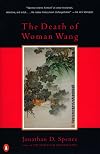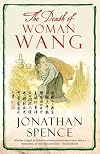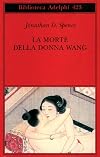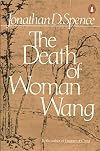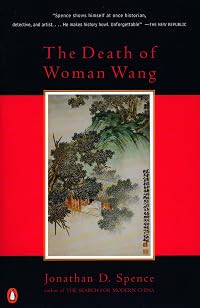
The Death of Woman Wang
by Jonathan D. Spence
On This Page
Description
Award-winning author Jonathan D. Spence paints a vivid picture of an obscure place and time: provincial China in the seventeenth century. Life in the northeastern county of T'an-ch'eng emerges here as an endless cycle of floods, plagues, crop failures, banditry, and heavy taxation. Against this turbulent background a tenacious tax collector, an irascible farmer, and an unhappy wife act out a poignant drama at whose climax the wife, having run away from her husband, returns to him, only to show more die at his hands. Magnificently evoking the China of long ago, The Death of Woman Wang also deepens our understanding of the China we know today. show lessTags
Recommendations







Member Reviews
In college I had to read Spence's God's Chinese Son for a class about religion and rebellion in modern east Asia. I found myself really enjoying the book due to the way Spence intertwines primary sources with his narrative. It was a manner of writing that really made the more detailed historical details pop while not getting inundated in dates and minute specifics.
With this (much) shorter work, he manages to do the same. I picked the book up due to it's powerful title which I think ended up being a great marketing strategy since the primary title is merely an anecdote that comes at the end of the story. In fact, this book is actually about the small town of T'an-ch'eng, in the province of Shantung between the years 1668 and 1672. If I show more were to re-title the book, it'd be more appropriate to call it "The Tax Codes of T'an-ch'eng, followed by, The Death of Woman Wang and Other Citizens of T'an-ch'eng". I see now why that was not the selected title.
However, it is indeed how the book starts, a whole chapter devoted to how unfortunate the citizens of T'an-ch'eng are as they are cheated by tax codes, pillaging thieves and devastating natural disasters. But it's with this introductory chapter and the second chapter that we realize that T'an-ch'eng is the main character of this story and Spence manages to make it all quite fascinating. Then, interspersed with the tax codes and penal codes of China's 17th century, he inserts little anecdotes of various citizens of the town that are quite interesting.
Although maybe a slow start, the narrative does eventually build up until you're suddenly at the end. So all in all, a great introspective on this little village called T'an-ch'eng. show less
With this (much) shorter work, he manages to do the same. I picked the book up due to it's powerful title which I think ended up being a great marketing strategy since the primary title is merely an anecdote that comes at the end of the story. In fact, this book is actually about the small town of T'an-ch'eng, in the province of Shantung between the years 1668 and 1672. If I show more were to re-title the book, it'd be more appropriate to call it "The Tax Codes of T'an-ch'eng, followed by, The Death of Woman Wang and Other Citizens of T'an-ch'eng". I see now why that was not the selected title.
However, it is indeed how the book starts, a whole chapter devoted to how unfortunate the citizens of T'an-ch'eng are as they are cheated by tax codes, pillaging thieves and devastating natural disasters. But it's with this introductory chapter and the second chapter that we realize that T'an-ch'eng is the main character of this story and Spence manages to make it all quite fascinating. Then, interspersed with the tax codes and penal codes of China's 17th century, he inserts little anecdotes of various citizens of the town that are quite interesting.
Although maybe a slow start, the narrative does eventually build up until you're suddenly at the end. So all in all, a great introspective on this little village called T'an-ch'eng. show less
Great little book. Spence looks at a very small area of China during the early Qing empire. He shows the impact of big events, such as mismanagement of the empire, natural disaster and an epidemic of banditry, while not particularly noticing the change between the Ming and Qing dynasties. He paints a picture of what daily life was like, emphasizing relations within communities and women's status.
His sources are particularly interesting. Spence found a journal of a local bureaucrat as well as a written history of the area written only a short time after the events it records. He supplements that with the legal code of the Qing and the writing of a novelist living nearby to emphasize the priorities of the society.
This book is an easy show more read and very interesting. If you are interesting in life in imperial China, this one is well worth the time. show less
His sources are particularly interesting. Spence found a journal of a local bureaucrat as well as a written history of the area written only a short time after the events it records. He supplements that with the legal code of the Qing and the writing of a novelist living nearby to emphasize the priorities of the society.
This book is an easy show more read and very interesting. If you are interesting in life in imperial China, this one is well worth the time. show less
This short book looks at life in during the Qing dynasty in China. It examines local governance and taxation, showing the many ways in which the system was corrupt. More interesting (to me at least) were the laws and social conventions on the role of women, and on crimes of passion and/or revenge. The main story is the book is that of a woman who leaves her husband, and is killed after her return. An easy read, well documented, but a bit dry (until you get to the title story).
I read this book on recommendation. I moderately enjoyed it, although it read more as a textbook at times rather than a pleasurable read. It was intriguing, although at times overbearing in the information that was offered. I would only recommend it to readers who are already engrossed with the topic. Not really idle reading. My opinion might be skewed in concerns to this author's book because I was more in the mood for the idea of the book rather then the historically accurate one that it turned out to be. I would however give this author another try at a later date. As I mentioned earlier it was an intriguing read and I'm curious as to the other topics in which the author writes on.
Meh. Only the last chapter is about Woman Wang. Disappointing read about people living in a county in Northern China. Really crappy era for women.
Ratings
Members
- Recently Added By
Lists

Harold Bloom - The Western Canon: D. The Chaotic Age
833 works; 24 members
Author Information

27+ Works 7,139 Members
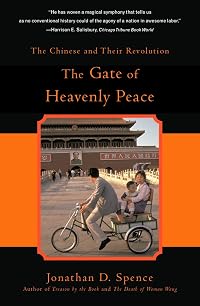
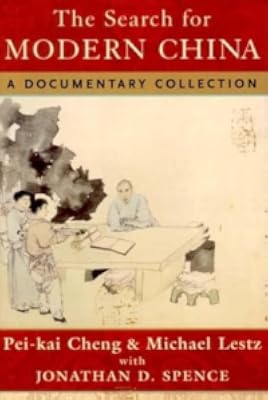
Jonathan D. Spence was born in Surrey, England on August 11, 1936. He received a B.A. in history from Clare College, Cambridge University and a M.A. and Ph.D. from Yale University. He was Sterling Professor of History at Yale University from 1993 to 2008. As a historian specializing in Chinese history, he wrote several books including The Search show more for Modern China, The Death of Woman Wang, and The Memory Palace of Matteo Ricci. The Gate of Heavenly Peace won the Los Angeles Times Book Award and the Henry D. Vursell Memorial Award of the American Academy-Institute of Arts and Letters. (Bowker Author Biography) show less
Some Editions
Awards and Honors
Notable Lists
Common Knowledge
- Canonical title
- The Death of Woman Wang
- Original publication date
- 1978
- Important places
- T'an-ch'eng County, Shantung Province, China
- Important events
- Qing Dynasty (Chinese history, 1644-1911)
- Epigraph
- Lost, is it, buried? One more missing piece?
But nothing's lost. Or else: all is translation
And every bit of us is lost in it...
-- James Merrill - First words
- The earthquake struck T'an-Ch'eng on July 25, 1668.
- Blurbers
- Bloom, Harold
Classifications
Statistics
- Members
- 537
- Popularity
- 55,417
- Reviews
- 5
- Rating
- (3.45)
- Languages
- 6 — Chinese, English, German, Italian, Spanish, Turkish
- Media
- Paper
- ISBNs
- 11
- ASINs
- 6