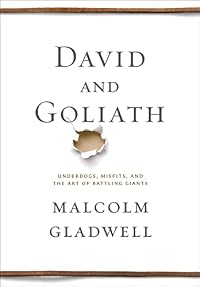
David and Goliath: Underdogs, Misfits, and the Art of Battling Giants
by Malcolm Gladwell
On This Page
Description
Audie Award Winner, Nonfiction, 2014Explore the power of the underdog in Malcolm Gladwell's dazzling examination of success, motivation, and the role of adversity in shaping our lives, from the bestselling author of The Bomber Mafia.
Three thousand years ago on a battlefield in ancient Palestine, a shepherd boy felled a mighty warrior with nothing more than a stone and a sling, and ever since then the names of David and Goliath have stood for battles between underdogs and giants. David's show more victory was improbable and miraculous. He shouldn't have won.
Or should he have?
In David and Goliath, Malcolm Gladwellchallenges how we think about obstacles and disadvantages, offering a new interpretation of what it means to be discriminated against, or cope with a disability, or lose a parent, or attend a mediocre school, or suffer from any number of other apparent setbacks.
Gladwell begins with the real story of what happened between the giant and the shepherd boy those many years ago. From there, David and Goliath examines Northern Ireland's Troubles, the minds of cancer researchers and civil rights leaders, murder and the high costs of revenge, and the dynamics of successful and unsuccessful classrooms—all to demonstrate how much of what is beautiful and important in the world arises from what looks like suffering and adversity.
In the tradition of Gladwell's previous bestsellers—The Tipping Point, Blink, Outliers and What the Dog Saw—David and Goliath draws upon history, psychology, and powerful storytelling to reshape the way we think of the world around us. show less
Tags
Recommendations

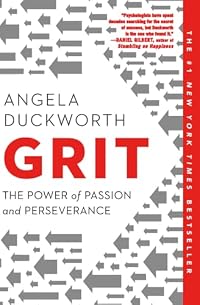
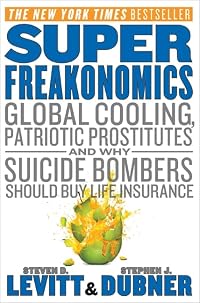
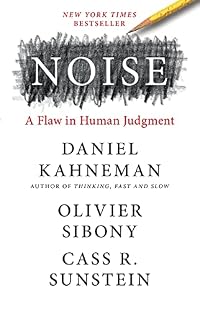
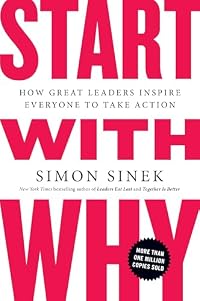



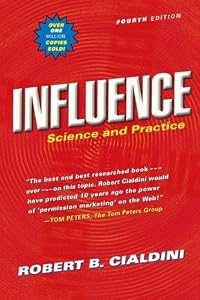
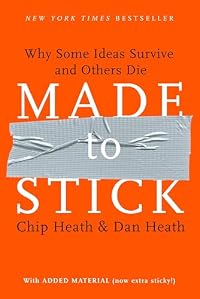
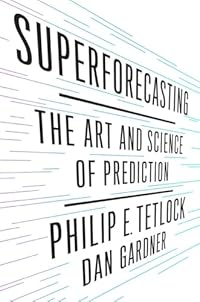
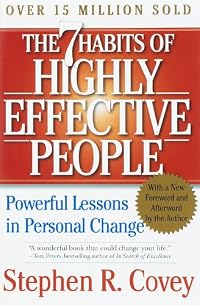
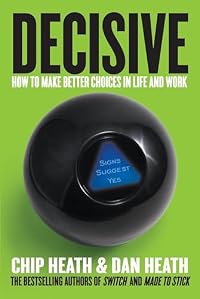
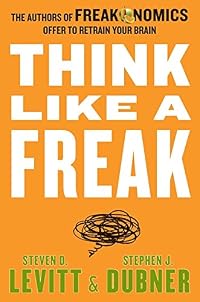
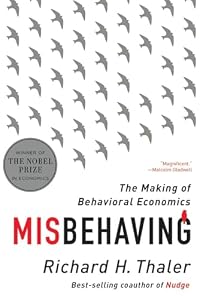
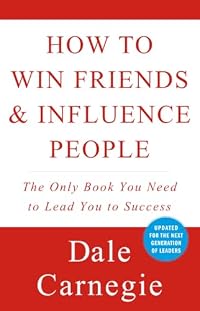

Member Recommendations

BookshelfMonstrosity David and Goliath explores the ways in which underdogs may succeed, while Underdog relates the experiences of one entrepreneur who converted his outsider status into a series of financially successful movies.
Member Reviews
Malcolm Gladwell provides insight into why underdogs are often successful against a more powerful opponent. As is typical in his books, he takes the contrarian position, arguing that these so-called underdogs are skilled in areas under-appreciated by the general population. He cites examples and research from the fields of psychology, sociology, science, and business in support of this assertions.
As always, I enjoy reading Gladwell for the entertainment value. He does a great job of weaving together various stories, setting one aside to focus on another, related, story on the same general topic, and coming back to the initial story later to wrap up the thought. His method is effective in keeping the reader’s attention. His approach show more is to highlight the counterintuitive, leading the reader to several “a-ha” moments.
Whether his sweeping statements will stand up to scientific scrutiny is another matter entirely. The main issue I have with his approach is that the research he cites is not done in support of his theories. It is relevant to the topic he is examining but does not actually prove “cause and effect.” For example, Gladwell cites examples and anecdotes of dyslexics who are successful. This does not mean dyslexia causes success. Science is used to supplement his narrative, not drive it. I enjoyed this book for its thought-provoking content, but the reader should bear in mind that his observations have not been proven using the scientific method. show less
As always, I enjoy reading Gladwell for the entertainment value. He does a great job of weaving together various stories, setting one aside to focus on another, related, story on the same general topic, and coming back to the initial story later to wrap up the thought. His method is effective in keeping the reader’s attention. His approach show more is to highlight the counterintuitive, leading the reader to several “a-ha” moments.
Whether his sweeping statements will stand up to scientific scrutiny is another matter entirely. The main issue I have with his approach is that the research he cites is not done in support of his theories. It is relevant to the topic he is examining but does not actually prove “cause and effect.” For example, Gladwell cites examples and anecdotes of dyslexics who are successful. This does not mean dyslexia causes success. Science is used to supplement his narrative, not drive it. I enjoyed this book for its thought-provoking content, but the reader should bear in mind that his observations have not been proven using the scientific method. show less
Malcolm Gladwell has done it again--taken confusing and difficult material and made it interesting and understandable.
Gladwell takes the well-known Bible story of David and Goliath and explains that, far from David being ill-matched in fighting Goliath, David had the better chance of prevailing. Goliath was weighed down with armour and equipped with weapons that he could use in close combat but not at a distance while David could move quickly and launch his slingshot well out of the reach of Goliath's weapons. This demonstrates that in the struggle between unequal forces how the underdog chooses to fight determines whether they will win. This has been shown in countless wars and also in sporting contests. Sometimes what seems to be an show more advantage is actually a disadvantage such as small school classes or being accepted to a great university.
The second part of the book is subtitled "The Theory of Desirable Difficulty". Gladwell shows that adversity, such as having dyslexia or losing a parent early in life, can sometimes mould a person into someone with great talents. Many very successful entrepreneurs are classified as having learning disabilities. Gladwell thinks that this problem forced them to learn and think in unusual ways that made them stand out in their fields. Of course, those who don't succeed in overcoming their disability often end up in jail so no-one would want children to have dyslexia.
The third section is called "The Limits of Power". Gladwell shows how power can sometimes make matters worse for instance when the British army was deployed in Northern Ireland. He also contrasts the reactions of two parents who lost daughters to violence. Mike Reynolds reacted to the murder of his daughter by calling for the institution of the Three Strikes Law of California which sent an offender to jail for life the third time they broke the law. This resulted in doubling the number of people in jail in California but likely did nothing to deter crime. On the other hand Wilma Derksen of Winnipeg reacted to the death of her daughter by refusing to be consumed by it and eventually forgiving the perpetrator. I lived in Winnipeg when Candace Derksen went missing and I followed the news stories about the finding of her body and the eventual arrest of the assailant. I remember being impressed with the Derksen's reaction but it was only when I read this book that I learned that they consciously choose not to be consumed because they had been visited by the father of a young girl who was killed in a donut shop a decade earlier. That father was still consumed by her death and it had destroyed his marriage, his health and his life. Which parent made the right choice? I hope I would choose the Derksens' reaction if faced with that horrible consequence. show less
Gladwell takes the well-known Bible story of David and Goliath and explains that, far from David being ill-matched in fighting Goliath, David had the better chance of prevailing. Goliath was weighed down with armour and equipped with weapons that he could use in close combat but not at a distance while David could move quickly and launch his slingshot well out of the reach of Goliath's weapons. This demonstrates that in the struggle between unequal forces how the underdog chooses to fight determines whether they will win. This has been shown in countless wars and also in sporting contests. Sometimes what seems to be an show more advantage is actually a disadvantage such as small school classes or being accepted to a great university.
The second part of the book is subtitled "The Theory of Desirable Difficulty". Gladwell shows that adversity, such as having dyslexia or losing a parent early in life, can sometimes mould a person into someone with great talents. Many very successful entrepreneurs are classified as having learning disabilities. Gladwell thinks that this problem forced them to learn and think in unusual ways that made them stand out in their fields. Of course, those who don't succeed in overcoming their disability often end up in jail so no-one would want children to have dyslexia.
The third section is called "The Limits of Power". Gladwell shows how power can sometimes make matters worse for instance when the British army was deployed in Northern Ireland. He also contrasts the reactions of two parents who lost daughters to violence. Mike Reynolds reacted to the murder of his daughter by calling for the institution of the Three Strikes Law of California which sent an offender to jail for life the third time they broke the law. This resulted in doubling the number of people in jail in California but likely did nothing to deter crime. On the other hand Wilma Derksen of Winnipeg reacted to the death of her daughter by refusing to be consumed by it and eventually forgiving the perpetrator. I lived in Winnipeg when Candace Derksen went missing and I followed the news stories about the finding of her body and the eventual arrest of the assailant. I remember being impressed with the Derksen's reaction but it was only when I read this book that I learned that they consciously choose not to be consumed because they had been visited by the father of a young girl who was killed in a donut shop a decade earlier. That father was still consumed by her death and it had destroyed his marriage, his health and his life. Which parent made the right choice? I hope I would choose the Derksens' reaction if faced with that horrible consequence. show less
Once again, Malcolm Gladwell takes a look at conventional thinking and turns it upside down. In this title he uses a variety of case studies to support the theory that what we commonly see as positions of advantage are not always so. And that positions of disadvantage may actually be a strength.
It's interesting to me that he uses quite a few references from the Bible, both Old and New Testament as introductions to a concept, which is a follow through of the biblical story used in the title.
He starts with battling giants as the title suggests, and points out the disadvantages of being large, slow, and myopic as the figure Goliath was purported to be by some sources. And analyzes the advantages of David, a young shepherd boy with no armor show more or experience in warfare, yet had the advantages of speed, skill, and maneuverability. These two tropes set the stage for the series of topics and case studies that he uses to support his point.
He touches on various topics such as choice of college, guerilla warfare, the 1960's Civil Rights movement, classroom size, California's Three Strike Rule, successful dyslexics, and children who've lost a parent at a young age.
This is not a book on empirical research in social science, but it is typical Malcolm Gladwell who challenges his readers to check their assumptions and prejudices at the opening of the book and look at the world in a more expansive way.
We listened to this as an audiobook, read by the author. He does a superb job of orally presenting his work. It was like sitting through a fascinating lecture. show less
It's interesting to me that he uses quite a few references from the Bible, both Old and New Testament as introductions to a concept, which is a follow through of the biblical story used in the title.
He starts with battling giants as the title suggests, and points out the disadvantages of being large, slow, and myopic as the figure Goliath was purported to be by some sources. And analyzes the advantages of David, a young shepherd boy with no armor show more or experience in warfare, yet had the advantages of speed, skill, and maneuverability. These two tropes set the stage for the series of topics and case studies that he uses to support his point.
He touches on various topics such as choice of college, guerilla warfare, the 1960's Civil Rights movement, classroom size, California's Three Strike Rule, successful dyslexics, and children who've lost a parent at a young age.
This is not a book on empirical research in social science, but it is typical Malcolm Gladwell who challenges his readers to check their assumptions and prejudices at the opening of the book and look at the world in a more expansive way.
We listened to this as an audiobook, read by the author. He does a superb job of orally presenting his work. It was like sitting through a fascinating lecture. show less
I have to give Mr. Gladwell this, he is a damn fine writer. Everything he touch becomes interesting and obsessively readable. You come away feeling smarter, let in on a bit of secret knowledge. That said, I'm not so sure Malcolm Gladwell is actually a good thinker. His style is a collage of anecdotes and surprise to conceal the obvious. In this case, those obvious stories are that large and ponderous entities can be beaten by nimble and aggressive ones who break implicit rules, at some point more of the same produces negative results (inverted U-shaped curves), and that childhood adversity produces 'great' people.
I admire Gladwell's obvious skill as a writer, and his jackdaw collections of facts and stories, but I worry that his show more psuedo-profundity is replacing actual insight. show less
I admire Gladwell's obvious skill as a writer, and his jackdaw collections of facts and stories, but I worry that his show more psuedo-profundity is replacing actual insight. show less
David and Goliath: Underdogs, Misfits, and the Art of Battling Giants . I disagree with Tyler Cowen, I do not think this is one of Gladwell's best books. It is thought-provoking and I enjoyed it, but reviewers (see here and here and here) have poked too many holes in it for me to think it authoritative.
Gladwell's premise is that we misperceive who is at an advantage and disadvantage. David wasn't an "underdog," a stone and sling in the hands of a mobile warrior had a huge advantage from a distance over a slow-moving giant (who was possibly blind) with a spear.
People can create advantage from disadvantage by altering their paradigm. He uses the full-court press in basketball (hailing Pitino, even) as an example. (I love to harp on show more peoples' paradigms as weaknesses, and this is my favorite example (not mentioned by Gladwell) of an item reinvented and made better by approaching from a different paradigm.)
Gladwell also points to research showing that millionaires--successful people-- have disproportionately faced handicaps, such as dislexia or losing a parent at an early age. He illustrates using a few examples, including the president of Goldman Sachs, who credit dyslexia to their future success. A "desirable difficulty" creates a willpower or stubborness that later serves the otherwise handicapped. However, Gladwell notes that the socially dysfunctional--namely prisoners-- are also disproportionately represented by dyslexics and people who lost parents at an early age. So, what does that tell us? Certain events in childhood can lead to polar outcomes, and it depends on luck, grace, and other circumstances? Did I need to read the book to know that? Do I not already know enough people who ended up in opposite ends of the spectrum to note this phenonmenon?
I appreciate Gladwell for trying to popularize economics, psychology, and statistics into "adventure stories" for the common reader. But repeated accusations that he cherry-picked his studies are problematic. You can't draw broad conclusions from a few anecdotes, especially when contradictory evidence is ignored.
You will learn about all sorts of historical trivia that Gladwell wants to draw your attention to. How Martin Luther King Jr. eagerly hoped children he'd recruited to march in Birmingham would be savagely attacked by dogs, and was quite happy when they were jailed in inhumane conditions. How the Three Strikes law in California was counterproductive in reducing crime, and how that relates to the British's failed occupation of Northern Ireland. How French Huguenots harbored Jews and behaved as true Christians in the midst of WWII and went unpunished, standing up to the Nazi/Vichy Goliath. But as reviewers have noted, other villages that stood up (not mentioned by Gladwell) were destroyed. Perhaps the full-court press isn't as widely shelved as the reader is led to believe.
I give this book 3 stars. There was a lot of historical trivia that I learned and found useful. His main premise, that we shouldn't count people out based on our preconceived biases and paradigms, doesn't strike me as very interesting. If it strikes you as novel, then you are Gladwell's target audience. show less
Gladwell's premise is that we misperceive who is at an advantage and disadvantage. David wasn't an "underdog," a stone and sling in the hands of a mobile warrior had a huge advantage from a distance over a slow-moving giant (who was possibly blind) with a spear.
People can create advantage from disadvantage by altering their paradigm. He uses the full-court press in basketball (hailing Pitino, even) as an example. (I love to harp on show more peoples' paradigms as weaknesses, and this is my favorite example (not mentioned by Gladwell) of an item reinvented and made better by approaching from a different paradigm.)
Gladwell also points to research showing that millionaires--successful people-- have disproportionately faced handicaps, such as dislexia or losing a parent at an early age. He illustrates using a few examples, including the president of Goldman Sachs, who credit dyslexia to their future success. A "desirable difficulty" creates a willpower or stubborness that later serves the otherwise handicapped. However, Gladwell notes that the socially dysfunctional--namely prisoners-- are also disproportionately represented by dyslexics and people who lost parents at an early age. So, what does that tell us? Certain events in childhood can lead to polar outcomes, and it depends on luck, grace, and other circumstances? Did I need to read the book to know that? Do I not already know enough people who ended up in opposite ends of the spectrum to note this phenonmenon?
I appreciate Gladwell for trying to popularize economics, psychology, and statistics into "adventure stories" for the common reader. But repeated accusations that he cherry-picked his studies are problematic. You can't draw broad conclusions from a few anecdotes, especially when contradictory evidence is ignored.
You will learn about all sorts of historical trivia that Gladwell wants to draw your attention to. How Martin Luther King Jr. eagerly hoped children he'd recruited to march in Birmingham would be savagely attacked by dogs, and was quite happy when they were jailed in inhumane conditions. How the Three Strikes law in California was counterproductive in reducing crime, and how that relates to the British's failed occupation of Northern Ireland. How French Huguenots harbored Jews and behaved as true Christians in the midst of WWII and went unpunished, standing up to the Nazi/Vichy Goliath. But as reviewers have noted, other villages that stood up (not mentioned by Gladwell) were destroyed. Perhaps the full-court press isn't as widely shelved as the reader is led to believe.
I give this book 3 stars. There was a lot of historical trivia that I learned and found useful. His main premise, that we shouldn't count people out based on our preconceived biases and paradigms, doesn't strike me as very interesting. If it strikes you as novel, then you are Gladwell's target audience. show less
It is well-known and oft-documented, at this point, that Gladwell is a master cherry-picker, blatantly ignoring the overwhelming majority of the numbers that run counter to the myriad of his arguments, to find the gems that he wishes to discuss. The gripes are boring at this point, because what his critics continue to ignore, and what is elementally boring, but wonderfully factual about the the thinker: he's a master storyteller, genius tale curator, and powerful, insightful analyzer, who's very keyed in to the very game he's playing. This book is also a masterwork of construction. It's built like a Darwinian tree, each story and concept at the bottom deriving perfectly from the branch above. Every chapter is seen through the eyes of show more specific individuals whose specific stories fall specifically into the categories he brings up for discussion. What comes first? The idea, or the story? It's impossible to tell! But it doesn't matter. Everything he writes is enjoyable, and the opening chapter on the David vs. Goliath story is a veritable "dvar torah" that, if I memorize properly, I might even present one day, in name of my rav, Malcolm Gladwell, SHLIT'A. show less
What an intriguing book this is! Gladwell starts with the premise that having what seem to be a plethora of advantages can in fact hide what are really disadvantages, and that being at a supposed disadvantage can actually turn out to be advantageous. These are the lessons he takes from the story of David and Goliath, exploring the possibility that Goliath’s height was the result of a malfunctioning pituitary gland and that David’s use of the sling makes him an artilleryman who was naturally superior to the heavily armed and slow-footed infantryman represented by Goliath. So far, so good.
And so it continues, through stories of an Indian middle school girls’ high school basketball coach whose team of nerds won with the full-court show more press because the experienced players couldn’t break it, a high school teacher who preferred a slightly larger class because a smaller one drowned out voices, and a would-be science major whose preference for Brown over the University of Maryland placed her in classes where her perceived inferiority converted her to an arts major. The Indian coach is the amateur equivalent, of course, of Rick Pitino, who Gladwell points out was a freshman spectator when Digger Phelps’ undersized and overmatched Fordham team came into Amherst and beat the powerhouse UMass team led by Julius Erving. The student choosing between Brown and the University of Maryland had a choice that Gladwell convincingly presents as equivalent to that faced by Impressionist artists in mid-19th Century France, when they needed the Salon for success but were not the Salon’s usual artists.
But then things go awry. Gladwell begins Part Two of the book by examining the prevalence of dyslexia among successful entrepreneurs as well as the great producer Brian Glazer and the famous trial lawyer David Boies. Again, so far, so good. Until he begins to address the loss of parents during childhood. Here Gladwell’s reliance on second-hand sources begins to betray him. He cites an ‘informal survey of famous poets and writers like Keats, Wordsworth, Swift, Edward Gibbon, and Thackeray’ which purports to explain their success by the death of a parent. The educated observer has to ask: how does the great historian Gibbon fit with the others, all of whom wrote fiction? He doesn’t. He was selected deliberately as someone who fits the data.
Then Gladwell continues to claim that ‘Sixty-seven percent of the prime ministers [of England from 1800 to 1938] lost a parent before the age of sixteen. […] The same pattern can be found among American presidents. Twelve of the first forty-four U.S. presidents […] lost their fathers while they were young.’ Two problems emerge with this comparison: first, he only addresses fathers with the U.S. presidents. We have no idea about mothers. Second, twelve out of forty-four is 27.3 percent. That is VASTLY different from 67 percent. It is barely more than a quarter being compared with two-thirds. No qualitative facility with language can make up for the abuse of statistics that Gladwell is here passing off on his readers. And yet I do not know whether Gladwell himself understands this. He is, after all, deliberately passing on second-hand information.
In the next chapter he purports to show how the Civil Rights movement as led by Martin Luther King and Wyatt Walker in Alabama overcame a lack of support from the African-American community in Birmingham. Here again he relies on second-hand sources, most notably the historian Taylor Branch, rather than the greatest of all primary sources, Martin Luther King, Jr.’s great book Why We Can’t Wait. The narrative conflicts, most likely because it is overly reliant on the memories of Wyatt Walker, whom Gladwell himself presents as somewhat erratic. In presenting the Birmingham issue as the product of Bull Connor’s failure to recognize that less than twenty demonstrators were being shadowed by thousands of spectators, he makes Connor appear stupid–which he was not–and distorts what I believe to be fact and historical accuracy. King had hundreds if not thousands of demonstrators. There may have been some spectators. It was probably as difficult then as it is now to differentiate between the two crowds.
Nor is this the first time he distorts history, using secondary sources, to make it conform to what he wishes to portray as a moral message. As Gladwell says, ‘WIlliam Polk writes in Violent Politics, a history of unconventional warfare, Washington “devoted his energies to creating a British-type army, the Continental Line. As a result, he was defeated time after time and almost lost the war.’ This is a complete misunderstanding of Washington’s achievement in the Revolutionary War. What Washington did was to master and brilliantly execute the Fabian Strategy, a strategy designed to exhaust the resources of an invader who does not know the soil. The Fabian Strategy does entail losses. It is a strategy designed to win a war of attrition. I’ve described it in depth in Volume 3 of Essays on the Classics! Gladwell doesn’t know that. Instead he is preaching the virtues of nonconformity, using an alleged Washington failure, and inciting others based on historical inaccuracy. This is deeply problematic to me.
The end result is the audacious, even outrageous claim that ‘we need to remember that our definition of what is right is, as often as not, simply the way that people in positions of privilege close the door on those on the outside.’ No doubt there is some element of ‘might equals right’ in any moral code, and that element is abusive. But if this is the sole justification for glorifying the fact that Gary Cohn, another dyslexic, lied to get his initial entry into banking and used that lie to rise to the top then it is extremely problematic. It is the equivalent of justifying Antonio Bastardo’s use of steroids to obtain the 25th spot on the roster of the Philadelphia Phillies. The guy who plays by the rules and also does not have advantages gets screwed by an immoral act. Gladwell makes the immoral act sound like an act of outright genius and something we should all look up to and emulate. I have no respect for that kind of thinking.
In short, Gladwell’s moral claims are dubious, and there are problems in the book with selection of data, use and interpretation of statistics, and historical accuracy. This is a work of sloppy scholarship that is disturbingly, even dangerously persuasive. And it is a total disappointment because the topic is meaningful, the introduction is brilliant, and the subject matter needs to be addressed seriously. It’s really too bad. show less
And so it continues, through stories of an Indian middle school girls’ high school basketball coach whose team of nerds won with the full-court show more press because the experienced players couldn’t break it, a high school teacher who preferred a slightly larger class because a smaller one drowned out voices, and a would-be science major whose preference for Brown over the University of Maryland placed her in classes where her perceived inferiority converted her to an arts major. The Indian coach is the amateur equivalent, of course, of Rick Pitino, who Gladwell points out was a freshman spectator when Digger Phelps’ undersized and overmatched Fordham team came into Amherst and beat the powerhouse UMass team led by Julius Erving. The student choosing between Brown and the University of Maryland had a choice that Gladwell convincingly presents as equivalent to that faced by Impressionist artists in mid-19th Century France, when they needed the Salon for success but were not the Salon’s usual artists.
But then things go awry. Gladwell begins Part Two of the book by examining the prevalence of dyslexia among successful entrepreneurs as well as the great producer Brian Glazer and the famous trial lawyer David Boies. Again, so far, so good. Until he begins to address the loss of parents during childhood. Here Gladwell’s reliance on second-hand sources begins to betray him. He cites an ‘informal survey of famous poets and writers like Keats, Wordsworth, Swift, Edward Gibbon, and Thackeray’ which purports to explain their success by the death of a parent. The educated observer has to ask: how does the great historian Gibbon fit with the others, all of whom wrote fiction? He doesn’t. He was selected deliberately as someone who fits the data.
Then Gladwell continues to claim that ‘Sixty-seven percent of the prime ministers [of England from 1800 to 1938] lost a parent before the age of sixteen. […] The same pattern can be found among American presidents. Twelve of the first forty-four U.S. presidents […] lost their fathers while they were young.’ Two problems emerge with this comparison: first, he only addresses fathers with the U.S. presidents. We have no idea about mothers. Second, twelve out of forty-four is 27.3 percent. That is VASTLY different from 67 percent. It is barely more than a quarter being compared with two-thirds. No qualitative facility with language can make up for the abuse of statistics that Gladwell is here passing off on his readers. And yet I do not know whether Gladwell himself understands this. He is, after all, deliberately passing on second-hand information.
In the next chapter he purports to show how the Civil Rights movement as led by Martin Luther King and Wyatt Walker in Alabama overcame a lack of support from the African-American community in Birmingham. Here again he relies on second-hand sources, most notably the historian Taylor Branch, rather than the greatest of all primary sources, Martin Luther King, Jr.’s great book Why We Can’t Wait. The narrative conflicts, most likely because it is overly reliant on the memories of Wyatt Walker, whom Gladwell himself presents as somewhat erratic. In presenting the Birmingham issue as the product of Bull Connor’s failure to recognize that less than twenty demonstrators were being shadowed by thousands of spectators, he makes Connor appear stupid–which he was not–and distorts what I believe to be fact and historical accuracy. King had hundreds if not thousands of demonstrators. There may have been some spectators. It was probably as difficult then as it is now to differentiate between the two crowds.
Nor is this the first time he distorts history, using secondary sources, to make it conform to what he wishes to portray as a moral message. As Gladwell says, ‘WIlliam Polk writes in Violent Politics, a history of unconventional warfare, Washington “devoted his energies to creating a British-type army, the Continental Line. As a result, he was defeated time after time and almost lost the war.’ This is a complete misunderstanding of Washington’s achievement in the Revolutionary War. What Washington did was to master and brilliantly execute the Fabian Strategy, a strategy designed to exhaust the resources of an invader who does not know the soil. The Fabian Strategy does entail losses. It is a strategy designed to win a war of attrition. I’ve described it in depth in Volume 3 of Essays on the Classics! Gladwell doesn’t know that. Instead he is preaching the virtues of nonconformity, using an alleged Washington failure, and inciting others based on historical inaccuracy. This is deeply problematic to me.
The end result is the audacious, even outrageous claim that ‘we need to remember that our definition of what is right is, as often as not, simply the way that people in positions of privilege close the door on those on the outside.’ No doubt there is some element of ‘might equals right’ in any moral code, and that element is abusive. But if this is the sole justification for glorifying the fact that Gary Cohn, another dyslexic, lied to get his initial entry into banking and used that lie to rise to the top then it is extremely problematic. It is the equivalent of justifying Antonio Bastardo’s use of steroids to obtain the 25th spot on the roster of the Philadelphia Phillies. The guy who plays by the rules and also does not have advantages gets screwed by an immoral act. Gladwell makes the immoral act sound like an act of outright genius and something we should all look up to and emulate. I have no respect for that kind of thinking.
In short, Gladwell’s moral claims are dubious, and there are problems in the book with selection of data, use and interpretation of statistics, and historical accuracy. This is a work of sloppy scholarship that is disturbingly, even dangerously persuasive. And it is a total disappointment because the topic is meaningful, the introduction is brilliant, and the subject matter needs to be addressed seriously. It’s really too bad. show less
Members
- Recently Added By
Lists

Top Five Books of 2013
1,562 works; 715 members

Recommend the 20 best books you've read in the last five years
2,168 works; 606 members

Books read in 2014
11 works; 1 member

2016 Book Club Choices
52 works; 7 members

CBC's Great Canadian Reading List
149 works; 5 members

Mind Expanding Books by hackerkid
581 works; 8 members
Author Information

In 2005, Time named Malcolm Gladwell one of its 100 most influential people. He is the author of three books, each of which reached number one on the New York Times Best Seller list. They are: The Tipping Point, Blink, and Outliers. His fourth book, What the Dog Saw and Other Adventures was published in 2009. He is a is a British-born Canadian show more journalist and author. Gladwell was a reporter for the Washington Post from 1987 to 1996, working first as a science writer and then as New York City bureau chief. Since 1996, he has been a staff writer for The New Yorker. He graduated with a degree in history from the University of Toronto's Trinity College in 1984. (Publisher Provided) show less
Some Editions
Awards and Honors
Awards
Work Relationships
Common Knowledge
- Canonical title
- David and Goliath: Underdogs, Misfits, and the Art of Battling Giants
- Original title
- David and Goliath: Underdogs, Misfits, and the Art of Battling Giants
- Original publication date
- 2013-10
- People/Characters
- Fred Shuttlesworth; Rosemary Lawlor; Goliath; David (King of Israel); Vivek Ranadivé; Teresa DeBrito (show all 12); Caroline Sacks; David Boies; Wyatt Walker; Wilma Derksen; André Trocmé; Emil "Jay" Freireich
- Important places
- Belfast, Northern Ireland, UK
- Important events
- Civil Rights Movement, USA; Northern Ireland peace process
- Epigraph
- But the Lord said to Samuel, "Do not look on his appearance or on the height of his stature, because I have rejected him; for the Lord does not see as mortals see; they look on the outward appearance, but the Lord looks on th... (show all)e heart."
—1 Samuel 16:7 - Dedication
- For A. L. and for S. F., a real underdog
- First words
- At the heart of ancient Palestine is the region known as the Shephelah, a series of ridges and valleys connecting the Judaean Mountains to the east with the wide, flat expanse of the Mediterranean plain.
- Quotations
- Page 274 bottom
It was not the privileged and the fortunate who took in the Jews in France. It was marginal and the damaged, which should remind us that there are real limits to what evil and misfortune can acco... (show all)mplish. If you take away the gift of reading, you create the gift of listening. If you bomb a city, you leave behind death and destruction. But you create a community of remote misses. If you take away a mother or a father, you cause suffering and despair. But one time in ten, out that despair rises an indomitable force. You see the giant and the shepherd in the Valley of Elah and your eye is drawn to the man with the sword and shield and the glittering armor. But so much of what is beautiful and valuable in the world comes from the shepherd, who has more strength and purpose than we ever imagine. - Last words
- (Click to show. Warning: May contain spoilers.)They grow in thickness, perhaps, and that is what I am doing.
(Click to show. Warning: May contain spoilers.)"He wrote down the name, and said he would. But he never did."
Classifications
Statistics
- Members
- 5,184
- Popularity
- 2,630
- Reviews
- 127
- Rating
- (3.74)
- Languages
- 16 — Chinese, Dutch, English, Estonian, Finnish, French, German, Indonesian, Italian, Korean, Norwegian (Bokmål), Russian, Spanish, Swedish, Turkish, Portuguese (Portugal)
- Media
- Paper, Audiobook, Ebook
- ISBNs
- 55
- ASINs
- 24