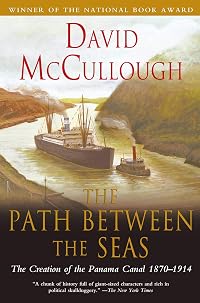
The Path Between the Seas: The Creation of the Panama Canal, 1870-1914
by David McCullough
On This Page
Description
The National Book Award–winning epic chronicle of the creation of the Panama Canal, a first-rate drama of the bold and brilliant engineering feat that was filled with both tragedy and triumph, told by master historian David McCullough.From the Pulitzer Prize–winning author of Truman, here is the national bestselling epic chronicle of the creation of the Panama Canal. In The Path Between the Seas, acclaimed historian David McCullough delivers a first-rate drama of the sweeping human show more undertaking that led to the creation of this grand enterprise.
The Path Between the Seas tells the story of the men and women who fought against all odds to fulfill the 400-year-old dream of constructing an aquatic passageway between the Atlantic and Pacific oceans. It is a story of astonishing engineering feats, tremendous medical accomplishments, political power plays, heroic successes, and tragic failures. Applying his remarkable gift for writing lucid, lively exposition, McCullough weaves the many strands of the momentous event into a comprehensive and captivating tale.
Winner of the National Book Award for history, the Francis Parkman Prize, the Samuel Eliot Morison Award, and the Cornelius Ryan Award (for the best book of the year on international affairs), The Path Between the Seas is a must-read for anyone interested in American history, the history of technology, international intrigue, and human drama. show less
Tags
Recommendations

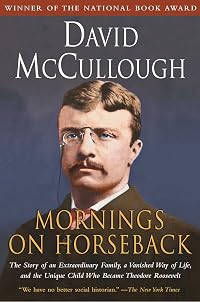
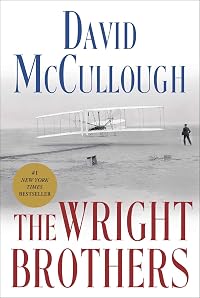

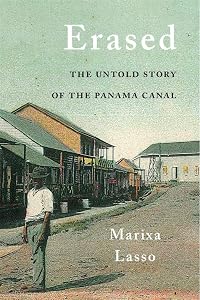
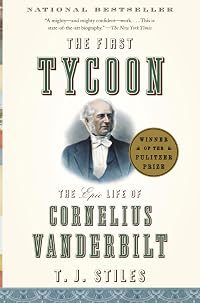
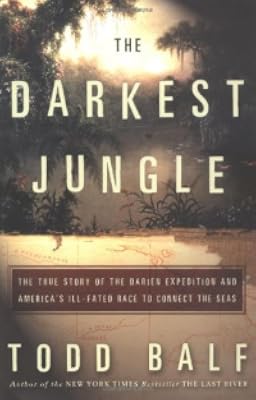
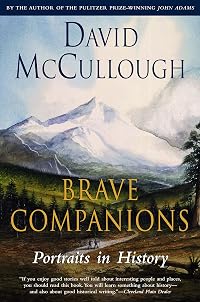






Member Recommendations

John_Vaughan Another dig that astounds.
02
Member Reviews
I found "The Path Between the Seas" to be very interesting, well researched and well written. It reads much like a novel and as it progressed I thought it got better.
McCullough organized the book in an easy to understand fashion and it progressed logically. There were some changes in the tone it was written as later chapters used more first person accounts reminiscent of Walter Lord.
Although the book was written in 1977, McCollough gives a fair and even-handed accounting of the non-American, non-white workers. He illustrates the differences in the health, diet and living conditions while indicating the canal was really made a reality by mainly West Indian labor. A fact that is very much glossed over in most contemporary accounts.
The show more backstory of the French attempt and the resulting political backlash was very interesting also.
I am also finding overlapping references to individuals in this book with other histories, Gorgas for example, who was featured in "The Great Influenza" by John Barry is fleshed out more as his work in Panama fighting Yellow Fever and Malaria were the seminal works of his career
This is an excellent history of a monumental project, the likes of which no longer happen. show less
McCullough organized the book in an easy to understand fashion and it progressed logically. There were some changes in the tone it was written as later chapters used more first person accounts reminiscent of Walter Lord.
Although the book was written in 1977, McCollough gives a fair and even-handed accounting of the non-American, non-white workers. He illustrates the differences in the health, diet and living conditions while indicating the canal was really made a reality by mainly West Indian labor. A fact that is very much glossed over in most contemporary accounts.
The show more backstory of the French attempt and the resulting political backlash was very interesting also.
I am also finding overlapping references to individuals in this book with other histories, Gorgas for example, who was featured in "The Great Influenza" by John Barry is fleshed out more as his work in Panama fighting Yellow Fever and Malaria were the seminal works of his career
This is an excellent history of a monumental project, the likes of which no longer happen. show less
This massive history of the making of the Panama Canal begins with France's attempt to carve out a canal and create a passage from the Atlantic to the Pacific through Central America. France had recently led the charge to create the Suez Canal, a huge success, and that initiative's leader, Ferdinand de Lessup, decided the Panama Canal would be his next project. There was argument over where to put it (Nicaragua?) and certainly lots of argument over how to engineer it - a sea level canal or a raised series of locks? The French initiative was tangled up with tons of issues from funding, to illness, to corruption, to lack of a feasible construction plan. Eventually it failed and the canal that had been begun sat there for quite some time show more until a Frenchman, Philippe Bunau-Varilla, reinvigorated the idea in America. Teddy Roosevelt quickly took it up and America built the canal in the early 1900s, after wresting the land from Columbia and granting Panama independence through a rather shady treaty. Advances in engineering meant that the whole building process went much more smoothly than when the French had tried it two decades earlier. The Americans also made the correct decision to forego the sea level canal and use the elevated Chagres River to create a series of above sea level locks and lakes.
It's a fascinating stretch of time. I was most fascinated by some of the details of the work, such as having to figure out what caused yellow fever and malaria and how to prevent it in order to achieve success. The engineering feat was, and still is, a marvel. It's hard to comprehend the amount of earth that was moved and controlled to make this venture successful, and McCullough does a fantastic job describing it. I was also fascinated by the section that describe the politics around America taking over the building of the canal.
All in all, this is a very readable and interesting book that I definitely recommend. Very interesting moment in history and quite a feat of engineering. I thought it got off to a bit of a slow start, but once I got into it, it read pretty quickly. show less
It's a fascinating stretch of time. I was most fascinated by some of the details of the work, such as having to figure out what caused yellow fever and malaria and how to prevent it in order to achieve success. The engineering feat was, and still is, a marvel. It's hard to comprehend the amount of earth that was moved and controlled to make this venture successful, and McCullough does a fantastic job describing it. I was also fascinated by the section that describe the politics around America taking over the building of the canal.
All in all, this is a very readable and interesting book that I definitely recommend. Very interesting moment in history and quite a feat of engineering. I thought it got off to a bit of a slow start, but once I got into it, it read pretty quickly. show less
David McCullough ably captures the grand spirit of the age in this book about the Panama canal. For centuries, men had dreamed of a canal through the American isthmus, which would elimate the fraught passage around Cape Horn, opening up the riches of the Far East and the Pacific Coast to traditional Atlantic powers.
The first man to seriously attempt a canal across the isthmus was Ferdinand de Lessup, builder of the Suez Canal and an entrepreneur par excellence. In the wake of the bitter defeat of the Franco-Prussian War, the elderly yet hale Lessups, and his eternal optimism for the canal, represented a possibility for a new France. Thousands of ordinary Frenchmen and women invested their savings in his canal company.
But Lessups, for show more all his reputation and energy, scorned technical matters. He had decided on a sea level canal at Panama, and manipulated his board into backing him without a thorough survey or solid plans. His company leaped into action, assuming that "men of genius" would arrive to meet challenges as they arose, just like at Suez.
There were definitely men of genius among the French, but they couldn't meet the challenges of the canal. Yellow fever began to slay men, first by the scores and then by the thousand, including the entire family of the local director. The Culebra Cut, the most critical part of the canal, slid continuously. Everything had to be imported to Panama, from massive dredges to Jamaican laborers, and the money ran out. The collapse of the French Panama Company destroyed Jessups reputation and nearly brought down the republic. Work stalled for decades.
Until the unlikely, almost accident figure of President Theodore Roosevelt. Americans had long favored a Nicaraguan canal, closer to the United States and with a more pro-American government. However, the Nicaraguan route was relatively long and twisty, and in a complex series of international intrigues, Roosevelt's administration bought the remains of the French company for $40 million (a song, relatively speaking), and fomented a revolution in Panama, when the Colombian government balked.
The American canal project succeed because it lead with medical hygiene, including a massive anti-mosquito campaign based on recent breakthroughs in epidemiology, as well as a cadre of tough railroad managers. The canal was essentially a matter of rail transport, of moving spoilage from the cut to dump piles as efficiently as possible. The French effort broke down continuously. The American effort was a well-oiled machine.
McCullough covers the grandeur of the effort, as well as it's darker side. There was a color line in Panama stricter than any Jim Crow law, where white Americans had every luxury and the best of healthcare, and the mostly black labor force from Trinidad and Tobago had comparatively high death rates and no amenities. The scale was monumental, from the cut to the the 1000 foot locks. The Panama Canal was the largest engineering project in history, a masterpiece of technological sublime. This book is the proper marker of its origins and place in history. show less
The first man to seriously attempt a canal across the isthmus was Ferdinand de Lessup, builder of the Suez Canal and an entrepreneur par excellence. In the wake of the bitter defeat of the Franco-Prussian War, the elderly yet hale Lessups, and his eternal optimism for the canal, represented a possibility for a new France. Thousands of ordinary Frenchmen and women invested their savings in his canal company.
But Lessups, for show more all his reputation and energy, scorned technical matters. He had decided on a sea level canal at Panama, and manipulated his board into backing him without a thorough survey or solid plans. His company leaped into action, assuming that "men of genius" would arrive to meet challenges as they arose, just like at Suez.
There were definitely men of genius among the French, but they couldn't meet the challenges of the canal. Yellow fever began to slay men, first by the scores and then by the thousand, including the entire family of the local director. The Culebra Cut, the most critical part of the canal, slid continuously. Everything had to be imported to Panama, from massive dredges to Jamaican laborers, and the money ran out. The collapse of the French Panama Company destroyed Jessups reputation and nearly brought down the republic. Work stalled for decades.
Until the unlikely, almost accident figure of President Theodore Roosevelt. Americans had long favored a Nicaraguan canal, closer to the United States and with a more pro-American government. However, the Nicaraguan route was relatively long and twisty, and in a complex series of international intrigues, Roosevelt's administration bought the remains of the French company for $40 million (a song, relatively speaking), and fomented a revolution in Panama, when the Colombian government balked.
The American canal project succeed because it lead with medical hygiene, including a massive anti-mosquito campaign based on recent breakthroughs in epidemiology, as well as a cadre of tough railroad managers. The canal was essentially a matter of rail transport, of moving spoilage from the cut to dump piles as efficiently as possible. The French effort broke down continuously. The American effort was a well-oiled machine.
McCullough covers the grandeur of the effort, as well as it's darker side. There was a color line in Panama stricter than any Jim Crow law, where white Americans had every luxury and the best of healthcare, and the mostly black labor force from Trinidad and Tobago had comparatively high death rates and no amenities. The scale was monumental, from the cut to the the 1000 foot locks. The Panama Canal was the largest engineering project in history, a masterpiece of technological sublime. This book is the proper marker of its origins and place in history. show less
Qualities that built the Panama Canal: nerve; persistence; dynamic energy; imagination; ambition; propaganda; deception; desire for power.
Pleasantries involved in its building: yellow fever; malaria; typhoid fever; smallpox; pneumonia; dysentery; beriberi; food poisoning; snakebite; sunstroke.
David McCullough captures it all.
Two events were pivotal in making the canal’s construction a success. The first was acquiring the right to build it. The second was dealing with yellow fever, the most horrifying of those “pleasantries.” Success in both helped assure U.S. emergence as a world power.
The venture’s imperialist character wasn’t unappreciated at the time even though Theodore Roosevelt impatiently insisted “our government was show more bound by every consideration of honor and humanity . . . to take exactly the steps we took.” Those steps included violating our treaty with Colombia, aborting negotiations to modify or replace the treaty, and deploying the U.S. military to help effect the taking of Panama from the Colombians.
After acquiring the right even to build the canal, challenges remained that were gigantic. An essential matter was disease, especially yellow fever. By the time the canal became an American project, scientists had established as fact that yellow fever’s source was a specific mosquito. Then, as now, men with power distrusted scientists and dismissed their consensus: “The Isthmian Canal Commission…did not seriously entertain the notion that mosquitos could be the cause of yellow fever or malaria.” The head of the Canal Commission called the theory “balderdash.” Governor Davis thought it a “wild” idea. Chief Engineer John Wallace believed “good health on the Isthmus was nothing more than a question of personal deportment.”
As someone might tweet today, or have telegraphed back then: SLEAZEY SCIENCE LIES. MOSQUITOS?—FAKE NEWS BITES!!!
Roosevelt realized the news was not fake after listening to his friend, Dr. Alexander Lambert, who told him, “Smells and filth, Mr. President, have nothing to do with the malaria or the Yellow fever. You are facing one of the greatest decisions of your career…If you fall back upon the old methods…you will fail…If you back up [U.S. Army physician] Gorgas and his ideas…you will get your canal.” TR’s decision to follow Gorgas defeated the yellow fever scourge that frightened workers most. The incidence of malaria fell dramatically too, an even more important victory for the project.
There is much else of outstanding interest in David McCullough’s history of the canal, particularly his recounting of the previous French effort that American engineers in Panama concluded was heroic. I won’t tell more except to comment about the final chapter. In it McCullough shows in great detail what happens when a ship passes through the canal, not skimping on technical aspects of how the locks work, what must be done on the ship, etc. It’s just the sort of thing to blunt my interest. But here, after living with the canal for some 600 extraordinary pages, I could not have been more engaged by his descriptions. By this I mean to say, The Path Between the Seas is a great book. show less
Pleasantries involved in its building: yellow fever; malaria; typhoid fever; smallpox; pneumonia; dysentery; beriberi; food poisoning; snakebite; sunstroke.
David McCullough captures it all.
Two events were pivotal in making the canal’s construction a success. The first was acquiring the right to build it. The second was dealing with yellow fever, the most horrifying of those “pleasantries.” Success in both helped assure U.S. emergence as a world power.
The venture’s imperialist character wasn’t unappreciated at the time even though Theodore Roosevelt impatiently insisted “our government was show more bound by every consideration of honor and humanity . . . to take exactly the steps we took.” Those steps included violating our treaty with Colombia, aborting negotiations to modify or replace the treaty, and deploying the U.S. military to help effect the taking of Panama from the Colombians.
After acquiring the right even to build the canal, challenges remained that were gigantic. An essential matter was disease, especially yellow fever. By the time the canal became an American project, scientists had established as fact that yellow fever’s source was a specific mosquito. Then, as now, men with power distrusted scientists and dismissed their consensus: “The Isthmian Canal Commission…did not seriously entertain the notion that mosquitos could be the cause of yellow fever or malaria.” The head of the Canal Commission called the theory “balderdash.” Governor Davis thought it a “wild” idea. Chief Engineer John Wallace believed “good health on the Isthmus was nothing more than a question of personal deportment.”
As someone might tweet today, or have telegraphed back then: SLEAZEY SCIENCE LIES. MOSQUITOS?—FAKE NEWS BITES!!!
Roosevelt realized the news was not fake after listening to his friend, Dr. Alexander Lambert, who told him, “Smells and filth, Mr. President, have nothing to do with the malaria or the Yellow fever. You are facing one of the greatest decisions of your career…If you fall back upon the old methods…you will fail…If you back up [U.S. Army physician] Gorgas and his ideas…you will get your canal.” TR’s decision to follow Gorgas defeated the yellow fever scourge that frightened workers most. The incidence of malaria fell dramatically too, an even more important victory for the project.
There is much else of outstanding interest in David McCullough’s history of the canal, particularly his recounting of the previous French effort that American engineers in Panama concluded was heroic. I won’t tell more except to comment about the final chapter. In it McCullough shows in great detail what happens when a ship passes through the canal, not skimping on technical aspects of how the locks work, what must be done on the ship, etc. It’s just the sort of thing to blunt my interest. But here, after living with the canal for some 600 extraordinary pages, I could not have been more engaged by his descriptions. By this I mean to say, The Path Between the Seas is a great book. show less
On December 31, 1999, after nearly a century of rule, the United States officially ceded ownership of the Panama Canal to the nation of Panama. That nation did not exist when, in the mid-19th century, Europeans first began to explore the possibilities of creating a link between the Atlantic and Pacific oceans through the narrow but mountainous isthmus; Panama was then a remote and overlooked part of Colombia.
All that changed, writes David McCullough in his magisterial history of the Canal, in 1848, when prospectors struck gold in California. A wave of fortune seekers descended on Panama from Europe and the eastern United States, seeking quick passage on California-bound ships in the Pacific, and the Panama Railroad, built to serve that show more traffic, was soon the highest-priced stock listed on the New York Exchange.
To build a 51-mile-long ship canal to replace that railroad seemed an easy matter to some investors. But, as McCullough notes, the construction project came to involve the efforts of thousands of workers from many nations over four decades; eventually those workers, laboring in oppressive heat in a vast malarial swamp, removed enough soil and rock to build a pyramid a mile high. In the early years, they toiled under the direction of French entrepreneur Ferdinand de Lesseps, who went bankrupt while pursuing his dream of extending France's empire in the Americas.
The United States then entered the picture, with President Theodore Roosevelt orchestrating the purchase of the canal—but not before helping foment a revolution that removed Panama from Colombian rule and placed it squarely in the American camp. show less
All that changed, writes David McCullough in his magisterial history of the Canal, in 1848, when prospectors struck gold in California. A wave of fortune seekers descended on Panama from Europe and the eastern United States, seeking quick passage on California-bound ships in the Pacific, and the Panama Railroad, built to serve that show more traffic, was soon the highest-priced stock listed on the New York Exchange.
To build a 51-mile-long ship canal to replace that railroad seemed an easy matter to some investors. But, as McCullough notes, the construction project came to involve the efforts of thousands of workers from many nations over four decades; eventually those workers, laboring in oppressive heat in a vast malarial swamp, removed enough soil and rock to build a pyramid a mile high. In the early years, they toiled under the direction of French entrepreneur Ferdinand de Lesseps, who went bankrupt while pursuing his dream of extending France's empire in the Americas.
The United States then entered the picture, with President Theodore Roosevelt orchestrating the purchase of the canal—but not before helping foment a revolution that removed Panama from Colombian rule and placed it squarely in the American camp. show less
Written in 1976, this is the excellent story of the building of the Panama Canal - both the French attempt and the American success. It starts in 1870 with the French forming a company to build a canal across the Isthmus. First, they had to determine the best location and eventually settled on Panama. After their attempt failed, the United States bought out the company and the rights to the land and in the process, created the country of Panama. After 7 years of incredible work, the canal was opened. Along the way they eradicated yellow fever and malaria from the canal zone (only), moved millions of cubic yards of rock and soil and created the largest artificial lake of it's time. The book flows very well, with excellent detail about show more the personalities and politics involved. It is not overly technical, but McCullough is clearly impressed with the engineering feat of building the canal. At no time was this a slow read, even when describing the fund raising or politics. Really excellent. show less
History of the building of the Panama Canal, including the debate about its location, construction of the railroad, initial failed attempt by France, the US involvement, engineering challenges, depiction of the many diseases, hardships endured by the workers, and much more. It is structured chronologically in three segments. The first includes the scouting of the site and describes the failed privately financed French project, the second covers the interest of the Americans and Panama’s independence, and the third includes the start and completion of the canal. I enjoy the way David McCullough takes a comprehensive approach. He includes the personalities of the main players, the politics behind decisions, financial considerations, show more vast improvements in medical treatments over the course of the project, and the technological advancements that facilitated overcoming several former obstacles. It encompasses the entire time frame (1870-1914). It immerses the reader in a past time period and highlights the many cultural differences. It shatters a few myths. It felt a little too detailed at times, but I am not sure what I would have left out. Overall, I found it fascinating.
4.5 show less
4.5 show less
Members
- Recently Added By
Lists

Top Five Books of 2013
1,562 works; 721 members

Central America
14 works; 1 member

National Book Award winners
65 works; 11 members
Talk Discussions
Past Discussions
The Path Between the Seas group read in 2013 Category Challenge (November 2013)
Author Information

58+ Works 64,233 Members
David McCullough was born in Pittsburgh, Pennsylvania on July 7, 1933. He received a bachelor's degree in English literature from Yale University in 1955. After graduation, he moved to New York City and worked as a trainee at Sports Illustrated. He later worked as a writer and editor for the United States Information Agency, in Washington, D.C., show more including a position at American Heritage. His first book, The Johnstown Flood, was published in 1968. His other books include 1776, Brave Companions, The Great Bridge, and The Greater Journey: Americans in Paris. He received the Pulitzer Prize twice for Truman and John Adams and the National Book Award twice for The Path Between the Seas: The Creation of the Panama Canal and Mornings on Horseback. He also won two Francis Parkman Prizes, the Los Angeles Times Book Award, and New York Public Library's Literary Lion Award. Two of his books, Truman and John Adams, have been adapted into a television movie and mini-series, respectively, by HBO. In December 2006, he received the Presidential Medal of Freedom. He also made the New York Times Best Seller List in 2015 with his book The Wright Brothers, and in 2017 with The American Spirit: Who We Are and What We Stand For. (Bowker Author Biography) David McCullough is a writer, historian, lecturer, & teacher. He has received the Pulitzer Prize for "Truman", as well as the Francis Parkman Prize, & the "Los Angeles Times" Book Award. He is also a two-time winner of the National Book Award, for history & for biography. He lives in Massachusetts. (Publisher Provided) show less
Some Editions
Awards and Honors
Awards
Distinctions
Work Relationships
Common Knowledge
- Canonical title
- The Path Between the Seas: The Creation of the Panama Canal, 1870-1914
- Original title
- The Path Between the Seas: The Creation of the Panama Canal, 1870-1914
- Original publication date
- 1977
- People/Characters
- Theodore Roosevelt; Gustave Eiffel; Ferdinand de Lesseps; Mark Hanna; John Hay; Philippe Bunau-Varilla (show all 10); William C. Gorgas; John Stevens; George Washington Goethals; William Howard Taft
- Important places
- Panama; Panama Canal, Panama; Paris, France; New York, New York, USA; Washington, D.C., USA
- Important events
- Building of the Panama Canal
- Dedication
- For Rosalee Barnes McCullough
- First words
- The creation of the Panama Canal was far more than a vast, unprecedented feat of engineering. (Preface)
The letter, several pages in length and signed by the Secretary of the Navy George M. Robeson, was addressed to Commander Thomas O. Selfridge.
Among those who were profoundly stirred by the opening of the canal in August 1914 were Charles de Lesseps and Admirals Alfred Thayer Mahan and Thomas Oliver Selfridge, all three quietly retired, but each still very much aliv... (show all)e. (Afterword) - Last words
- (Click to show. Warning: May contain spoilers.)"I believe that we are but children picking up pebbles on the shore of the boundless ocean..." (Afterword)
(Click to show. Warning: May contain spoilers.)The root causes of the present controversy are all here, however, they too are part of the story, as the reader will discover. (Preface)
(Click to show. Warning: May contain spoilers.)The lock gates appeared to swing effortlessly and with no perceptible sound. - Original language
- English
- Disambiguation notice
- Full title (1977): The path between the seas : the creation of the Panama Canal, 1870-1914 / David McCullough
Classifications
- Genres
- History, Nonfiction, General Nonfiction
- DDC/MDS
- 972.87504 — History & geography History of North America Mexico, Central America, West Indies, Bermuda Central America Panama
- LCC
- F1569 .C2 .M33 — Local History of the United States, Canada and Latin America Latin America. Spanish America Panama Canal Zone. Panama Canal
- BISAC
Statistics
- Members
- 3,926
- Popularity
- 4,006
- Reviews
- 67
- Rating
- (4.14)
- Languages
- Chinese, English, Spanish
- Media
- Paper, Audiobook, Ebook
- ISBNs
- 27
- ASINs
- 29